West
Pentagon scaling down National Guard deployment to LA


NEWYou can now listen to Fox News articles!
The Pentagon is releasing 2,000 National Guard troops from their federal mission to Los Angeles.
“Thanks to our troops who stepped up to answer the call, the lawlessness in Los Angeles is subsiding,” chief Pentagon spokesman Sean Parnell said in a statement to Fox News on Tuesday night. “As such, the Secretary has ordered the release of 2,000 California National Guardsmen (79th IBCT) from the federal protection mission.”
The Trump administration had federalized roughly 4,000 National Guard soldiers and deployed 700 Marines to Los Angeles in early June to quell anti-Immigration and Customs Enforcement (ICE) riots and protests.
Los Angeles Mayor Karen Bass categorized the rescission of about half of the National Guard troops deployed to the city as a “retreat.”
4 ARRESTED IN ALLEGED BORDER PATROL OPERATION SABOTAGE ATTEMPT NEAR LA AS ATTACKS ON IMMIGRATION AGENTS SURGE
Demonstrators face a mix of U.S. Marines, National Guards and Department of Homeland Security police officers in front of the Metropolitan Detention Center in Los Angeles, California, following immigration operations on July 4, 2025. (ETIENNE LAURENT/AFP via Getty Images)
“This happened because the people of Los Angeles stood united and stood strong. We organized peaceful protests, we came together at rallies, we took the Trump administration to court — all of this led to today’s retreat,” the Democratic mayor claimed in a statement, adding, “We will not stop making our voices heard until this ends, not just here in LA, but throughout our country.”
Bass said in a press conference that the National Guard’s primary mission has been to guard two buildings that “frankly didn’t need to be guarded.”
“I am hoping that this experiment with the lives of people ends here,” she said.
California Gov. Gavin Newsom sued the Trump administration for deploying California National Guard troops despite his opposition. He argued that the National Guard troops were likely violating the Posse Comitatus Act, which prohibits troops from conducting civilian law enforcement on U.S. soil.
Newsom won an early victory in the case after a federal judge ruled the Guard deployment was illegal and exceeded Trump’s authority. An appeals court tossed that order, and control of the troops remained with the federal government. The federal court is set to hear arguments next month on whether the troops are violating the Posse Comitatus Act.
US Marines and National Guards protecting the entrance of the Metropolitan Detention Center as demonstrators gather in front of it following federal immigration operations, in Los Angeles, California on July 4, 2025. (ETIENNE LAURENT/AFP via Getty Images)
NEWSOM ESCALATES TRUMP IMMIGRATION FEUD WITH FOUL-MOUTHED INSULT
The deployment of National Guard troops was for 60 days, though Defense Secretary Pete Hegseth had the discretion to shorten or extend it “to flexibly respond to the evolving situation on the ground,” the Trump administration’s lawyers wrote in a June 23 filing in the legal case.
Following the Pentagon’s decision Tuesday, Newsom said in a statement that the National Guard’s deployment to Los Angeles County has pulled troops away from their families and civilian work “to serve as political pawns for the President.”
He added that the remaining troops “continue without a mission, without direction and without any hopes of returning to help their communities.”
“We call on Trump and the Department of Defense to end this theater and send everyone home now,” he said.
U.S. Marines and National Guards stand in line protecting the entrance of the Metropolitan Detention Center in Los Angeles, California on July 4, 2025. (ETIENNE LAURENT/AFP via Getty Images)
In late June, the top military commander in charge of troops deployed to Los Angeles asked Hegseth for 200 Guardsmen to be returned to wildfire-fighting duty. Newsom had warned the Guard was understaffed as California entered peak wildfire season.
The end of the deployment comes a week after Bass was blasted on social media for interrupting federal authorities and National Guard troops during an operation at MacArthur Park, a known hotbed for homelessness and crime. The mayor claimed children were playing in the park when the “MILITARY comes through” and demanded to speak to ICE leadership at the scene. No arrests were reported, and online users lamented that Bass cared more for illegal aliens than Los Angeles fire victims.
On Tuesday afternoon, there was no visible military presence outside the federal complex downtown that had been the center of early protests and where National Guard troops first stood guard before the Marines were assigned to protect federal buildings, according to the Associated Press. Hundreds of soldiers have been accompanying agents on immigration operations.
Fox News’ James Levinson and the Associated Press contributed to this report.
Read the full article from Here



A statewide Flood Watch is in effect across Hawaii from Wednesday morning, April 8, through Friday afternoon, April 10, as a developing low-pressure system northwest of the islands, described by the National Weather Service (NWS) public guidance as a kona low, is forecast to bring prolonged heavy rainfall and elevated flood risk.
The NWS office in Honolulu reports that the system will draw deep tropical moisture northward across the state, creating conditions favorable for widespread showers and thunderstorms. Excessive rainfall may lead to flash flooding in urban areas, low-lying locations, and regions with poor drainage, while steep terrain remains susceptible to landslides.
All major islands, including Kauai, Oahu, Maui, Molokai, Lanai, Kahoolawe, and the Big Island, are included in the Flood Watch. Forecasters note that antecedent wet conditions from recent rainfall events have left soils saturated, increasing runoff efficiency and the likelihood of rapid stream rises under heavier rainfall rates.
Multiple kona low systems affected the islands between March 10 and March 22, producing extreme rainfall totals, including more than 330 mm (13 inches) in about 12 hours on Oʻahu’s North Shore and multi-day accumulations reaching approximately 1 170 mm (46 inches) on Maui.
The events triggered widespread flooding, landslides, evacuations, and infrastructure stress, including emergency warnings tied to Wahiawā Dam and power outages affecting more than 130 000 customers statewide.
Despite several days of drier trade wind conditions, soil moisture remains elevated, allowing new rainfall to convert more efficiently into surface runoff, increasing the likelihood of rapid stream rises and flash flooding under the current forecast system.
The heaviest rainfall associated with the new system is forecast to develop during the midweek period, with conditions deteriorating from Wednesday into Thursday as the low-pressure system strengthens west of the state. Forecast guidance indicates that the western islands may experience the initial phase of heavier rainfall before activity gradually shifts eastward later in the event.
In addition to heavy rain, the system is expected to generate strong southerly winds, with gusts of 64–80 km/h (40–50 mph) possible across many areas and locally stronger gusts exceeding 93 km/h (58 mph) in exposed locations or near convective activity. A Wind Advisory may be issued as conditions develop.
Winter weather conditions are also possible at higher elevations on the Big Island, resulting in a Winter Storm Watch in effect for summits above 3 810 m (12 500 feet), where a combination of snow and freezing rain is forecast during the same period.
Heavy rainfall is likely to persist into Thursday and Friday, with the flash-flood threat remaining elevated into the weekend, but periods of heavy rain may continue beyond the initial peak as moisture remains in place around the system.
The setup reflects a kona low pattern, characterized by a low-pressure system northwest of the islands producing southerly flow and transporting deep tropical moisture into the region over multiple days.
References:
1 Area Forecast Discussion for Hawaii – NWS Honolulu – April 7, 2026
2 Flood Watch – NWS Honolulu – April 7, 2026
Idaho
Volunteer organizes massive cleanup effort to remove huge piles of garbage from the Idaho high desert
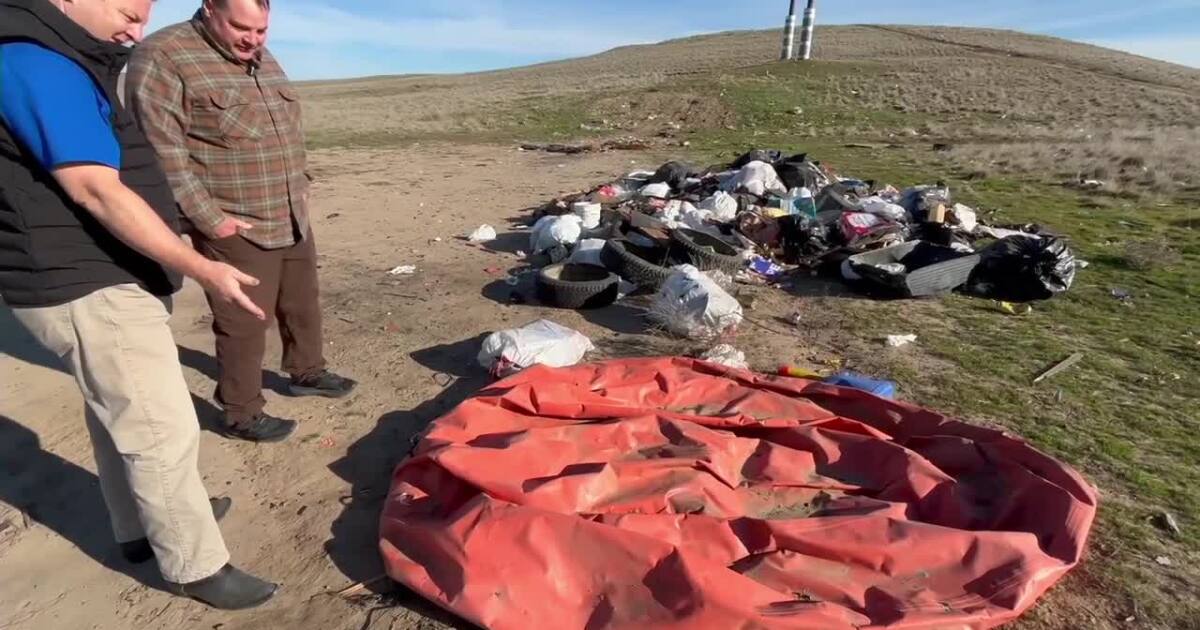
PAYETTE COUNTY, Idaho — Huge piles of garbage are littering the high desert west of the Treasure Valley, and one Idaho man is organizing a massive volunteer effort to clean up the 20,000-acre area.
Mike Long started the Facebook group 208Cleanup to organize volunteer cleanups across the state. He is hoping to get volunteers to join him on Saturday, April 11, to help remove the trash.
“This one is huge, it’s 20,000 acres,” Long said.
One man’s mission to clean up the Idaho desert
No one hired Long to clean up the desert. He took on the mission because he could not stand to see his home state desecrated.
“There’s more trash in this area than I have picked up in the two years that I’ve been doing this as 208Cleanup,” Long said.
The debris includes mysterious items, like an inflatable, and ordinary household trash.
“This is a bunch of household trash. This was someone’s house that got cleaned up. Clearly, you can see that someone dumped out here thinking no one cares about this land,” Long said.
Some of the garbage contains names, which has prompted an investigation.
“This pile’s been picked over by the BLM law enforcement. They’ve pulled out names and addresses from pieces of mail, so they’re investigating,” Long said.
Long believes community involvement is the key to keeping public lands pristine.
“If we as the community as the actual owners of this land, take care of it, it’s a lot cheaper, plus we’re invested in it, so when people come out to abuse it, it’s us, it’s the people that are seeing them and correcting each other and ourselves,” Long said.
Again, the cleanup is set for Saturday. Long has secured donations of garbage bags and huge dumpsters. He says the landfill has waived its drop-off fee for whatever is collected.
He adds that there are a lot of old, used tires in the area. The landfill will not waive the fees for them, so any donations are welcome. Otherwise, the tires will have to be gathered to one spot until the funds can be raised.
If you plan to volunteer, go to 208Cleanup on Facebook to sign up and learn more. Also, make sure to wear thick gloves and heavy-duty shoes.
This story was initially reported by a journalist and has been, in part, converted to this platform with the assistance of AI. Our editorial team verifies all reporting on all platforms for fairness and accuracy.
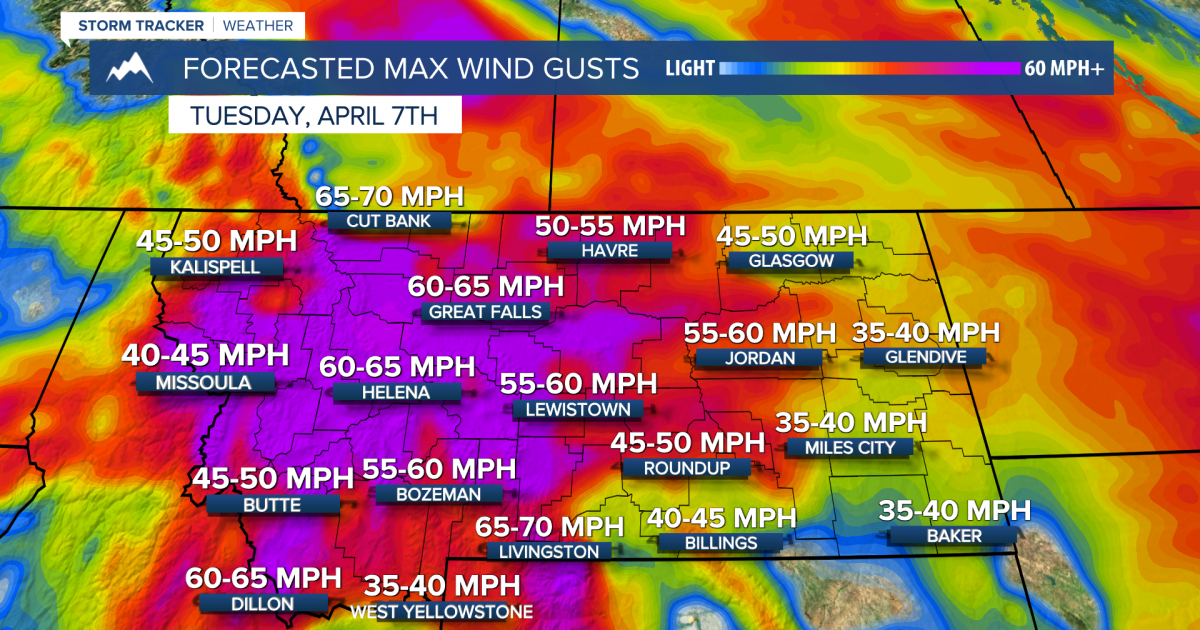
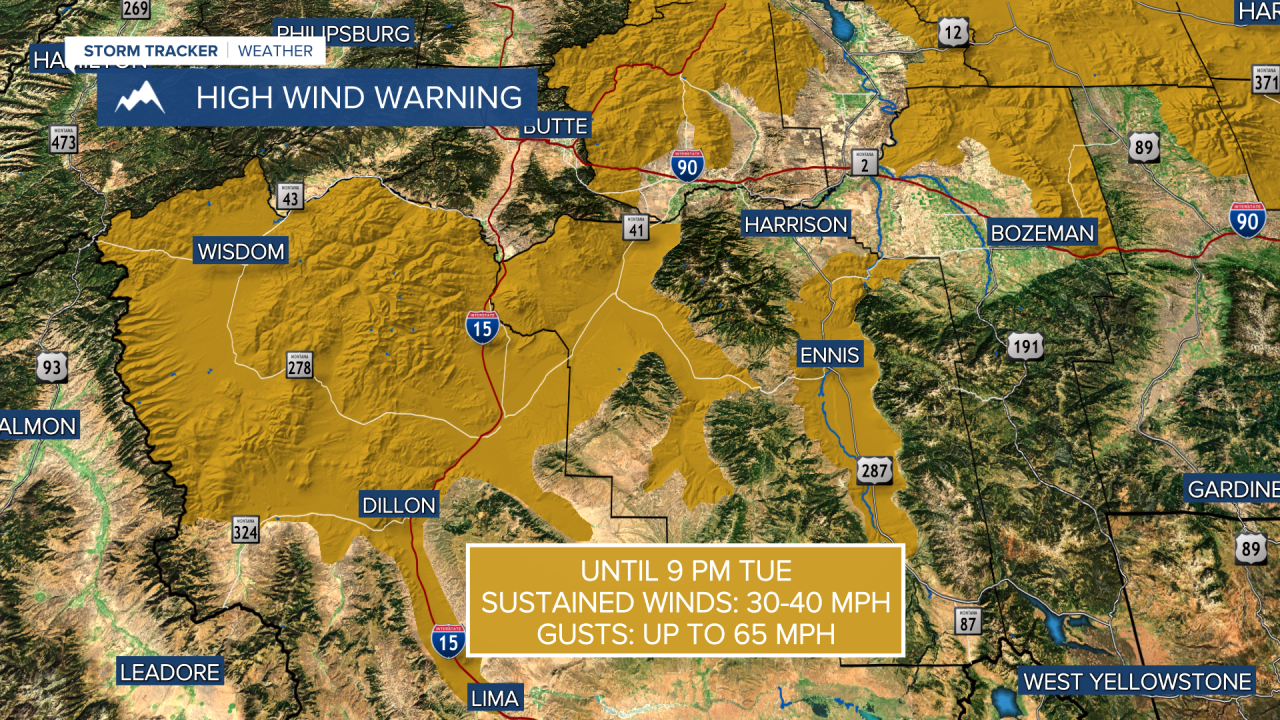
TUESDAY, APRIL 7TH: A strong wind event is set to unfold this afternoon through most of the state. A low-pressure system with an associated cold front will move just north of our state. This, combined with strong mid-level winds, will enhance surface-level winds. Gusts could reach up to 70 MPH in lower elevations, with the Rocky Mountain Front gusting to near 90 MPH at times.
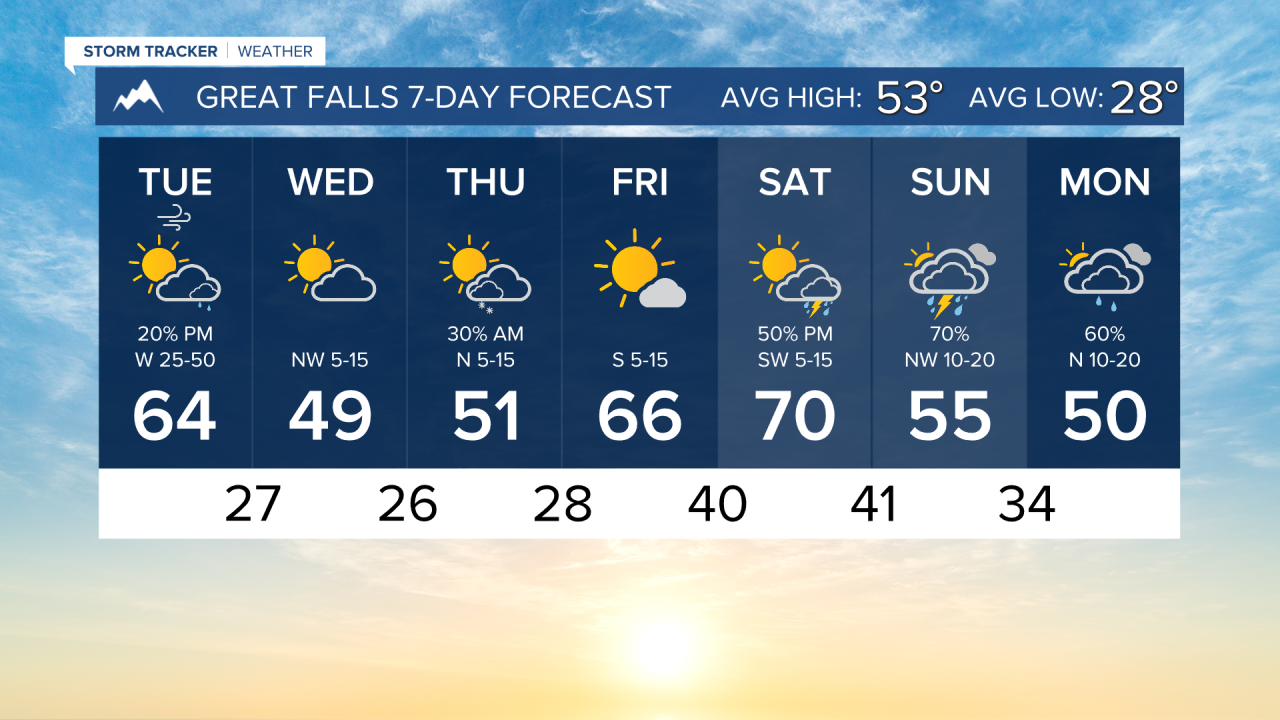
Expect partly cloudy skies for most of the day. A little more cloud cover may be present on and east of the Rocky Mountain Front. The wind will push high temperatures into the mid to upper 60s.
Most of the day will be dry, but a few rain showers will form along the cold front as it moves from northwest to southeast in the afternoon and evening. A few showers and a thunderstorm or two may also form in southwest Montana.
WEDNESDAY, APRIL 8TH: Winds will die down in the morning throughout central Montana, but will still be gusty throughout the afternoon in the eastern portion of the state. Temperatures will be cooler behind the front, with morning lows in the 20s and 30s. Afternoon highs will only reach the 40s and 50s.
A few morning snow showers will impact northeast Montana on the backside of the low-pressure system. Impactful accumulation is not expected.
THURSDAY, APRIL 9TH: A shortwave disturbance bringing isolated rain and snow showers will move through north-central Montana on Thursday. This may bring snowflakes in the morning, but it is not likely that this snow will stick. Morning lows will be in the 20s and 30s again. Highs will reach the 50s.
FRIDAY, APRIL 10TH: Friday will be a beautiful day with highs warming into the 60s for most areas, with a few spots potentially hitting 70 under mostly sunny conditions. A couple of thunderstorms will move into southwest Montana. These should stay south of I-90.
LONG-RANGE FORECAST: Another storm system begins to influence the state on Saturday afternoon. Moist southwest flow ahead of a center of low will bring air temperatures in the 60s and 70s with scattered thunderstorms. There will be some wet weather around on Sunday as well, with cooler temperatures.
——————————————————————————————————————————
WEATHER ALERTS:
MTN
MTN
MTN MTN


——————————————————————————————————————————
Helena Temperature Records Today:
High: 77 (1930)
Low: 7 (1923)
AVG: 54/30
Great Falls Temperature Records Today: MTN MTN
High: 81 (1930)
Low: 4 (1982)
AVG: 53/28


Flood Watch issued across Hawaii as kona low system brings risk of heavy rain and flood
Volunteer organizes massive cleanup effort to remove huge piles of garbage from the Idaho high desert

Kinston woman arrested in months-long fraud investigation in Illinois

Galveston Town Marshal placed on administrative leave

Inside Iowa Politics: Candidate Jim Carlin doesn’t want American troops on the ground in Iran

Florida High School Football Rankings: Top 25 teams – Oct. 21

How old is Bo Nix? What to know about Oregon quarterback ahead of 2024 NFL Draft

Cleary's 21 help Le Moyne down Central Connecticut State 69-64 in OT

99th annual Pony Swim held in Virginia

Indiana Members Credit Union announced as new anchor tenant at Bottleworks District

Ilhan Omar calls Trump an ‘unhinged lunatic,’ urges booting him out of office
Between Budapest and Brussels: Péter Magyar’s political tightrope

Michigan muscles its way to program’s 2nd NCAA basketball title, beating UConn

Map: Minor Earthquake Strikes Near San Diego

Trump claims he’d win as the president of Venezuela — just needs to ‘quickly’ learn Spanish
-

 Atlanta, GA2 days ago
1 teenage girl killed, another injured in shooting at Piedmont Park, police say
-

 South-Carolina1 week ago
South Carolina vs TCU predictions for Elite Eight game in March Madness
-

 Movie Reviews5 days ago
Vaazha 2 first half review: Hashir anchors a lively, chaos-filled teen tale
-

 Vermont1 week ago
Skier dies after fall at Sugarbush Resort
-

 Politics1 week ago
Trump’s Ballroom Design Has Barely Been Scrutinized
-

 Politics1 week ago
JD Vance says he was ‘obsessed’ with UFOs, believes aliens are actually ‘demons’
-

 Politics1 week ago
Jeffries declines to break with indicted Democrat after ethics panel’s guilty verdict
-
 Entertainment5 days ago
Inside Ye’s first comeback show at SoFi Stadium