Crypto
As Trump’s wealth skyrockets, accusations of conflicts of interest mount


They crane their necks to get a glimpse of the helicopter as it descends on the lawns of Donald Trump’s Virginia golf club.
The event is black tie, a gala, a chance to dine with the president of the United States.
This invite is one money can buy. A kind of money, at least.
To get into this room, the guests have had to invest real money into the official Trump cryptocurrency. Collectively, they hold about $US150 million ($229 million) worth of the coin.
The group watches as he exits the helicopter and cheers as he enters the room.
The gala was for the top 220 holders of the Trump cryptocurrency, $TRUMP. (Supplied)
Donald Trump’s wealth, and that of his family, is skyrocketing.
Trump says he has stepped back from his business ventures since taking office, and his interests are now held in trust by his sons.
But critics say he is operating like no president has before, mixing business and politics in a way that may violate the US constitution and threaten the very foundations of American democracy.
His links to a plethora of business activities and cryptocurrency ventures have opened him up to accusations of conflicts of interest and profiting from the presidency.
‘He can do whatever he wants’
The event in Virginia was billed as a reward for the top 220 holders of the Trump cryptocurrency, called $TRUMP, which launched three days before his inauguration.
The Trump family makes money when the currency is traded.
In crypto circles, it is considered a “meme coin”, a kind of collectible inspired by internet trends that can be bought and sold, but has no guaranteed real-world value or practical application.
One of the investors in the room was 25-year-old Nick Pinto.
Nick Pinto wanted to film a TikTok with the president at the gala. (Four Corners: Cameron Schwarz)

The Lamborghini-driving Floridian got into crypto early and has made a lot of money from it.
He knows the money he has poured into $TRUMP has made the president and his family richer.
“I don’t mind that Trump is profiting off this currency because I am involved in the crypto space and the fact that he’s involved in cryptocurrency at all drives the price up, and when the price goes up, I’m profiting,” he tells Four Corners.
“So any time he tweets something about the currency, the price will go up or down.
“As long as I can profit from it, I feel like he can do whatever he wants. If there’s a way for the average American to make money off of the president, I feel like it’s OK.“
Nick Pinto says Donald Trump’s involvement in crypto helps his investments. (Supplied)
Pinto bought $TRUMP early, and then topped up his holdings to guarantee he would get a ticket to the gala. By the big night, he held about $US370,000 worth.
All he wanted in return was to film a TikTok or at least get a selfie with the president.
Within four months of launching, the token had generated $US320 million in trading fees.
The bulk of this went to those behind the meme coin. This included the Trump family.
Skin in the game
A former cryptocurrency sceptic, Donald Trump’s conversion began on the 2024 campaign trail.
In May that year, he met members of a powerful crypto lobby spearheaded by leading Bitcoin advocate David Bailey. In July, he appeared at the group’s conference, where he pledged to run a crypto-friendly administration if re-elected.
Watching closely was Corey Frayer, a senior adviser for crypto markets and financial stability to the chair of the US Securities and Exchange Commission (SEC) at the time. He and his boss, Gary Gensler, had been cracking down on crypto.
“Almost the entire crypto industry is propped up by a belief and faith that there is something behind all of the magic of creating a crypto token,” Frayer tells Four Corners.
“So having the president get involved … just makes the entire market bigger and more dangerous.“
Corey Frayer says the president’s rhetoric on crypto changed once his family got into the industry. (Four Corners: Cameron Schwarz)
In September, just seven weeks out from the presidential election, the Trump family joined the crypto industry themselves.
Trump and his sons launched their own crypto platform called World Liberty Financial, with longtime Trump confidante Steve Witkoff and his sons as business partners.
The platform allowed people to invest through selling a token, with 75 per cent of the profit from each sale going to the Trump family.
It was a remarkable turnaround from the man who called Bitcoin a “scam” in 2021 and whose family had made its fortune from tangible assets like real estate, resorts and casinos.
Frayer noticed a change in the presidential candidate’s campaigning.
“He announced, to much applause, that he would fire the strong regulator, Gary Gensler, over his crypto policy,” he says.
“He started courting a lot of donations from the crypto lobby for his campaign, and all of that was very clearly driven by his new financial interests in this industry.”
World Liberty Financial allows people to invest through selling a token, with a share of the profit going to the Trump family. (Four Corners: Cameron Schwarz)
Corey Frayer believes there are other potential risks in a president being so invested in crypto.
“The transactions can be nearly anonymous,” Frayer explains
“If you want to use your presidency to sell influence or just make money, crypto is a great way to do that.“
The World Liberty Financial website states that Donald Trump was removed from his role with the company when he re-entered the White House. Steve Witkoff, now Trump’s special envoy to the Middle East, also left his role after taking office. Both Trump’s and Witkoff’s sons, however, are still actively involved in the business.
In March this year, World Liberty Financial announced it had sold $US550 million worth of its token. Four Corners estimates this has delivered $US390 million in revenue to the Trump family.
The White House told Four Corners that Donald Trump’s personal assets were in a trust managed by his children and have nothing to do with his presidential decision-making.
Business and politics
Critics say the blurred lines between where Trump’s businesses end and the presidency begins heighten the risk of conflicts of interest.
While Frayer was at the SEC, it was pursuing Chinese-born entrepreneur and crypto billionaire Justin Sun over allegations of civil fraud.
Sun once bought a piece of conceptual art — a banana gaffer-taped to a wall — for $US6.2 million and then ate it.
He made two investments in World Liberty Financial totalling $US75 million — one was made the day before the inauguration.
Sun’s World Liberty Financial investments delivered close to $US50 million to the Trump family.
Not long after Trump returned to the White House, the SEC case against Sun was paused.
Justin Sun made two investments in World Liberty Financial totalling $US75 million. (Getty Images: Steven Ferdman)
Sun later attended the $TRUMP meme coin gala as the coin’s largest holder — he had about $US22 million worth at the time of the dinner.
But it is not just individuals who are allegedly receiving favourable treatment.
An investigation by The New York Times, led by journalist Eric Lipton, raises questions about the impact business interests are having on US foreign policy.
The United Arab Emirates’ state-owned investment fund MGX, which is chaired by Abu Dhabi’s deputy ruler, invested $US2 billion in the crypto exchange Binance.
This investment was made using one of World Liberty Financial’s coins. The Trump family could earn tens of millions of dollars from this investment.
“That’s on a scale that we’ve never seen,” Lipton says.
“[It’s] the single largest transaction in cryptocurrency history.
“It’s tens of millions of dollars that is effectively going into the pockets of the Trump and Witkoff families and their business partners from that single transaction.”
New York Times investigative journalist Eric Lipton. (Four Corners: Cameron Schwarz)
Two weeks after the $US2 billion transaction, Trump announced the UAE would be allowed to buy hundreds of thousands of advanced AI chips from US technology giant Nvidia — something the Biden administration had refused to do.
There is no evidence that one deal was explicitly offered in return for the other.
Lipton says while the assertion was that the timing was coincidental, both involved “the same government officials and the same families that were benefiting”.
“The problem is, it creates questions about what is driving US foreign policy,” Lipton says.
It is impossible to put a precise figure on how much Mr Trump and his family have made since he retook office.
It is unclear how some profits are distributed from the array of real estate, crypto, media, and Trump-brand ventures.
Forbes Magazine estimates Trump’s current net worth is $US7.3 billion. Twelve months earlier, it was $US3.9 billion.
Questioning Trump
Donald Trump has strongly rejected suggestions that it is inappropriate for him to be involved in business activities while serving as the US president.
When Four Corners asked how much wealthier he was since returning to the White House, Trump replied:
“Well, I don’t know if the deals I made, for the most part, other than what my kids are doing. You know, they’re running my business. But most of the deals that I’ve made were made before [being re-elected]. And that’s what I’ve done for a life.”
Loading…
Trump said his children, not him, were running the business, and that the questions from Four Corners were “hurting Australia”.
“They want to get along with me. You know your leader is coming over to see me very soon. I’m going to tell him about you. You set a very bad tone.”
“Quiet,” he said when pressed further, pointing a finger.
Donald Trump tells reporter John Lyons he is setting “a very bad tone”.
Trump supporters believe he is acting within the limits of the law.
“The president has to abide by US law. When it comes to businesses, that’s normal. There’s no conflict of interest laws related to the presidency and the president, and so he’s operating within that space,” former Trump adviser and communications director Bryan Lanza says.
Lanza rejects suggestions by critics that the business deals benefiting Trump and his family while in office are improper.
“There’s nowhere in our constitution that requires family to be disqualified from earning a living,” he says.
“The president is not conducting these deals; it’s Don Jr and Eric.
“Every president benefits from their policies, every president benefits from a tax cut, every president benefits from their policies in the long term. Trump’s no different than any other president.”
‘Nobody does it like this’
Critics say, even if there are no quid pro quo deals, the president’s business activities fit within a broader definition of corruption.
“The classical definition of corruption is the exploitation of public office and public power for private gain,” lawyer and former Obama White House ethics adviser Norm Eisen says.
“So when you look at … the $US2 billion World Liberty Financial investment where he has a stake in the crypto industry, the auctioning off access to those who purchase his meme coin … they’re all about Donald Trump using his office, the official nature of the presidency — public office — for his private gain, instead of for serving the public interest.
“He is the most corrupt president that we have had in the modern era.
Trump supporters believe he is acting within the limits of the law. (Four Corners: Cameron Schwarz)
“When have we ever had a president who has huge financial interests, hangs onto them, gains from them, while regulating in that same area?
“Jimmy Carter put his peanut farm into a blind trust so that … there would be no question that he was making decisions about agriculture or farming or subsidies to benefit himself. Donald Trump is doing the opposite.”
His colleague, Virginia Canter, is one of America’s foremost ethics lawyers and has worked under both Republican and Democrat administrations, advising the US Department of Treasury and the Securities and Exchange Commission.
She says the UAE deal raises questions, given the immense benefit to the Trump family’s World Liberty Financial.
“You have to ask yourself, why didn’t the UAE state-backed investment fund called MGX just take their money and invest it directly in Binance?” Canter says.
MGX didn’t respond to questions from Four Corners.
Virginia Canter says the American people deserve better. (Four Corners: Cameron Schwarz)
Canter says the American people expect their president to represent the public’s interests.
“You can’t be confident of that because now this money is coming in and undoubtedly influencing his official activity,” she says.
“It’s an outrageous conflict of interest.“
She rejects assertions that, because the deals are public knowledge, Trump isn’t doing anything wrong.
“It doesn’t look as scary or nefarious, and in fact it normalises it and it makes it look like it’s OK, and that’s a terrible thing,” she says.
“It perpetuates this idea that everybody does it. Nobody does it like this.
“We deserve much better.”
Lipton says Trump’s sons are using every avenue they can to create new businesses and intensify profits.
“The diversity of new ventures that they’re creating to profit off of policies that the president is involved with is just across the map, and it is creating a quagmire of ethics. The hardest part is that we just can’t keep up.”
Money maker
The scope of business activity Trump and his family are engaged in has surprised Republican strategist Doug Heye.
“The Trump family is certainly using this as a very big opportunity to make a lot of money, and they’ve been very successful at it,” he says.
He says Trump is such a unique figure, and no other president would be able to get away with what he does.
“The rules just don’t apply to him in the way they do to everyone else, and he exploits it,” he says.
“Business is Donald Trump’s DNA and it’s also hardwired in the American psyche.
“For most voters, it is so factored in because they’ve known Donald Trump as a successful businessman their entire lives.
“Many Americans don’t see a problem with this president enriching himself while in office.”
That was true of Nick Pinto, to a point.
The 25-year-old crypto entrepreneur never got to film his TikTok with Trump at the meme coin gala.
Nick Pinto was left disenchanted by the meme coin gala experience. (Four Corners: Cameron Schwarz)
Once Trump had arrived, he delivered a speech before heading back to his helicopter and leaving. His appearance lasted less than 30 minutes.
Pinto, who was served a meal of steak and mashed potatoes, was left disenchanted by the experience and unimpressed by Trump’s apparent disregard for those who had invested in his crypto.
“I would say the entire dinner was about making money,” he says.
“They did advertise it as having dinner with Trump, and Trump did not eat anything at all.
“If there was a big table … and he’d sat down at least and drank a Diet Coke with us or something like that.
“I do feel like I maybe kind of got scammed.“
Watch the Four Corners investigation, Chasing Trump’s Billions, tonight from 8:30pm AEDT on ABC TV and ABC iview.



Key Takeaways
- The yen fell to 162.27 per dollar on June 30, its weakest level against the greenback since 1986.
- A wide rate gap, the BOJ at 0.75% versus the Fed’s 3.50%-3.75%, keeps pressuring the currency.
- Japan spent a record 11.73 trillion yen ($72.4 billion) on intervention from late April to late May.
A Four-Decade Low
The yen’s slide to a four-decade low has put Japanese authorities back on intervention watch. The currency has been dragged down by a persistent interest-rate gap between Japan and the United States, heavy speculative short positioning, and the limited staying power of Tokyo’s earlier efforts to prop it up.
The mechanics are straightforward given the Bank of Japan (BOJ) typically holds its policy rate at 0.75%, while the U.S. Federal Reserve’s target sits at 3.50% to 3.75%. That spread rewards investors who borrow cheaply in yen and park funds in higher-yielding dollar assets, a so-called carry trade that steadily pressures the Japanese currency.
Japan’s Finance Minister Satsuki Katayama signaled Tokyo’s readiness to act, saying the government was prepared to take appropriate action against excessive currency moves.
Intervention Has Already Failed Once
Tokyo has been here before and recently Japan launched its first yen-buying operation in nearly two years (after the currency punched through the politically sensitive 160 level). Authorities then spent a record 11.73 trillion yen, about $72.4 billion, defending the yen between late April and late May, only to watch it weaken again.
That track record is why traders doubt a fresh round would hold because the forces dragging on the yen are structural, rooted in the rate gap rather than short-term sentiment, and intervention can slow the slide without reversing it. Markets are now watching whether a move toward the 160-to-162 range triggers another defense from the finance ministry.
Where Does Crypto Fit Into All This?
A depreciating home currency has historically nudged some Japanese savers toward alternative stores of value, and bitcoin sits among them. Japan is one of the world’s most active retail crypto markets, and a yen losing ground against the dollar strengthens the argument that scarce, non-sovereign assets can hedge currency risk. Bitcoin priced in yen has tracked far higher than its dollar quote, mirroring the currency’s erosion over time.
The pressure also feeds into global risk appetite since a weaker yen can unwind carry trades suddenly when sentiment shifts, a dynamic that has spilled into crypto and equity markets before, sending leveraged positions scrambling.
In any case, the immediate question is whether Tokyo intervenes again or lets the slide run. With the rate gap unlikely to close soon, the Fed has held rates elevated while the BOJ moves cautiously. That said, the yen’s path ahead depends heavily on the next moves from both central banks and until that spread narrows, the currency’s weakness looks set to persist.

OHIO — The Ohio Department of Commerce Division of Financial Institutions issued a consumer alert on Monday for Ohioans who have used cryptocurrency ATM kiosks operated by Bitcoin Depot Inc.
The alert follows Bitcoin filing for bankruptcy last month in the U.S. Bankruptcy Court for the Southern District of Texas. Since the filing, it has shut down its ATM network, meaning consumers may be eligible for outstanding funds.
Bitcoin previously operated in 33 states, including Ohio, holding money transmission license number OHMT 263 with the division.
A Bitcoin ATM is a physical kiosk allowing people to buy or sometimes sell cryptocurrency, usually using cash or a debit card, but unlike a traditional ATM, it does not connect to a bank account. Instead, it transfers cryptocurrency to a digital wallet or an address the user provides.
“In the past year, Bitcoin Depot processed 10,637 individual transactions in Ohio across at least 50 machines,” the division said in a news release. “Any Ohioan who believes they may have been impacted by a scam involving these machines is encouraged to file a claim.”
There are 32 consumers who are owed a total of $90,907 in refunds, ranging from $18 to $43,000. These individuals will be contacted directly, but the division is calling attention to the situation to ensure any other Ohioan who used the service is aware of the potential refund.
Those who believe they are owed money, or who have an outstanding claim with Bitcoin Depot, can file a claim through the bankruptcy case. They can also call the company’s restructuring hotline at 844-339-4117 (Toll-Free U.S./Canada) or +1-332-232-7827 (International), or email BitcoinDepotInfo@ra.kroll.com.
Before filing a claim, consumers are encouraged to gather all recepts, transaction records and supporting documents.
For additional information, contact the Division’s Office of Consumer Affairs via email at web.dfi@com.ohio.gov or call 614-728-8400.
-

 World9 minutes ago
World’s oceans experience hottest June ever, scientists say more heat ahead
-
 News36 minutes ago
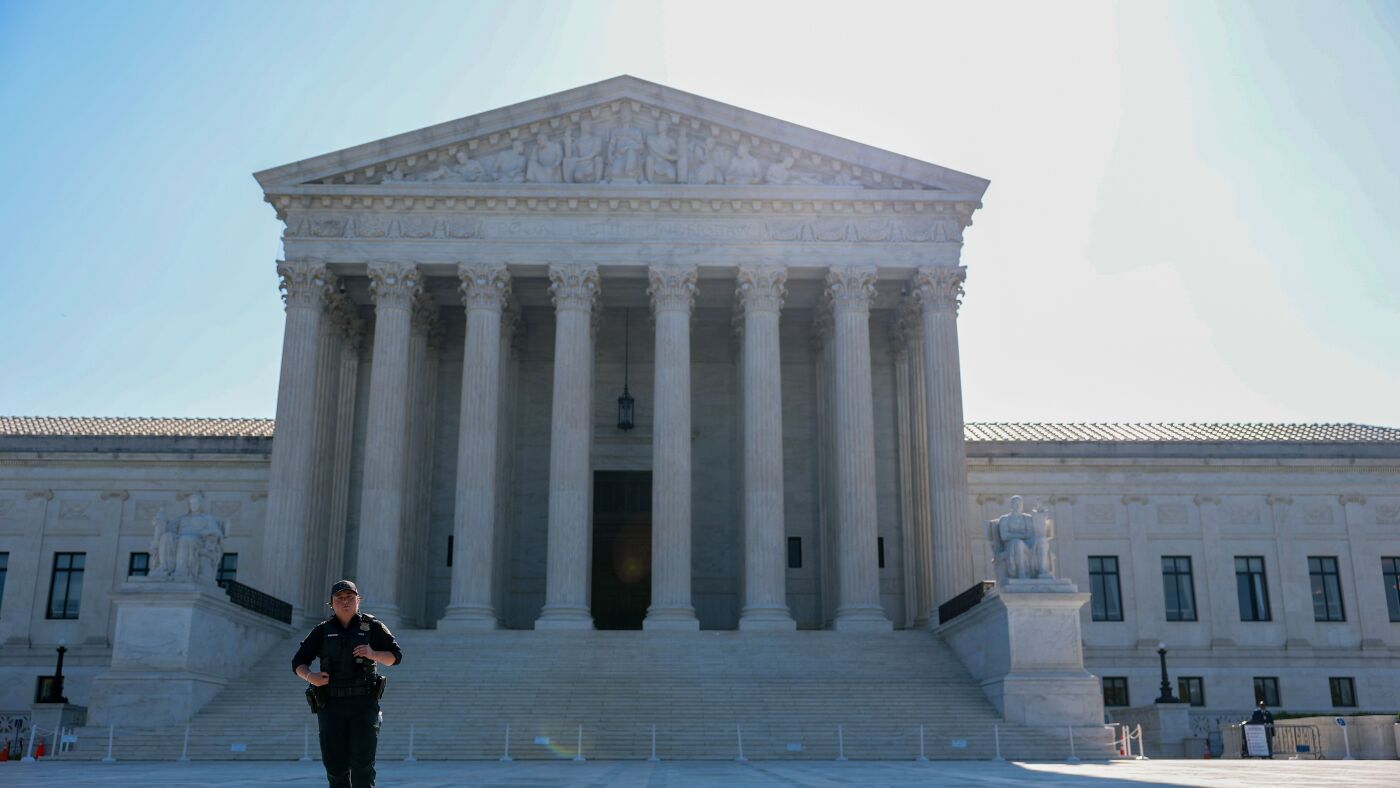
What the Supreme Court did on the final day of its term
-

 Los Angeles, Ca2 hours ago
Los Angeles County man convicted of sex trafficking, abusing woman he was dating
-

 Detroit, MI2 hours ago
Detroit Tigers tee off on New York Yankees with 5 homers in win
-

 San Francisco, CA2 hours ago
Popular brewery shutters San Francisco location amid industry woes
-

 Dallas, TX2 hours ago
Eight arrested after repeated attempts to enter World Cup matches without tickets
-

 Miami, FL3 hours ago
Reports: Heat add potent bench scorer in Tim Hardaway Jr.
-

 Boston, MA3 hours ago
Boston Pops gearing up for major July 4th celebration: ‘You only turn 250 once’ – Boston News, Weather, Sports | WHDH 7News

