Oregon
Oregon policymakers look to mend broken trust with Harney County irrigators


It’s January, fields of water-hungry hay are dormant, and a layer of hoarfrost and fog blankets the sagebrush for miles in Oregon’s remote southeast corner.
But as fields lie frozen, the seeds of an impending crisis continue to grow in Harney County.
It’s sure to force many farmers into a tough financial spot. Some say it could put them out of business. And now, some farmers are trying to navigate a problem that’s both about the economy, and the environment.
A center pivot sits on agricultural land in Harney County, Ore., on Dec. 18, 2025. Eli Imadali / OPB
The Harney Basin does not have enough groundwater to allow the current pace of irrigation to continue.
In December, water regulators adopted a plan to address the issue.
But many locals feel that the plan ignores their needs and could devastate a region whose economy largely revolves around agriculture.
Some have come to distrust the very agency in charge of managing the state’s water. They’re now forging a partnership with the governor’s office with the hope they can avoid, or at least delay, costly litigation.
“There’s a lot of animosity. And some of it is valid, and some of it’s not,” said state Rep. Mark Owens — a Republican from Harney County and a farmer. “Right now, if the state wants to work with this community, there needs to be a different face leading this instead of the water resource department, and the other option is the governor’s office.”
A disagreement over water management
Last month, the Oregon Water Resources Commission unanimously voted to designate much of the Harney Basin in southeast Oregon a critical groundwater area.
This designation will give the state more authority to reduce how much water irrigators can pump out of the aquifer, with the goal to stabilize it by 2058.
The Harney Basin spans 5,240 square miles of southeast Oregon’s high desert.
Almost all of the groundwater that’s used each year, about 97%, is pumped out to irrigate fields of hay that feed beef and dairy cattle.
For the last three decades, there’s been a problem: The water is drying up.
A center pivot sits on agricultural land in Harney County, Ore., on Dec. 18, 2025.
Eli Imadali / OPB

For decades, the state’s water resources department – overseen by the commission – enabled developers to drill new wells and pump out more water from the aquifer than what can naturally be replenished by rain and snowmelt.
That continued long after the department knew it wasn’t sustainable.
Irrigators in the basin acknowledge the problem – but many disagree with the state’s “critical groundwater area” designation and with how the state has interpreted the science that underpins it.
In one area of the basin north of Malheur Lake, groundwater levels have declined by more than 140 feet below the water table and, since 2016, have continued to drop by as much as eight feet per year.
But groundwater levels in other parts of the basin have not dropped as drastically – falling by less than a foot per year in some places.
As it stands, the water resources department’s plan to cut how much water irrigators can use in the basin doesn’t go into effect until 2028. That plan outlines how some water users will have to cut back their use by up to 70% over the next 30 years.
Before the plan takes effect, water users will have the opportunity to contest the restrictions they might face – a process that would require an attorney and an administrative law judge. It could be costly and take years to resolve.
But many farmers disagree with this plan.
Some feel they’re being punished for the water resources department’s failure. Some say the plan treats all irrigators the same, even though groundwater declines are not uniform across the basin.
Meanwhile, other people in the basin, residents who have domestic or livestock wells but are not irrigators, say the state is not acting fast enough to regulate water users.
In September, a coalition of residents, irrigators, tribes and local governments organized under Owens filed a petition asking the water resources commission to consider a different plan that diverged from the state’s own proposals to cut water use in the region.
In a memo, the water resources department determined the petition’s proposal would result in “continued long-term groundwater level declines” in most areas of the basin.
The commission rejected the petition and adopted the state’s plan instead.
Lost trust, and a different approach
Now, Owens is advocating for a different approach.
If the water resources department proceeds with its plan, many irrigators are likely to contest the restrictions they face.
Owens would like to give them more time to work on what’s called a “voluntary water conservation agreement” – a binding agreement to reduce water use, but one that irrigators would have a say in writing.
That’s where the governor’s office could come in, he said.
“There is some trust that needs to be gained again if we have a desire to work with the [water resources] commission on voluntary actions, because it’s not there right now,” Owens said. “The governor’s office can weigh in with the agencies, specifically the water resource department, and give direction on, ‘You have regulatory sideboards now, but slow down.’”
FILE – State Rep. Mark Owens, R-Crane, poses for a portrait in his Burns, Ore., office on Dec. 17, 2025.
Eli Imadali / OPB
That doesn’t mean the governor’s office plans to take over for the water resource department, according to Anca Matica, a spokesperson for Gov. Tina Kotek.
“We trust our agency. We know we monitor the agency’s work and implementation, but we also want to hear from community members to figure out are there ways we can do better,” Matica said. “Are there ways that we can help provide guidance to that agency that maybe they didn’t have?”
Geoff Huntington, a senior natural resources advisor for the governor, was at a meeting last week in Burns when irrigators met with Owens and state officials to discuss their options.
He acknowledged the lack of trust.
“We have a trust issue, right? Let’s call it what it is. It’s a trust issue,” Huntington said. “That’s a legitimate thing that has to be overcome if we’re going to be moving forward, and I say that on behalf of the department and the governor’s office.”
Geoff Huntington and Chandra Ferrari, both with the governors natural resources policy office, at a community meeting in Burns, Ore. on Jan. 22, 2026.
Alejandro Figueroa / OPB
Chandra Ferrari, also a natural resources advisor for the governor, told irrigators at the meeting that developing voluntary water conservation agreements would require a joint effort between the governor and the water resources department.
“Part of the trust building is us resetting right now and recognizing that we have an opportunity for a better pathway,” Ferrari said. “There is potential right now for this agreement, but ideally, we’re coming with you, right? The [Kotek] administration is coming with you to the [water resources] commission and saying we have a good path here.”
To date, no voluntary water conservation agreements have succeeded or even been proposed in Oregon, though.
A center pivot in a field covered with a layer of hoarfrost at a farm near Crane, Ore., Jan 22, 2026.
Alejandro Figueroa / OPB
“Voluntary agreements are a tool that’s available, but has not been used,” said a spokesperson with Oregon’s Water Resources Department. “There has not been one proposed to the department in regards to the Harney Basin.”
Owens said he’s optimistic the approach can work in the Harney Basin, but it will take time.
“These community members would like to try to take some of the fate in their own hands,” he said. “I am optimistic that our farmers will come together for the benefit of the community, for the benefit of themselves, and for the benefit of the state. And work toward reasonable reductions to hit reasonably stable [water levels] within a time frame that can work.”


Summer is in full swing, and across the country, the songs of birds and the cheeps of baby chicks are filling the air. While birdwatching season is happening just about everywhere right now, the Pacific Northwest offers something truly special: the chance to see puffins along the Oregon Coast. If you’re wondering when, where and how to see puffins in Oregon, you’re in the right place.
Few wildlife sightings feel as magical as spotting a Tufted Puffin (Fratercula cirrhata) in the wild. These beloved seabirds return to the Oregon Coast each year during their breeding season, drawing birdwatchers, photographers and nature lovers hoping for a glimpse of their bright orange beaks, expressive faces and unmistakable charm. For many visitors, seeing puffins in their natural habitat is a heartwarming coastal experience that captures the spirit of the Pacific Northwest.
Because puffins are seasonal migratory birds that nest in specific coastal areas, timing and location are key. With a bit of planning—and a little luck—you can witness one of Oregon’s most iconic wildlife moments along its rugged coastline. Here are the best places to see puffins on the Oregon Coast.
What Are the Best Places to See Puffins in Oregon?
If you’re wondering where you can you see these cute creatures, there are three spots that are worth going to and are hailed as the best places to see puffins in Oregon.
Haystack Rock, Cannon Beach
Haystack Rock is a popular place where puffins nest in Oregon.Getty Images Big5 Studio
Few wildlife encounters feel as effortless as spotting puffins right from shore, and Haystack Rock at Cannon Beach is one of the rare places where that’s possible.
This towering sea stack isn’t just an Oregon landmark, it’s also a seasonal nesting site for Tufted Puffins, who return here each year to raise their young on the rocky ledges. From the beach, visitors can often catch glimpses of puffins flying to and from the rock or resting along its cliffs, especially during the warmer months when activity peaks.
Because it requires no boat or hike to access, Cannon Beach remains one of the most rewarding and beginner-friendly places to experience puffins in the wild.
Face Rock State Scenic Viewpoint (Bandon)
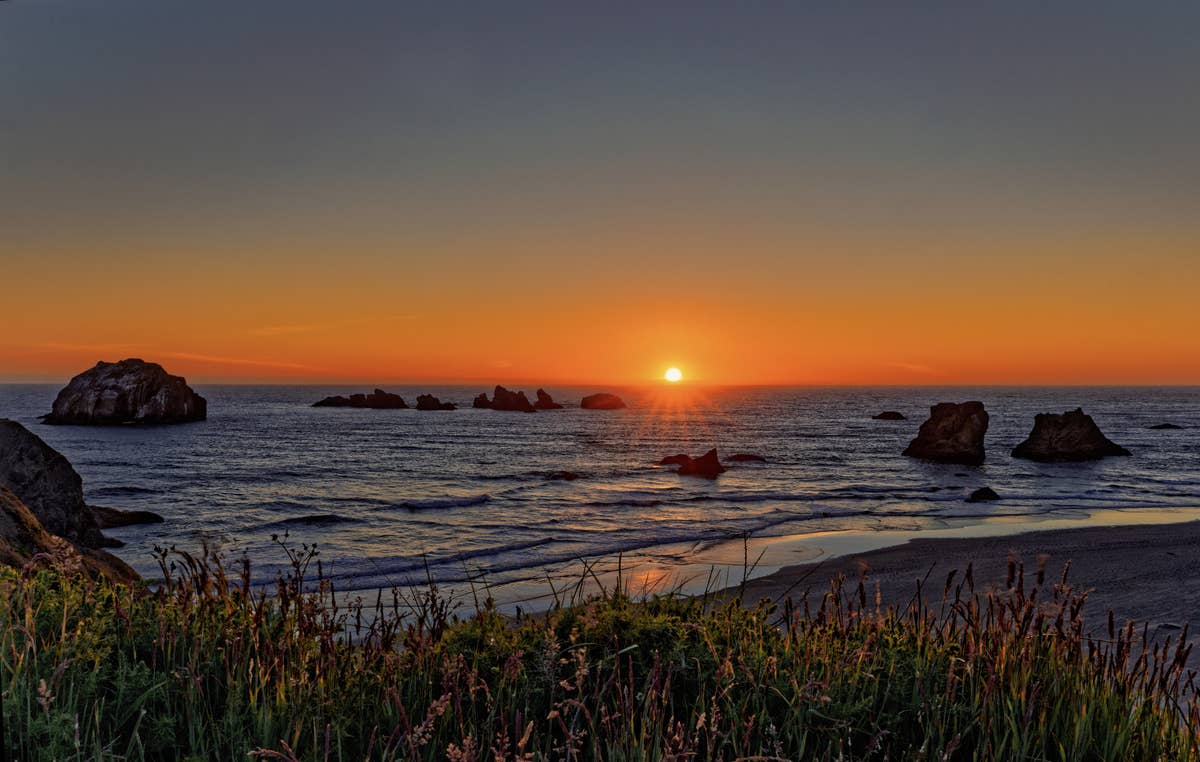
Image via Getty Images/Moelyn Photos
For a quieter, more immersive coastal experience, Face Rock in Bandon offers a different kind of puffin viewing.
Here, the focus shifts from crowds to coastline where Tufted Puffins and other seabirds nest along offshore rocks just beyond the shoreline. The setting is calmer than Cannon Beach, making it ideal for visitors who want to slow down and scan the horizon for wildlife activity.
Every Saturday and Sunday from now until July 26, Face Rock Wildlife Interpreters will host on-site sessions at Face Rock Wayside from 9 am to 11 am, where guests will get to look out for puffins nesting on Face Rock with the wildlife interpreters’ help. Whether you go puffin-peeping on your own or with a group, be sure to bring binoculars!
Three Arch Rocks National Wildlife Refuge
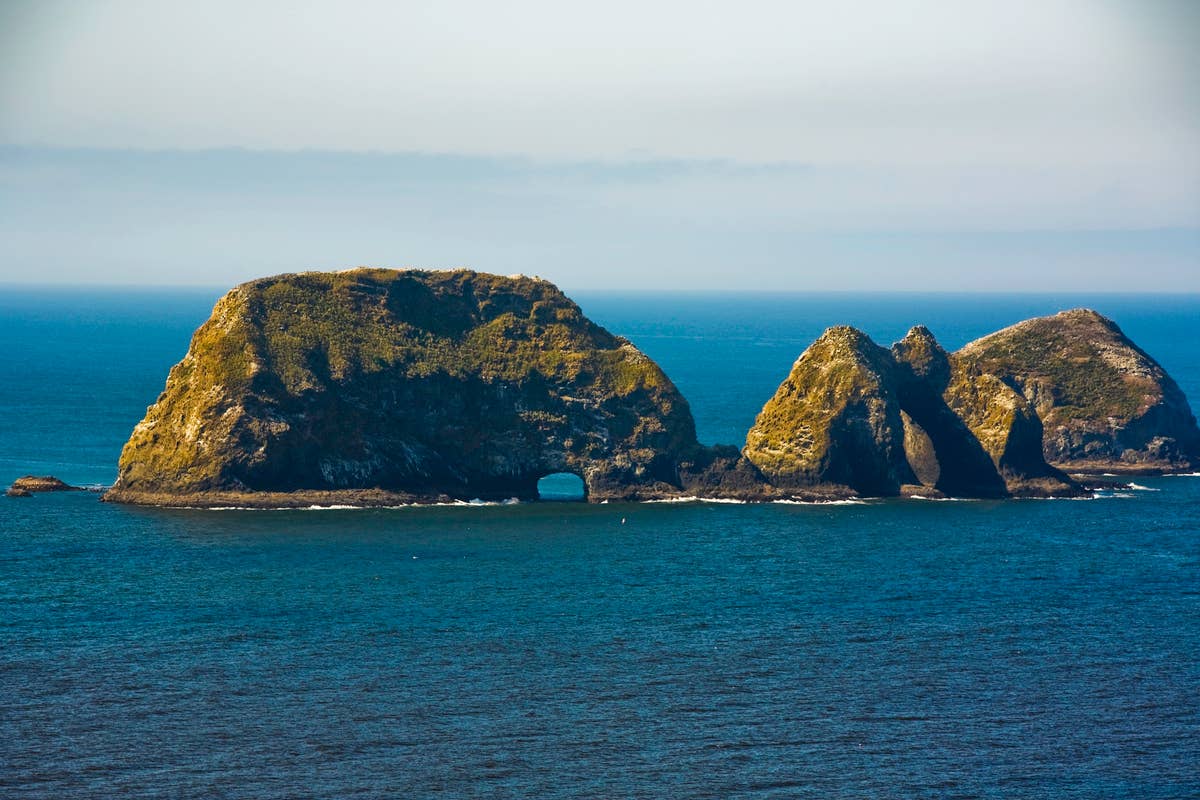
Image via Getty Images/Bob Stefko
If looking for something a little closer to Portland, Three Arch Rocks is home to the largest breeding colony of Tufted Puffins in Oregon. A trip to Three Arch Rocks National Wildlife Refuge is sure to be a treat for any lovers of the Pacific Northwest’s coastal wildlife.
Not only is it one of the top places in Oregon to spot nesting puffins over the summer, but it is also the only pupping site on the North Oregon coast for the federally-threatened Steller sea lion, one of two sea lion species native to Oregon. Incidentally, the Steller sea lion’s pupping season, which runs from mid-May to mid-July, coincides with the first half of the Tufted Puffin’s nesting season, so right now is the perfect time of year for a visit!
When Do Puffins Arrive on the Oregon Coast?
For a large part of the year, Tufted Puffins live far out at sea across the North Pacific Ocean (in fact, they can be found as far eastward as Japan). However, from right now through August, Tufted Puffins are making their way back to coastal islands along the Oregon coastline to create their nests and raise their young until they are strong enough to join them out at sea. Therefore, if you want to catch a glimpse of them, now’s the perfect time.
What’s the Best Time of Day to See Puffins in Oregon?
These birds don’t follow a predictable shoreline schedule, which is part of what makes spotting them such a rewarding experience. So when’s the best time to see puffins in Oregon? Throughout the day during the breeding season, they move between offshore feeding areas and nesting sites on rocky cliffs and sea stacks. However, early morning and late afternoon often offer the most consistent viewing opportunities, when bird activity around colonies tends to increase and lighting conditions make movement easier to spot from shore.
For visitors hoping to increase their chances, choosing calm, clear days can make distant movement easier to detect against the waves.
What Do Puffins Eat and Why Do They Come to Oregon?
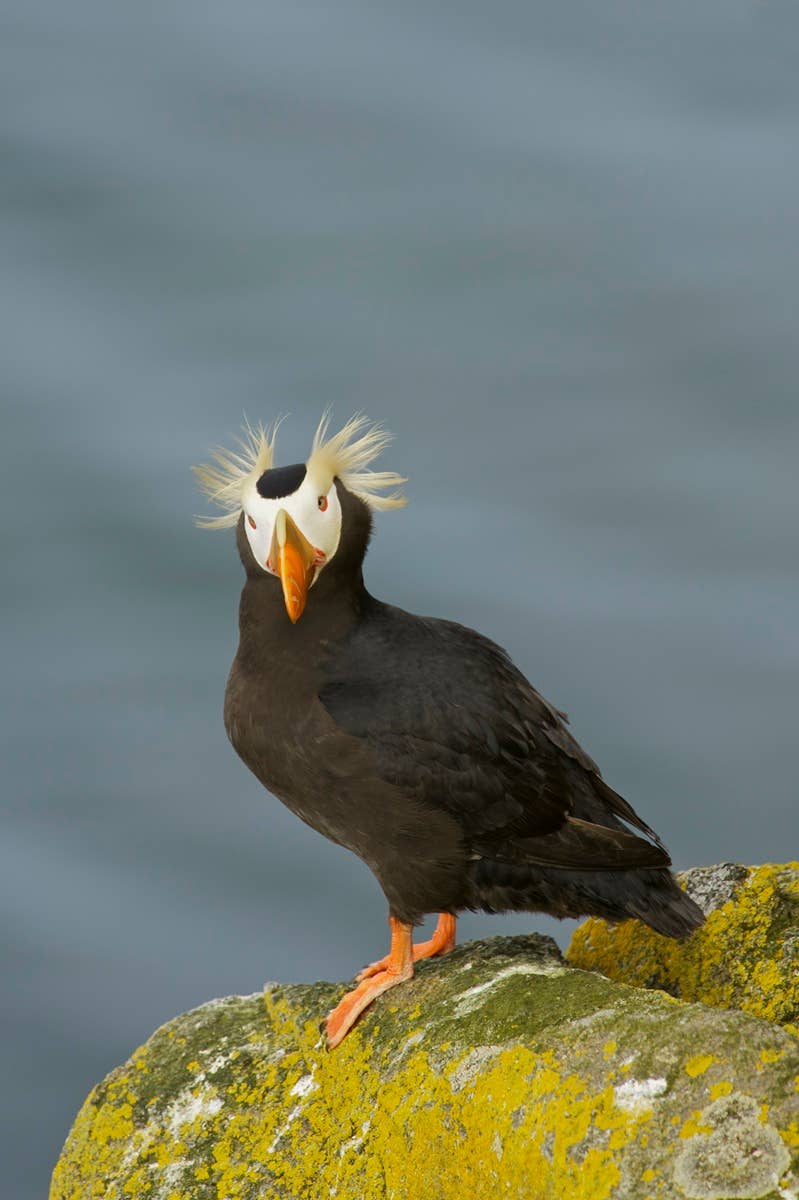
Tufted Puffins return to the Oregon Coast each summer.Getty Images Enrique Aguirre Aves
The presence of puffins along the Oregon Coast is closely tied to the health of the surrounding ocean ecosystem.
Oregon’s offshore waters provide an especially productive feeding environment thanks to cold currents that bring nutrients to the surface, supporting large fish populations. After all, Tufted Puffins rely on small schooling fish such as sand lance, anchovies and herring, which they catch by diving underwater and carry multiple fish back to feed both themselves and their chicks during the nesting season.
Combined with nearby rocky islands that offer protected nesting sites, the region creates an ideal seasonal habitat for breeding puffins and is what brings them back each year. It’s also why Oregon remains one of the most important puffin-viewing regions on the West Coast.
Tips for Spotting Puffins in Oregon
At one point, the Tufted Puffin’s distribution in North America stretched from northern California to British Columbia and the Aleutian Islands of Alaska. However, starting in the 1990s, the North American Tufted Puffin population plummeted in numbers, and now only a few thousand visit the Pacific Northwest every summer, including only a little over 500 puffins in Oregon. If you want the best odds at spotting these rare birds in Oregon, there are a few things you should keep in mind.
Puffins are easiest to spot when you know what to look for—and where to focus your attention. Bring binoculars and scan rocky cliffs and offshore waters, especially during calm mornings or late evenings when the sea is quieter. Watch for quick, low flights over the water or brief pops of movement near the surface as they dive for fish. Patience pays off, since puffins often appear suddenly and disappear just as quickly.
Why Puffin Sightings in Oregon is Special
Puffin sightings along the Oregon Coast are special because they’re both seasonal and fleeting. These seabirds spend most of their lives far offshore, only returning briefly to coastal nesting areas. That short window makes each sighting feel rare, especially when you catch them diving, flying, or gathering near rocky shorelines. Their bright beaks and energetic behavior make even a quick glimpse feel memorable.
Sources:

CURRY COUNTY, Ore. (KPTV) – A Texas man wanted for child sex crimes was arrested in Curry County on Tuesday afternoon.
The Curry County Sheriff’s Office says Kenneth Leatherwood of Bastrop, Texas, was arrested with the help of Oregon State Police and U.S. Marshals just after 12:30 p.m.
Leatherwood, who is accused of sex-related crimes involving a child in Texas, was reportedly found camping in a heavy wooded area near Lucas Lodge in Agness.
Investigators say Leatherwood has been on the run from Curry County law enforcement since June 16 after reports that he had been seen with a stolen car in the Agness area.
Leatherwood was also believed to have stolen weapons with him.
His dog was also found and returned to the suspect’s family in good shape, according to the sheriff’s office.
Copyright 2026 KPTV-KPDX. All rights reserved.

PORTLAND Ore. (KPTV) – Fireworks are on sale in Oregon until July 6, but state and local rules limit where they can be used and what types are allowed.
In Portland, fireworks use and sales are banned year-round.
Fireworks are also banned on beaches and in state and national parks.
Statewide, fireworks that fly into the air, explode, act unpredictably or move more than 12 feet horizontally are illegal. Banned fireworks include sky lanterns, missiles, rockets, Roman candles, firecrackers, cherry bombs and M-80s.
Fountains, sparklers, ground spinners and smoke devices are among the fireworks allowed under state rules.
Officials said people should not call 911 to report illegal fireworks. They said reports should go to the non-emergency line for the area.
First responders said there were 263 fires across Portland during last year’s fireworks season, and 27 were caused by fireworks.
For more details about fireworks regulation in Oregon, click here.
In Washington, fireworks sales legally begin Sunday and run through July 4.
Copyright 2026 KPTV-KPDX. All rights reserved.
-

 Oklahoma2 minutes ago
Woman hospitalized after house fire in northeast Oklahoma City
-
Oregon7 minutes ago
Puffins return to the Oregon Coast: where and when to see them
-

 Pennsylvania14 minutes ago
Pennsylvania coroners refuse to release autopsy reports – and that hinders research on deaths in custody
-

 Rhode Island17 minutes ago
‘Condom Hut’ Movie Adds Another Big Name
-
 South-Carolina22 minutes ago
Star Fox Review: Can’t quite teach an old Fox new tricks
-

 South Dakota29 minutes ago
Rounds, Office of the Inspector General requesting first-hand accounts of poor mail service in South Dakota
-

 Tennessee32 minutes ago
ESPN updates NBA mock draft for Ja’Kobi Gillespie, Felix Okpara in second round
-

 Texas37 minutes ago
Texas lawmakers want fixes to statewide voter registration system ahead of midterms


