
Connect with us

West

Nigerian bank CEO killed in Mojave Desert helicopter crash in California: 'Irreparable loss'

Published

on

Nigerian bank CEO killed in Mojave Desert helicopter crash in California: 'Irreparable loss'

Herbert Wigwe, the CEO of a major Nigerian bank, was one of the six people killed in a Friday night helicopter crash in California’s Mojave Desert, authorities say.

The death of Wigwe, who led Access Bank Group, was confirmed by Nigerian officials on social media, including World Trade Organization Director-General Ngozi Okonjo-Iweala.

Abimbola Ogunbanjo, a former Group Chairman of Nigerian Exchange Group, was also killed in the crash. Nigerian politician Godwin Obaseki reported that Wigwe’s wife and son were among the decedents as well. 

6 PEOPLE PRESUMED DEAD AFTER HELICOPTER CRASHES IN CALIFORNIA’S MOJAVE DESERT EN ROUTE TO LAS VEGAS AREA

The crash happened at around 10 p.m. local time Friday near Nipton, California, which is not far from the California-Nevada border. 

Advertisement

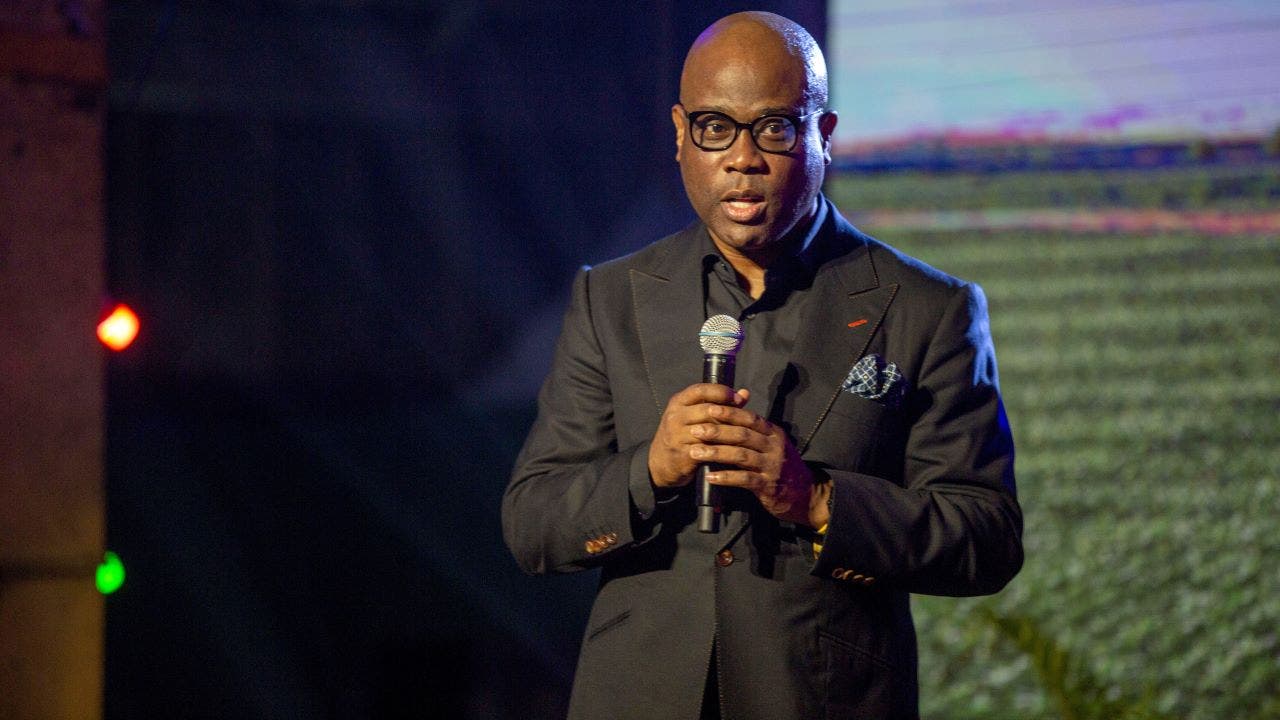
Herbert Onyewumbu Wigwe speaks onstage at Global Citizen Live, Lagos on Sept. 18, 2021, in Lagos, Nigeria. (Andrew Esiebo/Getty Images for Global Citizen/File)

The helicopter left Palm Springs Airport at around 8:45 p.m. and was on its way to Boulder City, Nevada, which is near Las Vegas. At the time of the crash, rainy and snowy weather was reported in the area.

Multiple American agencies are investigating the crash, including San Bernardino County Sheriff’s Department, the NTSB and the FAA.

“The FAA and the National Transportation Safety Board (NTSB) will investigate,” the FAA said to Fox News Digital. “The NTSB will be in charge of the investigation and will provide any updates.”

5 MARINES KILLED IN CALIFORNIA HELICOPTER CRASH ARE IDENTIFIED

Advertisement

Herbert Onyewumbu Wigwe attends Global Citizen Live, Lagos on Sept. 18, 2021, in Lagos, Nigeria. (Andrew Esiebo/Getty Images for Global Citizen/File)

In a statement, Obaseki, who is Governor of the Edo State, said that he is “extremely shocked and devastated” over Wigwe’s death on X Saturday.

“The tragic incident is painful and heart-wrenching, and we pray for God’s abiding comfort in this profoundly difficult time,” Obaseki wrote. 

“Wigwe was a colossus in Nigeria’s financial sector, leading Access Bank to become an international brand that placed Nigeria on the global map of first-class financial services,” he added. “I commiserate with the Wigwe family, the Ogunbanjo family, Access Bank Holding, the Nigeria Stock Exchange, friends and associates, and pray that God will grant all the fortitude to bear the irreparable loss.”

Dusk settles in over the Mojave Desert, about 10 miles north of Nipton, Calif. (Gina Ferazzi /Los Angeles Times via Getty Images/File)

Advertisement

Fox News Digital reached out to the San Bernardino County Sheriff’s Department and Access Bank Group, but has not heard back.

Read the full article from Here

Continue Reading
Click to comment

Leave a Reply

Your email address will not be published. Required fields are marked *

This site uses Akismet to reduce spam. Learn how your comment data is processed.

Utah

GAME DAY: Golden Knights seek to retake advantage in first playoff trip to Utah

Published

on

GAME DAY: Golden Knights seek to retake advantage in first playoff trip to Utah


The Vegas Golden Knights return to the ice for Game 3 against the Mammoth in Utah on Friday.

This will mark the first Stanley Cup Playoff game in Salt Lake City. Active franchises have an all-time record of 12-18-1 in their first-ever postseason home game.

Vegas has a 7-4 playoff series record when tied 1-1. That record falls to 2-4 when they drop Game 3.

Golden Knights captain Mark Stone is two playoff points shy (74) of surpassing Jonathan Marchessault (75) for most in franchise history.

Advertisement
Comment with Bubbles

BE THE FIRST TO COMMENT

Puck drop is scheduled for 6:30 p.m.


Source link

Advertisement
Continue Reading

Washington

2026 NFL Draft Grades | Washington applauded for selecting ‘instant alpha’ linebacker Sonny Styles

Published

on

2026 NFL Draft Grades | Washington applauded for selecting ‘instant alpha’ linebacker Sonny Styles


The views and opinions expressed in this article do not reflect the opinion of the team.

The Commanders welcomed new defensive coordinator Daronte Jones earlier this year, and yesterday on Night 1 in Pittsburgh, the DC was gifted one of the best defensive prospects in college football. With the No. 7 pick in the 2026 NFL Draft, Washington selected a versatile and supremely athletic young talent in Ohio State linebacker Sonny Styles.

There were many thoughts about what Washington might do at the position over the last several months, but there were no conflicted feelings on Peters end when the Commanders got on the clock and he saw who was there. Styles was the clear pick. “Looking at this, we wanted to get the best player. We didn’t want to draft for need, and we felt the best player staring us in the face was a linebacker,” Peters said.

Styles was evidently a guy Washington was very high on. “I’ve been smiling ear to ear for a while now,” Peters said. “He’s a true Commander, through and through.” There is a lot about the 21-year-old linebacker that has Washington excited. They believe he will be a “great blitzer.” He can cover a lot of ground with his speed and burst, and that, Peters emphasized, is “a big deal in this league.” Styles has also shown he can play in multiple linebacker roles.

Advertisement

The Commanders were looking for more of a spark on defense after a disappointing 2025 season. With his dynamism, freakish athleticism and tackling prowess, it appears Styles has the goods to deliver an immediate boost to the unit.

Here’s how draft pundits graded the move:


Source link

Continue Reading

Wyoming

Decades-old, newly restored Smithsonian carousel reopens — to children’s delight

Published

on

Decades-old, newly restored Smithsonian carousel reopens — to children’s delight


The Smithsonian Institution’s carousel is back open for business Friday after being closed for nearly three years for restoration and refurbishments.

Brightly painted ponies have been going round and round, delighting children, for centuries. But the joys they bring haven’t always been accessible to everyone.

The ribbon-cutting at the Smithsonian National Carousel nodded to this fact.

William A. Smith / AP

Advertisement

/

AP

Baltimore County police officers lift a white demonstrator into a patrol wagon on July 4, 1963. The man was arrested after he and some 400 other demonstrators protested the whites-only policy of Gwynn Oak Amusement Park in suburban Woodlawn, Md. Other demonstrators who had been arrested and escorted from the park sit in the background.

The first to ride the reopened carousel was a group of African American adults who arrived from Baltimore. In the 1960s, when many of them were kids, they were among the first to desegregate the carousel when it was located at Gwynn Oak Amusement Park outside of Baltimore.

“My family, we used to go there all the time once they let us in,” said Janice Chance, who was 13 when she first rode the carousel in 1966. Chance’s son was a Marine who died in Afghanistan in 2008. She said to have the carousel back on the National Mall means a lot to her and the many others who fought for “the freedoms of this country.”

“We are together, we’re having fun, but we remember the struggle and how we got here,” said Chance.

Advertisement

Desegregating Gwynn Oak Amusement Park took several years of protests by Black and white activists: It was finally integrated on Aug. 28, 1963, the same day that Dr. Martin Luther King, Jr gave his “I Have A Dream” speech on the National Mall.

Sharon Langley, 63, stands next to her "Freedom Riders" horse that she rode when she was 11 months-old. Langley was the first African American to desegregate the original carousel in Baltimore on Aug. 28, 1963, the same day that Dr. Martin Luther King gave his "I Have a Dream" speech.
Sharon Langley, 63, stands next to her “Freedom Riders” horse that she rode when she was 11 months-old. Langley was the first African American to desegregate the original carousel in Baltimore on Aug. 28, 1963, the same day that Dr. Martin Luther King gave his “I Have a Dream” speech.

“So while that was occurring in D.C., quiet activism with little people was occurring on the same date,” said Sharon Langley, who was the first Black child to ride the carousel that day. She was just 11 months old. Years later, Langley co-wrote a children’s book about it. This week, she rode again, on a horse called Freedom Rider — after the desegregating riders. She believes it’s fitting the carousel should be “with all the monuments of freedom… This is a monument for children to come and enjoy, ride and experience the pursuit of happiness.”

After Hurricane Agnes devastated Gwynn Oak’s rides and buildings, the park closed in 1973 and the carousel went into storage. Shortly after, then Smithsonian Secretary S. Dillon Ripley decided it was time to replace the aging carousel on the National Mall. “As Ripley’s original carousel began to show its age, the Smithsonian began looking for a suitably grand replacement,” Smithsonian Secretary Lonnie Bunch III wrote in Smithsonian Magazine. “Gwynn Oak’s hand-carved beauty, an emblem of the struggle for civil rights, fit the bill.”

Children play in bubbles outside the restored carousel.

With 54 horses, a sea monster, a pig and two chariots, the restored Gwynn Oak carousel stands again in front of the Smithsonian’s Arts and Industries Building.

Left: One of the Smithsonian National Carousel's 56 restored horses. Right: A new ADA-compliant chariot featuring Washington, D.C., landmarks.
Left: One of the Smithsonian National Carousel’s 56 restored horses. Right: A new ADA-compliant chariot featuring Washington, D.C., landmarks.

Its Civil Rights history might’ve been lost on the kids rushing onto the platform to mount their favorite horses at the ribbon-cutting this week. Seven-year-old Lucas Platt from Virginia gives the carousel high marks. “It’s actually one of the fastest carousels I’ve really been on,” he said. “Usually they’re much slower than this. It’s great. I really like it. Nothing bad about it.”

Advertisement

Copyright 2026 NPR


Source link

Continue Reading
Advertisement

Trending
