Nevada
What to expect in Nevada's presidential primary and caucuses


WASHINGTON (AP) – Nevada again holds the coveted first-in-the-West slot in the presidential campaign calendar, but this year’s showdown in the Silver State won’t look like it did in previous years.
State lawmakers opted to move away from the Iowa-style presidential caucuses that Nevada had held for years in favor of a traditional, state-run primary next Tuesday. The state GOP opposed the plan and opted to hold caucuses on Feb. 8 to allocate delegates. The party also barred candidates running in the primary from running in the caucuses, forcing them to choose one event over the other.
Donald Trump is competing in the caucuses, in which all 26 delegates will be awarded, while Nikki Haley opted to stay on the non-binding primary ballot. She’s the only active major candidate on the ballot, but her biggest opponent on Tuesday might be the “None of these candidates” option that some Trump supporters might use to send her a message ahead of the South Carolina primary on Feb. 24.
In the Democratic primary, President Joe Biden faces author Marianne Williamson and a handful of relatively unknown challengers.
Here’s a look at what to expect in Nevada:
PRIMARY AND CAUCUS NIGHT
Nevada’s state-run Democratic and Republican presidential primaries will be held Tuesday. Polls close at 7 p.m. local time, which is 10 p.m. ET.
The party-run GOP caucuses will be held two days later on Feb. 8. Caucus hours are 5 p.m. to 7:30 p.m. local time, which is 8 p.m. to 10:30 p.m. ET.
WHAT’S ON THE BALLOT
The Associated Press will provide coverage for the Democratic and Republican presidential primaries on Tuesday and the Republican caucuses on Feb. 8.
The Democratic primary ballot includes Biden, Williamson and 11 other candidates. U.S. Rep. Dean Phillips of Minnesota is not on the ballot. The Republican primary ballot includes Haley, who’s a former U.N. ambassador and former South Carolina governor, along with former primary candidates Mike Pence and Tim Scott and four other GOP hopefuls. Trump, the former president, is not on the primary ballot.
The Republican caucuses will feature two candidates: Trump and Ryan Binkley, a pastor. Haley is not on the caucus ballot.
Write-in votes are not allowed in either the primary or the caucuses. In the primary, voters also have the option to vote for “None of these candidates.”
WHO GETS TO VOTE
Only registered party members may participate in that party’s primary. However, Nevada also has same-day registration, which allows new voters to register and registered voters to change their party affiliations at the polls on Tuesday or during the early voting period. The deadline to change party affiliation for voters casting mail ballots was in January.
The GOP caucuses are limited to registered Republicans. The deadline to register was Jan. 9. No same-day registration is permitted. Caucus-goers must present a government-issued ID.
Republican voters may participate in both the Republican primary and caucuses.
DELEGATE ALLOCATION RULES
Nevada’s 36 pledged Democratic delegates are allocated according to the national party’s standard rules. Eight at-large delegates are allocated in proportion to the statewide primary vote, as are five PLEO delegates, or “party leaders and elected officials.” The state’s four congressional districts have a combined 23 delegates at stake, which are allocated in proportion to the vote results in each district. Candidates must receive at least 15% of the statewide vote to qualify for any statewide delegates and 15% of the vote in a congressional district to qualify for delegates in that district.
The state’s 26 Republican delegates are allocated in proportion to the statewide caucus vote on Feb. 8. Candidates must receive at least 3.9% of the caucus vote to qualify for delegates.
HOW DO THE REPUBLICAN CAUCUSES WORK?
The GOP caucuses function like a party-run primary, only with very limited polling hours and no accommodation for absentee voting, except for a small handful of active-duty military voters. Caucus-goers vote on paper ballots that are tabulated at each caucus site. Voters may cast ballots at any time between during caucus hours and may leave immediately after voting. The statewide caucus results determine how many national convention delegates each candidate has won.
DECISION NOTES
The Associated Press will declare winners in both the Democratic and Republican primaries on Tuesday, as well as the Republican caucuses on Feb. 8.
In the primaries, Nevada law requires all elections for president and statewide offices to provide an option to vote for “None of these candidates.” According to the Nevada secretary of state’s office, “only votes cast for named candidates are counted in determining the nomination or election to these offices.” In other words, the “None of these candidates” option can’t win delegates (in contests in which delegates are at stake) or electoral votes or be elected president, governor or U.S. senator.
However, if the “None of these candidates” ballot option receives the highest number of votes in an election, the AP will declare “None of these candidates” as the winner of the race or, in other words, that it has received more votes than any candidate. In this circumstance, the AP would also declare which candidate placed second behind “None of these candidates.” Any delegates at stake in the primary will be calculated using only the vote results of candidates.
This is in keeping with the unique nature of a presidential primary, which is unlike other elections in that the winner isn’t elected to office or doesn’t advance to a subsequent round of voting as a result of the victory. Being the top vote-getter in a presidential primary usually entitles a candidate to more delegates, but no delegates are up for grabs in the Nevada Republican primary, in which the only thing at stake is bragging rights. Declaring that “None of these candidates” received the most votes – or won the primary – would in this case provide a more accurate reflection of how Nevadans voted.
WHAT DO TURNOUT AND ADVANCE VOTE LOOK LIKE?
As of Jan. 1, there were about 2.3 million registered voters in Nevada. About 31% of them were Democrats, 28% Republicans and 34% independents. There is not a recent Nevada presidential primary to provide a meaningful point of comparison, but turnout for the 2020 Democratic caucuses was about 6% of registered voters.
In addition to a one-week in-person early voting period, all registered voters in Nevada are sent a primary ballot by mail, unless they opt out. As of Wednesday, nearly 124,000 Nevadans had already cast their primary ballots, about 61% in the Democratic primary and 39% in the Republican primary. In recent state primaries, 56% of voters cast ballots before primary day in 2018, while 78% did so in 2022. The 2020 state primary was an all vote-by-mail election because of the coronavirus pandemic.
In the Republican caucuses, voting must take place in person at the caucus site on caucus day, although allowances are made for active-duty military voters.
HOW LONG DOES VOTE-COUNTING USUALLY TAKE?
In Nevada state-run elections, polls close at 10 p.m. ET, but the state typically does not release vote results until after that. In the 2022 general election for governor, the first vote update was not available until 12:41 a.m. ET, with the final election night update at 4:44 a.m. ET with 82% of votes tabulated.
In the 2016 GOP caucuses, the first votes were reported at 11:01 p.m. ET, and the last caucus night update was at 5:19 a.m. ET with 100% of votes counted.
ARE WE THERE YET?
As of Tuesday, there will be 273 days until the November general election.
Copyright 2024 The Associated Press. All rights reserved.



LAS VEGAS (KSNV) — We’ll start the week with a heightened fire danger with dangerous heat later this week.
TODAY
Expect mostly sunny skies with winds picking up again on Monday. High temperatures will reach 98 degrees in Las Vegas with south winds 10-20 mph and wind gusts up to 30 mph.
A RED FLAG WARNING is in place from 10am to 9pm Monday for gusty winds and dry weather, so if a fire started, it would spread quickly.
Winds are estimated to be 20-25 mph with gusts around 40 mph at times with relative humidity of 5%-15%.
Air quality is ranked ‘good’ to ‘moderate’ for dust and tree pollen. The most common pollens are juniper, cedar, willow, sycamore and palm.
TONIGHT
We’ll see variable clouds this evening with skies going from mostly cloudy to mostly clear overnight.
Wind gusts will pick up again before midnight with gusts 30-40 mph possible downslope of the Spring Mountains in the west valley.
Elsewhere, gusts will be 20-30 mph. Breezes will eventually back down to 5-15 mph overnight. Valley lows will drop to around 74 degrees.
WHAT’S NEXT
We have reached 109 consecutive days without measurable rain in Las Vegas.
No rain is in sight, but for perspective, June is the driest month of the year in Las Vegas. Fingers crossed on a hopefully more active monsoon season!
High pressure builds next with highs 5-10 degrees above normal. Temperatures will reach around 108 degrees in Las Vegas by Friday. The last time we hit a high temperature of 108 degrees was back on August 20th of last year.
Not much relief is in sight by the weekend with highs around 107 degrees and temps at or above 105-106 degrees NEXT Monday through Wednesday.

Growing DNA databases continue to unlock decades-old cold cases. How the DNA Doe Project helped to identify remains 37 years later.
© KSNV, NBC News Channel

First team
Ty Ahlstrom, Centennial – The junior had 373 digs and was a first-team 5A all-state libero for the 5A state runner-up.
Evan Ditmar, Palo Verde – The senior first-team 5A all-state outside hitter had 187 kills with a .328 hitting percentage.
Luke Hashimoto, Arbor View – The senior had 302 digs and 37 aces for the 5A state champion.
Porter Hughes, Basic – The senior had 373 kills with 218 digs and 38 aces for the 5A state semifinalist.
Lincoln Larson, Centennial – The senior was the 5A state player of the year and was second in the state with 460 kills, on a .371 hitting percentage, and added 283 digs and 72 aces for the 5A state runner-up.
Jagger Mendenhall, Palo Verde – The senior first-team 5A all-state setter had 414 assists.
Risden Miller, Arbor View – The junior led the 5A state champion with 279 kills and added 173 digs.
RJ Regalado, Centennial – The senior had 723 assists and was a first-team 5A all-state.
Max Romzek, Shadow Ridge – The junior had 152 kills on a .437 hitting percentage with 66 blocks for the 5A state semifinalist.
Mateo Salomon, Shadow Ridge – The sophomore had 169 kills with a .374 hitting percentage for the 5A state semifinalist.
Keagan Sugden, Arbor View – The junior setter led the state with 1,129 assists for the 5A state champion.
Mau Tuiaana, Centennial – The senior had 162 kills on a .397 hitting percentage, 92 blocks and 147 digs for the 5A state runner-up.
Kenyon Wickliffe, Arbor View – The senior had a .477 hitting percentage with 176 kills and 46 blocks for the 5A state champion. He is committed to Cal State Northridge.
Jacob Wienke, Desert Oasis – The senior was the 4A Mountain League player of the year led the Diamondbacks with 290 kills and 154 digs on their way to the 4A state title.
Coach of the year
Nicole Adarme, Arbor View – Guided the Aggies to the Class 5A state title, the program’s first boys volleyball title.
Second team
Graham Blanchard, Arbor View – The senior had 179 kills, 32 aces and 136 digs for the 5A state champion.
Zelworth Chavis, Liberty – The 4A Lake League player of the year had 731 assists and 64 aces for the 4A state semifinalist.
Zavier Coleman, Shadow Ridge – The senior had 139 kills and 136 digs and was a first-team 5A all-state selection.
Andrew Gutierrez, Palo Verde – The junior had 153 kills 35 aces and was a first-team 5A all-state outside hitter.
Ty Hardy, Basic – The senior had 274 kills and 257 digs for the 5A state semifinalist.
Ty Harper, Shadow Ridge – The senior had 211 digs and was a first-team 5A all-state selection for the 5A state semifinalist.
Kaleb Law, Mojave – The senior was the 4A Sky League player of the year and was second in the state with 436 kills on a .457 hitting percentage with 69 blocks, 55 aces and 249 digs to help the Rattlers reach the 4A state semifinals.
Oakland Liugalua, Cadence — The freshman had 406 kills on a .396 hitting percentage with 154 digs and 57 aces.
Gavin McColl, Centennial – The senior had 154 kills on a .333 hitting percentage with 94 blocks for the 5A state runner-up.
Brad Rappleye, Sky Pointe – The junior was the 4A Desert League player of the year and had 187 kills and 78 blocks to help the Eagles reach the 4A state title game.
Levi Randall, Boulder City – The junior had 149 kills with a .477 hitting percentage and 92 blocks for the 3A state champion.
Yeheshua Ruiz, Foothill – The senior had 157 kills with a .426 hitting percentage with 70 blocks and was a first-team 5A all-state selection.
Preston Van Beveren, Boulder City – The senior had 137 kills on a .457 hitting percentage with 99 blocks, 27 aces and 141 digs for the 3A state champion.
David Zwahlen, Boulder City – The 3A state player of the year had 232 kills with a .364 hitting percentage, with 337 digs and 70 aces.
Honorable mention
Aaron Bagalawis, Mojave
Treyden Baltazar, Coronado
Kaden Co, Liberty
Jayden Elliazar-Keiki, Shadow Ridge
Ben Fife, Palo Verde
Dallas Hashimoto, Sky Pointe
Jacob Hutchings, SLAM! Nevada
Tucker Jenkins, Sky Pointe
Makai Kelley, Sky Pointe
Gibson Lamoreaux, Boulder City
Quintrell McGee, Mojave
Zion Moore, Shadow Ridge
Hunter Perkins, Cheyenne
Gunnar Robinson, Arbor View
Thomas Rowley, Coronado
Easton Smith, Desert Oasis
Spencer Stolworthy, Moapa Valley
Cooper Swenson, Centennial
Parker Teal, Centennial
Toller Trummell, Foothill
Jordan Valdez, Liberty
Owen Wenger, Arbor View
Luke Wilkinson, Coronado
Contact Alex Wright at awright@reviewjournal.com. Follow @AlexWright1028 on X.
-

 Movie Reviews4 minutes ago
‘Jean-Michel’ Review: Jean-Michel Basquiat Finally Gets the Fantastic Documentary He Deserves
-

 World12 minutes ago
War latest news. Iran, Israeli retaliation triggered: explosions in Tehran, Tabriz and Isfahan. Tehran missiles on Israel. Trump: return to negotiations
-
 Lifestyle52 minutes ago
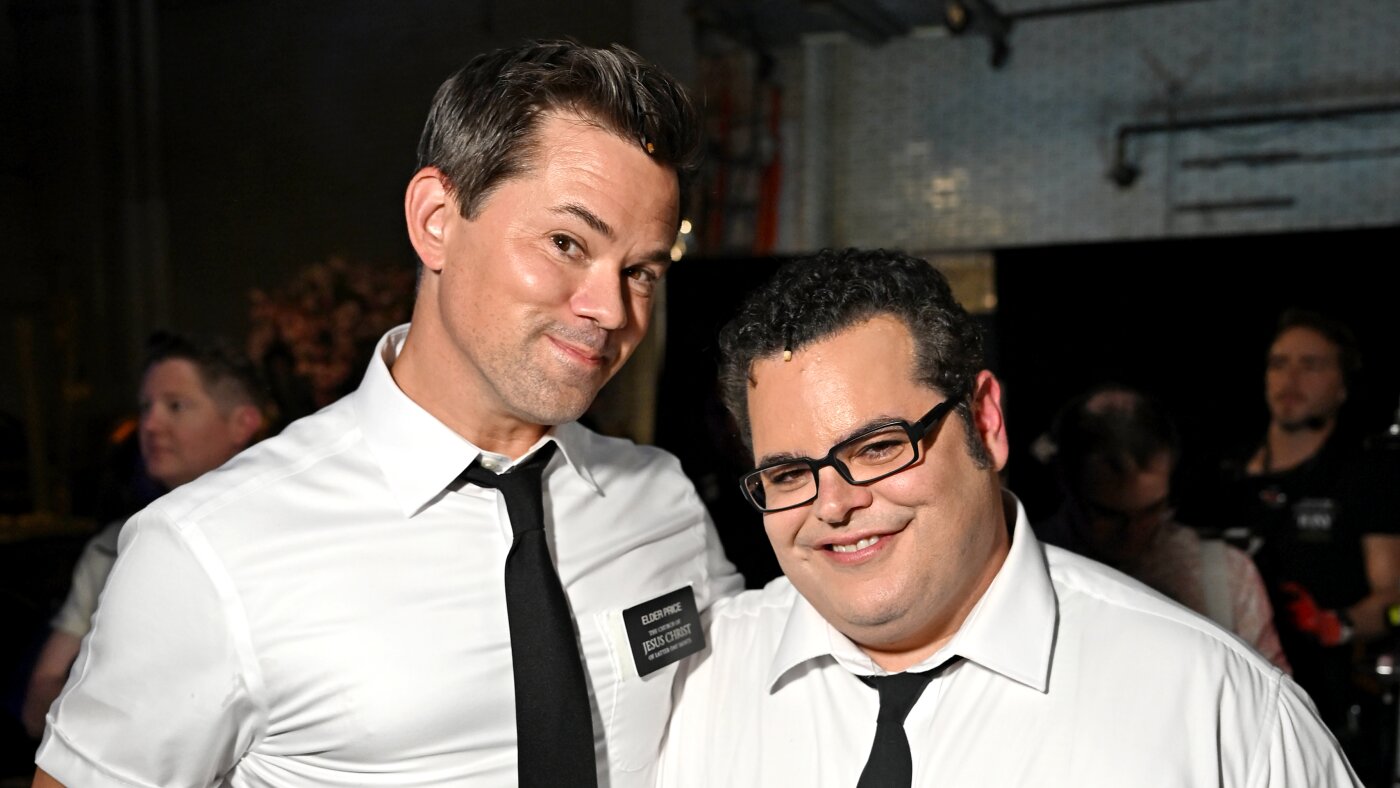
As ‘The Book of Mormon’ turns 15, its original stars pop in to say ‘Hello!’
-

 Technology1 hour ago
Instagram is finally letting everyone reorganize their profile grid
-

 World1 hour ago
Finland’s foreign minister says Ukraine ‘is now holding the cards’ as Russia signals talks
-

 Politics1 hour ago
Massachusetts lawmakers pass bill to scrap ‘offensive language’ from state’s General Laws
-

 Health1 hour ago
Why do some people get sepsis while others don’t? Scientists point to the gut
-

 Sports1 hour ago
Victor Wembanyama puts hand on Jalen Brunson’s head, pushes him down as refs look the other way in Game 3

