Nevada
Democracy Dies In Darkness: Nevada Democrats Refuse Ethics Reforms – Nevada Globe


By design, Nevada’s legislative body is exempt from open records requests, further shielding lawmakers from scrutiny or transparency. In 2015, legislators approved a bill cementing their immunity, which shields their calendars, emails and communications from public records requests.
As a result, numerous ethical scandals have plagued legislative Democrats, forcing three state legislators to vacate their reelection campaigns. Despite the “Culture of Corruption,” not one Democratic official or candidate will support reforms that would inspire transparency, trust, and accountability.
For background, as reported extensively by The Globe, are the 2023 lowlights:
Assemblywoman Michele Gorelow (AD-35) was the first Democratic lawmaker who decided not to run for re-election when it was revealed that $250,000 was funneled to Arc of Nevada, a nonprofit where Gorelow accepted a job as a director after she voted for the “Christmas tree bill.” In total, the bill directed $100 million to various Democrat-aligned nonprofits. Gorelow is only one of two employees for the organization. According to financial reports, the largest, single donation to this nonprofit is $50,000, so this $250,000 is five times more than any donation the organization has received since its founding.
Adding to the grift is Gorelow’s Democratic colleague Tracy Brown-May (AD-42) who serves on the board of Arc and voted to approve the appropriation without disclosing her association with the organization. To date, Brown-May is absent in that she has not commented or publicly acknowledged the scandal and deleted her X account. Brown-May is running for reelection.
Assemblyman C.H. Miller (AD-7) also announced he was dropping out of his re-election campaign after it was exposed by the Review-Journal that he failed to disclose that he was hired as the President and CEO of the Urban Chamber of Commerce before he voted to appropriate $100,000 on Chamber’s behalf.
Assemblywoman Bea Duran (AD-11), a Culinary Union activist, announced she was dropping her re-election bid in order “to spend more time with her family” after she came under pressure for voting on a “Christmas Tree” bill that allocated $25 million to the Culinary unknown for an unknown “capital improvement project.”
Senator Marilyn Dondero-Loop (SD-8) suddenly scrubbed any mention of her affiliation with the United Way of Southern Nevada from her legislative bio after the Review Journal exposed that she and the Chair of the Nevada Democratic Party, Assemblywoman Daniele Monroe-Moreno admitted that they “sat down and compared notes to determine which organizations would get money.” Monroe-Moreno further admitted admitted she was “instrumental” in the formation of the Christmas Tree bill and the distribution of funds. The United Way of Southern Nevada received $1.2 million for “public health, education, and improving economic mobility.”
Speaker Steve Yeager voted for a bill to benefit his law firm without disclosing his conflict of interest.
Assembly Majority Leader Sandra Jauregui works for a “progressive” public relations firm and doesn’t disclose her clients.
Senate Leader Nicole Cannizzaro sponsored a bill giving $25 million to her unregistered lobbyist husband’s union client without disclosing it.
Assemblywoman Shea Backus served on the board of an organization that defrauded the state of Nevada and didn’t disclose her role until she got caught.
David Colborne of the Nevada Independent did a little digging and found that Assemblywoman Venicia Considine (AD-18) voted in favor of bills that directed over $4,250,000 to the Legal Aid Center of Southern Nevada where she works as the director of Development and Community Relations.
The Review-Journal reported that Democratic Senator Dina Neal (SD-4) was under investigation after a College of Southern Nevada professor claimed she had pressured him to direct federal money toward businesses that didn’t meet grant requirements, including one owned by her friend. Later that month, the Review-Journal reported that North Las Vegas city officials met with law enforcement regarding concerns Neal had used campaign funds to pay a $20,000 lien on her home. Neal has since created a legal defense und and made her X account private.
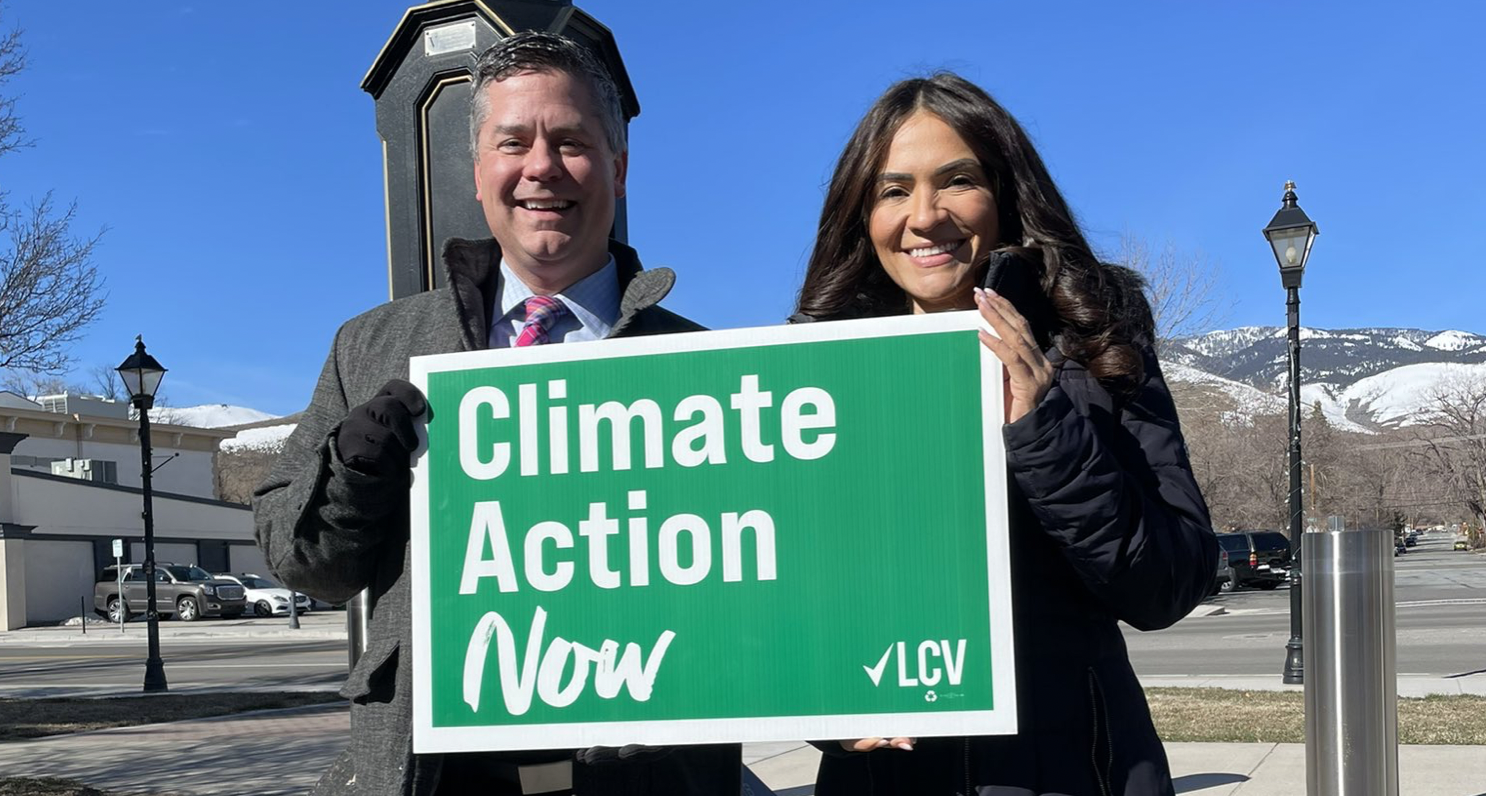
Due to these ethics scandals, the Las Vegas Review-Journal asked every incumbent and candidate this question:
“Should the Legislature be subject to the open meeting law and the Nevada Public Records Act? Why or why not?”
Not one Democrat incumbent said yes and most refused to respond, with the exception of Shea Backus who said “no.”
Those hoping for answers from Democratic candidates seeking to join the legislature will be equally disappointed. Ryan Hampton, Jennifer Atlas, Sharifa Wahab, and Joe Dalia all refused to answer the question.
“Nevadans are sick of corrupt politicians who profit off public life and put themselves before the people who elected them,” said Better Nevada PAC spokesman John Burke. “Democrats in our legislature won’t change and the candidates they’ve recruited will only continue to service their corrupt status quo. Remember their names. Vote them out.”




RENO, Nev. – A homicide suspect from Montana took their own life on Thursday night after police surrounded their car in northwest Reno, reports KTVN 2 News Nevada.
The incident happened in the area of Sharlands Avenue around 9 p.m., according to a spokesperson for the Reno Police Department.
Officers located the suspect and surrounded their car, blocking them in. They then heard a single gunshot and backed away.
Reinforcements were called, and a drone was brought in by UNRPD. It was then confirmed the suspect was in their car, dead from a self-inflicted gunshot wound, the news agency reports.
The suspect has not been identified pending the notification of next of kin, and no additional information has been released at this time.
In addition to the Reno Police Department, the Regional Narcotics Unit and Washoe County Sheriff’s Office also responded.
The investigation is ongoing.

MESQUITE (KTNV) — A deadly crash on Interstate 15 near Mesquite prompted a group of bystanders to spring into action before first responders could arrive, pulling a man from a burning motor home after a collision with a semi-truck.
Steven Grossman, a retired Army National Guard veteran, said he was driving northbound on I-15 after a Fourth of July camping trip with his family when he saw a motor home cross the center median from the southbound lanes.
“It was like a pile of dust, it was going across the center medium and down that big hill,” Grossman said.
WATCH | Nevada bystanders pull crash victim from burning motorhome on I-15 near Mesquite
Nevada bystanders pull crash victim from burning motorhome on I-15 near Mesquite
Nevada State Police Highway Patrol said the motor home had a blown tire. When it crossed the median, it crashed into a semi-truck and burst into flames.
Grossman said he immediately pulled over and ran toward the fire.
“I seen it on fire and, you know, we just, I just got out of the truck and just ran over there,” Grossman said.
NSP
Several other drivers also pulled over. Together, they worked to pull the motor home’s driver to safety.
“Let’s grab him and get him out of here. So we just grabbed him and just tugged him into the gutter right there, into the center medium,” Grossman said.
A propane tank exploded shortly after.
Grossman used his military medical training to keep the man still, while another bystander helped stabilize the victim’s neck until paramedics arrived.
NSP

The driver of the motor home, 62-year-old Gregory Louis Painter, later died at the hospital. Fire officials said 3 other people were taken to the hospital for injuries sustained in the crash.
Grossman said he does not consider himself a hero and that stopping to help was simply the right thing to do.
KTNV
“We were just the first ones there that if the next people that were the first ones there would have done the same thing,” Grossman said. “Same thing with behind them if it was 10 cars behind me, the cars behind them would have taken care of it. It’s just I think it’s just our human nature. People just want to help.”
This story was reported on-air by a journalist and has been converted to this platform with the assistance of AI. Our editorial team verifies all reporting on all platforms for fairness and accuracy.

Beach Boys co-founder selling Tahoe mansion for $43 million
The Lake Tahoe mansion of one of the original members of the Beach Boys was listed for $43 million.
You love to see it: local artists on local stages. Here are 12 shows featuring local artists between now and Labor Day, including rock, metal, punk, folk, jazz, hip-hop and more.
Bark Hardly
This indie-folk group from Reno headlines an all-local bill with Glitter Bats, Sad Giants and Anabelle and the Desert Scrubs. It starts at 7 p.m. at Holland Project, 140 Vesta St.
The show is July 10. Tickets are $12. Details: 775-742-1858 or hollandreno.org.
Thrashmob
It’s an all-local hip-hop night featuring this artist as headliner. They perform at 7 p.m. at Club Underground, 555 E. 4th St.
The show is July 11. Tickets are $20-$25. Details at clubundergroundreno.com.
Shared Scars
This Reno metal band celebrates the release of its new EP with a show that also features area metal bands Emberwake, Desolist, Titvn and Everglade. It all begins at 7 p.m. at The Alpine, 324 E. 4th St.
The show is July 11. Tickets are $20-$25. Details at thealpine-reno.com.
Cruz Control featuring Bree Rose
Rock, soul and hip-hop mix with this group from Reno. They play at 7 p.m. the first night and 8 p.m. subsequent nights at Terrace Lounge, Peppermill Resort Casino, 2707 S. Virginia St.
Free shows are July 16-18. Details at peppermillreno.com.
Next Question
The popular indie-punk group from Reno kicks off its tour at this show, which also features locals Blackstallion and Ring Pop Wedding. It begins at 7 p.m. at Holland Project, 140 Vesta St.
The show is July 17. Tickets are $10-$12. Details: 775-742-1858 or hollandreno.org.
Vampirates
The longtime local progressive-punk/noise band performs with Sacramento ska punks Lesdystics and local hardcore punk band The Scattering. It all begins at 7:30 p.m. at Lost Highway, 1526 S. Wells Ave.
The show is July 17 and there is a $10 suggested donation. Details at instagram.com/corrigans_losthighway.
Fireman’s Ball Reignited
A benefit for the Silver City Volunteer Fire Department, this show features some big northern Nevada and regional names including former Tahoe resident and country-rock singer/songwriter Matt Axton. Also on the bill are Darren Senn, Charity Kiss and Next Question, among others. It all starts at 1 p.m. at Silver City Park, 385 High St., Silver City.
This free show, with donations accepted, is July 18. Details at instagram.com/silvercityvfd_nv.
Everything Sucks Fest 2026
The annual punk-band event returns, this time with locals Hired Fun, Irreplaceable Beings, Flicker And Fade and Cold Amber Medicine. It begins at 4 p.m. at Shoe Tree Brewing Co., 1496 Old Hot Springs Road, Carson City.
This free show is July 25. Details at instagram.com/shoetreebrewing.
Reno Jazz Orchestra with Matt Mauser
For their Artown show, this local group will be joined by Mauser, an “America’s Got Talent” finalist who specializes in pop and jazz standards. The show starts at 7 p.m. at Robert Z. Hawkins Amphitheater, 6000 Bartley Ranch Road.
This show is July 29. Tickets are $35. Details at artown.org.
Reno Devilles
Rockabilly meets surf-rock with this local band. They play at 8 p.m. at Pele Utu, 1275 Stardust St.
This free show is Aug. 1. Details at instagram.com/peleutureno.
Jakota Wass
A country singer/songwriter from Gardnerville, Wass plays at 7 p.m. at the Outdoor Stage, Brewery Arts Center, 449 W. King St., Carson City.
The free show is Aug. 8. Details at breweryarts.org.
The Electric
A straight-ahead alternative rock band from Reno, the Electric headline an all-local bill that also features Sad Giants and The Jackeyes. They play at 7 p.m. at Holland Project, 140 Vesta St.
The show is Aug. 15. Tickets are $8-$10. Details: 775-742-1858 or hollandreno.org.
Cape Fear Quartet
This swing-jazz quartet from Reno performs at 8 p.m. at Pele Utu, 1275 Stardust St.
This free show is Aug. 15. Details at instagram.com/peleutureno.
Jelly Bread
Soul music meets alternative rock with this Reno group. They perform at 7 p.m. at the Outdoor Stage, Brewery Arts Center, 449 W. King St., Carson City.
The free show is Aug. 15. Details at breweryarts.org.
Band Wars Music Festival
An extension of the contest at Club Underground earlier this year, the participants now get to play at Bartley Ranch. Contest winners No One Good are joined by Split Persona, Interstate, Giant Skunk and Quitter, among others. It all begins at 2 p.m. at Robert Z. Hawkins Amphitheater, 6000 Bartley Ranch Road.
The show is Sept. 5. Tickets are $25-$35. Details at clubundergroundreno.com.
-
 Politics23 seconds ago
Trump ousts bipartisan commission in latest effort to reshape elections before midterm
-
 Science5 minutes ago
Nobel Prize winner leaving UC Berkeley for new role in China
-
 Sports12 minutes ago
Mikel Merino lifts Spain over Belgium, setting up World Cup showdown with France
-

 World20 minutes ago
Belgium to introduce new road tax in 2027, even for transiting drivers
-
 News45 minutes ago
Graham Platner makes it official in Maine, submitting paperwork to leave Senate race
-

 Los Angeles, Ca2 hours ago
Knee irritation forces Shohei Ohtani out of Friday start, All‑Star game
-

 Detroit, MI2 hours ago
Detroit Evening Report: Waymo cars blocking first responders – WDET 101.9 FM
-

 San Francisco, CA3 hours ago
San Francisco Mayor Daniel Lurie Blocks Vacant Grocery Store Tax Proposal | KQED

