West
Mountain West closes investigation into allegations against San Jose State trans player without discipline

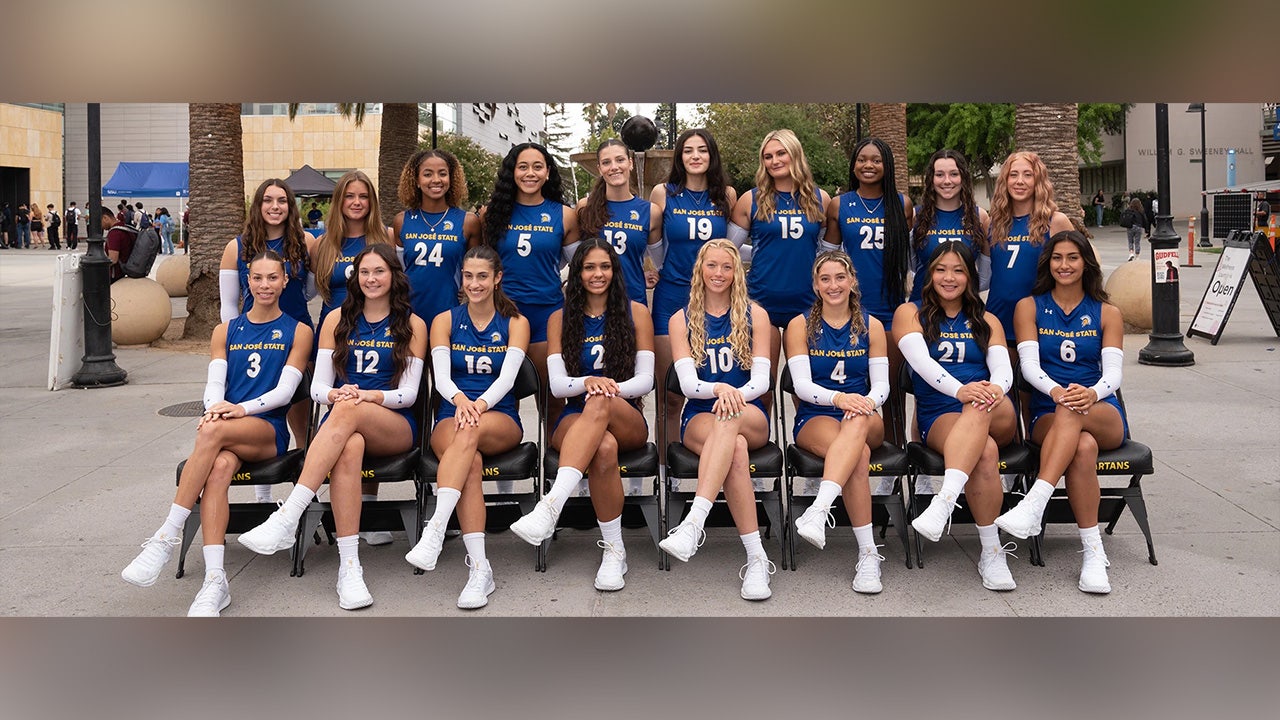
The Mountain West Conference has said it conducted an investigation into allegations of conspiracy by players on San Jose State and Colorado State’s volleyball teams and closed it without assigning any discipline.
In a letter addressed to San Jose State athletic director Jeff Konya and Colorado State athletic director John Weber, obtained by Fox News Digital, Mountain West Commissioner Gloria Nevarez says the conference did not find sufficient evidence to confirm the claims in a recent Title IX complaint. The complaint alleged San Jose State transgender player Blaire Fleming conspired with a player on Colorado State to influence the outcome of the game, and have Fleming’s teammate Brooke Slusser hit in the face with a ball during that game.
The letter did not address allegations in a recent lawsuit that provided further contest on this incident, nor did it address the notion that there was a conspiracy to have Slusser hit in the face. The letter simply refers to all the allegations listed in the complaint as “manipulation of the competition.”
Colorado State University police behind the San Jose State University Spartans bench monitor Moby Arena during an NCAA Mountain West women’s volleyball game between the Spartans and the Colorado State Rams in Fort Collins, Colo., on Thursday, Oct. 03, 2024. (Santiago Mejia/San Francisco Chronicle via Getty Images)
The complaint included allegations that volleyball student-athletes from Colorado State University (CSU) and San José State University (SJSU) conspired to engage in manipulation of the competition during the SJSU vs. CSU volleyball match played October 2, 2024, in Fort Collins, Colorado. Upon receipt of this information, the Mountain West Conference office, in coordination with both member institutions, immediately initiated a thorough investigation into these serious assertions,” the letter read.
Nevarez says the conference’s investigation included interviews with head coaches and student-athletes initiated by both institutions. However, the letter does not specifically state which individuals had been interviewed. Fox News Digital has reached out to the conference for clarity on that list of individuals, but has not received a response.
The conference also claims its investigation included review of the match video by both head coaches, review of the match video and statistical analysis by multiple third-party volleyball subject matter experts engaged by the conference and multiple interviews conducted by a third-party investigator engaged by the Conference in consultation with the Mountain West’s legal counsel.
The conference claims any evidence to back the claims was insufficient. However, the letter does not explicitly state that the allegations are false.
“Upon review and evaluation of the extensive information gathered during the investigation, there is insufficient evidence to corroborate the allegations of misconduct related to the SJSU vs. CSU volleyball competition played October 2, 2024. As a result, the Conference office has determined no disciplinary action is warranted and considers this matter closed,” it read.
The initial Tile IX complaint was filed by suspended San Jose State assistant head coach Melissa Batie-Smoose on October 29. Batie-Smoose was suspended shortly after the complaint was filed, to the dismay of Slusser and many other players on the team.
INSIDE SAN JOSE STATE’S POLICE BATTLE TO PROTECT WOMEN’S ATHLETES THREATENED BY A TRANSGENDER CULTURE WAR
Brooke Slusser is a junior at San Jose State university who plays volleyball and has joined a lawsuit against the NCAA. (courtesy of San Jose State athletics)
Then, Batie-Smoose, Slusser and other current and former players on the team and across the Mountain West filed a lawsuit against the conference and San Jose State that provided further context on the allegations.
San Jose State volleyball player Chandler Manusky is quoted in the lawsuit recounting an incident in early October, when she and other teammates, including the trans athlete, violated team rules by sneaking out of the team hotel the night before a match against Colorado State. Manusky claimed to have then learned about an alleged plan by player Blaire Fleming to ensure San Jose State would lose the match and set up Colorado State player Malaya Jones to spike Slusser in the face during a match on Oct. 3.
“Manusky said that at Jones’ residence Fleming had shared with Jones the scouting for the CSU-FC game and they had discussed Fleming ‘throw[ing] the game’ and how they would set up Jones to ‘blow up’ Slusser and ‘blast’ her in the face during the game,” the court documents read.
“Manusky also said that Fleming stated, ‘I’m going to leave center court open,’ which would allow Malaya Jones to have a wide-open shot to try to ‘blow up Slusser,’ i.e., to try to hit Brooke Slusser in the face with the ball.”
The documents allege Manusky confronted head coach Todd Kress and currently-suspended assistant coach Melissa Batie-Smoose about the incident. Manusky claims she was crying as she begged them not to tell Fleming that she had come forward with the story. Kress is alleged to have told Batie-Smoose that he believed the story was not true.
“Kress told Batie-Smoose he did not believe Manusky and thought she had made up the entire story so she would not get in trouble for leaving the team hotel,” the documents read.
Slusser previously told Fox News Digital in an exclusive interview that she was made aware of Fleming’s alleged plan and believes she has been treated unfairly by the university, arguing the university has not done enough to investigate the matter.
Colorado State University police behind the San Jose State University Spartans bench monitor Moby Arena during an NCAA Mountain West women’s volleyball game between the Spartans and the Colorado State Rams in Fort Collins, Colo., on Thursday, Oct. 03, 2024. (Santiago Mejia/San Francisco Chronicle via Getty Images)
“If this was me, and I was the one threatening to do this to my teammate who’s caused so much commotion, there would have been action taken immediately,” Slusser said. “I was definitely very angry, and I was glad at first to know that it was already made aware to the coaching staff and compliance and everyone, but I don’t know if that made me feel any differently, I was just angry because I didn’t think someone would go to these lengths.”
“Threatening to want to hurt one of your own teammates, I just feel like there’s so many things in that whole conversation that would make a school want to get it dealt with.”
In the first game since the lawsuit was filed, San Jose State beat Colorado State in the rematch of the game on Saturday. Fleming had the game-winning serve and was swarmed by the other Spartan players in celebration, including Slusser and Manusky.
Follow Fox News Digital’s sports coverage on X and subscribe to the Fox News Sports Huddle newsletter.
Read the full article from Here


ARIZONA — The Arizona Cardinals will be one of the first teams to hit training camp this summer.
Arizona’s July 22 report date is among the earliest in the league thanks to their participation in the NFL’s Hall of Fame Game to begin preseason festivities.
Eyes and ears are curious to see what Mike LaFleur’s first training camp in the desert looks and sounds like. With four preseason games and numerous camp practices, Arizona will begin the process of trimming their roster down to 53 players ahead of the regular season.
These four Cardinals could find themselves on the chopping block:
RB Trey Benson
Benson’s had arguably the worst offseason of any returning veteran in Arizona, as numerous faces have arrived to his position room to ultimately push him down the depth chart.
Benson’s play in the prior two seasons leading up to the 2026 offseason was shaky at best. Injuries and erratic play in the backfield offset any flashes of potential the Florida State product has had.
Many thought Benson may have been the potential lead back this season, though after James Conner restructured his deal, Tyler Allgeier signed in free agency and Jeremiyah Love was drafted with the third overall pick — Benson’s playing time has been massively dwindled.
If the Cardinals keep four running backs, Benson is in line to compete with Bam Knight for the final spot.
CB Kei’Trel Clark
I’ve often included Max Melton’s name in similar lists, and while there’s no doubting the pressure facing Arizona’s former second-round pick, Melton’s spot on the roster feels safe.
Kei’Trel Clark, on the other hand, is a different discussion.
Clark started seven games his rookie season but has combined for just two starts in the last two years after. The Cardinals have continuously poured resources into the cornerback room, and Clark’s hung around.
Injuries to Starling Thomas and Sean Murphy-Bunting helped solidify Clark’s roster spot last season, yet with both working their way back to full health (on top of Garrett Williams potentially being ready for Week 1), the Cardinals will have a crowded depth chart.
Clark will need to have a big training camp and leapfrog somebody ahead of him to retain his roster spot.
QB Kedon Slovis
This is more circumstantial than regarding talent.
Slovis moves into training camp as the heavy favorite to get the axe with Jacoby Brissett, Gardner Minshew and Carson Beck over him on the projected depth chart.
Brissett has (reportedly) been told by Arizona he’s the starter. Minshew has more guaranteed money than Brissett on his contract and Beck is a third-round pick.
None of the three quarterbacks are going to be cut, leaving Slovis with two options: Turn into the greatest quarterback we’ve seen or be an unfortunate cut candidate.
Slovis probably won’t make his way back to the desert on the practice squad, either — especially if Arizona indeed keeps three active quarterbacks on the roster.
Was Slovis ever going to start for the Cardinals? No. However, he’s on the chopping block merely because of the new faces added this offseason.
Charge it to the game.
 Add us as a preferred source on Google
Follow

© PeopleImages / Shutterstock.com
California’s median household income landed at $100,600 in 2024, according to Census data compiled by the St. Louis Fed. That is the number a portfolio has to replace to hand a Golden State family the same paycheck without anyone clocking in. The wrinkle: California’s 2024 regional price parity was 110.7, meaning prices were about 10.7% above the national average. Replacing that income with dividends carries a built-in purchasing-power headwind.
The core equation: income target divided by yield equals the capital required before taxes. What changes across yield tiers is the risk, growth trajectory, tax treatment, and whether the check keeps up with California living costs over the next decade.
The Sleep-At-Night Tier: 3.5% to 4%
At a 3.5% blended yield, replacing $100,600 requires roughly $2,874,000 in invested capital. This is the dividend growth lane. PepsiCo (NASDAQ:PEP | PEP Price Prediction) yields about 4% and just raised its payout for the 54th consecutive year, with a $1.48 quarterly dividend up from $1.4225. Johnson & Johnson (NYSE:JNJ) yields a leaner 2% but just delivered its 64th consecutive annual raise to $1.34 quarterly.
The tradeoff is capital-heavy but growth-rich. PepsiCo’s annual dividend climbed from $4.02 in 2020 to $5.62 in 2025, roughly a 40% raise in five years. That is how this tier beats the California cost-of-living treadmill.
The Middle Path: 5% to 6.5%
At a 5% blend, the required capital drops to roughly $2,012,000. Push to 6.5% and the number falls to about $1,548,000. This tier is where net-lease REITs, gaming REITs, and pipeline partnerships live.
Realty Income (NYSE:O) yields about 5%, pays monthly, and just declared its 114th consecutive quarterly increase at an annualized $3.246 per share. Portfolio occupancy sits at 99%. VICI Properties (NYSE:VICI) yields almost 7% off a $1.783 payout backed by triple-net leases on Caesars Palace and MGM properties with 100% occupancy. Enterprise Products Partners (NYSE:EPD) yields near 6% on a $2.20 annualized distribution, though its K-1 tax form adds filing complexity in a high-tax state.
The tradeoff: growth slows. VICI’s quarterly dividend rose from $0.4325 to $0.45 over the past year, a mid-single-digit bump. Realty Income’s payout grew about 3% to 3.7% per its 2026 AFFO guide. That still edges past inflation, barely.
The High-Yield Tier: 8% and Above
At 8.3%, the required capital collapses to roughly $1,212,000. Main Street Capital (NYSE:MAIN) is the archetype. Its regular monthly payout of $0.26 annualizes to $3.12, and four $0.30 supplementals per year add another $1.20, for a total of roughly $4.32 per share. Against a $52 stock price, that is a total yield near 8.3%.
The catch: BDC supplementals are tied to net investment income and portfolio performance, not contractual. Non-accruals sat at about 1% of the portfolio at fair value at quarter-end, which is healthy, but the extras can shrink in a credit downturn. The 10-year Treasury yields about 4.5% for comparison, so an 8% equity yield is nearly double the risk-free rate for a reason.
Why the Cheapest Portfolio Is Often the Worst Deal
A 3.5% yield growing 8% per year doubles the income stream in nine years. A flat 8% yield stays exactly where it started. Nine years from now, that $100,600 California household budget needs to be closer to $130,000 just to hold ground against typical inflation. The high-yield portfolio funds today’s paycheck. The growth portfolio funds today’s paycheck and next decade’s.
California’s top marginal state rate reaches 13.3%, and MLP K-1s, REIT ordinary-income distributions, and BDC dividends are almost all taxed as ordinary income. Qualified dividends from PepsiCo or Johnson & Johnson get preferential federal treatment. That gap matters in Sacramento’s tax bracket.
Before Chasing Yield, Run These Three Numbers
- Calculate spending, not salary. California households often need to replace only 70% to 80% of their working income once payroll taxes, retirement contributions, commuting costs, and other job-related expenses disappear. Replacing $75,000 of actual spending requires far less capital than replacing a $100,600 paycheck.
- Compare total return, not just today’s yield. Run a simple ten-year spreadsheet comparing a 3.5% dividend-growth portfolio with an 8% high-yield portfolio, assuming dividends are reinvested. The higher-yield option often wins early, but the growth portfolio frequently catches and passes it over time.
- Model after-tax income. California’s 9.3% and 13.3% state tax brackets can change the ranking. Qualified dividends, REIT distributions, BDC dividends, and MLP distributions all receive different tax treatment, so the portfolio with the highest stated yield may not produce the most spendable income.
Replacing California’s median household income with dividends is possible, but the cheapest portfolio is not always the one that leaves you in the strongest position ten or twenty years from now. The right choice depends on whether your priority is maximizing today’s income, protecting tomorrow’s purchasing power, or striking a balance between the two. For most investors, the real goal is not simply matching a paycheck. It is creating one that never requires punching a clock again.
Contact [email protected] for any questions or corrections.
Colorado
WATCH LIVE: Memorial service to honor firefighters killed on Colorado-Utah border – East Idaho News

GRAND JUNCTION, Colo. (AP) — Three firefighters who were killed battling flames on the Colorado-Utah border are being remembered as brave heroes who were trailblazers in their industries.
Wildfires have spread across the West fueled by months of dry weather and a record lack of snow, forcing residents from their homes as crews work to tamp down the flames.
Emily Barker, Nick Hutcherson and Sydney Watson were killed Saturday, June 27, and two others sustained burn injuries when they were overcome by flames from fast-moving fires in Mesa County. They deployed emergency protective shelters, which are considered a “last resort” for firefighters when there is no other way out.
RELATED | 3 firefighters killed in blazes along Colorado-Utah border are identified
They were assigned to a Helitack crew that can be dropped into remote areas by helicopters and whose mission is to prevent new fires from growing into out-of-control blazes.
Their deaths came almost 13 years to the day since an elite crew of 19 wildland firefighters died when they were trapped in a steep canyon in Yarnell, Arizona.
A memorial service will be held for the three firefighters at 11 a.m. Sunday at Las Colonias Park Amphitheater in Grand Junction, Colorado.
Emily Barker
Barker, 38, had so much spirit, and the people around her always strived to be a better person by her presence, said Sarah Brubeck Schnurbusch, a friend and former roommate.
Barker was from Clinton, Michigan, and liked hiking, skiing, dirt biking and playing hockey. She loved firefighting.
“I’ve never seen someone so excited to go to work,” Brubeck Schnurbusch said. She added that her friend was an expert who helped pave the way for many women in the industry.
She said she is hopeful that Barker’s death opens people’s eyes to the hard work firefighters are putting in day in and day out.
“I just hope that Emily knows the impact that she left on everybody else, and how many people really truly love her,” she said.
RELATED | Firefighter killed battling wildfire previously worked in eastern Idaho and was featured in EastIdahoNews.com story
Nick Hutcherson
Hutcherson, 27, served in the U.S. Navy and had plans to become a physical therapy doctor, according to the Kaibab National Forest in northern Arizona where he was assigned. He was also an active member of the Northern Arizona Deaf and American Sign Language community and was a dedicated Muay Thai practitioner who trained at Southside Combat Academy in Flagstaff.
Hutcherson was from Glendale, Arizona.
The Kaibab National Forest said it is heartbroken over his death. Hutcherson exemplified the agency’s commitment to serving the public and the courage wildland firefighters bring to the job, it said.
The combat academy described Hutcherson as a warrior and said it is forever grateful to have known him and to have fought alongside him.
“We lost a good one,” read a social media post. “If you met Nick, you loved Nick. He was such a gentle and genuine soul. We are still in disbelief.”
Sydney Watson
Watson, 27, was from Warrior, Alabama, and graduated from the University of Tennessee Southern, according to the university.
A former pitcher on the softball team and “a quiet, composed leader,” Watson was assigned to the U.S. Wildland Fire Service Rifle Helitack crew, the university said in a statement.
In 2023, Watson participated in a program in North Carolina organized by the Women-in-Fire Prescribed Fire Training Exchanges, the collaborative group wrote in a statement.
In her application for the program, she said she wanted to see more women on the fire line and to work with and learn from other women in the fire industry, the statement said.
“It’s hard for people outside of the firefighting world to understand why we do what we do. We do it because we love it. Sydney loved it,” the group wrote.
=htmlentities(get_the_title())?>%0D%0A%0D%0A=get_permalink()?>%0D%0A%0D%0A=htmlentities(‘For more stories like this one, be sure to visit https://www.eastidahonews.com/ for all of the latest news, community events and more.’)?>&subject=Check%20out%20this%20story%20from%20EastIdahoNews” class=”fa-stack jDialog”>
-

 Arizona5 minutes ago
3 Arizona Cardinals Now on the Chopping Block Entering Training Camp
-

 Arkansas12 minutes ago
A WORD | July 5: Arkansas’ own little game likes to play with your brain | Arkansas Democrat Gazette
-

 California15 minutes ago
A Dividend Portfolio That Out-Earns the Average California Family
-

 Colorado20 minutes ago
WATCH LIVE: Memorial service to honor firefighters killed on Colorado-Utah border – East Idaho News
-

 Connecticut27 minutes ago
Torrington declares local state of emergency after storms leave thousands without power
-

 Delaware30 minutes ago
Jersey Mike’s is nation’s top food chain, but score a local sandwich
-

 Florida35 minutes ago
This Week in South Florida: Maria Elvira Salazar
-

 Georgia42 minutes ago
Georgia Agriculture Commissioner Tyler Harper calls on public to report yellow-legged hornet secondary nests

