Montana
Q&A: Jon Tester, Democratic Candidate for U.S. Senate

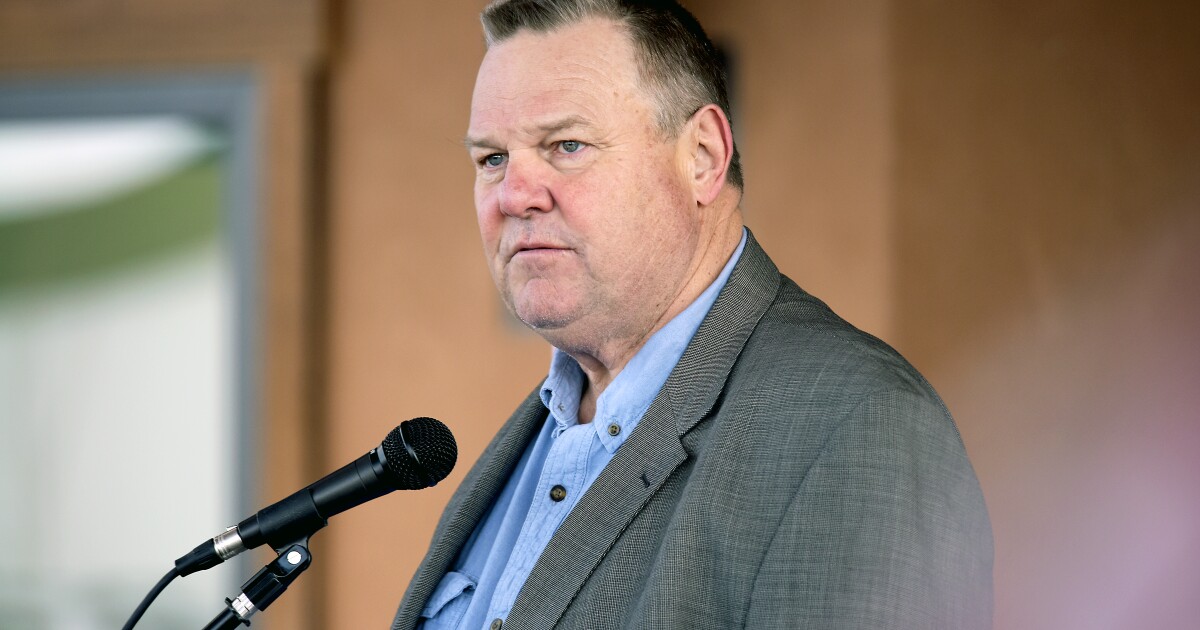
We are gathering information from all statewide candidates as a resource for the 2024 Primary Elections. Responses were limited to 200 words per question. Political attacks may have been removed, but otherwise, the responses are published unedited.
What is your full name as it will appear on ballots?
Jon Tester
What is your age?
67
Where do you live?
Big Sandy, MT
What is your education background?
College of Great Falls, Bachelor of Science in Music
Please list your current and previous occupations.
U.S. Senator, dirt farmer, music teacher for Big Sandy public schools
What motivated you to seek a seat in the U.S Senate?
Simply put, the Montana we know and love is changing. Everything from housing to groceries is more expensive as out-of-state multimillionaires move here and buy up our land, using Montana as their personal playground.
It’s putting a strain on everything – on prices, on our local infrastructure, on our towns and our parks and our public lands. With so much changing, we’ve got to have somebody in the Senate who’s willing to fight for our Montana way of life.
I still farm the land just outside of Big Sandy that my grandparents homesteaded more than 100 years ago. I feel those changes that are going on in Montana right now, every day.
Montana needs somebody back in Washington, DC who understands rural America. Someone who fights for our freedoms and goes to bat for our veterans, our family farms and ranches, our working families, our health care workers and our teachers. I’m running to keep up the fight for those folks, and to make sure our kids and grandkids can grow up in the same Montana we know and love. Montana is the greatest state in the greatest country in the world and it’s damn sure not for sale.
What, if anything, should the Senate do to address the federal deficit?
The deficit is out of control and both parties are to blame. In Montana, we know how to balance a budget and live within our means. That is why I authored a balanced budget proposal. It would protect Social Security and Medicare benefits that our seniors have earned while still forcing the federal government to stop racking up the debt and passing it along to our kids and grandkids. We also need to hold massive corporations accountable and make them pay their fair share.
Yes or no, do you support a federal ban on abortion?
NO.
Montanans of all stripes don’t want the federal government telling them what to do, and they don’t want politicians or judges stripping away their personal freedoms. Just last year, politicians in Montana ignored the voices of the voters and passed abortion bans. I opposed these bans and will always fight to protect Montana women’s freedom to make their own health care decisions.
What, if anything, should the Senate do to address climate change?
There is no question about it, climate change is impacting our economy and our way of life. Sharla and I see these impacts firsthand on our farm, where significant droughts have led to some of the toughest harvests in recent years. Wildfire seasons burn longer and more intensely, and taxpayers are stuck with the bill, paying untold billions of dollars to rebuild after extreme weather events.
We should be developing clean energy technologies to tackle climate change, create good-paying American jobs, and secure our energy independence, and Montana has the opportunity to lead the way. China is actively working to beat America in the clean energy sector in hope of taking over as the world’s strongest economy. We can’t afford to lose this competition. That’s why we should invest directly in Montana companies researching next-generation energy technologies that are affordable and lower costs for consumers. And my Bipartisan Infrastructure Bill secured investments to update our energy grids to prevent and protect against wildfire. Traditional energy sources like oil and gas remain a critical part of how we power our country, so we need to continue to invest in development of technologies like carbon capture and storage to reduce carbon emissions.
What changes, if any, should be made to the way elections and campaigns are funded?
Elected leaders should work for the people, not those who can cut the biggest check. It’s way past time to kick dark money out of politics. We should have done it yesterday.
The Supreme Court’s Citizens United v. FEC decision was disastrous. It flooded our elections with mind-boggling amounts of money and made a mess of our democracy. Since then, I’ve fought to overturn that decision with my “Corporations Are Not People” constitutional amendment, and I urge my colleagues in the Senate to join me in making sure hardworking Montanans, not massive corporations and out-of-state billionaires, get to pick their elected officials.
I will also continue fighting for better transparency in campaign finance, like my Sunlight for Unaccountable Non-profits (SUN) Act, which would take huge strides towards eliminating dark money by requiring the IRS to publicly disclose donors who give over $5,000 to certain tax-exempt groups engaging in political activity.
Hardworking Montanans should be the ones deciding their elections, not out-of-state special interest groups. I will always defend the voices of Montanans and put them first.
What, if anything, should the Senate do to improve the nation’s immigration laws and security at the southern border?
What’s happening on the southern border is unacceptable, and dedicating more manpower and resources is crucial to keeping Montanans safe.
That’s why I’ve called on President Biden to step up and do everything in his power to secure the border, and it’s why I supported a strong bipartisan deal to get our border under control earlier this year. This bipartisan bill would have hired more border patrol agents, cracked down on the fentanyl crisis, and tightened asylum standards – that’s why it received the strong endorsement of the National Border Patrol Council. Unfortunately, many of my colleagues decided to play politics and voted to keep the border open for another year so they could campaign on the issue.
I have been talking with Montanans, sheriffs, and mayors across the state, they all are feeling the consequences of the situation at the southern border, from stretched law enforcement budgets to fentanyl in the communities. I was proud that my bipartisan FEND Off Fentanyl Act passed to place sanctions on countries engaged in international trafficking of illegal fentanyl and give law enforcement the resources they need to battle the fentanyl crisis.
What, if anything, should the Senate do to ensure Social Security and Medicare benefits meet the needs of older adults?
I will never cut Social Security and Medicare. Full stop. For many older Montanans, Social Security is their only source of retirement income, and Medicare is their only way to access affordable life-saving health care. These are essential benefits that Montanans have spent their entire lives paying into, and I will always fight to ensure these benefits are protected – not just for today’s seniors but for all of Montana’s future generations.
There are some politicians who want to end Social Security or cut those benefits. I oppose any plan to do so. I will also stand tough against any plan to privatize Medicare, because our seniors have paid into that their whole lives and should be able to rely on it. I was also proud to pass legislation that allowed Medicare to negotiate prescription drug prices – including capping the price of insulin for seniors at $35/month – and I will fight to ensure that Montana’s nursing homes stay open and fully-staffed. Montana’s seniors can count on me to defend their hard-earned health care benefits.
What should be the top priority when managing public land?
As a lifelong Montanan, I know our public lands are foundational to our way of life and to our state’s economy. You don’t need to be a millionaire to hunt, fish, or hike in these treasured landscapes, because they belong to all of us. Our public lands play a key role for ranchers looking to graze their cattle, or local sawmills in need of timber to harvest. That is why I oppose the call from some politicians who have said they want to transfer our public lands, which would make it easier to sell our wide open spaces off to the highest bidder.
Montana has a long history of local collaboratives working together to improve management of our public lands. I worked with Montanans to protect special places like the Rocky Mountain Front, Glacier National Park, and the Gateway to Yellowstone National Park. I am also incredibly proud to have secured full funding for the Land and Water Conservation Fund, and it’s because of that work that conservation and recreation priorities for Montana’s public lands will be funded for generations to come. And I will continue to fight for bills like the Blackfoot Clearwater Stewardship Act to protect thousands of acres of public lands for future generations.
What, if anything, would you do if elected to build trust in the Senate?
When I first ran for U.S. Senate, I made a promise to Montanans that I would go above and beyond on ethics and transparency and work for them – not special interest groups.
Every day since, I’ve worked tirelessly to uphold that promise. The first thing I did was post my Senate schedule online for all Montanans to see. I was the first Senator to do this and still do it to this day – unfortunately, I’m one of the only U.S. senators who does. So I’ve introduced a bill to make that mandatory for all of my colleagues, because the American people deserve to know who their elected officials are meeting with.
I’m also fighting to crack down on lobbyist influence. I’m working to shut the revolving door by banning members of Congress from becoming lobbyists – ever. And I routinely invite retired Montana judges to conduct a voluntary ethics audits of my office, to ensure my office and I meet the high standards we set for ourselves. I think all of my colleagues should join me.
Like most Montanans, I believe a handshake means something and our word is our bond. That’s how trust in the Senate should be built – by earning it.


Where Khloe Kardashian Stands With Ex French Montana More Than 10 Years After Breakup
French Montana is done keeping up with reality TV.
In fact, he only agreed to appear on Keeping Up With The Kardashians and Kourtney & Khloé Take the Hamptons over a decade ago as a favor to then-girlfriend Khloe Kardashian.
“She said to get on the show,” he exclusively told E! News at the BET Awards on June 28. “And I got on the show. Shout out to Khloe.”
The “Ever Since U Left Me” rapper, who split with Kardashian in December 2014 after eight months of dating, said the experience was “fun” because her family kept it real.
“They filmed their real life,” he continued. “And we were part of something together that one time. So it felt great. It didn’t feel like work because they film what they do everyday.”
As for his future in reality TV, the 41-year-old said those days are over, shutting down any prospective offers with a simple, “Negative.”
Although the “Unforgettable” artist—whose real name is Karim Kharbouch—may not be returning to television anytime soon, he has no problem hanging out with his ex-girlfriend these days.

French Montana, Rick Ross & Max B Turn the BET Awards Into “
06/28/2026
More

GREAT FALLS — For Staff Sgt. Brianna St. Lawrence-Brody, service does not only happen in uniform.
Outside the gates of the base, she works at Benefis as a nurse, Great Falls Public Schools as a school nurse, and comes home as a wife and mom of four. For the Montana Air National Guard, she serves as a command post controller with the 120th Airlift Wing in Great Falls.
(WATCH: Montana nurse and Guard member earns national Air Force recognition)
Montana nurse and Guard member earns national Air Force recognition
This year, St. Lawrence-Brody was named the U.S. Air National Guard’s Outstanding Airman of the Year in the Non-Commissioned Officer category.
She said the recognition came as a surprise, especially because her path into the Guard started later than others.
“I joined very late in life,” St. Lawrence-Brody said. “I joined the Guard right before I turned 40. So for me, every opportunity that’s presented, I want to take the bull by the horns and just run with it and do the best of my ability.”
During the COVID-19 pandemic, she joined the Guard after finishing nursing school. She said she went straight from nursing school into helping open a COVID unit, while also working at Benefis.
She said that experience was the start of one journey, but not the whole of what she wanted to accomplish.
St. Lawrence-Brody joined the Guard for the opportunities, the challenge and to help build a future for her four children.
“It’s a little bit of a competition for myself,” she said. “Like, if I can do it, why not try my best to achieve it?”
120th Airlift Wing Public Affairs
As a command post controller, she assists in helping move information during emergencies and major events.
“Outside, obviously, I’m a nurse. Inside the Guard, I have nothing to do with the medical field, which is kind of amazing,” St. Lawrence-Brody said. “It keeps me on my toes.”
She explained balancing the Guard, two civilian jobs and four children takes support from her family, her employers and her unit. She said Benefis and GFPS have been supportive of her military service.
Her nomination included her deployment experience, training work overseas and involvement across the wing. St. Lawrence-Brody said she deployed to Ramstein Air Base in Germany, where she worked with an operations center supporting entities connected to Africa.
But, she says this recognition is not the finish line.
“This award, it’s not necessarily a landing pad for me,” St. Lawrence-Brody said. “I want to use it as a springboard.”
120th Airlift Wing Public Affairs

St. Lawrence-Brody hopes her story encourages others to keep taking on new opportunities, even when they feel uncertain.
“Get comfortable with being uncomfortable and be okay with doing things afraid,” she said. “I think when you get to be okay with doing things afraid, that’s where you’re going to find the growth.”
She has already won at the Air National Guard level, but she recently traveled to Washington, D.C., as part of the broader Air Force Outstanding Airman of the Year process, which includes nominees from the Guard, Reserve and major commands across the Air Force.
-

 New York35 minutes ago
Read the Indictment of Malik Beasley
-

 Los Angeles, Ca40 minutes ago
Stolen Sea Scouts boat found in Marina del Rey, suspect arrested
-

 Detroit, MI1 hour ago
Michigan House passes bill to restrict big investors from amassing single-family homes
-

 San Francisco, CA1 hour ago
San Francisco rolls out heightened security measures ahead of World Cup knockout match, 4th of July
-

 Dallas, TX1 hour ago
Klyde Warren Park reveals expansion plans, construction timeline
-

 Miami, FL1 hour ago
Person hospitalized after fire breaks out at North Miami Beach apartment building
-

 Boston, MA1 hour ago
Scottish soccer fan who died in Boston was ‘Tartan Army to his core,’ fundraising page says – The Boston Globe
-

 Denver, CO2 hours ago
Nuggets decline Jalen Pickett’s team option for 2026-27 season, sources say

