Montana
Montana Morning Headlines: Thursday, May 15, 2025


MISSOULA — Here’s a look at Western Montana’s top news stories for Thursday.
A South African family labeled as refugees by the U.S. Department of State arrived in Missoula on Monday, aided by the International Rescue Committee and Soft Landing Missoula. The family’s arrival follows an expedited immigration process stemming from an executive order that claims Afrikaners face violence and property seizures in South Africa. (Read the full story)
Therma Wood Technologies in Polson offers an eco-friendly heat and pressure process to treat wood, eliminating harmful chemicals while enhancing durability. This method provides treated wood with a lifespan of about 20 years, significantly exceeding the typical seven to eight years of chemically-treated wood. (Read the full story)
Polson wood treatment company provides eco-friendly option
Flathead High School students showcased their heavy equipment skills on Wednesday through a hands-on program in partnership with the Montana Contractors Association. The Build Montana Initiative allows students to gain practical experience operating machinery, preparing them for future careers in construction while reinforcing the importance of a skilled workforce in Kalispell. (Read the full story)
Kalispell students showcase heavy machinery skills



BILLINGS— Sponsorship of businesses on Montana highway exit signs have doubled in cost, pricing out some small business owners.
Montana Logos, which manages the signs, renegotiated its contract within the last year with the Montana Department of Transportation (MDT), which resulted in prices doubling for most customers. They refer to the signs as tourist-oriented directional signs (TODS).
Watch the report:
Highway ad sign costs double, pricing out Montana business owners
Transportation officials say they increased the costs to match rising costs. According to Bob Heiser, MDT Right of Way bureau chief, the department and Montana Logos have not increased costs for years.
“The contract was up for renewal this past year. And during that renewal process, we asked them to look at this program. And that’s when we discovered that there hadn’t been any rate changes in at least 21 years,” Heiser told MTN.
Heiser said the increased revenue will fund highway projects and other infrastructure.
“We feel it’s still an affordable way for some of those businesses to have some advertisement along our interstates,” he added.
Some business owners in Big Horn County disagree.
“I just don’t understand how a company can gouge small businesses. That wasn’t in my budget,” said Kristy Mastin, owner of the KOA campground in Hardin.
Vanessa Willardson/Q2
She received an invoice for $4,800 in February to keep her business on the exit signs. She paid $2,400 last year for the same service.
“I was dumbfounded,” said Mastin.
Other campground owners in the county shared Mastin’s shock.
Vanessa Willardson/Q2

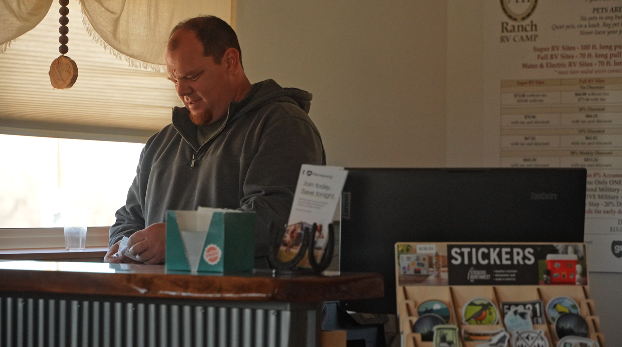
“We can’t afford that as a small business to suddenly have one aspect of our advertising raised that much,” said Jamie Redger, owner of 7th Ranch RV Camp in Garryowen.
His costs quadrupled in a year, increasing from $1,200 to $4,800, after Montana Logos told him he had to pay to be on the signs for a full year. In the past, he had only paid for half the year.
“At this point, I’ve told Montana Logos that I don’t plan to renew with them,” said Redger.
Vanessa Willardson/Q2
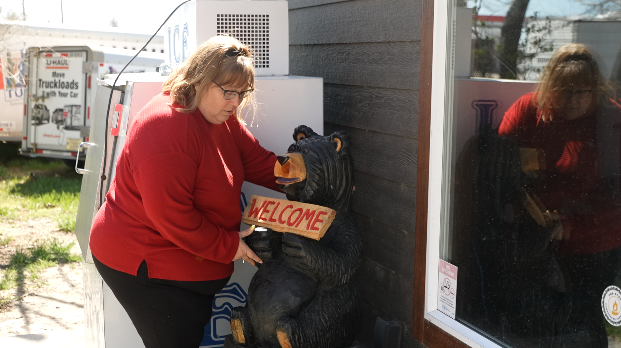
Another campground, Grandview Campground and RV Park, may be disappearing from the signs as well.
“We have to ask ourselves, what can we cut out? And Montana Logo is probably going to be it,” said the campground’s owner, Laurie Tschetter.
She is concerned about how the lack of advertising will affect the tourism industry in her community.
“We are kind of the backbone of bringing a lot of tourism dollars back into this state,” said Tschetter.
Vanessa Willardson/Q2
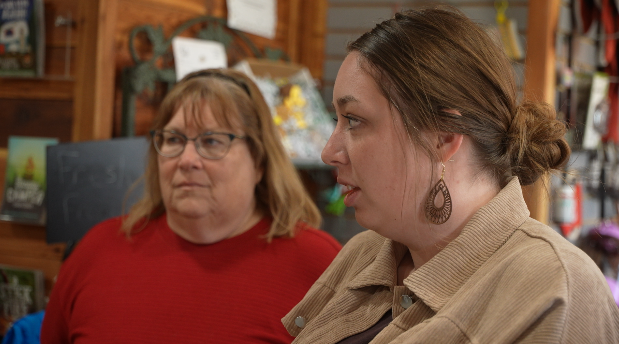
The business owners are working with the Hardin Chamber of Commerce, in hopes the state will hear their voices and give them a grant.
“I want to support these businesses and our communities and whatever we need to do next, whether it’s a letter or taking it up a little higher. That’s all we can do,” said Alexandria Edwards, with the Hardin Chamber of Commerce.
The community is also starting to consider advertising alternatives.
Vanessa Willardson/Q2
“It would be cheaper just to go get a billboard or put their money into something that would be more fruitful for them,” said Edwards.
“I’ve watched different advertising things go by the wayside. And maybe Montana Logos needs to find that out,” added Tschetter.
Montana Logos did not return multiple calls and messages from MTN News requesting comment.

I’m going to be honest, I’ve lived in Bozeman for years, and I have yet to spot anyone famous.
I bring this up because it seems that celebrity spotting’s are a big deal here in Montana, especially around the Bozeman area. Just in the last couple of weeks there have been Shaq and Justin Timberlake sightings, although it should be noted the two weren’t together.
Shaq decided to stop into McKenzie River Pizza in Belgrade and took a photo with the staff, while Justin Timberlake actually lives outside of Bozeman and so I’m not sure you get as many points seeing him out and about.
There are others, Glen Close has a place here, Sam Elliot has been spotted in town, as well as Michael Keaton, and Kurt Russell, and I had a co-worker swear we were in line with Cameron Diaz one time at an event over at The Armory.
So, yes, famous people hang out around Bozeman. However, when you encounter one, there are certain rules you should be aware of.
What do do when encountering famous people in Montana
First, are they with their family or are they eating? If so, maybe a head nod and you move on. Don’t be that person that goes up and interrupts them or worse, just stands there until they acknowledge you. While they may be famous, they still have a right to enjoy a meal or time with their family out in public.
Second, if they are alone, be cool. Don’t rush up to them and ask for 50 billion things. Approach them, calmly, say hello, let them know you’re a big fan. See how they respond, if they are gracious, then maybe ask for a picture. But don’t blow it by acting a fool.
Finally, if they come across as rude, don’t take it personal. Some of these folks work several hours a day, and maybe you caught them in a moment. Yes, it’s super cool for you to meet a celebrity, but for them, you’re the 500th person they’ve had to meet that day. You have to know when to walk away.
Have you ever ran into a celebrity? Who was it? Did you have a chance to talk with them? How was their reaction? Let us know by sending us a message on our app.
13 Famous Celebrities You Could Run Into in Montana
Whether they’re fly fishing, performing at local venues, or just grabbing a coffee downtown, these stars are blending into Montana life
Gallery Credit: jessejames
10 Celebrities Who’ve Lived In Missoula
Sure, tons of celebrities like to visit Montana but here are 10 who actually lived in Missoula.
Gallery Credit: Mike Smith

Movie Review: ‘Faces of Death’

Video: What the Cease-Fire Means for Iran

Video: Harris Signals Potential Third Presidential Run In 2028

Shortlisted for an Oscar, ‘Homebound’ is a daring movie about two dear friends

Now the FAA says gamers are the answer to its air traffic controller shortage

Florida High School Football Rankings: Top 25 teams – Oct. 21

How old is Bo Nix? What to know about Oregon quarterback ahead of 2024 NFL Draft

Cleary's 21 help Le Moyne down Central Connecticut State 69-64 in OT

99th annual Pony Swim held in Virginia

Indiana Members Credit Union announced as new anchor tenant at Bottleworks District

Swalwell’s former female staffer drops bombshell allegations of sexual assault, exposing himself: report

NASA’s Artemis II prepares for splashdown on Earth

Trump proposes painting executive office building white

Rep Randy Fine joins House Freedom Caucus: ‘Strongest group of conservative patriots in Congress’

Trump issues NATO ultimatum to reopen Strait of Hormuz ‘within days’
-

 Atlanta, GA6 days ago
1 teenage girl killed, another injured in shooting at Piedmont Park, police say
-

 Education1 week ago
Video: YouTube’s C.E.O. on the Rise of Video and the Decline of Reading
-

 Movie Reviews1 week ago
Vaazha 2 first half review: Hashir anchors a lively, chaos-filled teen tale
-

 Georgia3 days ago
Georgia House Special Runoff Election 2026 Live Results
-

 Education1 week ago
Video: Toy Testing with a Discerning Bodega Cat
-

 Pennsylvania4 days ago
Parents charged after toddler injured by wolf at Pennsylvania zoo
-
 Milwaukee, WI4 days ago
Potawatomi Casino Hotel evacuated after fire breaks out in rooftop HVAC system
-
 Entertainment1 week ago
Inside Ye’s first comeback show at SoFi Stadium