

Ahead of the 2026 Maccabiah Games, an event often called the “Jewish Olympics” and the largest Jewish sporting competition in the world, which are set to begin next week, social media influencer, dancer, and singer, Montana Tucker expressed her excitement to be hosting the delegation parade at the event and said that the games were taking place at a critical point for the global Jewish community.
Montana
Montana man pleads guilty to wildlife trafficking charges in scheme to clone sheep


(CNN) — Over the course of nearly a decade, a Montana ranch owner and at least five other people conspired to clone sheep and create a larger hybrid species of what is already considered the world’s largest sheep species for financial gain, according to federal prosecutors.
Arthur “Jack” Schubarth, 80, of Vaughn, Montana, pleaded guilty to felony charges related to trafficking sheep parts from Asia into the United States – a violation of the Lacey Act – with an aim of selling the species to captive hunting facilities primarily in Texas, according to a news release from the US Department of Justice.
The Lacey Act prohibits “trafficking of illegally taken wildlife, fish or plants,” according to the US Department of Agriculture.
Schubarth faces a maximum of five years in prison for each of the two felony counts and up to a $250,000 fine. CNN has contacted an attorney listed for Schubarth for comment.
Between 2013 and 2021, Schubarth and others set out to create a larger hybrid species of the Marco Polo argali sheep with trafficked sheep parts from Kyrgyzstan to garner higher prices from shooting preserves, according to the Justice Department.
The sheep species, often trophy hunted for its size and long spiraling horns, is listed as threatened under the US Endangered Species Act, according to court documents.
Marco Polo argali sheep, which can weigh more than 300 pounds and have horns spanning more than 5 feet, are banned in Montana “to protect native sheep from disease and hybridization,” according to the Justice Department.
Schubarth, who owned a 215-acre game farm where mountain sheep, mountain goats and other hoofed mammals were bought, sold, and bred, is the only person named in the court documents.
The five others involved are described in the documents as residents of Montana, Texas and Minnesota who were involved in alternative livestock husbandry and commercial livestock sales, according to court documents.
Schubarth is accused of conspiring to bring parts of the internationally and domestically protected Marco Polo argali sheep, which are native to Central Asia’s Pamir Mountains region, into the US without declaring the parts, court documents state. Schubarth is accused of engaging a third party to create a cloned argali sheep from the trafficked parts.
Schubarth’s farm – Sun River Enterprises, also known as Schubarth Ranch – mainly marketed and sold live animals and genetic material, like semen, to shooting preserves, court documents state.
He and co-conspirators allegedly performed artificial insemination and other types of artificial breeding to “create larger and more valuable lines of argali sheep,” according to the documents.
“The kind of crime we uncovered here could threaten the integrity of our wildlife species in Montana,” Ron Howell, chief of enforcement for Montana Fish, Wildlife and Parks, said in a statement.
In January 2013, the co-conspirator from Montana entered the US with undeclared biological tissue from a Marco Polo argali sheep that had been hunted in Kyrgyzstan, according to court documents.
Days later, Schubarth entered a cell storage agreement with a company to store and preserve the tissue from a male sheep named Rocky, according to the documents, which add that Schubarth entered an ovine cloning contract in October 2015 to have an unspecified number of sheep cloned from the tissue.
He received 165 cloned Marco Polo embryos in November 2016 at his ranch, the documents state. In May 2017, a pure male Marco Polo argali sheep was born from the embryos, and Schubarth named it Montana Mountain King.
In 2018, authorities say Schubarth began harvesting semen from Montana Mountain King to artificially inseminate ewes in hopes of creating hybrid offspring.
Using Montana Mountain King’s semen, Schubarth and co-conspirators artificially inseminated female sheep species that are also banned in Montana in an attempt to create hybrid animals, the Justice Department said.
Schubarth and others moved the illegal sheep into and out of Montana by forging veterinary inspection certificates, according to court documents.
Schubarth also violated Montana law by obtaining genetic material from the state’s Rocky Mountain bighorn sheep, which are the largest native wild sheep species in North America, according to the court document. Montana prohibits game animal parts being sold there and also “prohibits the use of Montana game animals on alternative livestock ranches,” according to the Justice Department.
The US Fish and Wildlife Service and Montana’s Department of Fish, Wildlife and Parks are investigating the case. Schubarth is set to be sentenced on July 11.


ELK PARK — A father and his four sons reported missing near Elk Park were found safe after their vehicle became disabled, according to Butte-Silver Bow County Sheriff Ed Lester.
They were found walking along a roadway around 5 p.m. north of Maney Lake, according to Lester.
Rescuers from 15-90 Search and Rescue, the United States Marshals Service, the United States Forest Service, and the Bureau of Land Management (BLM) were able to reach the group and transport them to safety.
“We are very happy that everyone is safe. We appreciate the hard work of the rescuers and the coordination among Jefferson, Anaconda-Deer Lodge, Powell, and Silver Bow counties,” Lester said in a statement.
(original report) Law enforcement and search and rescue teams are searching for a missing father and his four sons near Elk Park, just off Interstate 15, after the group failed to return from a fishing trip north of Butte.
The group has been missing for nearly 24 hours. Three of the four boys are Type 1 diabetics in need of insulin.
WATCH: Law enforcement and search and rescue teams near Butte, Montana are searching for a missing father and four sons. Three of the boys are Type 1 diabetics in urgent need of insulin
Search expands for missing Butte family as friend reveals 3 of 4 boys are Type 1 diabetics
Courtney Mosier, a family friend who drove from Helena to assist in the search, said the urgency of the situation is critical.
“There (are) four little boys that range from ages 14 to 10. Three of the little boys are Type 1 diabetics. They need their insulin. They need their sugar. They need to be found immediately,” Mosier said.
Mosier has known the father, Paul Klimpel, her whole life and said his outdoor experience is a reassuring factor.
“Paul is an avid outdoorsman. Like I said, I’ve known him my whole life. If the truck broke down, Paul would be able to fix it. So, luckily they’re with a really, really, really good adult. We just need to find these children,” Mosier said.
Meagan Thompson
According to a press release from Butte Sheriff Ed Lester, police are searching for the group in the Brown’s Gulch, American Gulch, Flume Gulch, and Bernice area north of Butte. Officials are also searching the Homestake and Delome Lake areas.
The last known location of the group came from a cell phone ping near Maney Lake.
“The last ping from one of the little boys’ cell phone was up near Maney Lake so that’s where the family is at currently right now,” Mosier said.
Butte-Silver Bow County Sheriff’s Office Butte-Silver Bow Sheriff’s Office

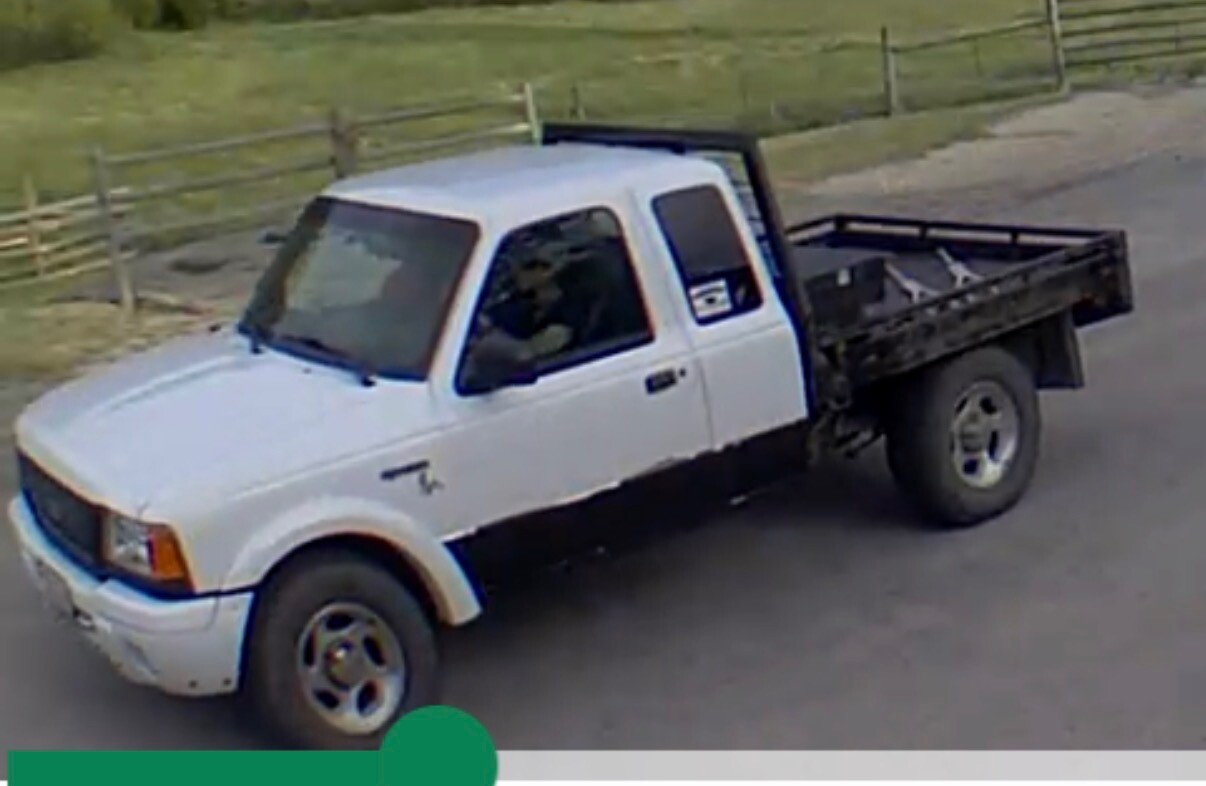
Anyone who spots a white Ford Ranger flatbed pickup is encouraged to call law enforcement at 406-497-1120.
This story was reported on-air by a journalist and has been converted to this platform with the assistance of AI. Our editorial team verifies all reporting on all platforms for fairness and accuracy.
Montana
Social media star Montana Tucker to host Maccabiah Games delegation parade | The Jerusalem Post

“Israel has gone through a lot, Israelis have gone through a lot, Jews have gone through a lot around the world,” Tucker told The Jerusalem Post on Tuesday. “What’s going on is not just happening in Israel; it’s really happening all around the world with our Jewish community. So, an event like the Maccabiah Games is showing the world that we are strong, we are united, and we don’t give up, and we keep fighting.”
According to Maccabiah, the games bring together more than 10,000 athletes from at least 80 countries in Israel every four years to compete in over 45 sports. The Maccabi World Union says the games are the second-largest sporting event in the world after the Olympics.
The 2026 Maccabiah Games, the 22nd of their kind, were initially scheduled for last year but were postponed due to the security situation involving Iran and its regional proxies.
“This was supposed to happen last year, and about a month away, we had to cancel it due to the war,” Tucker recalled. “And so I am so grateful that it is happening this year, because we truly do need this now more than ever.”
She also said she was excited to debut her new song “We’re Not Strangers” at the event.
“It’s all about unity and building bridges and bringing people together. And some of the lyrics say ‘we may pray to different saviors, but we’re not strangers,’” she told the Post. “Our world is so divided right now. I think that we really just need to come together and have more unity and compassion and understanding of one another. And if we really talk to people who look differently than us, act differently than us, have a different religion than us, we’ll realize we’re actually more similar than we think.”
Montana Tucker: Sport ‘truly unites the world’
Sports, she said, was an ideal method to build these bridges, adding she viewed it as something that “truly unites the world.”
The Maccabiah Games this year, though, will be the first since the Hamas-led massacres in southern Israel on October 7, 2023. The attacks sparked a regional eruption with Israel fighting wars against Hamas in Gaza, Hezbollah in Lebanon, and the Islamic regime in Iran.
“We always have to talk about what happened on October 7,” Tucker said. “We should never stop talking about it. And I think it is so important that Maccabiah is utilizing this platform to talk about it. I know they actually have a former hostage, Daniella Gilboa, who’s going to be performing, which is so powerful.”
Tucker also highlighted the value of the games, saying they were a powerful tool to dispel disinformation about the Jewish state.
“What’s shown on the news nowadays is just all the negativity. Most of it is just propaganda and lies about what Israel is, and I think the Maccabiah just debunks every possible propaganda and lie about Israel,” she said. “When people say the word ‘Israel,’ it comes with so many different connotations, and I think we can show them this. This is Israel. This is what being Jewish means.”
A key element in showing the world what Israel and being Jewish mean, she reiterated, meant showcasing Jewish unity at a time when, in the wake of the October 7, the global Jewish community has faced a worldwide rise in antisemitism.
The games themselves are being held under the slogan, “More Than Ever,” according to Maccabiah, to emphasize “the importance of strengthening the bond between [Jewish] communities worldwide and the State of Israel.”
The Montana Lottery offers multiple draw games for those aiming to win big.
Here’s a look at June 23, 2026, results for each game:
Winning Mega Millions numbers from June 23 drawing
48-51-60-63-66, Mega Ball: 20
Check Mega Millions payouts and previous drawings here.
Winning Big Sky Bonus numbers from June 23 drawing
06-21-22-31, Bonus: 13
Check Big Sky Bonus payouts and previous drawings here.
Feeling lucky? Explore the latest lottery news & results
When are the Montana Lottery drawings held?
- Powerball: 8:59 p.m. MT on Monday, Wednesday, and Saturday.
- Mega Millions: 9 p.m. MT on Tuesday and Friday.
- Lucky For Life: 8:38 p.m. MT daily.
- Lotto America: 9 p.m. MT on Monday, Wednesday and Saturday.
- Big Sky Bonus: 7:30 p.m. MT daily.
- Powerball Double Play: 8:59 p.m. MT on Monday, Wednesday, and Saturday.
- Montana Cash: 8 p.m. MT on Wednesday and Saturday.
- Millionaire for Life: 9:15 p.m. MT daily.
Missed a draw? Peek at the past week’s winning numbers.
This results page was generated automatically using information from TinBu and a template written and reviewed by a Great Falls Tribune editor. You can send feedback using this form.
-
Utah7 minutes ago
Edwin Munk Woolley — Obituary | Larkin Mortuary
-

 Vermont10 minutes ago
Experienced pros have Vermont Green women’s team on cusp of USLW playoffs
-

 Virginia15 minutes ago
Virginia Lottery Powerball, Pick 3 Night results for June 24, 2026
-

 Wisconsin25 minutes ago
Wisconsin Lottery Powerball, Pick 3 results for June 24, 2026
-

 West Virginia30 minutes ago
Morrisey announces more than $700,000 to support rural domestic violence and sexual assault victims
-

 Wyoming36 minutes ago
Politics in the Park: GOP gubernatorial candidates share visions for Wyoming governor
-

 Crypto40 minutes ago
The cryptocurrency industry has entered the “Show Me” era: merely relying on vision is no longer enough | WEEX Crypto News
-

 Finance45 minutes ago
Quadient Recognized as a Leader in the 2026 SPARK Matrix for Accounts Receivable Applications

