West
Lost cat makes 900-mile journey back home to California from Yellowstone

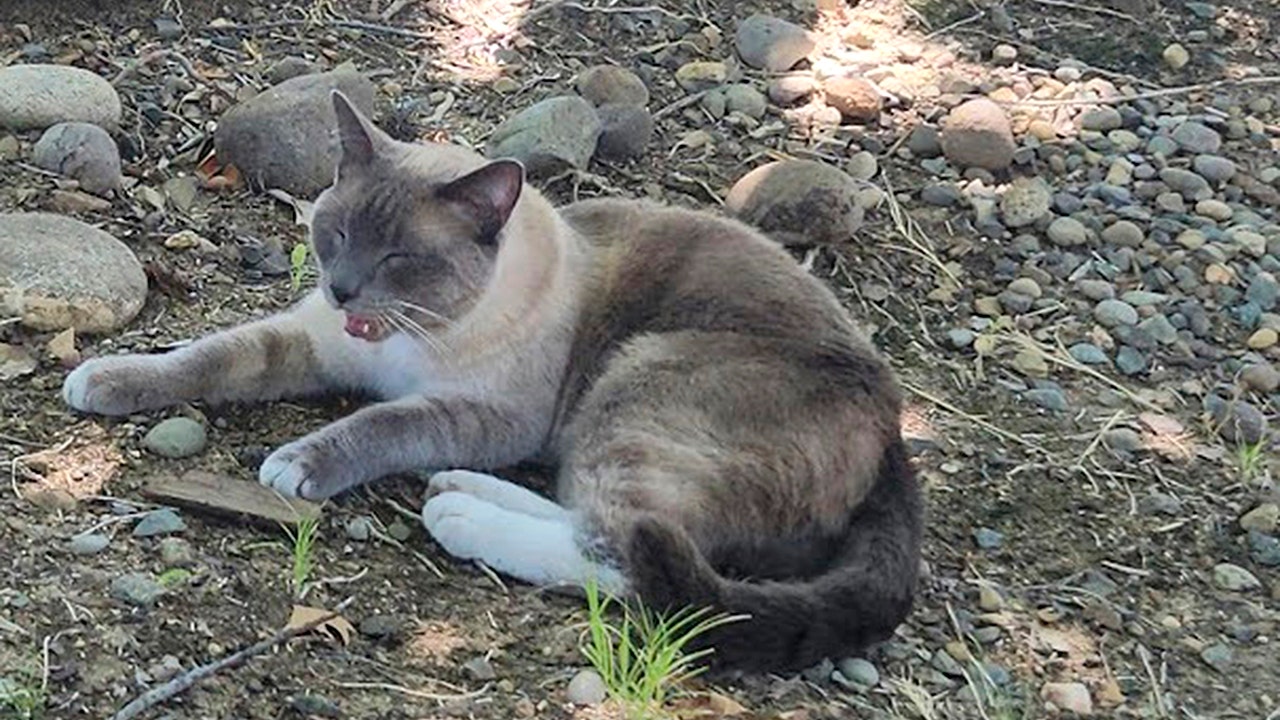
A husband and wife in California who thought their cat was gone for good got the shock of a lifetime last month when he showed up more than 900 miles away from where he was lost.
Benny and Susanne Anguiano and their two cats, arrived at Yellowstone National Park on June 4. Although the couple had always traveled with their pets, something spooked their Siamese cat, Rayne Beau, and he ran into the forest.
The couple looked for him for four days, said the Associated Press, and tried to tempt him to return with his favorite treats and toys.
MISSING DOG IN VIRGINIA CAPTURED AFTER 6 MONTHS ON THE RUN: ‘ALMOST LOST HOPE’
Rayne Beau was nowhere to be found.
Eventually, on June 8, the Anguianos began their return trip to their home in Salinas, California, south of San Francisco.
This photograph provided by Susanne Anguiano shows her cat Rayne Beau looking out the window of a camper in July 2023. Rayne Beau ran away from the camper in June 2024. He was missing for two months before being found 900 miles away. (Susanne Anguiano via AP)
Susanne told the AP she was “crushed,” but remained hopeful that, against all odds, her cat would be found safe.
“We were entering the Nevada desert and all of a sudden I see a double rainbow. And I took a picture of it and I thought, that’s a sign. That’s a sign for our rainbow that he’s going to be OK,” she said.
In August, the Anguianos received word that Rayne Beau had been found – skinny, and with paws that were roughed up – but otherwise OK.
Rayne Beau was spotted in Roseville, California, almost 900 miles from where he ran off in Yellowstone and about 200 miles away from Salinas, said the Associated Press.
Rayne Beau, above, was spotted in Roseville, California, two months after he ran away from his owners in Yellowstone National Park. He was reunited with his family after his microchip was scanned. (Alexandra Betts via AP)
A woman noticed the Siamese on the streets, and provided him with food and water before she successfully trapped him on August 3.
She then brought him to the local Society for the Prevention of Cruelty to Animals, where his microchip was scanned.
NEW STUDY SHOWS THE EFFECT OWNING PETS HAS ON OWNERS’ BRAINS
Rayne Beau lost six pounds during his two-month journey back to California, said the Associated Press.
The Anguianos believe that Rayne Beau, somehow, was able to make the journey back to California by himself.
“His paws were really beat up.”
“I believe truly that he made that trek mostly on his own. His paws were really beat up. Lost 40% of his body weight, had really low protein levels because of inadequate nutrition. So he was not cared for,” Susanne Anguiano told the Associated Press.
The couple reached out to the media hoping to see if anyone had perhaps spotted their cat on his journey.
For now, the Anguianos have decided to put a pause on traveling with their cats.
The Anguianos have since outfitted their cats (Rayne Beau is in front) with AirTags and GPS trackers. (Susanne Anguiano via AP)
“It was a very ugly feeling after we lost him,” Benny Anguiano told the AP.
“We’ll have to practice camping at home and camp in the driveway to get him used to it.”
And they have taken extra steps to ensure their cats are safe and sound.
For more Lifestyle articles, visit www.foxnews.com/lifestyle
While the cats were already microchipped, they have since been fitted with AirTags – and a GPS global tracker for Rayne Beau, said the couple.
The Associated Press contributed reporting.
Read the full article from Here


LAS VEGAS (KSNV) — The man arrested for murder in the 2006 death of his wife at a Utah national park left behind a suicide note in his Las Vegas jail cell, according to a police report.
Las Vegas Metropolitan Police released a public report on the death of David Vander Meer, 49, who was in custody on an out-of-state warrant.
The Washington County District Attorney’s Office said in an affidavit that Vander Meer, a former youth pastor, was a suspect in the death of his then-wife, 28-year-old Bernadette Vander Meer, 20 years ago.
Bernadette fell to her death at Angels Landing in Zion National Park. Prosecutors said in their affidavit that they received new information implicating David, alleing that he began having a close relationship with a young girl when she was 14 and he was her youth pastor.
A fugitive task force took Vander Meer into custody in Summerlin, according to an arrest report, and he was booked into Clark County Detention Center on June 22.
In the report on his death, LVMPD said a corrections officer was conducting visual checks at about 9:30 p.m. June 24 when he noticed Vander Meer lying face down on the ground and unresponsive.
Several sections are redacted, but police wrote that the officer performed chest compressions until medical personnel arrived. Vander Meer was taken to UMC, where he was pronounced dead just after 2:36 a.m. June 25.
Investigators wrote that because of “the nature of his case,” Vander Meer was placed into protective custody. He was seen sitting upright and awake at 9 p.m., and he had no known medical conditions. He also did not mention being suicidal during a mental health screening.
Inside the cell, police wrote that Vander Meer “left a hand written suicide letter and a hand written will in his cell which has been photographed and impounded.” The following paragraph of the report was redacted, and no further details on Vander Meer’s death were disclosed.
The Clark County Coroner’s Office has not yet released its official rulings on his cause and manner of death.
Bernadette’s parents, Richard and Laura Gudenkauf, told News 3 they long suspected Vander Meer played a role in her death.
“Because of the girlfriend,” said Laura. “I found insurance policies months later that he had, lots of them.”

The Washington Commanders are retiring John Riggins’ No. 44 during the upcoming NFL season, the team announced Thursday.
The Hall of Fame running back will be honored in a ceremony at halftime of the team’s game against the Los Angeles Rams on Nov. 8.
“There are certain players whose impact goes far beyond statistics, championships and accolades: They become woven into the identity of a franchise,” controlling owner Josh Harris said in a statement. “John Riggins is one of those players. …Our fans not only admired him, they identified with him. He is authentic, unapologetically himself and deeply connected to the people around him. John has meant so much to this franchise, our fans and the game of football.”
Riggins is the organization’s all-time leading rusher with 7,472 yards and 79 touchdowns on 1,988 carries and helped the team win the Super Bowl in the 1982 season.
The fan favorite nicknamed “Riggo” was the MVP of that Super Bowl for his performance best known for his memorable 43-yard TD run in the fourth quarter that put Washington ahead of the Miami Dolphins. He was inducted into the Pro Football Hall of Fame in 1992.
Riggins is the seventh player to have his number retired by the team, joining Sammy Baugh, Bobby Mitchell, Sean Taylor, Sonny Jurgensen, Darrell Green and Art Monk. Green, Monk and Riggins have all happened since Harris’ group took over from longtime owner Dan Snyder.

-

 Pennsylvania4 minutes ago
PA state rep. wants to force the York State Fair to change its name
-

 Rhode Island7 minutes ago
R.I. leading multi-state lawsuit against Trump administration housing policy – The Boston Globe
-

 South-Carolina12 minutes ago
SC is at the top for food waste in the nation. How you can make changes
-

 South Dakota19 minutes ago
Petition to clarify South Dakota proof of citizenship law shot down over technicality
-

 Tennessee22 minutes ago
Tennessee State men’s hockey cancels 2026-27 inaugural season for second straight year
-

 Texas27 minutes ago
Ted Cruz warns Talarico has ‘real chance’ to flip Texas’ U.S. Senate seat
-

 Utah34 minutes ago
Man suspected in 2006 Utah murder left suicide note in Las Vegas jail cell: police
-
 Vermont37 minutes ago
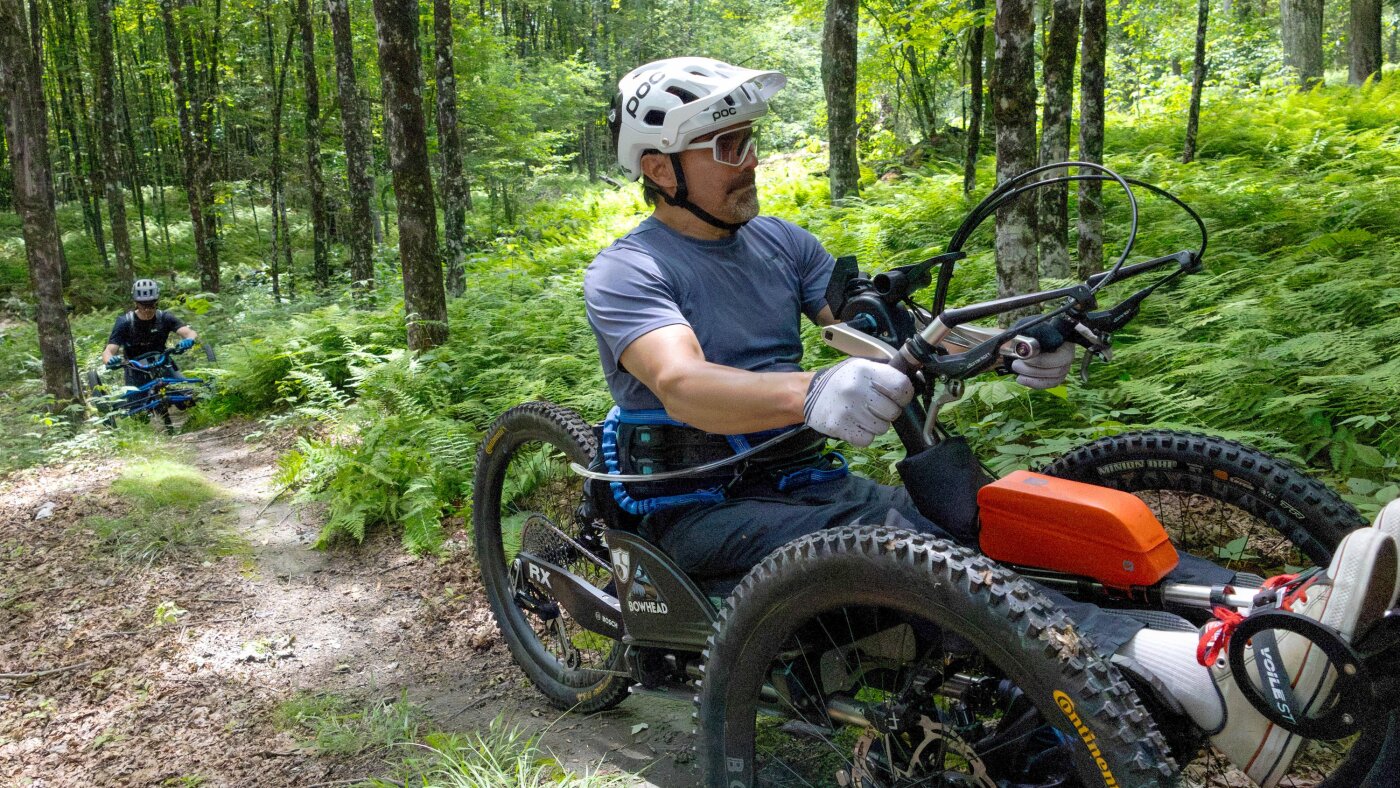
OUTDOOR ACCESS FOR DISABLED IN VERMONT

