
Miley Cyrus Claims Dad Billy Ray Once Smoked Pot on ‘Hannah Montana’ Set
West
Kidnapping survivor Elizabeth Smart on empowering kids from predators: 'Don't be afraid to practice screaming'

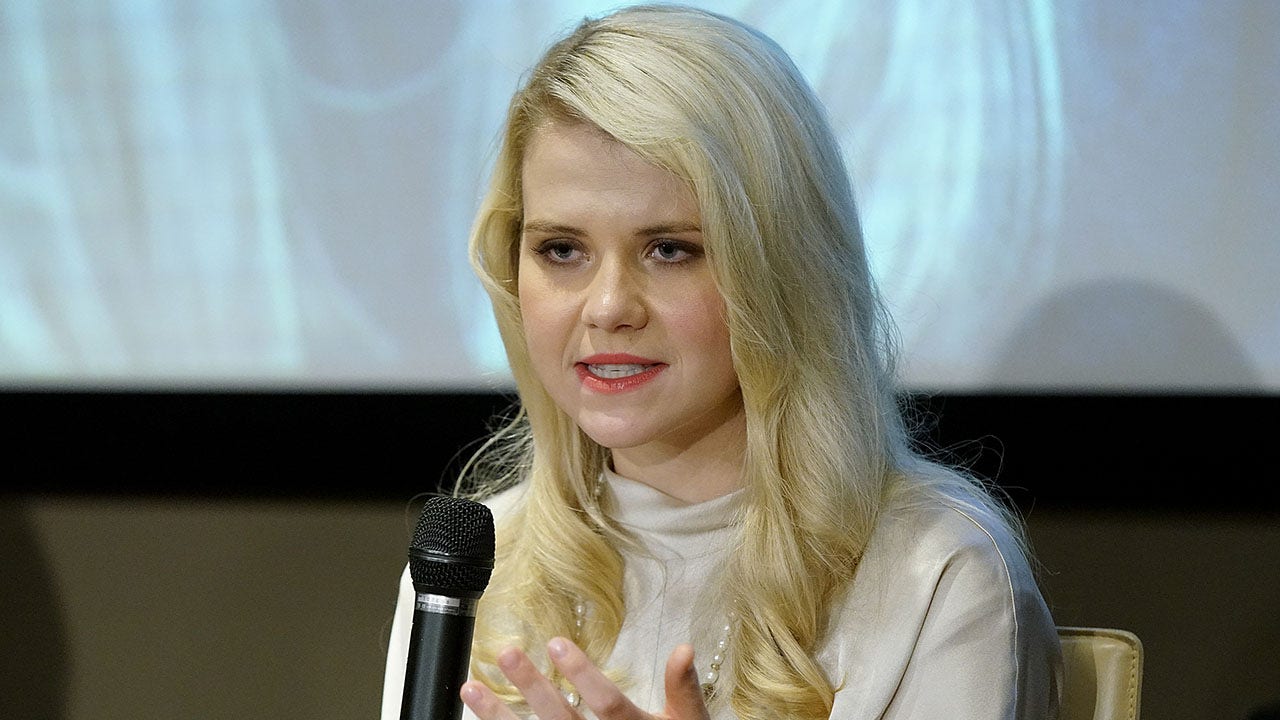
Elizabeth Smart was found alive in 2003 after she was abducted from her bedroom, and she’s telling her young children about it.
The kidnapping and rape survivor has found a new purpose since her high-profile rescue nearly 21 years ago.
The child safety activist and author is a special guest on Monday’s episode of “America’s Most Wanted,” which has returned to FOX with longtime host John Walsh.
The series, which features cases from across the country, offers a tip line at the end of each episode where viewers can provide leads in hopes of bringing justice to victims.
‘AMERICA’S MOST WANTED’ HOST JOHN WALSH REFLECTS ON HIS SON’S BRUTAL MURDER: ‘I WAS DYING OF A BROKEN HEART’
In a new episode of “America’s Most Wanted,” Elizabeth Smart (left), John Walsh (center) and Callahan Walsh (right) will detail the case of a married couple who violently attacked a child protective services worker, kidnapped their children and fled to Mexico. (FOX )
The 36-year-old admitted to Fox News Digital that warning her children about physical and online dangers has been “one of the most stressful parts of my life right now.” Smart and husband Matthew Gilmour share three children: Chloe, 8, James, 5, and Olivia, 4.
“When my oldest was 3 years old, she started asking me questions,” Smart explained. “’What happened to you? How did you get hurt?’ They were questions that I was not prepared to answer. I thought I still had years to talk about it. It did force me to have some pretty hard conversations.
“Now, I feel like I talk about it so much with my kids that they just roll their eyes at me,” she said. “I’m like, ‘Do you understand why we’re talking about this?’ And they respond, ‘Yes, you don’t want us to get hurt. Yes, you don’t want this bad thing to happen to us. Yes, we know.’ But it’s so important.”
Elizabeth Smart married Matthew Gilmour in 2012. They welcomed children in 2015, 2017 and 2018. (Presley Ann/WireImage)
“Hopefully, everyone talks to their kids enough that their kids also go, ‘I know, I’ve heard this a thousand times,’” Smart shared. “I think it does take a thousand times for things to penetrate.”
Smart stressed she’s not “a parenting expert” but is determined to help young children feel empowered when faced with danger. The Elizabeth Smart Foundation offers self-defense training for women and young girls.
BRYAN KOHBERGER TRIAL: ‘AMERICA’S MOST WANTED’ HOST JOHN WALSH PREDICTS IDAHO PARENTS WILL ‘GET JUSTICE’
“One of the first things that we have our class attendees do is yell because that’s one of the most powerful tools you have – to just scream,” she explained. “Very rarely do we have someone just scream at the top of their lungs and not feel embarrassed.
“Usually, there’s some embarrassed laughter or embarrassed smiles at first, and maybe the loudest person is screaming at 50% volume. And if we can’t really scream in a safe environment without feeling silly or embarrassed, we’re probably not going to be able to call on that when we actually need it.
The Elizabeth Smart Foundation offers a self-defense program for women and young girls. (Bennett Raglin/Getty Images for Lifetime)
“So, don’t be afraid to practice screaming.”
On the night of June 5, 2002, Smart was taken at knifepoint from her home in the upscale Federal Heights neighborhood. Her captor slid into the house undetected after cutting the screen of an open window, History.com reported. According to the outlet, Smart’s younger sister Mary Katherine, with whom she shared her bedroom, was the only witness to the kidnapping. The child, frightened that the captor would return for her, didn’t inform her parents until two hours later.
Smart was taken to a campsite three miles from her home. It was close enough that she could hear searchers calling out for her. Smart testified in 2009 that she was drugged, starved, tied to a tree and raped as often as four times a day.
This handout photo from the Salt Lake County Sheriff’s Department shows Brian David Mitchell March 12, 2003, in Salt Lake City. Mitchell and his wife Wanda Barzee were taken into custody in the kidnapping of Elizabeth Smart, who was found alive with them nine months after being kidnapped. (Salt Lake County Sheriffs Department)
In March 2003, a couple recognized Smart’s captor, Brian David Mitchell, from an episode of “America’s Most Wanted.” The street preacher was accompanied by Smart, who was forced to wear a veil in public and answer to a new name, “Augustine.” Smart revealed her identity to an officer who questioned them, ending her nine-month ordeal.
“I got cornered in a bathroom shortly after I was rescued, and this woman started asking me questions like, ‘You ran away, didn’t you? You loved Brian Mitchell, didn’t you? How do you feel about sending an innocent man to prison when it’s really your fault?’” Smart recalled.
NEW ‘AMERICA’S MOST WANTED’ STAR CALLAHAN WALSH SAYS TECH, TIPSTERS CHANGING HOW CRIMINALS CAPTURED ON LIVE TV
“I was so shocked that anyone could do that after everything that I had been through,” she said. “I just froze. I didn’t do anything. I didn’t say anything. But thinking back to that moment, that would’ve been an appropriate time to scream. But because I was in a bathroom — a bathroom at church — everything in me was like, ‘I don’t scream at church. I don’t scream in the bathroom.’ The thought didn’t even cross my mind.
Wanda Barzee was released from a Utah prison in 2018. (Salt Lake County Sheriffs Department)
“But looking back as an adult and someone who’s been in this space for a long time now? That would’ve been a completely appropriate moment to scream,” Smart added.
It was later revealed Mitchell first encountered the Smart family in 2001. At the time, he was clean-shaven and panhandling in downtown Salt Lake City when Smart’s mother, Lois, handed him $5, Biography.com reported. According to the outlet, Mitchell, who went by “Immanuel,” accepted a day job from the family in hopes of earning more money.
A sign is seen in Elizabeth Smart’s neighborhood welcoming her home March 13, 2003, in Salt Lake City. (Danny Chan La)
Mitchell, 70, is serving a life sentence on several charges related to the kidnapping, People magazine reported. His wife and accomplice, Wanda Barzee, was released from prison in 2018. Under the terms of her release, the 78-year-old, who pleaded guilty to her role and testified against Mitchell, must undergo mental health treatment. She also cannot contact Smart and her family.
Brian David Mitchell knew the Smart family before kidnapping Elizabeth Smart from her bedroom. (George Frey)
After her rescue, Smart admitted she felt “very alone.”
“I didn’t know of anyone who had been through something similar … like kidnapping,” she explained. “Sexual assault and exploitation — they were not commonly spoken about, at least I don’t remember them being commonly spoken about. So, initially, I wanted to just hide everything from everyone.
“I didn’t want them to know what I had been through. I didn’t want to talk about it with other people. Even though I knew it wasn’t my fault, I still felt a degree of shame and embarrassment over what had happened. … But as I moved on with my life, I began to meet more and more survivors. And they began to share their stories of what had happened. I began to realize that what happened to me was not so one in a million.”
Today, Elizabeth Smart is an author, children’s advocate and speaker. (Taylor Hill)
Smart said she didn’t want memories of her past to haunt her. She didn’t want the idea of sleeping in her bed to continue terrifying her. She said it was her family’s love and support that kept her going and inspired her to speak out.
NXIVM SURVIVOR INDIA OXENBERG DETAILS LIFE AFTER ESCAPING ALLEGED SEX CULT: ‘A CAUTIONARY TALE’
Elizabeth Smart and her father Ed Smart walk away from federal court after the sentencing of Elizabeth’s kidnapper, Brian David Mitchell, May 25, 2011, in Salt Lake City. (George Frey)
“For better or for worse, my case was everywhere for a long time,” she said. “So many people approached me while grocery shopping, in airports, just in random places. … I was never drawn to the spotlight. I was more of a wallflower. So, coming home and dealing with that kind of attention was a major adjustment … but I had my safe place.”
And when Smart looks back at her kidnapping, there was one thing that gave her hope.
Elizabeth Smart recently participated in “The Masked Dancer” as she takes control of the next chapter of her life. (FOX)
“I only ever heard about how important it was to not have sex before marriage … so I felt an immense amount of shame,” Smart explained. “I felt like I’d lost my worth as … a human being. But, ultimately, I remembered how much my parents loved me. … It did take me time to realize that it didn’t matter that I had been kidnapped.
“It didn’t matter that I’d been raped. It didn’t matter that I’d been chained up. My parents would still want me back, no matter what. And that knowledge, those feelings of love, are ultimately what gave me hope and the belief to keep going. … You can’t forget the power of love.
Elizabeth Smart, left, has a close friendship with John Walsh, center, who raised awareness about her kidnapping case on “America’s Most Wanted.” (FOX)
“My dad, my grandpa and so many adults in my family have always stressed the importance of service and trying to leave the world a better place than what we found it,” Smart reflected. “And since then, I’ve just felt this is what I was meant to do – to share my story. This is where I can make a difference in the world. And so, here I am.”
“Episode 2″ of “America’s Most Wanted” airs Jan. 29 at 8 p.m. The Associated Press contributed to this report.
Read the full article from Here

Continue Reading

MERIDIAN — Former Idaho state Rep. Dorothy Moon was elected to her third term as chair of the Idaho Republican Party during last week’s Idaho GOP Convention in Meridian.
Moon announced her candidacy for a third term as chair earlier this month after first being elected in 2022 and again in 2024. In this year’s election, Moon received 306 votes, former Idaho state Sen. Steven Thayn received 155 votes and Mark Fuller, the previous Idaho GOP first vice chair, came in third with 134 votes. In receiving just over 51% of the vote, Moon was able to narrowly avoid a runoff.
In his challenge to Moon, Thayn called for fostering a greater sense of unity among members of the party.
“Unity does not mean uniformity of opinion,” Thayn said in a prior news release on his candidacy. “Nor does it mean forced agreement. Forced unity always leads to tyranny. Real unity is voluntary. It is built through listening, respect, and a sincere effort to solve problems together.”
In the initial announcement of Moon’s campaign, she highlighted improvements to voter turnout and the defeat of the 2024 ranked-choice voting ballot initiative as among key party successes during her most recent term.
Montana
‘Hannah Montana’ Alum Mitchel Musso Reveals Why He Missed 20th Anniversary Special With Miley Cyrus

Hannah Montana star Mitchel Musso was noticeably absent from the show’s 20th anniversary special earlier this year — and now he’s revealing why.
“Of course they asked me [to be in it],” Musso, 34, revealed on the “Joe Vulpis Podcast” on Wednesday, June 24. “But, it wasn’t presented correctly [to me].”
Musso appeared in more than 70 episodes of the classic Disney Channel comedy series, playing Miley Stewart’s (Cyrus) best friend Oliver Oken alongside Emily Osment’s Lilly Truscott.
The star explained to host Joe Vulpis that he truly valued the opportunity to play Oliver again since he’d mostly been living outside the spotlight for the past decade. Instead, Disney opted for a retrospective look back at Hannah Montana.
Mitchel Musso, Emily Osment and Miley Cyrus on “Hannah Montana.” Joel Warren / Disney Channel / Courtesy Everett Collection
“I’ve been waiting ten years,” he stressed. “The people, they say, 20. My break’s been 10. It’s too long of a wait to do it in a way that isn’t even close to, in my opinion, correct.”
The Hannah Montana 20th Anniversary Special aired in March and featured Cyrus, 33, looking back on memorable moments from the show, alongside host Alex Cooper and celebrity guests such as Chappell Roan and Selena Gomez.
In his new interview, Musso said he would relish the chance of actually getting to play Oliver again in a proper Hannah Montana episode.
“I need a wig,” he joked. “I’d want the hair, which is fine. I’ve worn [wigs] plenty of times on Disney. I’ve worn plenty of wigs. … I’d want to feel the part again. I’d want to put on that little polo again, and wear the … plaid shorts with the goofy shoes.”
The actor went on, “I’d want to play the character, yeah. Once I saw myself doing it, I’d say, ‘Oh, there you are!’ Let’s get out there and let’s do it.”
Musso was not the only major Hannah Montana cast member missing from the anniversary special, as Osment, 34, could not appear due to her filming obligationa on CBS sitcom Georgie & Mandy’s First Marriage.
“We’re at Georgie & Mandy … and that’s why I was not able to be part of the 20-year reunion, because we are here shooting our show,” she said in a social media video at the time. “But I wanted to say hello and thank you to everybody that has stuck by us for all these years. I’m so grateful that you guys all still love the show. I’m so proud to be a part of it.”
Ahead of the Hannah Montana 20th Anniversary Special airing in March, Musso paid tribute to the show with his own Instagram post.


Miley Cyrus is still fielding questions about Hannah Montana more than a decade after its end — and she has some hilarious memories to share. During the Thursday, June 19, episode of her mom Tish Cyrus and sister Brandi Cyrus’ “Sorry We’re Cyrus” podcast, the Grammy winner, 32, opened up about a moment that never […]
“Hannah Montana wrapped around my heart and never really let go. We literally grew up with ya’ll — long days, crazy schedules, learning lines, cracking up between takes, and figuring out life while the cameras rolled,” he wrote. “It taught me so many wonderful values, but the most important ‘to me’ is that laughter can get you through the tough days. That confidence still sticks with me every single day.”
He also shouted out his costars, writing, “Miley, Emily, Jason [Earles], Billy Ray [Cyrus], Moises [Arias], and the whole crew at Disney — you became my family through all the real, messy, beautiful moments. Thank you for believing in a goofy kid from Texas who wore some questionable outfits with a haircut like that. To all of you, thank you for welcoming me into your homes and hearts 20 years ago and still allowing me to be here today. I’m honored we get to share all of this together.”
Hannah Montana originally aired for four seasons between 2006 and 2011. Classic episodes, as well as the Hannah Montana 20th Anniversary Special, can be streamed via Disney+.
-

 Idaho3 minutes ago
Dorothy Moon reelected to third term as Idaho GOP chair
-

 Georgia5 minutes ago
The Farmer’s Dog Partners with the University of Georgia College of Veterinary Medicine to Advance Veterinary Nutrition Training
-

 Hawaii8 minutes ago
Sewer rate hikes proposed – West Hawaii Today
-

 Illinois20 minutes ago
Man buys winning $1.3 million jackpot ticket at suburban gas station
-

 Indiana23 minutes ago
‘Foul play’ suspected in death investigation on Indiana-Ohio state line, Wayne County officials say
-

 Iowa28 minutes ago
New Iowa program aims to remove barriers to family support
-

 Kentucky33 minutes ago
Can you set off fireworks in Kentucky? See laws ahead of Fourth of July
-
 Louisiana43 minutes ago
Historic Gene Therapy Gives Young Louisiana Man a New Shot at Life

