Idaho
“Spotting” Salmonids: put your fish ID skills to the test!


Think you’ve got ‘em all? Check your answers with the descriptions below to see if you’re truly the master of spotting salmonids…
Note: salmon undergo significant color and body shape changes during their spawning migration from saltwater to freshwater; the characteristics described below refer to their freshwater mature adult phase coloration, which is what you would expect to see in Idaho.
A) Chinook Salmon (Scientific name: Oncorhynchus tshawytscha)
- You can identify a Chinook Salmon by continuous dark spots on the top half of their body from their head to their tail, and spots are present throughout both lobes of the tail. These fish also have a black mouth with a black gumline. Body color ranges from olive green to brown: the females are slightly lighter in color than the males, and the males will sometimes have maroon/red on their belly and sides.
- Fun fact: Chinook Salmon are the largest of the Pacific salmon species and are also referred to as King Salmon.
B) Coho Salmon (Oncorhynchus kisutch)
- Coho Salmon look similar to Chinook Salmon and they can be challenging to tell apart, but not impossible! Coho also have continuous dark spots on the top half of their body from their head to their tail, but they only have spots on the upper lobe of their tail, the lower lobe is plain. Coho have a black mouth with a white gumline. Body color ranges from dark brown to maroon/red.
- Fun fact: Coho are native to Idaho and were extirpated years ago, but now, thanks to reintroduction efforts, they are making a comeback in our great state! Coho are also referred to as Silver Salmon.
C) Sockeye Salmon (Oncorhynchus nerka)
- Sockeye Salmon are a little easier to tell apart from Chinook and Coho. Sockeye have no distinct spots and have a white mouth with a white gumline. Body color is a show stopper: solid bright red body and a green head, gorgeous! You may also encounter Kokanee Salmon in Idaho, which looks very similar to Sockeye, but are landlocked and do not migrate to the ocean.
- Fun fact: The Snake River Sockeye Salmon run has the longest freshwater migration (about 900 miles) and the highest elevation gain (6,547 feet) of any Sockeye population in the world! Sockeye Salmon are also referred to as Red Salmon.
D) Steelhead (Oncorhynchus mykiss)
- Steelhead have evenly spaced dark spots throughout most of their body and onto their tail. Body color ranges from dark green to pale silver green with a distinct pink or red stripe down their side and a pink or red patch on their cheek. Their colors will usually intensify during their spawning season in the spring from mid-April to late June. Steelhead look very similar to Rainbow Trout but are usually much larger in size because they migrate to the ocean for increased food opportunities.
- Fun fact: The catch-and-release Idaho state record for steelhead was recently broken in October 2023 – the lucky angler caught a whopping 41-inch steelhead! (New catch/release record steelhead landed | Idaho Fish and Game)
E) Cutthroat Trout (multiple Oncorhynchus species)
- Cutthroat Trout are sometimes confused with Rainbow Trout, but their dark spots are sparse near their head and most spots are heavily concentrated towards their tail. Cutthroats earn their name by the bright red or orange slash on the underside of their chin. Body color is variable depending on the species of cutthroat and can range from pale gray-green to yellowish brown, with red or orange on their bellies during spawning season. Don’t be fooled! – Rainbow Trout x Cutthroat Trout hybrids (known as “cutbows”) are also common in Idaho and can show characteristics from both species. So, if the trout you’ve caught has an orange chin slash, more evenly distributed spots, and some white-tipped fins, then it is likely a hybrid.
- Fun fact: Several previously well-known subspecies of cutthroat trout have been recently reclassified into four different species: Coastal, Westslope, Lahontan, and Rocky Mountain cutthroat trout. Although their taxonomic classification has changed, they still share the same identifying characteristics listed above when comparing them to other salmonids.
F) Bull Trout (Salvelinus confluentus)
- Unlike all the species above, Bull Trout have light spots on a dark background. They have no spots on their dorsal fin, which is key to telling them apart from a Brook Trout or other salmonids. Bull Trout can also be identified by a bright white leading edge on the front of their pectoral and pelvic fins. Their bellies can turn orange during spawning. Bull Trout also look similar to Lake Trout, another char species in Idaho, but Lake Trout have a deeply forked tail and Bull Trout do not.
- Fun fact: Bull Trout are listed as Threatened under the Endangered Species Act and are therefore catch-and-release only. Since Bull Trout have no black markings on their dorsal fins, an easy saying to remember while fishing is “no black – put it back!”
G) Brook Trout (Salvelinus fontinalis)
- Brook Trout are challenging to tell apart from Bull Trout (especially when they are small) in that they share these characteristics: light spots on a dark background, white leading edge on their pectoral and pelvic fins, and red or orange bellies during spawning. However, they have key differences that are important to remember, because Bull Trout are protected and Brook Trout are not. So, let’s seek the spots! First, Brook Trout spots extend onto their dorsal fin in a mottled pattern, whereas Bull Trout have a plain dorsal fin. Second, Brook Trout have distinct “squiggly worm tracks” on their back, called vermiculation, whereas Bull Trout do not have this spot pattern. Third, sometimes Brook Trout will have blue halos around a select few spots on their side, whereas Bull Trout have no blue halos.
- Fun fact: Brook Trout are native to eastern North America and are the state fish of nine states – not surprisingly, most of them are eastern states!
So…how’d you do? Whether you aced it or have some serious studying to do, be sure to check out Idaho’s fishing regulations (Fishing Seasons and Rules | Idaho Fish and Game) before you head out on the water, you never know which of these species you may encounter. This is not an all-inclusive list of Idaho’s salmonids, but it’s a good starting point to go forth and impress your friends with your newly acquired fish ID knowledge. And remember, always seek the spots!



ADRIAN, Oregon — The Friends of the Owyhee organized a clean-up in Malheur County in Oregon, and volunteers came out to pick up trash and get rid of abandoned campers.
“We had two abandoned RV’S and a camper that were abandoned out on public lands,” said Tim Davis, who runs the Friends of the Owyhee. “They were sitting there for upwards of a year, and it is really clear that it is hard to get rid of these.”
WATCH| Check out the video to see volunteers demolish a camper—
Volunteers camp out for the Succor Creek Clean-Up in the Owyhees
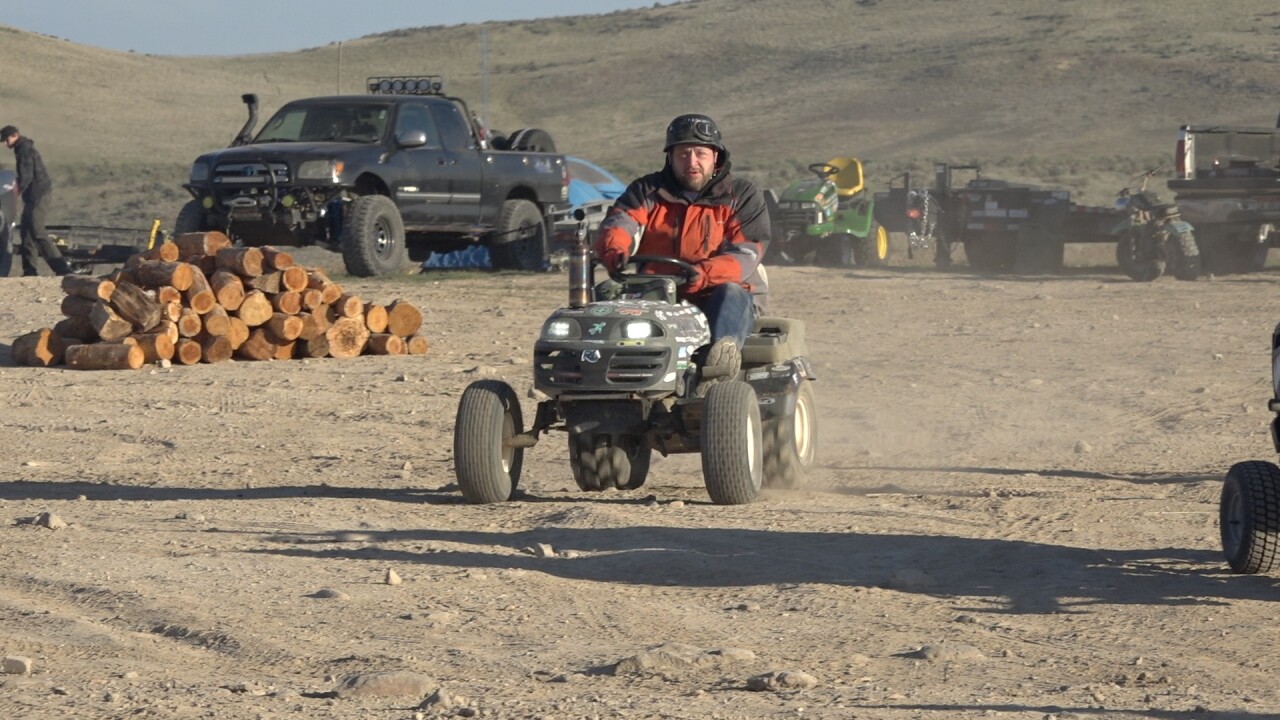
Davis worked with the local sheriff’s office and the BLM to remove the campers, but he found it difficult because there was no place to take these recreational vehicles. The Gambler 500, an off-road group, brought out some people to demolish a camper with an excavator.
“That is awesome to see the turnout with the army of volunteers we have today,” said Brian Arndt of the Gambler 500 group. “We are going to be able to get the camper all in the dumpster, get it cleaned down to the frame, and then everything that can be recycled will be recycled.”
Volunteers camped out on Succor Creek Road on Friday night so they could get an early start on Saturday. Many volunteers will camp out again on Saturday night and finish the clean-up on Sunday.
“Malheur is the 12th largest county in the United States, and it’s 74 percent public land,” said Davis. “We have very few resources with the BLM; they are understaffed, they have one rec planner right now, so us, as public land owners, should be able to step up and keep this place clean.”
Lela Blizzard works as the lone recreational planner for the Vail District of the BLM, who says most sites have signs that say pack it in and pack it out. She says the BLM really needs the cooperation of the public because of how large it is, and she was happy to see how many volunteers showed up.
“I just want to tell them thank you because I know they are taking time out of their weekend to come out here to help us make sure the land continues to look nice for everyone who comes out to enjoy it,” said Blizzard.

Griz Ward is one of the volunteers, and he enjoyed camping out, but he also would like to see people pick up after themselves. When it comes to outdoor recreation, it is so important to be part of the solution and not part of the problem.
“If you come out here and play in the area, be respectful,” said Ward. “Pack it in and pack it out, leave no trace and do the right thing, or frankly, stay home.”
The Succor Creek Clean-Up also received a lot of support from the Treasure Valley, as they got donations from the Ontario Sanitation Service with the dumpsters, Tates Rents with the excavator, and United with porta-potties for the campsite.
Send tips to Idaho Backroads neighborhood reporter Steve Dent
Have an Idaho Backroads story idea? Share it with Steve below —

IDAHO — ‘No Kings 3’ protests will take place throughout Idaho on March 28, including in Boise and Twin Falls.
According to the Idaho 50501 Facebook page, there will be speakers & musicians playing at protests across the Treasure Valley.
Protests will take place in Boise, Caldwell, Nampa, Mountain Home, Twin Falls, and other Idaho cities.
NoKings.org
On March 28, Neighborhood Reporters Allie Triepke & Lorien Nettleton will bring coverage of the Boise & Twin Falls protests on Idaho News 6 at 10.
Idaho
Idaho Senate introduces new bill to give local municipalities authority to control rat populations

BOISE, Idaho — A new bill in the Idaho Senate aims to let local municipalities take action to control rat populations. This, after a previous bill to combat rat infestations across Idaho, died in the House.
Rats have been spreading throughout the Treasure Valley in recent years, but previous attempts at legislation to deal with the problem have failed.
WATCH: Senior Reporter Roland Beres provides an update on the new rat bill
New bill would allow local governments to combat rats
Residents in Eagle and Boise have been tracking an alarming rise in rat populations recently.
Rep. John Gannon (D – District 17) introduced new legislation today that would essentially permit local governments to act in order to control rat populations if they want to, without creating a mandate.
Gannon said some cities complained that they did not have the authority to do the job themselves.
The bill was introduced with a dose of humor.
“I’m going to support this. It’s very late in the session, but I think this might just squeak through,” said Sen. Ben Adams (R – District 12). “Well. Unless it encounters a trap along the way.”
ALSO READ | ‘I’ve never seen something that big’: Boise neighbors finding rats in their backyards
This story was initially reported by a journalist and has been, in part, converted to this platform with the assistance of AI. Our editorial team verifies all reporting on all platforms for fairness and accuracy.
Send tips to neighborhood reporter Riley Shoemaker
Have a story idea from Downtown Boise, the North End or Garden City ? Share it with Riley below —

‘The highs are extremely high – but the lows are extremely low’: when working out becomes an addiction

‘The Last Critic’ Review: A Captivating Portrait of Robert Christgau, the Brilliant Mad Professor of Rock Critics, and How He Made the Grade

Mary Beth Hurt, Who Starred in ‘The World According to Garp,’ Dies at 79

Sunday Puzzle: Vowel Renewals

Red Rooms makes online poker as thrilling as its serial killer

Florida High School Football Rankings: Top 25 teams – Oct. 21

How old is Bo Nix? What to know about Oregon quarterback ahead of 2024 NFL Draft

Cleary's 21 help Le Moyne down Central Connecticut State 69-64 in OT

99th annual Pony Swim held in Virginia

Indiana Members Credit Union announced as new anchor tenant at Bottleworks District

Scathing report claims nation’s oldest labor union ‘betrayed’ MAGA members through ‘shocking’ spending

Republican US lawmaker demands Congress vote on any Iran troop deployment

So you went to a No Kings protest. Now what?

JD Vance says he was ‘obsessed’ with UFOs, believes aliens are actually ‘demons’
The EU's recipe for trade deals : easy on beef, tough on wine
-

 Sports1 week ago
IOC addresses execution of 19-year-old Iranian wrestler Saleh Mohammadi
-

 New Mexico7 days ago
Clovis shooting leaves one dead, four injured
-

 Miami, FL3 days ago
Jannik Sinner’s Girlfriend Laila Hasanovic Stuns in Ab-Revealing Post Amid Miami Open
-

 Tennessee6 days ago
Tennessee Police Investigating Alleged Assault Involving ‘Reacher’ Star Alan Ritchson
-

 Minneapolis, MN3 days ago
Boy who shielded classmate during school shooting receives Medal of Honor
-

 Technology1 week ago
YouTube job scam text: How to spot it fast
-

 Politics1 week ago
Schumer gambit fails as DHS shutdown hits 36 days and airport lines grow
-

 Science1 week ago
Record Heat Meets a Major Snow Drought Across the West