Idaho
Idaho just received its second domestic case of Chronic Wasting Disease: What is it and what does that mean?

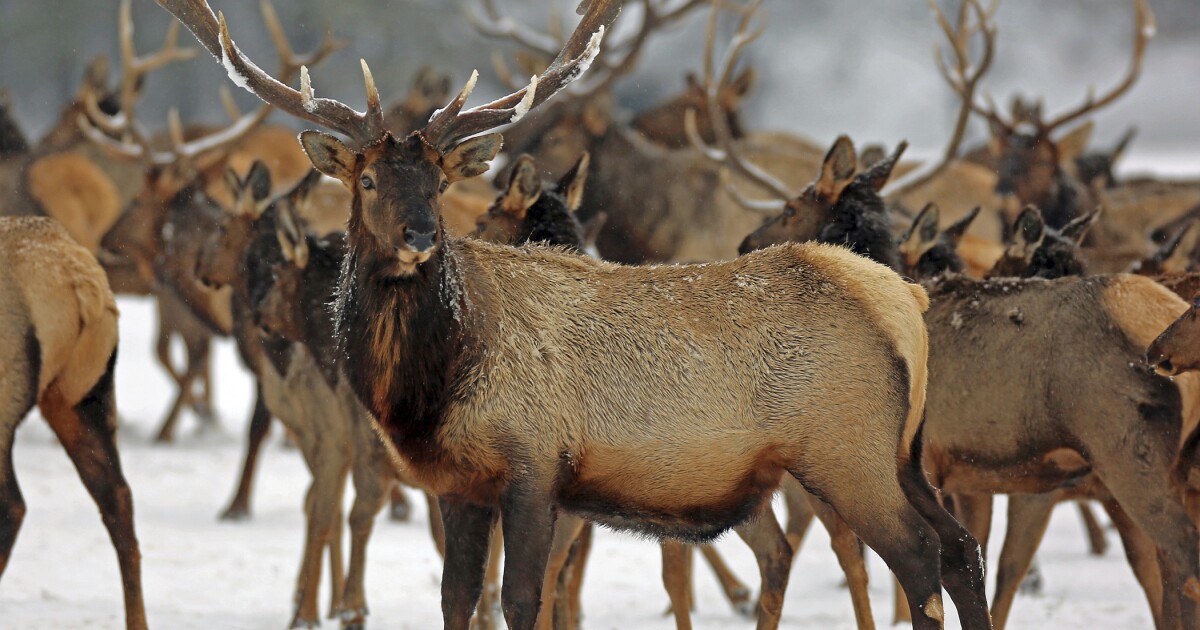
Chronic Wasting Disease, or CWD, is a deadly and incurable neurological illness. Idaho just received its second confirmed case in domestic elk.
What is Chronic Wasting Disease
CWD is a prion disease, a type of illness not caused by viruses or bacteria, but instead by misfolded proteins called prions. When enough prions enter the body, they can create a chain reaction of damaging normal proteins in the body which leads to cell destruction and neurological damage, and inevitably, death of the organism.
Prion diseases are currently incurable and the only known ones occur in mammals. CWD affects animals in the deer family (cervids) such as but not limited to: moose, caribou, mule deer, reindeer, red deer, and elk. CWD was first found in Colorado in 1967, but through the years has been detected across the globe.
“It’s in Asia, Europe and North America,” said Professor Mark Zabel with the Prion Research Center at Colorado State University
How is it spread?
Zabel said that the disease can be transferred directly–for instance from a sick moose to a healthy moose–as well as transferred indirectly due to the prions’ infectious properties,
“…unlike many most other pathogens, it’s very stable in the environment. So it can remain infectious in the environment, in soil and landscapes. For years to decades.”
Prions get into the environment (soil, water, plants, etc) through excretion by infected animals, such as through their urine, feces, saliva, and decomposing bodies. Then, due to the prion’s very stable protein structure, they’re able to stay infectious for up to 20 years. This means other animals can pass through the environment, and pick up the prions laid decades past, and still get infected.
Abigail Moody
/
Boise State Public Radio
CWD is difficult to detect because animals may be infected for long periods of time without showing signs due to the disease’s incubation period. On average, the time between initial infection and first signs of it is 18 to 24 months long.
Concerns of the Disease
Not only is CWD an ecological concern due to the difficulty of combating it, but it is also a severe economic issue regarding wildlife and agriculture governmental agencies. The most recent data shows the government as spent $280 million dollars on CWD from 2000-2021. A majority amount of that was spent by the U.S. Department of Agriculture’s Animal and Plant Health Inspection Service.
Idaho first saw CWD in wild mule deer in 2021. Within the past two months, there have been two confirmed cases of domestic elks that were from different elk farms, meaning, they couldn’t have infected one another. In Idaho’s 2021-2022 fiscal year, wildlife agencies spent close to $225,000 trying to combat CWD.
Zabel told me his main concern as a scientist is “…this disease could spread to humans, you know. So it has some zoonotic potential, similar to another prion disease that people might be aware of called bovine spongiform encephalopathy or BSE. Probably more commonly known as mad cow disease.”
When someone eats beef contaminated with Mad Cow disease, a variant of the prion disease from the cow can be made to infect a human. For now, CWD does not have the ability to change to infect humans, but since it is a prion disease, it is possible that it could develop one.
What you can do to stay safe and help
Zabel encourages hunters to follow state practices to reduce the possible spread of CWD and to test their harvest before eating. There’s no evidence yet that CWD can transfer from cervid to human but Zabel told me,
“I would definitely not want to be the reference case. I don’t want to be patient zero.”
This past year, Idaho Fish and Game released hunting guidelines to reduce the spread of CWD . The agency also offers free testing kits for hunters to help track the disease by sending in samples of their game.

Roger Phillips
/
Idaho Fish and Game


BLACKFOOT — A large contingent of Blackfoot Police officers has cordoned off an area near the Taco Bell on Parkway Drive in Blackfoot.
Police responded around 5 p.m., according to multiple witnesses who contacted EastIdahoNews.com.
EastIdahoNews.com has reached out to Blackfoot Police for details.
We will update this story as we learn more.
=htmlentities(get_the_title())?>%0D%0A%0D%0A=get_permalink()?>%0D%0A%0D%0A=htmlentities(‘For more stories like this one, be sure to visit https://www.eastidahonews.com/ for all of the latest news, community events and more.’)?>&subject=Check%20out%20this%20story%20from%20EastIdahoNews” class=”fa-stack jDialog”>

MISSOULA, Mont. — An Idaho Falls angler is back in the Idaho record books after landing a record-setting lake trout at Payette Lake.
Idaho Fish and Game said Dylan Smith caught and released a 43.25-inch lake trout on May 2, setting a new state catch-and-release record for the species. The fish surpassed the previous record of 42 inches.
The catch marks Smith’s second appearance in Idaho’s record books. He previously held the state catch-and-release lake trout record after landing a trophy fish in 2018 before that mark was later broken.
According to Fish and Game, Payette Lake has become one of Idaho’s premier lake trout fisheries thanks to years of management efforts aimed at improving both lake trout and kokanee populations.

Pride Month looks different this June along Boise’s Harrison Boulevard, where a long-standing tradition of hanging Pride flags on lamp posts has been put on hold after a new state law restricted which flags can be flown on government property.
For several years, Pride flags lined lamp posts along Harrison Boulevard in Boise’s North End neighborhood. But Idaho House Bill 561, signed by Gov. Brad Little in March, restricts which flags can be flown on government property, including the City of Boise’s Harrison lamp posts.
In response, a group of neighbors formed Pride North End and launched a distribution effort to help residents show support from their own front yards. The group has been making Pride flags and yard signs available to people who want to display them at home.
“I thought that I would…be a personal example of ‘yes, this is what I do.’ This is what I believe in,” said Edna Schochat, a North End resident.
Pride North End has already distributed more than 900-yard signs and 250 flags. The group’s original donation goal was around $2,000 to order 100 flags and 200 yard signs, but it has exceeded that GoFundMe goal, reaching $10,000 worth of donations.
The group plans to continue holding public flag and sign distributions through the end of the month.
“We cannot just say something without doing something that proves that we mean what we say,” Schochat said.
Pride North End said any leftover funds after materials are distributed will go to local LGBTQ+ nonprofits. A link to the group’s GoFundMe can be found here.
-
 Lifestyle37 minutes ago
Great movies you may have missed : Pop Culture Happy Hour
-

 Technology45 minutes ago
The best Apple deals you can get during Prime Day
-

 World52 minutes ago
Trump says Venezuela earthquakes left ‘devastating number of deaths’ as US readies aid
-

 Politics55 minutes ago
Closed-door outburst turns into victory for Trump’s Iran negotiations
-

 Health1 hour ago
Former reality star opens up about new diagnosis after years-long health ordeal
-

 Sports1 hour ago
Terrion Arnold, Lions’ 2024 first-round pick, charged with kidnapping and armed robbery in Florida
-
 Business1 hour ago
An electric truck for less than $25,000? Deliveries begin this year
-
 Entertainment1 hour ago
Kylie Jenner hit with third lawsuit as former chef claims Palm Springs party led to miscarriage

