Hawaii
Hawaii Joins Military Program To Recruit Government Workers


The state of Hawaii is hoping the U.S. Department of Defense can help fill some of the thousands of state job vacancies through a program that connects military members nearing the end of their service with employers looking for workers.
So far the DOD’s SkillBridge program hasn’t gotten any people in their final months of service to apply for an internship in Hawaii’s government, but state human resources officials hope that will soon change.
For the DOD, meanwhile, the main goal is for industry partners to help military members learn the skills they need to work in the civilian labor force – what DOD spokesman Joshua Wick calls “enhancing their employability.”
Participants continue to take home their full military pay and benefits including healthcare during the program because they are still under the DOD’s purview. Hawaii’s Department of Human Resources Development was accepted into the program earlier this summer.
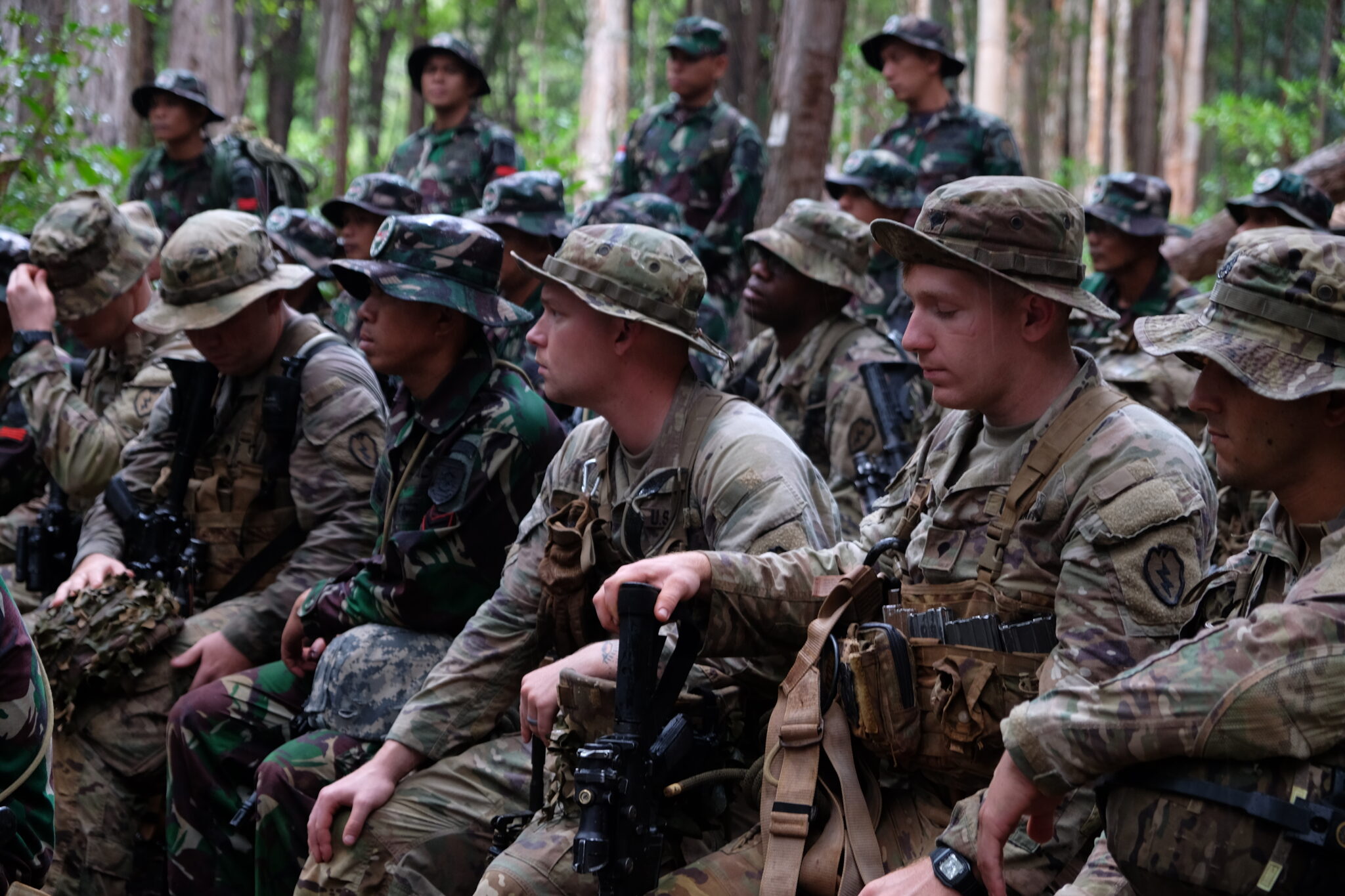
“It’s another pool of untapped applicants that we could bring onboard to join the state of Hawaii team,” said Patti Taketa, the state’s lead recruiter for the program. “The end goal is that they will be employed.”
Hawaii ended last year with an alarming statistic: more than 1 in 4 civil service positions in state government were vacant. Overall the state’s civilian labor force lost nearly 15,000 workers since 2019, a shift from about 684,000 eligible workers to 670,000.
Employers often say that it’s difficult to attract new workers to Hawaii, given the state’s notoriously high cost of living. But there’s an enormous untapped pool of potential workers right here. About 10,000 women and men exit the military in Hawaii each year, Taketa said.
It’s a large number for a small state, amounting to 5% of the roughly 200,000 who exit the service in the rest of the U.S. combined, according to data from the U.S. Department of Labor.
DOD launched SkillBridge in 2011 to assist soon-to-be veterans transition from the military to the civilian labor force.
Employment is a top concern for military members exiting the service, says Daniel Perkins, founder and principal scientist at Pennsylvania State University’s military-transition applied research center. SkillBridge offers an opportunity to test the waters of a new job before committing to a career path, he said.
“It lets people get their feet wet and see what their new normal could be like,” he said.
For the state government, eligible applicants are military members serving out their last 90 to 120 days of active duty. The state is targeting interns to work in information technology jobs, as military personnel often have training in that background, said Taketa.
Employers Must Have Space For Long-Term Workers
To start the process applicants need permission from the commander in charge of their unit. Next, they select an approved industry partner from the DOD’s list of employers and applies directly to them.
Industry partners must tell DOD what type of worker they need and how the partners will train them. Partners also need room to hire participants after the training is over.
For potential Hawaii state workers, there’s little risk. They don’t have to commit to a permanent job if they decide a government gig isn’t for them.
“Obviously, we would like to make it a positive experience with the applicant and have them apply for a state job,” said human resources development spokeswoman Erin Conner. “But there’s no expectation.”
So far no one has applied to the state’s program. Taketa says this is partly because it’s in the early stages and human resources needs to do a little more work with state departments to have them identify specific programs and positions that DHRD can promote.
“Once we’re in a better position of having all that in place we will more actively promote the program,” she said.
But she says there’s a wide range of open IT jobs in every department, including system analysts, support technicians, security analysts, system programmers and network administrators.

Hawaii state government is not the program’s only participant. The DOD’s 4,945 approved partners include CVS Health, Harvard University and John Deere. On a local level, Hawaiian Electric Co., Aloha Nursing Rehab Care and the Honolulu Police Department are also partners.
HPD has more than 450 vacancies across its eight patrol districts on Oahu. District 8, which spans between Ewa Beach and Kaena Point, has more openings than any other district with 68 available jobs.
Michelle Yu, the department’s spokeswoman, said several military members have expressed interest in the program and HPD is processing their applications. With most of Hawaii’s military personnel on Oahu, HPD hopes to attract applicants who want to continue to serve others and live in Hawaii.
Transition From Military To Civilian Life Can Be Hard
Aside from being in its early stages, the state-DOD partnership faces other obstacles in recruiting workers to apply for permanent jobs.
Perkins says many veterans don’t stick around their first civilian workplace for long for several reasons: most jobs don’t provide the same sense of purpose and camaraderie people find in the military.
There’s also the issue of military members who move from managing a team of personnel below them in the service, to starting over in a new career field and being managed by someone else, Perkins said.
“It’s one of those things civilian employers need to understand,” he said. “These veterans have held leadership posts and need to utilize those skills and feel purpose in where they work.”

A more basic question is whether state employers can offer competitive compensation, says Randy Perreira, executive director of the Hawaii Government Employees Association.
He said many state departments face upwards of 40% vacancy rates because the state’s salaries lag the private sector.
“Until the state addresses compensation, you’ll continue to see employees choose the private sector over government, and that includes candidates leaving military service,” he said.

Sign up for our FREE morning newsletter and face each day more informed.



HONOLULU (HawaiiNewsNow) – Over the last month, strong earthquakes of magnitude 6.0 and higher have rocked the Philippines, Japan, Venezuela, and even Hawaii.
Researchers have been closely monitoring the activity, and while it may seem like more quakes than normal, they say it’s about on par with forecasts.
“This is all pretty normal for earthquakes. On a given year, we expect around 15 between magnitude 7 and 8, and about 150 between magnitude 6 and 7,” said Helen Janiszewski, assistant professor at the University of Hawaii at Manoa’s Department of Earth Sciences.
The quakes are, however, hitting in more populated places compared to some large earthquakes in past years, making them more noticeable.
“A couple years ago, there was an actual very similar, sequence of earthquakes to the one that we had in Venezuela where it was, 7.8 and 8.1 in very close sequence, but it was here, where no one lives,” Janiszewski said, pointing to the Southern Atlantic Ocean on a map.
Despite advancements in technology, researchers say there’s still no way to precisely predict when and where the next big earthquake will strike. But some seismology enthusiasts believe patterns can be monitored, studied, and used to implement potential life-saving warnings.
“I think it’s something that could happen as well across the world if people, scientists got together and really understood what’s happening. And then governments also utilize this knowledge to better notify and warn their citizens,” Pahoa resident Bob Gentzel said.
There are upwards of 100 seismographs throughout Hawaii constantly monitoring for quake activity.
Very subtle energy from the Venezuela quake was mapped traveling through the continent.
Some hope investments will be made in early-warning technology, as well as individual emergency preparedness.
“I’m just trying to prove the point that they can be forecastable because I want to save lives,” Gentzel said.
Janiszewski added, “There’s a lot that we can do still in the interim, both on an individual scale for preparedness in your own home as well as investment at community and state levels.”
Copyright 2026 Hawaii News Now. All rights reserved.

HONOLULU (HawaiiNewsNow) – More than $10 billion in SNAP benefits paid nationwide in fiscal year 2025 were above recipients’ eligibility or went to people who didn’t qualify for the program, according to the U.S. Department of Agriculture.
An annual analysis shows the national payment error rate was 10.62%, well above the congressional threshold of 6%.
The error rate measures how accurately states determine who is eligible for SNAP and how much they should get.
In Hawaii, the payment error rate is higher than the national average at 10.92%
“These payment error rates are further proof that state accountability is severely lacking in SNAP,” Agriculture Secretary Brooke L. Rollins said in a press release. “USDA has taken historic action to help interested states curb SNAP waste, and I hope other states, regardless of political leadership, prioritize needy families and the American taxpayer over politics.”
States above the threshold must now pay back a percentage of their benefits and submit an action plan to the USDA explaining how the errors will be addressed.
Copyright 2026 Hawaii News Now. All rights reserved.
-

 Sports1 minute ago
Who is Alyssa Thomas? WNBA star suspended for punching Caitlin Clark in the throat
-

 Technology7 minutes ago
Fox News AI Newsletter: Waymo’s robotaxi recall
-
Business14 minutes ago
Cisco to lay off more than 400 workers in California
-
 Entertainment16 minutes ago
Tom Sandoval’s girlfriend Victoria Robinson arrested after patio fire pit altercation
-

 Lifestyle22 minutes ago
Swatch Seeks Damages From Samsung Over Trademark Infringement, Ft Reports
-
 Politics29 minutes ago
MS NOW anchor Alex Witt to exit as network reduces live weekend programming
-
 Sports36 minutes ago
Parents of ex-NFL player Doug Martin allege excessive force by Oakland police in wrongful death suit
-

 World46 minutes ago
Burkina Faso cuts diplomatic ties with former colonial ruler France

