


In case you missed it, the Denver Summit — the Mile High City’s new NWSL team — made quite a debut today:
Denver, CO
“Where Did We Sit on the Bus?” puts the audience in the Loop at the Denver Center | Theater review


The Denver Center is a-humming.
In the theater company’s largest house, Emma Woodhouse — to her own gentle comeuppance — is winking her way through Kate Hamill’s delightful adaptation of Jane Austen’s “Emma.” (See if before it closes Sunday.) Downstairs in the Singleton Theatre, things are positively loopy. Or rather brilliantly looping, as a young, Latina music-maker sets about crafting a mixed tape of her life in the hip-hop-influenced “Where Did We Sit on the Bus?,” directed by Matt Dickson. It runs through June 2.
So convincing is Satya Chávez (who uses the pronoun “they”) in the role of “Bee” Quijada that the audience is likely to assume it’s their life as the fourth child of Salvadoran immigrants that will be recounted for the next fleet, entertaining 80 minutes. It’s not; it’s writer-performer Brian Quijada’s.
Chávez’s intimacy with Quijada’s story might have been earned during the time they spent working (along with Nygel D. Robinson) on the concert series “Songs from the Border” at Colorado Spring’s Fine Arts Center during its 2021-22 season. But the vibrant poignancy and tangible intimacy that Chávez created with the opening-night audience feels very much their own.
Chávez skillfully utilizes the tools of hip-hop and spoken word for the show’s layering of sounds and, more vitally, personal and cultural history: rap’s diving and arcing rhymes, an iPad with a Bluetooth connection, four loopers, and her voice. But Chavez, a talented musician, also plays a keyboard, guitar, ukulele, guitarron, bass, caña, a harmonica and more. And they sing.
Oh, how they sing, warmly, wittily, sometimes plaintively. Chavez punctuates parts of the storytelling with a wordless refrain that soars and wails — just a little — during its exploration of belonging.
“Where Did We Sit on the Bus?” takes its title from the question a 9-year-old Bee asks her elementary school teacher during lessons on Rosa Parks and the civil rights movement. Defying the reigning black-white dialectic of the nation, little Bee wonders about her place as a brown kid, the child of immigrants, in this American life. Bee and her next oldest brother, Marvin, were born in the U.S. Older brothers Fernando and Roberto were born in El Salvador.
The show is disarmingly personable and cleverly participatory as it goes from Bee’s conception and birth (their time in mom’s womb is bathed in red light) to her childhood living first in a trailer park outside of Chicago and then in a suburban neighborhood adjacent to Highland Park, with its large Jewish community.
They share their love of Michael Jackson, an early role model — until he started to tarnish his reputation by what seemed to be a drastic repudiation of his skin color. But they find their emotional place when they become involved in theater.
Chavez wears a monochrome outfit, a richer shade of army fatigues. They begin at a breakneck pace, then find a lively cadence of trust and familiarity, at times teasing the audience with the sly rapport of a lounge singer.
The production design of the show feels like a departure for the theater company, not in quality but in tone. The set by Tanya Orellana (who also created the costumes) and Pablo Santiago’s playful and geometric lighting design recreate the spare intimacy of a black box theater that can also offer a neon-lit portal into Bee’s past. How far back it goes speaks to (and reverberates, thanks to Alex Billman’s sound design) the show’s joys and imagination.

There’s ample sweetness to this journey and little argumentativeness in Quijada’s script — until there needs to be, when nagging quandaries about belonging boil over. Because “Where Did We Sit on the Bus?” is a theater geek’s coming-of-age saga, Bee had described theater as their church. Late in the show, they take us there, to an ongoing, rancorous national conversation about immigration in which immigrants bear the brunt of ire.
And so, Bee takes an extended moment to preach a gospel of inclusion, one inscribed on the Statue of Liberty, but also confesses the kind of hurt and disappointment that comes from witnessing a nation fail its ideals. The nation may falter in moving toward a better and welcoming future, but Bee doesn’t.
“Where Did We Sit on the Bus?” began with Bee telling us that she popped the question to her beloved, who is Austrian and Swiss, in Mexico. It ends with an expansive answer to the question of the title.
Lisa Kennedy is a Denver-based freelance writer who specializes in theater and film.
IF YOU GO
“Where Did We Sit on the Bus?” Written by Brian Quijada. Additional compositions by Satya Chávez. Directed by Matt Dickson. Featuring Satya Chávez. At the Helen Bonfils Theatre Complex, 14th and Curtis streets. Through June 1. For tickets and info: 303-893-4100 or denvercenter.org.
Subscribe to our weekly newsletter, In The Know, to get entertainment news sent straight to your inbox.


Community Guidelines
Welcome to Denver Stiffs! We’re glad you’re here.
Denver Stiffs is a community where sports fans from all backgrounds gather to share their passion. We strive to create a fun and welcoming place for everyone to come fan with us. These guidelines help ensure that happens. Here’s the short version:
- Be respectful in your interactions with contributors and fellow fans.
- Don’t be a jerk, and don’t call other people jerks.
- We’ll remove anything we see that jeopardizes our communities.
- We ask that you do your best to keep the conversation to sports and primarily our favorite NBA team. Why? Because there are plenty of other sites where you can air your opinions about everything from politics to soup recipes.
- You can help with that. If you see something that doesn’t align with our guidelines, let us know. Flag any comments or usernames that violate our guidelines so our community managers can review them.
These rules extend to our communities everywhere: in our comments, on social media, and in real life.
We do not allow any of the following:
- Personal attacks: This includes name-calling, insults, threats, hurtful comments about someone’s appearance, voice, or style, and all other forms of attacks. We want our communities to be welcoming and fun. Personal attacks are the opposite of that.
- Attacks on staffers: It’s fine to critique a post, disagree with a take, or point out errors. We draw the line, however, at personal attacks (see above) about writers, editors, moderators, etc.
- Discriminatory or derogatory language: This includes racism, sexism, homophobia, transphobia, ableism, or other forms of discrimination.
- Harassment: This includes, but is not limited to, intimidation; stalking; unwanted photography; inappropriate physical contact; use of sexual or discriminatory imagery, comments, or jokes; and unwelcome sexual attention.
- Wishing harm on athletes: Don’t root for an injury, don’t root for harm to befall a coach or athlete. You can want someone to get fired or released, but please do not hope for bodily harm.
- Misinformation and disinformation: Sharing demonstrably false information about news or world events, beyond the scope of reasonable sports opinion or analysis, can be harmful to our communities. These comments will be removed and may result in a suspension or a ban.
- Illegal activity: Don’t promote, encourage, or make light of any kind of illegal activity, including DUIs, domestic violence, or sexual assault.
- NSFW images and comments: Keep it PG-13, or you will be removed. This includes language and images that are sexual, violent, or generally offensive in nature.
- Excessive profanity: Fans get worked up on game days, and we’re fans, too. We understand that. As a general rule, keep profanity to a minimum. Some communities prohibit profanity, so be sure to review guidelines for the individual communities you participate in.
- Multiple accounts and throwaway emails: These are a signal that you’re not interested in being a productive member of our communities, and we do not allow it.
- Trolling: We know it when we see it, and we’ll remove it. Don’t go to a rival team’s community for the sole purpose of riling up their fans, either. Moreover, you should never publish any private or personally identifiable information. Doxxing is strictly prohibited.
- The “first post” rule: If you break any of these guidelines with your very first post or interaction, it signals to our community managers you’re just here to be disruptive. Violators may be banned, blocked, or removed.
- Spam: We have a zero-tolerance policy on spam, which includes sharing links to illegal game streams or downloads. Spam will be deleted and spammers may be banned, blocked, or removed.
- Political commentary: Denver Stiffs is a site dedicated to the Denver Nuggets, not politics. There are many sites available on the internet to discuss politics, Denver Stiffs is not one of them. Please refrain from any political commentary while using our site.
Anyone who doesn’t follow these rules when engaging in our communities will at best be removed from the conversation, and at worst will end up banned from that community. These decisions will be made at the discretion of our community managers and other Mile High Sports personnel. Community managers and moderators have final say on interpretation of violating our community guidelines, and on all decisions resulting in a warning, suspension, and/or ban.
If you see any of these things happening in our communities, please flag it and it will be reviewed. You can also reach out via our contact page.

Carol Swan went to her first-ever protest in Denver’s Civic Center on Saturday dressed like Lady Liberty — a tiara of crystals and wire, a teal bedsheet-turned-dress that belonged to her late grandmother and a torch fashioned from aluminum foil.
The 74-year-old Lochbuie resident doesn’t like crowds. She normally protests alone every weekend on a busy street corner in the north metro area.
“But when we face our fears, they become less and less,” she said.
Swan was among tens of thousands of Coloradans who joined demonstrations across the state on Saturday to protest policies carried out by President Donald Trump’s administration as part of the nationwide “No Kings” movement.
No Kings organizers have criticized the administration’s use of masked federal agents for “terrorizing our communities,” the war in Iran and “attacks on our freedom of speech, our civil rights, our freedom to vote.”
Protesters filled Civic Center and spilled into surrounding streets Saturday as speakers led songs and chants and encouraged attendees to stand up for what they believed in.
Swan’s reason for driving into the city was simple: to be among the voices saying they don’t support the president.
“Trump swore at his inauguration that he would uphold the Constitution, and he’s done anything but that,” she said.
This is the third nationwide No Kings demonstration in less than a year, with previous protests in June and October also drawing tens of thousands of people onto the streets across Colorado. More than 70 protests were scheduled statewide Saturday, from Burlington to Steamboat Springs and Cortez to Fort Collins. No Kings organizers said nearly 4,000 demonstrations were planned nationwide.
Denver’s No Kings protest began on the steps of the Capitol shortly before noon, with attendees hoisting signs criticizing cuts to foreign aid and sharing expletive-laden messages against Trump. Several woman dressed as suffragettes in floor-length dresses, formal pantsuits and hats and carried signs or wore sashes that demanded “Votes for Women.”
Lifelong Denverite Christina De Luna, 29, was watching the crowd mill around a closed-off Broadway with a Mexican flag tied around her shoulders.
“I come from a family of immigrants, and I feel like this is a way of supporting them and taking a stance on the right side of history,” she said.
De Luna said she thinks the protests make a difference: They raise awareness about what’s going on in the U.S. and remind people to come together as a community.
“What’s going on in the world right now with immigrants and anyone who looks and sounds different, it’s not OK,” she said. “We should all be treated equally, and coming out here is about fighting for equality and basic human rights.”
Partners Diane Larson, 67, and Don Hiser, 72, drove from Parker to join the No Kings demonstration in downtown Denver. The couple said they were dismayed by what was happening in the country — that they lived through the Vietnam War and civil rights movement, and things had never been this bad.
“I think this is a start,” Hiser said. “You have to start somewhere, and if you don’t show up, you don’t change anything.”
“We care about what happens to people,” Larson added. “It’s really important to make sure everyone’s voices are heard, because we’re not standing idly by.”
Saturday was also the first time Ajani Brown, 33, attended a protest. Brown came to the park dressed as Captain America to pass out flyers with his union. He shared a hug and fist-bump with a passing Spider-Man.
“It feels like I’m doing something that’s a lot bigger than myself,” he said. “It’s about righteousness. It’s about freedom of expression.”
Demonstrators began marching through downtown about 1:30 p.m., with the crowds spanning city blocks. A video taken from a high-rise at 19th and Lincoln streets and shared on social media by Christine Piel shows marchers at 19th Avenue and Lincoln Street, with the crowd stretching south down Lincoln and out of view toward Civic Center.

Although the protest appeared to stay largely peaceful, Denver police officers used smoke cannisters and pepper balls to disperse a “small group of demonstrators” who blocked the road near 20th and Wazee streets, where police were staged to stop people from marching onto Interstate 25, agency officials said.
Police declared an unlawful assembly at 2:35 p.m. and used the smoke cannisters, switching to pepper balls when someone threw a cannister back at police. Eight people were arrested, and one person was arrested about two hours later for throwing things.
No Kings protests across the Front Range also saw significant crowds, including at least 3,000 people in Longmont.
Carlos Álvarez-Aranyos, founder of the Boulder-based group American Opposition, criticized Trump’s handling of the war with Iran and the actions of U.S. Immigration and Customs Enforcement.
“If one man can ignore the law, detain people without due process and drag this country into a war without the consent of its people, then we are no longer living in a democracy,” he said. “We are living under a king, and we are here today because we refuse to accept that.”
More than 1,000 people gathered at Lincoln Park in downtown Greeley, where residents Kyleen and Kathy Gilliland carried a large flag as they marched with the group around the streets near the park.
“Our country is in distress,” Kyleen Gilliland said. “It’s going upside down because the rich are empowered and the little guy is left behind. And that’s not what America stands for.”
Times-Call reporter Dana Cadey and Greeley Tribune reporter Anne Delaney contributed to this report.
Get more Colorado news by signing up for our daily Your Morning Dozen email newsletter.

The game ended on a 0-0 draw, but what a great day for Denver sports.
And that raises an interesting question: Is Denver the best sports town in the United States?
The sooner the Mile High City gets a WNBA team, the better.
Me, I think you can’t beat Denver for sports. But I’m willing to entertain other perspectives. Let us know in the comments!
- Fewer ads
- Create community posts
- Comment on articles, community posts
- Rec comments, community posts
- New, improved notifications system!

Sports3 minutes ago
UConn’s Braylon Mullins hits game-winning 3-pointer to shock Duke, advance to men’s Final Four

Technology9 minutes ago
Are robots coming to a McDonald’s near you?

Business15 minutes ago
As oil prices rise, airfares are surging and some airlines might not survive
Entertainment21 minutes ago
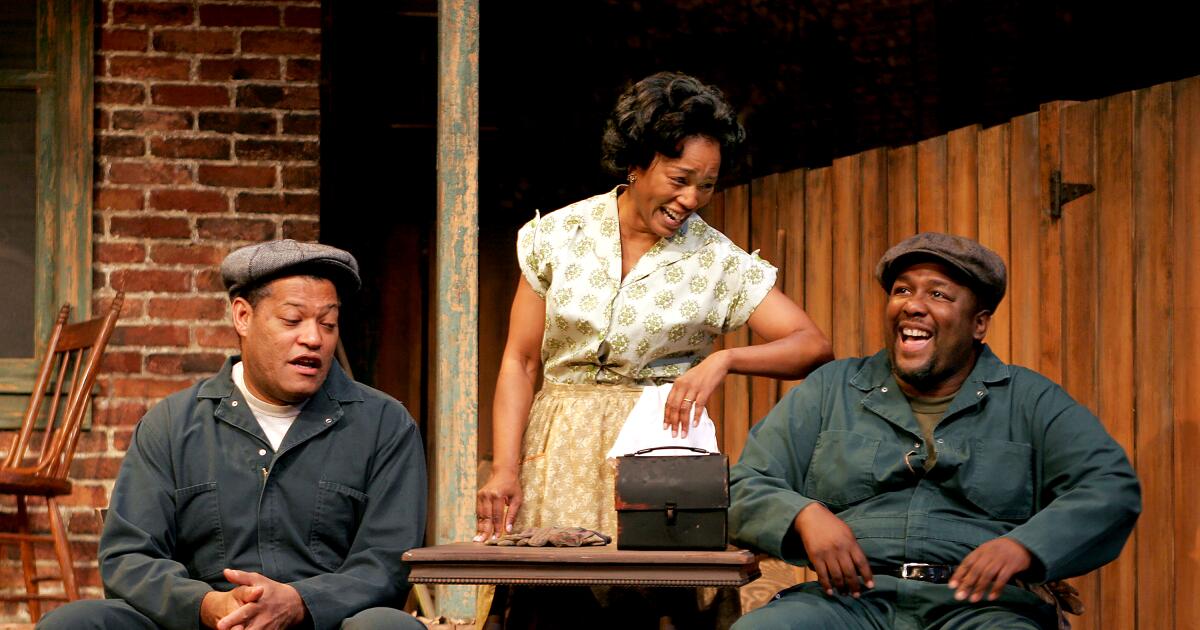
‘Fences’ and ‘Dog Man: The Musical’: Center Theatre Group pulls out all the stops in new season

Lifestyle26 minutes ago
L.A. Times Concierge: I live in O.C. My kids live in Santa Clarita. Looking for nice spots to meet halfway.

Florida1 year ago
Florida High School Football Rankings: Top 25 teams – Oct. 21

Oregon2 years ago
How old is Bo Nix? What to know about Oregon quarterback ahead of 2024 NFL Draft

Connecticut2 years ago
Cleary's 21 help Le Moyne down Central Connecticut State 69-64 in OT

Virginia2 years ago
99th annual Pony Swim held in Virginia

Indiana2 years ago
Indiana Members Credit Union announced as new anchor tenant at Bottleworks District

World57 minutes ago
Newsletter: G7 ministers to hold talks on war’s economic fallout

News1 hour ago
ICE officers could remain at airports after TSA workers are paid

Politics12 hours ago
Scathing report claims nation’s oldest labor union ‘betrayed’ MAGA members through ‘shocking’ spending

World13 hours ago
Republican US lawmaker demands Congress vote on any Iran troop deployment

News14 hours ago
So you went to a No Kings protest. Now what?
-

 Sports1 week ago
IOC addresses execution of 19-year-old Iranian wrestler Saleh Mohammadi
-

 New Mexico1 week ago
Clovis shooting leaves one dead, four injured
-

 Miami, FL4 days ago
Jannik Sinner’s Girlfriend Laila Hasanovic Stuns in Ab-Revealing Post Amid Miami Open
-

 Tennessee6 days ago
Tennessee Police Investigating Alleged Assault Involving ‘Reacher’ Star Alan Ritchson
-

 Minneapolis, MN4 days ago
Boy who shielded classmate during school shooting receives Medal of Honor
-

 Politics1 week ago
Schumer gambit fails as DHS shutdown hits 36 days and airport lines grow
-

 Science1 week ago
Record Heat Meets a Major Snow Drought Across the West
-

 Technology1 week ago
YouTube job scam text: How to spot it fast