Lifestyle
Tony Awards 2025: The complete list of winners


The cast and crew of Maybe Happy Ending accept the award for Best Musical during the 78th Annual Tony Awards.
Charles Sykes/Invision/AP
hide caption
toggle caption
Charles Sykes/Invision/AP
The 78th Annual Tony Awards hosted by Wicked star Cynthia Erivo, will be held Sunday at Radio City Music Hall in New York City. The award show will be airing on CBS, and streaming on Paramount+. Below is the full list of 2025 Tony Award nominees, with winners marked in bold.
Best Musical
Buena Vista Social Club
Dead Outlaw
Death Becomes Her
Maybe Happy Ending
Operation Mincemeat: A New Musical
Best Play
English
The Hills of California
John Proctor is the Villain
Oh, Mary!
Purpose
Best Revival of a Play
Eureka Day
Romeo + Juliet
Thornton Wilder’s Our Town
Yellow Face
Best Revival of a Musical
Floyd Collins
Gypsy
Pirates! The Penzance Musical
Sunset Blvd.
Best Performance by an Actor in a Leading Role in a Play
George Clooney, Good Night, and Good Luck
Cole Escola, Oh, Mary!
Jon Michael Hill, Purpose
Daniel Dae Kim, Yellow Face
Harry Lennix, Purpose
Louis McCartney, Stranger Things: The First Shadow

Cole Escola accepts the Best Performance by an Actor in a Leading Role in a Play award for Oh, Mary!
Theo Wargo/Getty Images for Tony Awards Productions
hide caption
toggle caption
Theo Wargo/Getty Images for Tony Awards Productions
Best Performance by an Actress in a Leading Role in a Play
Laura Donnelly, The Hills of California
Mia Farrow, The Roommate
LaTanya Richardson Jackson, Purpose
Sadie Sink, John Proctor is the Villain
Sarah Snook, The Picture of Dorian Gray

Sarah Snook accepts the Best Performance by an Actress in a Leading Role in a Play award for The Picture of Dorian Gray.
Theo Wargo/Getty Images for Tony Awards Productions
hide caption
toggle caption
Theo Wargo/Getty Images for Tony Awards Productions
Best Performance by an Actor in a Leading Role in a Musical
Darren Criss, Maybe Happy Ending
Andrew Durand, Dead Outlaw
Tom Francis, Sunset Blvd.
Jonathan Groff, Just in Time
James Monroe Iglehart, A Wonderful World: The Louis Armstrong Musical
Jeremy Jordan, Floyd Collins
Best Performance by an Actress in a Leading Role in a Musical
Megan Hilty, Death Becomes Her
Audra McDonald, Gypsy
Jasmine Amy Rogers, BOOP! The Musical
Nicole Scherzinger, Sunset Blvd.
Jennifer Simard, Death Becomes Her
Best Performance by an Actor in a Featured Role in a Play
Glenn Davis, Purpose
Gabriel Ebert, John Proctor is the Villain
Francis Jue, Yellow Face
Bob Odenkirk, Glengarry Glen Ross
Conrad Ricamora, Oh, Mary!
Best Performance by an Actress in a Featured Role in a Play
Tala Ashe, English
Jessica Hecht, Eureka Day
Marjan Neshat, English
Fina Strazza, John Proctor is the Villain
Kara Young, Purpose

Kara Young accepts the Best Performance by an Actress in a Featured Role in a Play award for Purpose.
Theo Wargo/Getty Images for Tony Awards Productions
hide caption
toggle caption
Theo Wargo/Getty Images for Tony Awards Productions
Best Performance by an Actor in a Featured Role in a Musical
Brooks Ashmanskas, SMASH
Jeb Brown, Dead Outlaw
Danny Burstein, Gypsy
Jak Malone, Operation Mincemeat: A New Musical
Taylor Trensch, Floyd Collins
Best Performance by an Actress in a Featured Role in a Musical
Natalie Venetia Belcon, Buena Vista Social Club
Julia Knitel, Dead Outlaw
Gracie Lawrence, Just in Time
Justina Machado, Real Women Have Curves: The Musical
Joy Woods, Gypsy
Best Direction of a Play
Knud Adams, English
Sam Mendes, The Hills of California
Sam Pinkleton, Oh, Mary!
Danya Taymor, John Proctor is the Villain
Kip Williams, The Picture of Dorian Gray
Best Direction of a Musical
Saheem Ali, Buena Vista Social Club
Michael Arden, Maybe Happy Ending
David Cromer, Dead Outlaw
Christopher Gattelli, Death Becomes Her
Jamie Lloyd, Sunset Blvd.
Best Book of a Musical
Buena Vista Social Club, Marco Ramirez
Dead Outlaw, Itamar Moses
Death Becomes Her, Marco Pennette
Maybe Happy Ending, Will Aronson and Hue Park
Operation Mincemeat: A New Musical, David Cumming, Felix Hagan, Natasha Hodgson and Zoë Roberts
Best Original Score (Music and/or Lyrics) Written for the Theatre
Dead Outlaw, Music & Lyrics: David Yazbek and Erik Della Penna
Death Becomes Her, Music & Lyrics: Julia Mattison and Noel Carey
Maybe Happy Ending, Music: Will Aronson, Lyrics: Will Aronson and Hue Park
Operation Mincemeat: A New Musical, Music & Lyrics: David Cumming, Felix Hagan, Natasha Hodgson and Zoë Roberts
Real Women Have Curves: The Musical, Music & Lyrics: Joy Huerta and Benjamin Velez

Will Aronson and Hue Park accept the Best Score award for Maybe Happy Ending.
Theo Wargo/Getty Images for Tony Awards Pro
hide caption
toggle caption
Theo Wargo/Getty Images for Tony Awards Pro
Best Choreography
Joshua Bergasse, SMASH
Camille A. Brown, Gypsy
Christopher Gattelli, Death Becomes Her
Jerry Mitchell, BOOP! The Musical
Patricia Delgado and Justin Peck, Buena Vista Social Club
Best Orchestrations
Andrew Resnick and Michael Thurber, Just in Time
Will Aronson, Maybe Happy Ending
Bruce Coughlin, Floyd Collins
Marco Paguia, Buena Vista Social Club
David Cullen and Andrew Lloyd Webber, Sunset Blvd.
Best Scenic Design of a Musical
Rachel Hauck, Swept Away
Dane Laffrey and George Reeve, Maybe Happy Ending
Arnulfo Maldonado, Buena Vista Social Club
Derek McLane, Death Becomes Her
Derek McLane, Just in Time
Best Costume Design of a Play
Brenda Abbandandolo, Good Night, and Good Luck
Marg Horwell, The Picture of Dorian Gray
Rob Howell, The Hills of California
Holly Pierson, Oh, Mary!
Brigitte Reiffenstuel, Stranger Things: The First Shadow
Best Costume Design of a Musical
Dede Ayite, Buena Vista Social Club
Gregg Barnes, BOOP! The Musical
Clint Ramos, Maybe Happy Ending
Paul Tazewell, Death Becomes Her
Catherine Zuber, Just in Time
Best Lighting Design of a Play
Natasha Chivers, The Hills of California
Jon Clark, Stranger Things: The First Shadow
Heather Gilbert and David Bengali, Good Night, and Good Luck
Natasha Katz and Hannah Wasileski, John Proctor is the Villain
Nick Schlieper, The Picture of Dorian Gray
Best Lighting Design of a Musical
Jack Knowles, Sunset Blvd.
Tyler Micoleau, Buena Vista Social Club
Scott Zielinski and Ruey Horng Sun, Floyd Collins
Ben Stanton, Maybe Happy Ending
Justin Townsend, Death Becomes Her
Best Sound Design of a Play
Paul Arditti, Stranger Things: The First Shadow
Palmer Hefferan, John Proctor is the Villain
Daniel Kluger, Good Night, and Good Luck
Nick Powell, The Hills of California
Clemence Williams, The Picture of Dorian Gray
Best Sound Design of a Musical
Jonathan Deans, Buena Vista Social Club
Adam Fisher, Sunset Blvd.
Peter Hylenski, Just in Time
Peter Hylenski, Maybe Happy Ending
Dan Moses Schreier, Floyd Collins

Natalie Venetia Belcon and the cast of Buena Vista Social Club perform onstage during the Tony Awards.
Theo Wargo/Getty Images for Tony Awards Productions
hide caption
toggle caption
Theo Wargo/Getty Images for Tony Awards Productions
Best Scenic Design of a Play
Marsha Ginsberg, English
Rob Howell, The Hills of California
Marg Horwell and David Bergman, The Picture of Dorian Gray
Miriam Buether and 59, Stranger Things: The First Shadow
Scott Pask, Good Night, and Good Luck
Special Tony Awards will be presented to:
The musicians who make up the band of Buena Vista Social Club – Marco Paguia (Music Director, Conductor/Piano); David Oquendo (Associate Music Director, Guitar); Renesito Avich (Tres); Gustavo Schartz (Bass); Javier Días, Román Diaz, Mauricio Herrera (Percussion); Jesus Ricardo (Trumpet); Eddie Venegas (Trombone); Hery Paz (Woodwinds); Leonardo Reyna (Piano);
The Illusions & Technical Effects of Stranger Things: The First Shadow (Jamie Harrison, Chris Fisher, Gary Beestone & Edward Pierce).
As previously announced, the 2025 Tony Honors for Excellence in the Theatre will be presented to Great Performances, Michael Price, New 42, and The New York Public Library for the Performing Arts. The Isabelle Stevenson Tony Award will be presented to Celia Keenan-Bolger. Harvey Fierstein will receive the Special Tony Award for Lifetime Achievement in the Theatre.


The Kennedy Center on June 28, with its facade signage still covered by a tarp and scaffolding.
Alex Wroblewski/AFP via Getty Images
hide caption
toggle caption
Alex Wroblewski/AFP via Getty Images
On Wednesday, a federal appeals court denied President Trump’s request to stop the removal of his name from Washington, D.C.’s Kennedy Center. The signage on the building has been covered with tarp and scaffolding since June 13, but in a court filing last month, the center’s current executive director said that Trump’s name has been removed.
In their decision, three judges from the U.S. District Court of Appeals for the District of Columbia Circuit said that the president had failed to prove that the arts center would be “irreparably injured” without Trump’s name attached to it.
NPR requested comment from the Kennedy Center, but did not receive an immediate reply.
This latest round of court decisions is part of the ongoing litigation filed by Rep. Joyce Beatty, D-Ohio, against President Trump and the board of the Kennedy Center. In a statement emailed Wednesday to NPR, Beatty said: “Today’s ruling again affirms that this administration’s efforts to rename the Kennedy Center were unlawful. His name no longer desecrates this sacred memorial, which belongs to the American people. Now it is time for the Trump administration to accept this, comply with the law, and take the tarps down.”
In previous court filings, Trump’s legal team had asserted that removing the president’s name from the arts complex, both on the physical building and in its digital materials, would inflict irreparable harm in both time and money already spent. In the denial, the three judges — Patricia Millett, Robert Wilkins and Gregory Katsas — wrote that since Trump’s name has already been removed, “a stay would not avert those harms.”
Furthermore, Trump had claimed that without his name attached, future fundraising would be threatened “and [will] contribute to the financial decline of the Center.” In response, the appeals judges wrote: “Appellants, however, have failed to support this assertion with any specific facts or evidence. They offer only the conclusory assertions of the Kennedy Center’s Executive Director that were made in a factually unsupported declaration.” The center’s current executive director, Matt Floca, specializes in physical plant management.
The presiding judge in the case, Christopher R. Cooper, has ordered that the center provide him a status report on the center’s operation and programming before the end of this month. As of Wednesday, the center’s calendar lists a small roster of programs, including outdoor free movie screenings, workshops for children, and five free live performances in July on its Millennium Stage. In the past, the Kennedy Center presented over 2,000 arts and education events each year, including free daily Millennium Stage performances.
Lifestyle
A meal with an animated Mona Lisa? Immersive dining goes high tech — but will L.A. eat it up?
My dinner course is served. It is a Campbell’s-inspired soup can, lightly angled so strands of broccoli are peeking out. I lift the can to uncover a slow-braised short rib and mashed potatoes. An American dish to represent an American artist, here Andy Warhol.
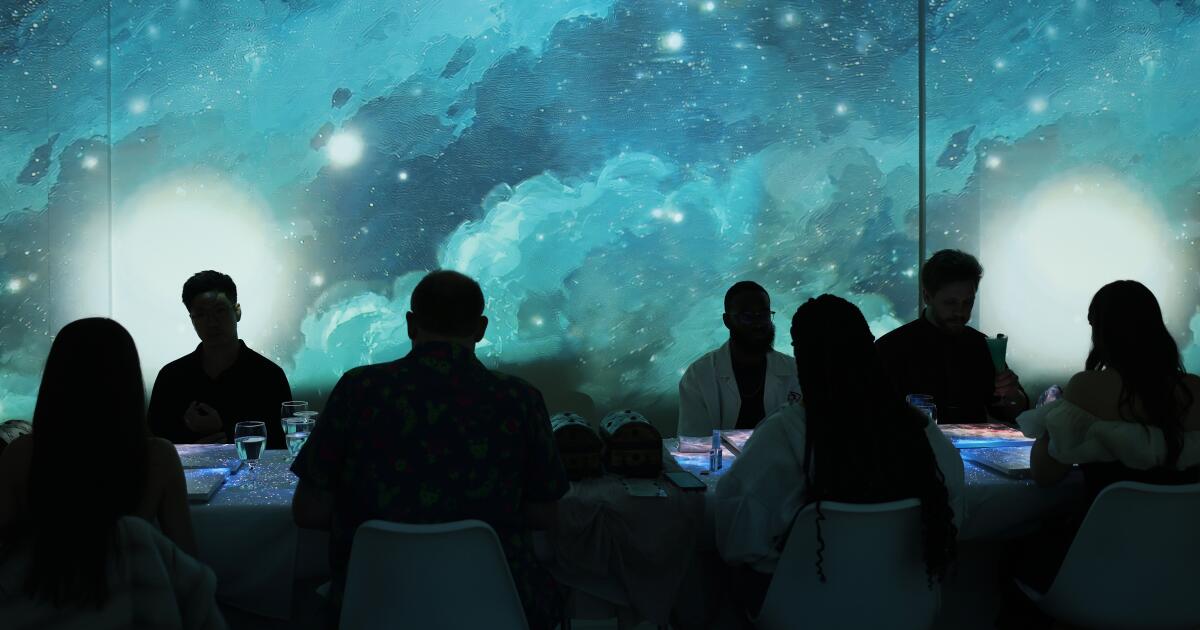
The room is overtaken with projections, scenes of bustling New York traffic paired with bachelor-pad-like guitar riffs. Shown on a wall above a dinner table is a selection of Warhol silkscreens. It’s a Friday night in West Hollywood, and I’m surrounded by a mix of out-of-towners and those celebrating an anniversary. And while this is a special occasion, we’re urged to get a little messy with our food — to use our hands, to paint with a salad, to draw on a cookie.
The main course: A tomato soup can? “7 Paintings” is an immersive event that occasionally hides dishes in artist-inspired presentations.
(Christina House / Los Angeles Times)
Play is the primary side dish at “7 Paintings,” a tech-infused dinner theater that aims to be a crash course in fine art. That selection of veggies paired with multiple mini cups of colorful dressings? Guests are encouraged to mix and match the vinaigrettes into a mess of hues, a nod to abstractionist Jackson Pollock. And yellowfin tuna with dashes of avocado and taro chips? That’s an edible tribute to Banksy, of course. What does raw fish have to do with stenciled street art? It’s bold, heavily angled and has a short shelf life? Maybe? Perhaps don’t overthink it.

Even the paper is edible.
(Christina House / Los Angeles Times)
“Have you ever eaten a painting before?” says Nadine Beshir, the Dubai-based creator of “7 Paintings.” “We try to get people out of their comfort zones and eating paper. I want to bring out the child in them.”
“7 Paintings,” held at Sunset House L.A. through the end of August, is the latest example of immersive dining to arrive in this city. These experiences often involve guest participation and are accentuated with advanced multimedia technology and sometimes theatrical elements.
Worldwide, there have been standouts. For instance, Eatrenalin at Germany’s Europa-Park, a dining room-meets-ride where participants are whisked around the space on trackless “floating chairs,” has just received a coveted Michelin star. Ibiza’s Sublimotion has similar haute ambitions, pairing 12 diners together in a room that will come alive with otherworldly projections and performers. At times, diners will win don virtual reality headgear.
But tech-driven immersive dining experiences have never quite taken off in Los Angeles as a trend. Last year, the Gallery, where fantastical cityscapes and projections surrounded downtown L.A. diners, stood just a couple months before the concept was abandoned.

“7 Paintings” pairs food with art and music. It’s “fun dining, not fine dining,” says its founder.
(Christina House / Los Angeles Times)

Bartender Luca Famulari shakes a cocktail at the immersive dining event.
(Christina House / Los Angeles Times)
“The economics of a restaurant are not the same as the economics of theater and the challenge of combining the two lies in thinking outside the box with respect to pricing and cost structure, such that the customer perceives high value from both the food and the experience,” says the Gallery co-founder Daren Ulmer.
Entrepreneurs keep aiming for that careful balance. “Le Petit Chef and Friends” is currently running at Tangier at downtown’s Hotel Figueroa, an event in which a fully animated film is projected on our plates and tables. Long-running pop-up event Fork N’ Film leans more dinner and movie, pairing dishes directly inspired by what is happening on screen. Upcoming films include “Ratatouille” and “Lilo and Stitch.”
The field comes with challenges. “The costs are very high,” says Joanna Garner, an immersive designer and former creative director with experiential art firm Meow Wolf. Garner has been experimenting herself with communal, immersive dinner events, and her next, the flirtatious “Please Open Your Mouth,” is set for July 11. (No tech there, as Garner is after a more sensual, adult-focused gathering.) Tickets for her event are $150 and a spot in the “7 Paintings” dining room runs $175, priced on par with a number of city’s most acclaimed restaurants.
There is also the reality that all public dining is in some fashion immersive, usually requiring varying combinations of engagement, communication and presentation. And then, are all these added elements distracting?

An animated Mona Lisa sits on the wall as guests enjoy their meals. Throughout the dinner, the painting provides factoids on various artists.
(Christina House / Los Angeles Times)
Throughout “7 Paintings,” for instance, an animated Mona Lisa, situated on the wall next to the main dinner table, will provide brief biographical details of each artist represented.
“Being able to nail the food, and nail the story, those are two very difficult threads to weave,” Garner says. “I do think, ultimately, people come to a dinner table to talk to the people at the table and to have intimate experiences. To have an experience where you’re constantly being taken away from the food, I’m not so sure if that’s what people are looking for.”
Food is framed as a star of “7 Paintings” but tasting it is just one component. At one point, we must uncover a cheese course in a tiny treasure chest, the code for the lock hidden in the projections (don’t stress, it’s not a hard puzzle). Beshir highlights the Pollock-inspired salad course, which is accentuated with a jazz soundtrack, as the thesis of the evening.
1

2

1. A guest uses a silicon brush to apply sauces onto an entree, a nod to abstractionist Jackson Pollock. 2. Projections fill up the dining table during meals.
“This course is really about getting people to free their minds from preconceived ideas,” Beshir says. “Like, you have to eat with a fork and knife, or the salad comes and then the dressing. No, the dressing comes and then the salad, and it’s trying with big brushes to paint the way he did. A lot of people do not understand Abstract Expressionism, and they think it’s people just splashing colors around. But when you understand the link between the rhythm of the music and painting, you live it. We give you time to paint with your salad dressing.”
In L.A., Beshir has partnered with nightlife impresario Kim Kelly, who is plotting a “Sleep No More”-inspired walk-around theatrical show for the Sunset House venue later this year. “7 Paintings,” however, is fully seated, and purposefully a little silly. Beshir and Kelly have been evolving it during its L.A. run, recently adding a stronger painting component by giving guests their own canvas to work on throughout the evening. Each night crowns a winner.
“Everyone comes over to look at their art,” Kelly says. “It just kind of changed the whole thing, to be honest. People are now being creative throughout the entire evening. Instead of just watching and occasionally painting, you’re now painting the whole time.”
As for what, perhaps, soba noodles with edamame and mushrooms have to do with Pablo Picasso, or why Salvador Dali gets an unexpected dessert course of a white chocolate potato souffle, Beshir clarifies the goal of the evening. While the animated Mona Lisa will provide backstories on each painter, this isn’t an educational night. “It’s fun dining, not fine dining,” Beshir says.
And by the end of my night, strangers were socializing, showing off their painted cookie creations, sharing Banksy tidbits and asking for recommendations on various vinaigrette combinations. Ultimately, it’s an evening of discovery, packed with surprises like finding an entire course hidden under a canvas.

Darryl Mayes of Charlotte, N.C., left, and Taylor Smith of North Hollywood, right, uncover their course.
(Christina House / Los Angeles Times)
“We try not to have too much sophistication, like fried ants or something. I’m personally very adventurous in how I eat, but if I want to have this in 100 cities around the world, I cannot be too meticulous.”
And Beshir has big goals.
“I want this be your movie and dinner thing,” Beshir says. “I want people to be waiting for our next show, and to be able to afford to come every couple months.”
And to come home not with leftovers, but perhaps a painting of their own.
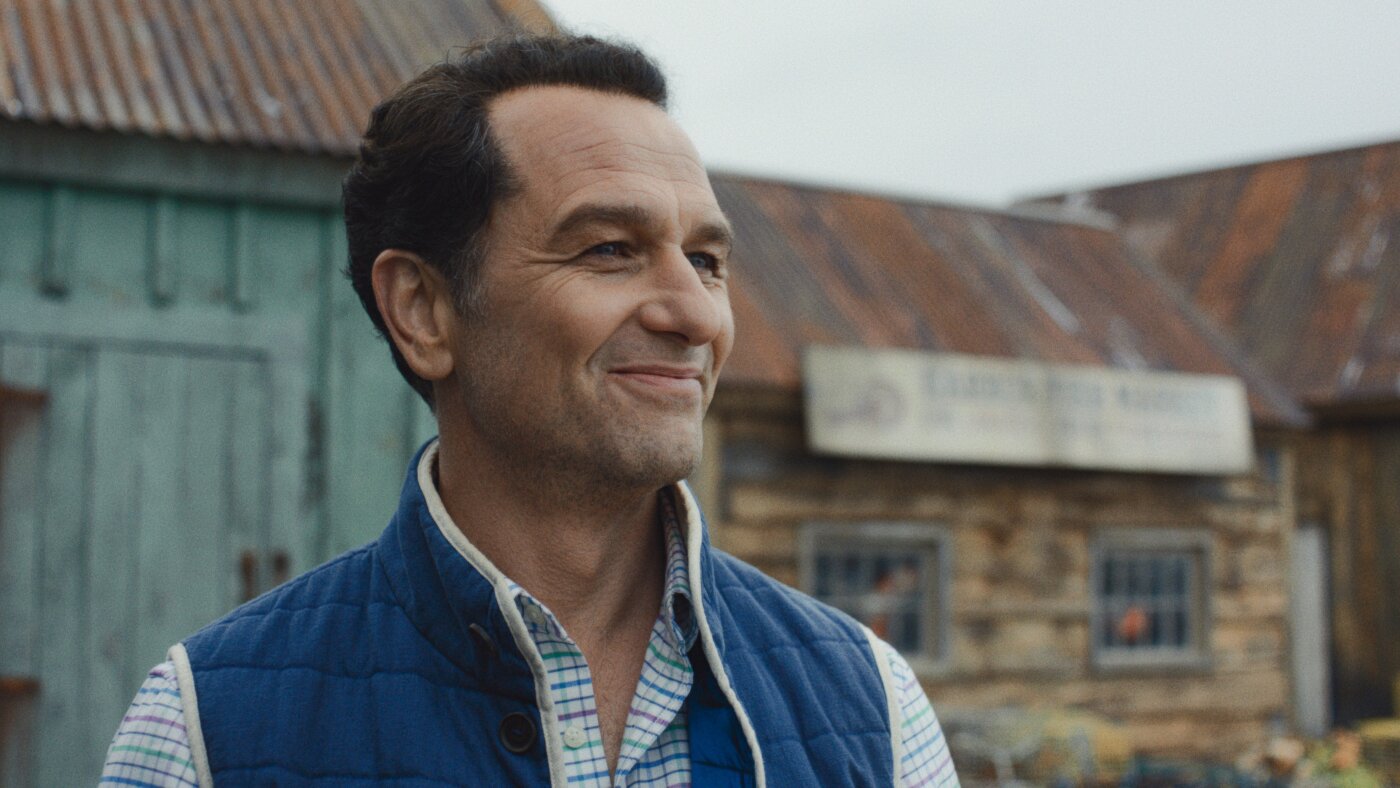
Matthew Rhys was nominated for his role in Widow’s Bay.
Apple TV
hide caption
toggle caption
Apple TV
The 2026 Emmy nominations are here. We’re unpacking the record-breaking nominations for Hacks, plus a big day for Widow’s Bay, The Pitt, and The Bear. We’ll also talk about the snubs and make some early predictions of who will win.
Connect with Pop Culture Happy Hour:
Letterboxd / Facebook
Our weekly newsletter
Support Pop Culture Happy Hour+
-

 North Dakota2 minutes ago
Today in History, 1975: Earthquake rattles portions of Minnesota and the Dakotas, including Fargo-Moorhead
-

 Ohio9 minutes ago
Is another team ready to take over the top of the Big Ten from Indiana and Ohio State?
-

 Oklahoma12 minutes ago
Kip Lewis reveals why he returned to Oklahoma for senior season
-

 Oregon17 minutes ago
Pierce County Sheriff: Homicide ‘suspect was shot and killed by police in Seaside, Oregon’
-

 Pennsylvania24 minutes ago
‘Natural splendor at its best’: Penn’s Cave may become Pa.’s next state park
-

 Rhode Island27 minutes ago
Throwback: USS Rhode Island commissioned in Newport
-

 South-Carolina32 minutes ago
Watch out for SC’s 5 most common ticks and take steps to avoid bites
-
South Dakota39 minutes ago
SD Lottery Powerball, Lotto America winning numbers for July 8, 2026

