Education
Video: Opinion | We Study Fascism, and We’re Leaving the U.S.


I’m a historian of totalitarianism. I look at fascist rhetoric. I’ve been thinking about the sources of the worst kinds of history for a quarter of a century. “Experts say the constitutional crisis is here now.” ”The Trump administration deporting hundreds of men without a trial.” “A massive purge at the F.B.I.” “To make people afraid of speaking out against him.” I’m leaving to the University of Toronto because I want to do my work without the fear that I will be punished for my words. The lesson of 1933 is you get out sooner rather than later. I’ve spent a lot of time in the last decade trying to prepare people if Trump were elected once, let alone twice. “Look what happened. Is this crazy?” [CHEERING] I did not flee Trump. But if people are going to leave the United States or leave American universities, there are reasons for that. One thing you can definitely learn from Russians — — is that it’s essential to set up centers of resistance in places of relative safety. We want to make sure that if there is a political crisis in the U.S., that Americans are organized. ”We’ve just gotten started. You haven’t even seen anything yet. It’s all just kicking in.” My colleagues and friends, they were walking around and saying, “We have checks and balances. So let’s inhale, checks and balances, exhale, checks and balances.” And I thought, my God, we’re like people on the Titanic saying our ship can’t sink. We’ve got the best ship. We’ve got the strongest ship. We’ve got the biggest ship. Our ship can’t sink. And what you know as a historian is that there is no such thing as a ship that can’t sink. “The golden age of America has only just begun.” America has long had an exceptionalist narrative — fascism can happen elsewhere, but not here. But talking about American exceptionalism is basically a way to get people to fall into line. If you think that there’s this thing out there called America and it’s exceptional, that means that you don’t have to do anything. Whatever is happening, it must be freedom. And so then what your definition of freedom is just gets narrowed and narrowed and narrowed and narrowed, and soon, you’re using the word freedom — what you’re talking about is authoritarianism. Toni Morrison warned us: “The descent into a final solution is not a jump. It’s one step. And then another. And then another.” We are seeing those steps accelerated right now. There are some words in Russian in particular that I feel help us to understand what’s happening in the United States because we now have those phenomena. “Proizvol”: It’s the idea that the powers that be can do anything they want to and you have no recourse. This not knowing who is next creates a state of paralysis in society. The Tufts student whose visa was removed because she co-authored an article in the Tufts student newspaper. [DESPERATE YELLING] I thought, what would I do if guys in masks tried to grab my student? Would I scream? Would I run away? Would I try to pull the mask off? Would I try to videotape the scene? Would I try to pull the guys off of her? Maybe I would get scared and run away. The truth is, I don’t know. Not knowing terrified me. It’s a deliberate act of terror. It’s not necessary. It’s just being done to create a spirit of us and them. “Prodazhnost”: It’s a word in Russian for corruption, but it’s larger than corruption. It refers to a kind of existential state in which not only everything but everyone can be bought or sold. “Critics are calling this a quid pro quo deal between Adams and President Trump.” “I’m committed to buying and owning Gaza.” “He made $2.5 billion today, and he made $900 million.” There’s an expression in Polish: “I found myself at the very bottom, and then I heard knocking from below.” In Russian, that gets abbreviated to “There is no bottom.” “We cannot allow a handful of communist radical left judges to obstruct the enforcement of our laws.” What starts to matter is not what is concealed but what has been normalized. There is no limit to the depravity — ”President Trump did not rule out the possibility of a third term.” — and the sadism — “The White House released this video titled ASMR Illegal Alien Deportation Flight.” — and the cruelty that we are watching now play out in real time. “This facility is one of the tools in our tool kit that we will use.” You have to continually ask yourself the question, “Is this OK? Is there a line I wouldn’t cross? Is there something I would not do?” People say, oh, the Democrats should be doing more. They should be fixing things. But if you want the Democrats to do things, you have to create the platform for them. You have to create the spectacle, the pageantry, the positive energy, the physical place where they can come to you. Poland recently went through a shift towards authoritarianism. Unlike in Russia, unlike in Hungary, the media remained a place, in Poland, where you could criticize the regime. And as a result, democracy returned. The moral of Poland is that our democratic institutions — the media, the university, and the courts — are essential. You know you’re living in a fascist society when you’re constantly going over in your head the reasons why you’re safe. What we want is a country where none of us have to feel that way.



In our national memory, George Washington is a mythic figure, cast in metal, carved in stone. His leadership, first as general, then as president, is so intertwined with the roots of this country that it is sometimes hard to separate the man from the idea of America. How does one imagine the living presence of such an icon, much less embody him?
There is a small fraternity of men bold enough to try. At historical parks and commemorations from Virginia to Seattle, these interpreters (their preferred term) transform themselves into Washington. Each has his own approach, but what all their representations seek to capture is a legacy that has endured from his time to ours. If America, at least in part, is an idea, then our national project becomes, like theirs, an act of interpretation, an imperfect attempt to translate some idealized vision into the messy reality of our own time.
— Ezekiel Kweku
“By some strange quirk
of genetics, I have
Washington’s exact
dimensions. Where my
sleeves fall on my wrist,
the size of my chest, the
size of my thighs, where
the breeches fall to my
knees, are all identical.”
John Koopman, 67, often performs
while riding his horse, Bear. He
has portrayed Washington for 20 years.
James Fryer, 70, wears a replica of a general’s uniform that Washington designed himself. He recently completed training to portray Washington for the nonprofit Historic Philadelphia.
“Some people portray George as a marble statue. I don’t do a marble George. I am interested in talking to everyone, even those who yell at me because George was a slave owner. I want to respect them, try to educate them, or maybe even inspire them.”
Vern Frykholm, 77, was moved to bring his interpretation of Washington to Washington State, where he lives, after seeing a 2011 performance in Pennsylvania.
Dean Malissa, 73, signs his personal
correspondence, including emails,
as Washington did: “Your Most Humble
and Obedient Servant.” He became
the Official George Washington
at Mount Vernon in 2004, and held
that role for nearly 20 years.
“I describe him sometimes as just a dude. I look at him and think, I could see myself in the same world, making similar bad decisions or similar good decisions.”
Daniel Cross, 39, portrayed a young Washington at Virginia’s Colonial Williamsburg until last year. He now works with organizations around the country.
Curt Radabaugh, 62, has 13,000 history books in his personal library, including several hundred about Washington. He is a veteran of the U.S. Marines and a retired police officer.
“He’s a mentor, a father
figure, and not only in the
sense that he’s a patriarch
of the country. Because
I grew up without a
father, he kind of became
my surrogate father.”
Brian Hilton, 58, says he researches
Washington’s era every morning before
his children get up and at night after
they go to bed. He is a high school history
teacher near Richmond, Va.
Daniel Shippey, 57, partners on interpretations with his wife, Kelly, who portrays Martha Washington. Kelly researched 18th-century hair techniques to create her husband’s costume hairstyle. They live in Virginia.
“You’re playing the myth of George Washington as well as the historical figure. I make his voice a little firmer and deeper than it probably was in real life. I play him a little funnier than he probably was. In reality, if you came to see him, he probably wouldn’t talk to you as much as I do.”
Doug Thomas, 53, is Washington’s second cousin nine times removed.
John Godzieba, 67, has reenacted
the crossing of the Delaware as
Washington every Christmas for the
past 16 years at Pennsylvania’s
Washington Crossing Historic Park.
“In many ways I don’t look like him. My eye color is wrong. My nose is wrong. My hair color is wrong. I wouldn’t have cast myself in this role.”
Ron Carnegie, 64, has portrayed Washington at Colonial Williamsburg for 20 years.
Ryan Williams, 37, is a veteran who specializes in playing a young Washington during the French and Indian War. He lives in Virginia.
“Some people portray
Washington almost
like a superhero.
I like to bring out that
he has faults. He’s a
person like you or me.”
Michael Grillo, 64, is a historical
tailor who hand-sews his own clothes
for reenactments. He also makes
period props, including two American
battle flags and pewter mugs
engraved with Washington’s crest.
Martin Schoeller is a photographer and director known for his close-up portraits of everyone from world leaders and celebrities to female bodybuilders. For this project, he used a large format camera to photograph 13 historical interpreters of George Washington — many of whom arrived in full uniform — over three days in Virginia and New York City.
Additional reporting by Tenzin D. Tsagong. Interviews have been edited and condensed for length and clarity. Top quotes from Brian Hilton, Daniel Shippey and Daniel Cross.
Produced by Sara Barrett, Danny DeBelius and Sam Whitney. Additional production by Olivia James.
One task the robots can take from us? Cleaning. Especially hard-to-access windows. So when writers Caroline Mullen and Evan Dent found this little guy — whose government name is “EcoVacs Winbot Mini” — they were intrigued. Could he clean the uncleanable? Caroline and Evan put their robot friend to the test at both the Wirecutter office and a high-rise apartment. Is a robo-window cleaner more effective than scrubbing yourself?

new video loaded: School Year Cut Short and Aid Delivery Slowed Amid Fuel Crisis in Cuba

By McKinnon de Kuyper
June 22, 2026
-
Culture27 minutes ago
Which Version of the ‘Odyssey’ Should You Read?
-
 Lifestyle30 minutes ago
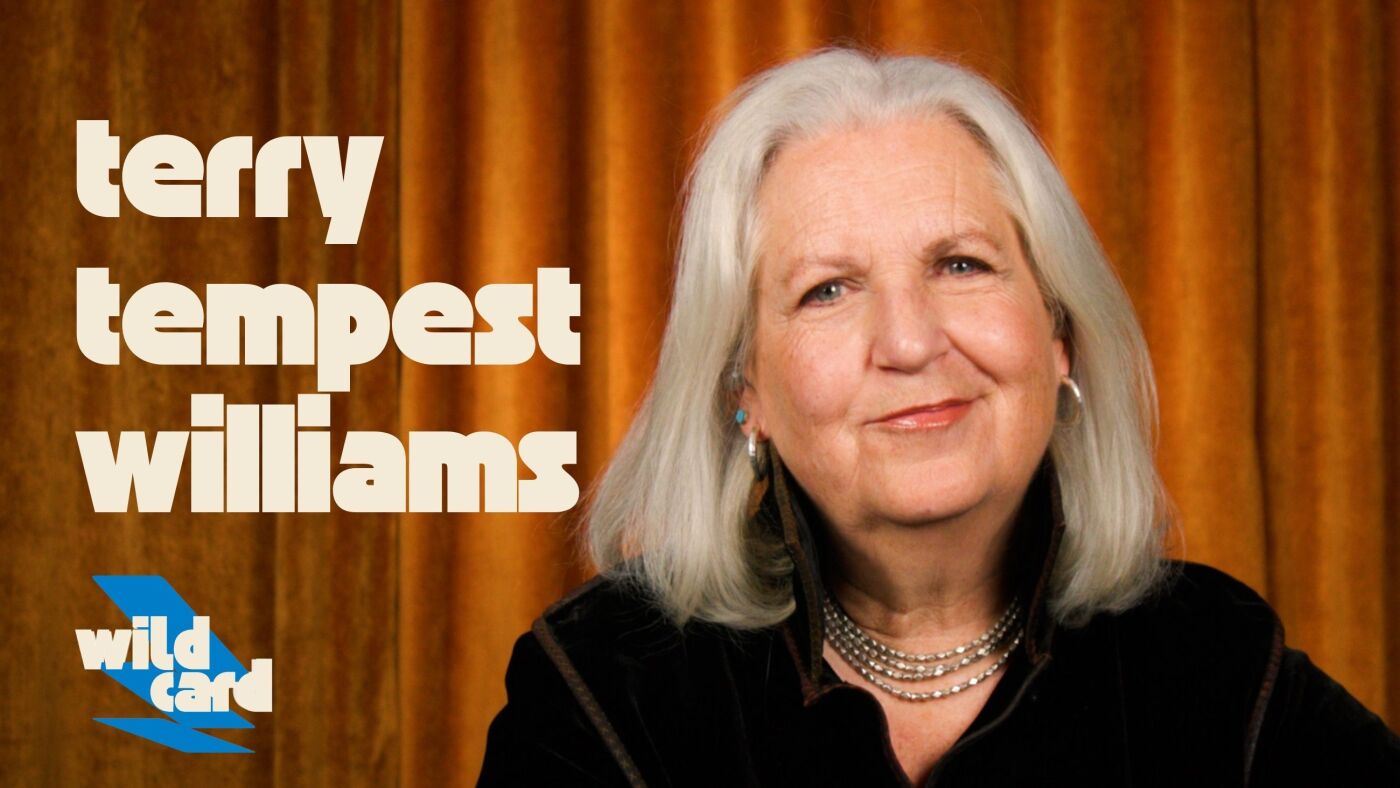
Terry Tempest Williams on why women with big ideas get labeled ‘crazy’ : Wild Card with Rachel Martin
-

 Technology42 minutes ago
Google’s Nest Thermostat has hit its best price of the year
-

 World45 minutes ago
Argentinian flight instructor jumps to death from plane, 22-year-old student forced to land alone
-

 Politics50 minutes ago
Omar’s disclosures erased millions, leaving her with potential negative net worth. She won’t explain why.
-

 Health57 minutes ago
Dr Oz links obesity to chronic disease surge, says GLP-1s can ‘jumpstart’ better health
-

 Sports60 minutes ago
Pirates star pitcher makes unfortunate history after being taken out in middle of perfect game bid
-

 Technology1 hour ago
Medical identity theft follows you into the doctor’s office

