Denver, CO
The Broncos aren't doing anything to end the Chiefs dynasty


Merilatt Monday is brought to you by Mercedes-Benz of Loveland
The Chiefs are a dynasty. After winning Super Bowl LVIII in thrilling fashion, with a walk-off touchdown in overtime, Kansas City has put that debate to bed.
They’ve won three Super Bowls in the last five years, including back-to-back titles. They’ve played in six-straight AFC Championship Games, winning four. And they’ve won the AFC West eight consecutive seasons, the longest streak in the history of a division that dates back to 1960.
It’s an unprecedented run. And even though it’s not a popular opinion, it’s unlike anything the Broncos have ever put together.
Sure, the three Super Bowls in four years during the 1980s was great. But John Elway and company never hoisted the Lombardi Trophy.
Yes, the back-to-back titles in the late 1990s were great. But the Chiefs have matched that, gone to another two Super Bowls and won another championship.
And granted, the Peyton Manning era was amazing. But that four-year run only featured two Super Bowl appearances and one parade through the streets of Denver.
Game. Set. Match.
The Chiefs are the best team to ever play in the AFC West. Andy Reid is the best head coach. And Patrick Mahomes is the best quarterback.
There really isn’t any argument against those statements. The Broncos, Chargers, Raiders and Seahawks (back in the day) have no run of success quite like what Kansas City has put together during the last six years.
That’s why every other team in the division should be fed up. They should be sick and tired of watching their rivals get all the glory. They should convulse at another shot of Reid and Mahomes on a postgame podium, Travis Kelce and Taylor Swift embracing on the field, and the Hunt family adding more hardware to their trophy case.
Is that the case in Las Vegas? It’s hard to tell, but who cares what Mark Davis is thinking.
Is that the feeling in Los Angeles? No one knows for sure, but the Spanos family luring Jim Harbaugh away from Michigan offers a strong indication.
Is that the mood in Denver? That’s open for discussion.
Since taking over the team prior to the start of the 2022 season, the Walton-Penner Family Ownership Group certainly has been willing to spend money. They signed Russell Wilson to a contract totaling $242.6 million, the paid Nathaniel Hackett to go away after just 15 games, the inked Sean Payton to a five-year deal worth a reported $80-90 million and they shelled out $235.1 million in contracts during their first foray into free agency.
The riches owners in the NFL have deep pockets. And they’re more than willing to dig into them.
That suggests a commitment. That offers hope that the right mindset exists in Denver.
But will it last? Is that something that Greg Penner is willing to keep doing?
Those are two questions that are hard to answer. But the signs aren’t encouraging.
During his end-of-the-season press conference, George Paton suggested that the Broncos wouldn’t be big spenders in 2024. The Broncos general manager set expectations for the upcoming offseason.
“We won’t be in on the first wave of free agency like we were last year,” Paton said. “You can’t do that every year.”
He’s not wrong. In a salary-capped sport, the spending has to be curtailed at some point. But after one year? That seems a bit premature.
Of course, the Broncos are going to be dealing with salary cap issues. If they decide to part ways with Russell Wilson, they’ll be absorbing $85 million in dead cap from the quarterback’s contract. That’ll tie their hands to a large degree.
But Denver is voluntarily putting themselves in that position. They could choose to pay Wilson to play the next two seasons in Denver, a move that would cost them more in cash during the 2024 and ’25 seasons, but would avoid huge cap hits for a player not on the roster.
Instead, they seemingly are willing to put themselves in salary cap purgatory for two seasons. It’s all but waving the white flag on trying to dethrone the Chiefs this season or next.
And the two people most-responsible for this mess are still employed. They’re still in charge of everything football-related in Denver.
Paton is still the GM, even though he made the trade for Wilson and gave the quarterback a five-year contract extension before he ever played a down in a Broncos uniform. And that’s just the first of his many mistakes. Hackett was another, Randy Gregory makes the list, so too do the contracts given to Courtland Sutton and Tim Patrick.
The Broncos cap issues are Paton’s fault. But he’s still around.
His power has been curtailed a bit, as Sean Payton now has final say in personnel matters. But that might not be a good thing. The head coach seems to be infatuated with anyone who has ever eaten a beignet at Cafe Du Monde. He also refuses to make it work with a quarterback who has played in two Super Bowls and was in the HOV lane to Canton before he got to Denver.
Instead, Payton is going to try to prove what an offensive genius he is by winning with a system quarterback. It’s the same mistake Mike Shanahan made in 1999 with Brian Griese and Gary Kubiak made in 2016 with Trevor Siemian. The head coach thinks his X’s and O’s are more important that the Jimmys and the Joes.
Yet, Penner is letting it all happen. The Broncos owner is allowing Payton and Paton to put the Broncos further and further behind the Chiefs, as evidenced by their woeful Super Bowl odds next season.
Perhaps he’s taking the long view. After all, Denver probably isn’t going to be catching the Chiefs in the next two seasons anyway. Their light years behind the back-to-back champs, so a total rebuild might be a good idea.
But if that’s the plan, why hire Payton? Why bring in a win-now coach with a Super Bowl title on his resume?
It doesn’t add up. In fact, it suggests that there isn’t much of a plan in place.
That’s why Penner’s words ring a little hollow. His comments in early January fail to hit the mark.
“We’re just as impatient as you are to win,” he said to Broncos Country.
Is that true? Are Penner and the rest of the ownership group really as anxious and fed up as the fans who’ve watched the worst stretch of NFL football ever played in the Mile High City?
It doesn’t seem so. Otherwise, he’d be making bold moves to make sure the dynastic run of the Chiefs comes to a close as quickly as possible.
Build around Russ, the only Broncos quarterback to beat Kansas City since Peyton Manning was behind center. Force Payton to make it work with a QB that has won a lot of games in the NFL. Tell Paton that he’s made one too many mistakes to still be in charge.
Do something. Otherwise, Penner is the opposite of impatient. He’s passively watching as his team’s rival runs circles around his franchise.



DENVER (KDVR) — More sunny and hot conditions are in Denver’s weather forecast for the rest of the weekend and into next week.
Denver weather tonight: Mainly clear
Saturday night will stay mainly clear and warm. Low temperatures will fall to the mid 60s, which is about 5 degrees warmer than normal for this time of year.
Denver weather tomorrow: Sunny, hot
Sunday will be sunny, breezy and hot with wind gusts out of the south southwest picking up to 20-30 mph. High temperatures will climb to the mid 90s, which is more than 5 degrees warmer than normal for this time of year, but well below the daily record of 102 set in 2024.

Looking ahead: Hot week ahead
Sunshine and a warming trend continues on Monday. High temperatures will reach just below the daily record of 100 degrees set in 2003.

More sunny and dry conditions are on the way through the workweek. Every day will start with a low in the 60s, then plenty of sunshine helping to boost high temperatures to the mid to upper 90s.

There is a slight chance for showers, mostly in the High Country, that return by the end of the week and the start of the weekend.

Getty
Peyton Watson #8 of the Denver Nuggets is a potential Lakers free-agent target.
The Los Angeles Lakers are still exploring means to improve their roster ahead of the upcoming season. Moves have been made already, but there are opportunities to add more talent around Luka Doncic.
One potential target for L.A. is Denver Nuggets star, Peyton Watson. In a proposed multi-team deal involving the Miami Heat and New Orleans Pelicans, the Lakers could land the high upside talent.
In the deal:
Both Watson and Jones have been linked with a move to L.A. this offseason, but no deal has been able to push forward. This proposal offers a chance to get both with one swing.
Lakers’ Outline for Acquiring Peyton Watson Through Trade
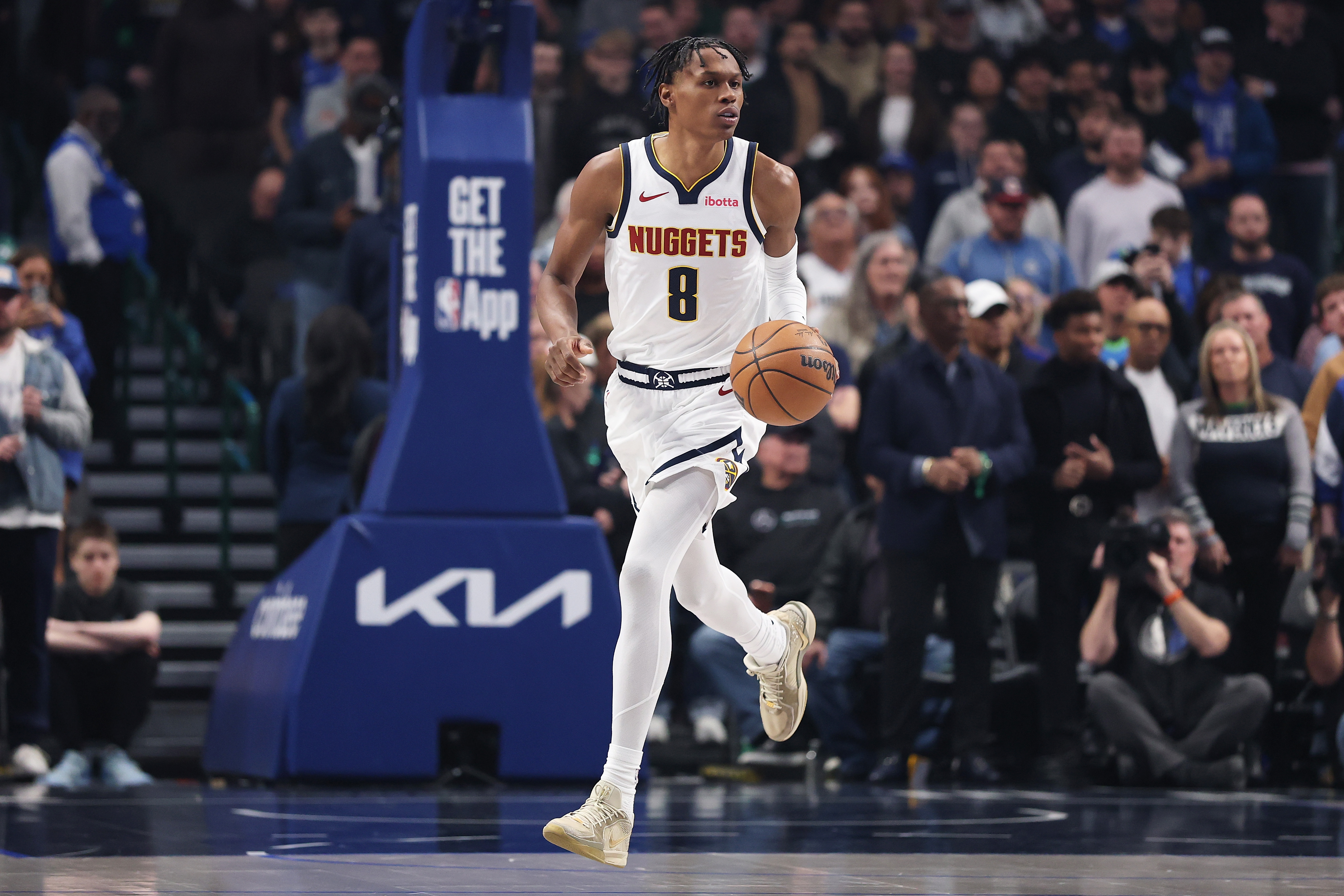
GettyDALLAS, TEXAS – JANUARY 14: Peyton Watson #8 of the Denver Nuggets handles the ball during a game against the Dallas Mavericks at American Airlines Center on January 14, 2026 in Dallas, Texas.
Watson, 23, is a restricted free agent, which makes any approach difficult. The Nuggets could match any offer to retain him and are reportedly planning to do so.
The 6-foot-8 star is coming off a breakout season in Mile High City, averaging 14.6 points, 4.9 rebounds, 2.1 assists and 1.1 blocks per game. He shot 49.1% from the field and 41.1% from three while starting 40 of his 54 appearances.
Watson’s camp is reportedly seeking north of $25 million per year which is unfavorable for the Nuggets at this point. Denver already has huge commitments to Nikola Jokic, Jamal Murray, Anthony Gordon and Christian Braun.
The Lakers can capitalize on the Nuggets’ need to move for pieces for flexibility and pitch a move for Watson. There would be adequate space to fit in the incoming star with the outgoings in this framework.
The Lakers can offer Watson a multi-year deal that doesn’t affect their flexibility. Vanderbilt’s outgoing deal is the most notable, which is why the Lakers have put him at the top of their moving list for now.
Watson’s Upside and Adding Herb Jones to the Roster

GettyLuka Doncic #77 of the Los Angeles Lakers passes the ball as he is pressured by Herbert Jones #2 and Jeremiah Fears #0 of the the New Orleans Pelicans during the second quarter of an 2025 Emirates NBA Cup game at Smoothie King Center on November 14, 2025 in New Orleans, Louisiana.
The Lakers would also get Jones out of this trade from the Pelicans. He is on a three-year, $68 million extension going through 2028-29 with a player option. His cap hit for 2026-27 sits at around $14.9 million.
With Watson and Jones, the Lakers would be bringing in roughly $38 million worth of salary, adding both Saddiq Rey for depth while sending out only about $26 million. This scenario would push L.A. well over its luxury limit but not into restrictive zones.
A potential lineup having Watson and Jones alongside Doncic, Austin Reaves and the newly acquired Walker Kessler, is positioned to be a strong core.
The real hurdle is getting Denver to move on from Watson. The franchise is committed to keeping him, even if it means giving up one of their more seasoned stars. They did activate a qualifying offer, making him restricted and they intend to match offers. Although a sign-and-trade is not impossible and the Lakers can work with that.
Adel Ahmad Adel is a writer with over five years of experience covering the NBA. His work has appeared on various media platforms, both national and local. More about Adel Ahmad
Denver, CO
One tree at a time: Denver nonprofit works to close shade gap as heat dome threatens neighborhoods

DENVER — Some Denver neighborhoods are far more vulnerable to this weekend’s incoming heat dome than others — and the difference comes down to trees.
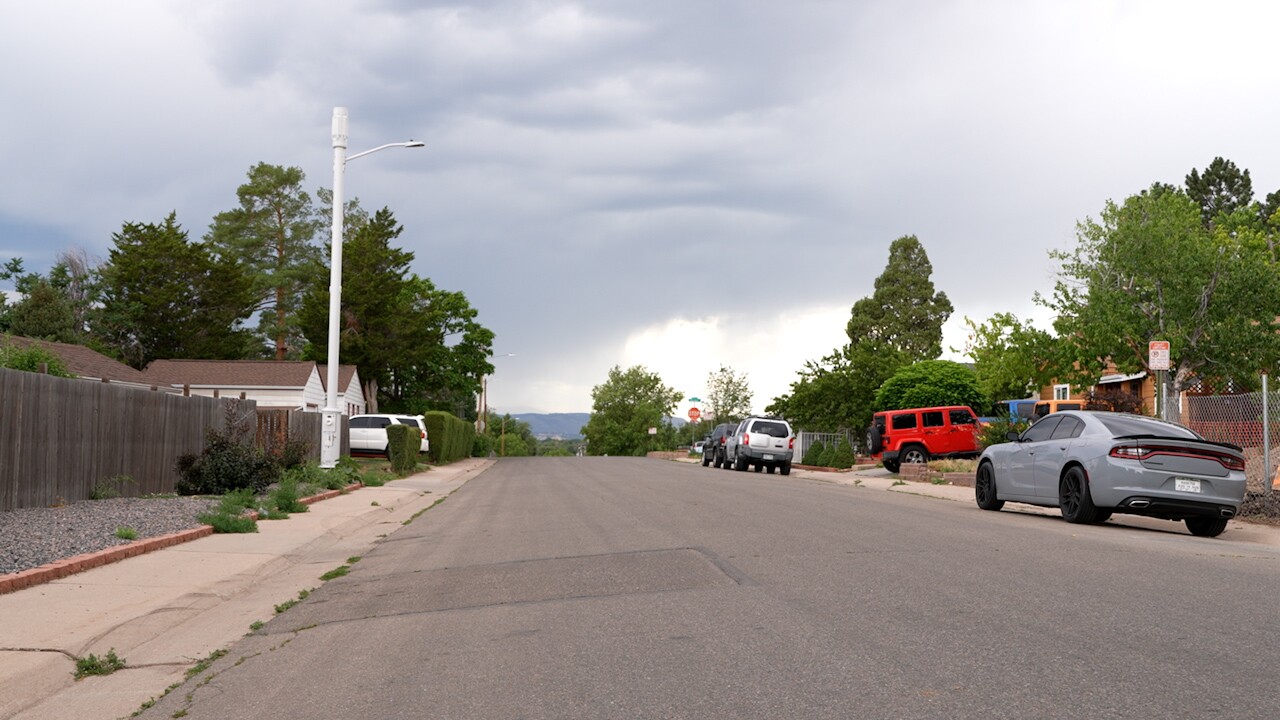
The Valverde neighborhood on the city’s west side has about 9% canopy cover, leaving residents with little shade as temperatures climb toward triple digits.
▶️ WATCH: Denver7’s Claire Lavezzorio learns more about The Park People and how it is helping neighborhoods in Denver.
One tree at a time: Denver nonprofit works to close shade gap as heat dome threatens neighborhoods
Kim Yuan-Farrell, executive director of The Park People, a nonprofit that plants trees in underserved neighborhoods, said the disparity across Denver is stark.
“We have some neighborhoods that have wonderful canopy cover, like 20 to 30% of those neighborhoods are forested. Then a number of our neighborhoods have really low canopy cover, between four or 8% where it’s just significantly less,” Yuan-Farrell said.
Denver7
The Park People identified 28 neighborhoods in need of more tree cover, including Westwood, Globeville and Northeast Park Hill.
Trees can cool an area by 15 to 20 degrees, making a significant difference.
The National Weather Service (NWS) warned the heat dome could last through next weekend.
“The exceptional thing about this is how long it will last,” said NWS meteorologist Russell Danielson. “If you do have trees to take shelter under, it does actually cool down the temperature a decent amount.”
Yuan-Farrell said trees are more than a comfort — they are a critical piece of urban infrastructure.
Denver7
“We really consider it a really essential element of green infrastructure, a real nature-based solution to a lot of these really serious local environmental problems,” Yuan-Farrell said.
In the map below, explore Denver’s libraries and rec centers that welcome the public in from the heat during business hours.
When asked whether Denver has a long road ahead, she did not hesitate.
“We have a lot of work ahead of us,” Yuan-Farrell said. “And we really need our whole community to get involved in that.”
The Park People plant anywhere from 1,200 to 2,000 trees a year. You can apply for one in your yard. Planting is set to begin in September.

Denver7 | Your Voice: Get in touch with Claire Lavezzorio
Denver7’s Claire Lavezzorio covers topics that have an impact across Colorado. If you’d like to get in touch with Claire, fill out the form below to send her an email.
-
 Lifestyle11 minutes ago
Love Island and Pre-Teen Punks with Jason Narducy : Wait Wait… Don’t Tell Me!
-

 Technology23 minutes ago
Oregon’s Attorney General withdraws effort to delay Paramount and Warner Bros. merger
-

 World26 minutes ago
Gunfire shatters Toronto Latin street festival, leaving at least 2 dead and multiple wounded
-

 Politics31 minutes ago
Sen. Lindsey Graham dead at 71 after ‘brief and sudden’ illness, office says
-

 Health38 minutes ago
Last American to use an iron lung dies at 78 years old after childhood polio diagnosis
-

 Sports41 minutes ago
Conor McGregor’s long-awaited Octagon return cut short by apparent knee injury seconds into UFC 329
-

 Technology46 minutes ago
Robotaxi pit stops could pop up near you
-
 Business53 minutes ago
‘Moana’ debuted just 10 years ago. Why Disney is remaking it as a live-action movie

