Lifestyle
Is print dead? Not at this indie bookstore publishing L.A.'s untold stories

Donato Martinez reads his poetry at the Libros Lincoln Heights bookshop.
On a Saturday evening in late April, the door of the Libros Lincoln Heights is propped open. Inside, 18 local poets pack the narrow single-room bookstore, waiting for a chance to read a poem or two at this month’s open mic in front of an enthusiastic audience.
Donato Martinez, an English professor at Santa Ana College, is the third poet to take the podium. He reads from a stack of loose papers, his hands moving in time with the stanzas he spits like rap bars.
“All street vendors are allowed. / taco stands that never get shut down / Free zone any time / Patrolled by our own. That means Elotes. Churros. Bacon wrapped hot dogs / Fruit cocktails anytime,” Martinez recites from his new poem, titled “If I Was God I Would Visit the Hood.”
The audience snaps and hums, layering their own harmony over the soft whir of the ceiling fan and the cars rushing down North Broadway.
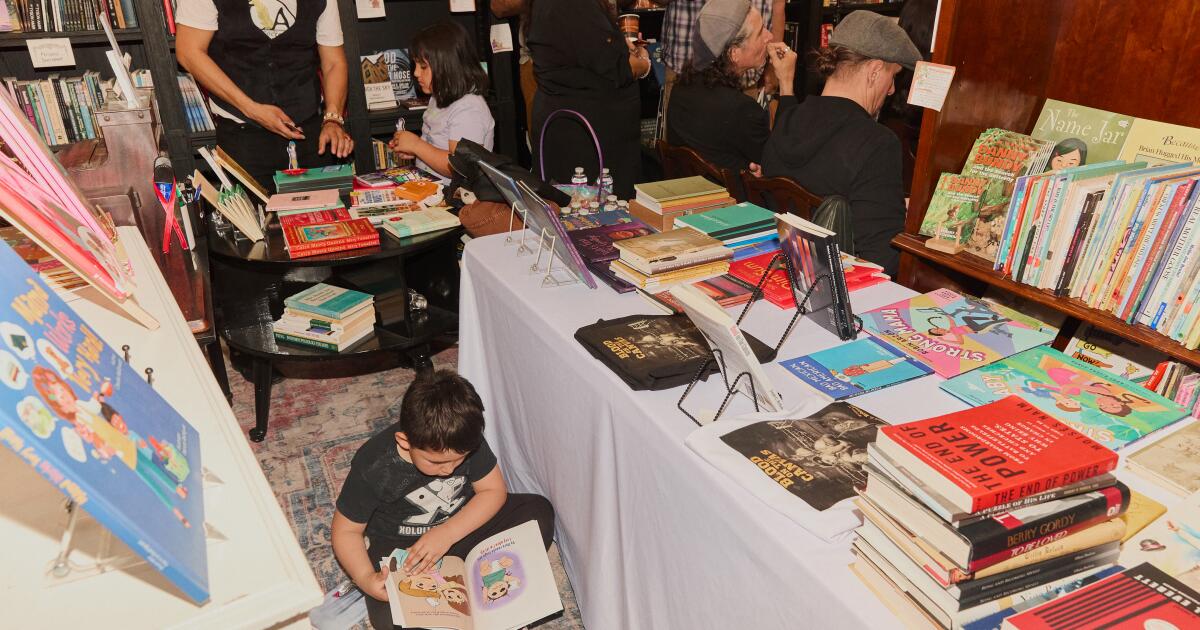
Martinez’s poetry collection “Touch the Sky” can be found on the surrounding shelves, along with collections from three other of the night’s readers. Their presence speaks to the driving ethos behind the Libros: 80% to 90% of the merchandise on the bookstore’s mismatched shelves are written by residents of Lincoln Heights and nearby neighborhoods.
“I don’t just have one little shelf for local authors. The whole place is local authors,” Jesse Marez, the owner of the Libros, said. “It blends in with the neighborhood.”
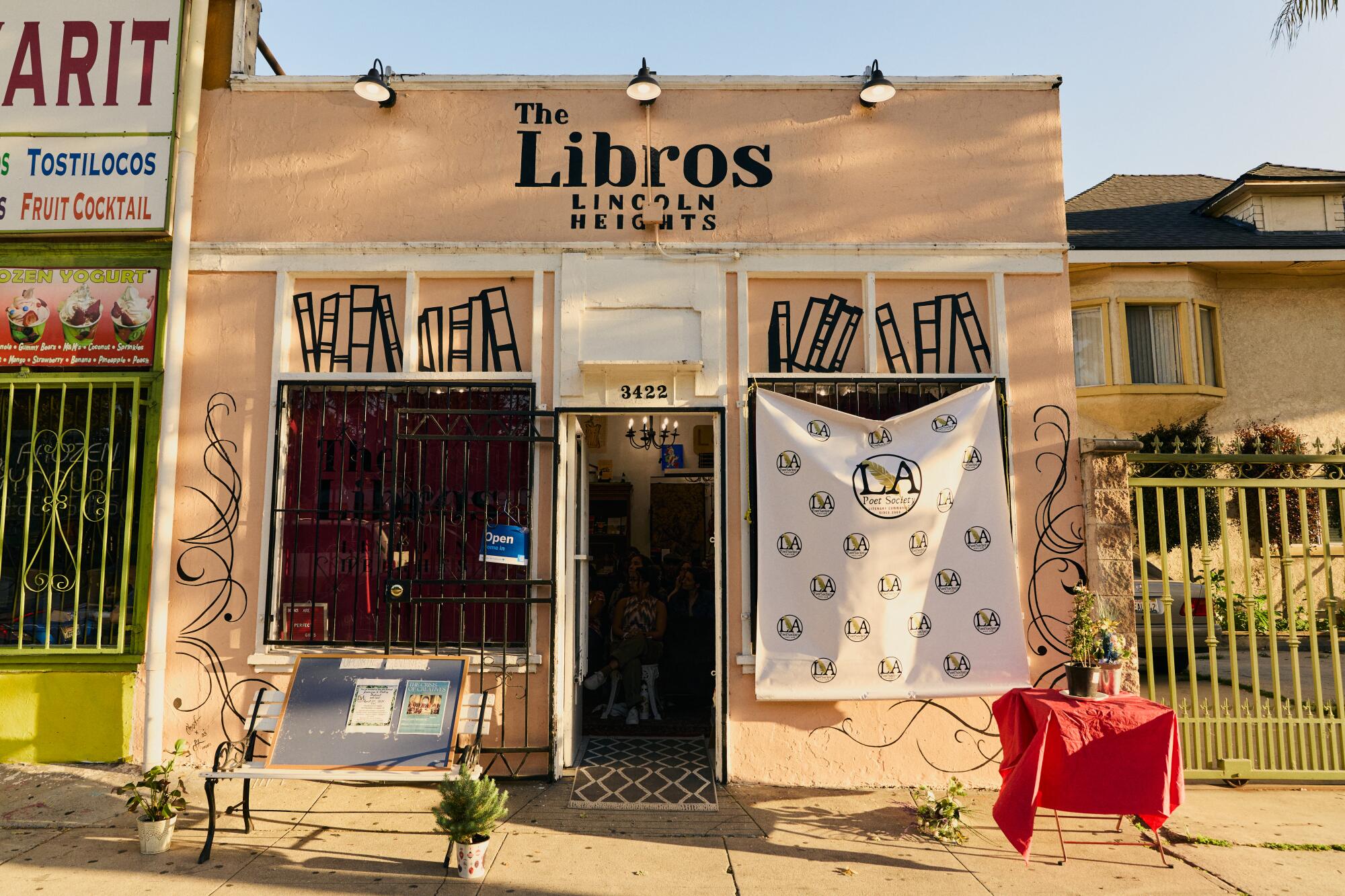
Marez, an electrical engineer by trade and lifelong book lover, opened the Libros last November, in an effort to consolidate the bookshelves he’d been curating at cafes across the Eastside since late 2021. He estimates that it is the first bookstore in Lincoln Heights in upwards of 70 years.
A sticker for the Libros on the doorway of the shop.
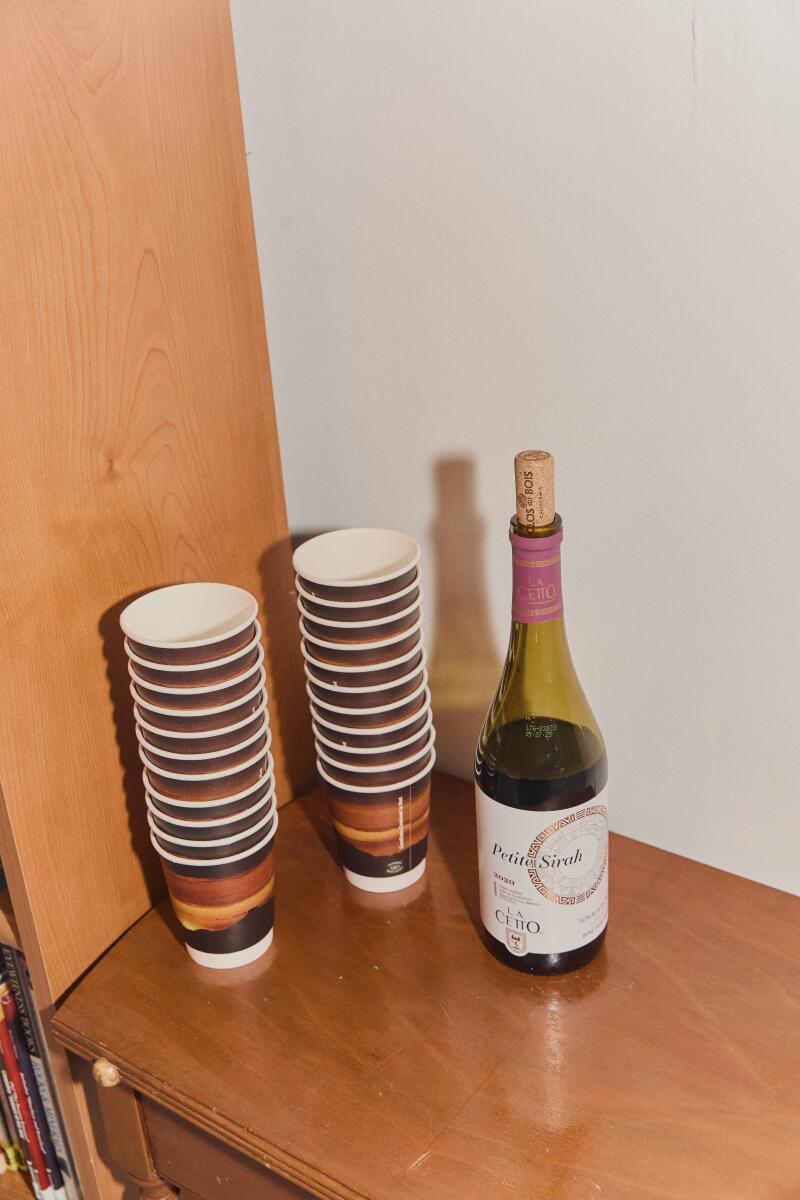
Beverages at the open mic poetry reading.
Growing up in Lincoln Heights and neighboring El Sereno, where his family settled after immigrating from Mexico in 1969, Marez experienced this paucity firsthand. Now he’s determined to be at least one place where local authors can share their stories and readers can find a book across a variety of languages and genres.
“We didn’t grow up going to a bookstore or having books, so for me I think it’s valuable for a child,” Marez paused, ducking his head to wipe away tears. “I think it’s important for them to know they can have a book of their own, and it not to be a used book because we’re all used to hand-me-downs. I think in a neighborhood like this, people need to know that they can get a new book, especially at an early age.”
In the months since opening, the Libros has become a neighborhood hub, spotlighting books and authors that can’t always be found on the shelves of other bookstores. Collections of self-published poetry and family histories of Lincoln Heights sit alongside multi-award-winning books by Viet Thanh Nguyen and Kelly Lytle Hernández (also L.A. residents). On a table in the center of the room are copies of “Violet’s First Big Goodbye,” a picture book written by the bookstore’s youngest author, 8-year-old Luna Yanez-Cuestas.
Yanez-Cuestas, who lives in Burbank, wrote and self-published the book with her mother, Adriana Cuestas, to share the grief she felt after saying goodbye to her old neighborhood.
“It’s about saying goodbye to what you really love,” Yanez-Cuestas said.
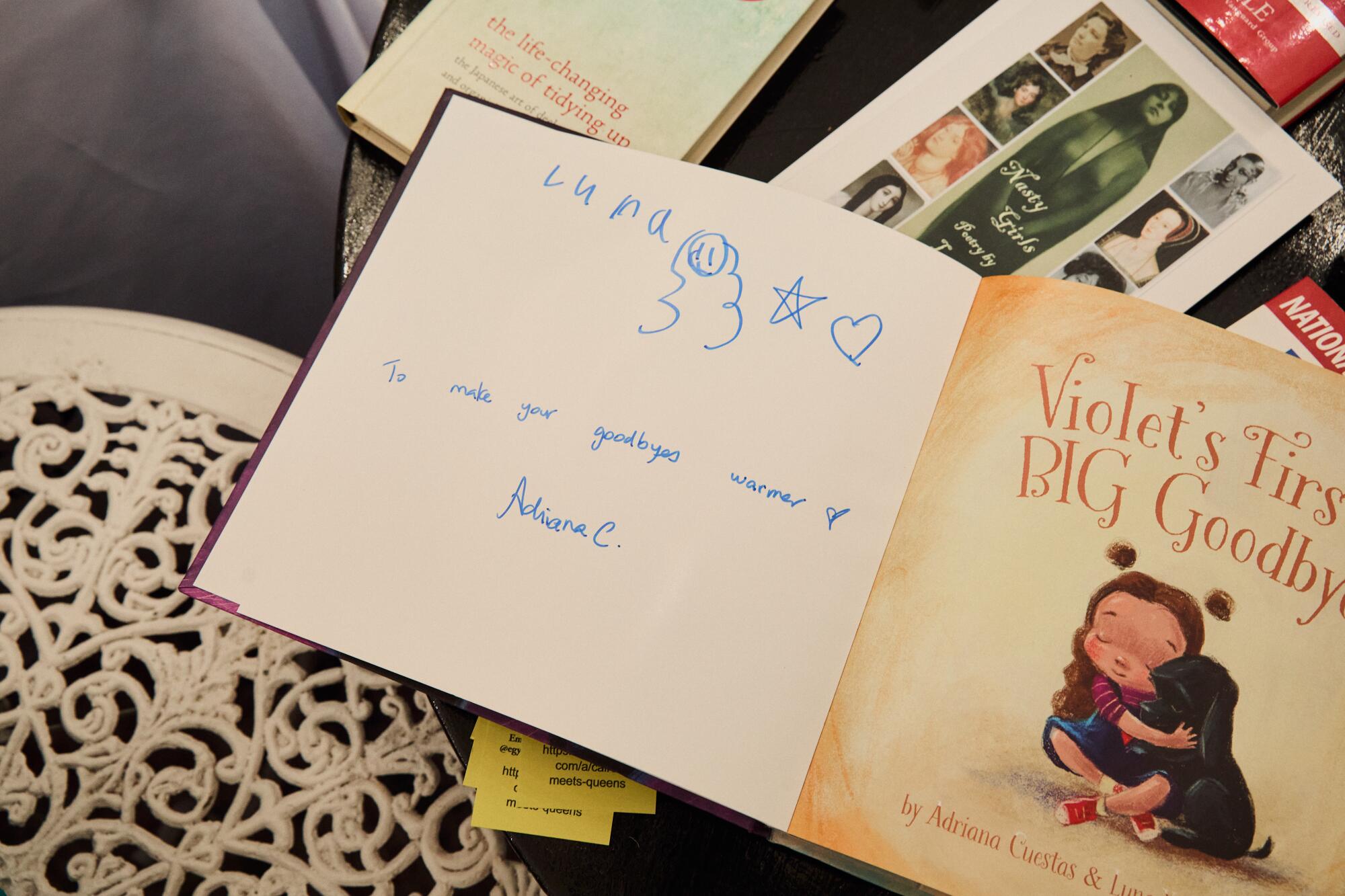
A signed copy of “Violet’s First Big Goodbye” by Luna Yanez-Cuestas lies on a table at the Libros bookshop.
Customers come to the store for this wide selection of books, many of which have been signed by their authors. Marez said most of the books sell quickly because they are local.
Readers aren’t the only ones who frequent the store. Authors regularly stop by with books tucked under their arms, shyly asking whether Marez will sell their memoir or poetry collection. His answer is always an enthusiastic yes, even as shelf space becomes increasingly limited.
Marez has a knack for finding local writers, too. He met Lluvia Arras, L.A.-based author of “A Kids Book About Blended Families,” when their sons were playing soccer together. A few months later, he connected with Joseph Robledo at an exhibit on the Olympic Auditorium at La Plaza de Cultura y Artes.
Robledo is the author of “Blood on the Canvas,” a book commemorating his father, local boxing legend Canto ‘TNT’ Robledo. The son of Mexican immigrants, the elder Robledo became an amateur boxer at 15, turned pro at 16 and won the Pacific Coast Bantamweight Championship at 19. He was on his way to the world championship when a series of injuries left him permanently blind.
“Blood on the Canvas,” guides readers through backyard gyms in South Pasadena to the World Boxing Hall of Fame to tell the story of his father’s transformation from would-be champion to inspirational trainer who touched the lives of hundreds.
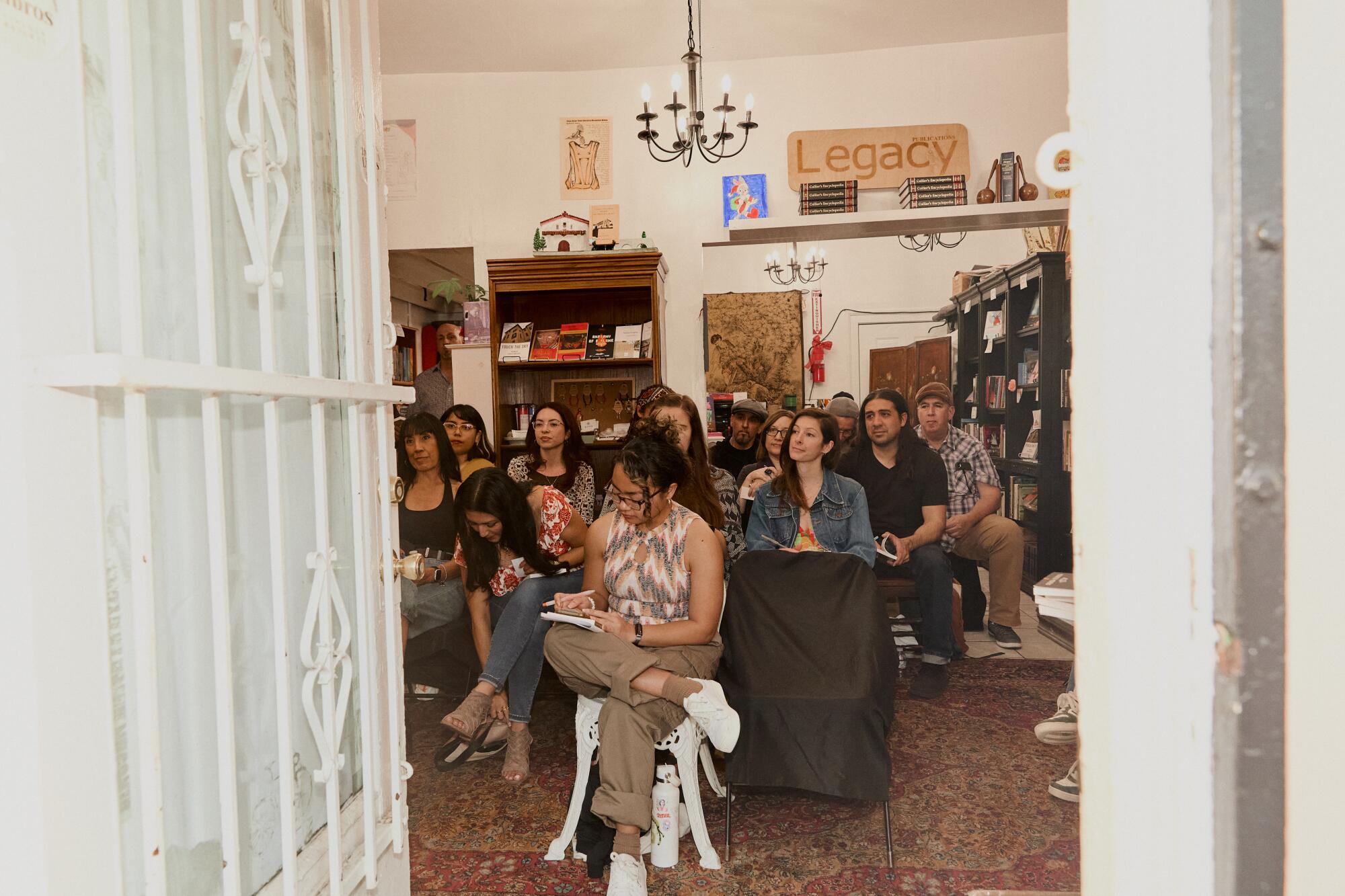
Attendees write poems during a poetry reading and open mic night at the Libros bookshop.
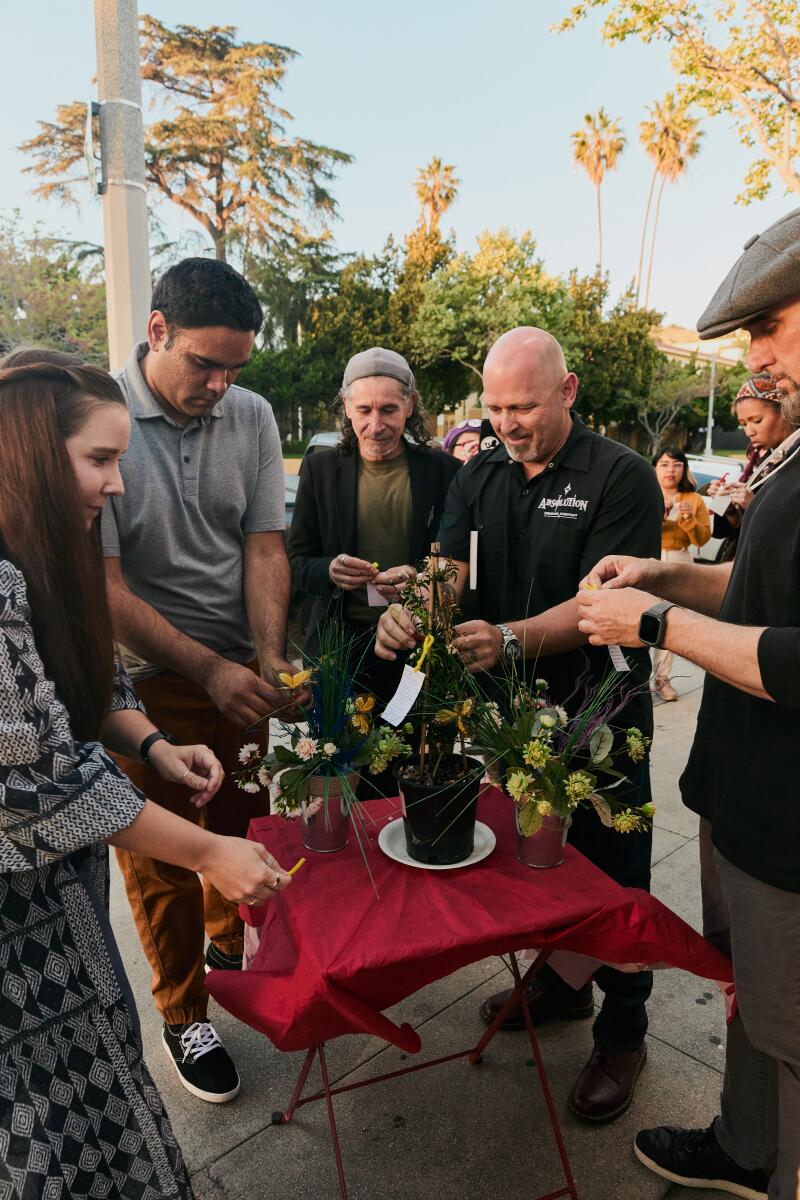
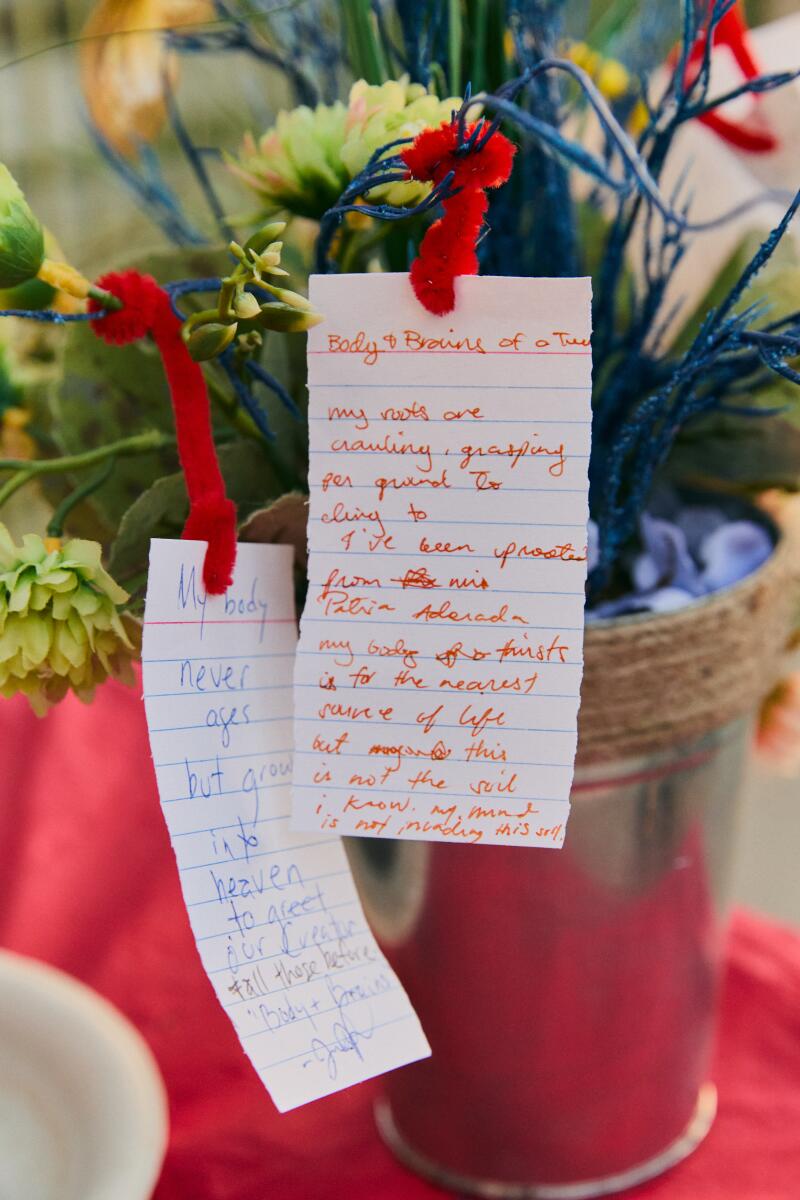
Attendees place their poems on plants outside the Libros bookshop.
Meeting authors like Robledo and Arras has drawn Marez into L.A.’s literary world and taught him tricks of a trade that is often opaque to outsiders.
Behind each book on the store’s shelves is a journey scattered with roadblocks. It’s challenging to break into the mainstream publishing world and, according to a new survey, the industry remains overwhelmingly white.
“I was obsessed with self-publishing because I thought based on how I hear things go for authors in our society, it just didn’t seem fair to give such a big part of your work to another person,” said Cuestas.
For these reasons, authors like Cuestas turn to independent or self-publishing to get their books out into the world. The latter, which has recently become increasingly popular, gives authors creative control and the potential to earn a greater share of the profits, said Brenda Vaca, an author based in Whittier who created her own publishing house to publish her poetry collection titled “Riot of Roses.”
But that creative control comes at the cost of donning all the hats: writer, publisher, distributor and marketer. Stewart J. Zully, who self-published a memoir about the 40 years he spent vending in Yankee Stadium, says he’s spent a large part of his writing career hustling alone and hoping for a break.
“The creativity and the work [to get] it done is one side of the brain and then the business side is completely different,” Zully said.
At the Libros, Marez is trying to lift a few of these hats off the authors’ heads by launching his own publishing company, Legacy Publications.
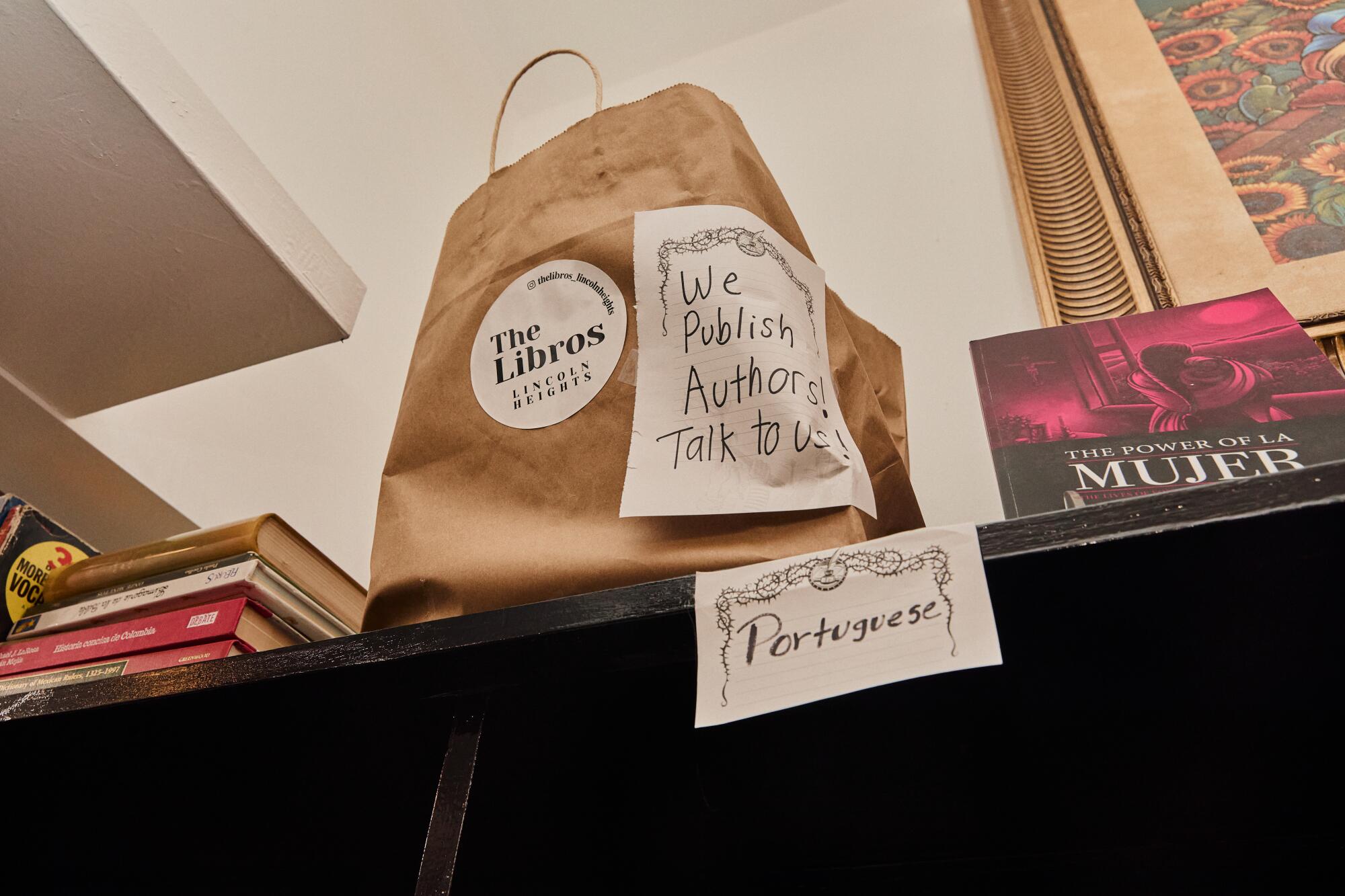
A paper bag with a sign that reads “We publish authors, talk to us” sits atop a shelf at the Libros bookshop.
“What we’re trying to do is help these authors with the distribution and the printing and the publishing,” he said. “Because they’re more worried about how to make a dollar or how to do the distribution, where they should be worried about their second book.”
Like the bookstore, Legacy Publications is deeply rooted in Marez’s pride for the Eastside neighborhoods he grew up in.
“I want to feature people that have actually made our community,” Marez said. “We want to talk about people who have left a legacy in our neighborhoods.’”
In launching this new branch of the business, Marez aims to highlight local voices, help authors make a profit and ensure the books themselves are made with high-quality materials. He prioritizes working with local printers such as Litho Press and Paperleaf Press and plans to release at least three books by the new year.
In his dual roles, Marez is filling Lincoln Heights with books that take readers to distant countries and eras, opening up new worlds. Alongside them, are stories that bring readers home with untold histories of the neighborhoods that have raised them and their families. The authors themselves find solace in knowing that, at least at the Libros, their books will be read and shared.
“Our books, they don’t appear at Barnes & Noble,” Martinez said, referencing how stories by authors of color have largely been kept out of mainstream publishing, and thus bookstores, for generations. “I wish they did and I think our stories belong there. If they’re not at Barnes & Noble, we need these independent bookstores to house our books. We support Libros and then Libros provides a safe space for the writers and poets. I think that right there is a relationship.”


Once rivals on the tennis court, Martina Navratilova, left, and Chris Evert have become close friends in retirement. They are pictured above at the French Open in 1986.
Trevor Jones/Getty Images Europe
hide caption
toggle caption
Trevor Jones/Getty Images Europe
Chris Evert and Martina Navratilova were the most successful women’s tennis champions of their generation. Both were 18-time Grand Slam tournament winners — and each other’s greatest rivals.
Evert, a Florida native, became a tennis star in her teens. Navratilova was born in communist Czechoslovakia, and emerged as a player after Evert was established. They first faced off during a match in Akron, Ohio, in 1973, when Evert was 18, and Navratilova was 16. Evert won, but Navratilova left an impression.
“I remember thinking to myself, holy cow, when this young girl gets into better shape, she is going to be a force to be reckoned with,” Evert says. “She had so much talent. Her hands were quick, she had a big first serve, she had a big forehand, and she just was so powerful.”

Two years later, on the day she lost a semifinals match to Evert at the U.S. Open, Navratilova defected to the U.S. In the years that followed, her tennis game improved. Though she and Evert had initially been friendly, the friendship cooled as their rivalry heated up.
“Playing Chris was difficult because how can you not like Chris? What’s not to admire?” Navratilova says. “She was like the epitome of cool.”
The new Netflix documentary Chris & Martina: The Final Set tells the story of how Evert and Navratilova re-established their friendship and how they both faced cancer in retirement. Evert was diagnosed with ovarian cancer in 2021; Navratilova was diagnosed with throat and breast cancer in 2022.
“I can’t get away from her,” Evert jokes. “We had a 15-year career, and then we got cancer at the same time. It really is freaky, but I always say: If I want someone to be in the trenches with me, it’s Martina because she has been so supportive and so understanding.”

Navratilova agrees: “We have such a level of trust that we know whatever we say to each other, it stays there. We give each other the best advice we know how to. And there is no ulterior motive, no playing games.”
At the time that this interview was taped, Evert and Navratilova were both in remission from cancer. But late last week, Evert disclosed she’d recently been diagnosed with a recurrence of ovarian cancer.

“We know whatever we say to each other, it stays there,” Martina Navratilova says of her friendship with Chris Evert.
Netflix
hide caption
toggle caption
Netflix
Interview highlights
On supporting each other through cancer
Evert: There are a lot of phone calls between us. … I don’t cook, but Martina would bake bread for me, and her wife Julia would cook, make some chicken soup. … I got a lot of food from Martina. She got a necklace from me.
Navratilova: I get jewelry from Chris, she gets food from me.
Evert: Martina’s and my relationship — because we’ve had one for 50 years — is not the type where we have to talk to each other every day to maintain the closeness. I always knew she was there. She always knew I was there if we needed to talk, and that was that.
On the weakness they experienced with cancer
Navratilova: Chris’ diagnosis and treatment was much more life-threatening than mine, percentage wise, but my treatment was more difficult physically. … I was in New York for seven weeks and I literally sat on a yoga mat, maybe half an hour of the seven weeks, and did some stretching. I couldn’t even do the down dog pose because I would have fallen down. I had absolutely zero strength left.
Evert: The chemo kicked my butt, let’s put it that way. … It left me very weak, very, very weak. After chemo I would have three or four days of intense nausea and I just would feel tingling in my body and it just wasn’t nice. I didn’t have the energy. To walk six blocks was a big deal for me. And it was foreign. You know, it felt like it wasn’t my body, for sure.
On watching the old footage of their matches together for the documentary
Navratilova: For me, it was fun watching with Chris, because we had different reactions to what happened on the court. But what impressed me is how well we played with those wooden rackets. Because you know what? Those rackets are not easy to play with. But you try to put yourself in there physically, what it was like, mentally, what it is like. And it’s like, “Oh, I should have gone down the line,” or, “I can’t believe I missed that shot.” Or “Chris, you had such a great pass.” It was amazing. So it was impressive. … I wish I could still have that six-pack, but anyhow.

Evert: I remember feeling genuinely happy for her. I remember it was her first Wimbledon. That’s always been her dream since she defected. Her family couldn’t be there to watch her. She was all alone. And I just was happy for it. And I knew that this was gonna be one of many for her to win.
On defecting to the U.S. in 1975 when she was 18 years old
Navratilova: I was thrilled to be in the States. I always loved American cars. And when you ordered a ham sandwich, you got, like, two inches of ham and two slices of bread. Whereas growing up, you had thick bread and one slice of ham. So I thought I was in heaven. And it was $2.30 for that sandwich. I still remember it. I couldn’t believe how much ham I was getting.
Lauren Krenzel and Nico Gonzalez Wisler produced and edited this interview for broadcast. Bridget Bentz, Molly Seavy-Nesper and Beth Novey adapted it for the web.


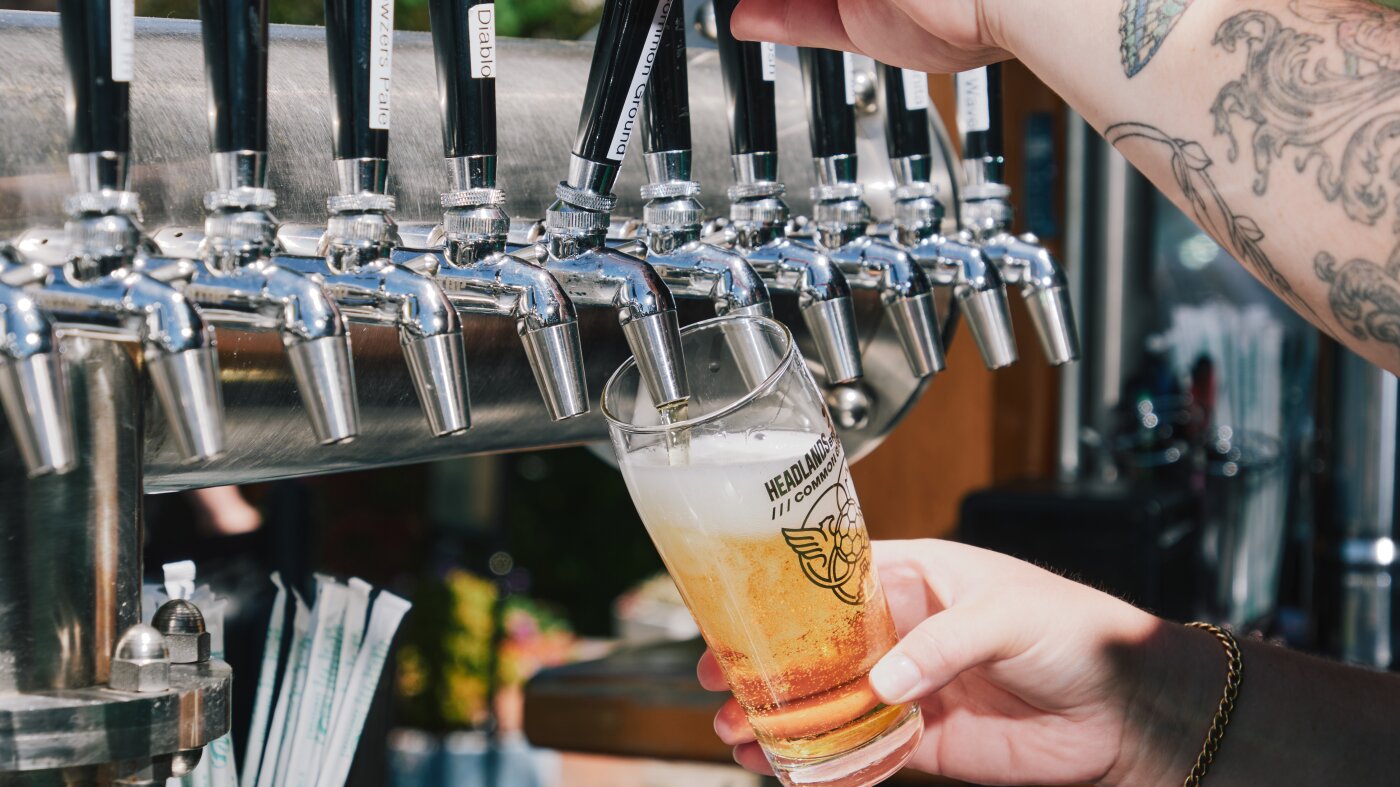
Headlands Brewing launched its World Cup-themed beer Common Ground ahead of the first World Cup game in June.
Justin Gellerson for NPR
hide caption
toggle caption
Justin Gellerson for NPR
The British betting company William Hill predicts that soccer fans will throw back more than 5 million pints of beer in stadiums and fan zones during this year’s World Cup. And that number doesn’t even account for the millions of pints being poured in bars as fans tune in to the global soccer event.
But while international soccer crowds are focusing on goals and penalties, a trio of craft breweries from the tournament’s three host nations are using the tournament to brew something increasingly rare: cross-border solidarity.

A shared recipe with local spin
The collaboration began months ago over a flurry of video chats and emails. The beermakers at Rey Árbol Brewing Co. in Mexico, Headlands Brewing in the United States, and Cabin Brewing Co. in Canada set out to design a single, unified recipe representing the brewing traditions of all three nations.
“It’s a Mexican lager,” said Alejandro Gomez, founder of Rey Árbol.
“That’s like a West Coast IPA,” said Ryan Frank, chief operating officer and brewmaster for Headlands.
“And up in Canada, most of our beers are hop driven,” said Haydon Dewes, co-founder of Cabin. “So we thought, let’s go for a dry-hopped Mexican lager.”
While all three breweries share the exact same recipe, each is giving the final product a distinct local spin, including unique, regionally designed labels. A four-pack of the U.S version costs $15.99. Frank said Headlands has produced about 130 cases of the limited-run brew.
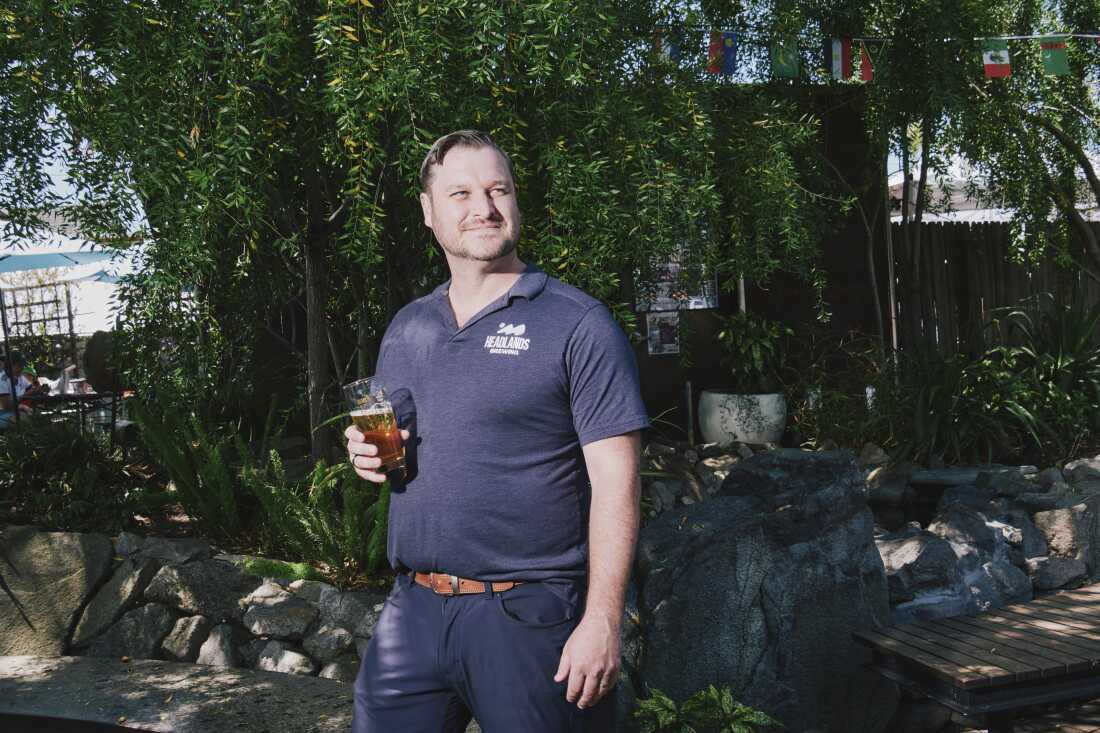
Headlands Brewing COO and brewmaster Ryan Frank drinks a Common Ground beer in Berkeley, Calif., on June 11.
Justin Gellerson for NPR
hide caption
toggle caption
Justin Gellerson for NPR
For the brewers, however, the project is less about marketing and more about connection: They named the multinational beer “Common Ground.”
“When I go to California or Canada, they will treat me like family,” Gomez said.
“It makes the world feel so much smaller,” said Dewes.
“It’s about building bridges and knowing what’s important in life,” said Frank. “And for us, that’s soccer and beer.”
Geopolitical friction in the taproom
The official rhetoric surrounding World Cup 2026 mirrors the brewers’ optimism, with promotional materials promising a tournament where billions are “united as individuals, united as billions.”
Yet this idealistic messaging stands in sharp contrast to a prickly geopolitical reality. Tensions between the U.S., Mexico and Canada have mounted over trade tariffs and auto manufacturing standards as the three nations renegotiate long-standing trade agreements.
The independent brewers behind Common Ground are feeling that friction firsthand through the rising costs of aluminum cans and raw ingredients.
“There are 15% tariffs slapped on any European-grown hops, which are really critical to some of our core brands,” Frank said.

Headlands Brewing brewmaster Ryan Frank and CEO Austin Sharp share a Common Ground beer in Berkeley, Calif., ahead of the first World Cup game on June 11.
Justin Gellerson for NPR
hide caption
toggle caption
Justin Gellerson for NPR
The political discord hasn’t just been confined to trade boards.
When signing an executive order to establish a White House Task Force for the World Cup in March 2025, President Trump suggested that cross-border hostilities might actually benefit the tournament. “Oh, I think it’s gonna make it more exciting,” the president said.
A bittersweet reminder
Tension on the soccer field is one thing; between nations, it’s another.
“It’s true that when it comes to the actual soccer, we’ve developed a very healthy, vibrant rivalry between the three countries,” said Andrés Martinez, the author of The Great Game: A Tale of Two Footballs and America’s Quest to Conquer Global Sport and co-director of Arizona State University’s Great Game Lab, which studies the intersection of sports, media and geopolitics. “But we’re also linked together in this very symbiotic relationship.”
Martinez said that when the U.S., Canada and Mexico initially launched their collaborative bid to host the World Cup back in 2017, the political climate was warmer.
“It was meant to showcase these tight bonds that had developed between the three countries,” Martinez said.

The makers of Common Ground used a shared recipe, but all created their own distinct packaging for the beer: Canada’s Cabin Brewing Co.; Mexico’s Rey Árbol Brewing Co.; the United States’ Headlands Brewing.
Cabin Brewing Company, Rey Árbol Brewing Company, Headlands Brewing
hide caption
toggle caption
Cabin Brewing Company, Rey Árbol Brewing Company, Headlands Brewing
But relations have soured since then, making cross-border business collaborations like Common Ground an anomaly rather than the norm for this tournament.
“To see craft beers across the three countries coming together like this, it’s a bittersweet reminder of what we were hoping to see a lot more of,” Martinez said.
Finding the real common ground
If trade wars and political posturing are looming large in Washington, D.C., Ottawa and Mexico City, they feel a world away at Headlands Brewing’s busy North Berkeley location.
As fans gathered to watch a crucial match between Mexico and South Africa at the start of the tournament, the sunny patio erupted into cheers and shrieks of “Goal!” when Mexico found the back of the net.

Headlands Brewing hosts a screening of the first World Cup game on June 11 in Berkeley, Calif.
Justin Gellerson for NPR
hide caption
toggle caption
Justin Gellerson for NPR
Hovering over a pint of the collaborative brew, soccer fan Roberto Mandujano reflected on the cross-border experiment.
“Three different ways, three different taste buds come together to make something cool,” he said.
When asked about the underlying political tensions between the host nations, Mandujano shrugged off the discord.
“We live in a world where everyone wants to make everything political,” Mandujano said. “But I think we’re all here for soccer. So I guess that’s the common ground.”
-

 Connecticut1 minute ago
New Haven asks for retrial after jury awards Connecticut man $38M in wrongful conviction lawsuit
-

 Delaware6 minutes ago
Rutgers Basketball Adds St. Peter’s and Delaware State to 2026-27 Non-Conference Schedule
-

 Florida13 minutes ago
50 tons of South Florida aid headed to Venezuela following earthquakes
-

 Georgia16 minutes ago
MLB's No. 39 Draft prospect Daniel Jackson of Georgia wins 2026 Golden Spikes Award
-

 Hawaii21 minutes ago
Historic Hawaiian Kukui Tree Cut Down After Nearly 30 Years at Disney’s Polynesian Village Resort – WDWNT
-

 Idaho28 minutes ago
Distemper found in raccoon population in Pocatello and Chubbuck – East Idaho News
-

 Illinois31 minutes ago
HSHS St. John’s, RMHC open Ronald McDonald House Family Room
-

 Indiana36 minutes ago
Local hardware store sees surge in sales of cooling items amid Indiana heat wave

