Denver, CO
Denver homeless shelter to close in January 2026, be rebuilt as affordable housing

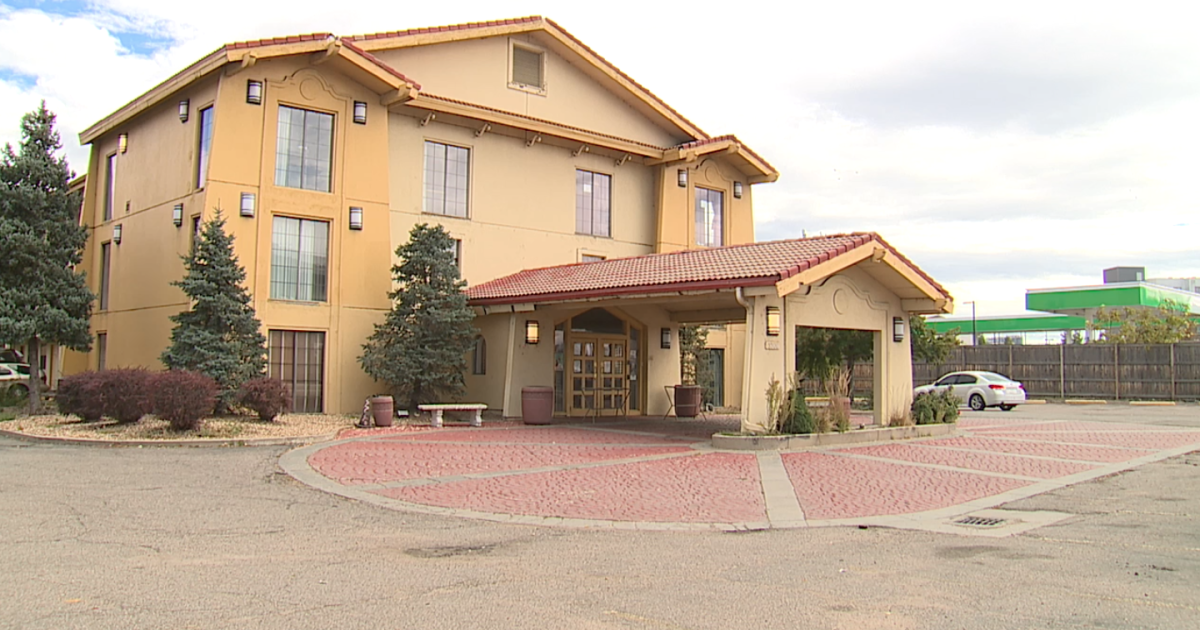
DENVER — A Denver shelter that serves people experiencing homelessness is set to close and be rebuilt as affordable housing, leaving current residents worried about where they will go.
The Park Avenue Inn shelter initially opened as part of the City of Denver’s COVID-19 homelessness emergency response, with the goal of putting affordable housing on the property eventually. Since then, it’s come to serve dozens as a non-congregate shelter and unofficial transitional housing.
“It’s served as a pathway to people to get other housing options,” said Cathy Alderman, chief communications and public policy officer for the Colorado Coalition for the Homeless, which owns the property. “Sometimes that takes a little longer because we’re in a really high-cost housing market here in Denver, and there’s not a lot of housing resources to move people into.”
Denver7 reporter Danielle Kreutter spent some time Monday afternoon listening to residents at Park Ave Inn.
“We were both homeless together for a few years now,” Aaron Dawson said about him and his wife, Michelle Pasco.
A few months ago, they were told the shelter would be closing in January 2026. It’s set to be demolished to make way for an affordable housing project.
“It’s like dire straits around here right now,” Dawson said.
“We’re just hoping to get housed,” Pasco added.
Denver7
Of the 36 residents currently staying at Park Avenue Inn, six have found other housing. Several others have been referred to Renewal Village, another property owned by Colorado Coalition for the Homeless. The single-occupancy studio apartments are in what used to be a hotel near West 48th Avenue and Bannock Street in Denver.
“There’s like 25 people still here that don’t know what they’re doing,” Dawson said. “Some of them never got offered Renewal Village, even.”
CCH acknowledged that some Park Avenue Inn residents may not have been offered housing at Renewal Village due to new tenant eligibility requirements.
“Renewal Village has certain referral pathways that we are obligated to, in terms of accepting people from certain programs or who’ve gone through certain assessments,” Alderman explained. “We will move some people from Park Avenue Inn into Renewal Village, but not everybody. But we will work with everybody at Park Avenue Inn to make sure that they have a safe place to exit to.”
CCH said it is optimistic that it will be able to place the rest of the residents into housing before the shelter closes.
“I think we have more time than we’ve seen with some shutdowns of spaces before,” Alderman said.
Denver7

Park Avenue Inn is set to close in January 2026, around when the City of Denver plans to close a large homeless shelter and a tiny home community.
Alderman called the timing an unfortunate coincidence, as the plan was to always transform the property into affordable housing.
“I think we’re always concerned when we lose resources in the homelessness response system because we know that we have a growing population of people experiencing homelessness, and we need more, not less, resources,” Alderman said. “But I think from our perspective, we also need more housing, and so this is really a critical step for us to provide that lasting solution.”
CCH has stopped referring people to Park Avenue Inn in order to minimize the impact of the closure.
The building will be demolished in January or February 2026.
“We’ll be breaking ground sometime next year on our first 60 units of affordable housing,” Alderman explained. “Some of those units will be supportive housing, and then probably a year or two after that, we’ll be able to break ground on our second phase, which could bring up to 160 potential new units of housing to the city of Denver, which is so needed and is the long-term solution to homelessness.”
Residents told Denver7 they hope their neighbors find a safe place to land.
“You don’t just pop this on them real quick and say, ‘Oh by the way, you have 120 days to figure out your whole entire rest of your life,’” said Dawson.

Denver7 | Your Voice: Get in touch with Danielle Kreutter
Denver7’s Danielle Kreutter covers stories that have an impact in all of Colorado’s communities, but specializes in reporting on affordable housing and issues surrounding the unhoused community. If you’d like to get in touch with Danielle, fill out the form below to send her an email.



Factors such as declining birth rates and families moving out of the city are contributing to declining enrollment at Denver Public Schools. In turn, it’s reshaping the district’s future.
“I think we’re in a good position, but it’s responsible for us to always be looking in the future and knowing we have to make some adjustments,” said Chuck Carpenter, the district’s CFO.
In a two-year span between this past school year and next, DPS expects a decline in enrollment of around 1,700 students.
“We haven’t really seen anything like this,” said Carpenter in response to the consistent decline.
Because of this trend, the district is facing a $28 million structural deficit over the next five years.
“We have a balanced budget now, and we’re not predicting that we’ll have an unbalanced budget in three years,” said Carpenter. “We’re saying we need to make adjustments over the next three, four years, so that our budgets are balanced.”
DPS’s Director of Campus Planning, Andrew Huber, told CBS Colorado in an interview last month that those adjustments will likely include closing down more schools.
“Additional school closures will be necessary in the upcoming years. When exactly that would be is hard to forecast right now,” said Huber.
The district’s CFO says his biggest takeaway from a recent round of closures is to make sure to give families options for what’s next.
“No one wants their school closed, but the second-best option isn’t going to be the same for every family,” said Carpenter.
This issue could be one Denver faces for years to come.
“We sort of say, how many kids are born here? Because in five years, those kids will be kindergartners,” Carpenter added.
The city’s birth rate peaked in 2005, meaning those babies have already graduated high school. And, according to the Colorado Department of Local Affairs, more young families move out of Denver and into surrounding counties than move into the city.
“I think school consolidation is very — I understand why people want to talk about it, but I think it’s more about, like, how do we make sure that the programs that are offered are rich programs,” said Carpenter.
Carpenter also says the district is closely monitoring some potential cuts to federal grants for students of poverty and language learners. He says those decisions will be made by October for the start of the new fiscal year, and cuts would have a “terrible” impact.

The Denver Broncos hosted eight tryout players at mandatory minicamp this week, including quarterback Sawyer Robertson. It sounds like the team has made decisions on those tryout players, and Robertson won’t be signed (at least not right now).
Instead, the Broncos are signing offensive lineman Reid Holskey (according to ESPN’s Jeremy Fowler) and cornerback Blake Cotton (according to the Denver Post‘s Parker Gabriel). Holskey (6-6, 306 pounds) spent time on the Houston Texans’ practice squad in 2025 before joining the New York Giants in January. He was cut by New York last month. Cotton (6-2, 195 pounds) is a rookie who spent last fall at Utah, totaling 30 tackles and seven pass breakups in 13 games.
The two moves came one day after Denver wrapped up minicamp. The 91-man offseason roster was already full, so the Broncos will need to make corresponding moves to make room for Holskey and Cotton on the roster.
Social: Follow Broncos Wire on Facebook and Twitter/X! Did you know: These 25 celebrities are Broncos fans.

Sean Payton has seen enough. The Denver Broncos’ third practice of mandatory minicamp, which was set to happen on Thursday, has been canceled.
“Just schedule-wise, today will be our last day,” Payton said after Wednesday’s practice. “I just finished telling them that. It’s unusual because there’s a lot of packing, a little bit more than normal when you’re moving into another facility. So when we’re back here, we’ll be in the new building.”
The Broncos are moving into their new state-of-the-art facility, but the decision to cancel the final practice of the offseason was motivated primarily by what Payton has seen thus far and how the team is shaping up.
Thus concludes the Broncos’ offseason training program, which featured eight total practices as a team, four of which were open to the media. There was more on-field activity than that, including walkthrough practices unseen by the press, but in essence, we’re talking about eight sessions.
Some players have already begun to separate themselves in their respective competitions. Others have really popped, while some have failed to really stand out in any meaningful way.
By way of a Broncos stock report, let’s get to the biggest winners and losers of mandatory minicamp.
Winner: Bo Nix | QB
Nix finally returned to the practice field on Tuesday, the first day of minicamp. He was limited to individual drills only, but it was still great to see him out there.
On Day 2, though, Nix took another big step forward, participating in a 7-on-7 drill that included a highlight-reel touchdown pass to RJ Harvey. Just getting Nix back on the field was a big win for the Broncos, but seeing him progress over two days and look overall very sharp was more than a little encouraging.
Winner: Jaylen Waddle | WR
Waddle has been a lightning rod since the practices were opened to the media. He just looks different. That speed and explosiveness really add an element to the Broncos’ offense that has been lacking.
It’s been palpable. But arguably just as exciting is what Waddle’s teammates and coaches have been saying about him. Payton has called him a “force multiplier,” which is another way of saying that he makes everyone around him better.
Not that we really had reason to doubt it, but Waddle has been as advertised thus far, and then some.
Loser: Marvin Mims Jr. | WR
Mims is not listed as a loser because of any specific negative plays, like a dropped pass or a mental miscue. It’s just that, with other receivers, including Waddle, shining, generating buzz, and earning plaudits from Payton, Mims didn’t really.
Mims is a similar receiver type as Waddle, but the newcomer made it clear how much separation exists between them in practice. Now, Mims is still important to the Broncos, especially as a returner, and Payton did compliment his clutch gene and contributions in big games, but you have to wonder how he fits into the game plan on offense. That question still hasn’t been answered.
Winner: J.K. Dobbins | RB
Dobbins was his usually talkative self at minicamp, but the fact that he was healthy and out there doing his thing is a major win for the Broncos. It’s good to have him part of the daily process at Broncos HQ again because he’s one of those veterans that takes players under his wing, and elevates them.
Winner: Que Robinson | OLB
With the recent off-the-field drama the Broncos have dealt with, some extra attention was paid to the Broncos’ outside linebackers. Robinson, in particular, separated himself during minicamp.
His get-off is something else, and he was dispruptive during the Broncos’ team periods. Vance Joseph has said he views Robinson as a “future starter.” Pending Cooper’s situation, the future could be now, though Elliss will also have something to say about that.
Robinson had one heck of an offseason. I’m really looking forward to his second year.
Loser: Jonathon Cooper | OLB
After being arrested twice in the span of a week, the Broncos excused Cooper from mandatory minicamp. It would seem the Broncos want to create some distance from Cooper until his legal troubles are resolved, one way or another.
It’s a shame, in more ways than one. Beyond what legal ramifications might await Cooper, he’s very likely to be suspended by the NFL, and the Broncos releasing him at some point is not outside the bounds of the plausible. It’s a good thing that rush linebacker room is stacked.
Winner: Matt Henningsen | DL
None of these winners has been quite as surprising as Henningsen. He made a huge play on Day 1 of minicamp, tipping a Sam Ehlinger pass and returning it to the house.
Henningsen followed that up with another disruptive Day 2. He’s gone from being an after thought in the Broncos’ defensive line conversation to establishing himself as a bona fide threat for the roster.
Loser: Jahdae Barron | CB
Like Mims, Barron wasn’t bad during the offseason; he just didn’t pop, really, in any way. He broke up one pass on Day 2 of minicamp, but beyond that, there wasn’t much to see.
It will be interesting to see how Barron performs in training camp. We know the Broncos have high expectations for him, and a role on defense, even if as a depth piece, will be created for him, but I was hoping to see more signs of a Year-2 leap by now.
Winner: Jonah Coleman | RB
Another as-advertised player. Coleman has proven he’s ready for the NFL, which was partly what attracted the Broncos to him in the draft.
Coleman stood out in a major way at minicamp and made it clear that the Broncos have more than just a J.K. Dobbins insurance policy on their hands. Coleman is a force to be reckoned with.
Winner: Tyler Onyedim | DL
Like Coleman the Broncos’ first pick in the 2026 draft has looked NFL-ready. The Broncos still haven’t signed Onyedim, but that didn’t stop him from participating in the offseason program, which is a good harbinger.
Rocking the No. 98 jersey, it’s easy to mistake Onyedim for the guy he was drafted to replace: John Franklin-Myers. That’s especially true when the rookie is out there making plays like JFM. Onyedim has earned praise from his teammates, including the All-Pro Zach Allen.
Winner: Evan Engram | TE
Engram looked very good in minicamp this week. He looked like a big, athletic, smooth, explosive receiver, which is what he’s been in the NFL.
Engram wasn’t really all those things in his first year with the Broncos, but I’m hopeful that Year 2 will be different for the two-time Pro Bowler. He’s had a good summer.
Winner: Troy Franklin | WR
Franklin seems like the obvious No. 3 receiver in the pecking order. That doesn’t mean he’ll get the No. 3 snaps on an exclusive basis, though.
As the Broncos’ No. 2 last year, Franklin wasn’t able to fully live up to that, although he took some big steps forward in his second year. As the No. 3, it’s more his natural spot and that should allow him to continue to thrive in the offense, especially with the connection he has with Bo Nix dating back to Oregon.
Winner: Sam Ehlinger | QB
Ehlinger had a great offseason. He looked way more comfortable and far sharper in the offense in what is his second go-around in Payton’s offense.
Ehlinger was sharp this summer, and if he can continue to build on the foundation he’s created, it could create some uncomfortable conversations at Broncos HQ.
Loser: Jarrett Stidham | QB
Stidham has been less noteworthy this summer, but that doesn’t mean he’s been bad. In comparison to Ehlinger, though, Stidham wasn’t as good, which is curious, considering his standing as the team’s primary backup since 2023.
If Ehlinger ends up leapfrogging Stidham, what do the Broncos do? They’re holding a competition for QB2, and they have to be prepared for the possibility of Ehlinger winning it, especially after his strong summer.
If Ehlinger forces this issue, Stidham could become expendable. Stidham is very unlikely to be a cut candidate because of his contract, but as a trade piece? There’s a reason the rumor mill has been active on the Stidham topic this offseason. It’s something to watch.
Sign up for our free Denver Broncos On SI newsletter, and get breaking Broncos news delivered to your inbox daily!
 Add us as a preferred source on Google
Follow
-

 Minneapolis, MN3 minutes ago
Real Capital Solutions Acquires Minneapolis Office Property for $34M
-

 Indianapolis, IN6 minutes ago
Retro Indy: For years Marott was Indianapolis’ most luxurious hotel
-

 Pittsburg, PA11 minutes ago
Pirates Trade Analysis: Something Had to Give
-

 Augusta, GA17 minutes ago
Augusta Dream Center sees surge in families needing food as summer begins
-

 Washington, D.C18 minutes ago
National Geographic Explorers share their most memorable adventures ahead of new DC museum opening
-

 Cleveland, OH26 minutes ago
LOOK: Remembering the Cavs championship win, victory parade 10 years later
-

 Austin, TX33 minutes ago
Juneteenth celebrations in Austin include parade and fun run
-

 Alabama36 minutes ago
Gov. Kay Ivey sets execution date for Jeremy Williams

