Colorado
Capitol’s new crop: Jeff Hurd, Colorado’s ‘accidental politician,’ who is taking over Boebert’s old House seat – Washington Examiner


The 2024 election cycle has ended, with Republicans holding control of all three branches of government. The Washington Examiner interviewed over two dozen new members as they prepare to take office in January. Part 9 of Capitol’s new crop will introduce Jeff Hurd, the representative for Colorado’s third congressional district in the 119th Congress.
Rep-elect Jeff Hurd (R-CO), the incoming freshman for Colorado’s 3rd congressional District, admits his representation style might be a “little bit different” from that of his predecessor, Rep. Lauren Boebert (R-CO).
Hurd, 45, had never run for elected office prior to his 2024 congressional campaign, saying during an interview with the Washington Examiner that his foray into politics was much that of an “accidental politician.”
For Hurd and his wife, Barbora Hurd, who have five children, the idea of running for an elected position “wasn’t anything that we had been aiming for,” with the incoming freshman saying he often jokes that “if you’re looking for somebody that has good judgment, don’t look at the person running for Congress, because it’s a crazy and hectic life, and it would involve a number of sacrifices.”
“But ultimately, where my wife landed, and where I landed, is this would be a tremendous honor to serve. It’s where I was raised, and we’re raising our children,” Hurd told the Washington Examiner. “We thought voters deserve a choice in both the primary and in the general election, and I felt called to give them that choice and to serve the district that I call home.”
CAPITOL’S NEW CROP: THE FOUR HOUSE REPUBLICANS POISED TO BECOME MAGA CHAMPIONS
An attorney at Denver-based law firm Ireland Stapleton Pryor & Pascoe, Hurd launched his congressional against Boebert in August 2023, saying in his campaign announcement that the district needed someone who is “committed to consensus-building and has a proven track record of being part of the solution, not creating more problems.”
Boebert often made headlines during her tenure as the district’s representative, with her heckling of President Joe Biden during his 2022 State of the Union address and her public divorce drawing national attention. In September 2023, she was kicked out of a performance of the musical Beetlejuice for vaping and groping while on a date in a theater in Denver.
Shortly after, Hurd’s campaign told the Washington Examiner in a statement that the “reason Jeff got in this race was because voters all over the district and Colorado are fed up with Rep. Boebert, specifically her inability to deliver results for our district, and her disgraceful behavior as an elected official.”
“Since her disappointing antics in September, Republicans all over the district have expressed concern that our chances of keeping the seat with her as our nominee are slim,” his campaign continued. “We are proud to have the support of many local and state conservative leaders who know Jeff will be a leader of character and deliver results for the district.”
The Washington Examiner asked Boebert’s office for comment.
Hurd ended up avoiding a primary fight against Boebert, who left the district to run for former Rep. Ken Buck’s open seat in the state’s 4th District after headwinds mounted against her. Hurd won the party’s nomination over former state Rep. Ron Hanks and four other Republicans.
Colorado’s 3rd district was an important win for Republicans as they sought to hold on to their House majority in the 2024 elections, with the district shifting from a “toss-up” to “lean-Republican” when Boebert announced her plans to leave the district.
Hurd went on to beat Frisch by 19,804 votes, or 5 percentage points, in the general election. The margin of victory was notably wider than Boebert’s 2022 reelection, where she defeated Frisch by a razor-thin margin of 546 votes.
Heading into the 119th Congress, Hurd has taken a softer tone toward Boebert, saying he believes the two will agree on the “vast majority of the issues,” particularly when it comes to representing rural Colorado.
“Her new district is a rural district; her old district, my new district, is also a rural district. And so think when it comes to the issues and the things that matter especially the border, inflation, government spending, energy — I think you’ll find that I am a conservative Republican legislator as well,” Hurd said. “My style might be a little bit different, but when it comes to substance, I think there’s a lot more alignment than it might appear, at least on the surface, and I guess we’ll have to see how that plays out in the next Congress.”
Hurd and Boebert have been in “constant communication” as the pair work to transition their offices from one to the next, according to a press release sent out on Nov. 14.
“I look forward to working with Congressman-elect Hurd on renewing America’s energy independence, improving the storage and management of water in Colorado, and securing our southern border to protect Colorado families from dangerous criminals and fentanyl,” Boebert said in the release.
Hurd previously told the Washington Examiner that he feels “it’s important that we have a close relationship, primarily because we’re going to be serving as colleagues, hopefully for many years together, but then also just transitioning the casework.”
Still, Hurd said he ran his campaign “consciously and deliberately” focused on the issues affecting his district, working to ensure his bid didn’t “get swept up in too much of the national discussion.”
“I felt like we were getting too tied up in the national sort of political discussion, and it was coming at the cost of families and small businesses and communities in my district,” said Hurd, who is also a former board chairman of the Grand Junction Area Chamber of Commerce.
Unlike many of his Republican peers, including Boebert, Hurd never received an endorsement for his congressional bid from President-elect Donald Trump.
The Colorado Republican told the Washington Examiner that the endorsement “just didn’t happen” and that the endorsements his campaign received were “primarily folks that were in the district and that we felt would validate our message of helping secure the border and grow our energy economy and protect water and agriculture.”

Hurd went on to say that he is looking forward to working with Trump and helping advance his second-term agenda alongside congressional Republicans.
“I think he got a mandate in this last election,” Hurd said. “I look forward to working with him and the Republican Senate and a Republican Congress in delivering on those promises to the American people, and I think we’re going to be evaluated on how effectively we can deliver in the next two years.”
CAPITOL’S NEW CROP: TIM SHEEHY FORMS UNLIKELY BIPARTISAN TRIO AS HE CEMENTS RIGHTWARD SHIFT IN SENATE
A commercial and regulatory attorney, Hurd’s campaign website touts a 2018 legal brief he co-authored supporting Amendment 71, which requires any individual or group attempting to amend the state’s constitution to gather support from every region in Colorado.
However, Hurd was attacked by Frisch during their congressional race for his legal background. The Colorado Democrat ran an ad that labeled Hurd a “corporate wolf in sheep’s clothing.”
Frisch also asked Hurd if he planned to release his list of clients to be transparent to voters about any conflicts of interest during their September debate.
“It’s a little ironic that a Manhattan currency trader is talking about Wall Street,” Hurd said at the time.
For his part, Hurd is hopeful his experience as an attorney will benefit his district during his term.
“I am going to work hard to be thoroughly prepared to understand the facts, to understand the law and how the facts fit with the law. And I think that’s one of my strengths, is not only that work ethic, but an approach to legislation, regulation, and public policy,” said Hurd.
Hurd continued, “My legal background, I think, will benefit me as a legislator in Congress, and I was sometimes criticized for being a lawyer when I was running, but I think it gives me a set of skills that I can deliver results for my district.”
CAPITOL’S NEW CROP: THE FRESH FACES OF THE HOUSE WHO ARE READY TO ‘ROLL UP’ THEIR SLEEVES IN THE 119TH CONGRESS
As he prepares to enter the 119th Congress, Hurd said he will be keeping in mind the people in his district who are “struggling” due to “bad democratic policies.”
Hurd explained that a tour he did of a coal-fired power plant in Craig, Colorado (that is slated to shut down) where he met with some of the operators who were around his age and also had children, with one returning late from a parent-teacher conference, was the “moment” he knew he “wanted to run and wanted to fight for them.”
“Those are the people that I’m going to be keeping in mind, are the people, the coal miners, and the power plant operators in Norfolk County, Colorado, and their families that are struggling in the third Congressional District because of bad democratic policies,” Hurd said.



The Colorado Buffaloes and coach Deion Sanders hosted one of the top offensive linemen from the state of Maryland on a recruiting visit on Thursday.
Three-star interior offensive line prospect Jaiden Lindsay spent two days in Boulder on an unofficial visit, just a few months removed from landing a scholarship offer from the Buffs.
Offensive Lineman Jaiden Lindsay’s Rise
Lindsay is listed as a three-star recruit by 247Sports in the class of 2027. His play at Our Lady of Good Counsel High School in Olney, Maryland, has earned him the No. 22 prospect ranking in the state according to 247Sports, which also lists him as the No. 56 interior offensive lineman in the class and the No. 900 overall recruit.
The current high school junior stands 6-3 and weighs in at an impressive 275 pounds. With plenty of time for development, a frame like that has certainly caught the attention of many Power Four programs.
He has offers from 14 FBS programs, with some key names being the reigning national champion Indiana Hoosiers, the Penn State Nittany Lions, Kentucky Wildcats, West Virginia Mountaineers and Pittsburgh Panthers.
But Colorado’s primary competition will come from Lindsay’s hometown school. The Maryland Terrapins are currently listed as his first choice, as they are also the only team 247Sports has given an interest level of warm to at this stage of the recruiting process.
Colorado is currently listed second on his interest list, and is the only other program Lindsay has scheduled an official visit to.
How Jaiden Lindsay Would Benefit the Colorado Buffaloes
Colorado is in a rebuilding period with its offensive line. While sophomore guard Yahya Attia seems to be the future of the interior offensive line for the Buffaloes as it currently stands, the Buffs will be looking to build around him and sure up their future for when he’s gone as well.
Lindsay is a prospect flying under the radar at the moment, preventing Colorado from having to engage in a long-term, neck-and-neck battle with many other high-profile programs and lots of NIL money involved. But he still has all the physicals and the flashes on film of a player who, while he may be a project, could pan out at the next level.
He has one more season of high school to develop, and with the right training program under offensive line coach Gunnar White and the Colorado staff, he could see his full potential realized in Boulder.
What’s Next in Jaiden Lindsay’s Recruitment
All of this leads up to June 2026. In the span of that month, Lindsay is set to visit both Colorado (on June 5) and Maryland (on June 19). Those two official visits will be crucial in determining the last legs of his recruitment process.
The key thing to note about how the visits are staggered: Colorado gets to make the first impression. Depending on how his visit with Colorado goes, Coach Prime and the Buffaloes could force Maryland to fight an uphill battle during his visit on the 19th if his mind is at all made up by then. So Buffs fans should pay close attention when the mid-summer rolls around.
Sign up to our free newsletter and follow us on Facebook for the latest news.

Thousands of candy-filled Easter eggs rained down on a waiting crowd of patient but eager children at a Colorado church community’s second annual Helicopter Egg Drop.
A charitable crew aboard a helicopter released 6,000 plastic eggs over the yard at Zeal City Church in Windsor, Colorado, early Easter Sunday morning for the parish’s egg hunt.
The copter came back and released even more colorful eggs for a second hunt during a later Easter service that day, CBS Colorado reported.
Lead Pastor Jeremy Cleveland told the outlet that the aerial egg drop is their unique way of “celebrating Jesus at Zeal City Church.”
“We’re celebrating Easter Sunday, the resurrection of Jesus Christ, and we really wanted to bless our community and not just give them a sermon, but something to make them memories with their families and friends,” Cleveland said.
Cleveland highlighted the event’s rousing success, noting that it drew hundreds of families to the Sunday service.
“The kids are enjoying it, loving it. Parents are having a great time. It’s been awesome,” Cleveland’s wife, Brittany, told the outlet.
The Clevelands hope to carry on the burgeoning tradition for many more years to come.
Another local egg drop in 2024 saw a chopper dump 5,000 eggs over a park in Colorado Springs, Fox 21 reported.
The Compass Church in Salinas, California, also hosted its own drop where a helicopter poured 100,000 eggs over the grounds.
Colorado
Where to watch Philadelphia Phillies vs. Colorado Rockies: Live stream, start time, TV channel, odds for Sunday, April 5

The Philadelphia Phillies (5-3) will try to complete a three-game sweep over the Colorado Rockies (2-6). The Phillies won the series’ first two games by limiting the Rockies to a single run in each. Philadelphia’s Taijuan Walker is scheduled to start against Colorado’s Tomoyuki Sugano.
How to Watch Philadelphia Phillies vs. Colorado Rockies
-
Time: 3:10 p.m. ET / 12:10 p.m. PT
-
Where: Coors Field, Denver
-
TV Channels: Rockies.TV, NBCSP+
Advertisement
Team records
-
Philadelphia Phillies: 5-3 (No. 3 in NL East)
-
Colorado Rockies: 2-6 (No. 5 in NL West)
Odds
-
Spread: Colorado Rockies +1.5
-
Moneyline: Colorado Rockies +145 / Philadelphia Phillies -175
Starting pitchers
Philadelphia Phillies: Taijuan Walker (0-1, ERA: 11.57, K: 2, WHIP: 2.79)
Colorado Rockies: Tomoyuki Sugano (0-0, ERA: 1.93, K: 4, WHIP: 0.86)
Weather: 63°F at first pitch
Ballpark: Capacity: 50,144 | Roof: Open | Surface: Grass
Weather: 63°F at first pitch
Ballpark: Capacity: 50,144 | Roof: Open | Surface: Grass

How a Family of 3 Lives on $25,000 in Corona, Queens

Trick Trick joined Waka Flocka onstage at ‘The Boys 4 Life Tour’ stop in Detroit – Detroit Metro Times

NFL Experts Continue to Link Former 49ers WR Back to San Francisco

What we learned in FC Dallas’ win vs DC United

Dolphins 7-Round 2026 NFL Mock Draft: Miami could catch the wave just right and get a monster draw in the top-50 picks

Florida High School Football Rankings: Top 25 teams – Oct. 21

How old is Bo Nix? What to know about Oregon quarterback ahead of 2024 NFL Draft

Cleary's 21 help Le Moyne down Central Connecticut State 69-64 in OT

99th annual Pony Swim held in Virginia

Indiana Members Credit Union announced as new anchor tenant at Bottleworks District

Trump threatens Iranian infrastructure over Strait of Hormuz | BBC News

GOP races to pass ICE, Border Patrol funding bill as priorities pile up, divisions emerge
Jet fuel crisis: Rationing triggered at four airports in Italy
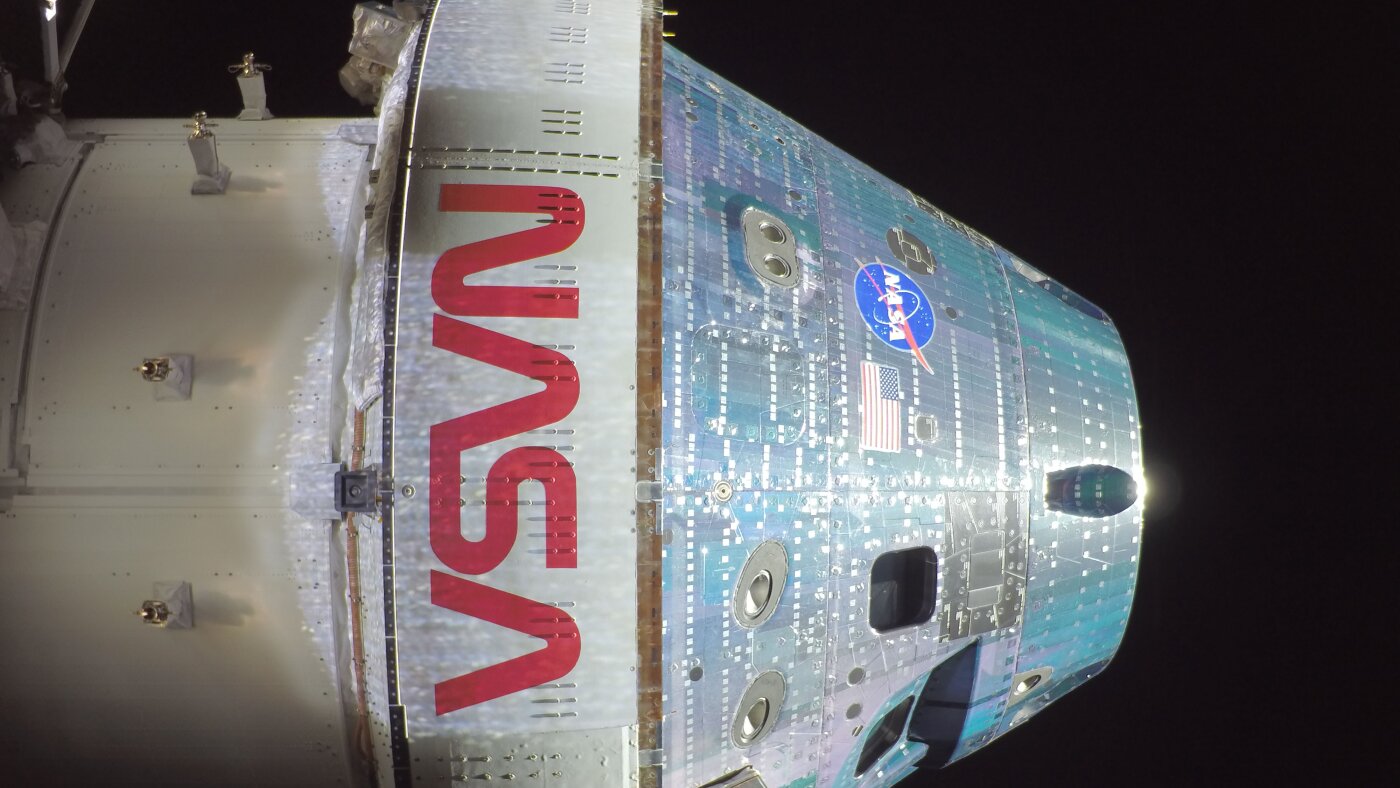
NASA’s Artemis II crew readies for Monday’s lunar flyby. Here’s what you need to know

Tax day is next week: Avoid these 5 common mistakes that can cost you money
-

 South-Carolina1 week ago
South Carolina vs TCU predictions for Elite Eight game in March Madness
-

 Atlanta, GA2 days ago
1 teenage girl killed, another injured in shooting at Piedmont Park, police say
-

 Vermont1 week ago
Skier dies after fall at Sugarbush Resort
-

 Movie Reviews4 days ago
Vaazha 2 first half review: Hashir anchors a lively, chaos-filled teen tale
-

 Politics1 week ago
Trump’s Ballroom Design Has Barely Been Scrutinized
-

 Atlanta, GA1 week ago
Fetishist ‘No Kings’ protester in mask drags ‘Trump’ and ‘JD Vance’ behind her wheelchair
-
 Entertainment4 days ago
Inside Ye’s first comeback show at SoFi Stadium
-

 Politics1 week ago
JD Vance says he was ‘obsessed’ with UFOs, believes aliens are actually ‘demons’