California
Deaf Football Team Was Underestimated and Mocked — Until They Started 'Beating the Pants Off' Opponents (Exclusive)

:max_bytes(150000):strip_icc():focal(722x576:724x578)/California-School-for-the-Deaf-tout-082124-088a765b74f04f88ade0b56e823681ac.jpg?ssl=1 "Deaf Football Team Was Underestimated and Mocked — Until They Started 'Beating the Pants Off' Opponents (Exclusive)")
With minutes left before halftime in the California School for the Deaf in Riverside’s 2022 championship football game, Coach Keith Adams and his players had come from behind to gain a narrow lead — and pushed for more.
Quarterback Trevin Adams, the coach’s oldest son, threw a desperate pass downfield — and right into the arms of wide receiver Jory Valencia, his childhood best friend, who broke for the end zone.
Starting with that touchdown dash, the Cubs, having honed their chemistry and system of football-specific sign language over countless hours, began steamrolling their way into history as the first deaf football team in the state to be crowned champions.
“We showed that we’re not only equal to others,” Trevin, 19, says now of their 80-26 win. “We’re better.”
For more on the Cubs championship football team, pick up this week’s issue of PEOPLE, on newsstands now, or subscribe.
Scarlett Valencia
After that first championship in their division, the Cubs, who play a mix of hearing and deaf teams, won a second in 2023 and have no intention of slowing down in the new season, which starts on Friday, Aug. 30.
“We’re here to keep that streak going, to honor that legacy,” says 17-year-old Kaden Adams, who stepped into the role of first-string quarterback since brother Trevin graduated.
Their wins turned the boys into community heroes — at one point, thousands packed the stands — and attracted a national spotlight. New York Times correspondent Thomas Fuller was so inspired, he gave up his job to document the Cubs’ rise in a new book, The Boys of Riverside, out now.
“It was so quintessentially American,” says Fuller, 54, of being struck by the team’s perseverance. “A team that had endured seven decades of losing seasons was now beating the pants off of all their opponents.”
It wasn’t always so. The school’s football program began in the 1950s but for decades was plagued by seasons of defeat — 51 in all. In nearly a dozen of those, the team did not win a game at all.
The losses were made more difficult by the discrimination athletes at the school sometimes faced from outsiders. (The Cubs were even mockingly accused of faking their deafness.)
Never miss a story — sign up for PEOPLE’s free daily newsletter to stay up-to-date on the best of what PEOPLE has to offer, from celebrity news to compelling human interest stories.
But the players say they shrugged off the ignorance. “Just because we can’t hear, it doesn’t mean anything,” Trevin says. “We’ll still crush you.”
Their turnaround began in summer of 2021, when the boys returned to school restless and seeking ways to reconnect with one another after the isolation of online classes and pandemic protocols.
“COVID made us realize what we were losing out on, and football is a good representation of what brings us together,” says Valencia, 19, a basketball-turned-football player who discovered that he excelled in catching high passes.
Riverside’s deaf community is tightly knit, and many of the Cubs players had grown up together. Coach Adams (who, like the other coaches, is also deaf) credits that bond for their success, along with rigorous training, a fleet-footed playing style and the unique ways in which their deafness makes them stronger.
Luis Sinco / Los Angeles Times via Getty
“When you watch deaf players and coaches communicate with each other on the football field, you realize maybe hearing people have a disadvantage,” explains Fuller, describing the speed with which they trade thoughts via sign language. “They are not affected by noise, they can speak over distances. It’s fast; it’s efficient.”
The Cubs’ first big win was in late September 2021, when the Division II squad beat Division I Calvary Chapel in a nail-biting 66-57 win that proved their preparation was paying off. “That started waking people up,” Valencia, the wide receiver, says. “It was a shock for us too.”
As the Cubs notched more and more victories, their excitement and determination grew.
“Hearing people, they’ve had opportunities in the past. They’ll have opportunities in the future to get a championship. But for us, the future’s uncertain,” says Coach Adams. “These boys were eager to change hearing people’s perspectives and get the opportunity they deserve.”
In their first-ever championship game, in 2021, with more than 3,000 fans in attendance, the Cubs’ undefeated season ended with a 74-22 loss — and a tough lesson that sometimes the best things in life don’t come easy.
“That really showed us what we needed to improve on,” says offensive lineman Christian Jimenez, 18, a cocaptain who transferred to the school to connect with teammates on an all-deaf team.
Adds their coach: “After that first loss, they were thinking, ‘Not again. I’m not gonna lose again.’ ”
They hardly did. The summer of 2022 was spent in the weight room, and in the two seasons since, the Cubs lost just three times. With each victory, often by double-digit margins, they attracted more fans and earned the respect they knew they long deserved.
“That stoked a fire in others to finally take us seriously and become more motivated [to try to] beat Riverside,” says Trevin, then the team’s cocaptain and star player, who inherited his love of football from his dad.
Scarlett Valencia
The 2022 championship win — which capped an undefeated season — was not without hurdles. Receiver Felix Gonzales was sidelined with a shattered shinbone mid-season, Valencia played through severe pneumonia (“It was my last year; I didn’t want to miss out,” he says), and Jimenez competed in his final game with a brace, warned by doctors that a single hit to his broken leg could leave him unable to walk.
“I still had that hunger and that drive. I wanted to feel that for one last time,” he says. “I gave my heart. I gave my all to it, for the Cubs.”
A successive championship win in 2023 hasn’t slaked their thirst for a threepeat this fall. “It would be amazing,” says Coach Adams. “That’s very rare, even for a hearing team.”
While some of his star players have since moved on to college — Trevin, Jimenez and Valencia are now student athletes at Gallaudet University in Washington, D.C., following in their coach’s footsteps — Kaden and other Cubs seniors are looking forward to passing along their winning spirit to new teammates this season.
“I can already tell we have earned other teams’ respect, and they do see us as equals,” Kaden says. “I think we’re going to have a good year.”


SACRAMENTO — Gov. Gavin Newsom on Monday signed his final state budget as governor, a $351.7-billion spending plan that seeks to uplift the poorest Californians through a tax system reliant on the stock market gains of the wealthy.
In a video message, Newsom extolled free school meals, universal transitional kindergarten, 130,000 subsidized childcare slots and other accomplishments in his tenure at the state Capitol, a period in state history marked by a dramatic expansion of state government and over $100 billion in increased spending.
“Over the past eight years, we built great things for the people of California — some of the boldest actions any government in this country has taken in a generation,” Newsom said. “And we did this without breaking the bank. We did this by design.”
The agreement ends weeks of lobbying by outside interests and negotiations among lawmakers and the governor at the state Capitol about how to handle a surge of income tax collected on stock market gains related to artificial intelligence.
Economists have warned that the revenue bump is potentially temporary and analysts say the growth in state spending could leave California in a challenging position if the economy declines.
Assemblymember David Tangipa (R-Fresno) agreed with Democrats that the budget is “compassionate.”
“My fear is that it’s not too much of a competent budget, and the budget continues a pattern that Californians know all too well: Spend now, justify it later, and hope somebody else pays the bill,” he said during a floor debate Monday.
Here’s what you need to know about the spending plan, which takes effect July 1.
Who decides the state budget?
The simplest answer is: Democrats. California voters have elected Democrats to represent 30 of the 40 seats in the Senate and 60 seats of the 80 seats in the Assembly. The budget was passed through a majority vote in each house of the Legislature and signed by Gov. Gavin Newsom, also a Democrat.
A more complex answer is that the budget is a product of dozens of legislative hearings, millions of dollars spent on lobbying by outside interests, talks among lawmakers and the governor and ultimately subject to the same political dynamics that rule the Democratic party.
Senate President Pro Tem Monique Limón (D-Goleta) and Assembly Speaker Robert Rivas (D-Hollister), in consultation with the chairs of the budget committees, represent their Democratic caucuses and reach a final agreement on the details of the spending plan with Newsom. In reality, staff members for the three parties handle most, if not all, of the back of forth negotiations to get there.
Union leaders seeking better pay, working conditions, benefits for workers and opportunities to expand their ranks are often brought in to consult or hammer out thorny deals as business groups try to fight off more regulations, taxes and costs, and support policies that increase their financial performance.
Democrats are spending more than ever before. How is that possible?
The Legislative Analyst’s Office, the nonpartisan fiscal advisor for lawmakers, recently examined the increase in state spending since 2019-20, Newsom’s first full year in office.
Between the budget approved that year and the spending proposal Newsom unveiled in January, spending from the state’s main operating fund had grown by over $100 billion, or 70%. That was largely by a 60% increase in revenue during that time. California typically operates with a spending deficit because Democrats spend more money than the state brings in.
The LAO found that the increase in spending stemmed from the growing cost of sustaining programs and services that were already in place when Newsom took office. About 30% of the remaining spending growth was categorized as new, either by newly created programs or the expansion of existing services.
Among the report’s conclusions: California could not afford the programs that predated Newsom and the ones he and the Legislature adopted.
To balance the budget over the last few years, Newsom and lawmakers have dipped into the state’s reserves at a time when California is experiencing strong revenue growth, which the LAO has cautioned against. Democrats have also increased taxes on businesses, paid for programs out of other funds and suspended reserve deposits among other solutions.
This year, the state budget places $6.4 billion in higher than expected revenue into a temporary holding account to knock down a deficit and balance the budget through 2027-28.
Democrats are pursuing a change to the state constitution on the November ballot that would allow them to set aside more money in years of good revenue growth to prevent cuts in future downturns.
Where is the money going?
Education and Medi-Cal are the two largest costs for the state.
Medi-Cal is the state’s version of subsidized health insurance for low-income Californians and provides medical, dental and vision care for an estimated 14.5 million people, or about one-third of the state population.
The federal government pays for more than half of the cost of the program. California is expected to spend about $50 billion from the general fund next year out of a total estimated at more than $220 billion in costs shared between the state and federal government, according to the LAO. State taxes and fees on providers also help fund Medi-Cal.
Overall, Medi-Cal costs more than any other state program and takes up about 40% of total spending, including federal funds the state receives, according to the LAO.
Spending on Medi-Cal has more than doubled over the last 10 years, which the LAO attributes to an increase in costs per enrollee, more enrollees and a greater share of seniors seeking care, among other factors.
Under Newsom, California has expanded Medi-Cal, including offering coverage to include all immigrants regardless of their immigration status, which the governor said has dropped the state’s uninsured rate down to 5.9%
The cost of Medi-Cal has grown beyond what Democrats expected and resulted in Newsom suggesting spending cuts.
The final budget agreement rejects a call by Newsom to lower the asset limit to $2,000 now and instead lowers it to $21,000 in 2027-28 to be eligible for Medi-Cal. The Legislature also delayed the governor’s proposal to reduce dental coverage and shift asylum seekers and other immigrants to restricted scope Medi-Cal, according to Jason Sisney, the lead budget advisor for the Assembly who posts about the budget on Substack.
The budget includes Newsom’s proposal to shift enrollees with unsatisfactory immigration status, a term that includes undocumented immigrants and others, from managed care to fee-for-service to save costs.
Under Proposition 98, approved by voters in 1988, California has a minimum funding guarantee for schools and community colleges and dedicates roughly 40% of general fund revenue to education.
Sisney said the budget increases the Local Control Funding Formula by $2.2 billion and provides historic general fund per pupil spending of $21,148. Support for special education also grew by $1.8 billion.
The California Community Schools Partnership Program received a $1-billion boost and Democrats directed $2.8 million in additional funding to the program that provides free meals for school children.
The budget also establishes 22,770 new slots for free or reduced childcare, which Newsom had proposed decreasing.

OROVILLE — Bradley Scott Sayer was charged with two counts of first-degree murder and discharge of firearm with injury during his arraignment Thursday at the Butte County Superior Court.
Sayer, 18, is the suspect in the Chico library shooting on Monday in which two men were killed, and he could face life in prison. If convicted, Sayer is facing the highest penalty for capital murder with special circumstances, which would be life in prison without the possibility of parole. Butte County District Attorney Mike Ramsey, who is the prosecutor of the case, said the court is not seeking the death penalty.
Sayer was not given bail, as Ramsey said the court felt Sayer was “too dangerous.” Ramsey also said Sayer is on suicide watch in at the Butte County Jail.
“We felt that it would be too dangerous to let him go at this juncture,” Ramsey said. “He planned a mass shooting, and there’s no reason to believe that if he was let go, that he wouldn’t continue to do that.”
Sayer was staying at his father’s house, who was out of town, the day of the shooting, according to Ramsey. He then went to the closet in his father’s room and took two .22 caliber rifles and a 20-gauge shotgun, as well as several boxes of “No. 3 birdshot shells” before leaving for the library.
Sayer will appear in court next at 8:30 a.m. July 16 at the Butte County Superior Court, where he is expected to enter a plea. He is being represented by Roberto Marquez as retained counsel.
Autopsies
The Chico Police Department released a final update regarding the shooting case. The Butte County Sheriff’s Office completed the autopsies of both Jacob Cody Hull and Robert Johnson.
“The autopsies were completed; results indicate that both victims died as result of gunshot wounds. The wounds are consistent with a shotgun being used. The decedents will be turned over to their families who will be making funeral arrangements. The suspect remains in custody at the Butte County Jail being held in isolation,” Butte County Sheriff Kory Honea said.
California
CA state senator physically, verbally harassed at pride parade for Israel stance | The Jerusalem Post

California State Senator Scott Wiener was harassed for his stance on Gaza during the San Francisco Trans March on Friday, to the point where it was no longer safe for him to remain, Wiener said.
A group of people were so “physically and verbally aggressive that it was impossible for me to safely remain in the park,” Wiener stated, adding that this was the first time he did not participate in the march.
Wiener was surrounded by people who made statements about his “Israeli handlers, among many other inaccurate, extreme, and vile statements,” Wiener said.
“We f***ing hate you. You stopped being queer the moment you started supporting Israel,” one person yelled in a video later shared on social media.
Wiener stated that while he has no objection to anyone disagreeing, opposing, or protesting him, the “harassment, including cornering me, touching me, or trying to physically bully me out of a public event, that crosses a line.”
“In San Francisco, we’re better than that,” he added.
Mayor Daniel Lurie made a statement on X/Twitter condemning the harassment, calling the language used “targeted, hateful, and antisemitic.”
In San Francisco, we welcome disagreement and respectful dialogue around issues many of us feel passionately about – but we cannot allow harassment and threats of violence,” Lurie wrote.
The California State Senate Democratic Caucus also released a statement on X, condemning the hate Wiener received.
“The harassment and violence shown from yesterday’s march in San Francisco towards Senator Scott Wiener is unacceptable and must be called out,” the statement read.
The caucus also pointed to Wiener’s work on legislation “advancing the rights and protections for Transgender, Gender Expansive and Intersex people.”
“The CA Senate Democratic Caucus and CA LGBTQ Caucus jointly denounce the verbal harassment and attacks he experienced,” the statement said.
-

 World3 minutes ago
UK asylum seekers could have to pay government $13K before applying for settlement
-

 Politics10 minutes ago
Fetterman unleashes on ‘dirtbag’ wing of Dems after far-left victories: ‘Orgy of socialism’
-

 Health13 minutes ago
Doctors thought man had brain cancer — they found live tapeworms instead
-

 Sports18 minutes ago
Paraguay stuns four-time World Cup champions Germany in penalty shootout after controversial call
-
 Business28 minutes ago
Comcast is spinning off NBCUniversal media and entertainment assets
-
 Entertainment33 minutes ago
Alannah Keyser is latest fired ‘Love Island USA’ contestant to apologize for using a racist slur
-

 Lifestyle40 minutes ago
Chanel’s Bruno Pavlovsky on Reengineering an Iconic Brand
-
 Politics43 minutes ago
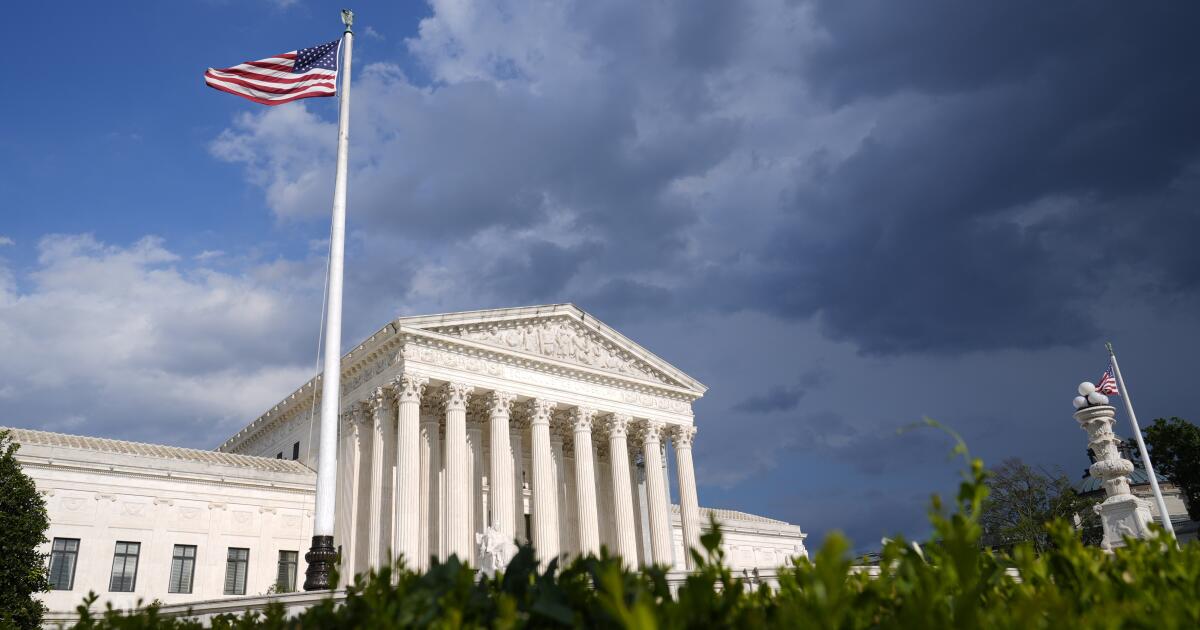
Supreme Court limits police use of cellphone data to find crime suspects

