California
California may exclude Tesla from EV rebate program


Spear Invest founder and Chief Investment Officer Ivana Delevska discusses the value of A.I. data centers and the future of driverless cars on ‘Making Money.’
California Gov. Gavin Newsom may exclude Tesla and other automakers from an electric vehicle (EV) rebate program if the incoming Trump administration scraps a federal tax credit for electric car purchases.
Newsom proposed creating a new version of the state’s Clean Vehicle Rebate Program, which was phased out in 2023 after funding more than 594,000 vehicles and saving more than 456 million gallons of fuel, the governor’s office said in a news release on Monday.
“Consumers continue to prove the skeptics wrong – zero-emission vehicles are here to stay,” Newsom said in a statement. “We’re not turning back on a clean transportation future – we’re going to make it more affordable for people to drive vehicles that don’t pollute.”
The proposed rebates would be funded with money from the state’s Greenhouse Gas Reduction Fund, which is funded by polluters under the state’s cap-and-trade program, the governor’s office said. Officials did not say how much the program would cost or save consumers.
NEBRASKA AG LAUNCHES ASSAULT AGAINST CALIFORNIA’S ELECTRIC VEHICLE PUSH
California Gov. Gavin Newsom on Monday proposed creating a new version of the state’s Clean Vehicle Rebate Program if the incoming Trump administration scraps a federal tax credit for electric car purchases. (Photo by Justin Sullivan/Getty Images, File / Getty Images)
They would also include changes to promote innovation and competition in the zero-emission vehicles market – changes that could prevent automakers like Tesla from qualifying for the rebates.
Tesla CEO Elon Musk, who relocated Tesla’s corporate headquarters from California to Texas in 2021, responded to the possibility of having Tesla EVs left out of the program.
Tesla and other automakers may not qualify for the proposed tax credits, according to the governor’s office. (Getty Images, File / Getty Images)
“Even though Tesla is the only company who manufactures their EVs in California! This is insane,” Musk wrote on X, which he also owns.
BENTLEY PUSHES BACK ALL-EV LINEUP TIMELINE TO 2035
Those buying or leasing Tesla vehicles accounted for about 42% of the state’s rebates, The Associated Press reported, citing data from the California Air Resources Board.
Newsom’s office told Fox Business Digital that the proposal is intended to foster market competition, and any potential market cap is subject to negotiation with the state Legislature.
| Ticker | Security | Last | Change | Change % |
|---|---|---|---|---|
| TSLA | TESLA INC. | 338.59 | -13.97 | -3.96% |
“Under a potential market cap, and depending on what the cap is, there’s a possibility that Tesla and other automakers could be excluded,” the governor’s office said. “But that’s again subject to negotiations with the legislature.”
Newsom’s office noted that such market caps have been part of rebate programs since George W. Bush’s administration in 2005.
Newsom has pushed Californians to replace gas-powered vehicles with zero-emission vehicles. (Chip Somodevilla/Getty Images / Getty Images)
Federal tax credits for EVs are currently worth up to $7,500 for new zero-emission vehicles. President-elect Trump has previously vowed to end the credit.
CLICK HERE TO GET THE FOX NEWS APP
California has surpassed 2 million zero-emission vehicles sold, according to the governor’s office. The state, however, could face a $2 billion budget deficit next year, Reuters reported, citing a non-partisan legislative estimate released last week.



California has billionaires on the brain.
Last week union activists, hoisting giant cutouts of money bags and a cigar-smoking boss, announced a proposal to raise Los Angeles city taxes on companies with “overpaid” chief executives.
They rallied in front of a symbol of the uber rich: the futuristic, steel-covered Tesla Diner owned by Elon Musk, the world’s richest man.
Meanwhile, a “billionaire tax” proposal prompted some of the wealthiest Californians to consider fleeing the state, amid arguments that they would take their tax revenue — and the companies they run — with them, hurting the ordinary residents the proposal is designed to help.
The focus on taxing the richest of the rich comes amid a growing affordability crisis in California, home to the nation’s most expensive housing market and highest income tax.
More than 200 billionaires reside in California, more than any other state, according to a group of law and economics professors at UC Berkeley, UC Davis and the University of Missouri who helped draft the statewide billionaire tax proposal, which proponents are hoping to place on the November ballot.
And they are getting richer. The collective wealth of the state’s billionaires surged from $300 billion in 2011 to $2.2 trillion in October 2025, according to a December report by those professors. In Los Angeles, where the median sale price of $1 million puts home ownership out of reach for many residents, prominent billionaires include David Geffen, Steven Spielberg and Magic Johnson.
One conspicuous billionaire is especially unpopular in California: President Trump, who, despite campaigning on bringing down the cost of living, recently called the word “affordability” a “con job” as he redecorated the White House in gold.
“In a deep blue state like California that has voted against Donald Trump by such large numbers in the last three elections, voters are even more predisposed to be suspicious of billionaires, because he’s now the person with whom they associate the status,” said Dan Schnur, a politics professor at USC, UC Berkeley and Pepperdine.
The state and local tax-the-billionaires proposals, he said, are “about retribution,” much like last year’s Proposition 50, which temporarily redraws the state’s congressional districts to favor Democrats as a counterweight to Trump’s efforts to increase Republican seats in Texas.
To get the statewide billionaire tax proposal on the November ballot, supporters need to collect nearly 875,000 signatures by June 24.
The measure would impose a one-time tax of up to 5% on taxpayers and trusts with assets, such as businesses, art and intellectual property, valued at more than $1 billion. It would apply to billionaires who were residents of the state on Jan. 1, with the option of spreading the tax payment over five years.
Service Employees International Union-United Healthcare Workers West, its main backer, said it will raise $100 billion. Most of those funds would be used for healthcare programs, with the remaining 10% going to food assistance and education programs, the union said.
Suzanne Jimenez, the union’s chief of staff, said Friday that “catastrophic” federal funding cuts stemming from Trump’s One Big Beautiful Bill Act will force hospitals to close, eliminate healthcare jobs and cause insurance premiums to spike, leaving senior citizens and veterans with limited access to services.
The California Budget & Policy Center estimates that as many as 3.4 million Californians could lose Medi-Cal coverage and rural hospitals could close unless a new funding source is found.
Jimenez called the proposal “a modest tax” that “affects few people.”
But Gov. Gavin Newsom vowed to stop the billionaire tax, arguing that California can’t isolate itself from the other 49 states.
“We’re in a competitive environment. People have this simple luxury, particularly people of that status, they already have two or three homes outside the state,” Newsom said at the New York Times’ DealBook Summit last month. “It’s a simple issue. You’ve got to be pragmatic about it.”
The billionaire tax would temporarily increase revenues by tens of billions spread over several years, but if billionaires move away, the state could lose “hundreds of millions of dollars or more per year,” according to the nonpartisan California Legislative Analyst’s Office.
Some of California’s wealthiest say they are indeed heading for the exits.
Andy Fang, the billionaire co-founder of DoorDash, wrote on social media: “I love California. Born and raised there. But stupid wealth tax proposals like this make it irresponsible for me not to plan leaving the state.”
Peter Thiel, the billionaire co-founder of PayPal and Palantir, announced in December that his investment firm opened a new Miami office. He donated $3 million that month to a political action committee connected to the California Business Roundtable, which is fighting the measure.
State records show that Google co-founders Larry Page and Sergey Brin have been cutting ties to California and moving business interests out of state.
Rick Caruso, the billionaire real estate developer who self-funded his losing 2022 L.A. mayoral campaign to the tune of more than $100 million, said in a statement that “the proposed 5% asset tax is a very bad policy. It will deliver nothing it promises and instead hurt California with lost jobs and hundreds of millions a year in lost revenue from existing income taxes.”
Ending months of speculation, Caruso announced Friday he will not challenge Mayor Karen Bass again, nor will he run for governor in a race that includes billionaire hedge fund founder Tom Steyer.
In Los Angeles, supporters of the “Overpaid CEO Tax” announced outside the Tesla Diner that they must collect 140,000 signatures in the next 120 days to get the measure on the November ballot. The measure would raise taxes on companies whose CEOs make at least 50 times more than their median-paid employee. It would apply only to companies with 1,000 or more employees.
The Fair Games Coalition, a collection of labor groups including the Los Angeles teachers union, is sponsoring the measure, which would allocate 70% of the revenue to housing for working families, 20% to street and sidewalk repairs and 5% to after-school programs and access to fresh food.
Business groups have denounced it, saying it would drive companies out of the city.
“Luxury for a few, while those who cook, who clean, who build, who teach, who write — the people who make the city prosperous — are stretched to the breaking point,” Kurt Petersen, co-president of the airport and hotel workers union Unite Here Local 11, said at Musk’s diner, describing it as an avatar for an unjust L.A. economy.
A similar effort to increase taxes on companies with disproportionately paid CEOs is underway in San Francisco, where voters already approved a levy on such businesses in 2020.
On Friday, Doug Herman, a spokesperson for Bass’ reelection campaign, said she has “not taken a position” on the state or city wealth tax proposals. But at her campaign launch last month, Bass framed the mayoral race as “a choice between working people and the billionaire class who treat public office as their next vanity project.”
Jeremy Padawer, a toy industry executive and animated TV producer who lost his home in the Palisades fire, said the mayor’s framing of the race as a battle against billionaires feels contrived, especially given the intense criticism of her handling of the fire.
Power is as relevant as money, and Bass is “the most powerful person in the room,” said Padawer, who organized the “They Let Us Burn” rally on the one-year anniversary of the fire.
“I know a lot of billionaires,” Padawer said. “And I think that billionaires have a propensity to do a lot of good, but they also have the propensity to do a lot of bad.”
Times staff writer Queenie Wong contributed to this report.

BERKELEY, Calif. — – John Camden scored 20 points and Dai Dai Ames and Justin Pippen each added 19 as California built a 20-point lead and held off No. 14 North Carolina 84-78 on Saturday.
The Tar Heels (14-4, 2/3 Atlantic Coast Conference) absorbed their second straight loss in the Bay Area; they fell 95-90 at Stanford on Wednesday.
Cal (14-5, 2-4) owned that 20-point lead early in the second half. A basket by Ames gave the Bears a 74-55 edge with 8:26 left before the Tar Heels rallied.
Carolina cut its deficit to 81-78 on a 3-pointer by Henri Veesaar with 19 seconds remaining but Pippen hit two foul shots with 10 seconds to go to just about clinch the decision.
Pippen had a game-high five assists. His father Scottie, a Basketball Hall of Famer, was part of the announced crowd of 8,077 at Haas Pavilion.
Cal had a decided advantage in 3-point shooting: The Bears went 14 for 26 from beyond the arc. The Heels were 9 for 27.
Freshman Caleb Wilson led Carolina with 17 points. Veesaar had 14 points and 10 rebounds.
The Bears’ Lee Dort grabbed a game-high 12 boards.
California scored the game’s first seven points, put together an 11-0 run to take a 26-13 lead and did not trail at any point Saturday.
The Bears took their biggest lead of the first half when Ames hit a jumper with 14 seconds remaining to put Cal up 54-35. Derek Dixon’s layup just before the buzzer cut the Heels’ deficit to 54-37 at the break.
Camden led all scorers in the half with 16 points as Cal went 10 for 16 from beyond the arc in the opening 20 minutes.
Up next
North Carolina hosts Notre Dame on Wednesday.
Cal plays at Stanford next Saturday.
——
Get poll alerts and updates on the AP Top 25 throughout the season. Sign up here and here (AP News mobile app). AP college basketball: https://apnews.com/hub/ap-top-25-college-basketball-poll and https://apnews.com/hub/college-basketballbr/]
Copyright © 2026 ESPN Internet Ventures. All rights reserved.
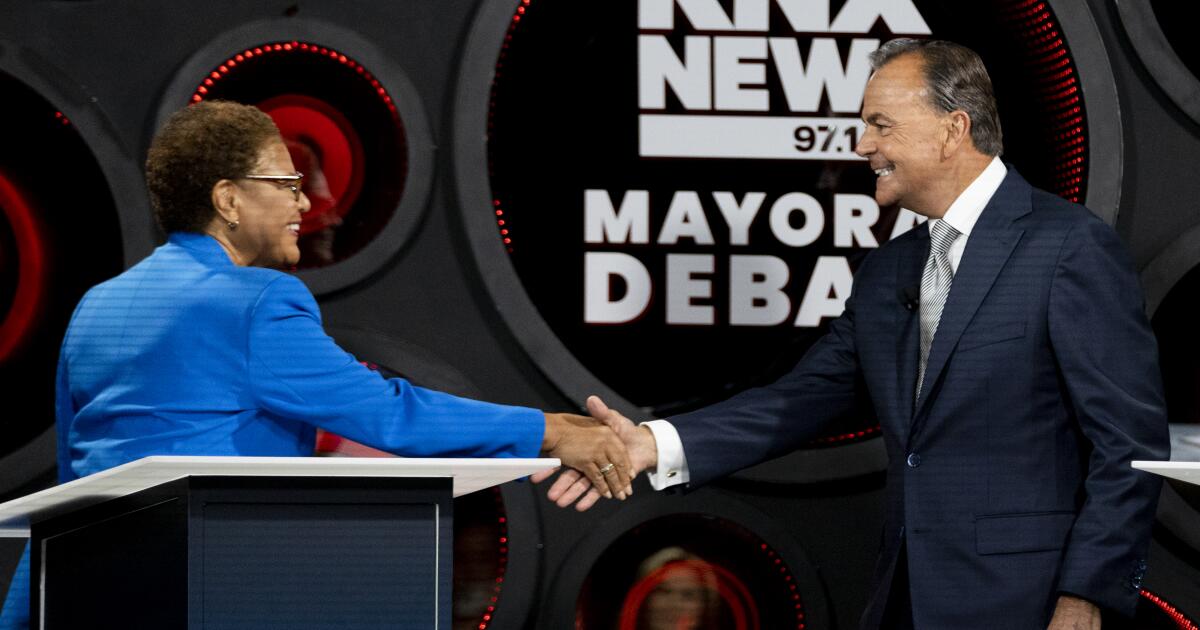
Billionaire developer Rick Caruso will not run for Los Angeles mayor or California governor, after months of speculation that he would seek one of the two posts.
Caruso, who had been teasing a possible run for months, made his decision Friday, saying it came after “many heartfelt conversations” with his family.
“Though my name will not be on a ballot, my work continues,” Caruso said on X. “Public service does not require a title. It is, and always will be, my calling.”
Caruso’s plans were the talk of political circles for many months. Recently, he seemed to confirm that he would seek one of the two positions.
When asked by a reporter on Jan. 7 if it was possible he would not run for any position, Caruso responded: “That option is pretty much off the table now.”
Caruso said he will focus on his nonprofit, Steadfast LA, which brings industry leaders together to help with the Palisades fire recovery.
The 66-year-old developer behind popular L.A. malls like the Grove and the Americana at Brand spent $100 million of his own fortune against Karen Bass in 2022, outspending her 11 to 1 in his failed bid. But Bass beat him by nearly 10 percentage points.
Caruso served as president of the L.A. Police Commission in the 2000s and helped the city hire William Bratton as police chief. He was appointed to the Department of Water and Power board in 1984, at age 26 — the youngest commissioner in city history at the time.
Caruso has steadily critiqued the mayor online and in public appearances since 2022, seemingly honing and refining his argument for voters to reject the incumbent, whom he has described as incompetent.
“Her record is so bad,” Caruso said at a town hall he hosted at the Americana on Nov. 3.
Caruso’s decision not to run for mayor solidifies the 2026 field against Bass. Former Los Angeles Unified School District Superintendent Austin Beutner is running a moderate campaign, with arguments about Bass’ response to the Palisades fire and quality of life concerns that are similar to Caruso’s. The developer’s entry could have thrown a wrench into Beutner’s campaign.
Bass also faces a challenge from her left with Rae Huang, a community organizer and reverend, announcing a run for mayor in November.
Most recently, the entry of former reality star and Palisades fire victim Spencer Pratt has added new intrigue to the race.
Bass’ campaign declined to comment on Caruso’s decision.
As for governor, some voters in deep blue pockets of the state may have rejected Caruso, a former Republican who registered as a Democrat in 2022 and has faced questions over his past party registration.
Still, the developer, who has made public safety and quality of life issues his main talking points, might have attracted California voters unhappy with the current crop of gubernatorial candidates.
No single candidate has dominated the field, while some potential contenders, including Sen. Alex Padilla and Atty. Gen. Rob Bonta, have announced they’re not running.
As he weighed a bid for governor in the last year, Caruso traveled multiple times to Sacramento and around the state to meet with labor leaders, community groups and politicians.
“My guess is he did polling and he did not see a path forward,” said Sara Sadhwani, a professor of politics at Pomona College.
“Had he jumped into either race and lost, it would have made the prospects of elected office even further away,” she said.

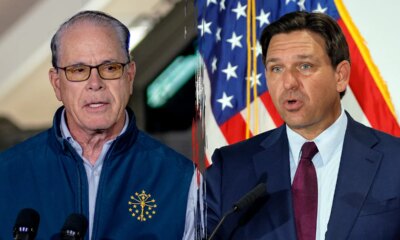
Governors Braun, DeSantis place ‘friendly wager’ for national championship between Miami and Indiana

Detroit, Ann Arbor Forecast: Frigid conditions, sub-zero wind chills ahead

Shoutout to the 2025 San Francisco 49ers, a fun team despite the ending

Celebrations planned across North Texas in honor of Martin Luther King Jr. Day

FIRST ALERT: Storm to dump up to 9 inches of snow on southern New England today

Florida High School Football Rankings: Top 25 teams – Oct. 21

Cleary's 21 help Le Moyne down Central Connecticut State 69-64 in OT

How old is Bo Nix? What to know about Oregon quarterback ahead of 2024 NFL Draft

99th annual Pony Swim held in Virginia

Video: ‘It Didn’t Have to Happen This Way:’ U.Va. Faculty Call for Review of Police Response to Protests

Border Patrol commander vows continued tear gas use after Minnesota fedreal judge’s order

US-backed Palestinian committee shares mission statement on Gaza governance

Spanberger takes swipe at Trump admin, says Virginians worried about ‘recklessness coming out of Washington’

Thousands take part in ‘Hands off Greenland’ protests in Denmark
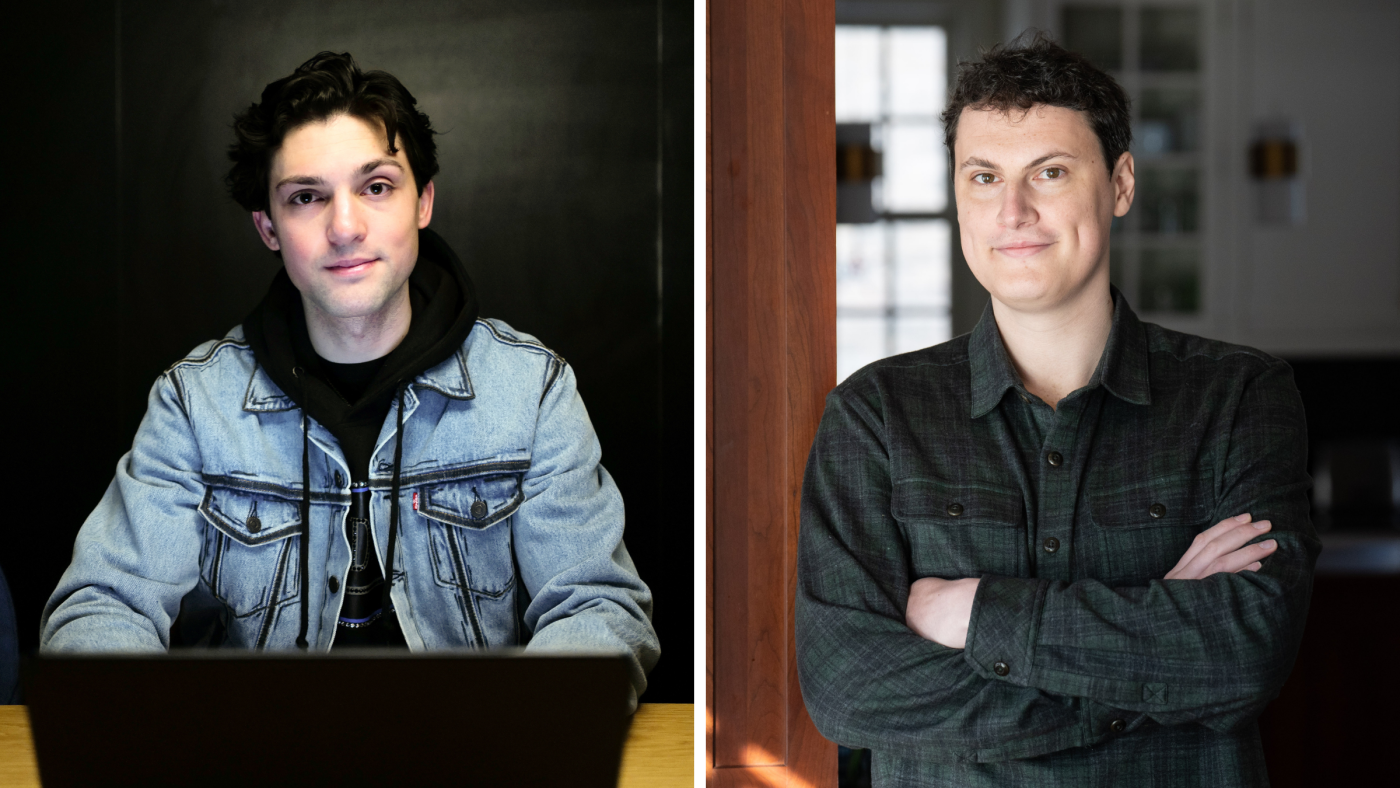
They quit their day jobs to bet on current events. A look inside the prediction market mania
-

 Montana1 week ago
Service door of Crans-Montana bar where 40 died in fire was locked from inside, owner says
-

 Delaware1 week ago
MERR responds to dead humpback whale washed up near Bethany Beach
-

 Dallas, TX1 week ago
Anti-ICE protest outside Dallas City Hall follows deadly shooting in Minneapolis
-

 Virginia1 week ago
Virginia Tech gains commitment from ACC transfer QB
-

 Montana1 week ago
‘It was apocalyptic’, woman tells Crans-Montana memorial service, as bar owner detained
-

 Minnesota1 week ago
ICE arrests in Minnesota surge include numerous convicted child rapists, killers
-
 Lifestyle3 days ago
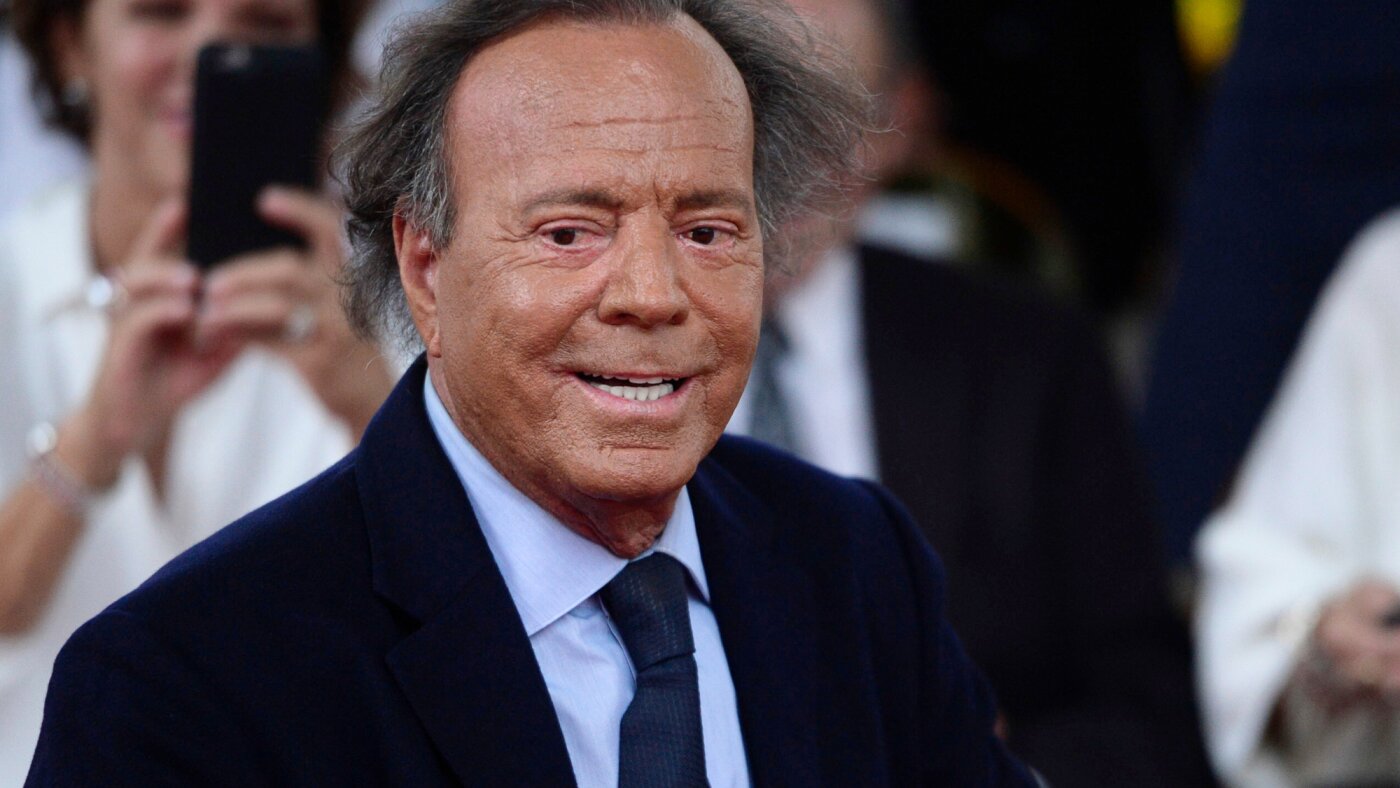
Julio Iglesias accused of sexual assault as Spanish prosecutors study the allegations
-

 Oklahoma7 days ago
Missing 12-year-old Oklahoma boy found safe