West
California sheriff blasts Newsom's 'pro-criminal agenda' after court blocks latest gun control law

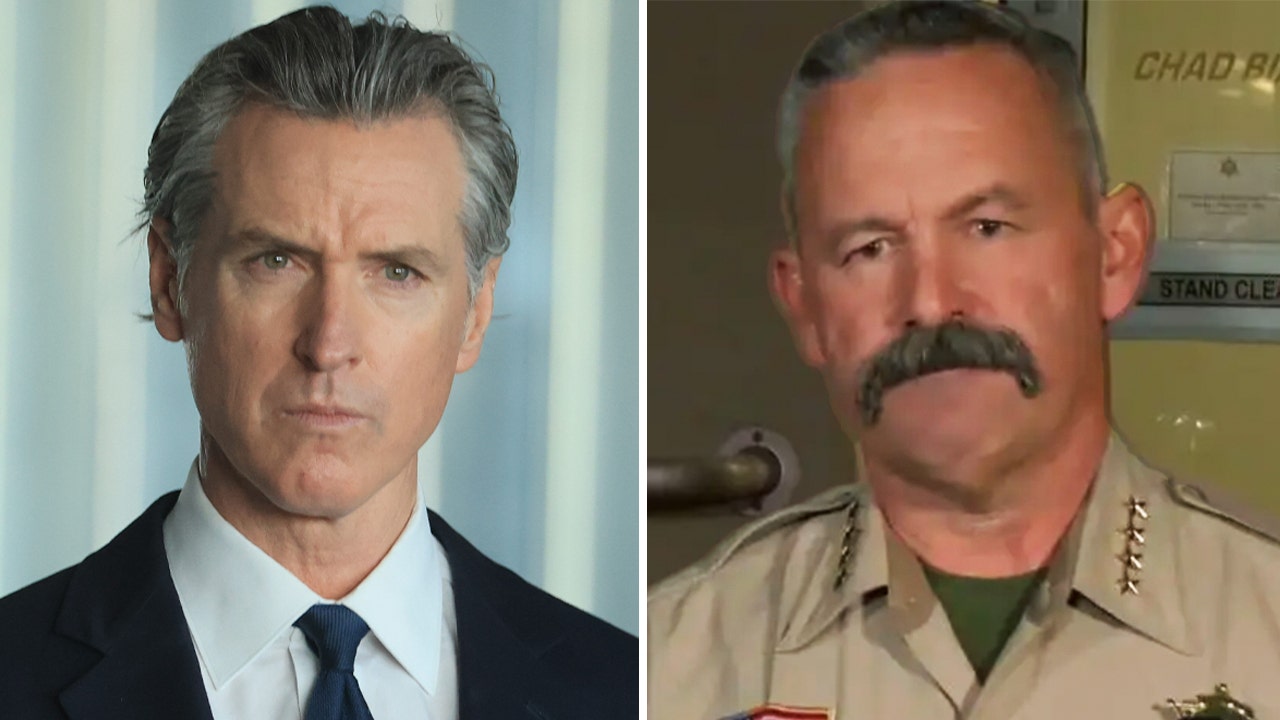
A California sheriff blasted California Gov. Gavin Newsom this week after a court blocked the governor’s latest gun control push that would have banned concealed carry in many public places.
“It was definitely a relief because having that go into effect and the potential of what was going to possibly happen to law-abiding residents was really unacceptable,” Riverside County Sheriff Chad Bianco told Fox News Digital this week.
Bianco spoke after the U.S. Court of Appeals from the 9th Circuit blocked a California law signed by Newsom that would ban concealed carry in public places like parks, churches and playgrounds from going into effect.
In a statement to Fox News Digital, Newsom’s office called it a “dangerous” decision that will risk the lives of Californians, but Bianco said the legislation is part of an “anti-gun ownership” agenda that is “extremely dishonest.”
GAVIN NEWSOM GIVES NEW HANDOUT TO ILLEGAL IMMIGRANTS AND TAXPAYERS COULD BE ON THE HOOK
Newsom and Sheriff Chad Bianco (Getty Images)
“The fact about everything we’re doing taking away the gun rights and ownership and the (carrying a concealed weapon) aspect of the whole thing — where you can carry and where you can’t — it flies in the face of what they do with criminals,” Bianco said.
“They have a very pro-criminal stance in California, and they have for years, all of the laws. Newsom’s goal is to close as many prisons as he can, to not prosecute and to not sentence anyone to state prison. They blame law enforcement. They blame society. So, there’s never a personal responsibility on someone’s criminal behavior. It’s always someone else’s fault. And there is this agenda that is extremely pro-criminal in Sacramento.
NEWSOM’S CHINA TRIP REIGNITES RUMBLINGS OF A ‘SHADOW CAMPAIGN’ AS CRISES MULTIPLY ON BIDEN’S WATCH
“They took the exact opposite stance for law-abiding residents here who have gone through background checks, who have proven over their lifetime that they’re good, law-abiding residents, to say that somehow or imply somehow that they’re a danger to the public when they have a gun out in public.
“It’s very dishonest, and I think he needs to drop his gun agenda, his anti-2A agenda. And he needs to concentrate on the skyrocketing crime in California and the quality of life issues for the residents of California that are being destroyed by the policies that he is promoting.“
Riverside County Sheriff Chad Bianco (Fox News)
Fox News Digital asked Bianco what his constituents tell him about Newsom’s goal of restricting where law-abiding citizens can exercise their Second Amendment rights.
“People that would relate it to the governor are basically saying he should resign,” Bianco said. “He is absolutely against residents. He does everything about destroying the quality of life in California by creating policies that increase crime that cause us to be in more danger when we are out in public. And yet he refuses to allow residents to protect themselves or to have the tools to protect themselves. So, really, they want him gone. They want him to resign.”
Bianco explained that while many point fingers at the liberal legislature, the governor “has quite a bit of power” in Sacramento behind the scenes and could immediately implement significant public safety changes with respect to crime if he wanted to.
“He’s the governor of the state. He can do anything he wants. He can exert his political influence over the legislature to fix crime in California,” Bianco said.
Gov. Gavin Newsom at Moffett Federal Airfield of NASA Ames Research Center before President Biden’s arrival in Mountain View, Calif., June 19, 2023. (Getty Images)
Bianco said he is deeply concerned about the crime trajectory in California in 2024 if things don’t change.
“We know from history the past several years that all the horrible public safety bills they’ve tried to pass or that they tried to get through that didn’t make it. We know they’ll bring them back the next year with a little twist. And they’ll use the political off-season to gain allies and make promises to the people that wouldn’t vote for it before,” Bianco said.
“So, we know those horrible bills are coming back. So, we want to fight them. We have to be on guard.
“California, in my opinion, is the greatest state in the country, and we are, unfortunately, being ruined by a political agenda. And the reality of our country now is that the rest of the country knows that California is broken, and they know that he’s responsible for it,” Bianco added.
“The rest of the country does not want to be California, and we’ve become a laughingstock.”
Newsom’s office directed Fox News Digital to a recent study that it says shows California gun safety laws have been “effective.”
Read the full article from Here


MISSOULA, Mont. — Nearly 1,000 customers are without power in Western Montana on Monday morning.
As of 6:15 a.m., Mission Valley Power’s outage map shows 984 customers without power in the Swan Lake area. The outage began at 5:30 a.m. The cause is listed as unknown.
There is no estimated restoration time listed.

Nevada’s leading authorities in preventing and treating problem gambling are joining state regulators and the casino industry to combat prediction markets, which, they contend, threaten to cut into the action of Nevada’s gambling enterprises and worsen the nation’s addiction to betting, especially on sports.
In less than a decade, legal sports betting, with the help of a U,S. Supreme Court ruling and the omnipresent smart phone, has morphed from a Nevada-centric novelty to a ubiquitous national pastime, with a slew of harmful side effects.
Nevada, once the only player in the legal sports betting game, has been relegated to the minor leagues in terms of revenue generated.
The American Gaming Association projects wagering on the 2026 NCAA tournament, excluding prediction market betting, which has not been officially estimated, will reach $3.3 billion, up 54% in the last three years.
Nevada’s 2025 March Madness betting was estimated at $466 million.
ESPN reports bettors wagered $1.9 billion on college basketball games in February on Kalshi alone.
In late December, the Financial Times reported trading volume on sports bets on Kalshi since its inception reached $16.8 billion, compared with $4.9 billion on other topics. By comparison, Nevada’s sports betting handle for 2025 was $8 billion, down 9% from the previous year.
Prediction platforms, critics argue, threaten to upend Nevada’s nearly 100-year history of profitable, regulated gambling.
Two betting sites, Kalshi and Crypto.com, are wrangling with Nevada gaming regulators and the Nevada Resort Association in the Ninth Circuit Court of Appeals. The platforms are challenging the constitutionality of state law, which requires that gambling enterprises have a state gaming license.
The Ninth Circuit last week denied Kalshi’s emergency motion to stop Nevada from enforcing its regulations pending the outcome of the appeal, according to Nevada Current. The ruling allowed Nevada to obtain a temporary injunction in state court prohibiting Kalshi from taking bets from gamblers in Nevada, at least until an April 3 hearing.
The Nevada Council on Problem Gambling, which specializes in prevention, and The Dr. Robert Hunter International Problem Gambling Center, a leading treatment center, filed amici, or ‘friend of the court’ briefs in the Ninth Circuit case, where a hearing is scheduled for April 16.
“Kalshi and similar prediction markets are the newest craze in sports betting and have exploded into the cultural zeitgeist,” the NCPG’s brief asserts.
The council rejects the argument that prediction platforms engage in commodity trades. “If it behaves like gambling, it should carry the same guardrails, accountability, and public health obligations — otherwise you create a parallel market with fewer protections and higher risk,” says NCPG’s Executive Director Trey Delap.
Chief among Delap’s concerns is the speed at which prediction platform gambling moves.
“It eliminates ‘friction’ — virtually eliminating any sort of time delay in accessing money and breaks in play,” Delay, a recovering problem gambler, said Thursday. “These breaks allow for a moment of awareness where one may judge the impact of their play.”
State regulators argue Kalshi is subject to Nevada law when taking bets in Nevada. Kalshi and others contend their federal regulatory status under the Commodities and Futures Trading Commission exempts them from state oversight.
The CFTC “does not propound or enforce gaming regulations, especially those related to preventing and addressing problem gambling,” NCPG’s brief argues. “To allow Kalshi’s sports betting to be regulated only by the CFTC is effectively to allow it to be unregulated with regard to problem gambling risk.”
The CFTC recognizes its regulatory limitations, the brief notes, citing a 2024 Notice of Proposed Rulemaking that would have prohibited betting on political and sporting events.
Commission regulations, the proposed rule said, are “focused on regulating financial instruments and markets, and do not include provisions aimed at protecting gambling specific risks and concerns inherent to gambling. …Gambling is a rapidly evolving field, and the Commission does not believe that it has the statutory mandate nor specialized experience to oversee it.”
The proposed rule was withdrawn in January.
“Nevada’s model works because of proximity — regulators, operators, and support systems are integrated,” says Delap. “Removing that structure weakens protections for consumers.”
Unlike casinos or sportsbooks “where the gambling nature of the activity is explicit — Kalshi downplays or omits warnings related to addiction, loss of control, or financial harm,” NCPG argues in its filing. “Instead, Kalshi famously portrays itself as intellectually rigorous, socially valuable, and skill based.”
The filing contends that “Kalshi’s slick, easy to use platform mimics traditional gambling, meaning that the risk associated with the use of the platform is high.” Without safeguards, it asserts, “the use of Kalshi in the state of Nevada is a public health crisis waiting to happen.”
Nevada gambling regulation for in-person and on-line wagering includes a number of safeguards, including age and identity verification, advertising standards, mechanisms for self-exclusion from play, and funding for problem gambling programs. Online operators are responsible for additional measures, including limits on deposits, bet amounts, and time playing.
“These safeguards do not eliminate all risk. They manage it,” says the NPGC’s brief.
Almost half of digital sports betting ads viewed in the U.S. this year are from prediction market platforms, which are not subject to responsible gambling advertising requirements that apply to state and tribal gambling operations.
Kalshi is the most visible sports betting advertiser in the U.S., with about 5.2 billion digital ad impressions this year, according to research from the American Gaming Association. The second most prolific advertiser, Fan Duel, generated 2.9 billion impressions.
In January and February, nearly half of digital sports betting ads in the U.S. were for prediction platforms, and did not include responsible gaming messaging, as required by states.
In addition to lacking safeguards, the brief notes a dearth of national policy dialogue amid the explosion of betting on prediction platforms.
Gambling disorder, it notes, is “a clinical condition that can be diagnosed in individuals. Public health policy, by contrast, focuses on population-level exposure, accessibility, and environmental risk.” Public health policy examines not only “who develops a disorder, but how many people are exposed to risk, how frequently, and under what safeguards.”
“Increased access, speed, and normalization of wagering-like products are associated with higher risk of harm at the population level,” says Delap of the NCPG.
Strange bedfellows?
Critics of the multi-state effort to rein in prediction platforms blame anticompetitive state and tribal licensees, some of which have been known to stray outside the regulatory boundaries they now seek to impose on the platforms.
Consumer protection, prediction market advocates argue, is a priority for licensees only when faced with a new form of competition, such as tribal or internet gambling.
“This isn’t about protecting consumers,” Kalshi CEO Tarek Mansour wrote on X this week of the effort to ban sports betting on prediction platforms. “It’s about protecting monopolies.”
An analysis by the National Council on Problem Gambling found that on average, states with legal gambling met only 32 of its 82 recommended player protection standards. Nevada aligned with 24 of the NCPG’s standards, landing it in the bottom tier of compliance with ten other states.
A University of Nevada Las Vegas Institute of Gaming study published last year found 15% of Nevada adults are defined as problem gamblers, meaning they’ve experienced harm from their gambling “many times” in the last year. The national average is 2%, according to the National Council.
Yet, the state’s commitment to adequately funding problem gambling prevention and treatment has long been lacking.
Problem gambling organizations in Nevada have historically declined to opine on whether betting is inherently good or bad. Their prevention and treatment efforts are often supported by casinos, financially and in other ways, such as making promotional material about problem gambling accessible to gamblers.
Delap contends the council’s brief does not signal alliance with the gaming industry.
“In informing the court on the public risk and harm, our position would be the same regardless of gaming’s position,” he said, adding that “since the harm of problem gambling is felt at the community and state level, we should have authority to protect the public.”

SANTA FE, N.M. – Northbound I-25 work near San Felipe Pueblo could slow Albuquerque-to-Santa Fe commuters this week through April 10.
The New Mexico Department of Transportation said crews started maintenance on I-25’s northbound lanes between mile 250 and 264 between Santa Fe and Albuquerque.
The work is happening near San Felipe Pueblo, and crews will do the maintenance in five-mile increments.
NMDOT said crews finished the same maintenance on the southbound lanes over the last two weeks.
NMDOT expects the northbound work to be done by April 10.

Minnesota Twins vs Kansas City Royals Live Stream: How to Watch MLB

Recent $167m lottery winner arrested for allegedly stealing $12,000 in Kentucky

AI regulation clashing with business lobby in Louisiana

12 ways to celebrate spring in Maine, from openings to festivals

USC baseball takes two of three from Maryland to win another series

Florida High School Football Rankings: Top 25 teams – Oct. 21

How old is Bo Nix? What to know about Oregon quarterback ahead of 2024 NFL Draft

Cleary's 21 help Le Moyne down Central Connecticut State 69-64 in OT

99th annual Pony Swim held in Virginia

Indiana Members Credit Union announced as new anchor tenant at Bottleworks District

Video: Iran to Allow More Oil Ships Through Strait of Hormuz, Trump Says

Dem senator warns deportation could let Virginia woman’s illegal immigrant killer ‘escape accountability’

Newsletter: G7 ministers to hold talks on war’s economic fallout
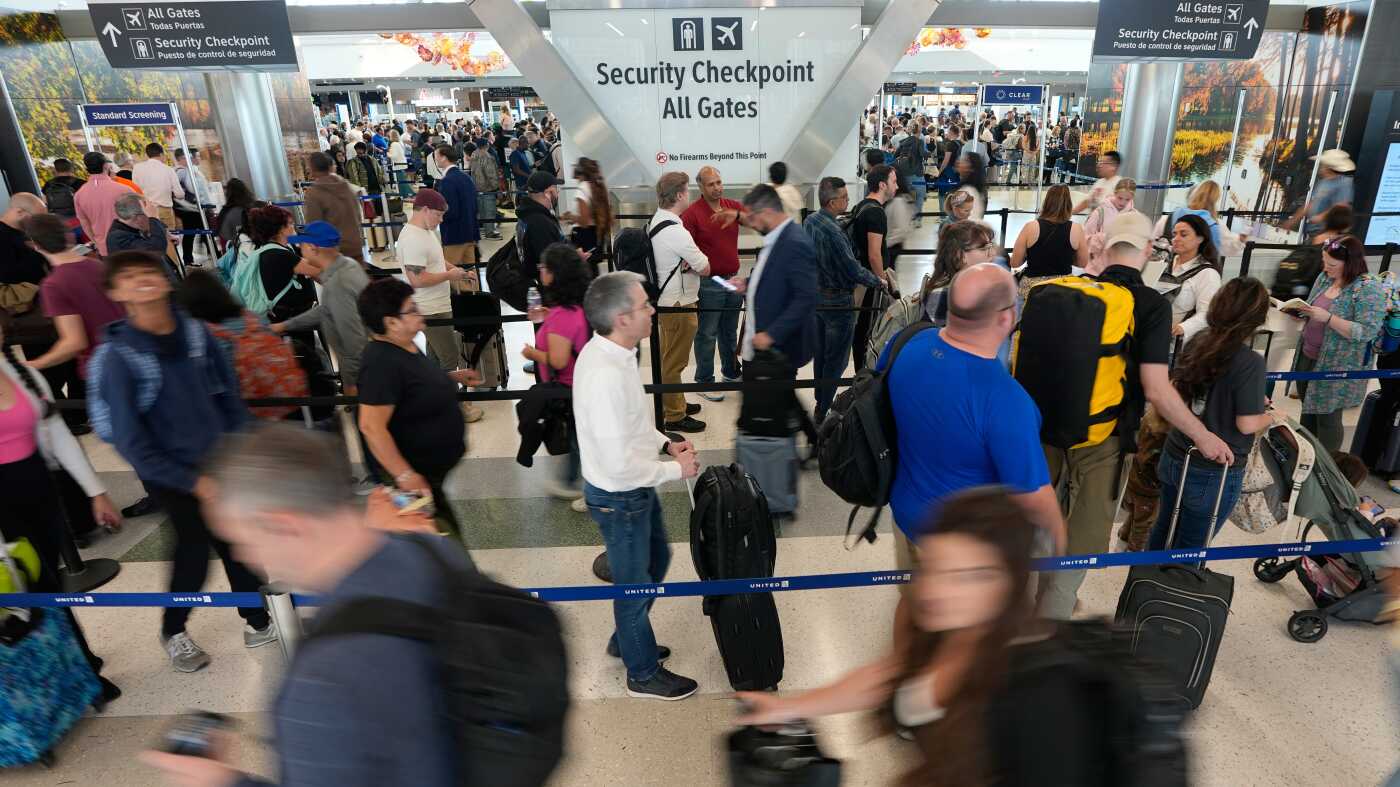
ICE officers could remain at airports after TSA workers are paid

Scathing report claims nation’s oldest labor union ‘betrayed’ MAGA members through ‘shocking’ spending
-

 Sports1 week ago
IOC addresses execution of 19-year-old Iranian wrestler Saleh Mohammadi
-

 Miami, FL4 days ago
Jannik Sinner’s Girlfriend Laila Hasanovic Stuns in Ab-Revealing Post Amid Miami Open
-

 New Mexico1 week ago
Clovis shooting leaves one dead, four injured
-

 Politics1 week ago
Schumer gambit fails as DHS shutdown hits 36 days and airport lines grow
-

 Tennessee7 days ago
Tennessee Police Investigating Alleged Assault Involving ‘Reacher’ Star Alan Ritchson
-

 Minneapolis, MN4 days ago
Boy who shielded classmate during school shooting receives Medal of Honor
-

 Science1 week ago
Record Heat Meets a Major Snow Drought Across the West
-

 Technology1 week ago
YouTube job scam text: How to spot it fast