- Sen. Mike Lee said Utah bill that requires proof of citizenship to vote is an example of the state leading the way.
- A review by the Utah Lieutenant Governor’s Office has so far found one confirmed noncitizen on Utah voter rolls.
- Lt. Gov. Deidre Henderson said these efforts must be careful not to accidentally kick citizens off of the voter rolls.
West
Border wall gap left open after Biden stopped construction frustrates agents: ‘It’s a beacon’

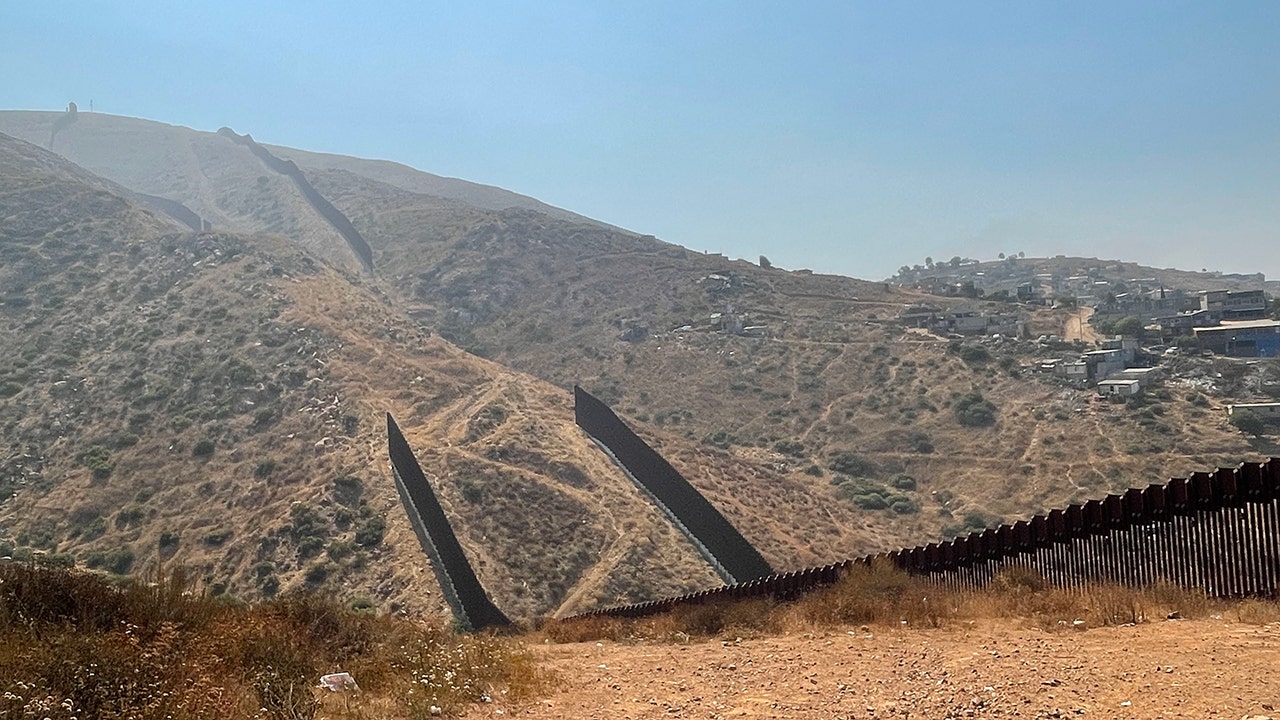
SAN DIEGO – Amid an ongoing crisis at the southern border and in one of the hottest spots for migrant crossings, there remains a massive gap in the border wall – through which Border Patrol agents say illegal immigrants know to pour through.
Along the border near Otay Mountain, California, about a mile and a half from the port of entry in Otay Mesa, there remains an enormous gap in the double wall structure.
The Trump administration set up or bolstered two barriers, one right along the U.S.-Mexico border to deter illegal immigrants from crossing into the United States. The second is an additional wall, surrounded by roads and lights so that Border Patrol can scoop up and detain any crossers who manage to climb over or through the first structure.
IMMIGRATION HAWKS DELIGHTED AT TRUMP PICK JD VANCE: ‘ONE HELL OF A CO-PILOT’
This image shows the gap in the southern border in the San Diego sector. (Fox News)
But the Biden administration stopped the wall construction after entering office in 2021. While it has committed to completing some projects already funded by Congress, including repairing some gaps in the wall, this project in San Diego has remained incomplete.
“It has a very significant impact on operations because it’s an open area where migrants can walk right into the United States unimpeded and when there’s an influx of migrants, they just use that instead of climbing the fence and just walk in that open area,” Manuel Bayon, president of the National Border Patrol Council in San Diego, told Fox News Digital in an interview.
Bayon described the gap as “frustrating” for agents.
The Trump administration built a wall, along with roads and lighting, throughout the border area. (Fox News)
“It was almost completed. You’re looking at possibly approximately two football fields. It’s just an open gap. It’s a beacon that here you’re allowed to cross into the United States,” he said.
In a statement, CBP said it “utilizes a multi-layered enforcement strategy where multiple facets complement each other to enhance border security.
“This includes technology, personnel and tactical infrastructure as well as a whole-of-government approach that utilizes our partner agencies as well as relationships forged with foreign governments,” a spokesperson said. “This particular location is included in the Border Patrol’s infrastructure priority list. We have been working to address this list over the past several years and are continuing to do work to do so.”
CBP has separately pointed to lower border numbers in recent months, including in San Diego Sector, with stats showing that encounters by Border Patrol are 29% lower than in May. The agency also says it is enforcing consequences against those entering illegally and on smugglers, with consequences including removal and a five year bar to entry.
“No one should believe the lies of smugglers. The fact remains: the United States continues to enforce immigration law, and those without a legal basis to remain will be removed,” CBP said.
The gap in the border wall represents the stark contrast between the policies of the prior Trump administration and the Biden administration. The Trump administration focused on increased interior enforcement and border wall construction.
This image shows the border wall separating Mexico from the U.S. in the San Diego Sector. (Fox News)
The Biden administration rolled back many of those measures, calling them ineffective. Instead, it has called for fundamental immigration reform and additional funding, while also emphasizing the importance of “root causes” of migration.
CLICK HERE FOR MORE COVERAGE OF THE BORDER SECURITY CRISIS
It has accused Republicans of failing to act for political purposes, including on a recent bipartisan Senate package. Republicans though, along with others including the Border Patrol union, have accused the Biden administration of fueling the crisis with its policies and have pointed to the record numbers of migrant encounters since the president took office.
The administration has taken action, including a recent executive order designed to limit entries at the southern border when numbers are high. The White House said this week that since the order was announced, encounters overall have decreased by more than 50%, and the number of releases has decreased by 70%. Officials also say the administration has removed and returned more than 50,000 individuals to more than 100 countries.
“While the president’s action has led to significant results, it is clear that the only lasting solution to the challenges we are seeing on our border – the solution that would deliver additional authorities, resources, and personnel that we need to secure our border – is through congressional action,” an official said.
Bayon, however, stressed that the union does not support the Biden administration due to what he said was a lack of enforcement, and also downplayed the importance of the executive order.
“It’s a Band-Aid on an open wound,” he said.
Read the full article from Here

Continue Reading

As debate on the New Mexico Senate floor stretched into Friday afternoon, Senate Health and Public Affairs Committee staff members addressed the crowd in a committee room with an apologetic tone: Committee Chair Sen. Linda López (D-Albuquerque) was concerned about the impending winter storm creating dangerous road conditions, they said, so the hearing on several pieces of proposed legislation would be rescheduled for Monday.


Video: When was the last time Oregon had a statistically ‘cool’ year?
Explore Oregon Podcast host Zach Urness talks with Oregon state climatologist Larry O’Neill about Oregon’s string of historically hot years.
A major winter storm has been forecast to spread heavy snow and ice across much of the United States. And while the storm won’t reach Oregon, the Beaver State is in for some of the coldest weather of the season.
The National Weather Service forecasts cold weather and potential cold weather advisories beginning Jan. 23 and lasting through Jan. 27, with widespread morning low temperatures near to below freezing.
The Salem area is under a cold weather advisory until Jan. 24 at noon. The region saw overnight lows that felt like 20 degrees at times due to wind chill earlier in the week.
But don’t count on snow in Marion and Polk counties any time soon. That’s because Oregon is in the midst of an unusually dry winter. Even though it’s cold enough to snow, it’s been nearly two weeks since the region has seen measurable rainfall.
It’ll likely remain dry for the next few days.
Still, there is an 80-95% chance for cold weather advisory conditions west of the Cascades, excluding the coast, and a 60-80% chance within the Greater Portland-Metro area, the weather service said in a release.
These conditions could see apparent temperatures at or below 25 degrees for four or more hours between Friday, Jan. 23, and Saturday, Jan. 24.
Areas of the Willamette Valley, Cowlitz and Columbia Valleys, and the Portland/Vancouver metros have a 20-40% chance of a Cold Weather advisory between the evening of Jan. 24 and the morning of Jan. 25.
Oregon could also experience “cold pockets” with temperatures at or below 25°F for up to three hours overnight and into the morning hours of Sunday, Jan. 25.
The weather service warned that the houseless could be impacted the most if they are unable to get to adequate heating. Frostbite and hypothermia are also dangers to pets and people not dressed appropriately for the cold weather.
For updated weather alerts, Oregonians can visit the weather service website at www.weather.gov.
Ginnie Sandoval is the Oregon Connect reporter for the Statesman Journal. Sandoval can be reached at GSandoval@statesmanjournal.com or on X at @GinnieSandoval.

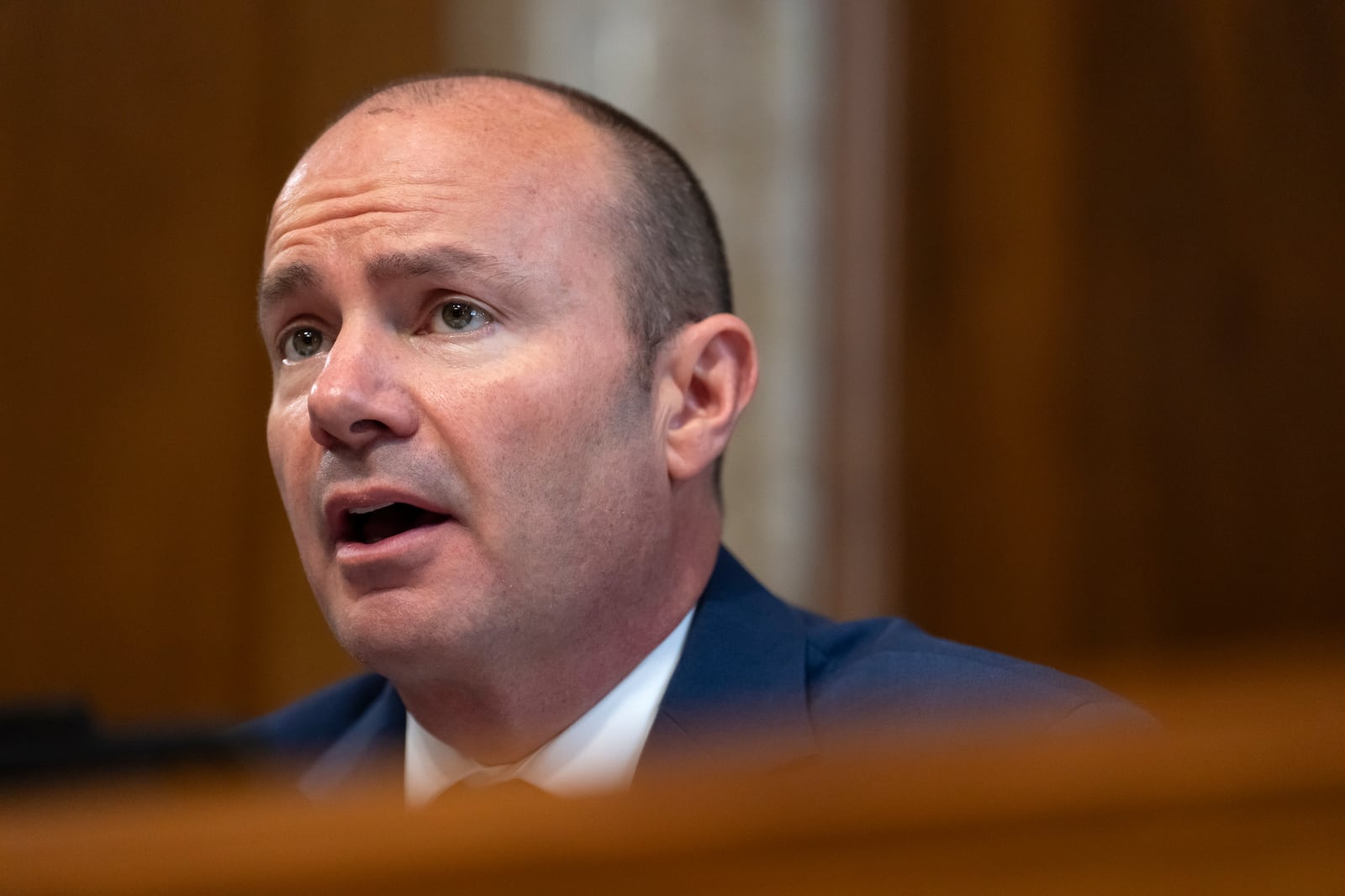
U.S. Sen. Mike Lee said Utah is an example to follow for its efforts to verify voter citizenship as the senator comes closer to passing his voter ID law in Congress.
More than a year after it was first introduced, Lee’s Safeguard American Voter Eligibility Act appears to be gaining traction as Republicans seek to make good on President Donald Trump’s campaign promises.
Meanwhile, Utah GOP legislators are backing a bill, HB209, that would create a process for county clerks to verify documentary proof of U.S. citizenship during voter registration, in line with the Utah Constitution.
“While we fight to pass the SAVE Act in the Senate, state-level citizenship requirements for voting and registration will be a vital tool to secure American elections and ensure citizen-only voting,” Lee said. “As ever, Utah leads the way.”
The Utah legislation would mirror that in a handful of Republican-leaning states that empower clerks to independently determine whether a registered voter is not a citizen and to bar participation in state elections.
As Lee, in Washington, D.C., and lawmakers in Utah clamp down on loopholes that may allow for noncitizens to vote, Utah’s chief election officer is also concluding an unprecedented citizenship review of Utah’s voter rolls.
What has the citizenship review found?
On Friday, the Utah Lieutenant Governor’s Office, which oversees elections in the state, provided an update on its review of noncitizens who are registered to vote.
After analyzing over 2 million records, election officials have so far identified just one noncitizen who was actively registered on voter rolls, but who never voted.
The individual checked the “noncitizen” box on the voter registration form but was still registered by the county clerk in a “clerical error” likely committed out of “some sort of confusion,” Lt. Gov. Deidre Henderson said.
Before the review began in April, the office identified four noncitizens who registered online to vote. The four were removed from voter rolls and are under investigation. It is unclear whether they voted, according to Henderson.
After confirming the citizenship of more than 99.9% of Utah voters, Henderson’s team is still working through roughly 7,000 records that could not be verified by using state drivers license information or federal databases.
Meanwhile, the office has updated the online voter registration process to prevent noncitizens from completing an application and Henderson is collaborating on HB209 to clarify when clerks can request proof of citizenship.
A problem of federal data?
One of Henderson’s takeaways from the comprehensive citizenship review, which she believes is the first in Utah history, is that federal databases are not a foolproof way to identify noncitizens on voter rolls, she said.
“There is no centralized federal database with a list of U.S. citizens,” Henderson told the Deseret News. “The states need to do further checks to find out. The federal government does not have good data.”
More than 95% of the 2,069,640 voters registered in August could be immediately confirmed as citizens by the Lieutenant Governor’s Office when comparing the state’s voter database with Driver License Division records.
The office then entered a memorandum of understanding with the Department of Homeland Security to use its SAVE program — which compiles Social Security, change of address and death records to determine welfare eligibility.
The program confirmed the citizenship of all but 8,836 of the remaining registered voters. But the database cannot “confirm noncitizenship,” Henderson said. So the Lieutenant Governor’s Office has begun manually inspecting each of the records.
The office found that 77% of the 2,119 active voters born outside the U.S. were citizens. On Jan. 13, the office asked the final 486 actively registered voters who could not be confirmed as citizens to complete a new registration form before Feb. 1.
The office will also inspect the roughly 6,700 records of inactive voters and those with incomplete information who said they were born within the U.S. The review will be published “as soon as we can track down as many of these voters as possible,” Henderson said.
Utah brings Sen. Lee’s SAVE Act to the state level
HB209 outlines what steps clerks can take if they cannot confirm citizenship, according to Henderson, who pointed out that, due to an election law passed last year, all Utah voters will soon be required to have state ID.

HB209, which is sponsored by Rep. Cory Maloy, R-Lehi, sailed through its first committee hearing on Wednesday with the blessing of House Speaker Mike Schultz, and the endorsement of the state’s top election administrators.
The bill would create a “bifurcated ballot system,” similar to that used for military service members in the state, that would provide voters a federal-only ballot if they refuse to provide documentary proof of U.S. citizenship.
If a registered voter has not provided proof of citizenship — with a drivers license, birth certificate, passport, tribal card or naturalization document — then clerks are instructed to notify the individual they cannot vote in state elections.
Schultz, R-Hooper, and Senate President Stuart Adams, R-Layton, both called the bill “common sense” this week, with Adams predicting on Friday that the desire to prevent noncitizens from voting is “probably unanimous up here.”
Over in the U.S. House, GOP leaders have signaled that Lee’s SAVE Act is a priority. The bill would amend the National Voter Registration Act to allow states to require REAL ID identification in order to vote in federal elections.
In addition to adding penalties for knowingly registering a noncitizen, the bill would provide alternate ways of proving citizenship to ensure citizens aren’t prevented from voting if they do not have certain forms of identification.
Any federal reform must actually accomplish “the intended goal,” Henderson said. In 2022, she was removed from voter rolls when her county clerk interpreted her birth on a foreign military base to mean she was not a U.S. citizen.
“We have worked in our state to balance accessibility and security,” Henderson said. “We want to make sure that only eligible voters are registered. We also want to make sure that we don’t erroneously kick off the voter rolls any eligible voters.”

New Hampshire42 seconds ago
Former Ambassador to Denmark on where he sees a U.S. deal with Greenland going

New Jersey6 minutes ago
New Jersey’s Traffic Ranking Reveals Challenges And Safety Focus In 2026 Study

New Mexico13 minutes ago
NM Legislature day 4 recap: Impending winter storm cancels committee hearing

North Carolina19 minutes ago
No. 22 North Carolina is trying to fix mistakes as the ACC schedule gets tougher

North Dakota25 minutes ago
Rural hospitals called ‘not optional’ as North Dakota acts to keep one open

Florida1 year ago
Florida High School Football Rankings: Top 25 teams – Oct. 21

Connecticut2 years ago
Cleary's 21 help Le Moyne down Central Connecticut State 69-64 in OT

Oregon2 years ago
How old is Bo Nix? What to know about Oregon quarterback ahead of 2024 NFL Draft

Virginia2 years ago
99th annual Pony Swim held in Virginia

Indiana1 year ago
Indiana Members Credit Union announced as new anchor tenant at Bottleworks District

News3 hours ago
Video: President Trump Rescinds Canada’s Invitation to His ‘Board of Peace’

Politics4 hours ago
Post-Roe battle over abortion pills reaches Kentucky gas stations as AG opens investigation

World5 hours ago
‘Electrifying everything’ is key to Europe’s future, says IEA chief

News6 hours ago
Ryan Wedding arrested: FBI confirms former Olympian turned drug kingpin in custody

News15 hours ago
Video: Jack Smith Defends His Trump Indictments During House Hearing
-

 Sports5 days ago
Miami’s Carson Beck turns heads with stunning admission about attending classes as college athlete
-

 Illinois1 day ago
Illinois school closings tomorrow: How to check if your school is closed due to extreme cold
-
 Detroit, MI1 week ago
School Closings: List of closures across metro Detroit
-

 Pittsburg, PA4 days ago
Sean McDermott Should Be Steelers Next Head Coach
-
 Lifestyle1 week ago
Julio Iglesias accused of sexual assault as Spanish prosecutors study the allegations
-

 Lifestyle5 days ago
Nick Fuentes & Andrew Tate Party to Kanye’s Banned ‘Heil Hitler’
-

 Sports4 days ago
Miami star throws punch at Indiana player after national championship loss
-

 Technology1 week ago
Inside the White House shitposting machine