North Carolina
No. 22 North Carolina is trying to fix mistakes as the ACC schedule gets tougher


CHAPEL HILL, N.C. (AP) — North Carolina had built momentum with a strong start to the season before an abrupt four-game downturn, one notably marked by a complete inability to defend the arc.
The 22nd-ranked Tar Heels don’t have a lot of time to fix problems, either, not with the Atlantic Coast Conference schedule about to get tougher.
Advertisement
UNC visits No. 14 Virginia on Saturday, its first matchup against a ranked league opponent and one of six games ahead currently ranked as a Quadrant 1 matchup that tops a postseason résumé for March Madness. That trip to face the Cavaliers comes a week after UNC closed an 0-2 cross-country trip to play Stanford and California, two games that highlighted some of the defensive struggles of late.
“The No. 1 thing from last week for us was, there were multiple possessions where we were making mistakes in back-to-back possessions,” coach Hubert Davis said after Wednesday’s win over Notre Dame. “We would turn the ball over, not get back on defense, give up a 3. We would get to the free throw line, miss two free throws, come down, give an and-1.
“I felt like last week, we were letting one play affect us on the other end to the next play.”
Defensive troubles
Advertisement
The Tar Heels (15-4, 3-3) have shown promise. There was a rousing early win against Kansas and potential No. 1 NBA draft pick Darryn Peterson. There was a win at Kentucky without senior and top defender Seth Trimble.
And after beating Florida State to open ACC play, the Tar Heels had their first 13-1 start since the 2008-09 season.
Yet trouble soon emerged.
First came a loss at SMU in which the Mustangs shot 60% — including 20 of 28 for 71.4% after halftime — and nearly scored 100 points. The Tar Heels followed in a white-knuckle final few minutes to edge Wake Forest in a high-scoring meeting.
Then came the trip out west. First the Tar Heels squandered a double-digit, second-half lead while watching Cardinal freshman Ebuka Okorie go for a season-high 36 points in a 95-90 loss. Three days later, the Golden Bears shot nearly 56% and hit 10 3-pointers to build a 17-point halftime lead then held off UNC’s frantic comeback.
Advertisement
By the time the Tar Heels faced Notre Dame, UNC had allowed five ACC opponents to make 70 of 156 3-pointers for an average of 14 made per game. That 44.9% success rate was worse than all but three of 365 Division I teams (North Dakota, Coppin State and Louisiana-Lafayette) in that same span, according to SportRadar.
The Fighting Irish managed to shoot well from outside early in Wednesday’s game, but Notre Dame went just 2 of 13 on 3s after halftime and finished the game at 8 for 25 (32%).
The trick now is turning that into more than just a one-game bump.
“It kind of helped us get back in the zone … and kind of build everybody’s confidence,” big man Henri Veesaar said afterward. “I think today everybody was a little bit nervous before the game even, I could say, because we had just lost two and we were like, ‘What are we doing wrong?’”
Advertisement
Making corrections
Alabama transfer Jarin Stevenson said multiple things were emphasized defensively in recent film sessions. He mentioned defensive communication while handling pick-and-roll plays to avoid getting dragged down lower into the paint. There was doing a better job in closing out on shooters or pressuring the ball on the perimeter, with a goal of “just making the offense uncomfortable.”
That wasn’t much of a problem against the Fighting Irish, who have struggled badly since leading scorer Markus Burton was lost to left-ankle surgery in early December. But future opponents won’t be nearly as limited; Virginia, for example, ranks 17th in both adjusted offensive and defensive efficiency in KenPom’s analytics rankings.
Freshman star Caleb Wilson felt there was at least one takeaway from the Notre Dame win: The Tar Heels made a determined effort to turn the game into a blowout, then did so in a 91-69 win.
Advertisement
“It’s more about pride with us now,” Wilson said. “Our coach can say whatever you want. I hate the people that try to blame Hubert for our lapses. But our coach is teaching us the right thing.
“It’s all about our effort and us playing as hard as we can. Coach can only do so much. We’re the ones out there playing.”
___
Get poll alerts and updates on the AP Top 25 throughout the season. Sign up here. AP college basketball: https://apnews.com/hub/ap-top-25-college-basketball-poll and https://apnews.com/hub/college-basketball



The NC Lottery offers several draw games for those aiming to win big.
Here’s a look at Wednesday, July 8, 2026 results for each game:
Winning Powerball numbers from July 8 drawing
12-29-37-43-55, Powerball: 18, Power Play: 4
Check Powerball payouts and previous drawings here.
Winning Pick 3 numbers from July 8 drawing
Day: 2-9-0, Fireball: 5
Evening: 7-9-6, Fireball: 6
Check Pick 3 payouts and previous drawings here.
Winning Pick 4 numbers from July 8 drawing
Day: 8-9-6-6, Fireball: 6
Evening: 3-4-8-5, Fireball: 4
Check Pick 4 payouts and previous drawings here.
Winning Cash 5 numbers from July 8 drawing
07-13-19-23-33
Check Cash 5 payouts and previous drawings here.
Winning Double Play numbers from July 8 drawing
01-03-14-18-32
Winning Millionaire for Life numbers from July 8 drawing
16-18-43-48-50, Bonus: 01
Check Millionaire for Life payouts and previous drawings here.
Feeling lucky? Explore the latest lottery news & results
Are you a winner? Here’s how to claim your lottery prize
All North Carolina Lottery retailers will redeem prizes up to $599.
For prizes over $599, winners can submit winning tickets through the mail or in person at North Carolina Lottery Offices. By mail, send a prize claim form, your signed lottery ticket, copies of a government-issued photo ID and social security card to: North Carolina Education Lottery, P.O. Box 41606, Raleigh, NC 27629. Prize claims less than $600 do not require copies of photo ID or a social security card.
To submit in person, sign the back of your ticket, fill out a prize claim form and deliver the form, along with your signed lottery ticket and government-issued photo ID and social security card to any of these locations:
- Asheville Regional Office & Claim Center: 16-G Regent Park Blvd., Asheville, NC 28806, 877-625-6886 press #1. Hours: 9 a.m. to 5 p.m. Monday through Friday. This office can cash prizes up to $99,999.
- Greensboro Regional Office & Claim Center: 20A Oak Branch Drive, Greensboro, NC 27407, 877-625-6886 press #2. Hours: 9 a.m. to 5 p.m. Monday through Friday. This office can cash prizes up to $99,999.
- Charlotte Regional Office & Claim Center: 5029-A West W. T. Harris Blvd., Charlotte, NC 28269-1861, 877-625-6886 press #3. Hours: 9 a.m. to 5 p.m. Monday through Friday. This office can cash prizes up to $99,999.
- NC Lottery Headquarters: Raleigh Claim Center & Regional Office, 2728 Capital Blvd., Suite 144, Raleigh, NC 27604, 877-625-6886 press #4. Hours: 9 a.m. to 5 p.m. Monday through Friday. This office can cash prizes of any amount.
- Greenville Regional Office & Claim Center: 2790 Dickinson Avenue, Suite A, Greenville, NC 27834, 877-625-6886 press #5. Hours: 9 a.m. to 5 p.m. Monday through Friday. This office can cash prizes up to $99,999.
- Wilmington Regional Office & Claim Center: 123 North Cardinal Drive Extension, Suite 140, Wilmington, NC 28405, 877-625-6886 press #6. Hours: 9 a.m. to 5 p.m. Monday through Friday. This office can cash prizes up to $99,999.
Check previous winning numbers and payouts at https://nclottery.com/.
When are the North Carolina Lottery drawings held?
- Powerball: 10:59 p.m. Monday, Wednesday, and Saturday.
- Mega Millions: 11 p.m. Tuesday and Friday.
- Lucky for Life: 10:38 p.m. daily.
- Pick 3, 4: 3:00 p.m. and 11:22 p.m. daily.
- Cash 5: 11:22 p.m. daily.
- Millionaire for Life: 11:15 p.m. daily.
This results page was generated automatically using information from TinBu and a template written and reviewed by a Carolina Connect editor. You can send feedback using this form.
North Carolina
Damaged Flock camera in North Carolina town sparks online debate over surveillance tech

RUTHERFORDTON, N.C. (WLOS) — A damaged Flock Safety camera in Rutherfordton has reignited debate over the use of license plate reader technology, with thousands weighing in online after police shared a photo of the vandalized device.
The Rutherfordton Police Department posted an image of the damaged camera on social media, where the post quickly gained more than 20,000 comments. While some users condemned the vandalism, others praised the person responsible, with comments including “Not all heroes wear capes” and “Give them a medal.”
Local law enforcement officials said there is too much misinformation online about the cameras.
FLOCK CAMERA DAMAGED IN NORTH CAROLINA TOWN, PROMPTING POLICE STATEMENT
“We’re seeing a lot of misconceptions that these cameras collect more data than they actually do,” said Capt. Ryan Bailey with the Rutherford County Sheriff’s Office. “The camera itself is only capturing the vehicle traveling down the road.”
Bailey said Flock cameras do not record video. Instead, they take still images of passing vehicles and capture license plate information. According to the sheriff’s office, those images are automatically deleted after 30 days.
The department also says safeguards are in place to prevent misuse of the system. Deputies are required to enter a case number before searching the database, allowing administrators to audit searches and ensure the technology is being used appropriately.
JULY 8, 2026 – A Flock camera in Rutherford County, North Carolina. (Photo: WLOS Staff)
Despite those protections, opinions among residents remain divided.
“I don’t like that idea at all because of the over-abundance of electronics and interference in our privacy,” Rutherfordton resident Rachel Alexander said.
Others believe the cameras are a valuable investigative tool.
“I have no really negative opinion with them. I think they’re really helpful, especially with criminals and children abductions,” said local homeowner Phyllis Irvine.
POLL: WHAT DO YOU THINK ABOUT FLOCK CAMERAS?
The Rutherford County Sheriff’s Office says the cameras have also proven useful in locating vulnerable people, including those with Alzheimer’s disease, dementia or other cognitive disabilities who may have gone missing while driving.
Officials say the technology has become an important resource for investigations and emergency response across the county.
Flock cameras cost about $3,500 each. Law enforcement officials say anyone caught intentionally damaging one could face charges.
North Carolina
North Carolina Republican operative shaping the state’s early voting plans is reassigned

North Carolina state Auditor Dave Boliek has reassigned a staffer working on state election preparations following reporting illustrating how the longtime Republican operative was using his position to shape county’s early voting plans.
-

 Texas22 seconds ago
Ted Cruz warns Talarico has ‘real chance’ to flip Texas’ U.S. Senate seat
-

 Utah7 minutes ago
Man suspected in 2006 Utah murder left suicide note in Las Vegas jail cell: police
-
 Vermont10 minutes ago
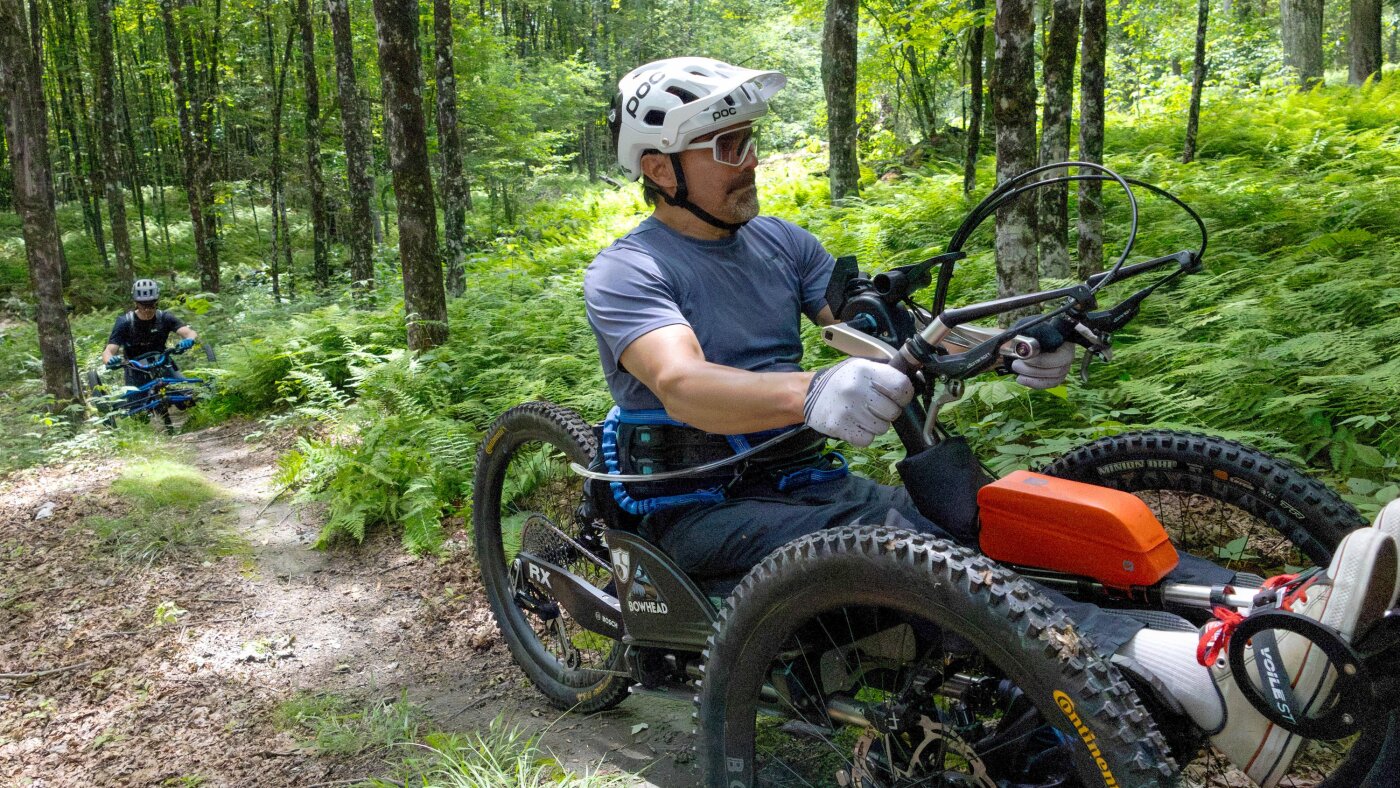
OUTDOOR ACCESS FOR DISABLED IN VERMONT
-
 Virginia15 minutes ago
4 indicted in Virginia double homicide; second victim ID’d as grandmother of 6
-

 Washington22 minutes ago
Washington Commanders are retiring Hall of Famer John Riggins’ No. 44
-

 Wisconsin25 minutes ago
Wisconsin State Patrol rides with truck and bus drivers to spot violations in five areas
-

 West Virginia30 minutes ago
West Virginia town fires entire police force after chief resigns, sergeant alleges evidence room break-in
-

 Wyoming37 minutes ago
WHP: July 5 single-vehicle rollover north of Riverton resulted in one death, one injury

