Arizona
Mark Meadows asks judge to move Arizona's fake elector case to federal court


PHOENIX (AP) — A judge will hear arguments Thursday in a Phoenix courtroom over whether to move former Donald Trump presidential chief of staff Mark Meadows’ charges in Arizona’s fake elector case to federal court.
Meadows has asked a federal judge to move the case to U.S. District Court, arguing his actions were taken when he was a federal official working as Trump’s chief of staff and that he has immunity under the supremacy clause of the U.S. Constitution, which says federal law trumps state law.
The former chief of staff, who faces charges in Arizona and Georgia in what state authorities alleged was an illegal scheme to overturn the 2020 election results in Trump’s favor, had unsuccessfully tried to move state charges to federal court last year in an election subversion case in Georgia.
Democratic Attorney General Kris Mayes’ office, which filed the Arizona case, urged a court to deny Meadows’ request, arguing he missed a deadline for asking a court to move the charges to federal court and that his electioneering efforts weren’t part of his official role at the White House.
While not a fake elector in Arizona, prosecutors said Meadows worked with other Trump campaign members to submit names of fake electors from Arizona and other states to Congress in a bid to keep Trump in office despite his November 2020 defeat.
In 2020, President Joe Biden won Arizona by 10,457 votes.
Last year, Meadows tried to get his Georgia charges moved to federal court, but his request was rejected by a judge, whose ruling was later affirmed by an appeals court. The former chief of staff has since asked the U.S. Supreme Court to review the ruling.
The Arizona indictment also says Meadows confided to a White House staff member in early November 2020 that Trump had lost the election. Prosecutors say Meadows also had arranged meetings and calls with state officials to discuss the fake elector conspiracy.
Meadows and other defendants are seeking a dismissal of the Arizona case.
In their filing, Meadows’ attorneys said nothing their client is alleged to have done in Arizona was criminal. They said the indictment consists of allegations that he received messages from people trying to get ideas in front of Trump — or “seeking to inform Mr. Meadows about the strategy and status of various legal efforts by the president’s campaign.”
In all, 18 Republicans were charged in late April in Arizona’s fake electors case. The defendants include 11 Republicans who had submitted a document falsely claiming Trump had won Arizona, another Trump aide, former New York City Mayor Rudy Giuliani and four other lawyers connected to the former president.
In early August, Trump’s campaign attorney Jenna Ellis, who worked closely with Giuliani, signed a cooperation agreement with prosecutors that led to the dismissal of her charges. Republican activist Loraine Pellegrino also became the first person to be convicted in the Arizona case when she pleaded guilty to a misdemeanor charge and was sentenced to probation.
Meadows and the other remaining defendants have pleaded not guilty to the forgery, fraud and conspiracy charges in Arizona.
Trump wasn’t charged in Arizona, but the indictment refers to him as an unindicted coconspirator.
Eleven people who had been nominated to be Arizona’s Republican electors had met in Phoenix on Dec. 14, 2020, to sign a certificate saying they were “duly elected and qualified” electors and claimed Trump had carried the state in the 2020 election.
A one-minute video of the signing ceremony was posted on social media by the Arizona Republican Party at the time. The document was later sent to Congress and the National Archives, where it was ignored.
Prosecutors in Michigan, Nevada, Georgia and Wisconsin have also filed criminal charges related to the fake electors scheme.



Cardinals’ Burch shares what he learned as a rookie in 2025
Arizona Cardinals second-year player Jordan Burch says his defensive line teammates have formed a bond heading into the 2026 NFL season.
Last year in early July, Cardinals edge rusher Jordan Burch was a rookie third-round draft pick out of Oregon who was looking forward to his first NFL training camp and eventual first season.
That rookie year is behind him now, and Burch has identified what he needs to improve on heading into his second season. He said he now knows what to expect and look for, and after talking with outside linebackers coach Matt Feeney, Burch built an offseason plan with which he was comfortable.
“I don’t think anything was like a surprise,” Burch said on Thursday, July 9, at the Cardinals’ Tempe headquarters. “I kind of know what to prep for, so this offseason I can look at my old plays, and then I can call my coach and tell him, from last year to this year, what does he want to see on the field.”
Burch seeks to improve his pass rush. He played in all 17 games last season and had five solo tackles with a sack, and also broke up three passes.
Much of his position was dropping into pass coverage, so Burch looks to recognize pass catchers’ routes better in 2026. He gets help from veteran Josh Sweat, who is there to answer questions about the position they share.
“Every week, every game going against somebody good,” Burch said about takeaways from last season. “The talent of the quarterbacks. We’re playing the Rams, how quickly they get the ball out.”
Burch looks forward to building a stronger bond with his teammates, having invited some of them for dinner or to watch TV. He said he was happy with his progress as a player throughout last season.
The Cardinals open training camp Wednesday, July 22, at State Farm Stadium. It’s a week earlier than most teams because Arizona plays the Carolina Panthers in the Aug. 6 Hall of Fame Game in Canton, Ohio.
Cardinals legend Larry Fitzgerald will be among those inducted into the Pro Football Hall of Fame Aug. 8.

A new study has ranked Arizona as one of the worst states to move to for two years in a row, largely due to what it calls a poor quality of life.
The study conducted by Consumer Affairs analyzed the best states to move to in the United States, putting Arizona at the bottom of the list.
Before Arizonans get too defensive about the Grand Canyon State, Consumer Affairs used factors such as affordability, safety, economic strength and education to measure each state, leaving out factors like entertainment, retirement benefits and other considerations that may be important to people living here.
Popular states such as California and New York also landed at the bottom of the list due to their lack of affordability, even though they both have some of the best health care and education in the nation, Consumer Affairs noted.
Here’s why the study says you shouldn’t move to Arizona. Do you agree?
Why you shouldn’t move to Arizona
Arizona ranked No. 10 out of the worst states to move to, scoring especially poorly in quality of life.
Quality of life was measured by the state’s Social Progress Index, average air quality, weather, environmental protection and number of national parks. Due to Arizona’s extreme summers and Phoenix’s consistently poor air quality, it’s easy to see why Arizona ranked No. 44 in quality of life out of 50 states, even though the Grand Canyon is one of the most popular national parks in the nation.
However, Arizona also ranked poorly in other categories, sitting at No. 42 in health care and education, No. 41 in safety and No. 34 in affordability out of 50 states.
There was one category Arizona did impressively well in, ranking No. 5 in economic strength even as one of the youngest states in the country. Still, Arizona’s economic power wasn’t enough to boost its ranking.
Top 10 worst states to move to
Arizona wasn’t alone; some of the biggest states in the country were also considered the worst states to move to in 2026.
- New Mexico
- Louisiana
- California
- Arkansas
- Oklahoma
- Nevada
- Alaska
- Mississippi
- Oregon
- Arizona
Top 10 best states to move to
- Utah
- New Hampshire
- Idaho
- Minnesota
- Massachusetts
- Maine
- North Dakota
- Pennsylvania
- Iowa
- South Dakota
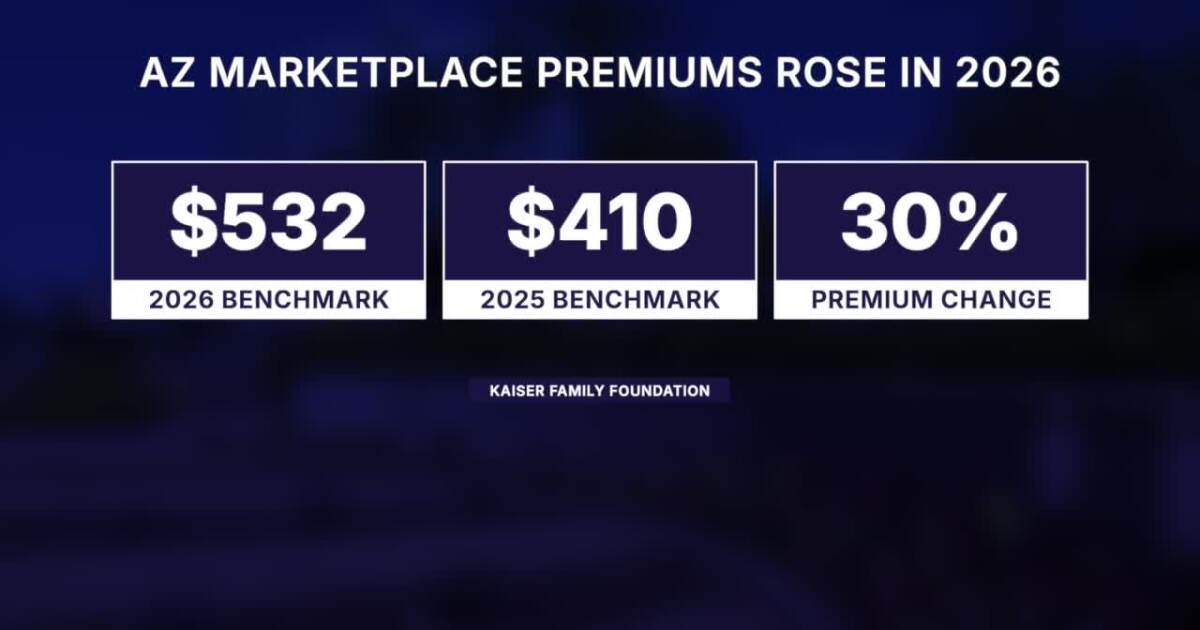
PHOENIX — Arizona’s ACA marketplace enrollment fell from 363,000 to just over 255,000 in a single year — a nearly 30% decline and the third-largest annual drop in the country.
Rising premiums and expired tax credits are driving the trend, with the average benchmark plan premium in Arizona now at $532 — up 30% from 2025.
In the player above, ABC15 Data Analyst Garrett Archer takes a look inside the numbers on how healthcare premiums are impacting health insurance enrollment.
This story was reported on-air by a journalist and has been converted to this platform with the assistance of AI. Our editorial team verifies all reporting on all platforms for fairness and accuracy.
Want more news in your community? Add ABC15 as a preferred source on Google below:

-

 Tennessee3 minutes ago
Tennessee Highway Patrol holds open house at Jackson district office
-

 Texas15 minutes ago
Longhorns Daily News: Texas coach Steve Sarkisian named among Dodd Trophy watch list
-

 Utah17 minutes ago
Utah Jazz vs Washington Wizards recap: Darryn Peterson is only a man
-
Vermont23 minutes ago
VT Lottery Gimme 5, Pick 3 results for July 9, 2026
-

 Virginia30 minutes ago
Virginia cannabis budget language triggers legal confusion, political fallout
-

 Washington32 minutes ago
Trump’s proposed 250ft Washington arch clears key planning hurdle
-

 Wisconsin38 minutes ago
A Wisconsin family is suing Target after their 10-month-old died from swallowing a water bead
-

 West Virginia45 minutes ago
How midsummer wild berries connect people, wildlife, and West Virginia’s forests – West Virginia Explorer

