Arizona
How Arizona's monsoon is changing

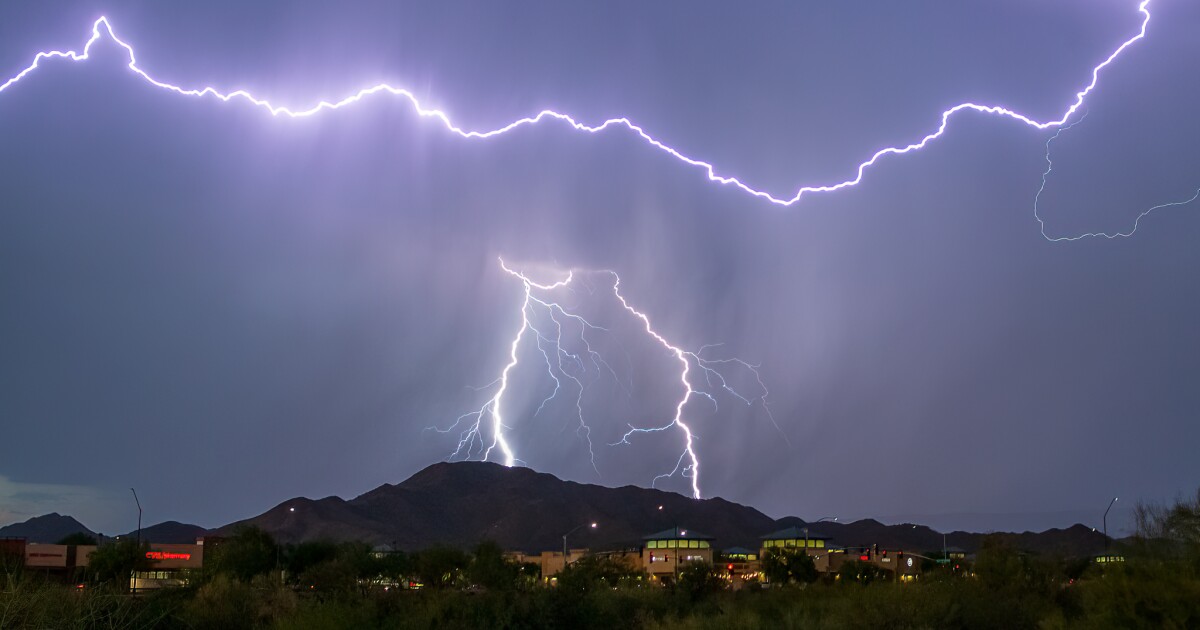
PHOENIX — Each summer, thunderstorms tower in our otherwise sunny Arizona sky. Winds shift out of the south and southeast, bringing moisture in all the way from the Gulf of Mexico. That moisture rises and forms thunderstorms in the heat of the day. This is our monsoon.
Much of Arizona typically receives 30 to 50 percent of its annual rainfall during the monsoon months of June, July, August, and September, which helps replenish our dry land and diminish wildfire threats.
UA
But, the monsoon as we know it is changing. As our atmosphere gets hotter with climate change, it’s able to essentially hold more water vapor and that’s altering how our monsoon behaves.
“We don’t get as many storms, but when they do come, they’re tending to produce higher rainfall amounts, more intense rainfall, and more intense winds,” says Dr. Christopher Castro with the Hydrology and Atmospheric Sciences Department at the University of Arizona.
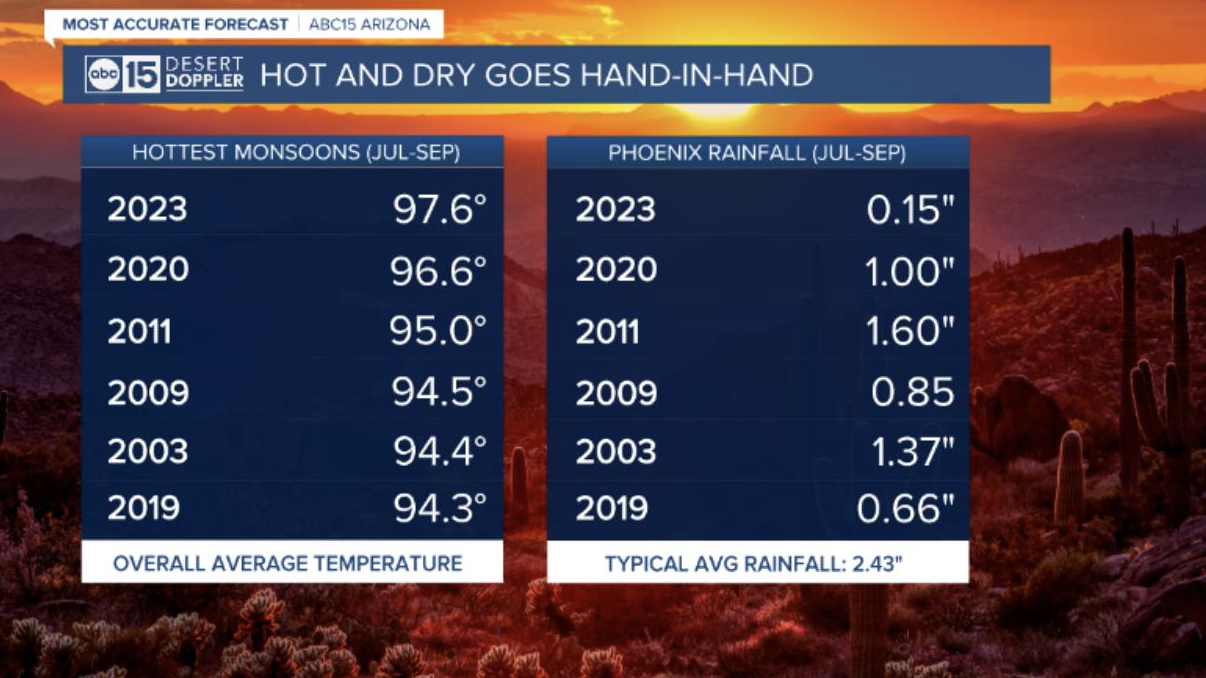
That’s exactly what we saw play out here in Phoenix last summer. It was our hottest and driest monsoon on record. Sky Harbor only received 0.15 inches of rain. That’s more than 2 inches below normal.
But, what is considered a “normal” amount of monsoon rain has changed a lot in the past 50 years.
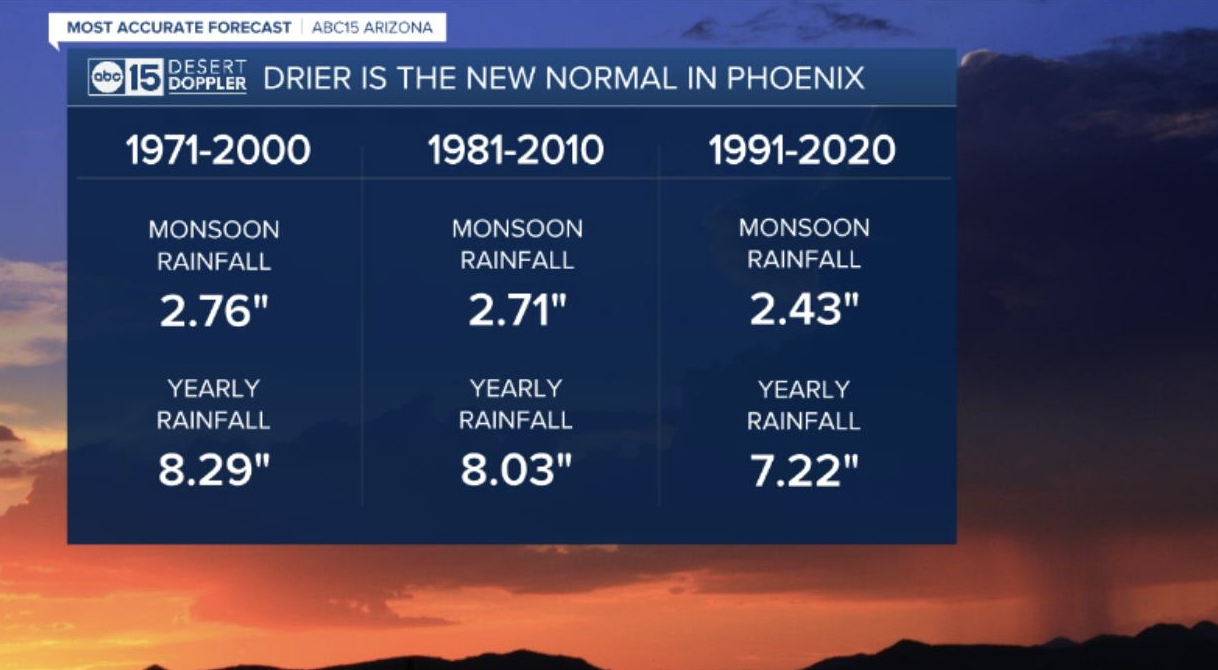
Every 10 years, new normals are calculated based on a rolling 30-year average. Our latest update came in 2021, giving us a new average that is based on rainfall data from 1991 to 2020.
This new normal showed an average rainfall in Phoenix for the monsoon season of 2.43 inches of rain. That’s more than a quarter of an inch drier than the previous average, which is a big difference here in the desert!
KNXV
Castro and his team at the University of Arizona are leading the way when it comes to research on how climate change is impacting our monsoon. Although not yet published in scientific peer-reviewed journals, they have run experiments simulating how storms move down into the Valley.
They have discovered that a greater number of green spaces, like parks, golf courses, and green landscaping, are leading to fewer storms making it down into the city.
“The presence of all these watered areas is suppressing the amount of instability in the atmosphere. So, it’s harder to initiate storms from the outflow boundaries,” he says.
So, as storms try to move down off of the Mogollon Rim, they are now often getting diverted around the periphery of the Phoenix metro instead of rolling right through it like they used to.
Scientists like Castro have also seen a broadening of our monsoon ridge, which is impacting our monsoon, too.
KNXV
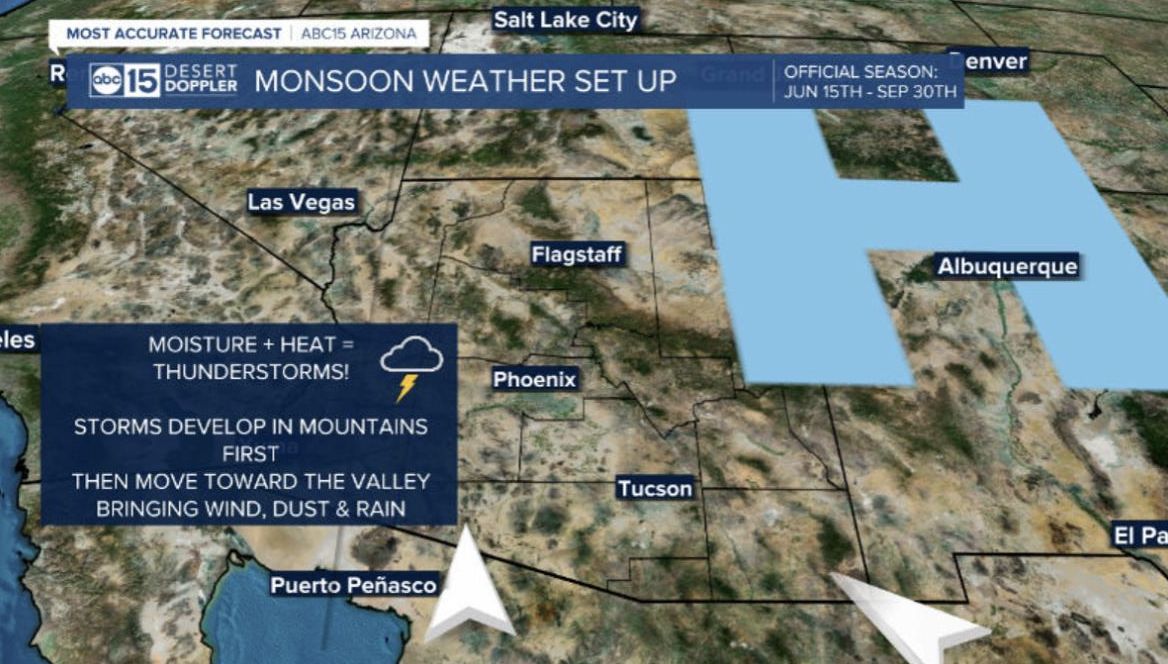
It’s the ridge of high pressure, which sets up near the Four Corners during the summer, that allows monsoon moisture to flow in.
“What we’ve observed in the last 20 years or so, is that the monsoon ridge is growing more intense and more spatially expansive. The bigger and more expansive that ridge is, the more propensity there is for the air to sink from the upper atmosphere. So. it suppresses the atmospheric instability and it makes storms harder to form,” Castro says.
That’s exactly what happened last year. As that ridge of high pressure sat over Arizona, it suppressed storm formation and made it much hotter. Our 2023 monsoon season was the hottest and driest on record in Phoenix.
KNXV
2020 was also a so-called “non-soon” with only 2 days of measurable rain in Phoenix. That year, we received 90% of our monsoon rain (0.90 inches) in just 2 hours with one particularly bad storm the night of August 20, 2020.
Castro says that’s the fingerprint of climate change in the desert.
“It’s really about the extremes. The monsoon is, generally all the way around, getting more extreme. So, when we get our heat waves now those are more intense than they used to be and when it rains, it may not rain as frequently as it used to, but it tends to be more intense,” Castro says.
That intensity makes it harder for us to adapt.
When it’s extreme heat, we see more heat-related deaths. We had 987 heat-related deaths across Arizona last year. 645 of those happened in Maricopa County, mostly during the hottest and driest monsoon on record.
When it’s extreme rainfall, we see more flash flooding and complete destruction near wildfire burn scars since the charred ground can no longer absorb water.
“From the water supply perspective, it’s bad news for recharge of the groundwater table. If you’re drying out the soils and then realizing your precipitation with only a few intense events, more of that precipitation is likely to run off. There’s also a greater danger for wildfires to happen and that totally changes the characteristics of the permeability of the soil. Then, when it rains, that water will immediately wash off very similar to a landslide,” Castro says.
A bigger, broader monsoon ridge also deflects atmospheric disturbances, known as inverted troughs, from tracking through Arizona.
Those disturbances often serve as triggers to get widespread rain and thunderstorm activity going during the monsoon.
“The expanded monsoon ridge is suppressing the path of those inverted troughs more to the south, so the number of inverted troughs is decreasing. So, the frequency of big precipitation events is decreasing. But when they do occur, they’re occurring in a more moist environment that is favorable for heavier amounts of precipitation,” says Castro.
We’re seeing similar impacts across the country as the number of heavy downpours increases in this warming world.
KNXV
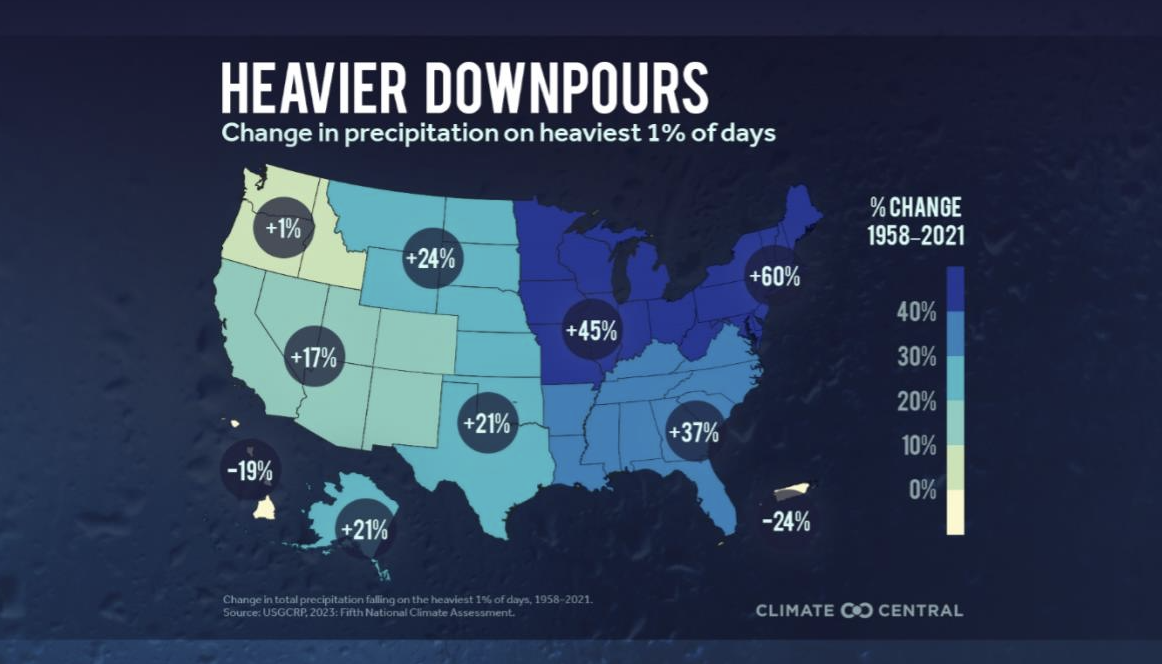
While downpours are increasing, periods of drought are increasing too.
Climate Central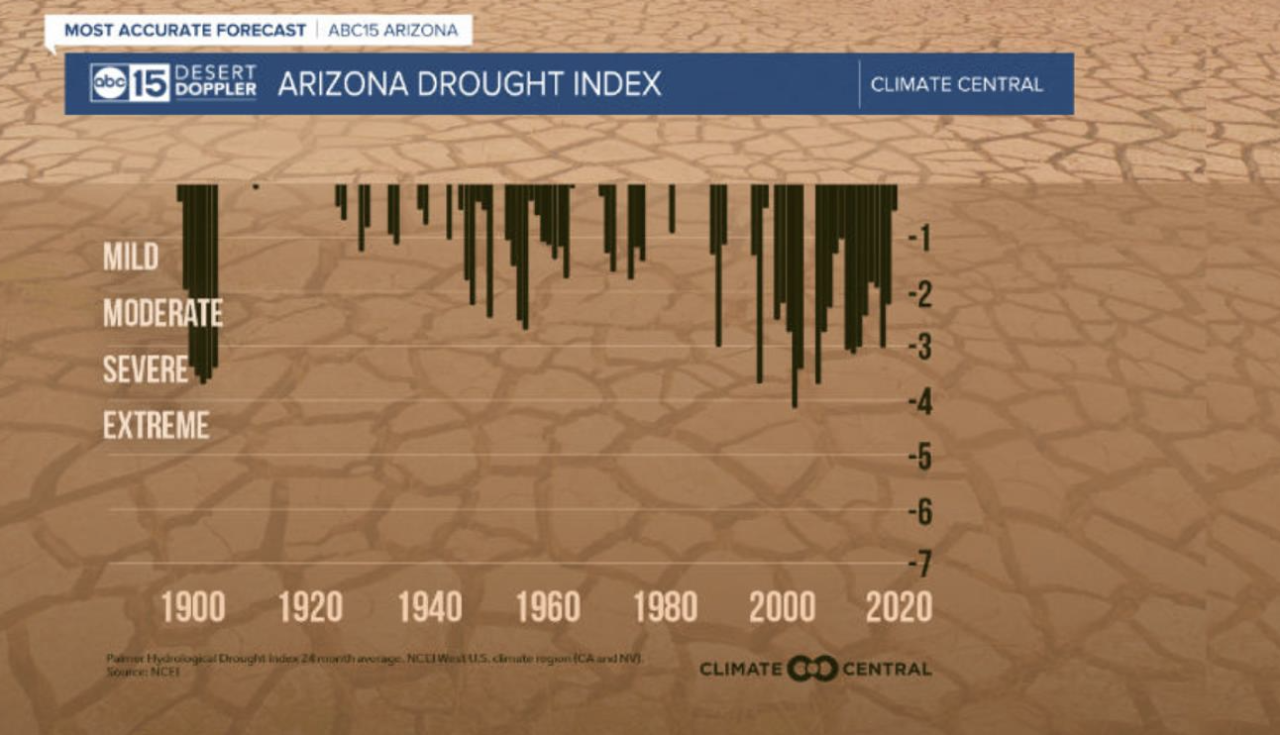
So we are increasing both of these extremes as our climate changes.
Castro says, “We’re going into a world where we have these more dramatic swings in climate variability, whether it’s winter or summer. There’s been this term coined climate whiplash, you go from one extreme to another, either between seasons or within a season. This is devastating from the standpoint of climate and our resiliency to the natural climate because if we’re exceeding the ranges of which our natural and human systems can cope with these whiplash swings, you’re going to go from one year where a dam nearly fails because it’s flooded to a year of devastating wildfires and the ecosystem cannot recover.”


![“Redux Redux”: A Mind-Blowing Multiverse Movie That Will Make You Believe in Cinema Again [Review]](https://i1.wp.com/www.thathashtagshow.com/wp-content/uploads/2026/02/Redux-Redux-Review.png?w=400&resize=400,240&ssl=1 "“Redux Redux”: A Mind-Blowing Multiverse Movie That Will Make You Believe in Cinema Again [Review]")


Arizona
Nancy Guthrie search at Arizona home ends with no arrests. ‘I’m not it,’ detained resident says

The search of an Arizona home overnight by police looking for Nancy Guthrie has ended with authorities seemingly no closer to finding the missing 84-year-old.
The home — part of the semi-rural community of Rio Rico, about 60 miles south of Tucson, belongs to the family of a 36-year-old man who had been detained in a traffic stop and questioned for several hours overnight in connection with the kidnapping case. The man, whom The Times is not naming, was released from custody early Wednesday, shortly after deputies and FBI forensics experts and agents left the house.
Officials have not officially released the individual’s identity or offered any details about if or how the person might be connected to the case. The man told reporters outside the home that he’d never heard of the Guthrie family and hadn’t followed news about the case. Police didn’t ask him any questions while he was detained, he said.
“I hope they get the suspect, because I’m not it,” he told reporters. “They better do their job and find the suspect that did it so they can clear my name.”
FBI Director Kash Patel told Fox News on Tuesday night that agents are looking at more than one individual as a “person of interest” in the case.
“We are looking at people who, as we say, are persons of interest,” Patel said.
The case took another bizarre turn Wednesday morning when TMZ announced that the outlet had received a letter demanding a payment of one bitcoin — worth about $67,000 at the time — in exchange for the name of Guthrie’s kidnapper.
“If they want the name of the individual involved, then I want 1 Bitcoin to the following wallet. Time is more than relevant,” the note stated, according to TMZ.
Authorities are already offering a $50,000 reward for information in the case.
The flurry of activity followed what had already been an eventful day for law enforcement investigating the case and the public avidly following it, with FBI officials releasing surveillance footage showing a masked individual approaching the front door of Guthrie’s Tucson home the morning she was abducted.
The footage marked the first major break in the investigation, which has spanned 11 days.
The images, recorded at 1:47 a.m. on Feb. 1, show someone wearing a balaclava, gloves and a backpack tampering with the Nest camera at Guthrie’s front door. A gun is holstered at the person’s waist, positioned at the front of their body where it is easily visible.
In the footage, the person approaches the front door, notices the camera and tries to cover the lens with their hand. Then they look around the patio and yard area, apparently for something to obstruct the camera, and settle on some greenery that they position in front of the lens.
When authorities arrived at the home in Arizona later that day, the camera was gone.
In an investigation with numerous dead ends, the footage was expected to be crucial in helping law enforcement move the case forward. But there is still no sign of Guthrie, who has been without medication since she was taken from her home on Feb. 1.
Pleas from the family for Guthrie’s return have become increasingly urgent as time has passed.
“Today” show anchor Savannah Guthrie, one of Nancy’s daughters, shared the footage of the masked individual at her mother’s front door in two posts on Instagram on Tuesday with a plea for the public’s help. In one post she says the family believes their mother is “still alive.”
“Someone out there recognizes this person,” she wrote. “We believe she is still out there. Bring her home.”

The University of Arizona women’s basketball team (11-13, 2-11 in Big 12) fell to the University of Cincinnati (9-16, 4-9 in Big 12) 77-61 on Tuesday, Feb. 10 in the Fifth Third Arena.
Key players
Junior Sumayah Sugapong led the Wildcats with 20 points, five rebounds and four assists. Following Sugapong was Daniah Trammell who managed to collect 12 points along with three rebounds. Tanyuel Welch was strong on defense for the Wildcats with the most rebounds at seven.
As for the Bearcats, Reagan Jackson paved the way with 19 points and two rebounds. Mya Perry was close behind with 17 points and three assists. Ramiyah Byrd was the most essential player all around during this game collecting 14 points and 15 rebounds.
First half
The Wildcats started strong as Bless Adebanjo made a jumper within the first 25 seconds getting the first points of the game. Arizona was able to maintain the lead for the first four minutes, but the Bearcats quickly tied up the game 6-6 after a fast break jumper by Caliyah Devillasee.
Reagan Jackson was sent to the line for Cincinnati after a foul on Kamryn Kitchen where she shot 2-for-2. Jackson’s shots brought the Bearcats in the lead 8-6. Cincinnati began to pull away but Arizona managed to hang close throughout the rest of the period.
Ramiyah Byrd put in a second chance layup after getting the offensive rebound bringing Cincinnati up by 7 points. The Bearcats were able to go on a scoring run which built a larger gap going into the second period of 25-13.
The Wildcats managed to get in one last point opportunity before the end of the quarter with a second chance jumper from Tanyuel Welch.
The first quarter ended with Cincinnati in the lead 25-15.
The second quarter consisted of lots of back and forth with both teams unable to score throughout the first three and a half minutes. The Wildcats managed to get the first points of the second quarter about seven minutes in with a 3-pointer from Sumayah Sugapong.
Cincinnati almost doubled Arizona’s points 35-18 after Byrd got the defensive rebound then turned it into a layup. Arizona was able to turn their possession into some points with a jumper by Sugapong. Following this, the Bearcats went on a scoring spree, tallying 8 points within the span of a minute.
The quarter finished with Joya Crawford shooting 2-for-2 from the stripe for the Bearcats.
Cincinnati took the lead going into halftime 46-22.
Second half
The Wildcats came back from halftime strong as they managed to make two layups, one from Achol Magot and the other from Daniah Trammell. Arizona managed to make more shots this period, but they were unable to slow down Cincinnati’s shooting which kept them in a large deficit.
Despite Cincinnati’s large lead, Arizona did not give up and chipped away at the gap. Welch made a driving layup to close out the third quarter 61-39.
Following the pattern of the previous quarters, Arizona was the first to score with a layup by Trammell in the paint. After a missed 3-pointer from the Bearcats, Welch was able to get the rebound and turn it into Wildcats points on the fast break.
The Wildcats demonstrated stronger defense and more hustle throughout the second half, but unfortunately it was not enough to override the power from Cincinnati. Once they fell behind, they were never able to fully recover to reduce the gap enough to regain the lead.
Cincinnati took victory over Arizona 77-61.
Looking forward
Arizona will return home this weekend to take on their rivals ASU on Saturday, Feb. 14 at noon. This will be the second time this season these teams have met and the Wildcats will be looking for redemption on their home court. This game will also be streamed on ESPN+.
Follow the Daily Wildcat on Instagram and Twitter/X

No. 1 Arizona men’s basketball team (23-1, 10-1 in Big 12) suffered a devastating loss 82-78 against No. 9 University of Kansas (19-5, 9-2 in Big 12) on Monday, Feb. 9 at 7 p.m. in Allen Fieldhouse. Kansas broke the Wildcats 23 game winning streak as they head into the final games of the conference season. The Jayhawks are now 39-0 on Big Monday on their home court.
Despite the loss, the Wildcats put up a good fight and remained close until the end.
“Well, if a guy’s 38-0 on his home court on Big Mondays, it’s probably pretty hard to win here, no matter what our record coming in is. So we knew it’s going to be a tough game and we’re okay with it.” said head coach Tommy Lloyd post game.
Key players
Brayden Burries was the leading scorer for Arizona recording the most points for either team with 25. Burries also attempted and made the most 3-pointers shooting 4-of-7. The team altogether only made 6-of-15 3-pointers. Koa Pete was the teams second leading scorer with 14.
Motiejus Krivas was essential on the boards, grabbing 15 rebounds and generated 16 second chance points.
For Kansas, Melvin Council Jr. and Flory Bidunga tied for the 23 points. Council Jr. managed to get six rebounds and shoot 10-of-11 free throws, which helped the Jayhawks extend their lead in the final minutes of the game. Bidunga also recorded 10 rebounds and six assists for Kansas.
First half
Arizona got on the board first after a layup from Ivan Kharchenkov which began a 6 point run. The Wildcats were able to gain a 7 point lead after Jaden Bradley went 1-for-2 from the free throw line.
The Wildcats controlled the first half but the Jayhawks eventually shortened the deficit. With about six minutes remaining in the half, a dunk on the fast break by Kansas’s Tre White brought the Wildcats lead to just 3 points.
Burries and Peat were able to create more space for Arizona with a free throw and 3-pointer. Arizona was in the lead 38-31 after Anthony Dell’Orso made a 3-pointer, but immediately after this Kansas went on a scoring run.
Elmarko Jackson and Bidunga made jumpers followed by a 3-pointer from Jamari McDowell to tie up the game 38-38 with just three minutes remaining in the first half. Both teams were going point for point, keeping the game tied as the clock ticked towards halftime.
With just one minute remaining, Burries made a 3-point jumper that brought the Wildcats into the lead 43-40. Kharchenkov made a jumper to extend Arizona’s lead, but unfortunately Bradley was called for a person foul, sending Council Jr. to the line where he shot 2-for-2.
Arizona held the lead going into halftime, but Kansas was not far behind with 45-42.
Second half
The Wildcats started the second half off similar to the first with a jumper from Kharchenkov getting them the first points of the half.
With just nine and a half minutes left in the game, Bidunga made a layup that brought the Jayhawks into the lead for the first time in the game. Kansas continued to go on a scoring run bringing their lead up to 69-64 after Council Jr. shot 2-for-2 from the free throw line.
Immediately following these shots, Burries came back and put in a 3-pointer for Arizona keeping them right behind the Jayhawks.
As the clock winded down, Kansas started to extend their lead but had a personal foul called on McDowell sending Burries to the line where he shot 2-for-2.
With 30 seconds left, Burries made a 3-pointer to cut the Jayhawk lead to just one. Following Burries shot, a foul was called on Peat which allowed Kansas to shoot from the stripe. Council Jr. made both free throws bringing their lead up to 79-76.
Arizona continued to get called for fouls that sent Kansas to the free throw line where they did not miss a single shot. They put up a good fight until the last moments as with just nine seconds remaining Krivas shortened the deficit to only 2 points with a jumper on the fast break.
This unfortunately was not enough as White was sent to the free throw line with five seconds remaining where he made 2-for-2 extending their lead. The win slipped out of Arizona’s reach after that. Kansas took the win and claimed the first victory against Arizona 82-78.
Looking forward
Arizona will be looking to bounce back from this loss at home on Saturday, Feb. 9 at 4:30 p.m. against No. 14 Texas Tech University. There are only four home games remaining in the 2025-26 season before the Big 12 Tournament, so the Wildcats will need all the support they can get from fans.
Follow the Daily Wildcat on Instagram and Twitter/X

You’re not burning as many calories as you think you are with exercise — here’s why
![“Redux Redux”: A Mind-Blowing Multiverse Movie That Will Make You Believe in Cinema Again [Review]](https://i1.wp.com/www.thathashtagshow.com/wp-content/uploads/2026/02/Redux-Redux-Review.png?w=80&resize=80,80&ssl=1 "“Redux Redux”: A Mind-Blowing Multiverse Movie That Will Make You Believe in Cinema Again [Review]")
“Redux Redux”: A Mind-Blowing Multiverse Movie That Will Make You Believe in Cinema Again [Review]

Video: Police Identify Suspect in Mass Shooting in Canada

Video: F.A.A. Said to Have Closed El Paso Airspace Over Military’s Use of Anti-Drone Technology
‘Dawson’s Creek’ star James Van Der Beek has died at 48

Florida High School Football Rankings: Top 25 teams – Oct. 21

Cleary's 21 help Le Moyne down Central Connecticut State 69-64 in OT

How old is Bo Nix? What to know about Oregon quarterback ahead of 2024 NFL Draft

99th annual Pony Swim held in Virginia

Indiana Members Credit Union announced as new anchor tenant at Bottleworks District
Video: F.A.A. Said to Have Closed El Paso Airspace Over Military’s Use of Anti-Drone Technology

Only one House Dem voted in favor of voter ID, proof of citizenship in US elections
Who decides who belongs in Europe? The migration debate returns

‘You’re a washed-up loser lawyer’: Pam Bondi taunts Democrats over Epstein

Video: Will Trump’s Order on Housing Help?
-

 Politics6 days ago
White House says murder rate plummeted to lowest level since 1900 under Trump administration
-

 Indiana1 week ago
13-year-old rider dies following incident at northwest Indiana BMX park
-

 Alabama4 days ago
Geneva’s Kiera Howell, 16, auditions for ‘American Idol’ season 24
-

 Indiana1 week ago
13-year-old boy dies in BMX accident, officials, Steel Wheels BMX says
-

 Politics1 week ago
Trump unveils new rendering of sprawling White House ballroom project
-

 Culture1 week ago
Try This Quiz on Mysteries Set in American Small Towns
-

 San Francisco, CA1 week ago
Exclusive | Super Bowl 2026: Guide to the hottest events, concerts and parties happening in San Francisco
-

 Massachusetts1 week ago
TV star fisherman’s tragic final call with pal hours before vessel carrying his entire crew sinks off Massachusetts coast