Arizona
Data centers are good for Arizona. Here’s why | Opinion


Data centers have gotten a bad rap lately, but here’s why we think they are actually good for Arizona. It starts with jobs.

Chandler City Council votes no on AI data center
Chandler becomes one of the first Phoenix-area cities to reject a data center, despite months of lobbying by former U.S. Sen. Kyrsten Sinema.
Arizona data centers have generated a lot of political heat in recent weeks.
At her State of the State address, Gov. Katie Hobbs questioned the social benefit of data centers and signaled an interest in reinstating a sales tax on data center equipment purchases. Neal Carter, a Republican state legislator, agrees with Hobbs. So too might Republican state legislator Leo Biasiucci.
A month ago, the Chandler City Council unanimously rejected a proposed data center despite the lobbying efforts of former U.S. Sen. Kyrsten Sinema. Hundreds of Chandler residents filled the auditorium for the vote, and 256 residents submitted online comments opposing the data center.
In Tucson, the city council unanimously rejected connecting a large data center (Project Blue) to the city’s water system. Attorney General Kris Mayes is now looking deeper into Project Blue, Tucson Electric Power and the Arizona Corporation Commission.
Here at The Arizona Republic, the opinion section published an editorial on Jan. 20 (Arizona data centers bring hidden water risks), and the news section printed an article on Jan. 18 (Gas power plant for data center project stirs concerns in Surprise), both of which cast data centers in a less-than-flattering light.
And earlier this week, handfuls of speakers at the Corporation Commission blamed data centers for proposed APS rate hikes.
Each situation has its own complexities and justifications (and I’ll get into some of them in future weeks). Some opposition is more factually substantiated than others. But they’re all rooted in a suspicion that these large warehouses of computer servers that power the modern world are no longer great things for Arizona.
Arizona data center benefits starts with jobs
If we may be so bold, and to set the stage for future articles here at the Republic, here are a few reasons why Arizona should celebrate our position as a top 10 state for data centers:
- Jobs. It’s not just the people employed by data centers (many of which are high-paying jobs), but the ancillary jobs needed by data centers: contracted electricians, carpenters, pipefitters, HVAC technicians, etc. PricewaterhouseCoopers (“PwC”) found that data centers accounted for 81,000 jobs in Arizona as of 2023.
- Taxes. It’s the start of the state legislative season and, sadly, this is going to be one of those years in which we hear lots about the things we can’t afford. But data centers help that equation. According to the same PwC report, data centers generated $2.3 billion in state and local tax revenue from 2017 to 2021. That means money for schools and roads. Or lower state income taxes (as happened).
- Tech center. It’s a truism that tech begets other tech. We’ve said this as we’ve celebrated the massive expansions of TSMC and Intel. It’s also true of data centers. And if proprietors of data centers – companies like Amazon and Microsoft – are happy with Arizona as a data center home, they’ll likely consider Arizona a home for other tech investments.
- Buying unwanted power. Normal businesses use power during the day (8 am-5 pm). Homes use power during the evening (5-11 pm). But few users demand power overnight (11 pm-8 am). This means we often have to dump unsold power. But data centers need power around the clock, and they can buy that overnight power, generating revenue for Arizona utility companies that then doesn’t have to be generated from Arizona households.
Those are the benefits.
Detractors focus on power, water and land. They’re all important, but solvable.
On power, public utilities can, and should, ensure data centers pay for all the power they use–not the public. The Salt River Project (SRP) website states this explicitly on its website. APS announced a proposed 45% increase on data center electricity costs to “make sure that (data centers) will continue to pay their fair share.” The recent agreement between Tucson Electric Power and Project Blue intends to do the same. And some data centers are even looking at generating their own power.
Data centers aren’t our biggest water worry
Regarding water, data centers have gotten so efficient at water use that, in some cases, they would use less water than vacant warehouses (of which there are, sadly, many). The Project Blue data center before Tucson City Council promised to be water-positive for the city, and other cities, such as Chandler have proposed caps on water usage by data centers. These caps are the same that apply to other businesses; data centers don’t get a special water deal. And, really, if you’re looking to pin water woes on any industry, it’s not chip-manufacturing, and it’s not data centers. It’s farming (over 70% of Arizona’s water supply goes to agriculture).
Lastly, regarding land, of course people don’t want to have neighborhoods disrupted by massive warehouses. And nobody should feel like they got into a bidding war with a data center for a home in a cute, quiet neighborhood. That’s why we have noise ordinances and zoning laws. Arizona still has plenty of space. The smart people in city planning can figure it out. And unlike big box stores, data centers don’t have 18-wheelers constantly delivering supplies.
Arizona is a state known for growth. We’ve grown massively in residents. We’ve grown massively in housing (and need to do more). We’ve grown massively in tourism. We’ve grown massively in healthcare. We’ve grown massively in education. And we’ve recently grown massively in semiconductors.
There’s no reason we can’t keep growing in data centers.
Stephen Richer is the CEO of Republic Affairs, a fellow at the Cato Institute, and a former Maricopa County Recorder. Josh Heywood is operations manager at Republic Affairs.



Arizona
Arizona Senate committee passes three bills aimed at reforming the Department of Child Safety
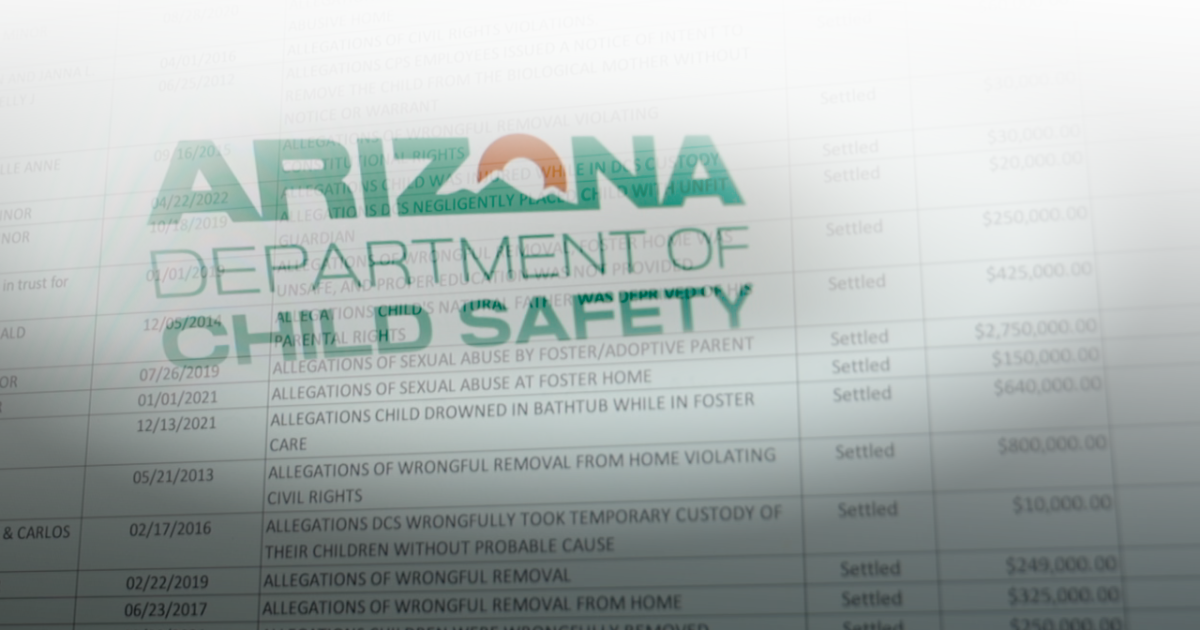
A state Senate committee passed three bills Wednesday morning aimed at reforming the Arizona Department of Child Safety.
The bills are part of a search for solutions following the murders of three girls known to Arizona’s child welfare system in 2025.
One of the bills strengthens the rules to place children with relatives or other adults they know. HB2035 would make kinship care presumptive and require a written explanation if a different placement were made.
Another bill, HB4004, encourages DCS to investigate new reports of child abuse, even if caseworkers had designated a “protective parent” who would shield the child from harm.
The third bill, HB2611, aims to improve the conditions of group homes. This includes improved building security, allowing foster children to participate in enrichment activities and live free from bullying, and randomly drug testing group home workers.
Hayden L’Heureux, who lived in foster group homes, spoke about the conditions youth face.
“For many foster youth group homes are not experienced as places of healing but as places of punishment or setback,” L’Heureux said.
Angelina Trammell also lived in foster group homes and shared her experience.
“I’ve been through things no child should ever have to go through in the hardest part. A lot of it could’ve been prevented,” Trammell said.
All three bills have already passed the state House and will move forward for consideration by the full Senate.
This story was reported on-air by a journalist and has been converted to this platform with the assistance of AI. Our editorial team verifies all reporting on all platforms for fairness and accuracy.

Welcome to SB Nation Reacts, a survey of fans across the NCAA. Throughout the year we ask questions of the most plugged-in Cardinals fans and fans across the country. Sign up here to participate in the weekly emailed surveys.
Happy Wednesday one and all.
The Arizona Cardinals have added a number of players and positions in free agency, so now, the question becomes what is the biggest need heading into the 2026 NFL Draft?
Now, if you choose quarterback, that does not mean it is a priority at the third overall pick, it is just acknowledging that they don’t have one to count on heading into the 2026 season.
So, it is a need, but maybe not one you can address in the 2026 NFL Draft.
For me, quarterback is the obvious need, but they also need an edge, in a class where maybe three of the five best players in the draft are edges.
This should be a slam dunk, right?

MESA, AZ — Swimming pools are a common way Arizona families beat the heat, and a leading safety concern for parents. Public health officials in Arizona say drowning is the leading cause of death for children 4 and under, and a local nonprofit is stepping in to help reduce the risk.
Child Crisis Arizona is offering free, lockable mesh-and-metal pool fences to qualifying homeowners. This group even sends a crew to install the barriers for recipients. The fences surround an entire pool and include locking mechanisms designed to keep unsupervised children out of the water.
“You need some kind of protection around the pool,” said Dustin George, owner of Octopus Pool Service and Repair. “I have children of my own. We put a fence around our pool to make sure they stay safe.”
Caitlyn Sageng, a spokesperson for Child Crisis Arizona, said the fences provide crucial seconds for caregivers. “That pool fence gives you that extra time to say — where did the two-year-old go? — and you’re able to get there before they get to the water,” she said.
To qualify, applicants must be homeowners (renters are not eligible) and have a child age 6 or younger living in the household. Child Crisis Arizona is accepting applications through April 5. Familes interested can apply through the nonprofit’s website.
Pool safety experts stress that barriers are one layer of protection and should be used alongside active supervision, swim lessons and other safeguards.

War with Iran disrupts fertilizer exports as U.S. farmers prepare for planting season

Detroit Pistons and A Kid Again team up to give children with illnesses a special night at the arena

Yankees top Giants 7-0 as robot umpire debuts

GOP considering Dallas for potential 2026 Midterm National Convention

Man arrested for breaking into job at Miami Beach brewery and stealing hundreds of dollars

Florida High School Football Rankings: Top 25 teams – Oct. 21

How old is Bo Nix? What to know about Oregon quarterback ahead of 2024 NFL Draft

Cleary's 21 help Le Moyne down Central Connecticut State 69-64 in OT

99th annual Pony Swim held in Virginia

Indiana Members Credit Union announced as new anchor tenant at Bottleworks District
War with Iran disrupts fertilizer exports as U.S. farmers prepare for planting season

White House unleashes on Raskin for clinging to ‘deranged’ Jack Smith ‘lies’ in latest Trump docs flare-up

‘Keffiyehs seized, left to die’: Inside the Palestine Action hunger strike

LaGuardia Crash Timeline: Moments Before Air Canada Plane Collided With Fire Truck

Chicago alderwoman apologizes for ‘wrong place at the wrong time’ comment on slain student
-

 Detroit, MI1 week ago
Drummer Brian Pastoria, longtime Detroit music advocate, dies at 68
-

 Georgia1 week ago
How ICE plans for a detention warehouse pushed a Georgia town to fight back | CNN Politics
-

 Movie Reviews7 days ago
‘Youth’ Twitter review: Ken Karunaas impresses audiences; Suraj Venjaramoodu adds charm; music wins praise | – The Times of India
-
 Science1 week ago
Industrial chemicals have reached the middle of the oceans, new study shows
-

 Science1 week ago
How a Melting Glacier in Antarctica Could Affect Tens of Millions Around the Globe
-

 Culture1 week ago
Test Your Memory of Great Lines From Classic Irish Poems
-

 Sports4 days ago
IOC addresses execution of 19-year-old Iranian wrestler Saleh Mohammadi
-

 New Mexico3 days ago
Clovis shooting leaves one dead, four injured