West
Apollo 8 astronaut, William Anders, who took famous picture of Earth, killed in small plane crash

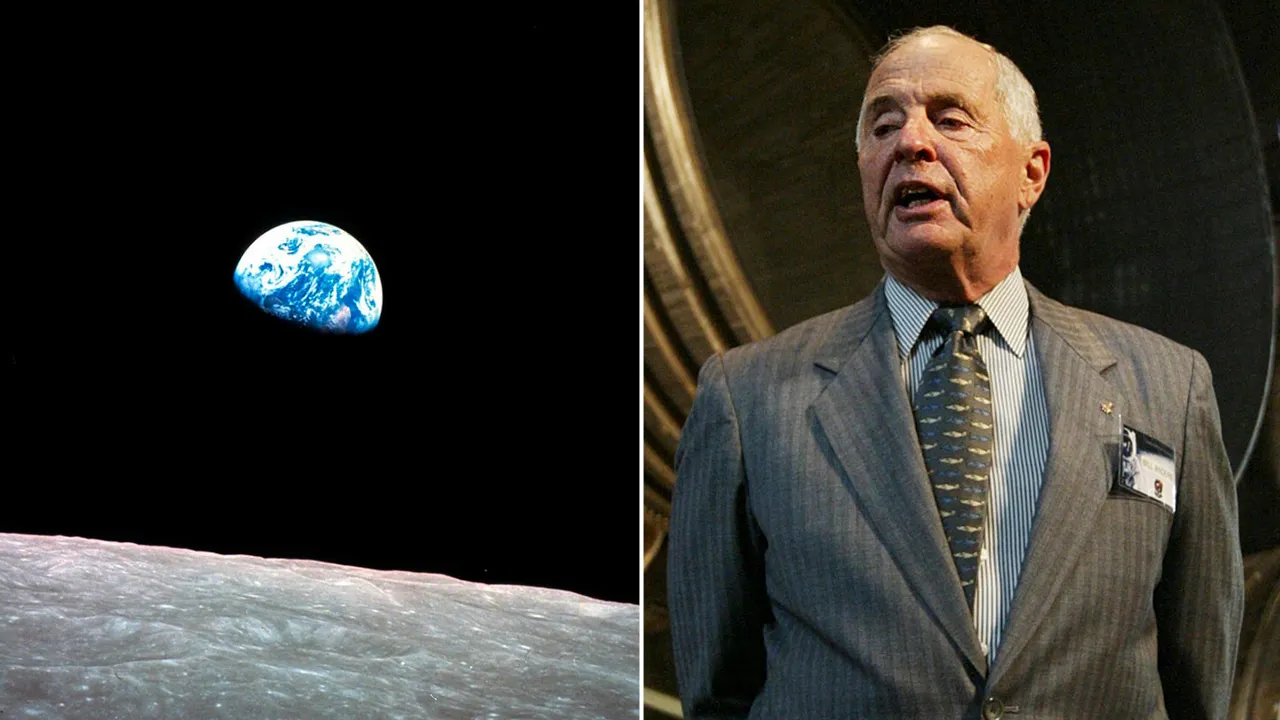
The victim in a fatal plane crash Friday in Washington state has been identified as Retired Maj. Gen. William Anders, the former Apollo 8 astronaut who took the iconic “Earthrise” photo, his son Greg Anders confirmed to The Associated Press.
Just before noon, rescue crews responded to reports of a plane crash in Washington state between Orcas and Jones Island, the U.S. Coast Guard Pacific Northwest confirmed.
“The family is devastated,” Greg Anders told the AP. “He was a great pilot, and we will miss him terribly.”
SMALL PLANE CRASHES IN CENTRAL VIRGINIA, KILLING 2
Close-up of American astronaut William Anders, of NASA’s Apollo 8 mission, during a panel interview held at the Museum of Science and Industry, Chicago, Illinois, April 5, 2018. (J.B. Spector/Museum of Science and Industry, Chicago/Getty Images)
During a telecast on Christmas Eve 1968, the Apollo 8 crew read verses from the first chapter of Genesis and wished viewers, “Good night, good luck, a Merry Christmas and God bless all of you – all of you on the good Earth.”
Anders took the “Earthrise” photo while in lunar orbit on December 24, 1968, according to NASA.
William, along with Apollo 8 crew mates, is one of the first three people to have traveled to the Moon. Bill also has a crater on the Moon named in his honor named “The Anders Crater,” according to the Anders Foundation website.
WASHINGTON PILOT WHO HAD GONE MISSING FOUND DEAD IN PLANE THAT CRASHED IN FORESTED AREA
FILE – This Dec. 24, 1968, file photo made available by NASA shows the Earth behind the surface of the moon during the Apollo 8 mission. Retired Maj. Gen. William Anders, the former Apollo 8 astronaut who took the iconic “Earthrise” photo showing the planet as a shadowed blue marble from space in 1968, was killed Friday, June 7, 2024, when the plane he was piloting alone plummeted into the waters off the San Juan Islands in Washington state. He was 90. (William Anders/NASA via AP, File)
The FAA confirmed to Fox News Digital that the plane that crashed was a vintage Air Force T-34 Mentor and said the only person on board was the pilot.
SMALL PLANE CARRYING TWO PEOPLE CRASHES IN NASHVILLE SUBURB: POLICE
The San Juan County Sheriff’s Office told Fox News Digital they are still doing a search and rescue and assisting the Coast Guard.
Air Station Bellingham and Station Port Angeles are also on-scene and helping with search and rescue.
UNC HEALTH PILOT, PHYSICIAN HOSPITALIZED AFTER SMALL PLANE CRASH
Portrait of the crew of NASA’s Apollo 8, Florida, December 1968, including command module pilot James Lovell, left, lunar module pilot William Anders, and Commander Frank Borman. (Photo by NASA/Interim Archives/Getty Images)
The National Transportation Safety Board and FAA are investigating the crash.
This is a developing story.
The Associated Press contributed to this story.
Read the full article from Here

Continue Reading

HONOLULU (HawaiiNewsNow) – The Honolulu Police Department shut down an illegal gambling operation in Kakaako.
On Thursday, officers with the Narcotics/Vice Gambling detail, along with the District 1 Crime Reduction Unit, Forfeiture Detail and Specialized Services Division, executed a search on a property on Kawaiahao Street.
HPD said they recovered 19 gaming machines and more than $7,000 in cash.
The department said they remain committed to addressing illegal gambling operations.
“The June 25, 2026, operation is the 19th illegal gambling search warrant executed so far in 2026 and the third in the month of June,” said HPD Maj. Jerome Pacarro. “Enforcing the law against these illegal operations helps prevent related criminal activity from taking root and strengthens the safety of our communities.”
To report illegal gambling, call the Narcotics/Vice 24-hour hotline at (808) 723-3933 or use the online form here.
Copyright 2026 Hawaii News Now. All rights reserved.

There’s been a sea change in the nuclear energy industry.
On Thursday, U.S. Energy Secretary Chris Wright greeted private developers at Idaho National Laboratory. He looked at the resident developers’ small modular reactors, or SMRs, then joined INL’s staff for a celebration of “The Golden Era of Nuclear Power” in Idaho Falls’ Mountain America event center.
The next generation of advanced reactors is a diverse bunch: some are large, some are small, some look like they could be part of a “Star Trek” episode, and others are reminiscent of large crab-boil pots.
Despite differences in structure and capacity, their designers and investors have two things in common: They promise their designs will scale, and each has been helped by the federal government’s priority of speeding up the rate of nuclear innovation.
Creating reactors on a factory line, they say, will turn nuclear power from a project to a product.
President Donald Trump signed four executive orders last May, with the overarching goal of quadrupling the country’s nuclear energy capacity to 400 gigawatts by 2025. In addition to the DOE’s $17.5 billion loan to 10 large reactors on Tuesday, the Trump administration is investing time into deregulating SMR production.
An unrealistic goal?
Sitting at a long conference table at the national lab on Wednesday, INL director John Wagner told press that he initially thought the goal seemed cool but unrealistic. He was specifically wary of the demand that three new nuclear reactors reach criticality by July 4, 2026.
“I love goals that focus resources and attention, but I didn’t think it was possible,” he said.
The biggest impediments, in Wagner’s opinion, would be Department of Energy authorization and whether they would be able to collect the uranium and fuel material necessary.
Wagner’s initial skepticism was well founded. For the last 50 years, it has been monumentally difficult to build large-scale nuclear power. Bogged down by heavy-handed regulations and permitting, the few nuclear projects that made it across the finish line were wildly late and over budget.
However, “when you have the will of federal policy and the will of the people, these things can absolutely happen,” Wagner said.

The impending Fourth of July deadline
Last June, the DOE selected 10 companies to participate in the Nuclear Reactor Pilot Program to fast-track small modular reactor development. Currently, the world’s only operating SMRs are in China and Russia.
A week ahead of the deadline, two of the 10 companies have reached criticality, the point at which a nuclear reactor achieves a self-sustaining nuclear chain reaction.
Antares Nuclear, which built its reactor on site at INL, reached criticality on June 4, and Valar Atomics, which built its reactor in Orangeville, Utah, reached criticality on June 18. Valar’s reactor, the Ward250, is currently generating 100 kilowatts.

Speaking to thousands of INL staff after Wright’s tour, Wagner said he fully anticipates achieving the president’s goal and suspects developers will exceed it.
“This is a goal that people thought was not possible, and I stand before you just days before the Fourth of July, saying that I believe we will absolutely achieve it,” Wagner said. “And that’s not the end. Several more will follow shortly thereafter. What we are witnessing is not one milestone; it’s a cascade — a cascade that is happening now.”

The president’s challenge “galvanized” the U.S. nuclear energy industry, Wagner said.
Aalo Atomics and Deployable Energy, both of which are developing their reactors on INL property, expressed deep optimism to the Deseret News they would reach criticality before the Fourth of July. On Thursday, Wright signed the approval for Aalo to move its reactor toward criticality.

Unleashing nuclear requires unleashing the market
Radiant Nuclear’s COO Tori Shivanandan led press through INL’s Demonstration of Microreactor Experiments, or DOME, on Wednesday.
“About three years ago, there were 50-some companies that applied for residency in the DOME,” she explained. The massive steel-and-concrete containment dome is designed to contain any unexpected radiological event during testing. It’s the world’s first microreactor test bed, and INL finished its construction in March, a full year ahead of schedule.
Radiant began its roughly yearlong residency in the facility following the test bed’s completion.

“The entire reason you spend a lot of capital on a multi-month test campaign is to find the unknown unknowns. When you do that in a facility that is especially equipped to handle the worst case scenario of the unknown unknowns, you’re able to proceed with a degree of additional assurance that even on the worst day, if something were to go horribly wrong, the general public is still safe,” Shivanandan said.
In addition to the DOME, INL gave Radiant space in a connecting building just to the south. This facility was constructed in the late ’50s and houses the old manual controls for the Experimental Breeder Reactor-II (EBR-II), which has since been dismantled and decommissioned.

Radiant’s computers sit in rows between the roped off and glass-enclosed levers. The 50-year gap in the technology made the stagnation of the nuclear energy market visible.
Shivanandan referenced the visual contrast. “I think it’s an illustrative viewpoint of like, this is what America has historically been proud of and the opportunity of where we’re going,” she said. “Your phone got smaller and smaller over time. Computers got smaller and smaller over time. The sources we create for energy need to get smaller and smaller over time. And that’s really what Radiant is pursuing.”

The federal government aligning with market forces is what is pushing the nuclear energy industry forward, Wagner said during his conversation with the press Wednesday.
“The old way was that federal dollars did almost everything, or nothing got done,” he said. “That started to evolve when we asked, ‘Why is it happening?’”
The same question has been asked in other science-heavy fields. Why have we not returned to the moon? Why aren’t we splitting atoms?
With the federal government’s new positioning on nuclear energy, “market forces are aligned with national security imperatives, which are aligned with federal and state policy,” Wagner said. “That alignment has brought the private sector and private dollars to the table.”
He continued, “For a lot of these companies, money is not their problem. They’re in a race to compete for the market.”
Companies look to run SMRs autonomously

To streamline operations at scale, Radiant Nuclear, Antares, and others are figuring out how to run their reactors autonomously.
Jason Andrus, the director of licensing at Antares, told the Deseret News that the company plans to eventually go autonomous.
“Ultimately, if you think about the systems that are on the small scale here, you either have to go to a fleet model, which is one operator for many reactors, or you have to go autonomous,” Andrus said.
In the DOME on Wednesday, Shivanandan said Radiant Nuclear will attempt going autonomous during its upcoming testing schedule.

After running its reactor continuously for 150 hours, “Radiant will attempt autonomous operations,” Shivanandan said. “We believe our commercial product can be autonomously operated, but we need to do it first in a very controlled and understood manner.”
Shivanandan said both INL employees and Radiant’s staff will observe the reactor as it goes through autonomous operations.
Energy Department will continue the small reactor surge through a new program

To keep the splitting-atoms momentum going, the DOE has created the Nuclear Energy Launch Pad to follow the Nuclear Reactor Pilot Program.
In the same way the pilot program did, the launch pad will streamline a path for private developers to accelerate the commercial deployment of their reactors. INL will help companies with fuel fabrication, enrichment and reprocessing, as well as advanced reactor development.
Every country I visit asks about the next generation of American nuclear technology.
— Energy Secretary Chris Wright
Applications for the launch pad are currently open and will close on July 8.
Ted Garrish, the DOE’s assistant secretary for nuclear energy, said the next big success will be selling the reactors.
“We have had incredible inquiries for these pilot projects,” Garrish said, referencing interest from Europe and from the American defense industry. “These are going to go like hotcakes,” he said.

Wright added, “Every country I visit asks about the next generation of American nuclear technology.”
“I’ve invited folks from Singapore, from multiple European countries, from Asia — they’re like, ‘We want to see it. We want that.’ The interest in what we talked about today, these small modular reactors, is unbelievable. This will be a massive American export a decade from now,” Wright said.
The nuclear vibe shift
Brazilian model Isabelle Boemeke joined the small group of press present at INL on Thursday.

Wearing a black cowboy hat emblazoned with the word “NUCLEAR,” Boemeke brought along a crew of documentarians hoping to chronicle the resurgence of nuclear energy and the rise of SMRs.
In her 2025 book “Rad Future,” Boemeke debunks fears and misconceptions about nuclear power, instead describing it as a sustainable and safe energy source. Between Instagram and X, Boemeke has nearly 150,000 followers. She represents a growing affinity for nuclear.
Nationwide, support for nuclear energy has grown significantly over the past decade. In 2025, about 60% of Americans supported more nuclear reactors being built in the country.

Polling done by the Deseret News/Hinckley Institute of Politics showed this demographic divided by age group. Gen Xers were the most likely to support nuclear energy in the state, and baby boomers were the least likely.
Wagner said he’s seen increased interest in nuclear energy firsthand over the past decade.
“I have to say, I’ve been around this for a while. You know, 10 years ago, I couldn’t have dreamed of having this much activity in this space, and it just keeps getting more and more,” Wagner said. “So now we have challenges with capacity on facilities.”
The next day, Wagner walked on stage at the Mountain America event center to “Thunderstruck” by AC/DC. In the dim audience light, INL employees hollered and cheered. Wagner laughed when they settled down and said, “I never thought I’d be able to walk out to music like ‘Thunderstruck.’”

“I am so excited to be with you all at this moment,” he told his INL employees and the private industry partners they work with. “I look around this Mountain America center, and it is so gratifying.”
He continued, “I am so proud of you, and I am so inspired by you. In the past 12 months, this ecosystem rewrote what American nuclear can do, rewrote what is possible, and rewrote expectations about what we can achieve in nuclear energy. Reactors have gone critical. Many more will follow shortly.”

The Montana Lottery offers multiple draw games for those aiming to win big.
Here’s a look at June 26, 2026, results for each game:
Winning Mega Millions numbers from June 26 drawing
05-13-30-33-52, Mega Ball: 06
Check Mega Millions payouts and previous drawings here.
Winning Big Sky Bonus numbers from June 26 drawing
07-08-20-22, Bonus: 12
Check Big Sky Bonus payouts and previous drawings here.
Feeling lucky? Explore the latest lottery news & results
When are the Montana Lottery drawings held?
- Powerball: 8:59 p.m. MT on Monday, Wednesday, and Saturday.
- Mega Millions: 9 p.m. MT on Tuesday and Friday.
- Lucky For Life: 8:38 p.m. MT daily.
- Lotto America: 9 p.m. MT on Monday, Wednesday and Saturday.
- Big Sky Bonus: 7:30 p.m. MT daily.
- Powerball Double Play: 8:59 p.m. MT on Monday, Wednesday, and Saturday.
- Montana Cash: 8 p.m. MT on Wednesday and Saturday.
- Millionaire for Life: 9:15 p.m. MT daily.
Missed a draw? Peek at the past week’s winning numbers.
This results page was generated automatically using information from TinBu and a template written and reviewed by a Great Falls Tribune editor. You can send feedback using this form.
-

 Delaware3 minutes ago
Annual Delaware River Sojourn honors the nation’s 250th anniversary
-

 Florida8 minutes ago
Florida Lottery Mega Millions, Jackpot Triple Play results for June 26, 2026
-
Georgia15 minutes ago
Georgia Lottery Mega Millions, Cash 3 results for June 26, 2026
-

 Hawaii18 minutes ago
Police recover 19 gaming machines, $7K in Kakaako gambling bust
-

 Idaho23 minutes ago
The reactor race has begun
-

 Illinois30 minutes ago
New Illinois bill aims to overhaul public defense system | The Chicago Report
-

 Indiana33 minutes ago
Driver airlifted after NW Indiana police chase ends with crash into tree
-

 Iowa38 minutes ago
Vote: Class 1A Iowa High School Softball Midseason Player Of The Year

