Alaska
Sullivan ‘side-deal’ not enough to save rural Alaska public broadcasting, opponents of Trump proposal to funding cut say


ANCHORAGE, Alaska (KTUU) – Hours before the Senate is set to vote on President Donald Trump’s $9.4 billion proposal to cut funding for public broadcasting and foreign aid, opponents said Sen. Dan Sullivan’s negotiation with the Trump administration – which a spokesperson for Sullivan argued Tuesday night would preserve rural Alaska stations – would not be enough to save them, arguing it only amounted to a one-time check to Tribal public media stations.
“I think with a side deal like this, [with it] not in the underlying legislation, it is not going to be an amendment, so we are sort of relying on different sources both within Congress and the [Trump] administration to talk about what they’ve said they’ve agreed to,” Kate Riley, CEO and President of America’s Public Television Stations said.
But details of how the deal could potentially impact Alaska remain unclear.
Sullivan’s Tuesday night statement announcing the deal, from the senator’s spokesperson Amanda Coyne, did not clarify the framework of how the funding would be allocated.
“Because of the importance of public radio for rural Alaska, for years Senator Sullivan has been an advocate for funding for our rural stations, and has been working for the last number of weeks with his Senate colleagues and senior White House officials on alternative sources of funding to help keep rural radio stations on the air,” Coyne said. “Today, the administration committed to continued funding to help support our most rural stations.”
“As I understand it, there are no officially recognized ‘tribal’ stations in Alaska,” Alaska Public Media President and CEO Ed Ulman told Alaska’s News Source Wednesday. “Only Koahnic Broadcasting Corporation, which operates KNBA, is owned and operated by Alaska Natives.”
Leading up to Wednesday’s debate, last month KNBA President and CEO Jaclyn Sallee released a joint statement with 11 other Alaska public media stations explaining the potential impact.
“KNBA 90.3, could lose nearly 25% of its annual revenue, leading to cuts in service including local Alaska Native news and emergency alerts. Our award-winning national Native programs, Native America Calling and National Native News, part of daily schedules on stations across Alaska, would experience an even greater loss – one from which they might not be able to recover,“ she said. ”More than 60 tribal stations we serve would be disproportionately impacted where they offer efficient emergency alerts and vital community connections.”
The deal, according to Riley’s numbers, would potentially mean Alaska having to split $9.4 million among 28 Tribal stations in eight other states. She said those cuts would come out of reallocated programs from the Department of the Interior.
Senator Mike Rounds, R-South Dakota, who was also reportedly part of the negotiations with the White House, said on X yesterday that cuts from the Green New Deal would fund these Tribal stations.
“We wanted to make sure tribal broadcast services in South Dakota continued to operate which provide potentially lifesaving emergency alerts,” he said. “We worked with the Trump administration to find Green New Deal money that could be reallocated to continue grants to tribal radio stations without interruption.”
The funding, however, will not come in the way of additional legislation or an amendment to the president’s bill currently being discussed by the Senate. So far, Riley said, it only amounts to a Trump administration promise to provide support.
Though 28 Tribal stations would benefit from the promise, she added the Corporation for Public Broadcasting, where funds to local stations would be cut from, provides support to 36 Tribal stations. She did not know which 28 stations would be supported.
Riley said the “side deal” also left unanswered what happens to other rural community public media stations.
“Those are not the only stations that serve native populations and there are many of our local stations that are providing service in communities where there are no other local media sources and no other broadcasters,” she said. “We think it’s critically important that all of those local station services be protected.”
Following America’s Public Television Station’s statement Wednesday, Alaska’s News Source reached out to Sullivan’s office who declined an interview.
When Alaska’s News Source first informed Alaska Public Media’s Ulman about Sullivan’s negotiation Tuesday, Ulman said he was “blindsided.”
“I can tell you for a fact that multiple folks in the state of Alaska have explained to the senator and his office how [public media] works and how [the Corporation for Public Broadcasting] is essential to ensuring that the 27 public media outlets in Alaska can remain in operation,” Ulman said. “So, this isn’t even a compromise. It’s just not gonna work.”
Ulman said Alaska stands to lose more than $30 million in federal funding over the next two years, if the bill is passed.
″It’s a 20% cut to Alaska Public media’s operational budget. How do you run your household If you took a 20 Percent pay cut,” Ulman told Alaska’s News Source Wednesday. “Any type of cut that’s 50% or higher to an annual budget. You’re not the same organization and you can’t cut half of your operation and continue to really thrive.”
He added he’s concerned over how the promised funding to Alaska Native stations would be apportioned, and worried that hedging a bet on a promise from the Trump administration may be problematic.
“I want to see the details. If I were one of my colleagues, say in Petersburg, or in Talkeetna, (or in) Galena, I would want to know the deal. How is this really going to affect me?”
Sen. Lisa Murkowski, R-AK, told reporters in the halls of Congress Wednesday that the public media funding bill was crucial to Alaska.
“There has been probably no issue, no single issue, that has drawn out more interest across the state of Alaksa than support for public broadcasting,” she said. “I come from a state that is extraordinarily rural. I come from a state where access to other forms of information and communication may be limited. It may just come by way of your radio. Call it old school, it’s what we live in many parts of the state.”
Murkowski was one of only three Republicans, including Sen. Susan Collins, R-ME, and Sen. Mitch McConnell, R-KY, who voted not to move forward with a vote, while Sullivan joined most other Republicans in voting to move forward on the bill.
“For years, in numerous meetings, Senator Sullivan has been consistently warning executives from public media entities, the Corporation for Public Broadcasting, and NPR that their biased programming and reporting, funded in part by the American taxpayer, would eventually jeopardize federal support for both national and local radio stations,” Coyne said.
As of publication, the Senate is voting on adding amendments to the legislation. If any amendments are approved by the legislature, the bill will be sent back to the House. The bill must pass Congress by Friday. Riley said she expected the vote to be close.
See a spelling or grammar error? Report it to web@ktuu.com
Copyright 2025 KTUU. All rights reserved.



Veteran musher Jessie Holmes (bib # 7 ), of Brushkana, Alaska was the first musher to reach the McGrath checkpoint at 8:03 p.m. today with 16 dogs in harness, winning the Alaska Air Transit Spirit of Iditarod Award.
First presented in 2019 and given to the first musher to reach the McGrath checkpoint, this award is presented by Lead Dog partner, Alaska Air Transit. First introduced in 2019, this award honors the first musher to arrive at the McGrath Checkpoint. The McGrath community shares deep ties to the Iditarod, and the award reflects that connection, featuring beaver fur mushers mitts with Athabaskan beadwork on moose hide, handcrafted by Loretta Maillelle of McGrath, along with a beaver fur hat made by Rosalie Egrass of McGrath. The award was presented to Holmes by Jessica Beans-Vaeao, Charter Coordinator for Alaska Air Transit
“Our team is excited to present this Spirit of Iditarod award in McGrath again this year. The Beaded Moose Hide and Beaver Mitts were made by Loretta Maillelle of McGrath, and the hand sewn Beaver Hat was made by Rosalie Egrass of McGrath. Rosalie Egrass was able to fly home on our plane that took our crew and the award to McGrath, which made for a pretty special trip! We are proud to be providing service to McGrath, and feel that all local Air Carriers represent the spirit of Iditarod throughout Alaska on a daily basis. It is great to be a part of the air carriers that service the state with essential supplies and transportation, and to be a part of the Iditarod in a meaningful way,” said Josie Owen, owner of Alaska Air Transit.
This is Alaska Air Transit’s eighth year sponsoring the Iditarod and seventh year presenting the Spirit of Iditarod Award. Alaska Air Transit offers crucial flight support statewide via air charter and provides scheduled service to the Upper Kuskokwim communities of Nikolai, McGrath, Takotna and Tatalina as well as the Prince William Sound communities of Tatitlek and Chenega.

The 2026 Alaska high school girls basketball state championships begin this week, and High School On SI has brackets for all four classifications.
The brackets will be updated with scores and matchups throughout the week.
All four classifications will play their state championship games at Alaska Airlines Center in Anchorage.
The 1A and 2A championships run March 11-14. Classes 3A and 4A play the following week, March 18-21.
Alaska High School Girls Basketball 2026 State Championship Brackets, Matchups, Schedule – March 10
3/11 – Shaktoolik (1) vs. Arlicaq (16)
3/11 – Kake (8) vs. Tri-Valley (9)
3/11 – Fort Yukon (4) vs. Andreafski (13)
3/11 – Sand Point (5) vs. Napaaqutgmiut (12)
3/11 – Scammon Bay (2) vs. Nunamiut (15)
3/11 – Akiuk Memorial (7) vs. Newhalen (10)
3/11 – Davis-Romoth (3) vs. Cook Inlet Academy (14)
3/11 – Hoonah (6) vs. Shishmaref (11)
3/12 – Seward (1) vs. Chevak (8)
3/12 – Metlakatla (4) vs. Cordova (5)
3/12 – Craig (2) vs. Susitna Valley (7)
3/12 – Glennallen (3) vs. Degnan (6)
3/18 – Barrow (1) vs. Kotzebue (8)
3/18 – Grace Christian (4) vs. Galena (5)
3/18 – Monroe Catholic (2) vs. Delta (7)
3/18 – Mt. Edgecumbe (3) vs. Kenai Central (6)
3/18 – Mountain City Christian Academy (1) vs. North Pole (8)
3/18 – Colony (4) vs. West (5)
3/18 – Bartlett (2) vs. Juneau-Douglas (7)
3/18 – Wasilla (3) vs. Service (6)
More Coverage from High School On SI

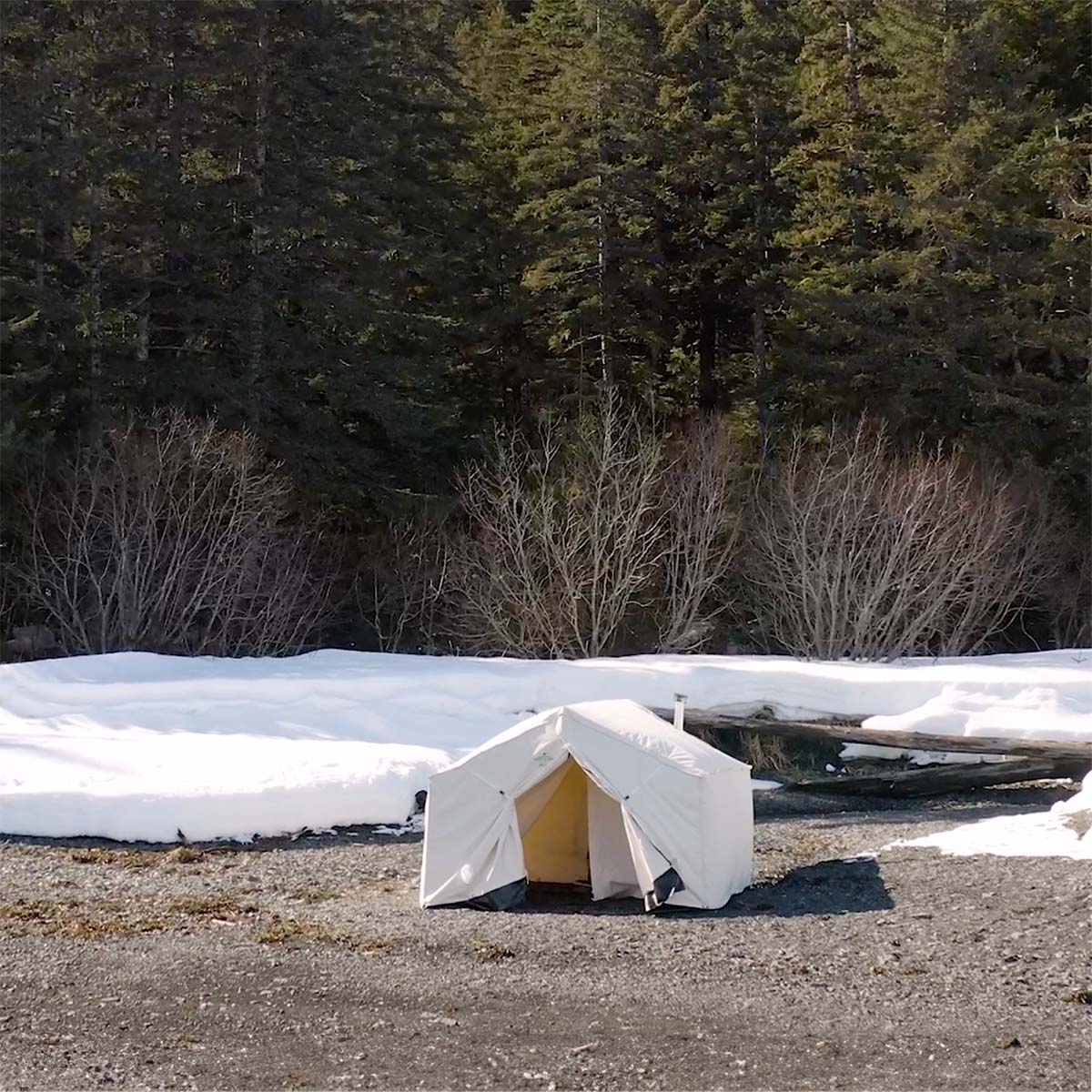
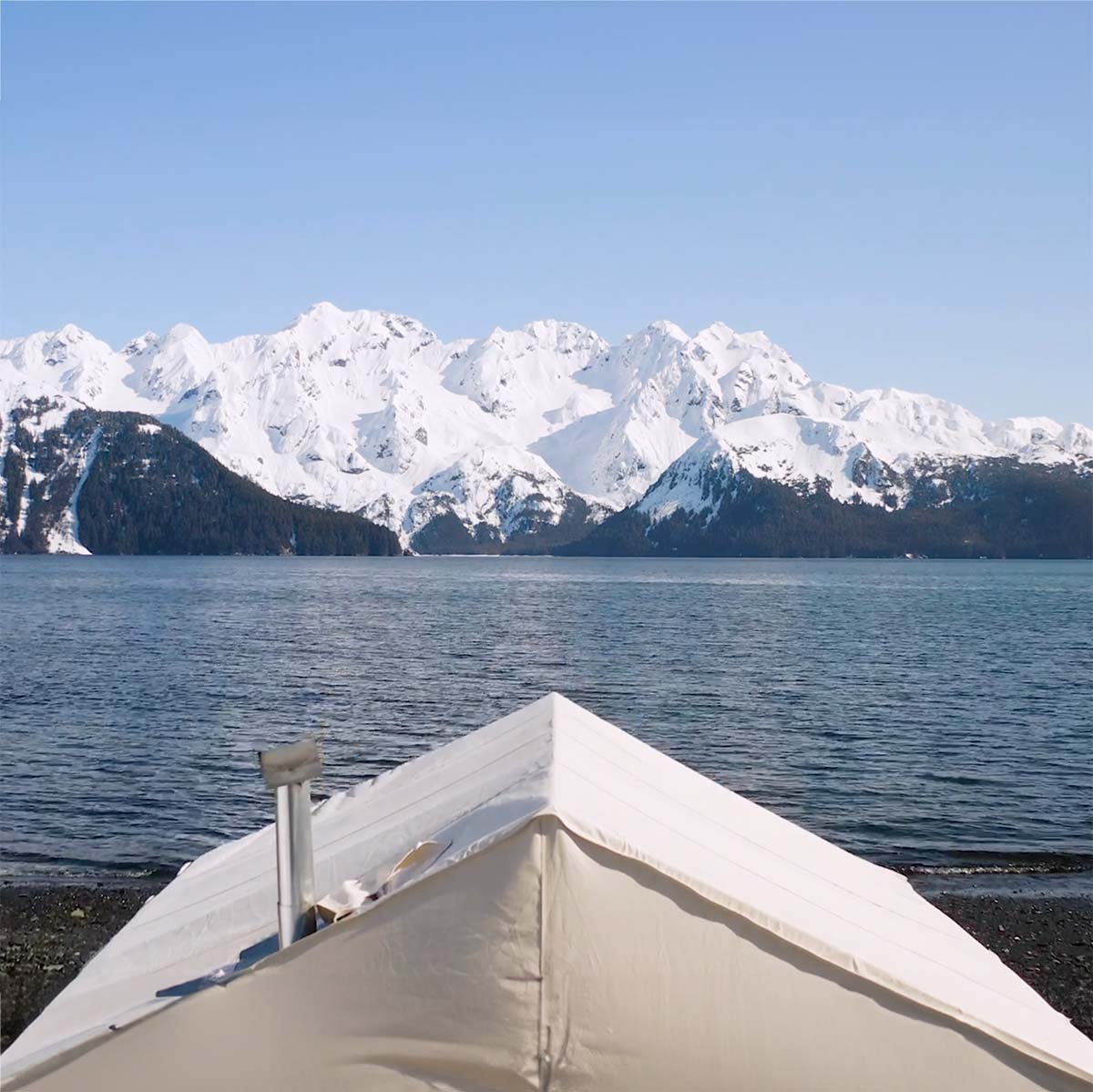
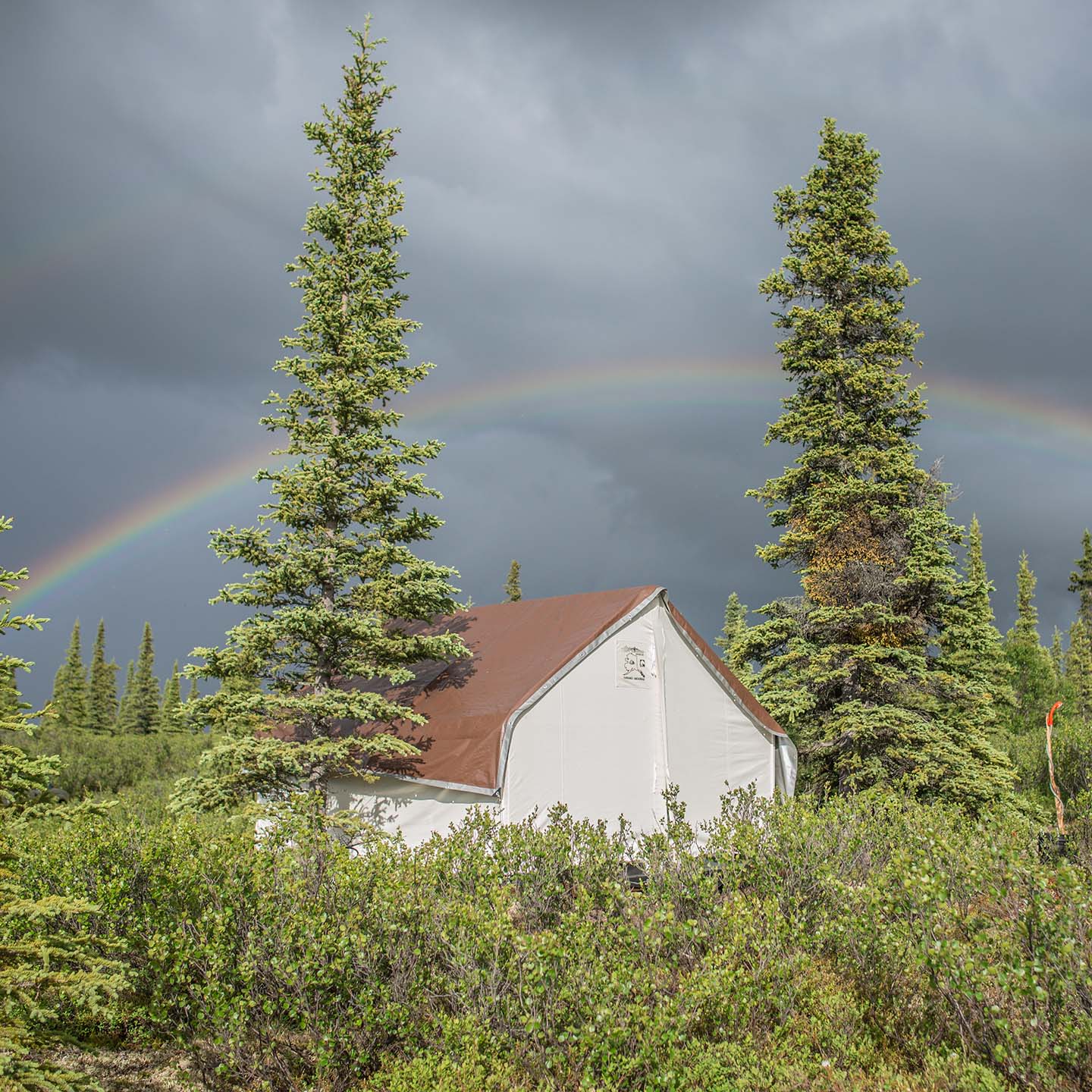
This is the Alaska Wall Tent by the Alaska Gear Company, each one is made in the United States from Sunforger 13oz DLX, a double-filled, pre-shrunk, marine-grade canvas ideal for longterm outdoor use.
The Alaska Wall Tent comes in an array of sizes and versions, allowing you to choose the one that best suits your individual use-case. They’re all individually made in Alaska, and perhaps even more importantly, they’re all tested extensively to be able to handle local conditions.
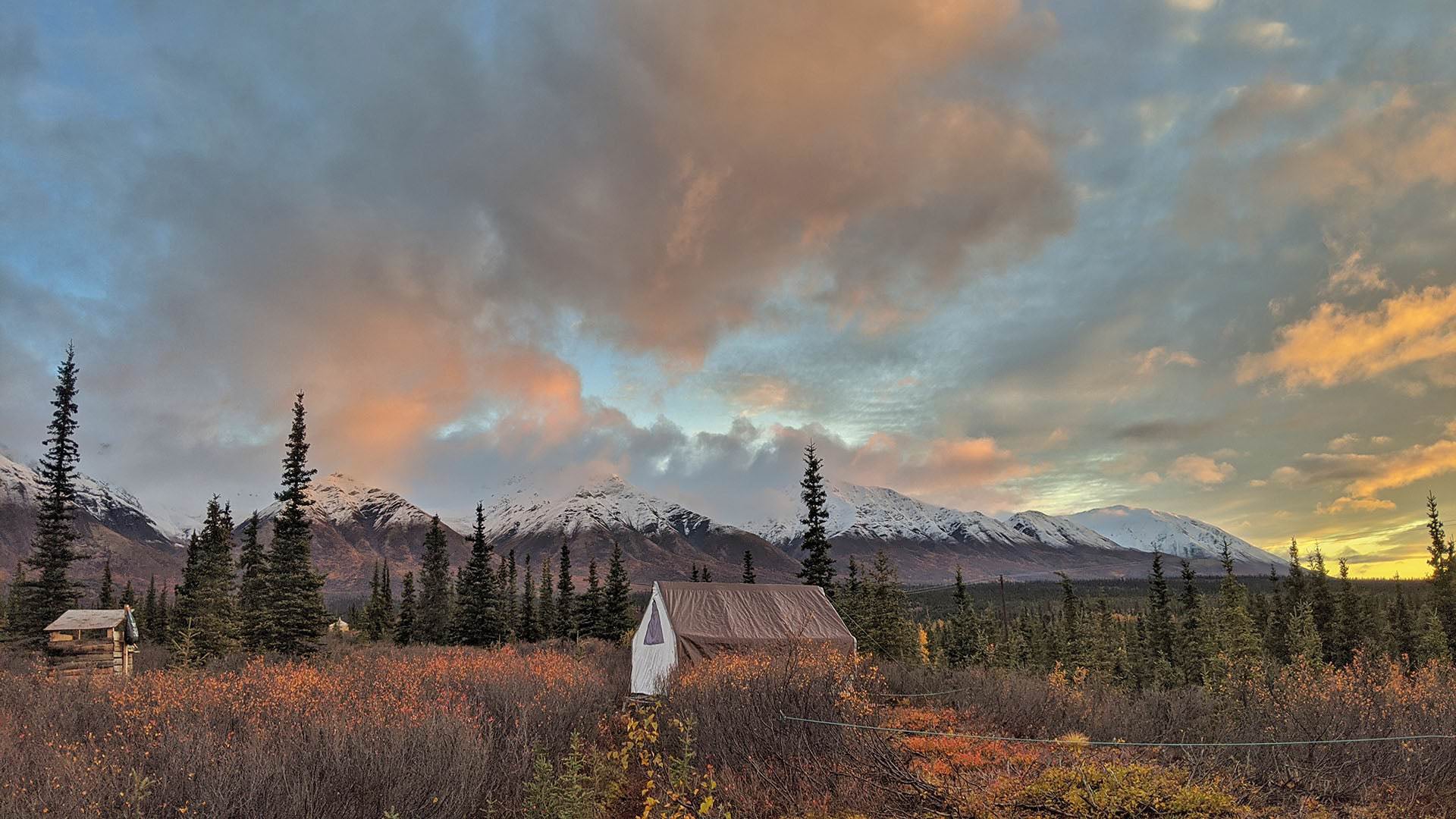
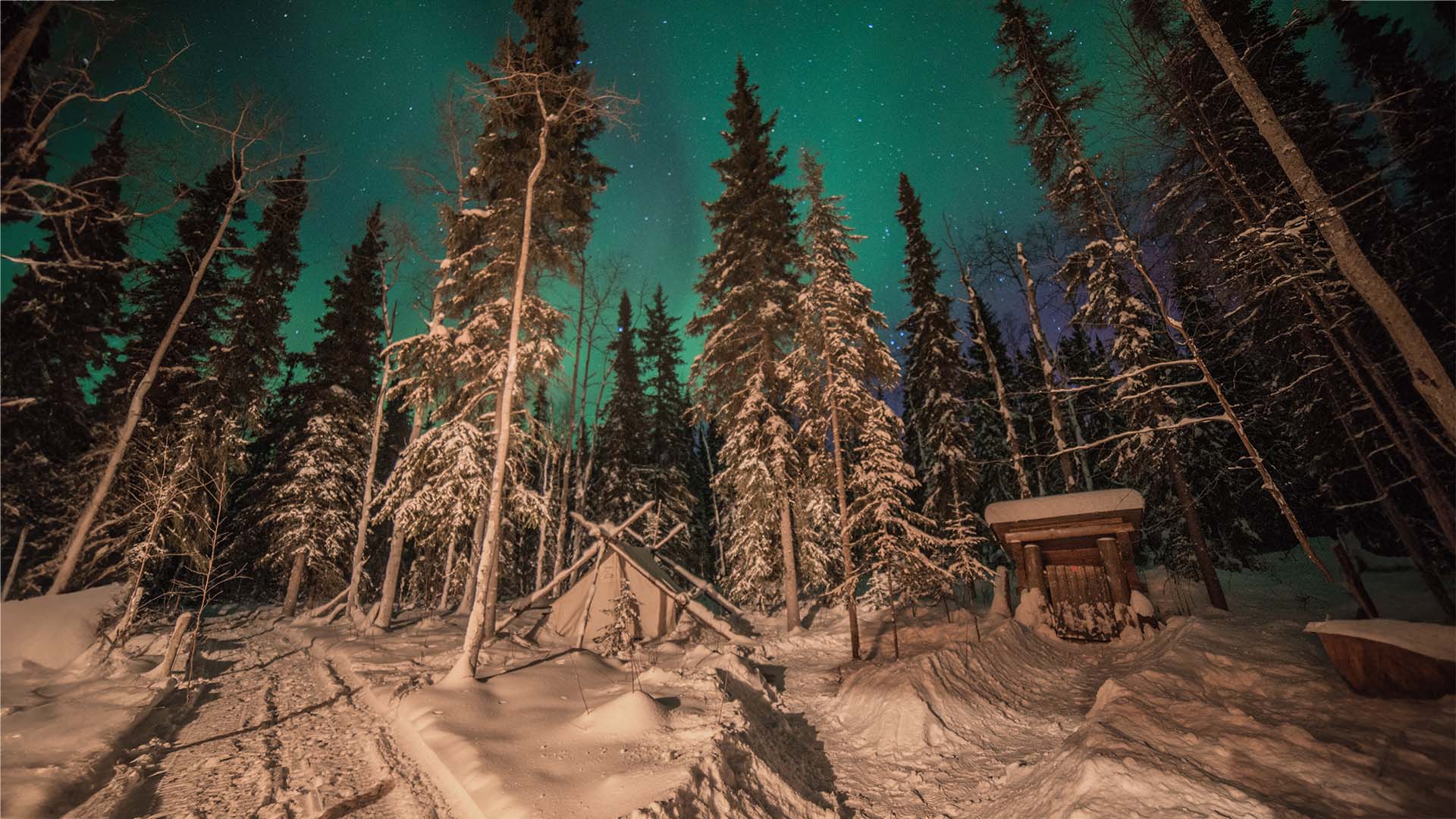
 This is the Alaska Wall Tent by the Alaska Gear Company, each one is made in the United States from Sunforger 13oz DLX, a double-filled, pre-shrunk, marine-grade canvas ideal for longterm outdoor use.
History Speedrun: The Alaska Gear Company
The Alaska Gear Company was formerly known as Airframes Alaska, it’s an aviation and outdoor equipment supplier and manufacturer headquartered in Palmer, Alaska. The company is led by majority owner Sean McLaughlin, who bought the original bush airplane parts business when it had just two employees and $100,000 in annual revenue. McLaughlin has since grown it to approximately 100 employees and $20 million in annual sales.
The company can trace its early roots to a licensed maker of Piper PA-18 Super Cub fuselages at Birchwood Airport. Through a series of acquisitions, including Reeve Air Motive (an aircraft parts retailer operating out of Anchorage’s Merrill Field since 1950, Alaska Tent & Tarp, and Northern Sled Works, the company grew well beyond aviation into outdoor recreation and cold-weather gear.
That diversification ultimately drove the rebrand from Airframes Alaska to Alaska Gear Company in late 2023, as the old name no longer conveyed the full scope of what the company produces and sells.
The Alaska Gear Company now operates out of three locations – a 100,000 square foot manufacturing facility in Palmer, a production facility in Fairbanks, and a retail store with an in-house sewing workshop at Merrill Field in Anchorage.
Its product lines span two major categories. On the aviation side, the company is best known for its hand-built Alaskan Bushwheel tundra tires, FAA-approved titanium landing gear, Super Cub fuselage modifications, and a wide range of bush plane parts. On the outdoor side, it manufactures Arctic Oven hot tents, canvas wall tents, custom freight and pulk sleds, and a modernized version of the iconic military bunny boot designed for extreme cold weather conditions.
More recently in 2024, the Alaska Gear Company was named “Made in Alaska Manufacturer of the Year” by the Alaska Department of Commerce.
The Alaska Wall Tent By The Alaska Gear Company
The Alaska Canvas Wall Tent is a handmade-in-Alaska canvas tent made from 13oz Sunforger DLX double-filled, preshrunk, marine-grade cotton canvas that’s treated to resist fire, water, and mildew while still remaining breathable.
It comes in four sizes, including 8×10, 10×12, 12×14, and 14×16 feet, all with 5-foot wall heights, and it’s available either unframed (starting at $1,295) or with a frame (starting at $2,300). The unframed version can be constructed in the field using lengths of wood sourced from the area, reducing the initial pack weight – this is crucial for trips into the wilderness by bush plane where every pound of weight is critical.
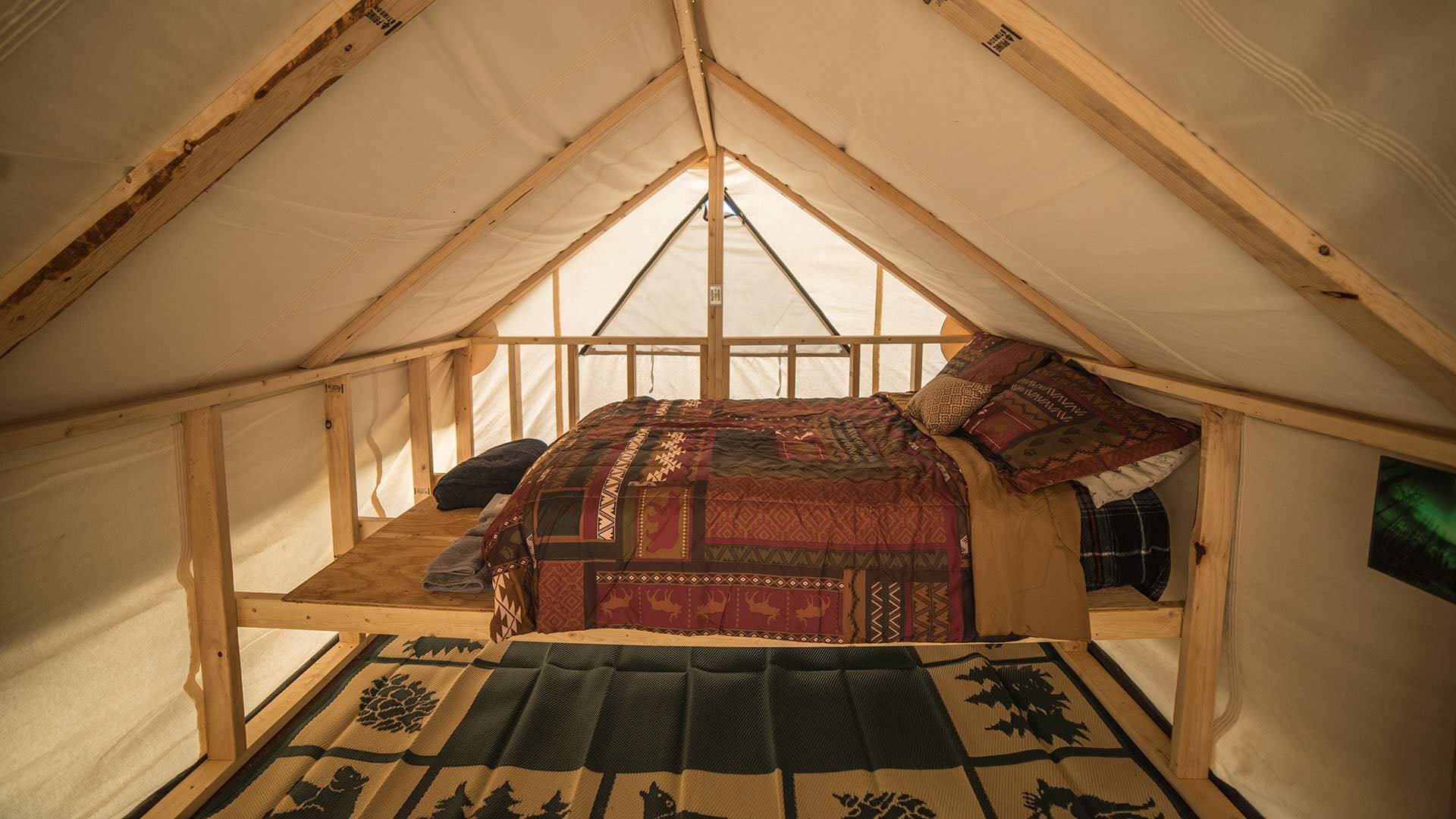
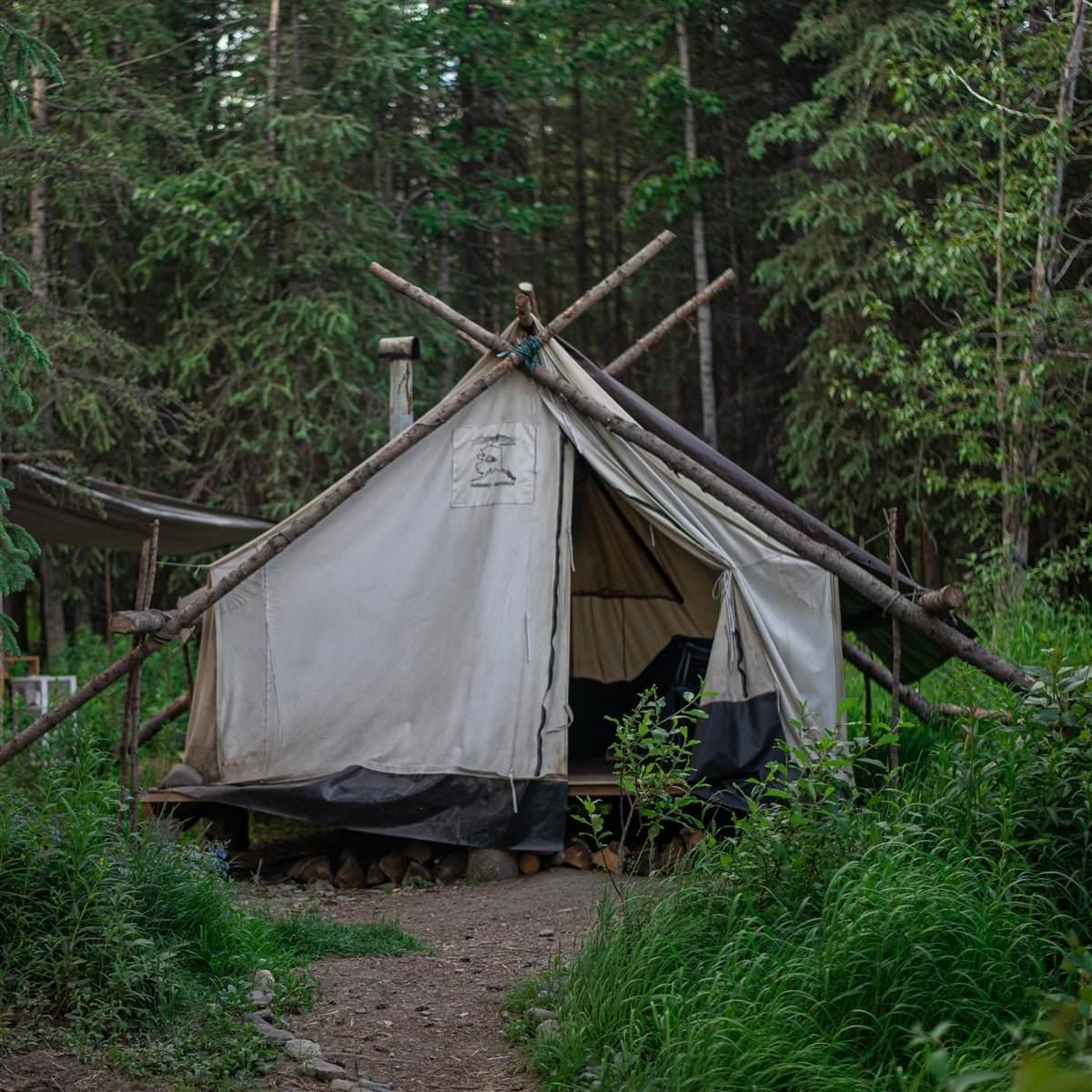
It comes in four sizes, including 8×10, 10×12, 12×14, and 14×16 feet, all with 5-foot wall heights, and it’s available either unframed (starting at $1,295) or with a frame (starting at $2,300). The unframed version can be constructed in the field using lengths of wood sourced from the area, reducing the initial pack weight – this is crucial for trips into the wilderness by bush plane where every pound of weight is critical.
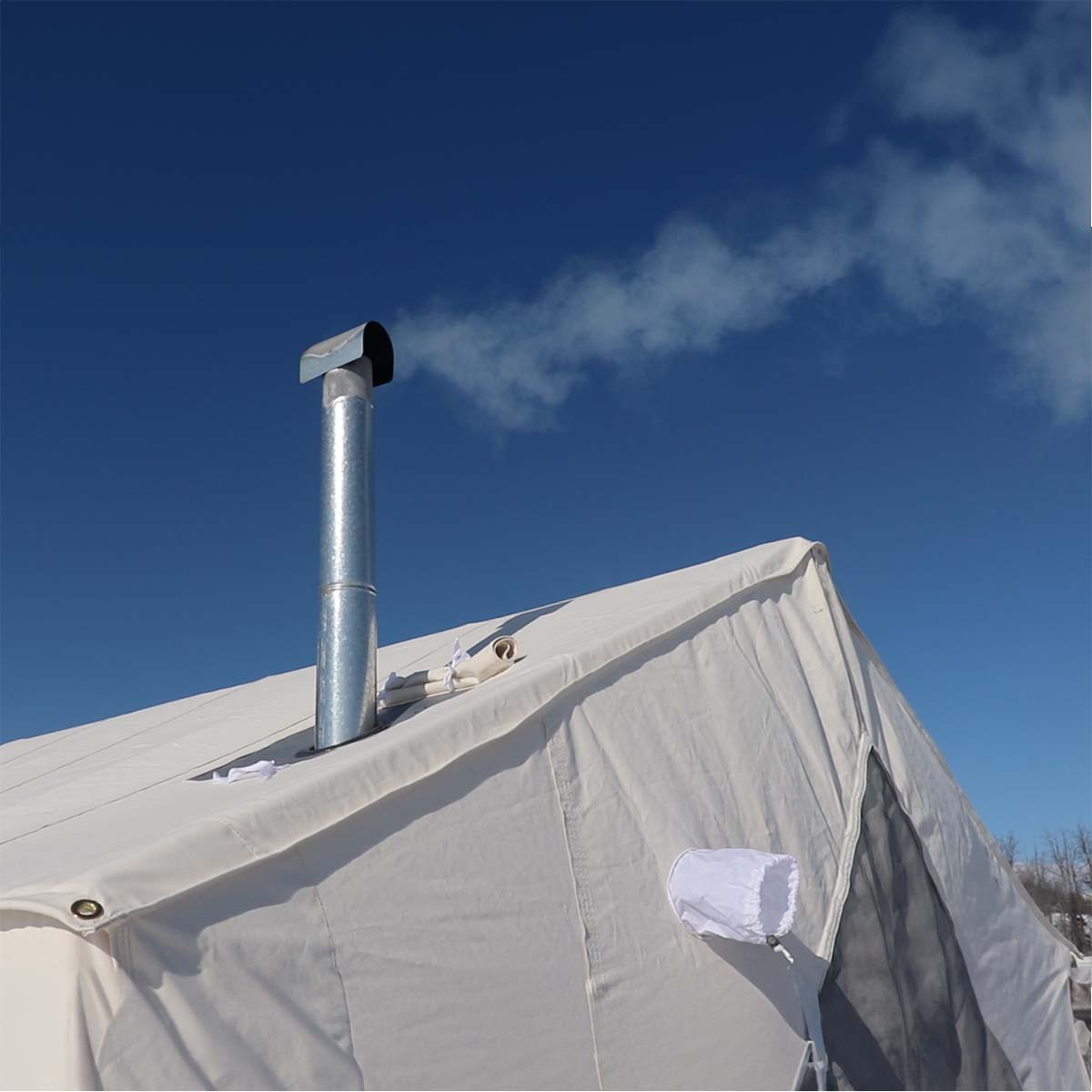
All tents include a 4.5 inch oval stove jack for use with wood or propane stoves, as well as a 56 inch triangular rear window with insect screening, an 18oz vinyl sod cloth around the base to block drafts and moisture, ridgepole openings at both ends, rope-reinforced eaves, brass grommets, overlapping door flaps with ties, a heavy-duty zippered door, and 100 feet of sisal rope for tie-downs.
The tents are now available to buy direct from the Alaska Gear Company here, and at the time of writing they have stock ready to ship out immediately.
Images courtesy of the Alaska Gear Company
Articles that Ben Branch has written have been covered on CNN, Popular Mechanics, Smithsonian Magazine, Road & Track Magazine, the official Pinterest blog, the official eBay Motors blog, BuzzFeed, Autoweek Magazine, Wired Magazine, Autoblog, Gear Patrol, Jalopnik, The Verge, and many more.
Silodrome was founded by Ben back in 2010, in the years since the site has grown to become a world leader in the alternative and vintage motoring sector, with well over a million monthly readers from around the world and many hundreds of thousands of followers on social media.

Harrison Ford isn’t retiring: ‘I really wouldn’t know what to do with myself’

Microsoft’s next Xbox, Project Helix, won’t reach alpha until 2027

Canada’s Carney under pressure to act after synagogues shot at in latest antisemitic incidents

Reporter’s Notebook: Trump’s SAVE Act ultimatum runs into Senate reality

Male fertility rates crash as doctors reveal health threats: ‘Something very wrong’

Florida High School Football Rankings: Top 25 teams – Oct. 21

Cleary's 21 help Le Moyne down Central Connecticut State 69-64 in OT

How old is Bo Nix? What to know about Oregon quarterback ahead of 2024 NFL Draft

99th annual Pony Swim held in Virginia

Indiana Members Credit Union announced as new anchor tenant at Bottleworks District
Reporter’s Notebook: Trump’s SAVE Act ultimatum runs into Senate reality

Not ‘a litre of oil’ to pass Strait of Hormuz, expect $200 price tag: Iran

Tornadoes hit Illinois, Indiana and Texas as severe storms sweep US

EXCLUSIVE: ICE says El Paso detention facility will stay open under new contractor after $1.2B deal scrapped

Von der Leyen ‘acting outside of competence,’ Araud tells Euronews
-

 Wisconsin1 week ago
Setting sail on iceboats across a frozen lake in Wisconsin
-

 Massachusetts1 week ago
Massachusetts man awaits word from family in Iran after attacks
-

 Detroit, MI5 days ago
U.S. Postal Service could run out of money within a year
-

 Pennsylvania6 days ago
Pa. man found guilty of raping teen girl who he took to Mexico
-

 Miami, FL7 days ago
City of Miami celebrates reopening of Flagler Street as part of beautification project
-

 Sports7 days ago
Keith Olbermann under fire for calling Lou Holtz a ‘scumbag’ after legendary coach’s death
-

 Virginia1 week ago
Giants will hold 2026 training camp in West Virginia
-

 Michigan2 days ago
Operation BBQ Relief helping with Southwest Michigan tornado recovery