Couple Who Live in a Remote Off-Grid Homestead in Alaska Reveal Brutal Reality of Winter Months—From Confronting Wild Wolves to Driving 6 Hours for Groceries
A couple who relocated from the suburbs of New England to live in a remote, off-grid homestead in Alaska have opened up about the extreme lengths they go to in order to survive the brutal winter months—from braving encounters with wolves while sourcing water to driving six hours to the nearest grocery store.
Dennis and Amy—who have kept their last name offline for privacy reasons but are known online as “Holdfast Alaska”—have been living self-sufficiently by raising, hunting, and gathering their own food; using renewable energy; and living with minimal waste for the past decade—even welcoming a child, Lena, during that time.
Recently, they decided to begin sharing their journey on social media in the hopes of helping others who wish to pursue an off-grid lifestyle but aren’t sure where to start. The couple offer up the tips and tricks they have learned while figuring out how to live an almost entirely self-sufficient lifestyle.
“We did not grow up homesteading or in Alaska or living in the bush; we both grew up in the suburbs of New England,” Amy says in a recent YouTube video, charting their move from “suburbia to remote Alaska.”
Advertisement
She goes on to reveal that she and Dennis met shortly after they had graduated high school and soon moved into an apartment together. However, she says they quickly grew “very dissatisfied with city living” and began focusing on their shared dream of building their own property off the beaten path, where they’d be able to raise a family together.
“We really wanted our own property to build and raise a family on, and to really live a homestead lifestyle and produce a lot of our own food—that was always a real big dream for us,” she explains.
Initially, the duo started looking closer to home, with Amy recalling how they would “scour Craigslist” for land in places like rural Maine, before eventually happening upon a sprawling property they were able to buy for just $5,000.
A couple who relocated from the suburbs of New England to live in a remote, off-grid homestead in Alaska have opened up about the extreme lengths they go to in order to survive the brutal winter months—from braving encounters with wild wolves while sourcing water to driving six hours to get to the nearest grocery store.
The property boarders a national park and sits near a large river where they are able to fish for salmon, while the woodland around them is ideal for moose hunting.
Although they have a social media channel, Amy and Dennis have kept the inside of their beloved cabin and barn private, with them mostly showing off the stunning view from their home and their farming abilities.
HoldfastAlaska/YouTube
Dennis and Amy also confessed that they chose to relocate to Alaska because it has the “best hunting and fishing in the world” and is “off-the-grid friendly.”
Advertisement
They also previously dished out several tips on becoming pro homesteaders, outlining these specifics for their followers:
“Access: The more affordable, typically it’s more remote and harder to access. Trails or roads may not be maintained. Are there neighbors who are year-round, to help maintain the road? Can you park somewhere and snowmobile in in winter months, if you don’t have a plow or a way to maintain it? Don’t forget mud season, or ‘break up.’ How wet is the way in too much for a four-wheeler or truck to pass? What about an Argo, or walking in? How will you haul in supplies?
“Make sure it’s legal access. Not just a road made by the property owners. Check with the borough, town, or a local title co/attorney, and make this a contingency to a sale if unsure. If it’s a no go- you want your deposit back.
“Financing: Can you owner finance? We did this with our first piece of raw land as two young 20-year-olds and $5,000 down and seller financed the rest. Depending on the property, if it has a water source it will be recreationally financeable, credit unions will also loan on land and cabins. If it’s a home and not quite finished, a Reno loan is another option.
“Use restrictions: Depending on where you are, it might be illegal to be off-grid, it may be illegal to raise animals on your property, it may be illegal to live without running water with children. I’ve found in rural parts local governments might turn the other cheek. Or they may not.
Advertisement
“In Alaska, for example, no CC&Rs (Codes, Covenants, & Restrictions) means it’s a free for all. Build what you want (you don’t need a permit), use an outhouse, or build your own crib septic (you don’t need a permit), raise livestock or make a home-based business (and don’t worry about it)- your free to do as you choose.
“In Maine, though, even in the great North Woods and in unorganized territory, to live year-round in a residence you need an engineer-designed septic. An outhouse permit is required for seasonal living. If you have running water, you need a permitted Greywater system. Look into these things- don’t rely on others, call the town to check.”
Although they have a social media channel, Amy and Dennis have kept the inside of their beloved cabin and barn private, with them mostly showing off the stunning view from their home and their farming abilities.
The first Jesuit missionaries in Alaska sailed up the Yukon River in 1887. By the turn of the 20th century, the religious order of the Catholic Church had as many as 50 Jesuits in the state.
Now, only two remain. And by the end of June, there will be none.
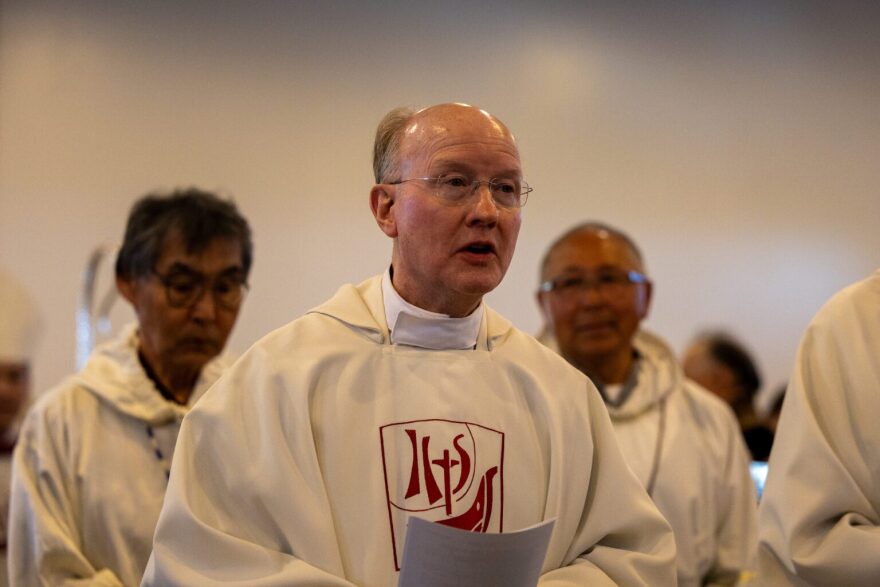
The Jesuits’ nearly 140 years in the state was honored at an event at Bethel’s Immaculate Conception Church on June 16. A procession of priests wearing long white gowns with red hems walked down the aisle to open the event. The Bishop of the Diocese of Fairbanks, Stephen Maekawa, thumped the ground with a shimmering silver staff known as a clozier as he approached the altar.
Bishop of the Diocese of Fairbanks, Steven Maekawa, walks toward the altar at the Immaculate Conception Church in Bethel.
“My brothers and sisters, we gather together to celebrate this wonderful and blessed occasion to acknowledge the love of God and the work of God through the 139 year mission of the Society of Jesus of the Jesuit fathers,” Maekawa said to open the event.
Advertisement
A traditional Catholic mass followed, with readings in both English and Yup’ik. During the sermon, Maekawa acknowledged the vastness of the Fairbanks diocese, and the tremendous amount of work done by the Jesuits to establish it.
“All of the 46 churches of the Diocese of Fairbanks that we currently have were established by either the Jesuit fathers or by direction of a Jesuit bishop,” Maekawa said. “We have a long history of the Society of Jesus’ presence and ministry here in all of Alaska.”
The Jesuits are an order within the Catholic Church, akin to the Dominicans or Franciscans. They have a reputation for taking on some of the Catholic Church’s most remote assignments.
That missionary spirit brought the Jesuits to the Yukon River in 1887, where they built churches, schools, and ministries. Without their work, Catholicism may not have taken root in huge swaths of Alaska, particularly among Alaska Native communities.
The Immaculate Conception Church in Bethel.
But the Jesuits leave a complicated legacy. Their methods of converting Native people to the religion, particularly in the first half of the 20th century, created generational traumas still felt to this day.
Advertisement
Fr. Sean Carroll is the provincial of the Jesuits West Province, which oversees Alaska and nine other states.
Fr. Sean Carroll, provincial of the Jesuits West Province, speaks at an event recognizing nearly 140 years of Jesuit service in Alaska.
“Thank you for all that you have taught us about who Jesus is and how to love and serve Him wholeheartedly,” Carroll said. “I also thank you for your patience with us. For there have been times when we have sinned and when we have hurt you.”
Missionaries, including the Jesuits, forcefully converted and assimilated Alaska Native people into Western culture and religion. Students at Jesuit-run boarding schools were forced to abandon their Native languages and physically punished when caught speaking languages other than English. Native dancing and drumming were also banned.
The Jesuits West Province maintains a list of 150 Jesuits with credible claims of sexual abuse against minors or vulnerable adults. A quarter of the accused Jesuits served in Alaska at some point in time.
“I ask for your forgiveness for all that we have done that was not rooted in Christ and love for Him, and for when we did not value your culture nor recognize the presence of God in you,” Carroll said.
Advertisement
Carroll gave the order to withdraw from the state last spring. A big issue was the recruitment of Jesuits willing to travel and serve in remote villages. He told the congregation that the Jesuits’ work would continue, just without a permanent presence.
Fr. Rich Magner, one of the two remaining Jesuit priests in Alaska, attends a ceremony in Bethel.
Fr. Rich Magner is one of the two remaining Jesuit priests in Alaska. His last day serving Chevak, Hooper Bay, and Scammon Bay is June 30.
“We all always knew coming in, or should have known, that we’re not going to be here forever. It’s going to be mission accomplished at some point,” Magner said. “And then we hand it off to the diocese that we’ve helped create, and so that’s a good feeling.”
Magner’s next stop is a Clinical Pastoral Education residency in Tacoma, Washington.
The other remaining priest, Fr. Tom Provinsal, first came to Alaska in 1968 to teach. A fond memory, he said, was meeting Elders that practiced traditional subsistence lifestyles.
Advertisement
“Some of the grandmothers, their fingers were just all bent with arthritis and stuff like that, you know, their whole lives they’ve been working out in the cold and the wet, doing food, sewing, all that kind of stuff,” Provinsal said. “I’d say I just feel very privileged to have come when I did come and to see that.”
Provinsal returned in 1975 as a priest and has served in the region ever since. After moving away, he plans to take a five month sabbatical. What happens next, he said, is in God’s hands.
Two lines formed in the aisle for communion at the end of the mass. After taking communion, Bethel’s Parish Administrator Susan Murphy gave a final thank you.
“It’s difficult to say goodbye to people who have been a part of our lives for so long,” Murphy said. “We know that you have done what was yours to do, and have taught us to do what is ours to do. We are grateful.”
Jesuit priests form a row along the altar of Bethel’s Immaculate Conception Church as members of the congregation lift their arms and pray.
Dominic Hunt, a Yup’ik deacon that flew in from Emmonak for the event, led the congregation through a final prayer.
Advertisement
“Bless them with your wisdom, that they may be a word of hope, a world in need. We ask this through Christ, our Lord. Amen,” Hunt said.
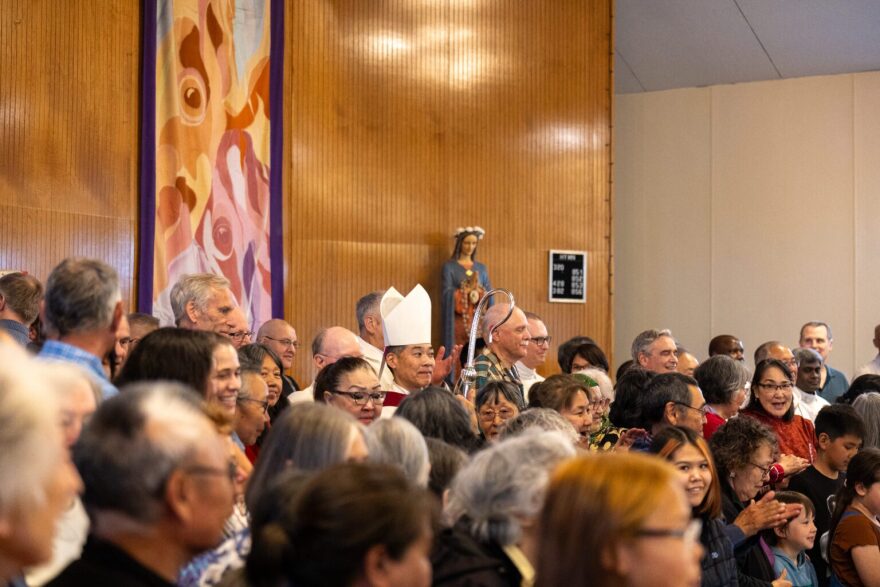
About 70 people posed for a photo on the altar – priests, deacons, parishioners, Elders and children — many of them smiling, some standing quietly.
The photo doesn’t tell the whole story. But it’s a moment when gratitude, grief, and memory all shared the same room.
Bishop of the Diocese of Fairbanks, Steven Maekawa, stands in the middle of a crowd waiting to take a photo at Bethel’s Immaculate Conception Church.
JUNEAU, Alaska (KTUU) – The Supreme Court of Alaska will be taking up the case of the State of Alaska, Division of Elections v. Daniel J. Sullivan, Jr.
The oral arguments will be held Monday at 10 a.m. via Zoom, according to an order and opening notice.
The document also specifies that a decision is expected to be made before noon on Tuesday.
According to documents from the Division of Elections, the state must start printing ballots at noon on the same day.
Advertisement
This comes after an Anchorage Superior Court Judge ordered Dan J. Sullivan on to the ballot Friday.
See a spelling or grammar error? Report it to web@ktuu.com



![Dennis and Amy—who have kept their last name offline for privacy reasons but are known online as “Holdfast Alaska”—have been living self-sufficiently by raising, hunting, and gathering their own food; using renewable energy; and living with minimal waste for the past decade—even welcoming a child, Lena, during that time.<p class="credit">HoldfastAlaska/YouTube‘ loading=”lazy” width=”960″ height=”540″ decoding=”async” data-nimg=”1″ class=”rounded-lg” style=”color:transparent” fifu-data-src=”https://wp.fifu.app/newspub.live/aHR0cHM6Ly9zLnlpbWcuY29tL255L2FwaS9yZXMvMS4yL3A4azNZR25JdGJMb1dhWXRoZnlGQmctLS9ZWEJ3YVdROWFHbG5hR3hoYm1SbGNqdDNQVGsyTUR0b1BUVTBNQS0tL2h0dHBzOi8vbWVkaWEuemVuZnMuY29tL2VuL3JlYWx0b3JfY29tXzQ2OC80YmRmZjIyMWUyOTI1Mzc3YWUxZDQ1MmQyY2I1NjllZA/97e63617db5e/couple-who-live-in-a-remote-off-grid-homestead-in-alaska-reveal-brutal-reality-of-winter-months-from-confronting-wild-wolves-to-driving-6-hours-for-groceries.webp?p=2382137″><button aria-label="View larger image" class="group absolute bottom-3 right-3 size-10 md:size-[50px] lg:inset-0 lg:size-full lg:bg-transparent" data-ylk="elm:expand;itc:1;sec:image-lightbox;slk:lightbox-open;"><span class="absolute bottom-0 right-0 rounded-full bg-white p-3 opacity-100 shadow-elevation-3 transition-opacity duration-300 group-hover:block group-hover:opacity-100 md:p-[17px] lg:bottom-6 lg:right-6 lg:bg-white/90 lg:p-5 lg:opacity-0 lg:shadow-none"><svg viewbox="0 0 22 22" aria-hidden="true" class="size-4 lg:size-6" width="22" height="22"><path d="M12.372.92c0-.506.41-.916.915-.916L21 0l-.004 7.712a.917.917 0 0 1-1.832 0V3.183l-6.827 6.828-1.349-1.348 6.828-6.828h-4.529a.915.915 0 0 1-.915-.915M1.835 17.816l6.828-6.828 1.349 1.349-6.829 6.827h4.529a.915.915 0 0 1 0 1.831L0 21l.004-7.713a.916.916 0 0 1 1.831 0z"></path></svg></span></button><dialog aria-label="Modal Dialog" aria-modal="true" class="fixed inset-0 z-[4] size-full max-h-none max-w-none bg-white hidden"></dialog></div><figcaption class="relative text-sm mt-1 pr-2.5">
<div style="max-height:none;overflow:visible">Dennis and Amy—who have kept their last name offline for privacy reasons but are known online as “Holdfast Alaska”—have been living self-sufficiently by raising, hunting, and gathering their own food; using renewable energy; and living with minimal waste for the past decade—even welcoming a child, Lena, during that time.
<p class="credit">HoldfastAlaska/YouTube
</div>
</figcaption></figure>
<p class="mb-4 text-lg md:leading-8 break-words">That site would go on to become their first homestead, with the duo clearing the land and building a simple structure themselves—despite not having any basic amenities like internet, electricity, or running water.
<p class="mb-4 text-lg md:leading-8 break-words">But that austere lifestyle was exactly what they had lusted for—and they quickly fell in love with the homesteading lifestyle, using the few years they spent living there as an opportunity to learn as much as they could, from books and from the locals who lived around them.
<p class="mb-4 text-lg md:leading-8 break-words">Having learned all they could from that property, they decided to sell their completed cabin and move to a nearby farmhouse, where they spent a short period of time learning the ins and outs of farming. But their long-term dream of homesteading in Alaska was still very much their main focus, with Dennis explaining that they realized it was one they needed to pursue while they still felt young and healthy enough to do so.<div class="mvp-post-ad-wrap"><span class="mvp-ad-label">Advertisement</span><div class="mvp-post-ad">
</div></div>
<p class="mb-4 text-lg md:leading-8 break-words">They traveled for four days to the remote town of Whittier, AK, and then set about finding their perfect property. Initially they settled down on a property on the Kenai River, on the outskirts of a town by the same name. But while it offered them a taste of the remote lifestyle they wanted, it still wasn’t enough. Dennis jokes that it felt like a “watered down version” of what they were searching for.
<p class="mb-4 text-lg md:leading-8 break-words">Six years later, they have relocated to a new homestead in Alaska—their “most remote yet”—and, despite admitting that the process of living off the land in the northern region is more “challenging” than it was in Maine, they couldn’t be happier with their decision.
<p class="mb-4 text-lg md:leading-8 break-words">The property boarders a national park and sits near a large river where they are able to fish for salmon, while the woodland around them is ideal for moose hunting.
<p class="mb-4 text-lg md:leading-8 break-words">For the most part, the duo says they are as self-sufficient as they can be right now, relying almost entirely on food they grow, hunt, fish, and forage, while their water supply comes from a local river they trek to regularly to keep up their supplies—despite noting that they have encountered wild wolves on those treks.
<p class="mb-4 text-lg md:leading-8 break-words">Although the couple’s cabin is small, it features more than enough amenities for Dennis, Amy, and daughter Lena, who have all perfected the art of living minimally.<div class="mvp-post-ad-wrap"><span class="mvp-ad-label">Advertisement</span><div class="mvp-post-ad">
</div></div>
<p class="mb-4 text-lg md:leading-8 break-words">In addition to an intimate kitchen, which features tall cabinets to maximize space, the cabin comes complete with a fireplace and a tiny living area with its own balcony, where Amy and Dennis enjoy a cup of coffee every day.
<p class="mb-4 text-lg md:leading-8 break-words">They frequently gush about their land on social media, previously noting, “After years of living in Alaska, we finally feel like we are on the frontier. This is the most wild place we have ever lived.
<p class="mb-4 text-lg md:leading-8 break-words">“There are no property taxes, and we are bordered by 10+ million acres of national forest and land to hunt. It has taken us over a decade of homesteading to get to this point, and we are beyond excited to get to fill up the smoker with moose and salmon.”
<figure class="relative mb-4">
<div class="relative"><img decoding="async" src="data:image/gif;base64,R0lGODlhAQABAIAAAAAAAP///ywAAAAAAQABAAACAUwAOw==" fifu-lazy="1" fifu-data-sizes="auto" fifu-data-srcset="https://wp.fifu.app/newspub.live/aHR0cHM6Ly9zLnlpbWcuY29tL255L2FwaS9yZXMvMS4yL2h6RG9YbU9Bb3RCb3VLek1HdGJsbXctLS9ZWEJ3YVdROWFHbG5hR3hoYm1SbGNqdDNQVGsyTUR0b1BUVTBNQS0tL2h0dHBzOi8vbWVkaWEuemVuZnMuY29tL2VuL3JlYWx0b3JfY29tXzQ2OC81OWVkNWU3MDM5NGViZTIxZWU2YzVlNTAzY2YxMWZhZg/c418ce4d05b6/couple-who-live-in-a-remote-off-grid-homestead-in-alaska-reveal-brutal-reality-of-winter-months-from-confronting-wild-wolves-to-driving-6-hours-for-groceries.webp?p=2382137&w=75&h=0&c=0 75w, https://wp.fifu.app/newspub.live/aHR0cHM6Ly9zLnlpbWcuY29tL255L2FwaS9yZXMvMS4yL2h6RG9YbU9Bb3RCb3VLek1HdGJsbXctLS9ZWEJ3YVdROWFHbG5hR3hoYm1SbGNqdDNQVGsyTUR0b1BUVTBNQS0tL2h0dHBzOi8vbWVkaWEuemVuZnMuY29tL2VuL3JlYWx0b3JfY29tXzQ2OC81OWVkNWU3MDM5NGViZTIxZWU2YzVlNTAzY2YxMWZhZg/b4f48e55df06/couple-who-live-in-a-remote-off-grid-homestead-in-alaska-reveal-brutal-reality-of-winter-months-from-confronting-wild-wolves-to-driving-6-hours-for-groceries.webp?p=2382137&w=100&h=0&c=0 100w, https://wp.fifu.app/newspub.live/aHR0cHM6Ly9zLnlpbWcuY29tL255L2FwaS9yZXMvMS4yL2h6RG9YbU9Bb3RCb3VLek1HdGJsbXctLS9ZWEJ3YVdROWFHbG5hR3hoYm1SbGNqdDNQVGsyTUR0b1BUVTBNQS0tL2h0dHBzOi8vbWVkaWEuemVuZnMuY29tL2VuL3JlYWx0b3JfY29tXzQ2OC81OWVkNWU3MDM5NGViZTIxZWU2YzVlNTAzY2YxMWZhZg/09e6735b9d79/couple-who-live-in-a-remote-off-grid-homestead-in-alaska-reveal-brutal-reality-of-winter-months-from-confronting-wild-wolves-to-driving-6-hours-for-groceries.webp?p=2382137&w=150&h=0&c=0 150w, https://wp.fifu.app/newspub.live/aHR0cHM6Ly9zLnlpbWcuY29tL255L2FwaS9yZXMvMS4yL2h6RG9YbU9Bb3RCb3VLek1HdGJsbXctLS9ZWEJ3YVdROWFHbG5hR3hoYm1SbGNqdDNQVGsyTUR0b1BUVTBNQS0tL2h0dHBzOi8vbWVkaWEuemVuZnMuY29tL2VuL3JlYWx0b3JfY29tXzQ2OC81OWVkNWU3MDM5NGViZTIxZWU2YzVlNTAzY2YxMWZhZg/ce764cb1971d/couple-who-live-in-a-remote-off-grid-homestead-in-alaska-reveal-brutal-reality-of-winter-months-from-confronting-wild-wolves-to-driving-6-hours-for-groceries.webp?p=2382137&w=240&h=0&c=0 240w, https://wp.fifu.app/newspub.live/aHR0cHM6Ly9zLnlpbWcuY29tL255L2FwaS9yZXMvMS4yL2h6RG9YbU9Bb3RCb3VLek1HdGJsbXctLS9ZWEJ3YVdROWFHbG5hR3hoYm1SbGNqdDNQVGsyTUR0b1BUVTBNQS0tL2h0dHBzOi8vbWVkaWEuemVuZnMuY29tL2VuL3JlYWx0b3JfY29tXzQ2OC81OWVkNWU3MDM5NGViZTIxZWU2YzVlNTAzY2YxMWZhZg/6fc3560f7278/couple-who-live-in-a-remote-off-grid-homestead-in-alaska-reveal-brutal-reality-of-winter-months-from-confronting-wild-wolves-to-driving-6-hours-for-groceries.webp?p=2382137&w=320&h=0&c=0 320w, https://wp.fifu.app/newspub.live/aHR0cHM6Ly9zLnlpbWcuY29tL255L2FwaS9yZXMvMS4yL2h6RG9YbU9Bb3RCb3VLek1HdGJsbXctLS9ZWEJ3YVdROWFHbG5hR3hoYm1SbGNqdDNQVGsyTUR0b1BUVTBNQS0tL2h0dHBzOi8vbWVkaWEuemVuZnMuY29tL2VuL3JlYWx0b3JfY29tXzQ2OC81OWVkNWU3MDM5NGViZTIxZWU2YzVlNTAzY2YxMWZhZg/232dead02461/couple-who-live-in-a-remote-off-grid-homestead-in-alaska-reveal-brutal-reality-of-winter-months-from-confronting-wild-wolves-to-driving-6-hours-for-groceries.webp?p=2382137&w=500&h=0&c=0 500w, https://wp.fifu.app/newspub.live/aHR0cHM6Ly9zLnlpbWcuY29tL255L2FwaS9yZXMvMS4yL2h6RG9YbU9Bb3RCb3VLek1HdGJsbXctLS9ZWEJ3YVdROWFHbG5hR3hoYm1SbGNqdDNQVGsyTUR0b1BUVTBNQS0tL2h0dHBzOi8vbWVkaWEuemVuZnMuY29tL2VuL3JlYWx0b3JfY29tXzQ2OC81OWVkNWU3MDM5NGViZTIxZWU2YzVlNTAzY2YxMWZhZg/33df1b26be90/couple-who-live-in-a-remote-off-grid-homestead-in-alaska-reveal-brutal-reality-of-winter-months-from-confronting-wild-wolves-to-driving-6-hours-for-groceries.webp?p=2382137&w=640&h=0&c=0 640w, https://wp.fifu.app/newspub.live/aHR0cHM6Ly9zLnlpbWcuY29tL255L2FwaS9yZXMvMS4yL2h6RG9YbU9Bb3RCb3VLek1HdGJsbXctLS9ZWEJ3YVdROWFHbG5hR3hoYm1SbGNqdDNQVGsyTUR0b1BUVTBNQS0tL2h0dHBzOi8vbWVkaWEuemVuZnMuY29tL2VuL3JlYWx0b3JfY29tXzQ2OC81OWVkNWU3MDM5NGViZTIxZWU2YzVlNTAzY2YxMWZhZg/b088815ca31f/couple-who-live-in-a-remote-off-grid-homestead-in-alaska-reveal-brutal-reality-of-winter-months-from-confronting-wild-wolves-to-driving-6-hours-for-groceries.webp?p=2382137&w=800&h=0&c=0 800w, https://wp.fifu.app/newspub.live/aHR0cHM6Ly9zLnlpbWcuY29tL255L2FwaS9yZXMvMS4yL2h6RG9YbU9Bb3RCb3VLek1HdGJsbXctLS9ZWEJ3YVdROWFHbG5hR3hoYm1SbGNqdDNQVGsyTUR0b1BUVTBNQS0tL2h0dHBzOi8vbWVkaWEuemVuZnMuY29tL2VuL3JlYWx0b3JfY29tXzQ2OC81OWVkNWU3MDM5NGViZTIxZWU2YzVlNTAzY2YxMWZhZg/2dd493a4ce1f/couple-who-live-in-a-remote-off-grid-homestead-in-alaska-reveal-brutal-reality-of-winter-months-from-confronting-wild-wolves-to-driving-6-hours-for-groceries.webp?p=2382137&w=1024&h=0&c=0 1024w, https://wp.fifu.app/newspub.live/aHR0cHM6Ly9zLnlpbWcuY29tL255L2FwaS9yZXMvMS4yL2h6RG9YbU9Bb3RCb3VLek1HdGJsbXctLS9ZWEJ3YVdROWFHbG5hR3hoYm1SbGNqdDNQVGsyTUR0b1BUVTBNQS0tL2h0dHBzOi8vbWVkaWEuemVuZnMuY29tL2VuL3JlYWx0b3JfY29tXzQ2OC81OWVkNWU3MDM5NGViZTIxZWU2YzVlNTAzY2YxMWZhZg/d9ced032cec5/couple-who-live-in-a-remote-off-grid-homestead-in-alaska-reveal-brutal-reality-of-winter-months-from-confronting-wild-wolves-to-driving-6-hours-for-groceries.webp?p=2382137&w=1280&h=0&c=0 1280w, https://wp.fifu.app/newspub.live/aHR0cHM6Ly9zLnlpbWcuY29tL255L2FwaS9yZXMvMS4yL2h6RG9YbU9Bb3RCb3VLek1HdGJsbXctLS9ZWEJ3YVdROWFHbG5hR3hoYm1SbGNqdDNQVGsyTUR0b1BUVTBNQS0tL2h0dHBzOi8vbWVkaWEuemVuZnMuY29tL2VuL3JlYWx0b3JfY29tXzQ2OC81OWVkNWU3MDM5NGViZTIxZWU2YzVlNTAzY2YxMWZhZg/de703e8d7dcc/couple-who-live-in-a-remote-off-grid-homestead-in-alaska-reveal-brutal-reality-of-winter-months-from-confronting-wild-wolves-to-driving-6-hours-for-groceries.webp?p=2382137&w=1600&h=0&c=0 1600w" alt=](data:image/gif;base64,R0lGODlhAQABAIAAAAAAAP///ywAAAAAAQABAAACAUwAOw==) HoldfastAlaska/YouTube‘ loading=”lazy” width=”960″ height=”540″ decoding=”async” data-nimg=”1″ class=”rounded-lg” style=”color:transparent” fifu-data-src=”https://wp.fifu.app/newspub.live/aHR0cHM6Ly9zLnlpbWcuY29tL255L2FwaS9yZXMvMS4yL2h6RG9YbU9Bb3RCb3VLek1HdGJsbXctLS9ZWEJ3YVdROWFHbG5hR3hoYm1SbGNqdDNQVGsyTUR0b1BUVTBNQS0tL2h0dHBzOi8vbWVkaWEuemVuZnMuY29tL2VuL3JlYWx0b3JfY29tXzQ2OC81OWVkNWU3MDM5NGViZTIxZWU2YzVlNTAzY2YxMWZhZg/14554f14f7c4/couple-who-live-in-a-remote-off-grid-homestead-in-alaska-reveal-brutal-reality-of-winter-months-from-confronting-wild-wolves-to-driving-6-hours-for-groceries.webp?p=2382137″>
HoldfastAlaska/YouTube‘ loading=”lazy” width=”960″ height=”540″ decoding=”async” data-nimg=”1″ class=”rounded-lg” style=”color:transparent” fifu-data-src=”https://wp.fifu.app/newspub.live/aHR0cHM6Ly9zLnlpbWcuY29tL255L2FwaS9yZXMvMS4yL2h6RG9YbU9Bb3RCb3VLek1HdGJsbXctLS9ZWEJ3YVdROWFHbG5hR3hoYm1SbGNqdDNQVGsyTUR0b1BUVTBNQS0tL2h0dHBzOi8vbWVkaWEuemVuZnMuY29tL2VuL3JlYWx0b3JfY29tXzQ2OC81OWVkNWU3MDM5NGViZTIxZWU2YzVlNTAzY2YxMWZhZg/14554f14f7c4/couple-who-live-in-a-remote-off-grid-homestead-in-alaska-reveal-brutal-reality-of-winter-months-from-confronting-wild-wolves-to-driving-6-hours-for-groceries.webp?p=2382137″>