West
2 bodies recovered from popular waterfall in Washington state after hikers went missing

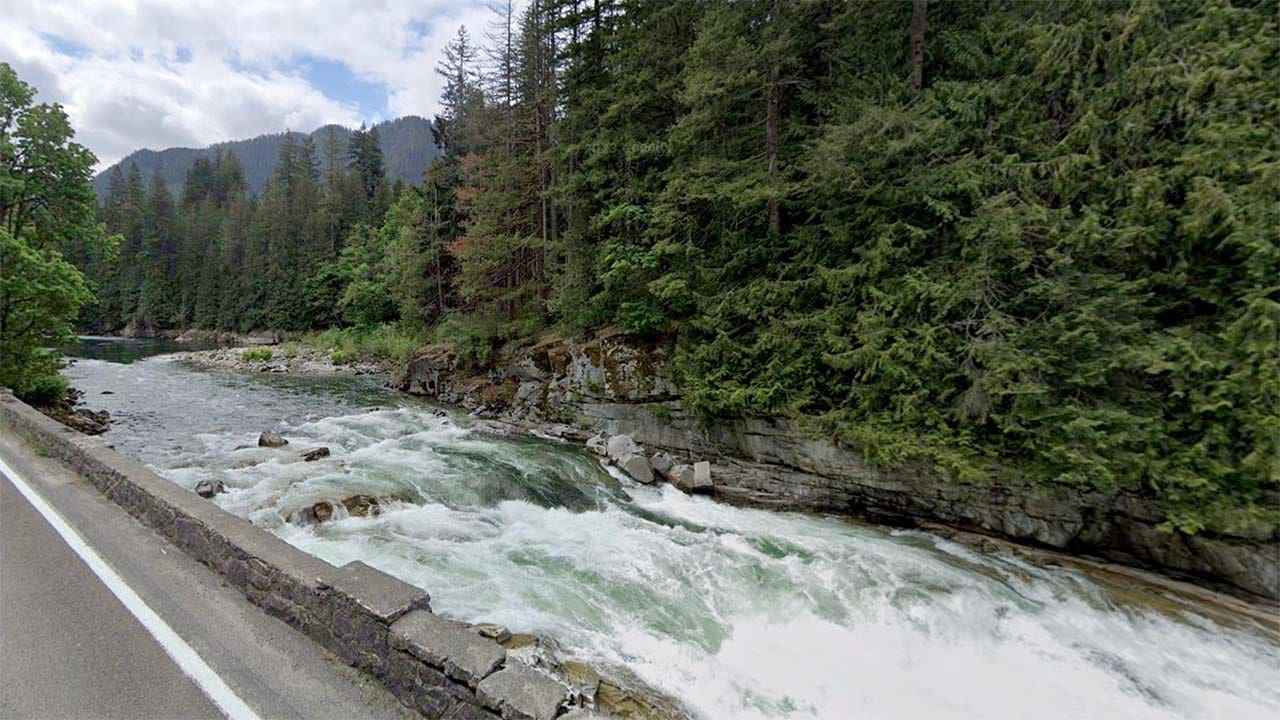
The search for two missing hikers in Washington state turned into a recovery effort after the men fell into Eagle Falls on Saturday and did not resurface, the Snohomish County Sheriff’s Office said.
“SAR and Divers are continuing their search this morning for the two missing subjects at Eagle Falls in Index. This has turned into a recovery effort,” the Sheriff’s Office posted on X, formerly Twitter, on Sunday morning.
Just after 12 p.m., the Snohomish County Sheriff’s Office reported that two male bodies had been recovered. However, it has not been determined if these bodies belong to the two missing hikers as investigators will be working with the Medical Examiner’s Office to determine their identities.
The Sheriff’s Office posted on social media that they received a call around 4:15 p.m. on Saturday for reports of two men who fell into the falls and vanished.
CALIFORNIA WOMAN ON HIKE GOES MISSING AFTER BEING SWEPT AWAY BY RIVER
Sheriff’s deputies and firefighters were searching for two people who reportedly fell into the water near Eagle Falls and did not resurface on Saturday. (Google Maps)
Rescue teams searched the area for several hours, but were unable to locate the men, officials reported.
The sheriff’s office told Fox 13 that the two men were with two other people when they fell.
MISSING NEW HAMPSHIRE HIKER’S BODY RECOVERED FROM WHITE MOUNTAINS AFTER HE WAS STRANDED IN COLD
South Fork Skykomish River below Eagle Falls, Cascade Mountains, Washington. (Greg Vaughn /VW PICS/Universal Images Group via Getty Images)
Due to the swift currents in Snohomish County rivers and cold water temperatures, the Sheriff’s Office is urging the public to stay out of the water and steer clear of the falls.
Two hikers fell into Eagle Falls in Washington state and vanished. Two bodies were recovered on Sunday morning, but authorities said the identity of the bodies has not yet been determined. (Google Maps)
The identity of the missing hikers has not yet been released.
Fox News Digital reached out to the Snohomish County Sheriff’s Office for more information but has not yet heard back.
Read the full article from Here


Governor’s Office
HELENA, Mont. – Governor Greg Gianforte today announced Montana ranks in the top ten states with the highest year-over-year job growth rates.
“Montana continues to rank as one of the best states to start or grow a business, earn a competitive wage, and secure a good-paying job,” Gov. Gianforte said. “As we continue to reform our regulatory environment to support job creators and cut taxes to give money back to the hardworking Montanans who earned it, we see the results of conservative policies at work as the Treasure State ranks in the top ten states with the strongest job growth.”
According to a report by Stat Ranker, which compared all 50 states based on year-over-year growth in total nonfarm payroll employment between February 2025 and February 2026, Montana ranked ninth in the nation for both jobs added and overall job growth adding more than 2,100 jobs over the year, representing a 0.4 percent job growth rate.
Last week, the governor attended the groundbreaking for Janicki Industries in Great Falls to celebrate the aerospace manufacturers’ investment expected to create more than 2,000 jobs over the next ten years and the ribbon cutting for Amazon’s sixth delivery station in Montana that brings the company’s total employment in the state to over 800.
Last month, the governor announced Montana was ranked in the top five states with the fastest-growing economies since 2021. The report from Visual Capitalist found that between 2021 and 2025, Montana’s GDP grew 16.1 percent while the national average in the same time period was 10.8 percent. When it comes to wage growth, Montana ranks third in the nation for fastest wage growth and is only one of two states in the nation where wage growth has outpaced inflation since 2020. The average wage earned by Montana workers reached $60,037 in 2024.
Earlier this year, Gov. Gianforte also announced Montana’s fiscal health surged into the top ten states nationally under his leadership, rising from 22nd in 2021 to 8th in 2025. Since taking office, the governor has paid off the state’s general obligation debt, making Montana debt-free in 2023 and saving Montanans $40 million over a period of two years.
Montana also consistently ranks in the top fifteen states with the lowest unemployment rates. Last month, the governor announced Montana’s unemployment rate ticked down to 3.4 percent in May, lower than the national unemployment rate which remained at 4.3 percent.
The full Stat Ranker report can be read here.
###
Tags:


Reno or Las Vegas: Which costs less?
Which costs less? Reno has pricier homes but higher pay and cheaper groceries; Vegas offers cheaper housing.
Nevada’s history as a mining and entertainment state has made it synonymous with boomtowns. Perhaps more than any other state, cities in Nevada can feel like they practically explode overnight (like Las Vegas) and at times are abandoned as quickly as they were inhabited (like the state’s many ghost towns)
SmartAsset, a financial technology company, said in a recent report that Nevada is still home to several boomtowns. SmartAsset defines as cities that “stand out for attracting people, investment and development at a pace that sets them apart.”
“Boomtown status does not mean growth benefits everyone equally, but it does reflect a city’s expanding economic capacity and the new opportunities that come with it,” wrote SmartAsset.
The list was compiled by analyzing more than 400 U.S. cities with populations of 65,000 or more. Each city received a score based on five-year changes in three factors: economic output, housing units and labor force size. Four Nevada cities landed in the 75 highest-scoring cities, which SmartAsset said represent America’s new boomtowns.
Here’s what else to know.
Nevada is home to these four ‘boomtowns,’ according to Smart Asset
North Las Vegas was the highest-ranked Nevada city on the list, at No. 39. It had a 21% increase in housing units, a 24% increase in the labor force, and a compound annual real GDP growth rate of 3.5%.
Nevada’s runner-up was Sparks at No. 53, which saw housing units grow by 16%, labor force increase by 14%, and a 3.8% compound annual GDP growth rate.
Henderson followed at No. 63, posting a 13% increase in housing units, an 18% rise in labor force, and a 3.5% annual GDP growth rate.
Reno came in last among Nevada cities on the list at No. 66, with housing units up 14%, a labor force increase of 11%, and a 3.8% compound annual GDP growth rate.
Methodology
In order to determine the country’s boomtowns, Smart Asset looked at U.S. cities with populations of more than 65,000.
Each city was scored across three metrics: five-year labor force change, five-year housing unit change, and county-level compound annual real GDP growth.
Changes in the labor force (which includes residents ages 16 and older who are employed or actively seeking work) and in housing units were calculated using 2019 and 2024 ACS data.
Real GDP growth was calculated using Bureau of Economic Analysis data for 2019 and 2024; county-level real GDP was used as a proxy for city-level economic output.
Cities were assigned composite scores based on the three metrics and ranked accordingly.
America’s top 10 boomtowns
According to SmartAsset, these are the top 10 boomtowns in the U.S. in 2026:
- Georgetown, Texas
- New Braunfels, Texas
- Lehi, Utah
- Leander, Texas
- Lewisville, Texas
- Palm Coast, Florida
- Nampa, Idaho
- McKinney, Texas
- Conroe, Texas
- Frisco, Texas
Diana Leyva with The Tennessean contributed to this report.

The McCauley Springs Fire in the Jemez Ranger District, east of Battleship Rock, is 100% contained at 712 acres.
The fire was reported on Wednesday, June 24, 2026. The Northern New Mexico Zone Type 3 Incident Management Team (IMT), led by Incident Commander Luke McLarty, initially managed the fire before the Southwest Area Incident Management Team 3, under Incident Commander Matt Rau, took over. From June 26 to July 4, this team handled operations, after which command returned to the Jemez Ranger District. Under a Type 4 organization, firefighters worked to cool remaining hot spots and secure firelines, reaching full containment on July 13.
Although the fire is fully contained, visitors should remain aware that burned areas can present hazards. When visiting fire-affected areas, watch for changing conditions, hazard trees, unstable terrain, and other post-fire hazards. Suppression repair work may continue in some locations, and the public is asked to use caution around personnel and equipment and provide crews with plenty of space to work.
A temporary closure order for the burned area remains in place through August 11, 2026. The full order and map can be found on the Santa Fe National Forest website under Alerts. Battleship Rock, Jemez Falls Campground and Group Area, the Jemez Falls Trailhead, San Diego Overlook, and the East Fork Trail from Battleship Rock to Highway 4 will remain closed until further notice for public safety.
A multi-disciplinary Burned Area Emergency Response (BAER) team evaluated the burned area to identify risks to human life, property, and critical resources. Over 80% of the fire was mapped as low soil burn severity, meaning most tree canopies and ground cover remain intact, reducing the risk of erosion and runoff. About 12% of the area showed moderate burn severity, with patchy ground cover loss and some water-repellent soils. Less than 1% was classified as high burn severity, where vegetation and soil were heavily impacted. The full summary can be found on the Santa Fe National Forest website.
For Santa Fe National Forest news and updates visit our website and social media pages (Facebook and X).
About the Forest Service: The Forest Service has brought people and communities together to answer the call of conservation for more than 100 years. Grounded in world-class science and technology — and rooted in communities — the Forest Service connects people to nature and recreation opportunities. The agency manages 193 million acres of public land, supports the nation’s forest industry and energy needs, and operates the largest and most respected wildland fire and forestry research organizations in the world. By providing assistance to state and private landowners and working with tribes and other partners, the Forest Service also helps steward an additional 900 million forested acres within the U.S.
###
USDA is an equal opportunity provider, employer and lender.
-

 Michigan1 minute ago
University of Michigan’s David C. Miller chosen to succeed Jeff Balser as Vanderbilt Health’s President and CEO and Dean of Vanderbilt University School of Medicine
-

 Massachusetts7 minutes ago
Massachusetts Broadband Institute distributes devices to underserved communities
-

 Minnesota13 minutes ago
Smoke from wildfires in Minnesota and Canada exposes millions to dangerous air quality
-

 Mississippi19 minutes ago
How permanent daylight saving time would impact Mississippi
-
 Missouri25 minutes ago
Missouri reports 43 cases of parasitic infection that’s sickened thousands nationwide
-

 Montana31 minutes ago
Governor Gianforte Announces Montana Ranks as Top 10 State for Job Growth
-

 Nebraska37 minutes ago
Roanoke County teen heads to national rodeo finals in Nebraska
-

 Nevada43 minutes ago
Nevada’s modern boomtowns are these fast-growing cities, study said

