Of all the jarring things I’ve witnessed on the National Mall, nothing will beat the image of the first thing I saw after I cleared security at the Army festival: a child, sitting at the controls of an M119A3 Howitzer, being instructed by a soldier on how to aim it, as his red-hatted parents took a photo with the Washington Monument in the background.
Technology
Tanks, guns and face-painting


The primary stated reason for the Grand Military Parade is to celebrate the US Army’s 250th birthday. The second stated reason is to use the event for recruiting purposes. Like other military branches, the Army has struggled to meet its enlistment quotas for over the past decade. And according to very defensive Army spokespeople trying to convince skeptics that the parade was not for Donald Trump’s birthday, there had always been a festival planned on the National Mall that day, and it had been in the works for over two years, and the parade, tacked on just two months ago, was purely incidental. Assuming that their statement was true, I wasn’t quite sure if they had anticipated so many people in blatant MAGA swag in attendance — or how eager they were to bring their children and hand them assault rifles.
There had been kid-friendly events planned: an NFL Kids Zone with a photo op with the Washington Commanders’ mascot, a few face-painting booths, several rock-climbing walls. But they were dwarfed, literally, by dozens of war machines parked along the jogging paths: massive tanks, trucks with gun-mounted turrets, assault helicopters, many of them currently used in combat, all with helpful signs explaining the history of each vehicle, as well as the guns and ammo it could carry. And the families — wearing everything from J6 shirts to Vineyard Vines — were drawn more to the military vehicles, all-too-ready to place their kids in the cockpit of an AH-1F Cobra 998 helicopter as they pretended to aim the nose-mounted 3-barrelled Gatling Cannon. Parents told their children to smile as they poked their little heads out of the hatch of an M1135 Stryker armored vehicle; reminded them to be patient as they waited in line to sit inside an M109A7 self-propelled Howitzer with a 155MM rifled cannon.

But seeing a kid’s happiness of being inside a big thing that goes boom was nothing compared to the grownups’ faces when they got the chance to hold genuine military assault rifles — especially the grownups who had made sure to wear Trump merch during the Army’s birthday party. (Some even handed the rifles to their children for their own photo ops.) It seemed that not even a free Army-branded Bluetooth speaker could compare to how fucking sick the modded AR-15 was. Attendees were in raptures over the Boston Dynamics robot dog gun, the quadcopter drone gun, or really any of the other guns available (except for those historic guns, those were only maybe cool).
However many protesters made it out to DC, they were dwarfed by thousands of people winding down Constitution Avenue to enter the parade viewing grounds: lots of MAGA heads, lots of foreign tourists, all people who really just like to see big, big tanks. “Angry LOSERS!” they jeered at the protesters. (“Don’t worry about them,” said one cop, “they lost anyways.”) and after walking past them, crossing the bridge, winding through hundreds of yards of metal fencing, Funneling through security, crossing a choked pedestrian bridge over Constitution Ave, I was finally dumped onto the parade viewing section: slightly muggy and surprisingly navigable. But whatever sluggishness the crowd was feeling, it would immediately dissipate the moment a tank turned the corner — and the music started blasting.
Americans have a critical weakness for 70s and 80s rock, and this crowd seemed more than willing to look past the questionable origins of the parade so long as the soundtrack had a sick guitar solo. An M1 Abrams tank driving past you while Barracuda blasts on a tower of speakers? Badass. Black Hawk helicopters circling the Washington Monument and disappearing behind the African-American history museum, thrashing your head to “separate ways” by Journey? Fucking badass. ANOTHER M1 ABRAMS TANK?!?!! AND TO FORTUNATE SON??!?!? “They got me fucking hooked,” a young redheaded man said behind me as the crowd screamed for the waving drivers. (The tank was so badass that the irony of “Fortunate Son” didn’t matter.)

When you listen to the hardest fucking rock soundtrack long enough, and learn more about how fucking sick the Bradley Fighting Vehicles streaming by you are (either from the parade announcer or the tank enthusiast next to you), an animalistic hype takes over you — enough to drown out all the nationwide anger about the parade, the enormity of Trump’s power grab, the fact that two Minnesota Democratic lawmakers were shot in their homes just that morning, the riot police roving the streets of LA.
It helped that it didn’t rain. It helped that the only people at the parade were the diehards who didn’t care if they were rained out. And by the end of the parade, they didn’t even bother to stay for Trump’s speech, beelining back to the bridge at the first drop of rain.
The only thing that mattered to this crowd inside the security perimeter — more than the Army’s honor and history, and barely more than Trump himself — was firepower, strength, hard rock, and America’s unparalleled, world-class ability to kill.



Philips Hue products don’t often see major discounts, which makes this year’s Prime Day deals especially notable. Prices have dropped significantly across much of the company’s smart lighting lineup, with deals on everything from smart bulb starter kits and sleep lamps to smart buttons. If you’ve been thinking about investing in Philips Hue, now is one of the best opportunities we’ve seen all year to do so for less.
Update, June 26th: Updated prices and availability and added a couple of deals, including a discount for the Philips Hue Bridge.
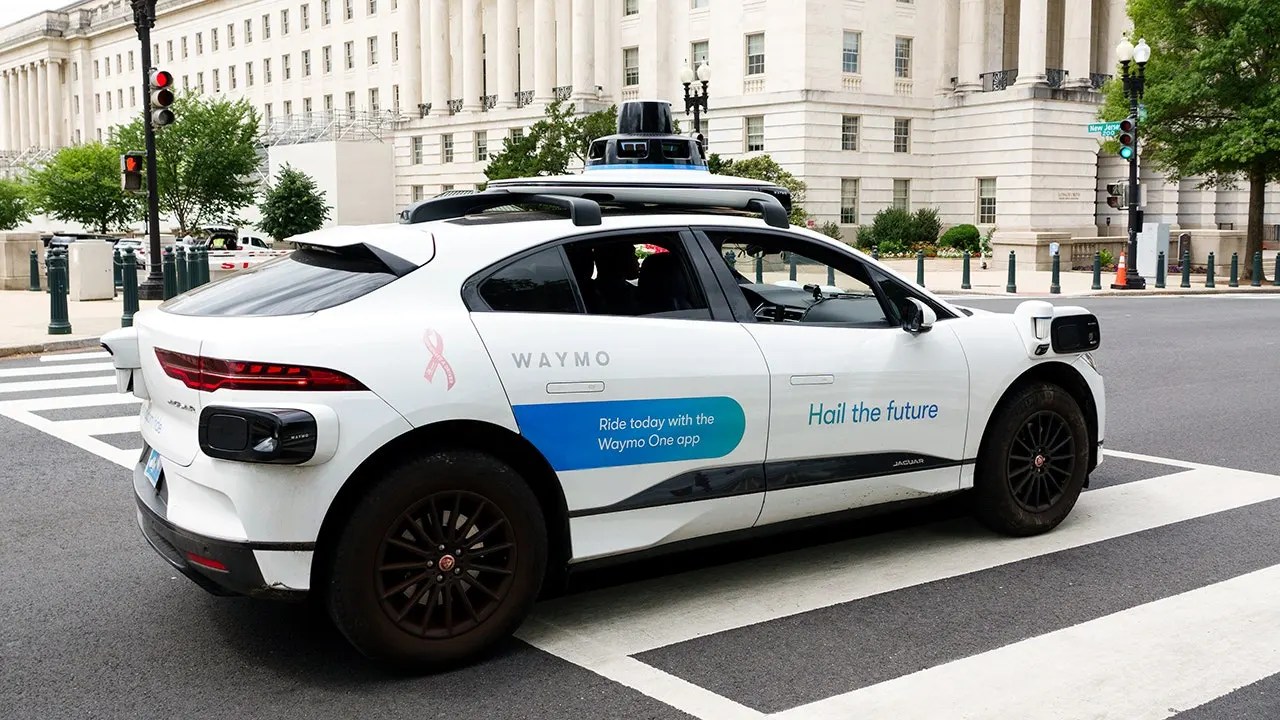
Waymo is recalling 3,871 robotaxis after software issues allowed some vehicles to enter closed freeway construction zones. The company has restricted freeway operations while deploying a fix. (Kevin Carter/Getty Images)
NEWYou can now listen to Fox News articles!
Welcome to Fox News’ Artificial Intelligence newsletter with the latest AI technology advancements.
IN TODAY’S NEWSLETTER:
– Waymo recalls robotaxis over construction-zone risk
– Reporter’s Notebook: Lawmakers wrestle over whether AI can make the grade in America’s classrooms
– OPINION: China is building an AI war machine. Washington must wake up before it’s too late
CONES IGNORED: Waymo has filed a voluntary recall affecting 3,871 vehicles equipped with its 5th Generation Automated Driving System. According to the National Highway Traffic Safety Administration, the software may allow a Waymo vehicle to enter a closed freeway construction zone and continue driving.
OPINION: On June 24, OpenAI unveiled its first custom-built inference chip, developed with Broadcom and known internally as “Jalapeño.” Most Americans will never see it. Yet Beijing certainly noticed. The announcement signals that the contest between America and China has moved beyond software and chatbots into a struggle for control of the infrastructure that will shape economic, military and technological power in the 21st century.
REPORTER’S NOTEBOOK: Reading. Writing. And AI algorithms. The Senate is now wrestling with how students — and teachers — might use artificial intelligence in the classroom. It’s inevitable. “The question is not whether AI is going to impact education. The real question is whether we will shape its use thoughtfully. Responsibly,” said Delaware Secretary of Education Cindy Marten during a recent Senate hearing.
FCC Chairman Brendan Carr announced a review of the agency’s E-Rate program, citing concerns about excessive screen time in schools. (Michael Macor/The San Francisco Chronicle via Getty Images)
SEE THAT?: Meta Wearables VP Alex Himel discusses the newly launched Meta Smart Glasses, highlighting their AI capabilities, accessible price point of $299, and the design collaboration with Kylie Jenner on “The Claman Countdown.”
TECH TITAN: Microsoft CEO Satya Nadella issued a warning that the tech giants competing in the AI race need to ensure they advance the emerging tech in a way that’s palatable to the public.
BOTS MEET BOUNDARIES: NVIDIA, a technology company known for AI computing and robotics systems, has introduced NVIDIA Halos for Robotics. The company calls it the industry’s first full-stack, comprehensive safety system for robotics and physical AI.
NVIDIA introduced Halos for Robotics, a full-stack safety system designed to help robots operate more safely alongside people in industrial workplaces. (Photo by Tomohiro Ohsumi/Getty Images)
Subscribe now to get the Fox News Artificial Intelligence Newsletter in your inbox.
FOLLOW FOX NEWS ON SOCIAL MEDIA
YouTube
X
SIGN UP FOR OUR OTHER NEWSLETTERS
Fox News First
Fox News Opinion
Fox News Lifestyle
Fox News Health
DOWNLOAD OUR APPS
Fox News
FOX Business
Fox Weather
Fox Sports
Tubi
WATCH FOX NEWS ONLINE
Fox News Go
STREAM FOX NATION
Fox Nation
Stay up to date on the latest AI technology advancements and learn about the challenges and opportunities AI presents now and for the future with Fox News here.

Meta is, by and large, a company built on other companies’ ideas. It has almost perfected the strategy: wait for a new platform or social mechanic to take off, then either buy or clone it, put it next to Meta’s unmatched user base and advertising engine, and watch the money pile up. Well, the next big thing appears to be turning everything into gambling. So why wouldn’t Meta make a Polymarket?
On this episode of The Vergecast, David and Nilay discuss the reported prediction market app being built inside Meta, plus the company’s onslaught of other news this week — and its massive, apparently increasing morale problems. Nilay’s at Cannes Lions in France this week, where Meta’s advertising prowess is on full display, and yet it also feels like Meta is in crisis. So which is it? And what is your Facebook feed about to become?
-

 Lifestyle9 minutes ago
Former Vice President Mike Pence believes Washington is more ‘swampy’ under Trump
-

 Technology24 minutes ago
Prime Day’s final hours bring rare discounts on Philips Hue smart lights
-

 World27 minutes ago
Video shows gaping hole after small plane crashes into towering skyscraper
-

 Politics32 minutes ago
Warren tells Trump to ‘sign the damn bill’ as bipartisan housing package remains stalled in Washington
-

 Health39 minutes ago
Common food preservatives may raise blood pressure and heart risks, study suggests
-

 Sports42 minutes ago
Who is Alyssa Thomas? WNBA star suspended for punching Caitlin Clark in the throat
-

 Technology47 minutes ago
Fox News AI Newsletter: Waymo’s robotaxi recall
-
Business54 minutes ago
Cisco to lay off more than 400 workers in California


