


After protests broke out in early January, the Iranian regime shut down the internet, starting the longest blackout in Iranian history. Despite this attempt to stop the protests from spreading, they did not stop. Still, the internet shutdown slowed down the spread of information both inside and outside Iran.
Technology
Federal probe targets Waymo’s robotaxis amid traffic safety concerns


The technology behind self-driving cars has been around for quite some time. However, its commercialization – from companies offering and operating ride-share services to those selling self-driving cars – is still rather new. One well-known taxi company is Waymo, which, despite its successes, is now under federal investigation due to traffic safety concerns.
So, what do you need to know about this investigation? Is Waymo still considered safe? What about other self-driving cars? Is it time to get in on this trend now, or is it better to wait until this technology improves before stepping into a self-driving vehicle? Here’s what you need to know.
GET SECURITY ALERTS, EXPERT TIPS – SIGN UP FOR KURT’S NEWSLETTER – THE CYBERGUY REPORT HERE
Waymo autonomous taxi (Waymo) (Kurt “CyberGuy” Knutsson)
What are Waymo taxis?
Self-driving vehicles were developed by Waymo, a subsidiary of Alphabet Inc. (Google’s parent company). These autonomous taxis provide transportation without the need for a human driver, using a combination of different technologies to navigate urban environments and respond to ever-changing traffic conditions. We’ll talk more about the specifics of that technology in a bit.
If you haven’t seen Waymo cars yet in your neighborhood, that’s because Waymo is only available in San Francisco, Los Angeles and the Phoenix area right now. It is set to roll out its services in Austin, Texas, soon.
Waymo autonomous taxi (Waymo) (Kurt “CyberGuy” Knutsson)
ASK ANY TECH QUESTION AND GET KURT’S FREE CYBERGUY REPORT NEWSLETTER HERE
Why is Waymo under federal investigation for safety concerns?
One concern people have regarding self-driving cars is whether they are safe or as safe as a human-controlled vehicle. Well, the answer is not quite yet. While self-driving technology, i.e., driver-assistant technology, is believed to reduce accidents, fully autonomous vehicles are not quite there yet and can, in fact, lead to more accidents.
Due to this, it might be no surprise that Waymo is now under federal investigation by the National Highway Traffic Safety Administration (NHTSA) due to more than 20 accidents, ranging from single-party crashes to traffic law violations and driving on the wrong side of the road. There were also two incidents where a Waymo taxi hit a bicyclist, and another vehicle hit and struck a pedestrian.
Waymo autonomous taxi (Waymo) (Kurt “CyberGuy” Knutsson)
SIGN UP FOR KURT’S FREE NEWSLETTER, THE CYBERGUY REPORT HERE
How this investigation will impact the industry at large
Now, the NHTSA is checking in on the compliance of Waymo’s autonomous driving system with traffic regulations and the overall safety performance of the vehicles. Unfortunately for Waymo, this isn’t exactly great timing as they plan to expand their operations.
But from the consumer’s perspective, it’s helpful to know that this investigation is underway. The hope is that it will also address wider concerns in the industry, which ultimately concern whether or not self-driving cars are safe and reliable. In fact, 75% of people in the U.S. want Congress to stop self-driving vehicles. That should tell us a lot about how we might not be ready yet.
Self-driving car on the road (Kurt “CyberGuy” Knutsson)
HOW YOUR CAR MIGHT BE SELLING YOU OUT TO INSURERS
How do self-driving cars work, anyway?
If you’re not familiar with self-driving cars – maybe you’ve heard about them and read about them in the news, but you’re still a little skeptical – you’re not the only one. So, how do they work?
Self-driving cars operate through a combination of advanced technologies that enable them to perceive their surroundings, make decisions, and navigate safely. Here’s a breakdown of the key components and how they work together:
Sensors:
First, self-driving cars are equipped with various sensors to gather information about their environment:
- Cameras: Capture visual data, allowing the car to detect objects, traffic lights, signs, and lane markings.
- Lidar (light detection and ranging): Uses laser beams to create a detailed 3D map of the car’s surroundings, detecting objects and obstacles with precision.
- Radar: Measures the distance and speed of objects using radio waves, helping the car detect vehicles and obstacles, especially in poor weather conditions.
- Ultrasonic sensors: Assist with close-range detection, such as parking and avoiding collisions with nearby objects.
Self-driving car on the road (Kurt “CyberGuy” Knutsson)
Perception:
Next, using data from its sensors, the self-driving car creates a detailed understanding of its environment:
- Object detection: Identifies and classifies objects, such as pedestrians, vehicles, cyclists, and road signs.
- Localization: Determines the car’s precise location on a map relative to its surroundings.
- Mapping: Compares sensor data with pre-existing high-definition maps to enhance localization and route planning.
Decision-making:
Then, once the car has perceived its environment, it makes real-time decisions about how to navigate safely:
- Path planning: Determines the best route to reach the desired destination while avoiding obstacles and adhering to traffic laws.
- Behavior prediction: Anticipates the behavior of other road users, such as predicting where pedestrians might cross or how other vehicles might maneuver.
- Risk assessment: Evaluates potential risks and uncertainties, adjusting its driving behavior accordingly to prioritize safety.
Control:
Finally, the self-driving car executes the decisions made by its onboard computer:
- Steering, acceleration and braking: Actuators control the car’s movements, adjusting steering angles, speed, and braking force as necessary.
- Communication: Some self-driving cars can communicate with each other and with infrastructure through vehicle-to-everything (V2X) technology, enhancing coordination and safety on the road.
- Integration and optimization: All these components work together seamlessly, with advanced algorithms and software continuously optimizing the car’s performance:
- Artificial intelligence: Powers the car’s decision-making processes, learning from data and improving over time.
- Machine learning: Enables the car to learn from real-world driving experiences, enhancing its ability to navigate complex scenarios.
MONSTER PLANE COULD REPLACE TRUCKS AND TRAINS
Is it safe to get in a self-driving car?
If you decide to get in a Waymo or another self-driving car, it’s important to fully understand that failures or unexpected situations may occur. Self-driving cars use their technology to respond to traffic conditions in real-time; it’s not the same as an experienced, defensive driver behind the wheel. Despite the fact that these vehicles are designed to reduce human error (one of the leading causes of traffic accidents), they are still far from perfect and not without risks.
What about a Tesla? Are those okay?
Self-driving cars are one thing, but what about a Tesla, where you can still intervene? Tesla offers Autopilot and Full Self-Driving features in their vehicles, which provide varying levels of autonomous driving capabilities. While these systems can handle many driving tasks, they still require driver supervision and intervention in certain situations, which may be the right balance of what this technology can handle now. Yet, Tesla’s technology has also been involved in several high-profile accidents, so anyone planning to drive or step into a Tesla should carry the same concerns as they would in a Waymo.
MORE: WHY SELF-DRIVING CARS ARE ABLE TO COMPLETELY BREAK THE RULES IN THIS CALIFORNIA CITY
Kurt’s key takeaways
Self-driving cars and taxis are all the rage right now, but you’re right to be concerned. Until these vehicles are truly able to prevent human error and not be the subject of a series of accidents and incidents, it’s safe to say that you should stick to human-driven vehicles. However, when the automobile first came out, there were also accidents. Any new technology will have a learning curve, but the question is whether or not you want to be there as it’s happening.
What are your thoughts on self-driving cars? Are you willing to hop in one for your next ride? Let us know by writing us at Cyberguy.com/Contact.
For more of my tech tips and security alerts, subscribe to my free CyberGuy Report Newsletter by heading to Cyberguy.com/Newsletter.
Ask Kurt a question or let us know what stories you’d like us to cover.
Follow Kurt on Facebook, YouTube and Instagram.
Answers to the most asked CyberGuy questions:
Copyright 2024 CyberGuy.com. All rights reserved.


Waymo announced a $16 billion investment round aimed at bringing its robotaxi business to more US cities, as well as some overseas markets. The funding round was led by Dragoneer Investment Group, a “crossover” firm known for investing in late-stage tech companies before they go public.
Waymo’s co-CEOs said in a blog post they would use some of the money to buy more vehicles to grow its fleets size, a crucial step as it seeks to launch in at least 20 new cities in 2026. The company currently operates more than 2,500 robotaxis in six US cities. The new funding values Waymo at $126 billion.
Waymo’s latest funding round attracted several new investors, including Dragoneer, Sequoia Capital, and DST Global. Returning investors include Andreessen Horowitz, Abu Dhabi sovereign fund Mubadala, Fidelity Management and Research Company, Perry Creek Capital, Silver Lake, Tiger Global, Temasek, and T. Rowe Price. The company last raised a $5.6 billion in 2024, valuing the company at $45 billion.
Despite their promise to bring down costs by eliminating driver jobs, autonomous ridehail vehicles are enormously expensive. In addition to vehicle purchases, companies must install expensive sensors and computers into each vehicle. The robotaxis need to be monitored by remote operators during trips. And fleet managers handle EV charging, cleaning, and sensor calibration while the robotaxis are offline.
Still, Waymo is one of the few companies to run a paid service with fully driverless vehicles in the US. Amazon’s Zoox is still running free trips in a handful of cities, while Tesla has yet to transition away from using safety monitors in the vehicle.

NEWYou can now listen to Fox News articles!
The Super Bowl is not only the biggest sporting event of the year, but it has also become one of the busiest scam seasons.
Every February, millions of Americans receive texts, emails and calls tied to the game, such as “Your ticket couldn’t be delivered,” “Your streaming account needs verification” or “Your betting account was locked.” At first glance, these messages may seem like random spam, but in reality, they are carefully targeted.
Instead of blasting messages blindly, scammers rely on data brokers – companies that collect, package and sell personal information. These brokers build detailed profiles, and scammers either buy or steal those lists to decide exactly who to target and when.
Below, I’ll explain how this system works and, more importantly, how you can remove yourself from the data pipeline scammers depend on.
Sign up for my FREE CyberGuy Report
Get my best tech tips, urgent security alerts and exclusive deals delivered straight to your inbox. Plus, you’ll get instant access to my Ultimate Scam Survival Guide – free when you join my CYBERGUY.COM newsletter.
TAX SEASON SCAMS SURGE AS FILING CONFUSION GROWS
Scammers ramp up Super Bowl-themed fraud each February, using fake ticket, streaming and betting alerts to steal personal information from unsuspecting fans. (Elisa Schu/picture alliance via Getty Images)
Why Super Bowl season is a gold mine for scammers
Big events create urgency, emotion and distraction – perfect conditions for fraud. During Super Bowl week, scammers use the same themes real companies use:
- Ticket confirmations
- Streaming service alerts
- Betting account warnings
- Delivery delays for food or merchandise.
But here’s the key: they don’t blast these messages randomly. They target people who look like likely buyers. That targeting comes from your digital profile.
How scammers know you’re a ‘Super Bowl target’
You might never have posted about football, yet you still receive a fake ticket message. That’s because data brokers build profiles using your:
- Address history
- Household size
- Income range
- Age
- Shopping behavior
- Most-used apps
- Frequently visited websites
- Household members.
These details are stitched together from retailers, apps, public records and tracking tools – then sold to marketers and, eventually, leaked or resold to scammers. So when Super Bowl season arrives, scammers simply filter their lists: “People who look like they’d watch the game, place a bet, or order food.” And your phone number is right there.
The most common Super Bowl scam messages
During Super Bowl week, scammers flood inboxes and phones with messages that look like they came from legitimate companies. The goal is simple: create urgency, make you click and steal your information before you have time to think. Here are the scams I see spike every February:
1) Fake ticket alerts
“Your Super Bowl ticket transfer failed. Verify now.”
These messages pretend to come from Ticketmaster, StubHub or SeatGeek. They claim your ticket couldn’t be delivered, your transfer is pending or your account needs verification. The link takes you to a fake login page that looks identical to the real site. The moment you enter your email and password, scammers capture your credentials. Many victims then find their real ticket accounts emptied, their payment methods used or their email taken over.
How to spot it:
- The sender’s address is misspelled
- The link leads to a lookalike domain
- The message creates panic and urgency.
What to do: Never click. Go directly to the ticket site through your browser or app.
2) Streaming account warnings
“Your Super Bowl stream is on hold. Update billing now.”
These messages impersonate major streaming platforms like YouTube TV, Hulu, ESPN, Peacock or cable providers. They claim your payment failed or your account is suspended just before kickoff. The link sends you to a fake billing page that steals your credit card details, login credentials or both. Some versions install malware that records keystrokes and login activity.
Why this works: Millions of people stream the Super Bowl. Scammers know most recipients won’t even question it.
What to do: Open the streaming app directly and check your account there. Ignore any links in the message.
5 MYTHS ABOUT IDENTITY THEFT THAT PUT YOUR DATA AT RISK
Super Bowl scams aren’t random; criminals use detailed data broker profiles to target likely viewers, bettors and shoppers. (Kim Kulish/Corbis via Getty Images)
3) Betting account freezes
“Your wager is pending. Confirm your identity.”
These target people who have been flagged by data brokers as likely sports bettors. Messages claim your account with DraftKings, FanDuel or BetMGM is locked due to “suspicious activity.”
The fake verification page asks for:
- Your full name
- Date of birth
- Social Security number
- Bank or card details.
This gives scammers everything they need to commit identity theft.
What to do: Never respond to betting account messages outside the official app.
4) Merch and food delivery scams
“Your Super Bowl order is delayed. Track here.”
Scammers mimic popular retailers and delivery apps, like Amazon, DoorDash, Uber Eats, FedEx and USPS. They claim your food, jersey or party supplies couldn’t be delivered.
Clicking the tracking link can:
- Install malware
- Redirect you to a fake login page
- Steal your payment info.
Why it works: People are expecting packages and food orders that week, so the message feels real.
What to do: Use the retailer’s official app or website to check orders.
Why families are hit even harder
Your data isn’t isolated. Data brokers connect people living at the same address, spouses, children and roommates. So one exposed profile becomes an entire household target. During Super Bowl weekend, when everyone’s using phones, scanning QR codes and ordering food, one bad click can put the whole family at risk.
The real problem: you’re still on the lists
Most people try to protect themselves by:
- Deleting emails
- Blocking numbers
- Installing antivirus software.
Those help, but they don’t stop your data from being sold again tomorrow. As long as your information exists in data-broker databases, scammers can keep finding you. That’s why I recommend removing your data at the source.
The ‘game-day cleanup’ that stops the targeting
If you want fewer scam messages, not just better filters, you need to remove your personal data from data brokers. That’s where a data removal service comes in. While no service can guarantee the complete removal of your data from the internet, a data removal service is really a smart choice. They aren’t cheap, and neither is your privacy. These services do all the work for you by actively monitoring and systematically erasing your personal information from hundreds of websites. It’s what gives me peace of mind and has proven to be the most effective way to erase your personal data from the internet. By limiting the information available, you reduce the risk of scammers cross-referencing data from breaches with information they might find on the dark web, making it harder for them to target you.
Check out my top picks for data removal services and get a free scan to find out if your personal information is already out on the web by visiting Cyberguy.com.
Get a free scan to find out if your personal information is already out on the web: Cyberguy.com.
What to do before Super Bowl weekend
Here’s how to protect yourself right now:
- Don’t click Super Bowl messages. Even if they look real, go directly to the company’s website instead. Use strong antivirus software to help block malicious links, fake websites and malware before they can steal your information.Get my picks for the best 2026 antivirus protection winners for your Windows, Mac, Android and iOS devices at Cyberguy.com.
- Avoid QR codes from emails or texts. Many link to fake login pages.
- Use credit cards, not debit cards. They offer stronger fraud protection.
- Remove your data from broker sites. This is the single most effective way to reduce scam targeting.
FBI WARNS QR CODE PHISHING USED IN NORTH KOREAN CYBER SPYING
Fake Super Bowl tickets and streaming messages often create urgency, pushing victims to click malicious links or fake login pages. (Kyle Ericksen/Penske Media via Getty Images)
Kurt’s key takeaways
Super Bowl scams are not random. Instead, they are precision-targeted using personal data sold behind the scenes. While you cannot stop scammers from trying, you can make it harder for them to find you. By removing your data now, you reduce scam messages, limit fake alerts and lower your risk, not only this Super Bowl, but throughout the entire year. That kind of protection is a win worth celebrating.
Have you received scam texts or emails tied to the Super Bowl? What did they look like, and did you almost fall for one? Let us know by writing to us at Cyberguy.com.
CLICK HERE TO DOWNLOAD THE FOX NEWS APP
Sign up for my FREE CyberGuy Report
Get my best tech tips, urgent security alerts and exclusive deals delivered straight to your inbox. Plus, you’ll get instant access to my Ultimate Scam Survival Guide – free when you join my CYBERGUY.COM newsletter.
Copyright 2026 CyberGuy.com. All rights reserved.

Behind the heavily policed borders and the jammed signals, an unprecedented wave of state violence continues to add to a death toll somewhere between 3,000 and 30,000. Even at the lowest count, which has been acknowledged by the Iranian state and is likely a wild underestimate, these last few weeks have been one of the bloodiest uprisings in modern history.
The situation in Iran can be hard to grasp. The history is complicated; the state of the technology and internet infrastructure there is constantly in flux. To get a sense of what is happening right now, I turned to an expert. Mahsa Alimardani, the associate director of the Technology Threats & Opportunities program at WITNESS, has been a researcher and advocate in the digital rights space — particularly around Iran — since 2012. I spoke with her about what is happening in Iran, and how technology both props up and threatens repressive regimes.
The Verge: What is internet access in Iran like right now?
Mahsa Alimardani: Since the weekend [of January 24], there has been some resumption of connectivity. And I’m a little bit worried that this might convince people that things are back to normal. Last I saw, there was like 30 to 40 percent connectivity on some of the Cloudflare network data in Iran and there’s very inconsistent connectivity. Some circumvention tools have started to work.
Randomly, someone in Iran FaceTime called me yesterday. They were like, “My VPN stopped working, so I just tried to call with FaceTime, and for some reason, it didn’t even need a VPN.” But it was a momentary glitch. Various things are happening across the network, and it’s not really clear why there’s this opening, or what it means for long-term connectivity.
Since January 8th, when there was a surge in the uprising in the protest movement in Iran, there was an internet shutdown — the longest internet shutdown in Iran, they broke the record in length.
They also broke the record in number of protesters that have been massacred. It’s horrifying to think that technology helps enable such crimes.
Why does the Iranian government fear internet access?
In 1988, there was a fatwa where the government massacred a lot of political prisoners in a short span of time. I bring this up because it happened when there was no internet, and the media was heavily controlled and centralized by the state. If you did not flee Iran, and if you were not part of the generation of prisoners and political activists that survived, it was very hard to pass on the memory of that event. Peers of mine in Iran didn’t grow up with the same information. It’s so interesting having these conversations with people and realizing they are learning history only when they leave the country.
What’s been a real game changer is the way you can document and witness these kinds of crimes in the age of the internet. I think it’s obviously a big threat to the regime. It’s a massive threat to them to be able to hold them accountable, and be able to document and witness what they’re doing.
Anytime anyone sees a severe crackdown like an internet shutdown, you know that it’s going to be followed by violence. In 2019 there was a week-long internet shutdown, under the blanket of which they massacred 1,500 people. The reason why is because they don’t want people to use the internet for mobilization and communication, and they don’t want there to be a way to document what’s happening.
Anytime anyone sees a severe crackdown like an internet shutdown, you know that it’s going to be followed by violence
So the denial of the scale of their crimes is part of what they do in Iran, because it’s very hard to assess the percentage of legitimacy that the regime has, because obviously you can’t do free polling. You don’t have free media. Even when you have foreign journalists that go there, they’re followed by minders and the reporting is super-limited. The UN hasn’t been able to really have anyone do proper site visits for human rights documentation, since the start of this regime in 1979.
There isn’t any real access to professional on-the-ground documentation and fact-finding. So it all really depends on the internet, on people, on citizen media. People sending things, putting them online, and then having professional fact-checkers and verification.
What was internet access in Iran like most recently? What platforms and service providers did people use before the blackout started?
Iranians are extremely tech savvy because there’s been a cat-and-mouse game across the internet for most of its existence. Since 2017, 2018, on average, there’s been protests every two years. Each time they have a different level of censorship, new kinds of rules and regulations.
In 2017, [messaging app] Telegram was massive. Some people were even saying Telegram was the internet for Iranians, they were doing everything across Telegram. It worked really well, especially with network bandwidth being really low. So Telegram was a place for news, chatting, socializing everything, even like online markets. But then they blocked it in 2018 when protests started, because protest mobilization on there was a threat to the regime.
There was a move toward Instagram and WhatsApp becoming the most popular applications.
They had yet to be blocked back then. Instagram was more for fun, but it became much more politicized after Telegram was blocked. Then, during the Woman Life Freedom movement in 2022, Instagram and WhatsApp got blocked.
The regime has spent a lot of effort in trying to disable VPNs
Most people are just on VPNs. The regime has spent a lot of effort in trying to disable VPNs. There’s a lot of different VPN projects both for-profit and nonprofit that work within that cat-and-mouse game where protocols are being disabled and new ones are created.
An average Iranian often has many different VPNs. When one can’t work, they’ll turn on another one.
We’ve talked about how technology threatens the regime and how average Iranians use it. Let’s switch over to the other side of this issue: how does technology enable repression?
So there’s various different things the regime does, different levels of enacting information controls. There’s the censorship level of shutting it down.
Then there’s physical coercion. Like, I know people who have not reported their children who have been killed recently because they were so frightened by the process by which they had to get their loved one’s body.
They also flood the information space with a lot of misinformation. They create a lot of doubt.
They’ve been doing this information manipulation even before the internet. Iran is a very complicated information space. There are a lot of actors beyond the regime who also want to manipulate it. Even authentic dissidents and activism will get lumped in with Mossad or CIA operations.
Iran’s foreign relations muddy its information space
In 1953, the American CIA and British MI6 overthrew the democratic government of Iran, consolidating power under a monarchy that was more favorable to the US and the UK. Many believe that the political instability caused by the CIA and MI6 eventually led to the Islamic Revolution of 1979, which established the current authoritarian regime.
From 2014 to 2024, Iran and Russia joined a strategic partnership with the Syrian dictatorship as part of the Syrian civil war. The United States formed its own coalition; both coalitions purported to fight ISIS. The civil war spawned massive amounts of internet disinformation, and in 2018, Facebook and Twitter deleted hundreds of accounts originating in Russia and Iran that formed a global influence network pushing disinformation. The Syrian regime was overthrown at the end of 2024. The next year, following decades of hostilities, Israel and Iran engaged in a 12-day war.
These are some, but not all of the factors that contribute to the complicated information space in Iran that Alimardani is referring to.
The regime’s campaign existed pre-internet, but with technology, it went into overdrive. They’ve been quite clever in some of the ways they’ve covered the protests. They’ve been able to even mobilize, like, people who are sympathetic to the Palestinian cause, against, you know, the Iranian cause for liberation.
There have been a lot of documented efforts of them trying to manipulate protest documentation, undermine it, you know, use the concept of the Liar’s Dividend, which is very easy to use in the increasingly AI world we’re in.
Hold on, can you go through those examples you just mentioned? About mobilizing people who are sympathetic to the Palestinian cause?
Yeah, so, Iran is quite complicated in that it’s an Islamic fascist state. They use Islam in a lot of ways to repress the people. And there is a lot of very valid rhetoric about Islamophobia in the West, from the very specific context and history of the United States, such as what happened during the War on Terror.
But in Iran, it’s quite different. And this can really be manipulated and conflated, right? Mosques in Iran are often also the headquarters for the Basij [the Iranian paramilitary corps], and people might not know this. So there will be videos like, “Look at these protesters who are setting fire to this mosque. Look at these Islamophobic rioters.”
You might see that, without the context that the mosques also are places where the security forces that kill people are stationed, and lose why something like that would be attacked by Iranians seeking liberation.
You mentioned the regime’s use of AI — do you want to talk a little bit more about that?
Yeah, so, we didn’t need AI for authoritarian regimes to deny evidence of their crimes. Even before AI, Bashir al-Assad [the former dictator of Syria] was saying that reliable documentation of his crimes in Syria were not valid.
Whether we like it or not, AI is being integrated into a lot of things. AI editing is slowly becoming ubiquitous. Like, in fact, we might come to a point where editing photos or anything might become unavoidable without the use of generative AI.
So you no longer have that binary of like, if it’s AI, it’s fake. If there’s no AI, it’s real.
So there’s this very symbolic image that everyone has said reminded them of the Tiananmen Square Tank Man from 1989. But here, a protester is standing in front of armed security forces on motorcycles with weapons. [Ed. note: The New York Post ran with the headline “Powerful image of lone Iranian protester in front of security forces draws parallels to Tiananmen Square ‘Tank Man.’”]
This was a very low resolution video taken from a high rise [building]. Someone had screenshotted a frame from the video and it was quite blurry.
They used some AI editing software to enhance it, and you could see some AI artifacts. Nevertheless, this is an authentic, verified image of a brave protester. Lots of credible sources have verified it. But immediately, it was pointed out to have these AI artifacts, and a lot of the regime accounts started this narrative of “This is all AI slop from Zionists.”
And of course, because, you know, Israel has a special interest in Iran, they have a Farsi-language state account. Israel’s Farsi state account shared the image, which further fueled the claim that this authentic image from Iran was AI slop being pushed by the enemy, Israel.
As you’ve already mentioned, Iran has a complicated information environment. What would you say are the various actors in this space? What kinds of things are they doing?
Obviously there are foreign policy interests by Israel and the US in Iran, just because of the history and very antagonistic relationship they’ve had from the very beginning of the revolution.
The Iran-Israel war in June 2025 was a super interesting moment because the war started a few weeks after Google launched Veo 3, which has made access to very realistic generative AI content very easy. So right off the bat, you could see, from both sides, a lot of AI content coming from the war. This wasn’t the first war where that’s happened — like the Ukraine war has had so many different examples — but since Russia’s invasion of Ukraine [beginning in 2022], the technology has advanced far more, so it became a very big part of the narrative of the situation in Iran.
The most famous example from the Iran-Israel war was a piece of manipulated content that Citizen Lab later was able to attribute to the Israeli state. It was this AI-generated video of Israel bombing the gates of Evin Prison, perpetuating this narrative that they have very precise military operations and that they were freeing these political prisoners.
Evin is a very famous prison for a lot of activists and dissidents and intellectuals in Iran. Human Rights Watch and Amnesty International called the bombing of Evin Prison a war crime. And indeed, political prisoners were casualties of the bombing.
But that deepfaked video went viral. Mainstream media even reposted it immediately before a lot of various different researchers, including our deepfakes rapid response force and others, were able to attest that indeed this was a manipulated video.
So you have this information space that is quite complicated. But in this scenario, I think it would really be remiss to put that much emphasis on the role that these other actors have. There are things from these outside actors that fog up the information space, but ultimately what’s really happening is that there’s a really unprecedented massacre happening. And the perpetrator is the Islamic Republic of Iran.
I’ve seen some reporting about how Iranians bought Starlink terminals prior to the blackout. Can you say anything about that?
Yeah, I want to start by referencing a really great article by the Sudanese activist Yassmin Abdel-Magied, called “Sudanese People Don’t Have the Luxury of Hating Elon Musk.” Whatever my personal ideas are about Elon Musk, you have to give credit where credit is due. This technology is a game changer. It’s been a game changer in Sudan. And it has been in Iran.
We’ve had a few days of a little bit of connectivity of people coming online just through the ordinary network, but when the shutdown was full and complete, Starlink was really the only window we had into Iran.
When the shutdown was full and complete, Starlink was really the only window we had into Iran
And if you talk to documentation organizations, they’ll tell you, they were getting evidence and doing the verification through what was coming in from the Starlink connections. I know of people who had a Starlink and had like a whole neighborhood of people come in to check in and use the Wi-Fi.
The most credible stats before the situation was that there’s about 50,000 Starlinks. There’s likely more than 56,000 now. It became very popular during the Iran-Israel War, because of course, then the Islamic Republic enacted another shutdown. A lot of people invested in getting Starlink then.
You can get anything you want in Iran through smugglers — I think Starlink was like $1,000 at the time because demand was so high. Receivers are ordinarily a few hundred US dollars. The last price I heard was they were being sold for $2,000 in Iran. It’s a lot of money, but given the demand and the massive risk the smugglers have to undertake, I think it’s fair, but also, it means you can’t really scale this, and the people that have it are very privileged or have access to very privileged people.
What we’re seeing is a very small window. When having discussions with various folks that have been doing firsthand documentation, they’ve expressed, “We’re not getting enough from Kurdistan. We’re not getting enough documentation from Sistan and Baluchestan.” Historically, these areas are often at the forefront of protests, because the regime often has the bloodiest forms of repression in these provinces with marginalized ethnicities. Areas like Sistan and Baluchestan have a lot of economic poverty, so they’d have less access to something privileged like Starlink.
Satellite internet is really this way of reimagining connectivity
For all these years, myself, many people, have been working on this concept of internet censorship and internet shutdowns. And there really hasn’t been a way to reimagine this system. There’s this concept of digital sovereignty in place in terms of internet access and internet infrastructure that fits within national borders. In even the most democratic of countries, this is still national infrastructure that the government can have access or forms of control over.
This concept has to be broken. Satellite internet is really this way of reimagining connectivity, not just for Iran, but anywhere where lack of connectivity results in a crisis, whether humanitarian one, or a massacre of this proportion.
It’s really important to reconceive access to satellite internet in a way that could scale beyond those who are privileged and beyond those willing to take the risk. And one of the ideas that I’ve had and have been working on with other colleagues at Access Now has been to push for direct-to-cell access, which is a form of satellite internet connectivity that depends on technology that exists in phones created from 2020 onwards. We launched this campaign called Direct 2 Cell, hoping to push forward this concept.
On a personal note, how are you doing? Have you heard from your friends, family, other people you know in Iran recently?
I’ve been able to be in touch with some of my family and others here and there.
I also had that random FaceTime audio call from another person I know. I was very worried about them because they’ve been at the protests. I had heard through various people that they were okay, but I finally heard from them firsthand, and it was such a bizarre experience, speaking to them.
I had never heard them sound the way that they sounded: recounting their experience of leaving the protest before the military tanks came to open fire on the crowds, how they got tear gassed, and for the next few days, seeing water hoses washing blood off the streets. It sounded like they were making a lot of dark jokes — I had never heard them sound this way. I don’t know how you can walk the streets of your neighborhood, seeing people wash off blood, and just…. like, something not fundamentally change in your mind.
I just, I don’t, I can’t imagine how to process it if I was there. As someone in the diaspora, it’s hard to process being privileged and being away.
Follow topics and authors from this story to see more like this in your personalized homepage feed and to receive email updates.

Fitness55 seconds ago
How ‘Exercise Snacking’ Can Help You Get Fitter

Movie Reviews13 minutes ago
‘The Mysterious Gaze of the Flamingo’ Review: A Tender Chilean Coming-of-Ager Turns the AIDS Epidemic Into a Surreal Trans Western

World25 minutes ago
Labor Department delays January jobs report because of partial shutdown

News31 minutes ago
Video: Disappearance of ‘Today’ Host’s Mother Is a Crime, Investigators Say

Culture1 hour ago
Try This Quiz on Mysteries Set in American Small Towns

Florida1 year ago
Florida High School Football Rankings: Top 25 teams – Oct. 21

Connecticut2 years ago
Cleary's 21 help Le Moyne down Central Connecticut State 69-64 in OT

Oregon2 years ago
How old is Bo Nix? What to know about Oregon quarterback ahead of 2024 NFL Draft

Virginia2 years ago
99th annual Pony Swim held in Virginia

Indiana1 year ago
Indiana Members Credit Union announced as new anchor tenant at Bottleworks District
News31 minutes ago
Video: Disappearance of ‘Today’ Host’s Mother Is a Crime, Investigators Say

Politics2 hours ago
DOJ removes Ed Martin from Trump admin’s Weaponization Working Group amid increased activity

World3 hours ago
Germany opposes direct talks with Putin due to ‘maximalist demands’

News3 hours ago
The Trump Administration exempts new nuclear reactors from environmental review

News13 hours ago
Video: How Trump’s Tariffs Affected the Economy After One Year
-

 Massachusetts2 days ago
TV star fisherman, crew all presumed dead after boat sinks off Massachusetts coast
-

 Indiana20 hours ago
13-year-old rider dies following incident at northwest Indiana BMX park
-

 Tennessee2 days ago
UPDATE: Ohio woman charged in shooting death of West TN deputy
-

 Pennsylvania1 week ago
Rare ‘avalanche’ blocks Pennsylvania road during major snowstorm
-

 Movie Reviews7 days ago
Vikram Prabhu’s Sirai Telugu Dubbed OTT Movie Review and Rating
-
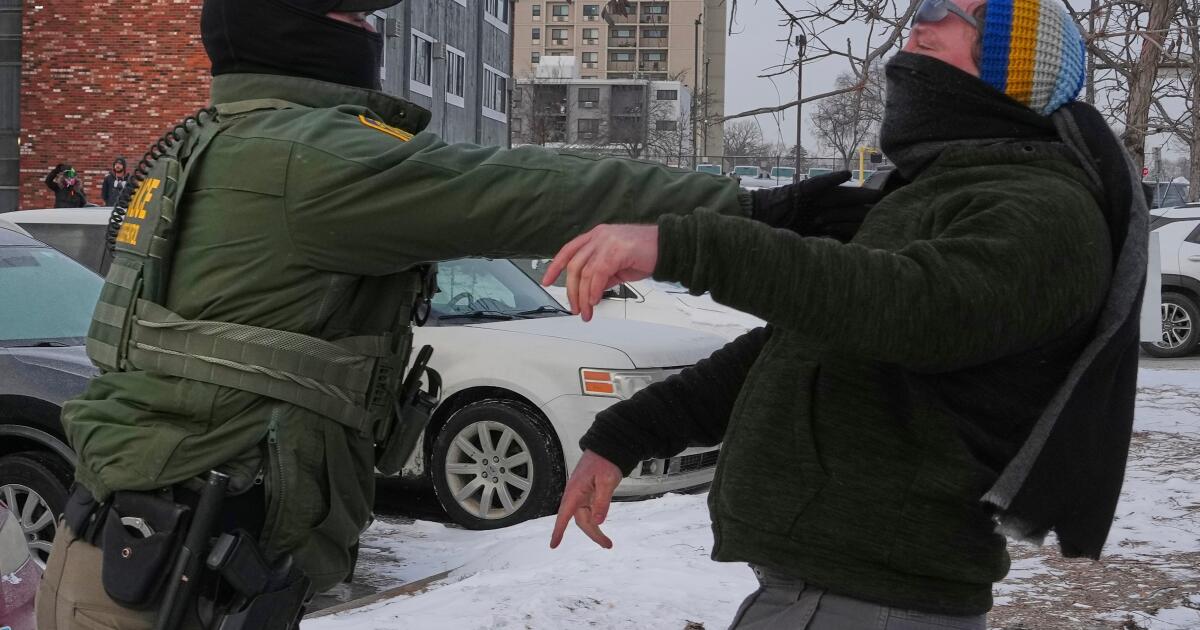 Politics1 week ago
Trump’s playbook falters in crisis response to Minneapolis shooting
-
Austin, TX3 days ago
TEA is on board with almost all of Austin ISD’s turnaround plans
-

 News1 week ago
Timeline: How the Shooting of Alex Jeffrey Pretti Unfolded

