Sports
‘We open with the Super Bowl’: The work behind Daytona’s 24-hour endurance race


DAYTONA BEACH, Fla. — Nodding out his window in a small, nondescript building inside Daytona International Speedway’s infield, Chris Baynes can smile about it now. But two decades ago, it was a serious matter demanding immediate attention, and it just so happened to be his first day on the job.
Baynes, DIS’ senior director of facility operations, is talking about his first race working the Rolex 24 at Daytona, a twice-around-the-clock endurance race that is one of the signature races on the motorsports calendar. The position he was in then and still holds now is all-encompassing, responsible for ensuring DIS’ infrastructure is fully operational whenever hosting an event, including the fencing and guardrails that surround the 3.56-mile, 12-turn road course.
On this day, a crash had severely damaged a section of guardrail, necessitating lengthy repairs, with Baynes overseeing the project. The damage was so extensive the race needed to be stopped completely, something that doesn’t normally happen during an endurance race. But this was an exception; a decision that fell on Baynes’ shoulders.
“I was sitting in this office, lights out, headset on, and I got a call, and I looked out that window right here,” Baynes said. “There’s a Porsche sitting on top of a guardrail, guardrail is (flapping) in the air and the Porsche is on fire.
“That was my first race being by myself in charge. Probably the most nervous I’ve ever been.”
So it goes when a track hosts any race, but particularly one that requires near-perfect operations for 24-plus hours before a crowd of tens of thousands. Accidents happen, things break, the unthinkable occurs — and it all can happen at any time of the day.
Throughout the just-completed Rolex 24 at Daytona, The Athletic spoke to several key individuals on everything that goes on behind the scenes to ensure a race of this scope goes off, navigating a stressful high-wire act in a coordinated effort while running on little sleep.
DIS is well-versed in hosting big events, and with the Rolex 24 now in its 63rd year, there is no shortage of experience and institutional knowledge. Preparations begin the previous fall, then commence in earnest once the calendar flips to the new year, effectively triggering the countdown to race day. Each department head has a detailed checklist, some over a hundred pages long, which they work through. Certain projects need to begin well in advance, while others can wait until the week of the event.
From the big (ensuring the track, fencing and guardrails are safe and the on-site care centers are properly staffed and equipped) to little facets (making sure every light bulb in every suite, restroom and public area are working efficiently), the idea is nothing is overlooked, a continual process of checking and rechecking.
“It’s a lot,” said Paul Bender, senior director of venue operations. “The grandstands and food service areas kind of sit idle for a few months, so things get shut down and things go to hibernation, so to speak. And we kind of gear things back up in January, so we don’t know what’s going to be broken and what’s not.”
On Bender’s phone, he can access the temperature for nearly every refrigerator and freezer on property used by the hospitality staff. Tthe convenience of technology helps him to know whether something is awry because any breakdown is potentially cataclysmic considering the volume of food that must be prepared.
Stocking these 100-plus combined walk-in refrigerators and freezers plus two “giant” refrigerators and freezers is the responsibility of Ty Bittner, the regional operations manager for Levy, a hospitality company that services DIS. In the weeks and days leading into the Rolex 24 weekend, orders will be placed with Levy, and Bittner is tasked with delivering 25,000 pounds of chicken, 15,000 hot dogs, 5,000 pounds of brisket and 5,000 pounds of short ribs, plus a multitude of other ingredients his 100 chefs on staff require to prepare full, multi-course meals that will be served in suites or grab-and-go food sold at concession stands.
The sun sets over the grandstands at DIS during this weekend’s Rolex 24. The endurance race demands a lot out of race teams — and the track’s staff. (James Gilbert / Getty Images)
And being this is a 24-hour race, coffee is essential. Lots and lots of coffee. Bittner estimates they’ll go through 2,000 gallons of coffee over the entirety of the weekend. (Forty-thousand non-alcoholic beverages will also be ordered.)
“We have a (big) wall with just sheets of paper of who’s getting what, where, and it’s called ‘The Timeline,’” Bittner said. “We know the suite is getting this at this time — you know this person has a nut allergy or doesn’t want gluten but wants this. We coordinate all that. … Everybody has their task. We get up in the morning, have coffees and go over what we’re doing. Here’s our plan, let’s go to it.”
While the challenges facing DIS on the food side aren’t necessarily unique compared to other large-scale sporting events, there is a difference, explains Bittner, who has extensive experience in hospitality working for the NBA’s Golden State Warriors and Sacramento Kings, and MLB’s Los Angeles Dodgers.
Many stick-and-ball sports get to ramp up and iron out any kinks before hosting a “big game.” But for the Rolex 24, Bittner notes, DIS doesn’t get the chance to hold an exhibition or regular-season game to prepare for a high-profile event. His staff essentially has to jump into the deep end of the pool.
“When you’ve got 20 to 40 games, hopefully you’ve gotten it right by your first one or two games,” Bittner said. “We don’t have that luxury. We open with the Super Bowl. We have one chance to get it right, so we make sure we get it right.”
Just as those competing on the track must sacrifice sleep, so too do many of DIS’ staff. The most valuable commodity during the Rolex 24 is the chance to grab even a couple of hours of rest.
Having to remain on duty doesn’t apply to general staff or emergency service workers employees, as they’re rotated out in shifts. For many others, however, that’s another story. This is an endurance race for them, too. And it’s not just the 24-hour duration but the time before and afterward, which can mean staying awake for 30-plus hours.
Among the operations staff, radio chatter is constant throughout the race to ensure everyone stays awake and alert. A logistics crew is dispatched at various points to all the firetrucks stationed around the property to swap out batteries, bring coffee and check in.
“You have to make sure they’re hydrated, make sure they’re fed, do radio checks and that kind of stuff,” said Troy Willrick, DIS’ managing director of emergency and event services. “With this race, it’s basically a 32-hour day.”
Those in charge aren’t required to stay awake throughout, it’s just that they admit they can’t entirely pull themselves away and detach due to the constant trepidation that something will happen that requires their immediate attention. Jennifer Young, DIS’ senior director of operations, whose duties include coordinating the master schedule down to the last second, laughs and shakes her head when asked how much sleep she gets.
Sure, she tries to go home and rest, though it’s essentially futile. Typically, she lays in bed, watches the race and monitors her phone.
“We had a windstorm come through (the weekend prior), and we lost a lot of our backstretch banners, so I had a panic moment for our partners,” Young said. “And so this week was a little stressful. I would love to sleep at night, but when you see the wind and you see those large green jumbo banners, I kind of get a little nervous. I’d love to sleep through the night, but I’m constantly worried.”

A sign at DIS has some fun with the 24-hour nature of the race. Keeping fans entertained around the clock is part of the added challenge for organizers. (James Gilbert / Getty Images)
DIS president Frank Kelleher takes it a step further, having accepted that he doesn’t feel comfortable leaving the facility. For the duration of the week leading into the race and through the race weekend itself, he moves into a motorhome located in the infield so he’s constantly accessible.
“We now have an espresso machine in our infield ops (building),” Kelleher said. “We have a soft serve ice cream machine. We’ve got a popcorn machine. I just found a soft pretzel machine that I think I’m going to borrow and bring it into infield ops. This is not a weekend where you’re counting calories, carbs or coffee intake.”
The “zombie effect” is what Bender refers to it as. It’s that time of night when sleep deprivation sets in, something he often encounters in fans trying to stay awake for all 24 hours. It’s common for Bender to wander the concourse during the wee hours and see someone trying to sleep wherever they can find a spot to crash.
“People are just trying to hang on, and they’re looking for any place where they could just somewhat lay their head down, something soft,” Bender said. “I’ll find a couple of those people wandering around just looking for a spot, or I’ll be walking down the concourse and look over and someone is tucked up in a corner with their backpack, just waiting for the sun to come up.”
Concerns extend beyond equipment like an elevator getting stuck, an escalator breaking down or a pipe springing a leak. (Just in case, DIS has a specialized service team stationed on-site on standby for all 24 hours.) There is also Daytona’s fickle weather to contend with that can vacillate between hot during the day to frigid cold at night, not to mention the persistent threat of rain.
Willrick doesn’t go more than a couple of minutes without checking the most up-to-date weather report. Should a storm roll in bringing lightning, or worse, it is his responsibility to put events in motion to stop the race, clear spectator areas and send out advisories instructing everyone to seek shelter.
“I am constantly checking, all day long,” Willrick said. “All day.”
The 2025 edition of the Rolex 24 was highly competitive, culminating with Penske Porsche celebrating a second consecutive victory.
But it wasn’t just Penske celebrating Sunday afternoon. So too were operational folks whose work ensured the venue also successfully completed DIS’ longest race of the year.
“I’m the guy behind the scenes that makes sure that everybody has a good time,” Bender said. “I make sure that escalators are working; I got 47 escalators and 16 elevators and a freight elevator. There’s a lot of moving parts. (Daytona) is nine-tenths of a mile from one end to the other, and 104,000 seats. That’s a big gig. So I take a lot of pride in that.”

GO DEEPER
‘It’s never-ending out there’: Behind the scenes at a 24-hour race with an F1 champ
(Top photo of cars racing under fireworks on Saturday during the Rolex 24 at Daytona: James Gilbert / Getty Images)



NEWYou can now listen to Fox News articles!
Toronto Maple Leafs No. 1 draft pick Gavin McKenna has already been on the ice with the team as it held its development camp this week, but the highly-touted rookie is going to have to make a big change for this fall.
His number.
When he was playing for the Western Hockey League’s Medicine Hat Tigers and then again at Penn State this past season, McKenna wore the No. 72.
THE TALLEST PLAYER EVER SELECTED IN THE NHL BLEW MINDS IN HIS DEBUT WITH THE SAN JOSE SHARKS
Toronto Maple Leafs top pick Gavin McKenna has revealed that he’ll be opting for a new number for his rookie campaign. (Photo by Brian Babineau/NHLI via Getty Images)
The expectation was that McKenna would wear No. 72 with the Maple Leafs, and he did so this week at development camp. Plenty of fans have also already ordered No. 72 jerseys with his name on the back.
On most rosters, No. 72 is unique enough that he wouldn’t run into any issues wearing it. However, on July 1, the Leafs signed two-time Stanley Cup champion goaltender Sergei Bobrovsky, who has worn No. 72 for most of his career, except during his first two seasons with the Philadelphia Flyers, when he wore No. 35.
So, some were wondering how this would work out. Would the Leafs want their new franchise player to get his pick of the number litter, or would they defer to a two-time Vezina winner?
FLYERS MAKE STUNNING OFFER SHEET FOR DUCKS STAR LEO CARLSSON IN BLOCKBUSTER NHL MOVE
Gavin McKenna wore No. 72 in juniors, as well as last season at Penn State. (Photo by Richard T Gagnon/Getty Images)
Well, it turns out that McKenna will be the one swapping numbers, and he’ll be switching to No. 92 this season.
McKenna had to get creative here because the obvious number changes were a no-go in Toronto. Adding 7 and 2 would be 9, but that was retired in honor of Charlie Conacher and Ted Kennedy.
Another option would’ve been to flip the digits and go with No. 27, but that was retired in honor of Frank Mahovlich and Darryl Sittler.
ALEX OVECHKIN SIGNS A ONE-YEAR DEAL TO RETURN FOR ANOTHER NHL SEASON WITH THE CAPITALS
So, 92 it is.
However, McKenna reached out to one of the three previous players to wear the number, Jeff O’Neill, to ask whether he was comfortable with him using it.
It’s fair to say he was down with the idea.
CLICK HERE TO DOWNLOAD THE FOX NEWS APP
McKenna will be a key piece of a Maple Leafs team that is looking to bounce back after a nightmare 2025-26 campaign that saw them finish last in the Atlantic Division.
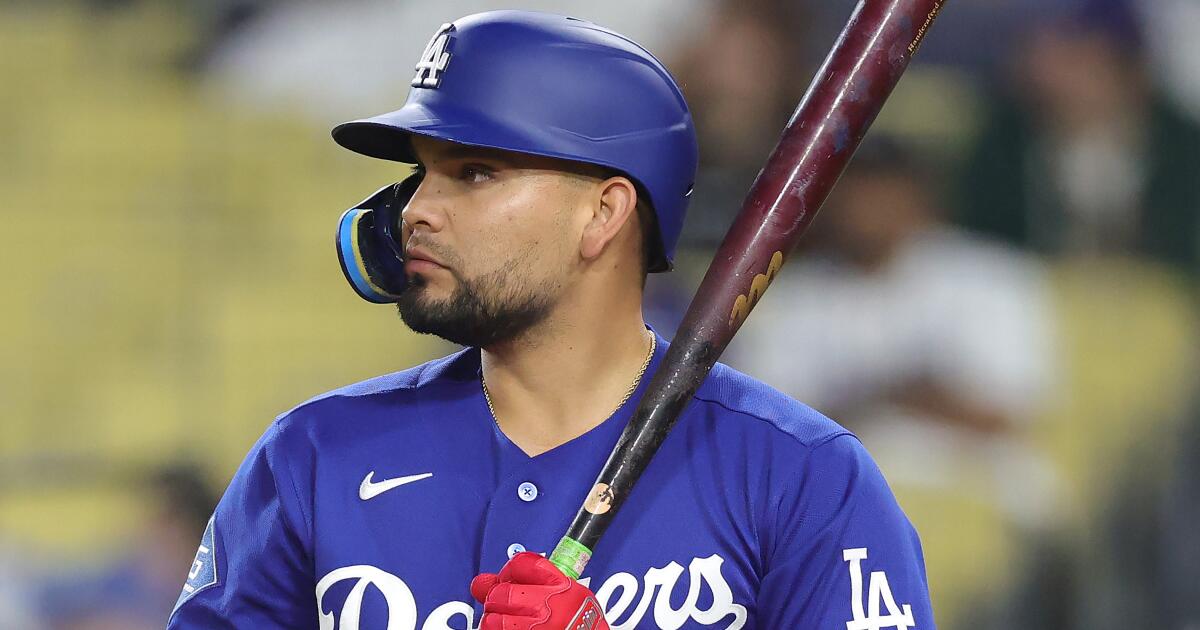
It’ll be the culmination of nine minor-league seasons. But Eliezer Alfonzo‘s major-league debut on Sunday won’t include his family watching from Dodger Stadium.
Alfonzo’s younger sister, Eliana, and stepmother, Patricia, have been missing since last month when earthquakes caused widespread devastation in his home country of Venezuela.
“I’ve been trying to support my dad a lot, every day talking to him, trying to be with him,” Alfonzo said of the elder Eliezer Alfonzo, a retired major-league catcher. “It’s a little tough from here because I would like to be there with him, supporting him every day.”
His father, of course, would love to be in attendance for his son’s debut. He told him as much when he heard the Dodgers were calling him up.
The Dodgers switched their backup catchers Saturday, optioning Chuckie Robinson. They saw an opportunity to give Alfonzo some runway behind Dalton Rushing, with starting catcher Will Smith’s stay on the injured list expected to extend through the All-Star break.
The elder Eliezer Alfonzo, however, is doing whatever he can to locate his wife and daughter. Their dog was found alive, which gave the younger Eliezer Alfonzo hope.
“We’ve just gotta stay together as a family, as a country,” Alfonzo said. “Because I feel like we’re a beautiful country, we’re a really beautiful people over there. It’s not just about my family, it’s all families that have lost people already. But we’ve got hope. We just pray, we ask God to give them back to us alive.”
Alfonzo’s locker in the clubhouse is next to countryman Miguel Rojas’ stall. Rojas’ wife, Mariana, and their two children were in Venezuela, planning to renew Mariana’s passport and seek Venezuelan citizenship for their children, when the earthquakes hit. They managed to stay safe and have returned to the U.S.
“I just want to be here for him,” Rojas said. “At the end of the day, that’s the best thing I can do for him, is being a good teammate and being a friend for him. Because I know there’s going to be ups and downs. He’s going to have a lot of time to be caught [up] in baseball, and that’s going to probably take his mind away from stuff. But sometimes he’s probably going to feel weak, and he’s going to start thinking about his family. So I’m going to be here, I’m right next to him. And that’s what I told him.”
Rojas, who played against the elder Eliezer Alfonzo for years in Venezuela, reached out Saturday morning and promised him he’d save the ball from his son’s first major-league hit.
Sports
Kylian Mbappé’s seventh goal of the World Cup lifts France past Paraguay in physical Round of 16 match

NEWYou can now listen to Fox News articles!
The United States may not have been in action on Independence Day, but France — who fittingly played an important role in the Revolutionary War — was on the pitch in Philadelphia against Paraguay in a massive Round of 16 clash for a trip to the quarterfinals.
It was a hot day in the birthplace of our nation, and that made things difficult for both teams in more ways than one.
While Paraguay is a great squad, they were significant underdogs against a heavily favored French team led by superstar Kylian Mbappé, who has been lighting it up this tournament.
THIS ‘AMERICA THE BEAUTIFUL’ RENDITION BEFORE THE FRANCE VS PARAGUAY MATCH WILL GIVE YOU GOOSEBUMPS
French and Paraguayan players get into a shoving match during their Round of 16 match on Saturday in Philadelphia. (Kyle Ross-Imagn Images)
Obviously, the heat itself is a factor, but it also made for a slower pitch, something that was believed to play into the hands of Paraguay.
However, most of the action in the first half was played on their end as France put the pressure on through the first half hour of the match.
It was intense, and that intensity boiled over in the 35th minute with some pushing and shoving after Mbappé and Paraguay’s Andrés Cubas started a wild shoving match.
VAR DENIES CROATIA’S GAME-TYING GOAL AS CRISTIANO RONALDO LEADS PORTUGAL TO ROUND OF 16
But while the intensity ramped up — and stayed high for pretty much the entire game — Paraguay weathered the storm and had every reason to feel good about reaching halftime with the game scoreless.
France got some more scoring opportunities in the early part of the second half, including a near-breakaway for Mbappé.
France’s Kylian Mbappe scored the go-ahead and ultimately game-winning goal against Paraguay on a penalty kick. (James Lang-Imagn Images)
In the 67th minute, France was awarded a penalty kick for a foul against Desire Doue that had to go to VAR for review, and it was Mbappé who took it.
MESSI, ARGENTINA AVOID A SHOCKING UPSET IN WILD KNOCKOUT STAGE MATCH AGAINST CAPE VERDE
Mbappé has tended to do most of his damage in the second half, and that trend continued here with him drilling the penalty past Paraguay goaltender Orlando Gill.
That was his 19th career World Cup goal, and his seventh of this tournament alone, tying him with Argentina’s Lionel Messi for the tournament lead.
Paraguay seemed to fade after the Mbappé goal, but turned it on again late, forcing Mike Maignan to make his first save of the day about 89 and a half minutes into the match.
CLICK HERE TO DOWNLOAD THE FOX NEWS APP
It seemed like Paraguay’s plan was to try and get a rise out of the French, and they succeeded in drawing three yellow cards. In fact, they even tried to keep that going after the match with players meeting near midfield for some more pushing and shoving.
But France is moving on, and they will take on Morocco in a quarterfinal match on Thursday in Boston.
-

 Health4 minutes ago
July 4 heat delays America 250 celebration as State Fair guests share love of USA
-

 Sports7 minutes ago
Toronto Maple Leafs top pick Gavin McKenna reveals that he’s changing his jersey number
-

 Technology12 minutes ago
China’s robot-run hotel opens to public in 2027
-
 Business19 minutes ago
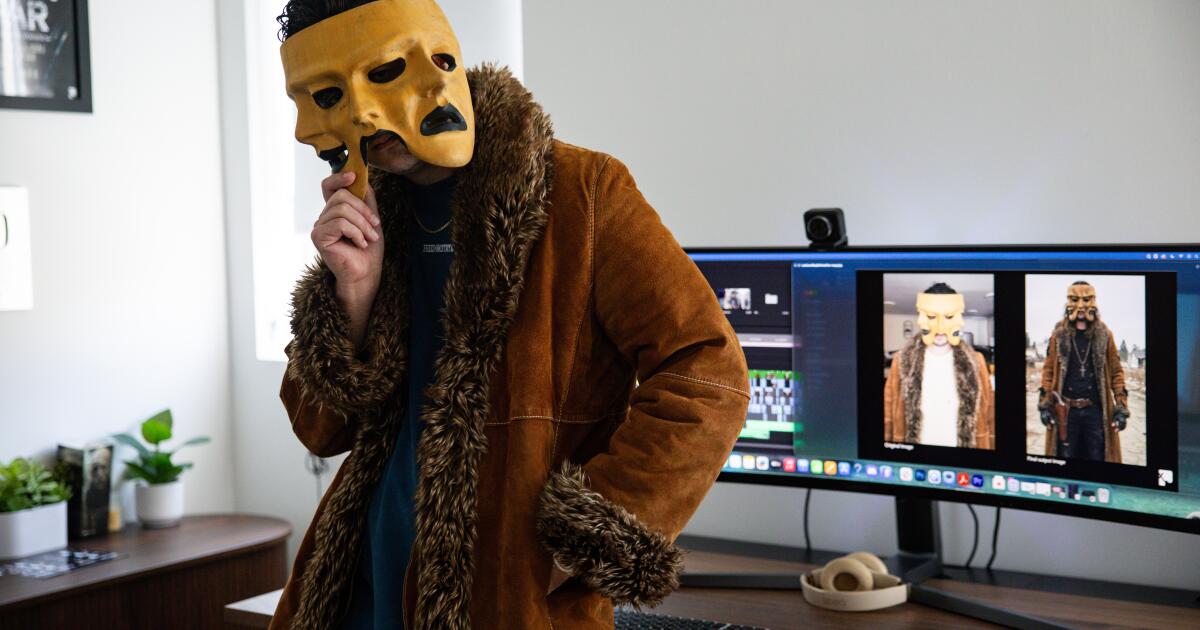
China-backed AI tool behind fake Brad Pitt fight making Hollywood inroads
-
 Entertainment22 minutes ago
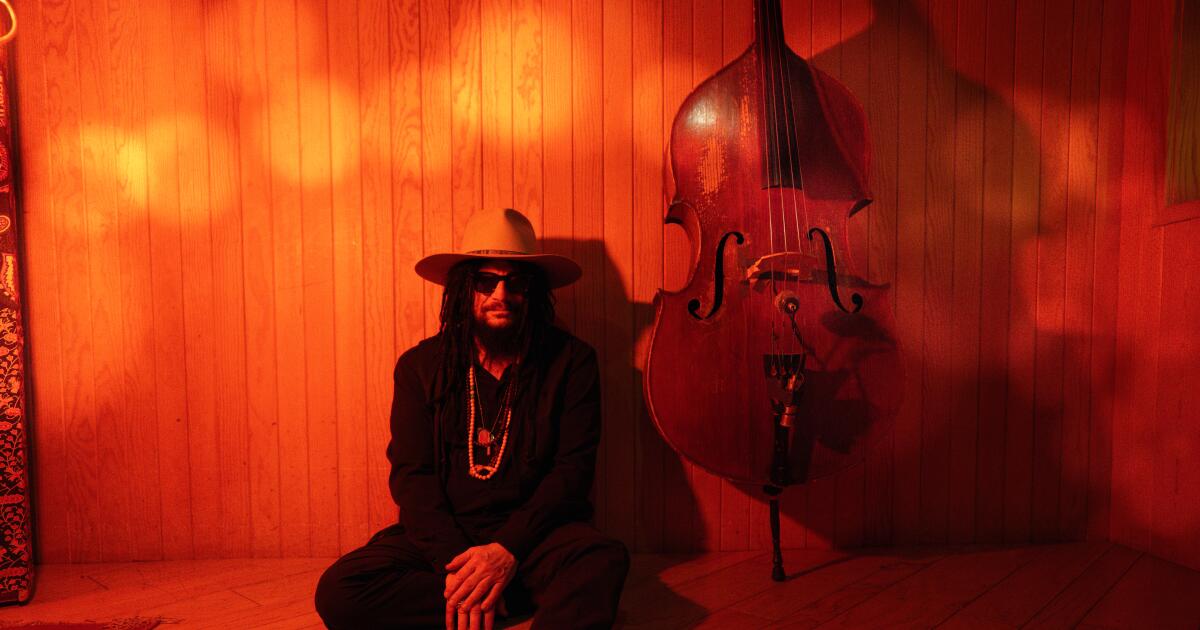
Don Was produced the Rolling Stones, Bob Dylan and Ozzy. At 73, he found his voice in Detroit — and the Dead
-
 Politics34 minutes ago
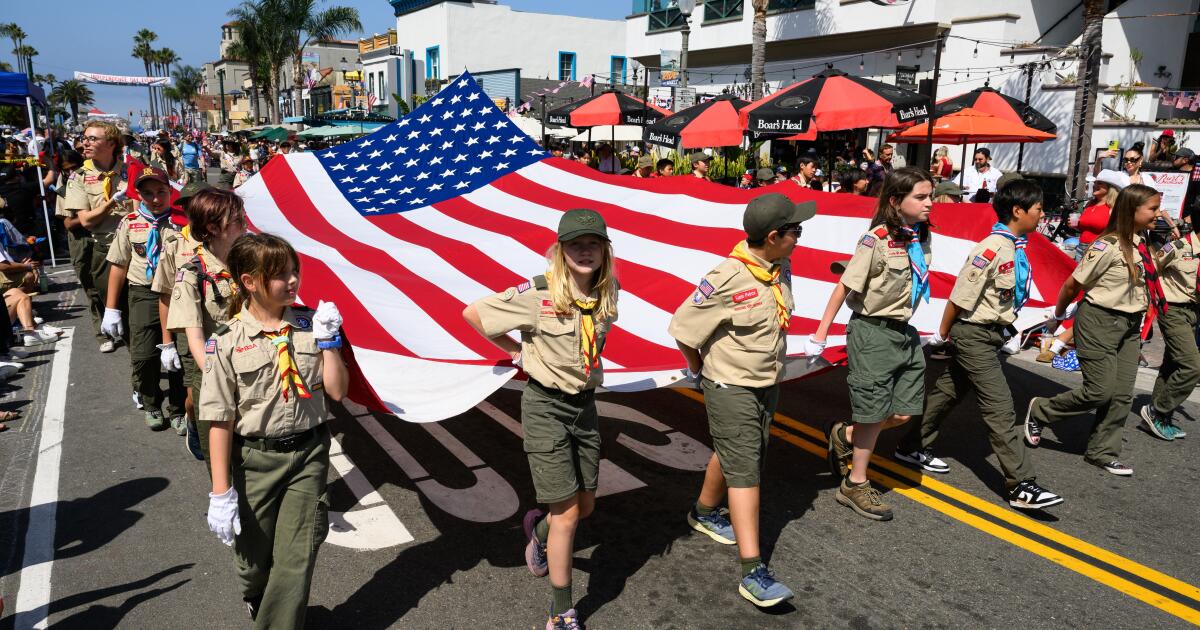
Commentary: Happy Birthday, America! You’ve weathered another rough year
-
Sports42 minutes ago
Dodgers’ Eliezer Alfonzo praying his sister and stepmother will be found in Venezuela
-

 World52 minutes ago
Reform UK’s Farage failed to disclose funds from convicted criminal: Report

