Sports
Tennis players, the ATP, WTA and the Grand Slams are on a collision course as season begins


It became clear that the fractured dysfunction that courses through professional tennis was getting worse on a bright November morning in Turin, Italy.
Andrea Gaudenzi, the chairman of the ATP Tour who views himself as the sport’s ultimate mover and shaker, was holding court in the sparkling hospitality dining area at the 2024 men’s Tour Finals before the room filled for lunch with corporate guests. White tablecloths, crystal stemware and silver flatware covered the tables.
About 100 yards away in the Inalpi Arena, a couple of exercise bikes and some rubber mats jammed into the dark corner of a basement corridor comprised the warmup and cooldown area for the players who are the lifeblood of men’s tennis. Just two months before, the men’s game’s most important young star, Carlos Alcaraz, had added his voice to the chorus of complaints about the inability of the people in charge of the sport to fix the 11-month, globe-crossing schedule.
“Probably, they are going to kill us in some way,” he said in a news conference at the Laver Cup in Berlin.
Players on both the ATP and WTA Tours spent most of the year in that chorus, largely lamenting the expansion of most 1,000-level tournaments — the rung below the four Grand Slams — from nine days to 12. The essentially two-week events reduce unbroken time off; the tours say that having a day of rest between matches in-tournament makes up for it. In 2025, just two of nine ATP Masters 1000 tournaments will finish in one week and players must play eight of them. On the WTA Tour, three of 10 are shorter; all 10 are mandatory.
In Turin, Gaudenzi had his chance to chime in. There is flexibility and space for change, he said. There was a but.
“We also have to consider that, if you do that, you’re destroying the product.”
Gaudenzi, who played in the 1990s, also lamented that five-set tennis matches are now reserved for Grand Slams.
“We started taking off, taking off, taking off from the product,” he said.
“Taking away from that product, in my opinion, is the wrong strategy. We have to take away somewhere else. Our commitment at the Masters is eight tournaments. Eight tournaments per year is not a lot.”
So says the man in the suit in the hospitality suite.
Andrea Gaudenzi with compatriot Jannik Sinner at the 2024 ATP Tour Finals. (Valerio Pennicino / Getty Images)
Players do not agree — even Stefanos Tsitsipas, who not so long ago sat down with Gaudenzi for a video promoting the changes to Masters 1000 tournaments. “The two-week Masters 1000s have turned into a drag,” the Greek wrote on X in November.
Alexander Zverev, a member of the ATP Player Council who was also in Turin, said he was already focused on 2025 and described his results as secondary to his preparations for the next season. He was spending a good hour practicing after his matches because the off-season offers so little time for rest and preparation.
Gaudenzi had thoughts on this, too.
“You need as a player a couple of weeks of holiday, a couple of weeks of rebuilding your body,” he said, “and then another couple of weeks where you start hitting the ball before you go to competition and head out towards, you know, Middle East and Australia.”
A reality check. Baseball players finish at the latest by the first week in November. They report to spring training in mid-February. NFL Players are done by early February. They have a handful of off-season workout weeks, but training camp begins in July. NBA players are done in mid-June. The vast majority finish by mid-May. Training camp begins at the end of September. The best golfers are largely done at the end of September and don’t start up again until January.
Gaudenzi was pitching a two-week holiday at the end of a nearly 11-month season, plus, potentially, the inclusion of a new 1000-level tournament to open the season in Riyadh, Saudi Arabia, one week before the Australian Open and eight time zones away from Melbourne. It was this concept that sent the sport into turmoil in 2023, exposing the fissures that make it fractured and the inertia that keeps it so.

GO DEEPER
How to fix tennis
When Gaudenzi spoke among the silverware, more than a year had passed since tennis’ latest reckoning with its endless schedule, its nonsensical governing structure, and the competitive infrastructure that even devout fans sometimes struggle to understand. This exercise occurs roughly every 10 to 15 years.
Through an endless string of meetings, phone calls, negotiations, and sidebar dealings among allies and enemies in the alphabet soup of nine organizations that rule the sport, tensions and disagreements appeared to be giving way to a consensus around a more streamlined tour and schedule then billed as the ‘Premier Tour‘. It would take in the four Grand Slams and 10 further events that would always have the best ATP and WTA players in the same city at the same time, all with the same prestige as the current 1000-level tournaments. The fractured professional ranks of tennis would head in the direction of Formula One, offering fewer events and more money, but locking out much of the globe from the sport.
That was meant to be proposed in November 2023. It was pushed to March 2024, when meetings and a fractious presentation in Indian Wells, California, revealed that the commercial underpinnings of the plan did not yet exist. By April 2024, in London and Madrid, the finances were there, with the leaders of the Australian, French and U.S. Opens and Wimbledon pledging to commit a portion of their lucrative media and sponsorship rights to the premium tour plan. The ATP and WTA were not enthusiastic, with their 250- and 500-level events essentially relegated to the minor leagues under the proposal.
For the rest of the season, there were many discussions but little more than detente. The players played more two-week 1000s; the Cincinnati and Canadian Opens prepared to expand to join their ranks from 2025. The ATP and WTA counter-proposals to the Grand Slams’ plan, hinging on an event for and sizeable investment from Saudi Arabia along with a commercial merger between the two tennis organizations, stalled too.
And then by the end of the year, as Gaudenzi and Alcaraz looked at the same sky, one said it was blue and the other said it was gray. Nearly a year and a half had passed since the turmoil began and everyone was back where they started. By some measures, a few steps behind that.
GO DEEPER
More prize money, less tennis, equal pay: Grand Slams launch premium tour offensive
As tennis traveled across the globe while its own inertia sapped the momentum at the top of the sport, the ATP and WTA Tours and their players spent much of 2024 engaged in a perennial shadowbox.
It was as early as April that Zverev, the highest-ranked player with some sway inside ATP meetings, said in an interview at the Madrid Open: “Four weeks is not enough for a body and for an athlete to recover, but also to get ready.”
“Days between matches are not recovery days, they’re not days that you’re resting.”
Iga Swiatek, then the world No. 1, had raised similar concerns, calling the switch to the 12-day events a big problem. The tours dug in on their increased prize money and commercial value to tennis, contending that guaranteeing top-ranked players makes selling tickets and securing money from broadcast and sponsorship easier. When criticized for the disparity in prize money between Sinner and Sabalenka in 2024, the Cincinnati Open attributed the difference to broadcast and sponsorship.
With those financial promises came stringent and, at times, arcane rules, which in the autumn helped Aryna Sabalenka take over the world No. 1 ranking because Swiatek lost points for missing the quota of six mandatory 500-level tournaments, as well as much of the Asian hard-court swing.
It was later revealed that Swiatek was sidelined for the latter because she was appealing a provisional suspension after a positive doping test, but it was the points deductions, imposed without explanation overnight into Monday, October 21, that first robbed the sport of the spectacle of Sabalenka and Swiatek battling for its top ranking.
“These rules have been changed without us even knowing about them,” Swiatek said during a news conference at the U.S. Open. “These decisions about mandatory tournaments were shown to us after. We spoke to WTA about it: that we want to at least be in the loop. I don’t think our sport is going in the right direction because of that.”

Iga Swiatek is one of the players to criticize changes to the WTA Tour rules. (Valerio Pennicino / Getty Images)
The WTA said it discussed the changes with members of the Players Council before enacting them. The organization’s new chief executive Portia Archer, who replaced Steve Simon, is still in her first months on the job and it is too soon to assess the impact of any changes she has made or has planned.
In a broader context, women’s tennis continues to struggle with something of a self-inflicted identity crisis. There is plenty of work for the WTA to do, from promotion to media management. The French Open largely refuses to schedule a women’s match for the prestigious Court Philippe Chatrier night session. The ITF held this year’s Billie Jean King Cup Finals in a pop-up bubble in the parking lot of the arena for the Davis Cup.
More broadly, vast swaths of empty seats at women’s tournaments during so many weeks of the season make the sport look less than important when television viewers happen upon it. A potential merger with the ATP that might provide some more juice on the commercial side in sponsorship and media sales remains a long-talked-about work in progress, as does the looming but far-from-confirmed 1,000-level combined event for Saudi Arabia.
Though top men’s and women’s players descended on Riyadh this season — the former for the Six Kings Slam exhibition and the latter for the first of three WTA Tour Finals there — the biggest asset of Saudi Arabia’s three-headed push into tennis remains just an idea, with uncertainty on both sides over the tournament’s size, timing and financing. It is still not expected before 2027 at the earliest, as was the case in October this year.
With the ‘Premier Tour’ in suspension, three of the four Grand Slams have continued their evolution into three-week events, building high-profile exhibitions and boosting up qualifying matches on-site during the week before the main draw. Wimbledon has made progress in joining their ranks by securing planning permission to add 39 courts — but they won’t be built for several years and the approval is under challenge from community groups. Everything in this sport takes time.
More challenges are in the works. Lawyers working with the Professional Tennis Players Association, co-founded by Novak Djokovic, have spent 2024 scouring the sport’s rules and structure, preparing for a possible anti-trust litigation with the potential to remake the sport. It has exchanged stern letters with the International Tennis Integrity Agency, which controls anti-doping regulations, in the wake of cases involving men’s world No. 1 Jannik Sinner and Swiatek, with allegations including officials acting outside the norms of due process. The ITIA has denied those allegations.
One of those antitrust lawyers, James Quinn, who has worked on suits against the NBA and the NFL, described the structure of tennis as “classic monopolization.”
It’s not hard to understand why tennis is in this position. Each of the organizations that influence the structure and oversight of the sport has its own interests to protect.
The Grand Slams want to maintain and expand their primacy. The 1000-level tournament owners have lobbied Gaudenzi, Archer and Simon not to devalue their events by giving in to player pressure on their length. Those tournaments fought to get those extra days as they agreed to raise prize money, with the events in Rome, Cincinnati and Canada pledging to equalize the women and the men by 2027. Those extra days mean selling extra tickets for extra fans who spend extra money on those tickets and at the events, as well as extra content to sell to networks and streamers.

The Cincinnati Open in Ohio will expand to two weeks for the 2025 season. (Al Bello / Getty Images)
Owners of the 250- and 500-level tournaments want to make sure Gaudenzi, Archer and Simon don’t agree to a premium tour and devalue their events. The International Tennis Federation, which controls the national team tournaments, the Billie Jean King Cup and the Davis Cup, is fighting to keep its spots on the calendar. It’s already not pleased about being right at the end.
Then, for the players who create the product, there’s the fact that they are given a smaller percentage of revenues than their counterparts in other sports. Those outside the top 50 or so are often a few bad months from having to think about cutting back on coaches and support staff. They get paid to play. There isn’t a lot of short-term incentive to rest. For 2025, ATP players in the top 30 will have to play five 500-level events to qualify for the bonus pool attached to those tournaments, instead of four. That bonus pool is growing to almost $3million (£2.4m) from just over $1m.
Add it all up and there is no shortage of intransigence and little room for optimism.
The result, at least for the time being, is something of a circular stand-off, with every side pointing at everyone else and the sound of revolution feeling more and more inevitable. For now, there is silence.
(Top photos: Getty Images; design: Eamonn Dalton)



NEWYou can now listen to Fox News articles!
Toronto Maple Leafs No. 1 draft pick Gavin McKenna has already been on the ice with the team as it held its development camp this week, but the highly-touted rookie is going to have to make a big change for this fall.
His number.
When he was playing for the Western Hockey League’s Medicine Hat Tigers and then again at Penn State this past season, McKenna wore the No. 72.
THE TALLEST PLAYER EVER SELECTED IN THE NHL BLEW MINDS IN HIS DEBUT WITH THE SAN JOSE SHARKS
Toronto Maple Leafs top pick Gavin McKenna has revealed that he’ll be opting for a new number for his rookie campaign. (Photo by Brian Babineau/NHLI via Getty Images)
The expectation was that McKenna would wear No. 72 with the Maple Leafs, and he did so this week at development camp. Plenty of fans have also already ordered No. 72 jerseys with his name on the back.
On most rosters, No. 72 is unique enough that he wouldn’t run into any issues wearing it. However, on July 1, the Leafs signed two-time Stanley Cup champion goaltender Sergei Bobrovsky, who has worn No. 72 for most of his career, except during his first two seasons with the Philadelphia Flyers, when he wore No. 35.
So, some were wondering how this would work out. Would the Leafs want their new franchise player to get his pick of the number litter, or would they defer to a two-time Vezina winner?
FLYERS MAKE STUNNING OFFER SHEET FOR DUCKS STAR LEO CARLSSON IN BLOCKBUSTER NHL MOVE
Gavin McKenna wore No. 72 in juniors, as well as last season at Penn State. (Photo by Richard T Gagnon/Getty Images)
Well, it turns out that McKenna will be the one swapping numbers, and he’ll be switching to No. 92 this season.
McKenna had to get creative here because the obvious number changes were a no-go in Toronto. Adding 7 and 2 would be 9, but that was retired in honor of Charlie Conacher and Ted Kennedy.
Another option would’ve been to flip the digits and go with No. 27, but that was retired in honor of Frank Mahovlich and Darryl Sittler.
ALEX OVECHKIN SIGNS A ONE-YEAR DEAL TO RETURN FOR ANOTHER NHL SEASON WITH THE CAPITALS
So, 92 it is.
However, McKenna reached out to one of the three previous players to wear the number, Jeff O’Neill, to ask whether he was comfortable with him using it.
It’s fair to say he was down with the idea.
CLICK HERE TO DOWNLOAD THE FOX NEWS APP
McKenna will be a key piece of a Maple Leafs team that is looking to bounce back after a nightmare 2025-26 campaign that saw them finish last in the Atlantic Division.
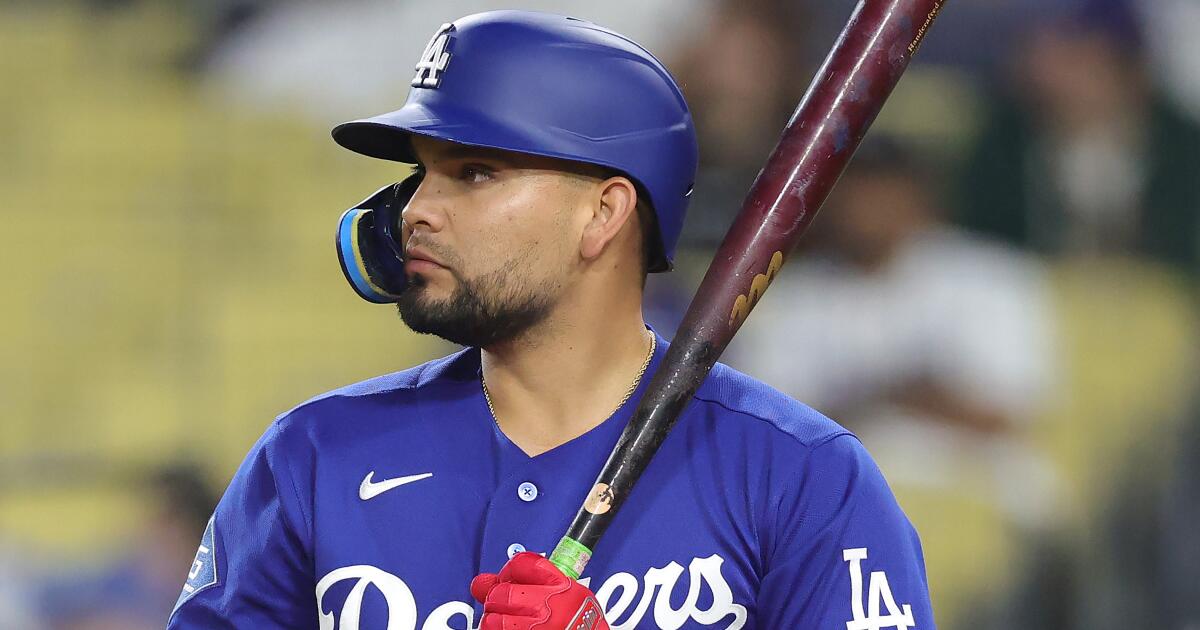
It’ll be the culmination of nine minor-league seasons. But Eliezer Alfonzo‘s major-league debut on Sunday won’t include his family watching from Dodger Stadium.
Alfonzo’s younger sister, Eliana, and stepmother, Patricia, have been missing since last month when earthquakes caused widespread devastation in his home country of Venezuela.
“I’ve been trying to support my dad a lot, every day talking to him, trying to be with him,” Alfonzo said of the elder Eliezer Alfonzo, a retired major-league catcher. “It’s a little tough from here because I would like to be there with him, supporting him every day.”
His father, of course, would love to be in attendance for his son’s debut. He told him as much when he heard the Dodgers were calling him up.
The Dodgers switched their backup catchers Saturday, optioning Chuckie Robinson. They saw an opportunity to give Alfonzo some runway behind Dalton Rushing, with starting catcher Will Smith’s stay on the injured list expected to extend through the All-Star break.
The elder Eliezer Alfonzo, however, is doing whatever he can to locate his wife and daughter. Their dog was found alive, which gave the younger Eliezer Alfonzo hope.
“We’ve just gotta stay together as a family, as a country,” Alfonzo said. “Because I feel like we’re a beautiful country, we’re a really beautiful people over there. It’s not just about my family, it’s all families that have lost people already. But we’ve got hope. We just pray, we ask God to give them back to us alive.”
Alfonzo’s locker in the clubhouse is next to countryman Miguel Rojas’ stall. Rojas’ wife, Mariana, and their two children were in Venezuela, planning to renew Mariana’s passport and seek Venezuelan citizenship for their children, when the earthquakes hit. They managed to stay safe and have returned to the U.S.
“I just want to be here for him,” Rojas said. “At the end of the day, that’s the best thing I can do for him, is being a good teammate and being a friend for him. Because I know there’s going to be ups and downs. He’s going to have a lot of time to be caught [up] in baseball, and that’s going to probably take his mind away from stuff. But sometimes he’s probably going to feel weak, and he’s going to start thinking about his family. So I’m going to be here, I’m right next to him. And that’s what I told him.”
Rojas, who played against the elder Eliezer Alfonzo for years in Venezuela, reached out Saturday morning and promised him he’d save the ball from his son’s first major-league hit.
Sports
Kylian Mbappé’s seventh goal of the World Cup lifts France past Paraguay in physical Round of 16 match

NEWYou can now listen to Fox News articles!
The United States may not have been in action on Independence Day, but France — who fittingly played an important role in the Revolutionary War — was on the pitch in Philadelphia against Paraguay in a massive Round of 16 clash for a trip to the quarterfinals.
It was a hot day in the birthplace of our nation, and that made things difficult for both teams in more ways than one.
While Paraguay is a great squad, they were significant underdogs against a heavily favored French team led by superstar Kylian Mbappé, who has been lighting it up this tournament.
THIS ‘AMERICA THE BEAUTIFUL’ RENDITION BEFORE THE FRANCE VS PARAGUAY MATCH WILL GIVE YOU GOOSEBUMPS
French and Paraguayan players get into a shoving match during their Round of 16 match on Saturday in Philadelphia. (Kyle Ross-Imagn Images)
Obviously, the heat itself is a factor, but it also made for a slower pitch, something that was believed to play into the hands of Paraguay.
However, most of the action in the first half was played on their end as France put the pressure on through the first half hour of the match.
It was intense, and that intensity boiled over in the 35th minute with some pushing and shoving after Mbappé and Paraguay’s Andrés Cubas started a wild shoving match.
VAR DENIES CROATIA’S GAME-TYING GOAL AS CRISTIANO RONALDO LEADS PORTUGAL TO ROUND OF 16
But while the intensity ramped up — and stayed high for pretty much the entire game — Paraguay weathered the storm and had every reason to feel good about reaching halftime with the game scoreless.
France got some more scoring opportunities in the early part of the second half, including a near-breakaway for Mbappé.
France’s Kylian Mbappe scored the go-ahead and ultimately game-winning goal against Paraguay on a penalty kick. (James Lang-Imagn Images)
In the 67th minute, France was awarded a penalty kick for a foul against Desire Doue that had to go to VAR for review, and it was Mbappé who took it.
MESSI, ARGENTINA AVOID A SHOCKING UPSET IN WILD KNOCKOUT STAGE MATCH AGAINST CAPE VERDE
Mbappé has tended to do most of his damage in the second half, and that trend continued here with him drilling the penalty past Paraguay goaltender Orlando Gill.
That was his 19th career World Cup goal, and his seventh of this tournament alone, tying him with Argentina’s Lionel Messi for the tournament lead.
Paraguay seemed to fade after the Mbappé goal, but turned it on again late, forcing Mike Maignan to make his first save of the day about 89 and a half minutes into the match.
CLICK HERE TO DOWNLOAD THE FOX NEWS APP
It seemed like Paraguay’s plan was to try and get a rise out of the French, and they succeeded in drawing three yellow cards. In fact, they even tried to keep that going after the match with players meeting near midfield for some more pushing and shoving.
But France is moving on, and they will take on Morocco in a quarterfinal match on Thursday in Boston.
-

 Health6 minutes ago
July 4 heat delays America 250 celebration as State Fair guests share love of USA
-

 Sports9 minutes ago
Toronto Maple Leafs top pick Gavin McKenna reveals that he’s changing his jersey number
-

 Technology14 minutes ago
China’s robot-run hotel opens to public in 2027
-
 Business21 minutes ago
China-backed AI tool behind fake Brad Pitt fight making Hollywood inroads
-
 Entertainment24 minutes ago
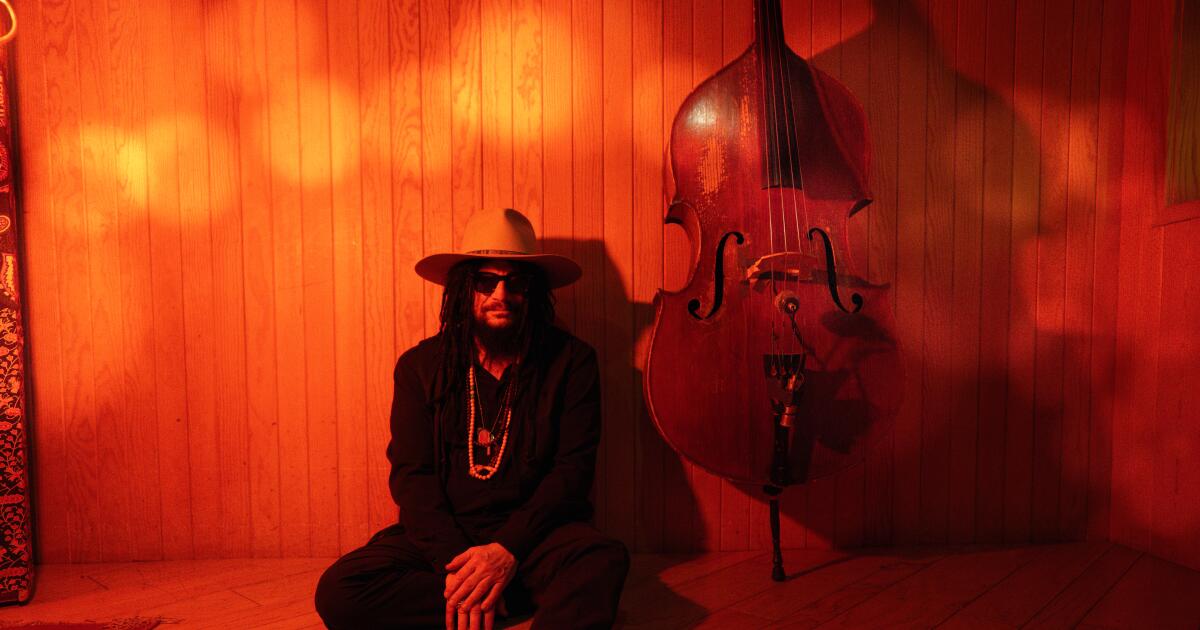
Don Was produced the Rolling Stones, Bob Dylan and Ozzy. At 73, he found his voice in Detroit — and the Dead
-
 Politics36 minutes ago
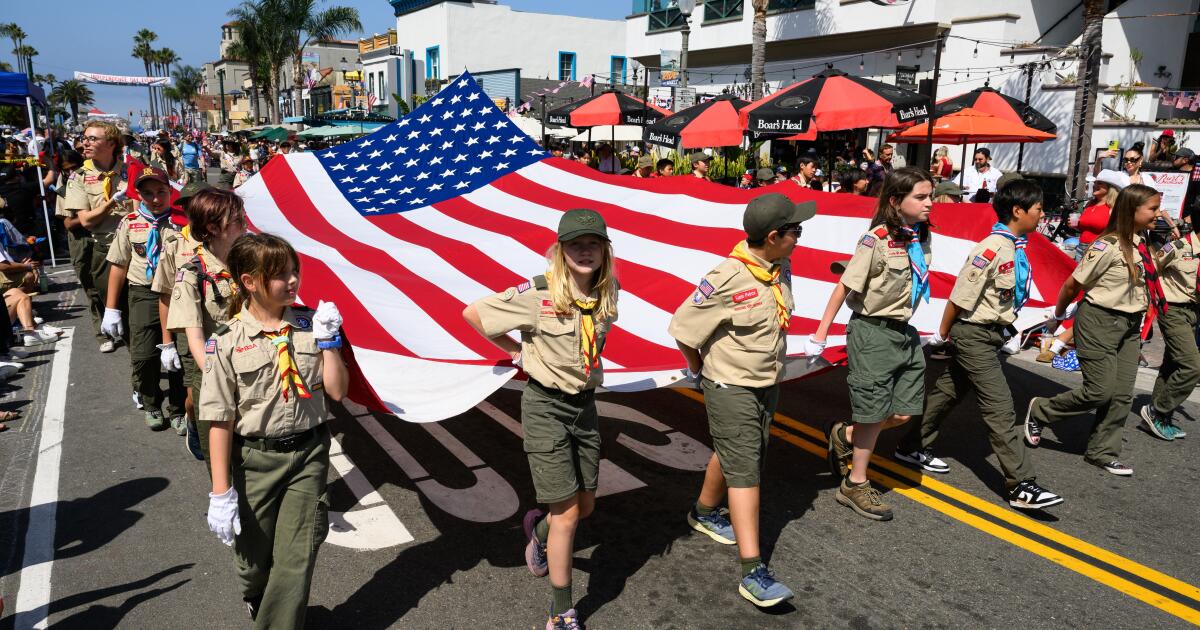
Commentary: Happy Birthday, America! You’ve weathered another rough year
-
Sports44 minutes ago
Dodgers’ Eliezer Alfonzo praying his sister and stepmother will be found in Venezuela
-

 World54 minutes ago
Reform UK’s Farage failed to disclose funds from convicted criminal: Report

