Sports
In the NHL, boozing is out. Edible cannabis and video games are in


In the ruins of an apocalyptic war zone, Mitch Marner is gunning for you. He’s tracked your movements, followed you with precision alongside his Toronto Maple Leafs teammates. Hours after the arena cleared and his day shift is done, the three-time NHL All-Star is locked on his mission and looking for another kill.
Ryan Reaves, the veteran muscle, might be around one corner. Matthew Knies, the fireball future, around another. You probably won’t notice 6-4 Steven Lorentz closing in. And William Nylander’s famous flow won’t give him away.
Though you’ll likely never know it, you’re about to be another casualty of the Leafs postgame routine.
Years ago, you might have encountered members of an NHL team like the Leafs in a more traditional setting after a game — like a bar across the street from Maple Leaf Gardens, or in a private booth in a ritzy club on Toronto’s trendy King Street West. But today, they’re more likely to be in the privacy of their own homes, sitting in front of a screen planning out missions against random “Call Of Duty” opponents over their headsets.
“Usually, I like to get home to my dog, chill for a little bit and then go downstairs and just kind of black out in my own world,” Marner says.
NHL team bonding has moved away from partying in public settings to the quiet privacy of online gaming. At the same time, the drinking culture that was once pervasive across the league is waning while the use of cannabis products is on the upswing.
When The Athletic asked more than three dozen players on different teams whether they use edible marijuana during the season, 38 percent indicated that they did. Because of the sensitivity of the topic, The Athletic agreed not to identify those players.
When Florida Panthers defenseman Nate Schmidt entered the league a decade ago, he says cannabis use by NHL players was unheard of — but partying and boozing were widely accepted.
“If you can’t play hungover in this league, you don’t belong in it,” Schmidt recalls being told several years ago. Today, particularly among a younger generation of players, that’s changed. Few players are willing to show up to the rink feeling the aftereffects of a late night out.
“You show up and guys are 100 percent all the time,” Schmidt says. “You can’t be at 80 percent.”
Nearly every player The Athletic interviewed for this story agreed that partying in the NHL is on the decline.
One NHL veteran forward, who asked not to be named, lamented the demise of alcohol-fueled bonding with his teammates.
“When I came into the league, we were going out for beers the night before games,” he says. In this dramatically altered off-ice landscape, he believes something has been lost: “I think (the NHL) used to be more fun back in the day.”
That sentiment is echoed by others, who say those nights out helped their teams bond.
When one player boarded a flight after a matinee loss, he says he was irritated when he looked up and down the aisles to see only about a third of the guys having a beer or a glass of wine. A decade ago, when he entered the league, he says players commiserated.
“Two beers in the back of every seat on the plane, and that’s just on the flight. Then there would be a couple more in your bag, a couple more on the bus,” says the player, who asked not to be named. “A nice professional buzz before you got back.”
Alcohol softened the blow of a loss and got players opening up to each other about the game. For generations, those booze-fueled evenings were an integral part of NHL life.
Now?
“It’s a lot less,” he says.
Oilers defenseman Troy Stetcher — who was a member of the Arizona Coyotes when The Athletic spoke to him — said if his team had a day off before a road trip years earlier, players would have gathered to hit the town.
On a day off more recently? “We didn’t even practice, and I know some of our younger guys played Xbox in the room for three or four hours,” Stetcher says.
Another NHL veteran describes his shock a few seasons ago when he turned back from a game of cards on a team flight to see one of his younger teammates locked into a VR headset, deeply entrenched in a video game.
“And I was like, ‘What the hell is going on?’” says the defenseman, who asked not to be named so he could speak freely about his teammates.
Other players, however, see this culture shift as a positive. The pressure of playing in the NHL is as intense as ever, and the need for players to unwind remains.
Amid that reality, many players have turned to a substance that was not nearly as prevalent in the NHL a decade ago: marijuana edibles.
Up until a few years ago, cannabis was largely illegal and considered widely taboo in professional sports.
Possession and consumption of cannabis became fully legalized in Canada in October 2018. It is also legal, as a recreational drug or for medical use, in most U.S. cities with NHL teams, but remains illegal in Texas and Tennessee, where the Stars and Predators play. Cannabis is not considered a prohibited substance for NHL players, but if testing reveals concerning levels of any substance, the NHL and NHLPA will refer the player to the joint Players Assistance program.
Because of the continued stigma surrounding the drug, many NHL players expressed hesitation to speak about personal cannabis use. Almost every player who spoke about cannabis use, and many who spoke about the shifting culture in the league, preferred to speak anonymously.
Most players who said they take edible cannabis prefer a mix of THC and CBD, but with a higher dosage of CBD. THC dictates how your brain reacts to cannabis and produces the high commonly associated with cannabis use. CBD does not produce a high but can instead produce relaxing effects and is an anti-inflammatory.
When Schmidt entered the NHL a decade ago, cannabis was frowned upon. Today, he says he’s happy to see that legal barriers and societal pressures have dissipated, though most players still are uncomfortable speaking about it publicly.
“For younger players, the stigma has disappeared,” Schmidt says. “For older players it hasn’t.”
One older NHL player who uses edible cannabis after games says he keeps his use as private as possible by getting the product directly from a friend’s company. He asked to be anonymous out of concern about potential ramifications of cannabis use.
Like many players today, he’s well-versed in the potential dangers of abusing prescription drugs or alcohol to address pain or anxiety.
“I was also heavily addicted to sleeping pills back in the day, addicted to Ambien, too. I was going down a bad path. It was bad for a couple years, I had to get away from it,” the player says. “It wasn’t worth what it was doing to my body and how I was feeling after taking them.”
During Ryan VandenBussche’s career in the late 1990s and 2000s, there was much less awareness. The former enforcer cycled through the use of Perocet to numb pain and Sudafed to get hyped up before a game. He’d wash it all down with a beer. Later, when he couldn’t sleep, he’d take Ambien.
“The culture was numbing,” he says. “You’re playing hard, you’re going balls to the wall. And off the ice, we had to recover. We did what we were told.”
Ryan VandenBussche (left) draws a distinction between the way things were when he played to today’s NHL. (Grant Halverson / Getty Images)
VandenBussche, who now works in the cannabis industry and promotes the use of plant-based medicines to athletes, says players today are much more concerned about what they are putting into their bodies.
“I think a lot of players are just more educated,” he says. “They’re making better decisions overall compared to what, you know, we were doing 15, 20 years ago.”
Riley Cote, a former NHL player and current mindfulness teacher, also has seen a huge shift since his career in the 2000s. During his playing days, there were always players on his teams who used cannabis in some form, he says. But today there is much more focus on the precision and intent for how it is being used.
After he retired in 2010, Cote spent seven seasons as an AHL assistant coach and says he witnessed players go from drinking beers on the bus after a game to infusing their peanut butter and coconut oil with cannabis.
“There’s a lot of mindfulness that goes into this. Players are wise enough and have done their research to know what it’s going to do for their recovery, sleep and performance,” Cote says. “This is a different way of managing the daily grind and the stresses that come with NHL life.”
One young player who uses edible marijuana says he was in the middle of a stretch of six games in 12 days, with half of those games on the road. Coupled with the travel and intense schedule is the physical toll that comes with playing a contact sport.
Depending on where an NHL team plays, it’s not uncommon for teams to return home at 3 a.m. after a game.
One player, who asked not to be named, says edible cannabis allows him to “disconnect.” Several players agreed.
Relaxing after an adrenaline-filled and pressure-packed game can be challenging. “Your mind is racing,” Schmidt says. “You’re replaying everything you’ve done, you’re replaying everything you could have done.”
While Schmidt says he does not use cannabis, he has heard from past teammates about its benefits. They tell him, “it’s a much less invasive way of unwinding.”
For those players who do use cannabis, the rigorous travel schedule is a complication. Every player surveyed says they don’t travel with the substance, so acquiring it can be tricky.
Some players say they lean on friends or acquaintances who own cannabis production companies to supply them directly. Others prefer the convenience of ordering directly from various online retailers. The ease of delivery services allows cannabis orders to arrive directly to hotel rooms.
“It’s like DoorDash,” one player says of his cannabis ordering experience.
It’s part of the wider trend amongst NHL players toward downtime spent behind closed doors. This cultural shift is real. “The new generation has changed the mentality,” Maple Leafs forward Ryan Reaves says.
Matthew Knies, a 22-year-old forward with the Leafs, says his generation — and the generations to come — are much more accustomed to life online.
“It’s technology, how much it’s advanced and how easy it is to live a virtual life instead of a real one,” Knies says.
Buffalo Sabres 23-year-old forward Peyton Krebs — part of the NHL’s youngest team by average age — says it’s not uncommon for at least five players on the team to bring video game consoles on road trips.
“We’ll all go out for dinner, but then guys will generally go back to their rooms to play video games,” Krebs says.

Peyton Krebs (19) says video gaming can include plenty of interpersonal communication. (Sean M. Haffey / Getty Images)
But Krebs says players still communicate within the game or via specific group chats. It’s not, in his view, antisocial, just a different kind of socializing.
“You just have to be more open,” one veteran Eastern Conference defenseman says. “I’ll try to drag guys out of their comfort zone, and then I’ll play video games with them.”
In part, Marner attributes the lack of public partying to the fishbowl reality of the social media age. It’s difficult for players to gather in a public place without being noticed.
“Every time you go somewhere, there is usually a phone or camera coming out snapping photos of you undercover,” Marner says.
Colton Sissons, a 31-year-old forward for the Nashville Predators, has also noticed the trend. “Going out and drinking in the NHL just for the sake of drinking … it’s way less,” he says.
Those players, Sisson and others agree, are focused on their health.
“You’ve got to be more on top of taking care of yourself, recovering your sleep,” Leafs forward Max Domi says. “There’s a large population of pro athletes who are just so invested in their bodies now that if you’re one of those guys that doesn’t, you get left behind.”
One player has a simple reason for cutting back on booze: “It’s not worth it. I don’t enjoy feeling like s—.”
Veteran Chicago Blackhawks defenseman Alec Martinez believes COVID played a big role in changing how players interact socially. As the NHL tried to operate through the pandemic, players were often restricted from going to bars.
“I guess guys just got in the habit of staying in,” Martinez says.
Many veterans believe young players who began in the league from 2020 to 2022 may have gotten comfortable spending time alone in their hotel rooms.
“It’s almost like there hasn’t been enough time for things to really reverse,” Martinez says.
And that likely isn’t going to change anytime soon.
“When I came into the league, the older guys would grab us, force us to come out,” says an NHL veteran who asked not to be named. “There’s less and less of that now. With young guys, there’s more of them saying ‘No, I’m set. I’m just going to stay in and order room service.’”
When younger players do go out with their teammates, the bill looks much different than it might have several years ago.
“I took a few of our younger guys out for dinner the other night,” one veteran Eastern Conference defenseman says, “and I was the only one having any alcohol.”
When he was a young player, VandenBussche remembers bonding with his teammates after morning practices by going for lunch, then sometimes going to a bar to play pool all afternoon.
“Before you know it, you’re three sheets to the wind,” he says. “But it was team building … when you were a young guy, you’d get to know your team by going out with them and doing team things — and a lot of what we did back then was drinking.”
The decrease in those alcohol-fueled outings has some veterans concerned about what the future of NHL team-bonding looks like.
One player on a team that has been on multiple deep playoff runs sees a correlation between large team get-togethers and on-ice success.
“A lot of times, the camaraderie you have on the plane, going out for big dinners, we have a lot of that and a lot of that is undervalued leaguewide,” the player says.
Yet as the league continues to skew younger, what past generations valued could fade further away. If that means unwinding in a more solitary manner, so be it.
As one player put it: “We have bigger goals to accomplish than to just go drinking beers.”
(Illustration: Eamonn Dalton / The Athletic. Photos: iStock; Ethan Cairns and Robin Alam / Icon Sportswire via Getty Images)



Sports
Kylian Mbappé’s seventh goal of the World Cup lifts France past Paraguay in physical Round of 16 match

NEWYou can now listen to Fox News articles!
The United States may not have been in action on Independence Day, but France — who fittingly played an important role in the Revolutionary War — was on the pitch in Philadelphia against Paraguay in a massive Round of 16 clash for a trip to the quarterfinals.
It was a hot day in the birthplace of our nation, and that made things difficult for both teams in more ways than one.
While Paraguay is a great squad, they were significant underdogs against a heavily favored French team led by superstar Kylian Mbappé, who has been lighting it up this tournament.
THIS ‘AMERICA THE BEAUTIFUL’ RENDITION BEFORE THE FRANCE VS PARAGUAY MATCH WILL GIVE YOU GOOSEBUMPS
French and Paraguayan players get into a shoving match during their Round of 16 match on Saturday in Philadelphia. (Kyle Ross-Imagn Images)
Obviously, the heat itself is a factor, but it also made for a slower pitch, something that was believed to play into the hands of Paraguay.
However, most of the action in the first half was played on their end as France put the pressure on through the first half hour of the match.
It was intense, and that intensity boiled over in the 35th minute with some pushing and shoving after Mbappé and Paraguay’s Andrés Cubas started a wild shoving match.
VAR DENIES CROATIA’S GAME-TYING GOAL AS CRISTIANO RONALDO LEADS PORTUGAL TO ROUND OF 16
But while the intensity ramped up — and stayed high for pretty much the entire game — Paraguay weathered the storm and had every reason to feel good about reaching halftime with the game scoreless.
France got some more scoring opportunities in the early part of the second half, including a near-breakaway for Mbappé.
France’s Kylian Mbappe scored the go-ahead and ultimately game-winning goal against Paraguay on a penalty kick. (James Lang-Imagn Images)
In the 67th minute, France was awarded a penalty kick for a foul against Desire Doue that had to go to VAR for review, and it was Mbappé who took it.
MESSI, ARGENTINA AVOID A SHOCKING UPSET IN WILD KNOCKOUT STAGE MATCH AGAINST CAPE VERDE
Mbappé has tended to do most of his damage in the second half, and that trend continued here with him drilling the penalty past Paraguay goaltender Orlando Gill.
That was his 19th career World Cup goal, and his seventh of this tournament alone, tying him with Argentina’s Lionel Messi for the tournament lead.
Paraguay seemed to fade after the Mbappé goal, but turned it on again late, forcing Mike Maignan to make his first save of the day about 89 and a half minutes into the match.
CLICK HERE TO DOWNLOAD THE FOX NEWS APP
It seemed like Paraguay’s plan was to try and get a rise out of the French, and they succeeded in drawing three yellow cards. In fact, they even tried to keep that going after the match with players meeting near midfield for some more pushing and shoving.
But France is moving on, and they will take on Morocco in a quarterfinal match on Thursday in Boston.
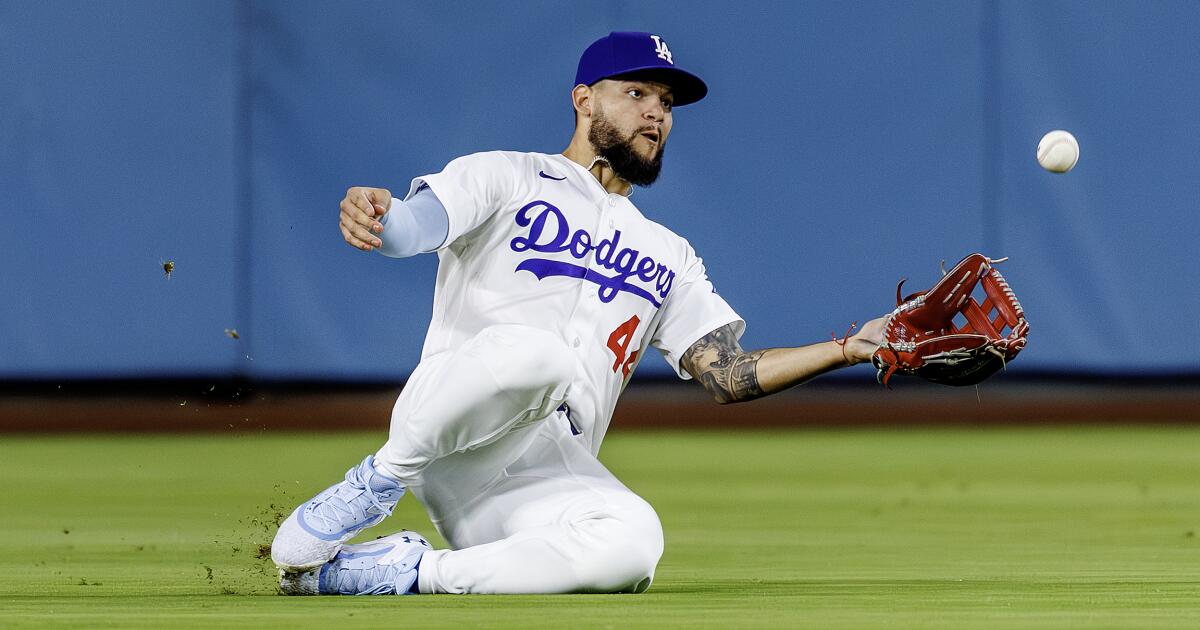
The Dodgers have four more 2026 All-Stars joining Shohei Ohtani on the National League squad.
Center fielder Andy Pages claimed the first All-Star nod of his career. And third baseman Max Muncy (three) first baseman Freddie Freeman (10) and pitcher Yoshinobu Yamamoto (two) added to their Midsummer Classic honors.
Ohtani (six) bypassed phase two of All-Star voting by earning the most fan votes of any player in the first phase.
All of the Dodgers position players were elected as starters, marking the first time since 1980 that the team has had four All-Star starters.
The MLB All-Star Game will be played in Philadelphia on July 14.
Sports
Chris Johnson’s former teammate reflects on ex-star’s surprise ALS diagnosis, tight-knit bond after milestone

NEWYou can now listen to Fox News articles!
The NFL world was stunned on Monday when it became public that Chris Johnson, one of just nine players ever to rush for 2,000 yards in a season, is suffering from ALS.
The news hit close to home for Ryan Fitzpatrick, who played for Johnson’s Tennessee Titans for a season. And despite it being just one year, the two have a special connection.
“He was a great teammate when I got to play with him for the one year, and obviously a super talented guy on the football field. We texted about a year ago. I was just looking back at our text messages, and one of the things that I had sent him — the 100th touchdown pass that I threw in the NFL was to CJ2K, and he signed the football for me and gave it to me. It says, ‘To my cool white boy. Congrats on number 100,’” Fitzpatrick recalled in an interview with Fox News Digital. “So the amount of street credit I have from Chris Johnson calling me a cool white boy has always been awesome to me.”
Quarterback Ryan Fitzpatrick, No. 4 of the Tennessee Titans, hands off to running back Chris Johnson, No. 28, against the Seattle Seahawks at CenturyLink Field on October 13, 2013 in Seattle, Washington. (Otto Greule Jr/Getty Images)
But ALS is just such a tough thing to have to deal with, obviously for Chris and for everybody around him. You can just imagine the frustrations of his mind being there but his body starting to fail him and how difficult that is. We’re obviously all hoping for the best for him, and all our love and support goes to him and his wife and his family.”
In a lengthy social media post, Johnson said that there is growing research that shows a link between repetitive head trauma and ALS, and studies have shown that NFL players are four times as likely to develop ALS as the general population.
Fitzpatrick, personally, said that when it comes to football, he would do it all over again, even as the risks are more prevalent now than ever before. However, what comes with age is more grim reality.
Tennessee Titans running back Chris Johnson runs against the Carolina Panthers at Bank of America Stadium in Charlotte, N.C., on Aug. 28, 2010. (Sam Sharpe/USA TODAY Sports)
FORMER NFL STAR CHRIS JOHNSON SAYS HE’S BEEN DIAGNOSED WITH ALS
“I do think guys playing football understand at least the broad scope of what the risks are. I think a lot of guys would tell you, and I would be the same way, football has given me so much in my life that it’s something I would do again in a heartbeat. And for my kids that want to pursue it, I’m happy for them to pursue it,” Fitzpatrick said.
“But as you get older, I’m 43, as you get older, and your parents get older, I lost my mom five years ago, there’s just more stuff that seems to happen. It’s really sad. One of my best friends from high school was diagnosed with ALS. So seeing that firsthand, and the difficulties that come with it, not just for him but everybody that is around him, it’s really hard. As you get older, stuff happens, and there are things that you have to deal with and figure out. So unfortunately, it’s a tough part about aging.”
There is no known cure for ALS – known as amyotrophic lateral sclerosis. It’s a progressive disease in which the brain loses connection with the muscles, according to the ALS Association. The afflicted slowly lose their ability to walk, talk, eat, dress, write, swallow and, eventually, breathe.
Tennessee Titans running back Chris Johnson breaks free for a long run against the San Francisco 49ers in the fourth quarter at Candlestick Park in San Francisco, Calif., on Nov. 8, 2009. The Titans defeated the 49ers 34-27. (Cary Edmondson/USA TODAY Sports)
CLICK HERE TO DOWNLOAD THE FOX NEWS APP
The former running back played in the NFL from 2008 to 2017 with the Titans, New York Jets and Arizona Cardinals.
Fox News’ Ryan Gaydos and Angelica Stabile contributed to this report.
Follow Fox News Digital’s sports coverage on X, and subscribe to the Fox News Sports Huddle newsletter.
-
 News6 minutes ago
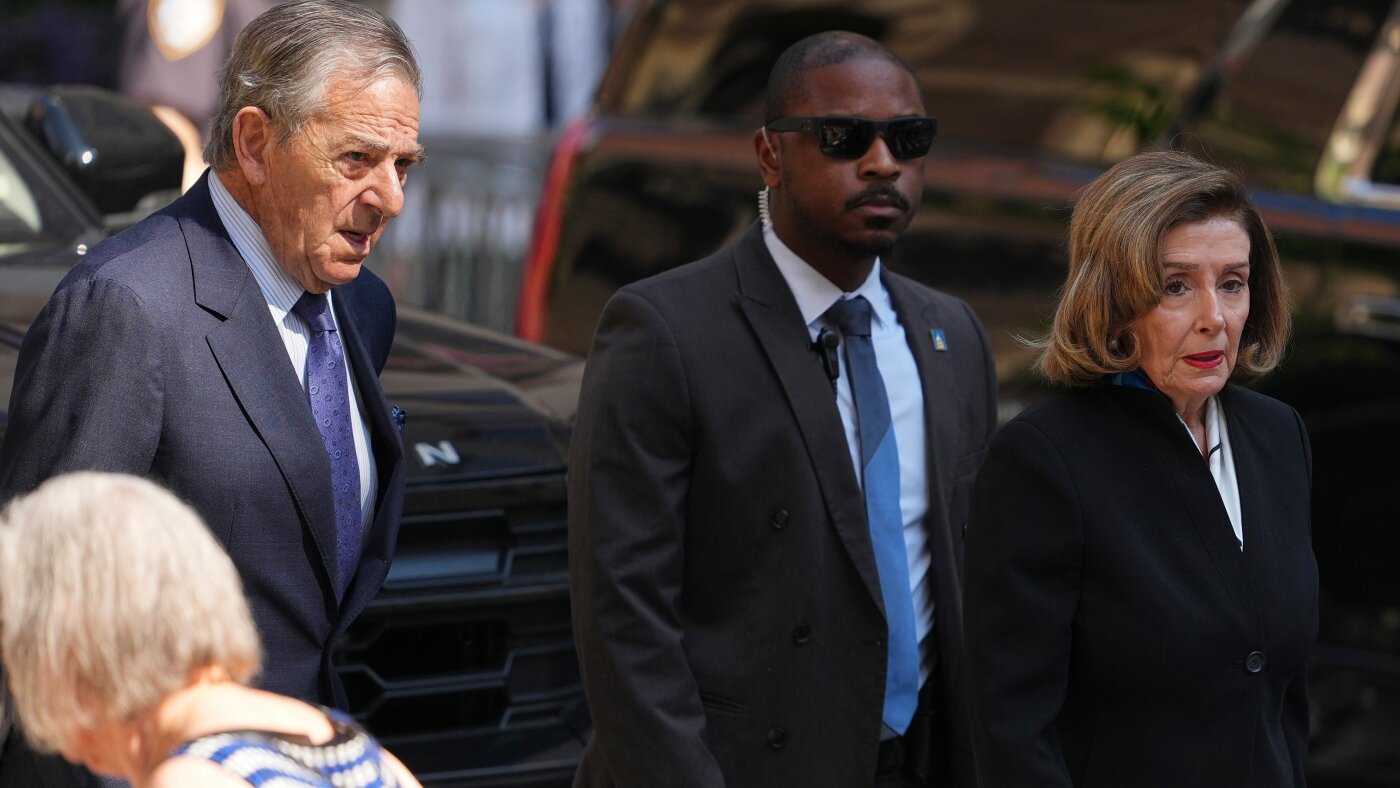
Paul Pelosi in hit-and-run in California, car left with major damage, authorities say
-

 Los Angeles, Ca1 hour ago
Firefighters battle Fourth of July blazes around Los Angeles
-

 Detroit, MI2 hours ago
Storm chances linger into the start of the week across Metro Detroit
-

 San Francisco, CA2 hours ago
Relay for America runs flag from San Francisco to D.C. in message of unity
-

 Dallas, TX2 hours ago
Cowboys newcomer already looks like a waste of money in Dallas
-

 Miami, FL2 hours ago
Police search for suspect after man is shot while on a boat near hotel in Fort Lauderdale on 4th of July
-

 Boston, MA2 hours ago
Sonny Gray shines again, and the Red Sox make it two straight wins at the Angels to start grinding road trip – The Boston Globe
-

 Denver, CO2 hours ago
Aldi expanding into Colorado, applies for permits at two Denver locations

