Sports
How the Australian Open became the tennis Silicon Valley, from roofs to party courts


MELBOURNE, Australia — There are plenty of reasons to travel to Melbourne for the Australian Open each January, especially from a winter climate.
It’s sunny, it’s warm and Aussies at Melbourne Park are good with beer at noon and banter all day. Roger Federer had it about right when he nicknamed this event the “happy slam”.
The Australian Open also doesn’t treat tennis like a fragile museum piece, never to be touched or tweaked because ‘that’s not the way it’s done’, or one of those other haughty phrases the guardians of the game use to rationalize their stodginess.
This is the signal Grand Slam: the event that starts each season and offers a window into where tennis is headed with remarkable and deliberate regularity, all on the north bank of the Yarra River. Retractable roofs; 10-point deciding tiebreaks; cameras in the player tunnels and glitching cartoon tennis stars: it all debuted here. What California is to America, Australia has often been for tennis — the lab where new stuff goes for a test drive before being pushed out in so many other places.
“We’ve always tried to keep pushing the business,” said Machar Reid, the head of innovation for Tennis Australia, in an interview in Melbourne.
This year’s innovations have been especially visible. Coaches are sitting in pods on the three main courts with tablet computers packed with live stats, rather than in a box above the court and in the stands, where they had to lean over to chat with players craning their necks and cupping their ears to hear a potential gem among the noise.
Carlos Alcaraz talks with his coaching team during his fourth-round match against Jack Draper. (Clive Brunskill / Getty Images)
Even players who were against allowing any coaching, who really hated having a rule against coaching when it was happening match in, match out, have got on board.
“I always thought tennis is an individual sport where you kind of have to figure things out on your own in a way,” said Alexander Zverev, world No. 2.
“If tennis is going that way, then it should go that way to 100 percent.”
Novak Djokovic and his coach Andy Murray are having a face-to-face chat between sets. Iga Swiatek and her coach Wim Fissette are trading words between points. That kind of closeness is natural for a tournament that turned its underbelly — the tunnels under Melbourne Park that house the player areas and allow the best in the world to move freely and privately between the gym, the lounge, and their matches, bumping fists and talking shop as they go — into one large Big Brother live feed.
It’s probably a safe bet this is all coming soon to a tournament near you. Maybe not the Big Brother.

GO DEEPER
The cartoon tennis stars of the Australian Open have gone viral. Can they change sports media?
The AO, as it calls itself (a little less grand than Wimbledon’s “The Championships”) was the first Grand Slam to have one retractable roof, then two, then three. It was the first to bring cameras into the bowels of the stadium, following players as they walked to the court through that fancy tunnel with all the photos and names of past champions.
The net camera first became a main staple here, according to organizers. It had the first heat scale, and the first air quality scale.
The U.S. Open fashions itself as a food and style and tennis technology hotbed. Tennis Australia has gotten some heat for that this year, as the tournament, along with some other Grand Slams have done away with the electronic let sensor. The chair umpire makes the call based on whether they hear the ball tick the net, a system tournament officials insist is reliable.
Players don’t agree. Zverev called it “quite ridiculous”.
“Every single corner of everything has a camera. We have video review and all the high-end technologies that we can possibly have. But a simple let machine that we’ve been using for the past 25 years is not available at a Grand Slam.”
Chances are, most spectators don’t pay it any mind. At the Australian Open, fans come for the tennis, but stay for the music festival.
All afternoon and into the evening, there are guitarists and singers performing in the main plaza between the courts, where fans take a break from the matches — if they ever make it to them in the first place. Those couches and pillows strewn across the shaded, artificial grass where the music plays make for an awfully pleasant spot to spend an evening sipping lager and whiskey.

Tennis fans enjoy the ‘Finals Festival’ at the Australian Open in 2023. (Kim Landy / Getty Images)
Last year, the tournament introduced innovations — by tennis standards — that have been long overdue.
Ushers began letting people take their seats between every game, rather than having to wait for a changeover, the old rule penalizing fans for going to the toilet, making them potentially miss 20 minutes of action. Players were caught slightly off-guard on the first day, but quickly got used to it and the change has spread elsewhere, especially in the higher sections of stadiums.
“We have been a little bit behind the other sports with changes and trying to keep the pace with the evolution of society and the new generation that we all know doesn’t have that much of a great attention span, and they want the movement,” Djokovic said Thursday night, after his third-round win over Tomas Machac. “That’s one of the ways to really try to open up a bit more and not have strict rules.”
There was another change — a bar and cafe next to a court instead of a bank of stands, with music and no limitations on noise during play. Last year, there was one. This year there is another. And just like that, taking a child to a tennis match, or catching up with a friend a few feet away from the action, becomes doable. Watching tennis no longer feels like the punishment your parents hand down when you misbehave: sit still and be quiet for the next three hours!
On the afternoon of the first Saturday, Rachel and Miki Petrovic, who were on their annual trip to the Australian Open from their home in Serbia, took in an otherwise forgettable doubles match over a beer as their seven-week-old infant, Violetta, rested beside them in a stroller.
“I have a baby,” Rachel told The Athletic. “Here I don’t have to worry about being annoying.”
A few feet away, Andrew Matthews and Danny Sincic, longtime Melbournians and attendees but first-time party-court visitors were enjoying a ginger beer and an IPA.
“Never been to anything like this,” Sincic said. “Makes it feel a bit more social than having to sit in the stadium without talking.”
“I don’t know how the players feel, but it’s good for us,” Matthews said.
GO DEEPER
Collins: Australian Open controversy has sparked ‘six sponsorship opportunities’
The players are basically fine with it. At this point, they know that when they play tennis in Melbourne Park, it might feel like a rugby match — especially if they play an Aussie. Chair umpires and stadium officials will attempt to keep the hometown faithful in line, but they don’t try that hard.
After all, that would rob the tournament of its more moments, such as Danielle Collins’ second-round win over home favorite Destanee Aiava. After enduring more than two hours of harassment from the Australian fans, Collins blew kisses to the crowd and thanked them in her on-court interview for helping her land a “big fat pay check”.
Djokovic, who ends up trolling crowds more often than anyone, gave Collins his full backing.
“Big fan of Danielle Collins,” he said the Thursday night after Collins’ interview. “We should try to look to connect more with the younger people and bring them. I want to see a little bit more entertainment.”
He has thoughts, including on-court dancers during changeovers or some version of a Super Bowl half-time show mid-match. Coco Gauff points out that in a sport with one-minute changeovers, it doesn’t really work. Maybe, somewhere in Melbourne, it’s already been noted on a whiteboard.
(Top photo: Brett Price / VWPics via Associated Press)



NEWYou can now listen to Fox News articles!
Toronto Maple Leafs No. 1 draft pick Gavin McKenna has already been on the ice with the team as it held its development camp this week, but the highly-touted rookie is going to have to make a big change for this fall.
His number.
When he was playing for the Western Hockey League’s Medicine Hat Tigers and then again at Penn State this past season, McKenna wore the No. 72.
THE TALLEST PLAYER EVER SELECTED IN THE NHL BLEW MINDS IN HIS DEBUT WITH THE SAN JOSE SHARKS
Toronto Maple Leafs top pick Gavin McKenna has revealed that he’ll be opting for a new number for his rookie campaign. (Photo by Brian Babineau/NHLI via Getty Images)
The expectation was that McKenna would wear No. 72 with the Maple Leafs, and he did so this week at development camp. Plenty of fans have also already ordered No. 72 jerseys with his name on the back.
On most rosters, No. 72 is unique enough that he wouldn’t run into any issues wearing it. However, on July 1, the Leafs signed two-time Stanley Cup champion goaltender Sergei Bobrovsky, who has worn No. 72 for most of his career, except during his first two seasons with the Philadelphia Flyers, when he wore No. 35.
So, some were wondering how this would work out. Would the Leafs want their new franchise player to get his pick of the number litter, or would they defer to a two-time Vezina winner?
FLYERS MAKE STUNNING OFFER SHEET FOR DUCKS STAR LEO CARLSSON IN BLOCKBUSTER NHL MOVE
Gavin McKenna wore No. 72 in juniors, as well as last season at Penn State. (Photo by Richard T Gagnon/Getty Images)
Well, it turns out that McKenna will be the one swapping numbers, and he’ll be switching to No. 92 this season.
McKenna had to get creative here because the obvious number changes were a no-go in Toronto. Adding 7 and 2 would be 9, but that was retired in honor of Charlie Conacher and Ted Kennedy.
Another option would’ve been to flip the digits and go with No. 27, but that was retired in honor of Frank Mahovlich and Darryl Sittler.
ALEX OVECHKIN SIGNS A ONE-YEAR DEAL TO RETURN FOR ANOTHER NHL SEASON WITH THE CAPITALS
So, 92 it is.
However, McKenna reached out to one of the three previous players to wear the number, Jeff O’Neill, to ask whether he was comfortable with him using it.
It’s fair to say he was down with the idea.
CLICK HERE TO DOWNLOAD THE FOX NEWS APP
McKenna will be a key piece of a Maple Leafs team that is looking to bounce back after a nightmare 2025-26 campaign that saw them finish last in the Atlantic Division.
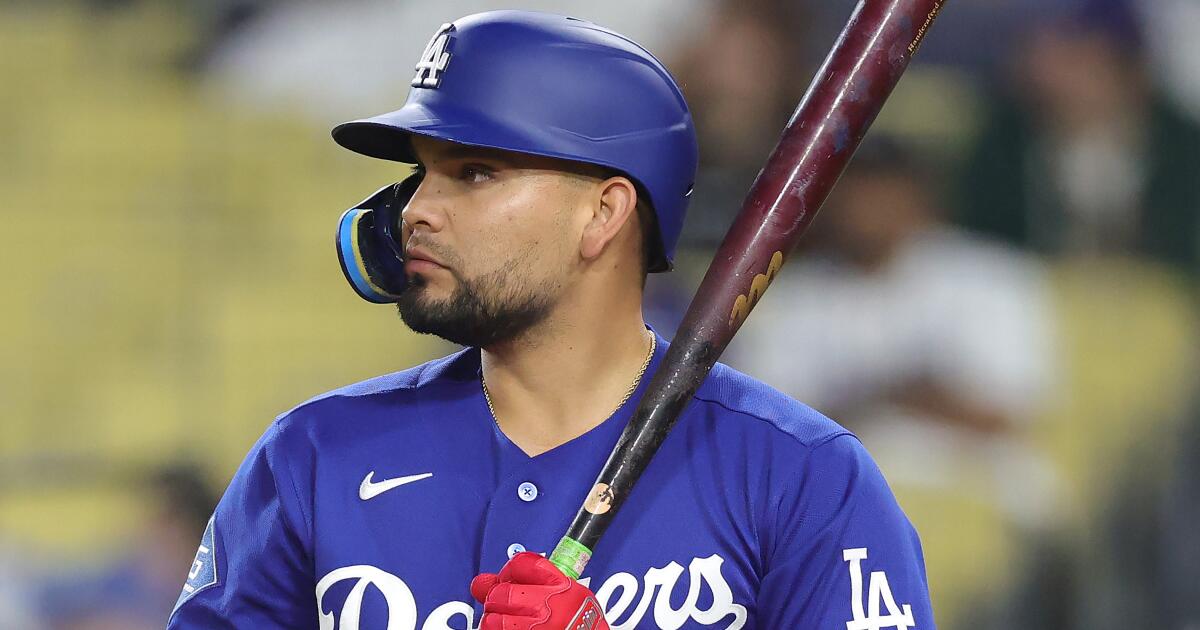
It’ll be the culmination of nine minor-league seasons. But Eliezer Alfonzo‘s major-league debut on Sunday won’t include his family watching from Dodger Stadium.
Alfonzo’s younger sister, Eliana, and stepmother, Patricia, have been missing since last month when earthquakes caused widespread devastation in his home country of Venezuela.
“I’ve been trying to support my dad a lot, every day talking to him, trying to be with him,” Alfonzo said of the elder Eliezer Alfonzo, a retired major-league catcher. “It’s a little tough from here because I would like to be there with him, supporting him every day.”
His father, of course, would love to be in attendance for his son’s debut. He told him as much when he heard the Dodgers were calling him up.
The Dodgers switched their backup catchers Saturday, optioning Chuckie Robinson. They saw an opportunity to give Alfonzo some runway behind Dalton Rushing, with starting catcher Will Smith’s stay on the injured list expected to extend through the All-Star break.
The elder Eliezer Alfonzo, however, is doing whatever he can to locate his wife and daughter. Their dog was found alive, which gave the younger Eliezer Alfonzo hope.
“We’ve just gotta stay together as a family, as a country,” Alfonzo said. “Because I feel like we’re a beautiful country, we’re a really beautiful people over there. It’s not just about my family, it’s all families that have lost people already. But we’ve got hope. We just pray, we ask God to give them back to us alive.”
Alfonzo’s locker in the clubhouse is next to countryman Miguel Rojas’ stall. Rojas’ wife, Mariana, and their two children were in Venezuela, planning to renew Mariana’s passport and seek Venezuelan citizenship for their children, when the earthquakes hit. They managed to stay safe and have returned to the U.S.
“I just want to be here for him,” Rojas said. “At the end of the day, that’s the best thing I can do for him, is being a good teammate and being a friend for him. Because I know there’s going to be ups and downs. He’s going to have a lot of time to be caught [up] in baseball, and that’s going to probably take his mind away from stuff. But sometimes he’s probably going to feel weak, and he’s going to start thinking about his family. So I’m going to be here, I’m right next to him. And that’s what I told him.”
Rojas, who played against the elder Eliezer Alfonzo for years in Venezuela, reached out Saturday morning and promised him he’d save the ball from his son’s first major-league hit.
Sports
Kylian Mbappé’s seventh goal of the World Cup lifts France past Paraguay in physical Round of 16 match

NEWYou can now listen to Fox News articles!
The United States may not have been in action on Independence Day, but France — who fittingly played an important role in the Revolutionary War — was on the pitch in Philadelphia against Paraguay in a massive Round of 16 clash for a trip to the quarterfinals.
It was a hot day in the birthplace of our nation, and that made things difficult for both teams in more ways than one.
While Paraguay is a great squad, they were significant underdogs against a heavily favored French team led by superstar Kylian Mbappé, who has been lighting it up this tournament.
THIS ‘AMERICA THE BEAUTIFUL’ RENDITION BEFORE THE FRANCE VS PARAGUAY MATCH WILL GIVE YOU GOOSEBUMPS
French and Paraguayan players get into a shoving match during their Round of 16 match on Saturday in Philadelphia. (Kyle Ross-Imagn Images)
Obviously, the heat itself is a factor, but it also made for a slower pitch, something that was believed to play into the hands of Paraguay.
However, most of the action in the first half was played on their end as France put the pressure on through the first half hour of the match.
It was intense, and that intensity boiled over in the 35th minute with some pushing and shoving after Mbappé and Paraguay’s Andrés Cubas started a wild shoving match.
VAR DENIES CROATIA’S GAME-TYING GOAL AS CRISTIANO RONALDO LEADS PORTUGAL TO ROUND OF 16
But while the intensity ramped up — and stayed high for pretty much the entire game — Paraguay weathered the storm and had every reason to feel good about reaching halftime with the game scoreless.
France got some more scoring opportunities in the early part of the second half, including a near-breakaway for Mbappé.
France’s Kylian Mbappe scored the go-ahead and ultimately game-winning goal against Paraguay on a penalty kick. (James Lang-Imagn Images)
In the 67th minute, France was awarded a penalty kick for a foul against Desire Doue that had to go to VAR for review, and it was Mbappé who took it.
MESSI, ARGENTINA AVOID A SHOCKING UPSET IN WILD KNOCKOUT STAGE MATCH AGAINST CAPE VERDE
Mbappé has tended to do most of his damage in the second half, and that trend continued here with him drilling the penalty past Paraguay goaltender Orlando Gill.
That was his 19th career World Cup goal, and his seventh of this tournament alone, tying him with Argentina’s Lionel Messi for the tournament lead.
Paraguay seemed to fade after the Mbappé goal, but turned it on again late, forcing Mike Maignan to make his first save of the day about 89 and a half minutes into the match.
CLICK HERE TO DOWNLOAD THE FOX NEWS APP
It seemed like Paraguay’s plan was to try and get a rise out of the French, and they succeeded in drawing three yellow cards. In fact, they even tried to keep that going after the match with players meeting near midfield for some more pushing and shoving.
But France is moving on, and they will take on Morocco in a quarterfinal match on Thursday in Boston.
-

 Health5 minutes ago
July 4 heat delays America 250 celebration as State Fair guests share love of USA
-

 Sports7 minutes ago
Toronto Maple Leafs top pick Gavin McKenna reveals that he’s changing his jersey number
-

 Technology13 minutes ago
China’s robot-run hotel opens to public in 2027
-
 Business20 minutes ago
China-backed AI tool behind fake Brad Pitt fight making Hollywood inroads
-
 Entertainment23 minutes ago
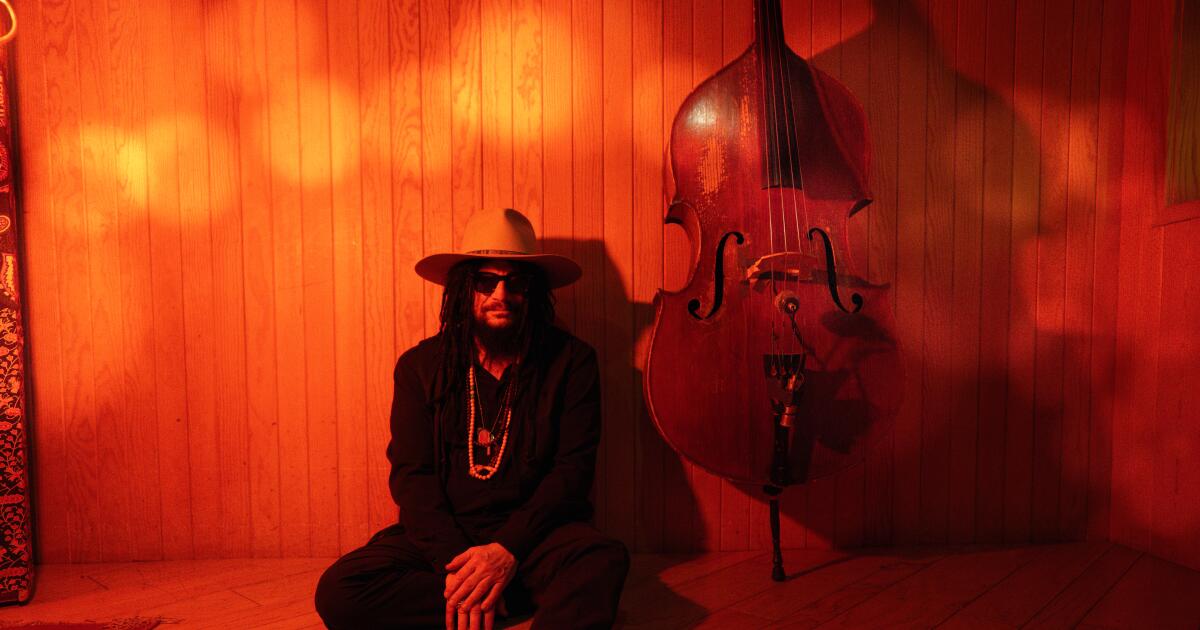
Don Was produced the Rolling Stones, Bob Dylan and Ozzy. At 73, he found his voice in Detroit — and the Dead
-
 Politics35 minutes ago
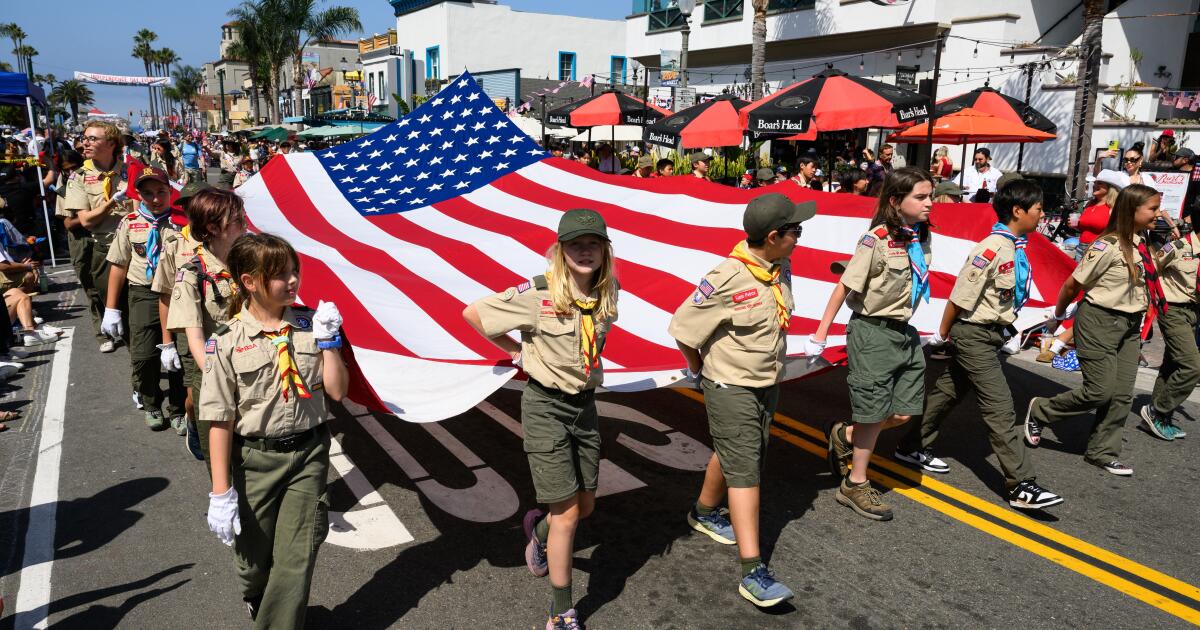
Commentary: Happy Birthday, America! You’ve weathered another rough year
-
Sports43 minutes ago
Dodgers’ Eliezer Alfonzo praying his sister and stepmother will be found in Venezuela
-

 World53 minutes ago
Reform UK’s Farage failed to disclose funds from convicted criminal: Report

