Sports
Can Paris as Olympic host renew enthusiasm for the Games?


Follow our Olympics coverage from the Paris Games.
The Olympic Games have had a rough decade.
For so many people over the past 10 years, those five multicolored rings that were long synonymous with the pinnacle of sport came to symbolize billions in wasteful spending, similar excesses of political and moral dissonance and a dismantling of the idea of the Games as pure competitions played for spirit and country.
Every cycle, the Games stumbled through another series of problems: Russia’s annexing of Crimea and its use of a systemic doping program during the Sochi Games in 2014; the threat of the Zika virus and unparalleled disorganization in Rio de Janeiro in 2016; the threat of nuclear war in South Korea in 2018; the depressing images of empty stadiums because of the coronavirus pandemic in Tokyo in 2021 and Beijing in 2022.
Empty stands due to the COVID-19 pandemic took the shine off the Tokyo Games, which were also delayed one year. (Tim Clayton / Corbis via Getty Images)
At those same Beijing Games, organizers and the International Olympic Committee were frequently asked about free speech and the treatment of ethnic minority groups like the Uyghurs, a situation the United Nations later described as crimes against humanity, easily flying in the face of the stated values of the Olympics.
With each dent, television audiences in the United States have turned away in significant numbers, threatening one of the largest single sources of Olympic revenue.
Now comes Paris. One of the world’s leading tourist destinations, a city that conjures levels of fascination and romanticism that few if any can top, will take on the task of restoring to the Olympic Games that mythical quality that for so long allowed it to exist as something so much more than sport.
That quality might have always been more myth than truth. Crass commercialism helped transform the Olympics into a multibillion-dollar behemoth from the quaint sports festival seen when Paris last hosted 100 years ago. Still, Paris has promised to bring back the luster.
“I have been an athlete, and I love the pressure,” Tony Estanguet, a three-time gold medalist in canoe and the president of the Paris 2024 Organizing Committee, said during a visit to New York last fall. “How can we move the line and be more creative and more innovative? The success of the Games relies on this ability to evolve and to make the brand, this event, more attractive. It’s a permanent fight.”
The IOC, the roughly 100-member organization based in Switzerland that owns the trademark to the famous rings and awards the Games to cities that compete to hoist them, has been losing that fight lately for several reasons. One has been a lack of geographic diversity, with the previous three Olympics in East Asia.

GO DEEPER
How NBC is broadcasting the most unique opening ceremony in Olympic history
To change that, the IOC in recent years altered its bidding rules to take a more active role in targeting cities rather than simply selecting from whichever candidates offer themselves up. After Paris, the Olympics will head to northern Italy; Los Angeles; the French Alps; Brisbane, Australia; and Salt Lake City. Organizers hope that will help revive lagging interest in Western Europe and the Americas.
“No question in my mind, moving the Games to such an iconic European city like Paris, plus having fans and partners back in person, will be such a needed and welcomed lift,” said Michael Lynch, a leading international sports consultant and the former director of sports marketing for Visa, one of the main sponsors of the Olympics.
For their part, the French have taken up the fight in the most French way: by showing off their beautiful capital. Estanguet and his team decided years ago when they first bid for these Games to marry sports and culture as never before by placing the Games at some of the most famous and recognizable locations in and around the French capital.
The move is a stark turn away from the plan most cities have followed when they have hosted recent Olympics. That playbook generally involved finding a massive, undeveloped or long-since abandoned tract and building a huge park filled with sports facilities, usually somewhere outside the center of the city, and putting a big fence around it.
Paris did a bit of that with its Olympic Village, where athletes will live, in St. Denis, north of the city center and not far from the Stade de France, where track and field will take place. The aquatics center — host to diving, water polo and artistic swimming — is near there, too.
Just about everything else is stuffed into or just beyond the peripheral road that encircles the main area of Paris, which can be traversed on foot with a comfortable pair of shoes in an afternoon.
As the sun sets beyond the city Friday evening, the opening ceremony will unfold along the Seine, with some 10,000 athletes floating down the river on boats rather than marching into an enclosed, remote stadium. Beach volleyball will take place at the Eiffel Tower. Fencing will take place at the Grand Palais. Breaking, skateboarding and 3×3 basketball will happen near Place de la Concorde. The equestrian competition will happen at Versailles.

Beach volleyball in the shadow of the Eiffel Tower figures to be one of the visual spectacles of the Paris Olympics. (Tim Clayton / Corbis via Getty Images)
In addition to creating a two-week commercial for Paris, organizers want to reimagine what the Olympics can be by bringing them closer to population centers rather than siphoning them away in a remote area. It’s especially poignant after Tokyo and Beijing, two consecutive versions of the Olympics that were siloed as never before, with COVID-19 prompting organizers to prohibit paid spectators.
The fallout was ugly, especially in the United States, where the size of the television audience dwindled for NBC, whose media rights fee accounts for about 50 percent of Olympic television revenue. Coverage from Beijing in 2022 dropped 40 percent from South Korea in 2018, which was down from Sochi in 2014. Coverage from Tokyo in 2021 was down 42 percent from Rio in 2016.
Michael Payne, the former director of marketing for the IOC, said audiences have grown elsewhere, especially for the host countries in Asia, but after a few “challenging Games,” in his words, Paris brings the chance for a “reboot.”
“Would be good to get back to normal,” Payne said with Olympian understatement.
There is no guarantee for that. However wondrous and new Friday’s opening ceremony might appear, clouds are hanging over the Games, as there always are in this era.
Russia, long one of the most important countries in the Olympic movement, remains a pariah nation because of its history of state-sponsored doping and its invasion of Ukraine. Athletes from Russia and Belarus will compete as part of a neutral group of athletes with no national affiliation.
Israel’s war in Gaza, a significant response to deadly attacks by Hamas last October, has sparked calls for athletes from Israel to be banned and generated demonstrations at Israel’s first men’s soccer game Wednesday.
The threat of a terrorist attack looms, especially when so many events will take place in the center of Paris.
The worldwide anti-doping system, which relies on independent national organizations to test their athletes, has broken down. COVID-19 rates are rising. With people from all over the world converging on Paris, the city might become the ultimate petri dish, especially the Olympic Village, where the athletes will live and eat and socialize for the next 17 days.
David Wallechinsky, a leading Olympic historian, said he walked 10 miles through Paris this week searching for a pre-Games buzz. He couldn’t find it. Still, he knows everything changes once the competitions begin, the stadiums fill and the host country wins its first gold medal.
Wallechinsky also knows one thing for certain.
“It’ll look good,” he said of the Paris Games.
Estanguet wants more than that. He knows the world will be watching.
“The pressure is positive to me,” he said. “We have to succeed.”

Equestrian events will take place in front of the Palace of Versailles, one of the many marriages of sport and iconic venue at the Games. (Pierre-Philippe Marcou / AFP via Getty Images)
(Illustration: Dan Goldfarb / The Athletic; photo of the Eiffel Tower: Maja Hitij / Getty Images)



NEWYou can now listen to Fox News articles!
The New Orleans Saints have reportedly made an addition to their quarterback room.
The team signed Zach Wilson to a one-year contract, according to multiple reports.
Wilson, 26, spent last season with the Miami Dolphins and will serve as the backup quarterback to Tyler Shough.
Miami Dolphins quarterback Zach Wilson looks to throw a pass against the New England Patriots during the fourth quarter at Gillette Stadium in Foxborough, Massachusetts, on Jan. 4, 2026. (Brian Fluharty/Imagn Images)
The Saints will be Wilson’s fourth team in four seasons. He spent the first three years of his career with the New York Jets after being selected with the No. 2 overall pick of the 2021 NFL Draft.
After three disappointing seasons with the Jets, they traded him to the Denver Broncos in April 2024. The Broncos declined Wilson’s fifth-year option, and after the season he signed with the Dolphins.
Wilson has seen little game action over the last two seasons, not playing at all with the Broncos in 2024. With the Dolphins last season, he appeared in four games, completing 6 of 11 passes for 32 yards.
COWBOYS STAR DAK PRESCOTT’S EX POSTS ABOUT ‘GROWTH’ DAYS AFTER COUPLE SPLIT BEFORE WEDDING
Miami Dolphins quarterbacks Zach Wilson and Tua Tagovailoa talk on the field before the game against the Pittsburgh Steelers at Acrisure Stadium in Pittsburgh, Pennsylvania, on Dec. 15, 2025. (Charles LeClaire/Imagn Images)
With the Jets, Wilson started 33 games, going 12-21 while completing 57% of his passes for 6,293 yards with 23 touchdowns and 25 interceptions.
Wilson will join Shough and 2024 fourth-round pick Spencer Rattler in the quarterback room.
Shough impressed in his nine starts last season. The Saints went 5-4 in his starts while Shough completed 67.6% of his passes for 2,384 yards with 10 touchdowns with six interceptions, while rushing for 186 yards and three touchdowns.
CLICK HERE TO DOWNLOAD THE FOX NEWS APP
Miami Dolphins quarterback Zach Wilson looks to throw a pass against the New England Patriots during the fourth quarter at Gillette Stadium in Foxborough, Massachusetts, on Jan. 4, 2026. (Brian Fluharty/Imagn Images)
However, Shough battled numerous injuries throughout his college career. He sustained a broken left collarbone in 2021, re-injured that same collarbone in 2022, and broke his fibula in 2023.
The Saints hope he remains healthy as they look to win the NFC South next season and return to the playoffs for the first time since 2020.
Follow Fox News Digital’s sports coverage on X, and subscribe to the Fox News Sports Huddle newsletter.
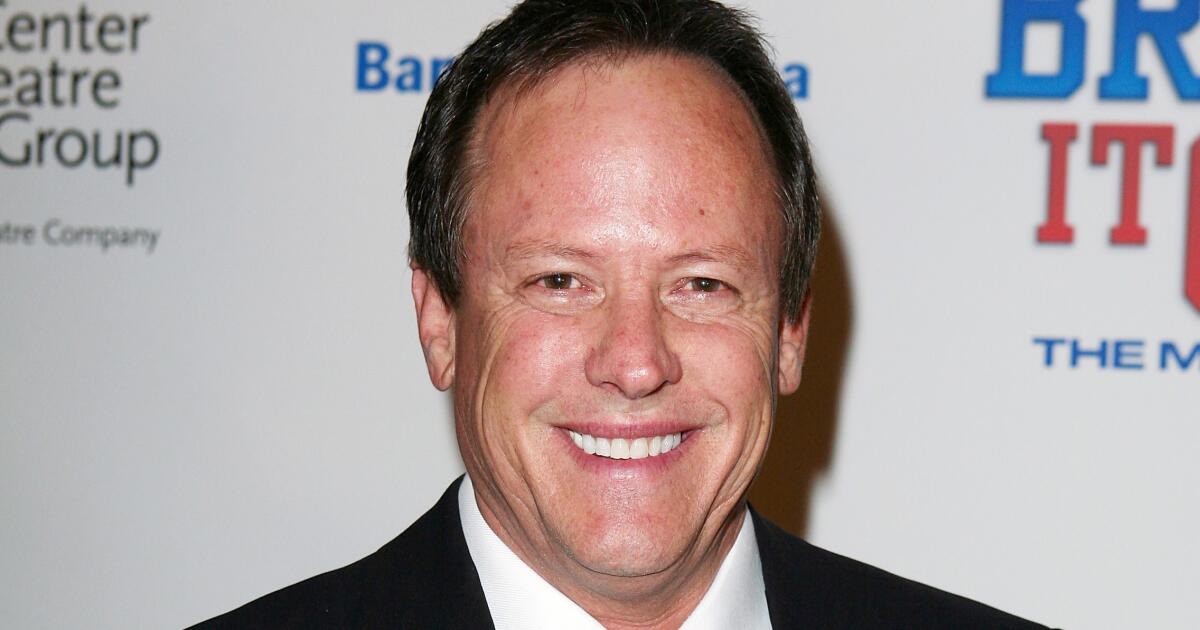
Jeff Webb, known as the “founder of modern cheerleading” for his role in turning the activity into a competitive sport, died Thursday following “a tragic accident,” a family spokesperson said Tuesday. He was 76.
A former yell leader for the University of Oklahoma cheerleading squad, Webb went on to form several organizations — including Varsity Spirit, the Universal Cheerleaders Assn. and the International Cheer Union — that helped him reshape what was once largely a sideline activity into an International Olympic Committee-recognized sport that features elements of gymnastics, stunts and dance.
Cheer Daily reports that an email sent by Varsity Spirit president Bill Seely to the company’s community said that Webb fell while playing pickleball earlier this month and suffered a severe head injury.
Webb was buried in a private ceremony for family on Sunday. A larger celebration of life will be held at a later date.
“Our father was, at his core, a man of inexhaustible energy, and he poured that energy into everything he did, from revolutionizing cheerleading to his never-ending — and constantly growing — list of activities,” Webb’s children said in a statement.
An avid outdoorsman, Webb managed a farm and hunting lodge and enjoyed offshore fishing and boating. He was also a pilot, author, publisher and guitar player.
“He brought that same spirit of dedication and encouragement to being a father and grandfather,” his children added. “To most people he is a legendary entrepreneur — to us, he was our soccer coach and on-demand comedian, our mentor and father-daughter dance partner, our solace and our source of strength.
“He taught us by example that a life well lived contains balance, that seriousness and silliness are not in fact opposites, that focus and discipline do not and should not preclude care and kindness.”
Through his organizations, Webb established hundreds of cheerleading competitions — including national championships that have been broadcast on ESPN for decades — and training camps. He was a pioneer in the manufacturing and marketing of cheerleading apparel and equipment and also played a role in establishing safety guidelines for the sport.
“The founder of modern cheerleading, [Webb] spent his life building the sport he loved and advocating for young people everywhere,” the International Cheer Union wrote on Facebook. “Our thoughts are with his family, friends and the entire global cheer community.
Varsity Spirit wrote on Instagram: “Join us in honoring the life and legacy of Jeff Webb, founder of Varsity Spirit and modern cheerleading. His impact has built a community that will continue to inspire generations to come.”
The Varsity Spirit post included a tribute video that featured an audio clip of Webb discussing the instant he realized just how much of an impact his efforts had on the sport.
“I was at UCA High School Nationals, and I looked out there — everybody had a smile on their face,” Webb said. “People think this is a little corny, but I had this almost epiphany experience. And it was just this emotion that came over me. It was, how lucky am I? How fortunate have I been to be able to have this idea and to build on it and have fabulous people kind of hook their star to my vision and for us together to build this great thing?”
Webb is survived by his wife, Gina, and his children, Jeffery and Caroline, and two grandchildren.

NEWYou can now listen to Fox News articles!
Los Angeles Rams star Puka Nacua has reportedly been accused of biting a woman and making anti-Semitic comments, according to TMZ.
The woman made the allegations in a rejected application for a temporary restraining order after an alleged incident on Dec. 31 in Los Angeles.
Nacua’s attorney, Levi McCathern, said, according to TMZ, that “the whole claim is nothing more than a shakedown attempt” and that the bite “left nothing more than a temporary mark.”
NFL Network reporter Jamie Erdahl interviews Los Angeles Rams wide receiver Puka Nacua (17) after the game against the Arizona Cardinals in the second half at SoFi Stadium on Dec. 28, 2024 in Inglewood, California. (Kirby Lee/Imagn Images)
A hearing is scheduled for April 14.
Fox News Digital has reached out to Nacua’s agent and the Rams for comment.
Nacua previously apologized for performing an “antisemitic” act on a YouTube stream in December.
UPSCALE SHOPPING DISTRICT ROCKED BY ALLEGED ANTISEMITIC BEATING AS LAWYER, 2 OTHERS CHARGED
Puka Nacua of the Los Angeles Rams reacts during the second quarter against the Indianapolis Colts at SoFi Stadium on Sept. 28, 2025 in Inglewood, California. (Ronald Martinez/Getty Images)
Nacua discussed touchdown celebrations on YouTuber Adin Ross’ stream, as Nacua’s Rams are set for a Thursday night affair in Seattle against the Seahawks.
Many, however, believed the celebration perpetuated a harmful anti-Jewish stereotype.
In the video, Ross instructed Nacua to spike the ball, flex and then rub his hands together. Ross, who is Jewish, has referred to the movement as his own “dance” or “emote.”
CLICK HERE TO DOWNLOAD THE FOX NEWS APP
Los Angeles Rams wide receiver Puka Nacua reacts following an NFL football game against the Buffalo Bills, Sunday, Dec. 8, 2024, in Inglewood, Calif. The Rams won 44-42. (Eric Thayer/AP Photo)
Nacua received overwhelming pushback and issued an apology Thursday, hours before his Rams took on the Seattle Seahawks.
“When I appeared the other day on a social media livestream, it was suggested to me to perform a specific movement as part of my next touchdown celebration. At the time, I had no idea this act was antisemitic in nature and perpetuated harmful stereotypes against Jewish people,” Nacua said in a “Stand Up to Jewish Hate” graphic. “I deeply apologize to anyone who was offended by my actions as I do not stand for any form of racism, bigotry or hate of another group of people.”
Follow Fox News Digital’s sports coverage on X, and subscribe to the Fox News Sports Huddle newsletter.

8 Of The Quietest Alaska Towns

Arizona Senate committee passes three bills aimed at reforming the Department of Child Safety

Community rallies behind Arkansas mother, GoFundMe more than doubles in less than 24 hours

U.S. Forest Service issues Southern California rattlesnake warning after two deadly bites

Man found dead in Colorado’s Black Canyon of the Gunnison

Florida High School Football Rankings: Top 25 teams – Oct. 21

How old is Bo Nix? What to know about Oregon quarterback ahead of 2024 NFL Draft

Cleary's 21 help Le Moyne down Central Connecticut State 69-64 in OT

99th annual Pony Swim held in Virginia

Indiana Members Credit Union announced as new anchor tenant at Bottleworks District

White House unleashes on Raskin for clinging to ‘deranged’ Jack Smith ‘lies’ in latest Trump docs flare-up

‘Keffiyehs seized, left to die’: Inside the Palestine Action hunger strike

LaGuardia Crash Timeline: Moments Before Air Canada Plane Collided With Fire Truck

Chicago alderwoman apologizes for ‘wrong place at the wrong time’ comment on slain student

Fake Euronews website targets Hungary election with false claims
-

 Detroit, MI7 days ago
Drummer Brian Pastoria, longtime Detroit music advocate, dies at 68
-

 Georgia1 week ago
How ICE plans for a detention warehouse pushed a Georgia town to fight back | CNN Politics
-

 Movie Reviews7 days ago
‘Youth’ Twitter review: Ken Karunaas impresses audiences; Suraj Venjaramoodu adds charm; music wins praise | – The Times of India
-
 Science1 week ago
Industrial chemicals have reached the middle of the oceans, new study shows
-

 Science1 week ago
How a Melting Glacier in Antarctica Could Affect Tens of Millions Around the Globe
-

 Sports4 days ago
IOC addresses execution of 19-year-old Iranian wrestler Saleh Mohammadi
-

 Culture1 week ago
Test Your Memory of Great Lines From Classic Irish Poems
-

 New Mexico3 days ago
Clovis shooting leaves one dead, four injured