Los Angeles, Ca
Many loathe public speakerphone calls, so why do people do it?


(NEXSTAR) – Few things are as universally reviled as a loud phone conversation infringing on your personal space. (Mosquitoes and taxes aside.) Doing it on loudspeaker is even more incendiary.
To me, having a phone conversation on speakerphone in public is puzzling. Doesn’t it make it harder to hear for everyone involved? Yet in the past month I’ve seen this behavior play out in a crowded airport terminal, the lobby of a boutique fitness studio and the grocery store pasta aisle. (Nowhere is safe!)
Aside from being odd, it’s rude, say etiquette experts. “Taking a call on a loudspeaker around others can unintentionally send the message that you’re not considering their presence or personal space,” said Myka Meier, founder of Beaumont Etiquette. “It can come across as inconsiderate or even self-centered, as though you assume everyone else should be subjected to your conversation.”
The fact that it’s a phone conversation — not just in-person chit-chat — could be part of the reason people find loud speakerphone calls so grating, speculated Ozlem Ayduk, professor and chair of the UC Berkeley psychology department. Because people have another choice (using headphones, or waiting until they get off the hypothetical bus), it seems like an intentional affront to other people’s peace and quiet.
“Talking to someone out loud in person on a bus where you’re dominating everybody else’s consciousness is just as rude as talking on the phone … in terms of real impact, it’s the same,” Ayduk said. “But there’s something about it being a phone, because I think we have conceptions that phone conversations are private, so it’s violating that expectation or assumption.”
People who use hearing aids (and might experience feedback when they hold a phone up to their ear) may get a free pass, but they’re not the only ones transgressing this unspoken rule.
The motivations for those without hearing impairment isn’t clearcut. It could be a number of things that lead to people speaking loudly — on the phone or otherwise — with abandon.
“I have no idea, but the person talking on the phone on a bus could be like, I don’t give a damn about all these people, you know, they’re just strangers to me. I’m never going to meet them again,” Ayduk said. “There may be some more nefarious reasons like somebody is narcissistic and they want to show the world how many friends they have. It could be totally benign to nefarious.”
They may also have trouble reading social cues and may not realize how their behavior impacts others, she explained.
Plus, how we act in any social situation also depends on the context we grew up in, our individual values and our goals. What’s rude to one person could be completely fine to another.
“We tend to temper our behavior depending on how we think it’s perceived, how socially acceptable those behaviors are,” Ayduk said.
The more you see the behavior happening around you, the more normalized it becomes. So if you see people speaking loudly on the phone all the time, you may not shy away from doing it yourself.
“Humans learn from observing other people’s behaviors. And especially in situations where there may not be very strong established norms, they look to others to gauge their own behavior,” she said.
Meier, for her part, hopes the norms around loud phone conversations won’t change too much. She suggests using speakerphone in private settings only, and generally being mindful of the people around you when taking a call.
“Whether you’re on the street, in a coffee shop, or even on public transport, the goal is to minimize the impact your conversation has on everyone around you. Being discreet and respectful makes all the difference,” she said.
Despite my fascination with this slice of human behavior, there hasn’t been much academic interest. Ayduk said she wasn’t aware of any scientific studies or journals published on the matter. (Free research paper idea for anyone who wants it!)
In the meantime, the conduct will remain a mystery to me. But people are complicated, after all. That’s what makes them so interesting to study.



The future of voice to text is here.
I’ve been testing a variety of tools that make taking notes, transcribing audio, and even voice typing faster and easier than ever.
If you have a smartphone, you’re already halfway there!
Google’s Pixel Recorder app is free and built into their smartphone. It’s excellent for transcribing meetings, lectures, and conversations – all in real time.
Apple’s Voice Memos App recently added transcriptions if you’re upgraded to iOS 18.
Samsung’s Voice recorder app now offers transcripts too – as long as you’re on their latest One UI 7 software. (Check Settings > About Phone > Software Information)
Got an older phone? Try Otter.AI. It works great for transcriptions across devices and you get 300 minutes a month free.
Don’t want to tie up your phone?
I’ve been testing AI-powered digital audio recorders from a startup named Plaud.
The Plaud Note is thin, records for hours, and can even clip to the back of your phone to record calls. Just make sure you know your local laws before using that feature.
The Plaud Pin can be clipped to your shirt or worn on your wrist for hands-free recording.
Both devices sync audio to a companion app that auto transcribes and summarizes.
You get five hours of transcription a month included, with options to pay for more.
Pricing for each gadget starts around $160 dollars.
Want to transcribe audio files on your computer?
My favorite Mac app is MacWhisper. You can even get it completely free – although paid versions are avaialble with more features and options.
On Windows, check out Vibe Transcribe, also free.
And for a web-based option, Whisper Web gets the job done.
Finally, if you want to type less and talk more… there’s an excellent AI voice-to-text app called Wispr Flow. It was previously Mac only but just became avaialble for Windows, too.
One you install it, you pick a hotkey. Then, instead of typing just press and hold down that key and dictate what you want to write.
Since it uses the power of AI, you can even stumble or ramble and it will clean up your words and get the punctionation right.
It’s a gamechanger for responding to emails fast! You get 2,000 words free each week with options to pay for more.
Enjoy your newfound time!

An alleged attack on a state prison officer by a 43-year-old inmate transferred from Los Angeles County is being investigated as attempted homicide, California Department of Corrections and Rehabilitation officials announced Tuesday.
The March 18 incident at Salinas Valley State Prison in Soledad reportedly unfolded just before 9 a.m. on what authorities describe as a “dayroom floor.”
The inmate, Anthony G. Ramirez, is believed to have pulled an improvised weapon from his waistband before attempting to attack custody staff member, according to a CDCR news release.
“Staff immediately responded, disarming Ramirez and placing him in handcuffs without incident,” the release detailed.
The 43-year-old, who was transferred to SVSP in 2008 after being sentenced to life with the possibility of parole for second-degree murder, with enhancements for the use of a firearm and causing great bodily injury or death, was placed in restrictive housing pending the investigation and possible felony prosecution by the Monterey County District Attorney’s Office.
Both Ramirez and the custody staff member were examined by medical personnel who noted no serious injuries.
Officials said that the California Correctional Peace Officers Association was notified of the incident and prison staff were offered peer support services and employee assistance programs.
Salinas Valley State Prison, opened in 1996, houses more than 2,400 minimum, medium, maximum and high-security inmates. The facility also offers vocational programs and academic classes and employs some 1,800 people.

A toxic algal bloom leaving an increasing number of marine mammals stranded along Southern California beaches shows no signs of subsiding and “will only get worse,” officials said Monday.
“This week, we saw more stranded dolphins (both alive and deceased) than we saw during the major domoic acid (DA) bloom in 2023,” Marine Mammal Care Center (MMCC) Los Angeles posted on Facebook.
Recent tests showed DA-producing algae levels have increased, and officials believe that trend will continue in the coming weeks. “We anticipate that it will only get worse,” the post read.
MMCC asked the public not to approach sick dolphins or sea lions on the beach because they can become aggressive upon awakening from a seizure.
“This is a safety issue for people and their pets as much as it is for the marine mammals,” officials said.
Beachgoers were also urged not to push stranded dolphins back into the water, saying it can reduce their chances of survival.
More information about domoic-acid poisoning can be found at https://marinemammalcare.org/domoic-acid/.
The volume of sick marine mammals has also had a financial impact on the MMCC.
“Our team is working heroically to respond to every call and to rescue every animal they can. Please share this post and give now at marinemammalcare.org/donate to give these marine mammals a second chance at life!” the MMCC stated.
Anyone who encounters a sick or stranded marine mammal can alert the nearest lifeguard and call 1-800-39-WHALE to make a report.

Washington D.C. Named 2026’s 6th “Healthiest City in America” – The MoCo Show

Man in custody after mother and 12-year-old son killed in shooting: Akron Police

Joint Venture Acquires 243-Bed Student Housing Community Near University of Texas at Austin

Governor Ivey proclaims March 30 Doctors Day in Alabama

How Sanctioned Russian Arctic LNG Hardware Could Find a Second Life in Alaska’s ‘Polar LNG’ Project

Florida High School Football Rankings: Top 25 teams – Oct. 21

How old is Bo Nix? What to know about Oregon quarterback ahead of 2024 NFL Draft

Cleary's 21 help Le Moyne down Central Connecticut State 69-64 in OT

99th annual Pony Swim held in Virginia

Indiana Members Credit Union announced as new anchor tenant at Bottleworks District

Video: Iran to Allow More Oil Ships Through Strait of Hormuz, Trump Says

Dem senator warns deportation could let Virginia woman’s illegal immigrant killer ‘escape accountability’

Newsletter: G7 ministers to hold talks on war’s economic fallout
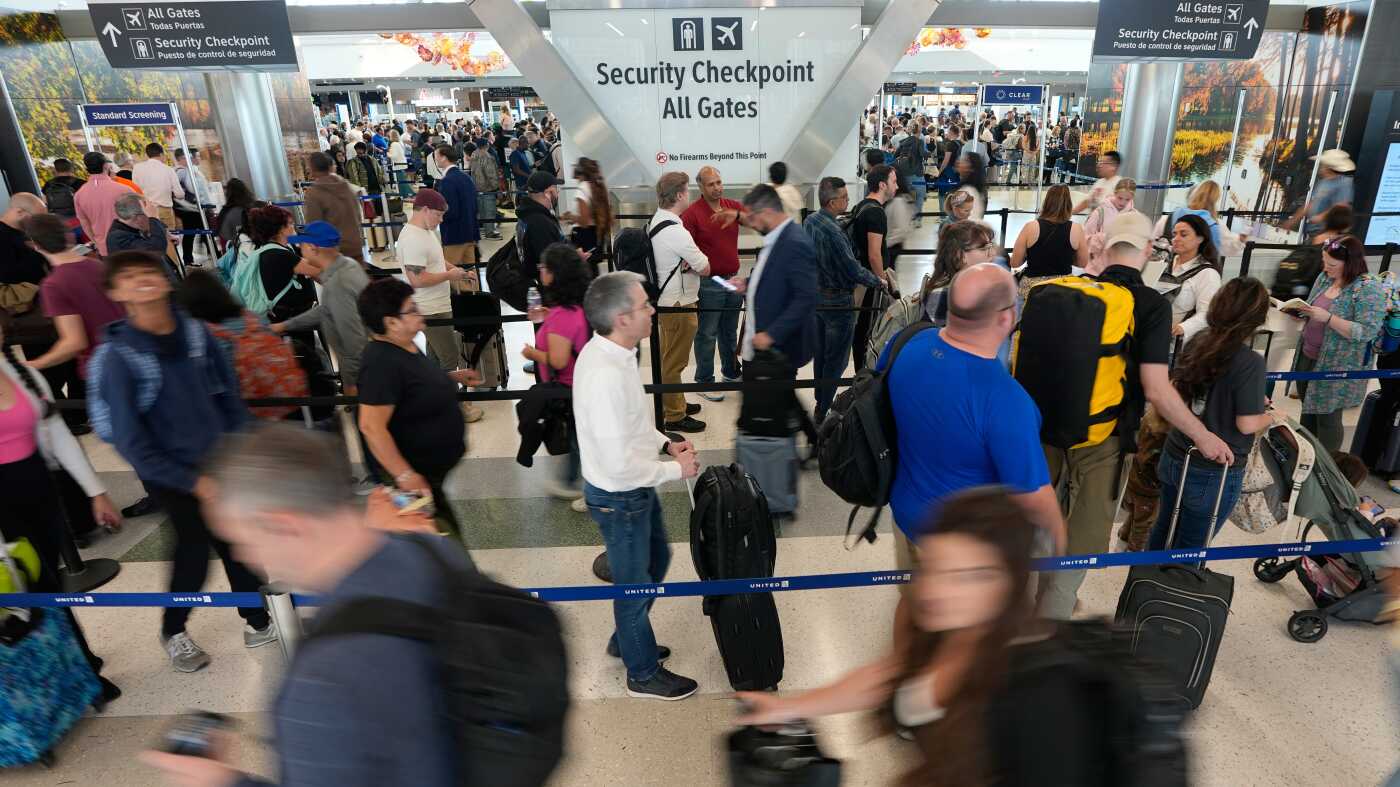
ICE officers could remain at airports after TSA workers are paid

Scathing report claims nation’s oldest labor union ‘betrayed’ MAGA members through ‘shocking’ spending
-

 Sports1 week ago
IOC addresses execution of 19-year-old Iranian wrestler Saleh Mohammadi
-

 Miami, FL4 days ago
Jannik Sinner’s Girlfriend Laila Hasanovic Stuns in Ab-Revealing Post Amid Miami Open
-

 New Mexico1 week ago
Clovis shooting leaves one dead, four injured
-

 Politics1 week ago
Schumer gambit fails as DHS shutdown hits 36 days and airport lines grow
-

 Tennessee7 days ago
Tennessee Police Investigating Alleged Assault Involving ‘Reacher’ Star Alan Ritchson
-

 Minneapolis, MN4 days ago
Boy who shielded classmate during school shooting receives Medal of Honor
-

 Science1 week ago
Record Heat Meets a Major Snow Drought Across the West
-

 Politics1 week ago
Trump gives Iran 48-hour ultimatum to reopen Strait of Hormuz or face strikes on power plants