Washington, D.C
Why Trump has pardon power over DC cases


President Donald Trump’s pardons of the Jan. 6 defendants and two D.C. police officers convicted in the death of Karon Hylton-Brown have many people asking questions about the president’s pardon power.
A law professor who specializes in pardons explains the president’s unique power to intervene in local D.C. criminal prosecutions.
In his first hours back in office, Trump issued pardons to hundreds of Jan. 6 defendants, many who were convicted of attacking police officers during the insurrection at the U.S. Capitol. Trump also extended his pardon power to two Metropolitan Police Department officers who had been convicted in the death of Karon Hylton-Brown.
While the Jan. 6 defendants were charged with federal crimes, the two MPD officers were charged with local crimes.
“Article II of the Constitution gives the president of the United States the power to pardon offenses against the United States government, meaning federal offenses, but also, it turns out the president does have the pardon authority over District of Columbia offenses as well, given the novel nature of D.C.,” said Kimberly Wehle, author of “Pardon Power: How the Pardon System Works — and Why.”
Because most crimes in D.C. are prosecuted by the U.S. attorney, Wehle explains, the president has power in D.C. he doesn’t have elsewhere, whether the cases are brought in federal court or D.C. Superior Court.
“Given the unique nature of the District of Columbia, but there’s no other part of the country where he would be able to pardon a state crime,” Wehle said.
While reporters have asked the president about the reasons for the pardons, Wehle says the public rarely gets specific details.
“So not only is there no limits or oversight on the president’s ability to pardon, but there’s like a confidentiality lock on the information that the president has exclusive discretion whether to disclose it to the public,” she said.
As for how someone gets a pardon, and how they qualify: “There’s an application online on the Department of Justice website,” Wehle said. “And there are criteria, including that you have to have served your sentence and waited five years to be eligible, which of course is not what happened with the Jan. 6 insurrectionists. In addition, there’s a number of criteria. Two that are prominent are, you have to demonstrate remorse and accountability for the crime, and you can’t be violent. Those are generally disqualifying by the office of the pardon attorney in the Justice Department. But, of course, the president is not bound by those recommendations.”
About 10,000 people will apply for pardons during a president’s term, she said.
Once someone receives a pardon, rights such as the ability to buy a gun and to vote are restored. A person can refuse a pardon, as we have seen with one of the Jan. 6 defendants, she said.
It’s not just Trump who’s made headlines for issuing pardons. Former President Joe Biden has received backlash for pardoning his son Hunter in connection with his felony gun and tax convictions — a decision Biden made after previously stating he would not. Then, during his final hours in office, Biden also pardoned several people including Dr. Anthony Fauci, members of the Jan. 6 committee and members of the Biden family.



‘No Kings’ protests across DC
Thousands of people took to the streets of Washington, D.C., and across the U.S. on Saturday to protest President Donald Trump’s administration as part of massive “No Kings” protests.
WASHINGTON – Washington, D.C., and the surrounding DMV area are set to host the third major “No Kings” march and rally this Saturday, March 28, 2026, as part of a wave of nationwide demonstrations planned for the same day.
Event details:
Organized locally by area chapters of Indivisible and allied grassroots groups, the event aims to draw protesters to downtown Washington and surrounding counties to oppose policies of the Trump administration and to voice broader concerns about civil rights and democratic norms.
The march will kick off at 10 a.m., with participants gathering at Memorial Circle near Arlington Cemetery, with additional access from the Blue Line or nearby parking at the Fashion Centre at Pentagon City, according to the event organizers. There is no public parking in the immediate area, but participants can be dropped off at the circle.

People take part in a “No Kings” protest in Washington, D.C., the United States, on Oct. 18, 2025. (Photo by Li Rui/Xinhua via Getty Images)
From there, the procession will head across the Memorial Bridge into Washington, D.C., passing the Lincoln Memorial and continuing on to the Washington Monument.
At the conclusion of the march, participants can walk to a downtown rally, from 1:30 p.m. to 4 p.m.
A broader movement
Big picture view:
A nationwide series of “No Kings” protests is set for March 28—over 3,000 events are scheduled.
These protests are organized by groups including Indivisible and the broader 50501 Movement, which have coordinated previous actions in June and October 2025 that drew millions of participants nationwide, including in Washington, D.C.
Other ‘No Kings’ rallies in the DMV
Dig deeper:
In addition to the main rally in downtown D.C., several other demonstrations tied to “No Kings 3” are scheduled around the DMV this Saturday.
In Arlington, Virginia, activists are organizing a march across the Memorial Bridge beginning at 10 a.m., with protesters expected to continue into West Potomac Park before joining larger crowds in the District proper, for example.
There are hundreds of “No Kings” events scheduled to take place this Saturday throughout the DMV. You can click here to find a list of all of them.
The Source: Information from “No Kings” organizers, Indivisible, Mobilize and previous FOX 5 DC reporting.

ASHEVILLE, N.C. (FOX Carolina) – The Great Mother March has begun a 500-mile pilgrimage from Asheville, North Carolina, to Washington, D.C.
Organizers said the 32-day journey is a women’s empowerment pilgrimage inspired by the Buddhist monks’ Walk for Peace.
“This is a universal movement,” founder Whitney Freya, an artist, author and sacred activist, said. “Everyone has a mother. Every tradition reveres a Great Mother. And we all depend on Mother Earth. This march is a call to honor those truths while reminding us what is possible when we move together, with intention, hope, and love.”
The march is expected to end April 22, Earth Day, when participants reach the steps of the U.S. Capitol.

Here’s a look at the group’s route:

Organizers said the group will walk alongside the Appalachian Mountains through rural communities in North Carolina and Virginia, with planned stops including Black Mountain, Old Fort, Marion, Linville and Boone, North Carolina.
From there, the group plans to travel via Todd and West Jefferson, North Carolina, and the River Country Campground along the New River, to the Peace Pentagon near Independence, Virginia.
The marchers are expected to arrive in Galax, Virginia, on April 1, then continue to Hillsville, Floyd, Ferrum and Rocky Mount, arriving in Rocky Mount on April 5.
The group is expected to reach Lynchburg on April 9 and travel up U.S. 29 to Waynesboro, arriving April 12.
Organizers said the marchers plan to arrive in Charlottesville on April 13 and spend April 14 at IX Art Park to rest and prepare for the final leg to Washington.
From Charlottesville, the group plans overnight stops in Barboursville, Orange, Culpeper and Warrenton, Virginia, before arriving in Manassas on April 19. Additional stops include the Workhouse Arts Center in Lorton, Virginia, and Alexandria, Virginia, ahead of the group’s arrival in Washington on April 22.
Feel more informed, prepared, and connected with FOX Carolina. For more free content like this, download our apps.
Copyright 2026 WHNS. All rights reserved.

A U.S. Park Police officer was shot in Washington, D.C., while on duty, according to a statement from the agency.
Park Police said the officer was shot at 7:30 p.m. on Monday in Southeast Washington on Queens Stroll Pl.
The officer has been transported to a local hospital, officials said.
The circumstances of the shooting are unclear. A Park Police spokesperson told ABC News the officer has non-life-threatening injuries.
Attorney General Pam Bondi said on X that she has spoken to D.C. Mayor Muriel Bowser and Metropolitan Police Chief Jeffery Carroll and was briefed on the shooting.
“Please pray for the officer’s recovery,” the attorney general said.
This is a developing story. Please check back for updates.
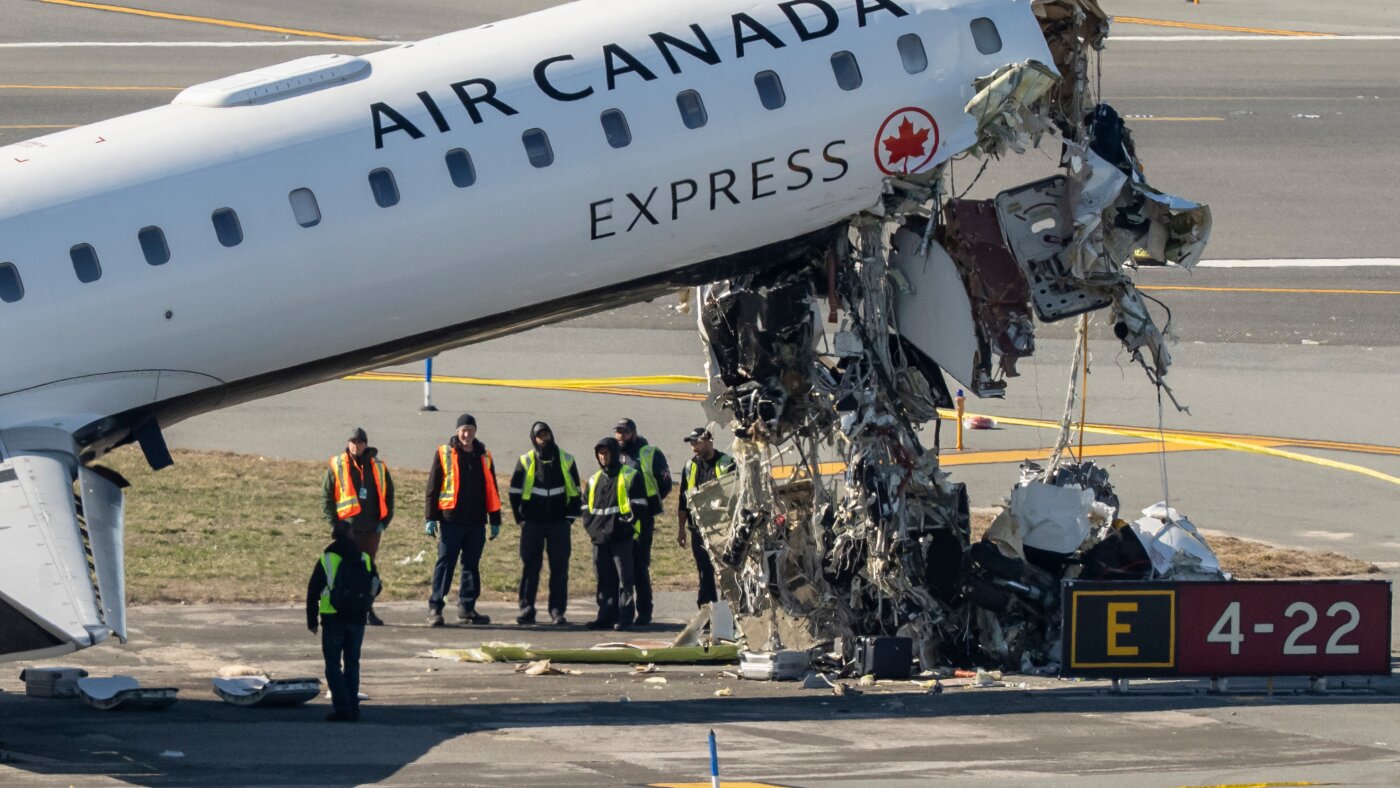
An air traffic controller was juggling extra roles during the LaGuardia plane crash

Video: LaGuardia Crash Survivors Recount Ordeal

Michigan ‘adventure seekers’ take flight at new experiential venues

Barricaded suspect in standoff with police in San Francisco’s Tenderloin neighborhood

Jack Hughes scores twice as Devils beat Stars 6-4, end Dallas streak with four-goal first period

Florida High School Football Rankings: Top 25 teams – Oct. 21

How old is Bo Nix? What to know about Oregon quarterback ahead of 2024 NFL Draft

Cleary's 21 help Le Moyne down Central Connecticut State 69-64 in OT

99th annual Pony Swim held in Virginia

Indiana Members Credit Union announced as new anchor tenant at Bottleworks District
An air traffic controller was juggling extra roles during the LaGuardia plane crash

Iran War: Pentagon set to send thousands of elite 82nd Airborne troops to region | BBC News

Video: Passengers Wait in Long Security Lines at LaGuardia After Deadly Crash

King Charles to address Congress in historic first state visit to Washington

Iran names successor to security chief killed in US-Israeli attack
-

 Detroit, MI6 days ago
Drummer Brian Pastoria, longtime Detroit music advocate, dies at 68
-

 Georgia1 week ago
How ICE plans for a detention warehouse pushed a Georgia town to fight back | CNN Politics
-

 Movie Reviews6 days ago
‘Youth’ Twitter review: Ken Karunaas impresses audiences; Suraj Venjaramoodu adds charm; music wins praise | – The Times of India
-

 Alaska1 week ago
Police looking for man considered ‘armed and dangerous’
-

 Education1 week ago
Video: Turning Point USA Clubs Expand to High Schools Across America
-

 Sports3 days ago
IOC addresses execution of 19-year-old Iranian wrestler Saleh Mohammadi
-
 Science1 week ago
Industrial chemicals have reached the middle of the oceans, new study shows
-

 New Mexico2 days ago
Clovis shooting leaves one dead, four injured