To understand Maggie Michael’s paintings, start from the bottom.
Washington, D.C
Review | Maggie Michael may be D.C.’s most vital, volatile painter


In “Understory,” a show of Michael’s recent works on view near Union Market, motion is always key. Tall vertical paintings such as “Boulder Monument (Orange)” (2020/2022) and “Moon Fall (Mt. Hood, Mt. Sopris, Clay)” (2024) evoke the volcanic action of an idea rising to the surface and spilling over. The latest works by Michael — perhaps the most vital and visible D.C. painter since Sam Gilliam — unfold as a series of volatile discoveries.
Michael’s lyrical painting is a reminder of the power of pure abstraction as a lens for finding the world, as it is and as it could be. That Michael’s first major solo show since 2016 arrives at an all-time nadir for abstract-expressionist painting only makes the show more riveting.
Ten years ago, things were different. An overheated market was fixated on highly abstract post-minimalist painting, inviting a craze by collectors for “zombie formalism.” But abstraction is no longer top of mind for curators and dealers. Instead, museums and galleries across the country are deeply engaged with figurative painting, tackling urgent issues about identity and representation. Some critics say the rebound has gone too far, subbing a fad for abstraction with a fever for “zombie figuration.”
Michael’s style recalls mid-century ideals about the value of painting. Objects make frequent appearances on her canvases. A small grid-like device shows up in “Pink for Kiefer, Homage to Midgard” (2023-2024) and other works, a way of mentioning the hard-edge geometric tradition in abstract painting while also toying with the notion of the surface. The snakeskin that Michael pins to “Night Studio” (2024) is a casual quotation of Robert Rauschenberg, whose sculptural combines stretched the notion of painting with taxidermy and tires. She has an arsenal of abstract-expressionist strategies at her disposal, but as a stylist, she makes them all her own.
Michael produced 15 of the paintings in “Understory” while working as an artist-in-residence at the Joan Mitchell Center in New Orleans. During her residency, Michael says, she tried to produce a diptych or triptych in tribute to Mitchell, the New York School artist who relished large-format paintings, but it didn’t happen. That’s not so surprising. Michael is a tighter painter, and her style is much more densely plotted. For “Understory,” which occupies a space that once served as a Lululemon store, Michael uses the former fitting rooms to showcase a rotation of more than a dozen small paintings, some as little as 10 inches square — small in scale but not in scope.
With its epic sweep, “Chagall’s Horse Lands in Utah” (2021-2022) could easily take up an entire wall. In the painting, the loosest figure of a horse charges under an ocher orb that might signify a setting sun. Michael frames this circle with a stencil from player-piano print roll, another one of the artist’s signature marks. This painting summons the vast reaches of a twilight dreamscape, but the actual production is quite condensed. Michael delivers novellas that read like myth.
“Chagall’s Horse Lands in Utah” could be a fitting title for Michael’s entire project. Her approach to drafting abstract sagas draws on a rich and distinctly American painterly tradition. One of her own paintings tests the rule: “American Seance for CoBrA (Malachite)” (2022) stands apart from the others, with a muddled, primitive, almost Crayola-like brushstroke. Both the title and style nod to CoBrA — a collective of postwar European painters from Copenhagen (Co), Brussels (Br) and Amsterdam (A) — and specifically within this group Karel Appel, the founder from Amsterdam. Nestled within this very non-American and un-Michael-like piece is a section of painting that resembles malachite, a mineral whose radial copper banding is prized by Navajo and Hopi tribes in the Southwest.
These vivid undercurrents bubble up in one painting after another, although the sheer size of “Understory” means that viewers might miss such moments. The show, assembled by Michael herself, features nearly 50 paintings staged on multiple levels. At 3,000 square feet, the space is vast enough that it doesn’t feel cramped or forced; in fact, only an especially prolific artist could hope to fill it. But “Understory” risks being overwhelming. Two or three subsets of paintings in this show could easily stand on their own.
The most difficult painting on view might also be the most figurative. The composition of “Olympia’s Odalesque” (2017/2018) speaks directly to Édouard Manet’s “Olympia” (1863), the reclining nude Venus whose hand rests on her thigh like a tarantula. In Michael’s composition, a hard-edge rectangle intersected by a chevron conveys the thrust of a chaise longue within a frame. But the figure-ish shape inside that frame is cramped, its head missing, with only a nipple-like protrusion to suggest any feminine identity — a bleak reading of the original.
It may take another biennial or two for expressionist paintings to come back into vogue. Abstraction has lost its place, perhaps, but none of its power. Swoops of texture and gesture in a painting such as “Antelope Falls, Nude Descending” (2024) can unlock a primal feeling, as poetry or music manifests goose bumps or heart palpitations. Michael’s paintings dwell in that rush of blood, that sense of sensation.
If you go
Maggie Michael: Understory
1256 Fourth St. NE. unionmarketdc.com.



Washington, D.C
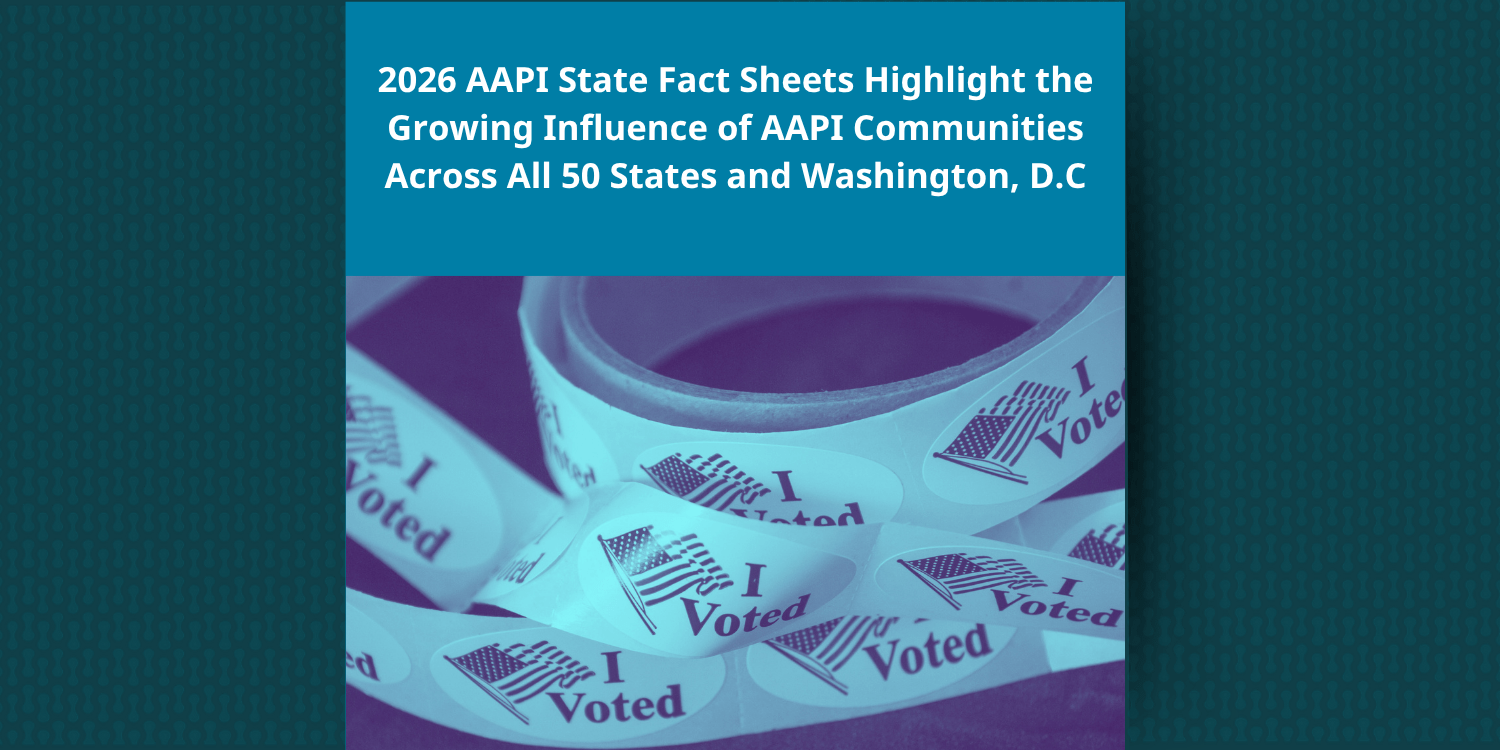
AAPI Data Releases 2026 AAPI State Fact Sheets, Highlighting the Growing Influence of AAPI Communities Across All 50 States and Washington, D.C. – AAPI Data
MEDIA CONTACT:
Amanda Ong
press@aapidata.com
AAPI Data Releases 2026 AAPI State Fact Sheets, Highlighting the Growing Influence of AAPI Communities Across All 50 States and Washington, D.C.
Washington, DC – Asian and Pacific Islander American Vote (APIAVote) and AAPI Data today released the 2026 AAPI State Fact Sheets, a comprehensive set of demographic and voter data for all 50 states and the District of Columbia. Updated every two years, the fact sheets provide policymakers, advocates, researchers, journalists, campaigns, and community organizations with essential data on the nation’s fastest-growing racial demographic and voter bloc.
“AAPI voters are shaping elections nationwide, yet our communities are still too often overlooked or misunderstood,” said Christine Chen, Executive Director of APIAVote. “These fact sheets give organizers, policymakers, media, and advocates the context they need to build more informed, effective, and inclusive engagement strategies and to better understand AAPI communities’ growing impact on American democracy.”
“Our communities are growing rapidly in places well beyond the Northeast and the Pacific West,” said Karthick Ramakrishnan, Founder and Executive Director of AAPI Data. “It is critical for news media, funders, and civic engagement organizations to use these updated findings to ensure accuracy and efficacy in their work.”
The 2026 State Fact Sheets include state-specific information on:
- AAPI population and eligible voters
- Population growth trends
- Citizenship and immigration data
- Language access and English proficiency
- Economic indicators, including poverty and health insurance coverage
- Geographic concentrations by county
- Voter demographics and civic engagement
The fact sheets are based on data from the U.S. Census Bureau’s American Community Survey and include both monoracial and multiracial AAPI populations. Together, these data provide a more complete picture of AAPI communities and equip decision-makers with the information needed to better serve and engage one of the country’s fastest-growing populations.
The 2026 AAPI State Fact Sheets are available for free and may be downloaded individually by state or as a combined report at: https://apiavote.org/policy-and-research/aapi-demographics-by-state/. The factsheets can also be found on the AAPI Data website: https://aapidata.com/demographics/2026-aapi-voter-state-fact-sheets
About AAPI Data
AAPI Data is a national research and policy organization producing accurate data to support community narratives that drive action toward enduring solutions for Asian American, Native Hawaiian and Pacific Islander (AANHPI) communities. Learn more at aapidata.com.
About APIAVote
Asian and Pacific Islander American Vote (APIAVote) is the nation’s leading nonpartisan nonprofit dedicated to engaging, educating, and empowering Asian American and Pacific Islander (AAPI) communities to strengthen and sustain a culture of civic engagement. See our website for more information at https://www.apiavote.org/

WASHINGTON, D.C. (WSAW) – It’s a day for gathering and remembering victims of internet crimes.
The parents of Bradyn Bohn, the D.C. Everest teen who was a victim of sextortion, are in Washington, D.C. for the event.
A sign with Bradyn’s picture, his name, ‘forever 15′– along with too many more– sit outside the capitol.
It’s the inaugural ‘Social Media Victims Remembrance Day.’ A number of lawmakers were on hand. Bradyn’s mom, Brittney Bird, says Congress needs to choose families over big tech.
“My first thought is it’s absolutely heartbreaking,” she said. ”None of us should be here. These groups have been doing this for coming up on four years now. And there hasn’t been a change. If four years ago there would have been a change, my son would be here. Countless children would still be here. It’s heartbreaking, but at the same time there’s strength in numbers. So there’s that strength. And it gives us hope, you know, that things will change and that we’ve got each other.”
Bradyn died by suicide in March 2025 after a sextortion scheme. The efforts of his parents helped lead to the creation of Bradyn’s Law, signed into law last December. It established sextortion as a new crime, and imposes severe penalties on perpetrators.
Click here to download the WSAW news app or WSAW First Alert weather app.
Click here to submit a news tip or story idea.
Copyright 2026 WSAW. All rights reserved.
Washington, D.C
First Nebraska civics bee champion crowned, will head to Washington, D.C. for national competition

The state competition, which was put on by the Nebraska Chamber of Commerce & Industry, had three rounds. The first two rounds included 20 multiple choice questions about various historical documents, court cases and civics concepts.
In the final round, the top five students gave short pitches about the essays they submitted on improving a problem in their community. Bernal wrote about the Tyson Plant closure after she visited Lexington in December.
“Things were really starting to be like, ‘Oh my gosh, the Tyson plant is actually closing,’” Bernal said. “Around two weeks later, during the first day back from winter break, my social studies teacher said we’re going to be writing an essay about a problem we see in our community. I thought, ‘Wow, this is something really positive I could use my voice for.’”
In her essay, Bernal said she wanted to bring awareness to the closure and host job fairs for those impacted. Other topics included student mental health, impacts of flooding and the childcare crisis.
Tara Lea, executive vice president of partnerships and programs for the Nebraska Chamber of Commerce & Industry, said more than 500 students submitted essays across Nebraska, making the state fifth in the nation for participation and first per capita.
“We had no idea what to expect when we signed up to do this,” Lea said. “We were just excited all 50 states were doing it. We were proud to be one of them, but Nebraska showed up.”
-

 Miami, FL1 minute ago
Hard Rock Cafe lets Downtown Miami lease lapse after 30-plus years
-

 Boston, MA3 minutes ago
Federal judge in Boston bars Trump from implementing proof of citizenship requirement to vote – The Boston Globe
-

 Denver, CO8 minutes ago
Denver Broncos Foundation launches extension of ‘ALL IN. ALL COVERED.’ emphasizing youth football participation
-
Seattle, WA11 minutes ago
Iran and Egypt to play in Seattle ‘Pride Match’ despite earlier complaints | The Jerusalem Post
-

 San Diego, CA16 minutes ago
Con Rangers San Diego Comic-Con 2026 Exclusives
-

 Milwaukee, WI23 minutes ago
Did Milwaukee Get Enough in Return for Giannis?
-

 Atlanta, GA26 minutes ago
Minnesota’s golden gift to Atlanta just became Wolves’ worst nightmare
-

 Minneapolis, MN31 minutes ago
FOX 9 Good Day: June 24, 2026

