Washington, D.C
‘Come Join Us!’: Washington, DC’s ‘Little Rome’ Hosts 1,200 for Eucharistic Procession


More than 1,200 filled the streets of the neighborhood known as “Little Rome” in Washington, D.C., on Saturday to pay witness to Jesus Christ in the Blessed Sacrament as part of the National Eucharistic Pilgrimage.
After Mass at the Basilica of the National Shrine of the Immaculate Conception celebrated by Auxiliary Bishop Evelio Menjívar-Ayala, the crowd of faithful filed out of the church and spilled into the streets to follow the procession.
Armed with tote bags provided by the Archdiocese of Washington that were filled with everything needed for the day’s sojourn — water, a snack, a map of the procession route, and rosary beads — the pilgrims set out for a morning of fellowship, prayer, and time spent in proximity to Jesus in the Eucharist.
The two-mile-long procession route bordered the basilica and the Catholic University of America and traveled through Brookland, a densely populated neighborhood with a lively business district that is home to residences of several religious orders.
The June 8 procession through this corner of the nation’s capital was part of the broader National Eucharistic Pilgrimage, an initiative of the U.S. Catholic bishops’ National Eucharistic Revival intended to foster a greater understanding and devotion to the real presence of Jesus Christ in the Eucharist.
While those who live and work in the Brookland neighborhood of Washington are not strangers to the rhythms of Catholic life there (the basilica’s church bells mark the hours to the tune of “Ave Maria”), the sheer numbers of faithful in the streets drew the attention of dozens of curious onlookers. They stood on their front lawns, apartment balconies, or roofs to get a closer look as the procession passed by their homes.
“Come join us!” one procession-goer beckoned onlookers who watched the proceedings.
Two laborers working on the roof of a house under construction smiled and waved back as they paused to watch the Eucharist and the crowd pass.
A group of people sitting outside a coffee shop stopped their conversation to take pictures of the procession as the faithful sang hymns and prayed the rosary, alternating between English and Spanish.
Sister Margaret Regina of the Little Sisters of the Poor told CNA: “It’s the first time I’ve seen [something like this] in the area.” The sister said she was happy to see so many people of different backgrounds at the procession.
There is a “need to profess our faith” and tell people: “This is what I believe,” she said. “We need this peace that only [Christ] can bring because our hearts have to change and be like him.”
The procession brought a diverse group of Catholics together to celebrate the Eucharist: a few communities of religious sisters, dozens of priests, and hundreds of laypeople from various backgrounds speaking, praying, and singing in different languages.
It took more than three hours for the procession to slowly wend its way from the basilica to the John Paul II Shrine, making stops at the “Angels Unaware” statue at Catholic University, at the home of the Nashville Dominicans, the Dominican House of Studies, and the offices of the U.S. Conference of Catholic Bishops.
At each stop, the priests carrying the monstrance and its canopy and young people following with candles held high stopped as speakers read reflections on the Gospel (alternating between English and Spanish). The crowd, young and old alike, knelt on the hot asphalt for a moment to adore the Eucharist.
“[The Eucharist] strengthens us, unites us with the body of Christ, and equips us to carry on his mission in the world,” Father Robert Hitchens, administrator of the Ukrainian Catholic National Shrine of the Holy Family, told pilgrims as they gathered near the Basilica Rosary Walk and Garden.
In emphasizing the real presence of Jesus Christ in the Eucharist, Hitchens said the Blessed Sacrament “is not merely a symbol” but rather “a banquet.”
When the procession reached its final destination of the day for Benediction — the St. John Paul II National Shrine — children threw rose petals on the ground ahead of the procession. Some of the older attendees, including religious sisters, who were not able to walk for the whole procession were given chairs to watch the procession’s closing stop at the shrine. Some, with the help of aides, rose from their seats to stand in reverence as the procession neared.

Sister Mary Vincent of the Little Sisters of the Poor told CNA the procession “was a gift to this area” and said the reverence, with so many Catholics kneeling in the streets to adore Christ in the Eucharist, was “absolutely beautiful.” She said it can help strengthen faith “when you see everyone around you adoring him.”
The pilgrimage, which began on Pentecost, has four routes: from the north, south, east, and west, all heading to Indianapolis for the July 17–21 National Eucharistic Congress.
The Washington, D.C., procession was part of the Seton Route, which began on the East Coast in New Haven, Connecticut. The route has brought Christ through the streets of New York City, Philadelphia, and Baltimore along with other communities in the northeast. The route will continue into southwest Pennsylvania before heading into Ohio and then Indiana.
Cardinal Wilton Gregory, the archbishop of Washington, celebrated a solemn Mass for the National Eucharistic Pilgrimage in the upper church of the basilica at noon on Sunday, June 9, the day after the procession. Bishop Michael Burbidge of the next-door Diocese of Arlington, Virginia, was a concelebrant.



WASHINGTON – Navy Yard is back on the list of D.C.’s juvenile curfew zones for the weekend, a week after a large gathering of teens turned violent in a nearby park.
D.C. Police announced three curfew zones beginning Friday night: Navy Yard, Chinatown and the U Street Corridor. Under the emergency juvenile curfew law, anyone under 18 is prohibited from gathering in groups of nine or more within the designated zones from 8 to 11 p.m. through Sunday unless accompanied by an adult.
Navy Yard added back to DC’s juvenile curfew zones this weekend
Navy Yard was not included as a curfew zone last weekend, when police say roughly 200 teens gathered in the area. Videos posted to social media showed several teens assaulting another. Police, with assistance from the National Guard and Secret Service, arrested two teens. One was accused of firing a gun into the air, the other accused of trying to discard a gun in a rideshare vehicle. At least two victims were forcibly robbed.
City leaders enacted the temporary curfew law in response to a rise in teen takeovers across the District. But the measure is set to expire April 15, and Councilmember Brooke Pinto, who chairs the Judiciary and Public Safety Committee, said this week there are not enough votes to extend it again.
READ MORE: DC curfew zones: 18 juveniles stopped first night
Emergency Curfew Legislation | DC Police
The Juvenile Curfew Second Temporary Amendment Act of 2025 is in effect through April 15, 2026
What does the law say?
The Juvenile Curfew Second Temporary Amendment Act of 2025 states that all persons under the age of 18 cannot remain in any public place or on the premises of any establishment within the District of Columbia during curfew hours, unless they are involved in certain exempted activities.
The law gives the Chief of Police the authority to establish Extended Juvenile Curfew Zones and allows the Mayor of the District of Columbia to authorize an Emergency Juvenile Curfew.
What are the curfew hours?
Citywide curfew hours are 11:00 pm to 6:00 am, seven days a week.
Juvenile Curfew Zones
In Juvenile Curfew Zones, any person under the age of 18 gathering in a group of nine (9) or more youths in any public place or on the premises of any establishment within the perimeter of an extended juvenile curfew zone must leave the area unless engaged in certain exempted activities. The Chief of Police will designate the curfew hours within these zones and communicate them to the public, but they will not begin before 8:00 pm or end after 6 am.
A list of declared Juvenile Curfew Zones is available in a link at the bottom of this page. That list includes zones declared in July and August 2025 under the first Juvenile Curfew Amendment Act of 2025, and in November 2025 under Mayor’s Order 2025-115.
Juvenile Curfew Zone Petition
Pursuant to the emergency law, an Advisory Neighborhood Commission (ANC), business improvement district (BID), or Main Street organization may petition the Chief of Police to establish a Juvenile Curfew Zone with extended juvenile curfew hours in an area covered by, or adjacent to the area covered by, the organization.
The petition must be approved by a formal vote of the members of the ANC, or the members of the BID or Main Street board of directors.
For more information on submitting a petition, please visit this form.
Does the curfew law apply to non-District residents?
Yes. The curfew law applies to all persons under the age of 18 who are in the District of Columbia during curfew hours. This includes both District residents as well as young people who reside elsewhere.
What are the penalties for violating the law?
A parent or legal guardian of a juvenile under the age of 18 commits an offense if he or she knowingly permits, or by insufficient control allows, a minor to violate the curfew law. Any adult who violates the Juvenile Curfew Act is subject to a fine not to exceed $500 or community service. A minor who violates curfew may be ordered to perform up to 25 hours of community service.
Persons under the age of 18 are exempt from curfew if they:
- Accompany a parent or guardian
- Complete an errand at the direction of a parent or guardian, without detour or stop
- Ride in a motor vehicle involved in interstate travel
- Work or return home from a job, without detour or stop
- Become involved in an emergency
- Stand on a sidewalk that joins their residence or the residence of a next-door neighbor, if the neighbor did not complain to police
- Attend an official school, religious, or other recreational activity sponsored by the District of Columbia, a civic organization, or other similar group that takes responsibility for the juvenile (this includes traveling to and from the activity)
- Exercise their First Amendment rights protected by the US Constitution, including the free exercise of speech, religion, and right of assembly
Is a Curfew Law Constitutional?
Passed in 1995, The Juvenile Curfew Act of 1995 (DC Code 2-1541 et. seq.) was set up to protect the health and safety of young people and our communities. After the law was challenged in court, MPD stopped enforcement until the court decided whether the law was constitutional. In June 1999, the US Circuit Court of Appeals for the District of Columbia found the law to be constitutional. The District began enforcing the law again in the fall of 1999. MORE ONLINE
The Source: Information in this article comes from the Metropolitan Police Department and previous FOX 5 reporting.
Washington, D.C
Road closures, parking restrictions for DC’s Rock ‘n’ Roll Half Marathon – WTOP News

Saturday’s Rock ‘n’ Roll Half Marathon and 5k will have thousands of runners rocking through D.C. But drivers will want the party to end as fast as possible.
This year’s Rock ‘n’ Roll Half Marathon and 5K run will have thousands of runners rocking through D.C. on Saturday. But drivers will want the party to end as fast as possible, as the race will bring a slew of road closures and parking restrictions to the District.
The 5K begins at 7:30 a.m. and the half marathon starts at 8 a.m. The finisher concert wraps up at 1:30 p.m. The routes for both races are below:
|
|
|
The following streets will be closed from 3 a.m. to noon Saturday.
- Constitution Avenue from 9th Street to 15th Street NW
The following streets will be closed to vehicle traffic Saturday from 6 a.m. to noon.
- Constitution Avenue from 15th Street 23rd Street NW
- 10th Street from Constitution Avenue to Pennsylvania Avenue NW
- 12th Street from Constitution Avenue to Pennsylvania Avenue NW
- 14th Street from Constitution Avenue to Pennsylvania Avenue NW
- Virginia Avenue from 18th Street to 19th Street NW
- 18th Street from Constitution Avenue to E Street NW
- 1800 block of C Street NW
- E Street from 18th Street to 19th Street NW
- 19th Street from E Street to Constitution Avenue NW
- 27th Street from Virginia Avenue to Whitehurst Freeway NW
- I Street from 27th Street to Virginia Avenue NW
- Calvert Street from 24th Street to Columbia Road NW
- Adams Mill Road from 18th Street to Calvert Street NW
- Columbia Road from 18th Street to 16th Street NW
- Harvard Street from 16th Street to 5th Street NW
- 5th Street from Harvard Street to Bryant Street NW
- Bryant Street from 4th Street to North Capitol Street NW
- North Capitol Street from Bryant Street to K Street NW
- K Street from North Capitol Street to 5th Street NW
- 4th Street from K Street to E Street NW
- E Street from 4th Street to 6th Street NW
- 6th Street from E Street to Pennsylvania Avenue NW
Parking will be restricted on the following streets from noon Friday to 5 p.m. Saturday.
- Constitution Avenue from 6th Street to 7th Street NW
- Pennsylvania Avenue from 3rd Street to 4th Street NW
- 6th Street from C Street to Constitution Avenue NW
- Madison Drive from 3rd Street to 4th Street
Parking will be restricted on the following streets from 4 p.m. Friday to 5 p.m. Saturday.
- Pennsylvania Avenue from 4th Street to 7th Street NW
- Constitution Avenue from 3rd Street to 6th Street NW
- 3rd Street from Constitution Avenue to Independence Avenue SW
- 4th Street from Madison Drive to Pennsylvania Avenue NW
Parking will be restricted on the following streets Saturday from midnight to 2 p.m.
- Constitution Avenue from 7th Street to 23rd Street NW
- 10th Street from Constitution Avenue to Pennsylvania Avenue NW
- 12th Street from Constitution Avenue to Pennsylvania Avenue NW
- 14th Street from Constitution Avenue to Pennsylvania Avenue NW
- Virginia Avenue from 18th Street to 19th Street NW
- 18th Street from Constitution Avenue to E Street NW
- 1800 block of C Street NW
- 1800 block of Virginia Avenue NW
- E Street from 18th Street to 19th Street NW
- 19th Street from E Street to Constitution Avenue NW
- 27th Street from Virginia Avenue to Whitehurst Freeway NW
- I Street from 27th Street to Virginia Avenue NW
- Calvert Street from 24th Street to Columbia Road NW
- Adams Mill Road from 18th Street to Calvert Street NW
- Columbia Road from 18th Street to 16th Street NW
- Harvard Street from 16th Street to 5th Street NW
- 5th Street from Harvard Street to Bryant Street NW
- Bryant Street from 4th Street to North Capitol Street NW
- North Capitol Street from Bryant Street to K Street NW
- K Street from North Capitol Street to 5th Street NW
- 4th Street from K Street to E Street NW
- E Street from 4th Street to 6th Street NW
- 6th Street from E Street to Pennsylvania Avenue NW
Get breaking news and daily headlines delivered to your email inbox by signing up here.
© 2026 WTOP. All Rights Reserved. This website is not intended for users located within the European Economic Area.
Washington, D.C
Could DC see one last blast of winter? Polar vortex could potentially bring late March chill

After chilly week, warmup ahead for DC region
It’s the last day of winter tomorrow and it sure felt like it on Wednesday, though a timely warmup is expected as we prepare to start spring! FOX 5’s Mike Thomas has the outlook for the rest of the week.
WASHINGTON, D.C. – Don’t pack the winter coat away just yet. Forecasters say a potential polar vortex split could send colder air into the Washington, D.C. region before the end of March, bringing one last reminder of winter as spring begins to take hold.
What we know about the potential cold blast
Long-range forecast models suggest the polar vortex — a mass of cold air typically locked near the North Pole — could split by the end of March.
If that happens, colder air may shift into parts of the northern U.S., including the Northeast and Mid-Atlantic.
Forecasters with FOX Weather say this setup could bring below-average temperatures to areas like Washington, D.C., Maryland and Virginia late in the month.
Polar Vortex (FOX Weather)
What local meteorologists are saying
While long-range models point to a possible late-month cooldown, FOX 5 DC meteorologists say a warmup is expected in the near term.
“It’s the last day of winter tomorrow and it sure felt like it on Wednesday, though a timely warmup is expected as we prepare to start spring!” FOX 5’s Mike Thomas said while outlining the forecast for the rest of the week.
That outlook underscores the uncertainty in longer-range projections, with warmer spring conditions expected before any potential shift later in the month.
What we don’t know yet
It remains uncertain exactly where the coldest air will settle.
That uncertainty will determine whether the D.C. region sees a noticeable cooldown or only a slight dip in temperatures.
How this could impact the D.C. region
The D.C. area may see a return to cooler conditions just as spring begins, though impacts could be less intense if the coldest air stays farther north.
While widespread snow is not currently expected, temperatures could still dip enough to bring a brief reminder of winter.
Polar Vortex (FOX Weather)
Is this winter’s final blast?
The polar vortex has been a key driver of cold outbreaks this winter.
Forecasters say this could be the last time it plays a significant role this season as warmer spring patterns take over.
What’s next in the forecast
Meteorologists will continue to refine the forecast in the coming days as models better determine how far south the cold air will travel.
Even if a cooldown arrives, temperatures are expected to trend warmer into April.
Polar Vortex (FOX Weather)
The Source: This article was written using information from FOX Weather and FOX 5 DC meteorologists.

Where Oil and Gas Sites Have Been Attacked During Iran War

Why is the ‘Bachelorette’ canceled? A guide to the Taylor Frankie Paul controversy

Microsoft is ending the Windows Update nightmare — and letting you pause them indefinitely

Iranian man, 2nd person arrested after allegedly trying to enter UK nuclear missile base: report

Pritzker pushes prosecutions of Trump officials as part of Dem ‘Project 2029’ agenda

Florida High School Football Rankings: Top 25 teams – Oct. 21

How old is Bo Nix? What to know about Oregon quarterback ahead of 2024 NFL Draft

Cleary's 21 help Le Moyne down Central Connecticut State 69-64 in OT

99th annual Pony Swim held in Virginia

Indiana Members Credit Union announced as new anchor tenant at Bottleworks District
Pritzker pushes prosecutions of Trump officials as part of Dem ‘Project 2029’ agenda

Iran’s Khamenei says enemy ‘defeated’ in written Nowruz message

Gold Trump coin moves forward after Treasury invokes rare authority

Meet the longtime biz partner of Ilhan Omar’s husband as questions swirl over her skyrocketing net worth

‘Nobody can blackmail us’: Leaders excoriate Orbán’s veto
-

 Detroit, MI2 days ago
Drummer Brian Pastoria, longtime Detroit music advocate, dies at 68
-

 Oklahoma6 days ago
Family rallies around Oklahoma father after head-on crash
-

 Nebraska1 week ago
Wildfire forces immediate evacuation order for Farnam residents
-

 Georgia4 days ago
How ICE plans for a detention warehouse pushed a Georgia town to fight back | CNN Politics
-

 Massachusetts1 week ago
Massachusetts community colleges to launch apprenticeship degree programs – The Boston Globe
-

 Alaska5 days ago
Police looking for man considered ‘armed and dangerous’
-

 Colorado1 week ago
‘It’s Not a Penalty’: Bednar Rips Officials For MacKinnon Ejection | Colorado Hockey Now
-
 Southwest1 week ago
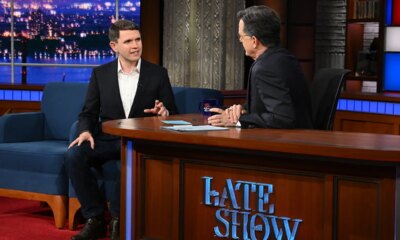
Talarico reportedly knew Colbert interview wouldn’t air on TV before he left to film it