Culture
Grading each MLB team’s offseason so far: Bowden on signings, trades and key questions


There are still a number of difference-making free agents on the board and likely some significant trades still to come, but let’s take stock of each team’s offseason moves — or lack thereof.
The teams that have had the best offseasons so far include the Yankees, Dodgers, Mets, Diamondbacks, Cubs and Red Sox. The worst? It has to be the Mariners, Padres and Cardinals, who have all gotten nothing of note done this winter. But, of course, there’s still time.
With about a month until pitchers and catchers report to spring training, here are my “midterm” grades for each team, along with key takeaways, the biggest remaining questions and division predictions.
(Major-league trades and signings through Jan. 9 are listed for each team.)
NL East
Atlanta Braves
Grade: D-minus
Free agents:
• OF Bryan De La Cruz, one-year deal
• RHP Connor Gillispie, one-year deal
Trades:
• Acquired RHP Griffin Canning from Angels for OF/DH Jorge Soler
• Acquired RHP Davis Daniel from Angels for LHP Mitch Farris
Extensions:
• RHP Reynaldo López, 3 years /$30 million
• LHP Aaron Bummer, 2 years/$13 million
Key takeaways: The Braves lost both Max Fried and Charlie Morton in free agency, and after dumping Jorge Soler’s contract on the Angels in a trade for starter Griffin Canning, they decided to non-tender him. They have a lot of strong young arms for the back of their rotation, but could stand to upgrade. I liked that they took a chance on Bryan De La Cruz to compete with Jarred Kelenic in left field, but was hoping they’d make a run at free agent Jurickson Profar instead. The Braves have not done enough to surpass the Phillies or hold off the Mets. They need to add a veteran starting pitcher and more bullpen depth and upgrade left field and/or shortstop by Opening Day to significantly improve the team — hence, my low grade for their offseason so far.
Big questions: How soon will Ronald Acuña Jr. and Spencer Strider return to the active roster? When back, how close will they be to their past levels?
Season prediction: Second place
Miami Marlins
Grade: B-minus
Free agents:
• 3B Eric Wagaman, one-year deal
Trades:
• Acquired SS Starlyn Caba and OF Emaarion Boyd from Phillies for LHP Jesús Luzardo and C Paul McIntosh
• Acquired INF Max Acosta, INF Echedry Vargas and LHP Brayan Mendoza from Rangers for 1B/3B Jake Burger
• Acquired 1B Matt Mervis from Cubs for INF Vidal Bruján
Key takeaways: The Marlins have punted on the upcoming season and are undergoing a complete rebuild, starting from the bottom of the organization. They are building the team like a skyscraper, with a focus on the foundation as they realize it will be years before they begin construction on the penthouse. They will have a Triple-A-caliber lineup on Opening Day but also a postseason-level rotation eventually if Sandy Alcantara and Eury Pérez can stay healthy after returning from their respective Tommy John surgeries. The Marlins have done a great job collecting prospects but haven’t started to build a competitive major-league team yet.
Big question: How soon can their boatload of prospects develop into major-league players?
Season prediction: Fifth place
New York Mets
Grade: A-minus
Free agents:
• RF Juan Soto, 15 years/$765 million
• LHP Sean Manaea, 3 years/$75 million
• RHP Clay Holmes, 3 years/$38 million
• RHP Frankie Montas 2 years/$34 million
• RHP Griffin Canning, 1 year/$4.25 million
• RHP Dylan Covey 1 year/$850,000
Trades:
• Acquired CF Jose Siri from Rays for RHP Eric Orze
Key takeaways: The Mets outbid the Yankees to win the Soto sweepstakes, but in the end grossly overpaid, even for a generational player, because their owner could. However, Soto brings high energy, charisma and elite on-base skills. To get the most out of Soto’s abilities, I think they must re-sign Pete Alonso or acquire another big bat to provide protection directly behind him in the lineup to prevent teams from intentionally walking him in key spots.
President of baseball operations David Stearns again sought to build their rotation around shorter-term free-agent deals; I liked the moves despite the risk that comes with that type of strategy. Bringing back Manaea was the key and Montas was the best risk based on how he finished last season. Holmes, who will attempt to transition from reliever to starter, will probably end up back in the bullpen.
Big question: Can they bring back Alonso to play first base and give Soto protection in their lineup?
Season prediction: Third place
The Phillies upgraded the back of their rotation by acquiring Jesús Luzardo from Miami. (Orlando Ramirez / Getty Images)
Philadelphia Phillies
Grade: B
Free agents:
• OF Max Kepler, 1 year/$10 million
• RHP Jordan Romano, 1 year/$8.5 million
• RHP Joe Ross, 1 year/$4 million
Trades:
• Acquired LHP Jesús Luzardo and C Paul McIntosh from Marlins for SS Starlyn Caba and OF Emaarion Boyd
• Acquired cash considerations from Rays for RHP Mike Vasil
• Acquired RHP Aaron Combs from White Sox for LHP Tyler Gilbert
Key takeaways: Landing Luzardo from the Marlins was an excellent move. It gives the Phillies the best five-man rotation (Zack Wheeler, Aaron Nola, Cristopher Sánchez, Ranger Suárez, Luzardo) in the division to start the season. Top prospect Andrew Painter is projected to join the big-league club in midseason and will further augment the starting pitching depth. I didn’t love the pick-up of Kepler, who is more of a platoon-type player; he’s slated to start in left field for the Phillies but has never played there in the majors. I did like the one-year gamble they took on Romano, an oft-injured closer, to bolster their bullpen, which lost Jeff Hoffman and Carlos Estévez to free agency. The Phillies listened to offers for both Nick Castellanos and Alec Bohm, but never heard any that made sense.
Biggest questions: Is the outfield good enough on both sides of the ball to get them to the World Series? Do they need to add another high-leverage reliever?
Season prediction: First place
Washington Nationals
Grade: C-plus
Free agents:
• RHP Trevor Williams, 2 years/$14 million
• RHP Michael Soroka, 1 year/$9 million
• 1B/DH Josh Bell, 1 year/$6 million
Trades:
• Acquired 1B Nathaniel Lowe from Rangers for LHP Robert Garcia
Key takeaways: Surprisingly, the Nationals didn’t believe they were good enough to make a big splash in free agency and instead decided to improve around the edges. Lowe should help their first-base production and Bell can supply some power in the DH spot. Williams is a quality back-end innings-eater. Soroka was a worthwhile gamble. However, they didn’t do enough and again look like a fourth-place team.
Biggest questions: Can the young outfield of Dylan Crews, Jacob Young and James Wood live up to its lofty potential? When will third baseman Brady House and outfielder Robert Hassell III be major-league-ready?
Season prediction: Fourth place
NL Central

The Cubs added Matthew Boyd, who logged a 2.72 ERA over eight starts last season with Cleveland. (Jeff Curry / Imagn Images)
Chicago Cubs
Grade: A-minus
Free agents:
• LHP Matthew Boyd, 2 years/$29 million
• C Carson Kelly, 2 years/$11.5 million
• LHP Caleb Thielbar, 1 year/$2.75 million
Trades:
• Acquired OF Kyle Tucker from Astros for 3B Cam Smith, RHP Hayden Wesneski and 3B Isaac Paredes
• Acquired RHP Cody Poteet from Yankees for CF/1B Cody Bellinger and cash
• Acquired RHP Eli Morgan from Guardians for OF Alfonsin Rosario
• Acquired INF Vidal Bruján from Marlins for 1B Matt Mervis
• Acquired C Matt Thaiss from Angels for cash considerations
• Acquired RHP Matt Festa from Rangers for cash
• Acquired cash from White Sox for C Matt Thaiss
Key takeaways: The Tucker acquisition headlines a strong offseason for the Cubs. With Paredes departing, that trade also opened up third base for Matt Shaw, one of their top prospects. They improved their bullpen with the additions of Morgan and Poteet and made the catching room stronger with the signing of Kelly, a strong defensive backstop. Boyd was their best under-the-radar signing; he impressed last season and looked healthy in the playoffs with the Guardians.
Biggest question: Have they done enough to improve their bullpen? They still have a shot to sign Tanner Scott, Kirby Yates or Carlos Estévez; adding one of those three would significantly improve their chances of winning the NL Central.
Season prediction: First place
Cincinnati Reds
Grade: B
Free agents:
• LHP Brent Suter, 1 year/$2.5 million
• RHP Nick Martinez 1 year/$21.05 million
Trades:
• Acquired RHP Brady Singer from Royals for 2B Jonathan India and OF Joey Wiemer
• Acquired C Jose Trevino from Yankees for RHP Fernando Cruz and C Alex Jackson
• Acquired INF Gavin Lux from Dodgers for OF Mike Sirota and a competitive balance pick in the 2025 draft
Key takeaways: The best offseason move the Reds made was hiring future Hall of Fame manager Terry Francona. He will bring leadership to a clubhouse in need of it. He’ll make their young players accountable, and give young talents like Elly De La Cruz and Matt McLain the runway to live up to their potential. I liked the trade with the Royals to acquire Singer, a veteran innings-eater with two years of team control. The addition of Trevino protects the Reds as they now have two everyday catchers; Tyler Stephenson will start, but when he plays first or serves as the DH, they’ll have a Gold Glover in Trevino to step in behind the dish. I thought the Reds made a business mistake in offering Martinez the qualifying offer, but from a baseball perspective I love that they still have his versatility on their staff. The trade for Lux gives them a quality left-handed hitter who is affordable but also offers tremendous positional versatility.
The Reds need another power bat for either first base or the outfield. Would they be willing to trade from their strong farm system to land Luis Robert Jr. from the White Sox? Would they spend the money to sign someone like Anthony Santander to play right field or first base? They might be one big bat away from winning the division.
Biggest question: Will they land the big bat they need to bolster their lineup?
Season prediction: Third place
Milwaukee Brewers
Grade: C-minus
Free agents:
• LHP Grant Wolfram, one-year deal
Trades:
• Acquired LHP Nestor Cortes and 2B Caleb Durbin from Yankees for RHP Devin Williams
• Acquired RHP Grant Anderson from Rangers for LHP Mason Molina
Key takeaways: The Brewers lost shortstop Willy Adames to free agency and traded away Williams, one of the game’s best closers. Both players will be significantly missed. The Brewers do a great job of building teams with limited payrolls, but it’s difficult to maintain a high level year after year when you keep losing your best players. The acquisition of Cortes could work out but he’s also a huge injury risk.
Biggest question: Can Brandon Woodruff return and pitch like the ace he was before he had shoulder surgery? That will probably determine whether the Brewers can get back to the playoffs in 2025.
Season prediction: Second place
Pittsburgh Pirates
Grade: C-plus
Free agents:
• OF Andrew McCutchen, 1 year/$5 million
• LHP Caleb Ferguson, 1 year/$3 million
Trades:
• Acquired 1B Spencer Horwitz from Guardians for RHP Luis Ortiz, LHP Josh Hartle and LHP Michael Kennedy
• Acquired INF/OF Emmanuel Valdez from Red Sox for RHP Joe Vogatsky
Key takeaways: The Pirates haven’t improved their offense enough to become a postseason team. I liked their trade for Horwitz, who should solve first base for them at an affordable price. Bringing back McCutchen, who hit 20 homers last season, does have more than sentimental value. But those two moves are not enough for a team that has the starting pitching to make the playoffs.
Biggest question: Can they add another impact bat to the lineup between now and Opening Day?
Season prediction: Fourth place
St. Louis Cardinals
Grade: F
Key takeaways: The Cardinals haven’t made a single trade or free-agent signing. They lost Paul Goldschmidt to free agency and have been trying to unload Nolan Arenado and his contract to no avail. Even if they can’t trade Arenado now, if he comes to spring training and demonstrates he could be a Comeback Player of the Year candidate, his trade value might improve and it might be easier to swap him. The Cardinals will probably have a better idea if they can move him before spring training once Alex Bregman signs, as teams that miss out on him will be forced to pivot. In the meantime, they’re building for the future in the final year under John Mozeliak’s leadership before Chaim Bloom takes over as president of baseball operations next offseason.
Biggest question: Can Jordan Walker and Nolan Gorman develop enough this year to live up to their potential on both sides of the ball?
Season prediction: Fifth place
NL West

Corbin Burnes’ six-year, $210 million deal with Arizona includes a player opt-out after the second year. (Troy Taormina / Imagn Images)
Arizona Diamondbacks
Grade: A-minus
Free agents:
• RHP Corbin Burnes, 6 years/$210 million
Trades:
• Acquired 1B Josh Naylor from Guardians for RHP Slade Cecconi and a competitive balance round pick in the 2025 draft
• Acquired INF Grae Kessinger from Astros for RHP Matthew Linskey
Key takeaways: The Diamondbacks once again shocked the sport in free agency, signing Burnes, arguably the best pitcher on the market. They now have a rotation capable of running the table in October, and one that is much more equipped to get them back there. The D-Backs lost first baseman Christian Walker but made an excellent pivot in trading for the much younger Josh Naylor, who replaces Walker with similar power but without the elite defense. They now need to turn their focus to improving the back end of their bullpen and perhaps adding another veteran bat for the DH position.
Big question: Will they boost their bullpen, and maybe add another bat, to cap a strong offseason?
Season prediction: Second place
Colorado Rockies
Grade: D
Free agents:
• INF Kyle Farmer, 1 year/$4 million
• C Jacob Stallings, 1 year/$2.5 million
• 2B Thairo Estrada, 1 year/$3.25 million
Trades: None
Key takeaway: The Rockies added infield depth with the inexpensive signings of Estrada and Farmer and picked up a solid backup catcher in Stallings. However, that’s not nearly enough to help them make up ground in the competitive NL West. A fourth straight last-place season awaits.
Biggest question: When will the Rockies decide to be more aggressive in making trades and signings to improve their organization? They’ve mainly relied on their own system to build the franchise, but what they’ve been doing hasn’t worked for several years.
Season prediction: Fifth place
Los Angeles Dodgers
Grade: A
Free agents:
• LHP Blake Snell, 5 years/$182 million
• OF Teoscar Hernández, 3 years/$66 million
• RHP Blake Treinen, 2 years/$22 million
• OF Michael Conforto, 1 year/$17 million
• 2B/SS Hyeseong Kim, 3 years/$12.5 million
Trades:
• Acquired OF Mike Sirota and a competitive balance pick in the 2025 draft from Reds for INF Gavin Lux
• Acquired RHP Jose Vasquez from Twins for C Diego Cartaya
Extensions:
• INF/OF Tommy Edman, 4 years/$64.5 million
Key takeaways: The world champion Dodgers made a huge splash in signing Snell, who gives them one of the best and deepest rotations in baseball. They also landed a new left fielder (Conforto) and middle infielder (Kim) in free agency. They plan to have outfielders Josh Outman and Andy Pages compete with Kim for the last starting spot in the lineup, which they can do because of Edman’s positional versatility as he’s able to play center field, second base and shortstop. The Dodgers did an excellent job in extending Edman, 29, on a club-friendly deal. Another huge move was bringing back Hernández, who is expected to play right field with Conforto patrolling left. Treinen, who shined last year in the regular season and postseason, returns as well to boost the back of the bullpen. The Dodgers have the best 40-man roster in MLB heading into the 2025 season.
Biggest question: Can they get Dave Roberts signed to the most lucrative manager’s contract in baseball history before spring training begins?
Season prediction: First
San Diego Padres
Grade: F
Free agents: None
Trades: None
Key takeaways: The Padres haven’t made a single trade or free-agent signing this offseason; along with Seattle, they’ve been the most inactive teams this winter after being the two most aggressive teams over the past few years. Go figure. The biggest news coming out of their offseason has been a power struggle within their ownership group over who should be the franchise’s control person. The Padres have a tight budget and have been listening to offers on both Dylan Cease and Luis Arraez as both are entering their free-agent walk years.
Biggest question: Can the Padres bring back Jurickson Profar to play left and Ha-Seong Kim to play shortstop?
Season prediction: Third place

GO DEEPER
Padres ownership’s family fight raises questions about operation of team
San Francisco Giants
Grade: B
Free agents:
• SS Willy Adames, 7 years/$182 million
• RHP Justin Verlander, 1 year/$15 million
Trades: None
Key takeaways: The new Giants leadership team of president of baseball operations Buster Posey and GM Zack Minasian didn’t waste any time in finding their short- and long-term solution for shortstop: Adames, who should be a game-changer for them at the plate, in the field and in the clubhouse. Verlander might not be a top-of-the-rotation starter anymore, but the soon-to-be 42-year-old can help the back of their rotation and also mentor young starters such as Kyle Harrison. The Giants still need a middle-of-the-order impact bat if they want to contend this year; signing a free agent like first baseman Pete Alonso would go a long way in making them relevant. They also need to upgrade their bullpen with a high-leverage arm, and there are plenty of available free agents, including Kirby Yates and Tanner Scott, who would be difference-makers for them.
Biggest question: Will they add a power bat for the middle of their lineup?
Season prediction: Fourth place
AL East
Baltimore Orioles
Grade: B
Free agents:
• OF Tyler O’Neill, 3 years/$49.5 million
• RHP Charlie Morton, 1 year/$15 million
• RHP Tomoyuki Sugano, 1 year/$13 million
• RHP Andrew Kittredge, 1 year/ $10 million
• C/DH Gary Sánchez, 1 year/$8.5 million
Trades: None
Key takeaways: The Orioles probably have done just enough to stay locked in as a wild-card team, but not enough to become a World Series team. Losing both Corbin Burnes and Anthony Santander to free agency is significant; combined, they were worth at least five wins. The Orioles did a nice job in signing veteran starters Morton and Sugano on one-year deals, but now they must hope that starters Grayson Rodriguez and Dean Kremer reach another level through development. The O’s addressed their need for right-handed power by signing O’Neill, but how much will he play? The injury-prone outfielder has topped 400 plate appearances in a season only twice over his seven-year career.
Biggest question: Closer Félix Bautista will be back after missing last season due to Tommy John surgery and the Orioles added Kittredge, but will they do more to upgrade their bullpen?
Season prediction: Second place
Boston Red Sox
Grade: A-minus
Free agents:
• RHP Walker Buehler, 1 year/$21.05 million
• LHP Patrick Sandoval, 2 year/$18.25 million
• LHP Aroldis Chapman, 1 year/$10.75 million
• LHP Justin Wilson, 1 year, $2.25 million
Trades:
• Acquired LHP Garrett Crochet from White Sox for C Kyle Teel, OF Braden Montgomery, INF Chase Meidroth and RHP Wikelman Gonzalez
• Acquired C Carlos Narvaez from Yankees for RHP Elmer Rodriguez-Cruz and international bonus pool money
• Acquired RHP Joe Vogatsky from Pirates for INF/OF Emmanuel Valdez
• Acquired RHP Yhoiker Fajardo from White Sox for LHP Cam Booser
• Acquired LHP Jovani Moran from Twins for C/1B Mickey Gasper
Key takeaways: Red Sox chief baseball officer Craig Breslow was the most aggressive front-office exec in acquiring left-handed pitchers this offseason; he signed three southpaws in free agency and traded for two more. His best move was landing Crochet from the White Sox, although he paid the market price in prospects. I loved the one-year deal with Buehler based on how the righty finished the season with the Dodgers.
I think the Red Sox still need to land an impact closer like Tanner Scott, Kirby Yates or maybe even Carlos Estévez in free agency. I don’t believe they’ve done enough overall to catch the Yankees or Orioles, but they have put themselves in a strong position to possibly get a wild-card berth if their young players develop as projected.
Biggest question: Can the Red Sox acquire a right-handed pull power hitter to better balance their lineup before Opening Day?
Season prediction: Third place
GO DEEPER
Rosenthal: Alex Bregman is still on the market. Do the Red Sox want him or not?

Cody Bellinger was one of a series of key acquisitions after the Yankees failed to sign Juan Soto. (Daniel Kucin Jr. / Imagn Images)
New York Yankees
Grade: A
Free agents:
• LHP Max Fried, 8 years/$218 million
• Paul Goldschmidt, 1 year/$12.5 million
• RHP Jonathan Loáisiga, 1 year/$5 million
Trades:
• Acquired OF/1B Cody Bellinger and cash from Cubs for RHP Cody Poteet
• Acquired RHP Devin Williams from Brewers for LHP Nestor Cortes and 2B Caleb Durbin
• Acquired RHP Elmer Rodriguez-Cruz and international bonus pool money from Red Sox for C Carlos Narvaez
• Acquired RHP Fernando Cruz and C Alex Jackson from Reds for C Jose Trevino
Key takeaways: Imagine losing Juan Soto in free agency to the crosstown rival Mets and still getting an “A” for the offseason? That’s exactly what happened as future Hall of Fame GM Brian Cashman continues to show he’s one of the best in the game. The signing of Fried bolsters the top of the rotation. Williams provides the Yankees with arguably their best closer since Mariano Rivera. The under-the-radar pick-up of Cruz improves the set-up innings. The Yankees also improved their outfield defense significantly by moving Judge back to right field and acquiring Bellinger, who will be an upgrade in center or left field, wherever they play him. Moving Jazz Chisholm Jr. to second base improves the middle-infield defense and adding Goldschmidt to play first base gives them another plus defender and, more importantly, another leader.
Biggest question: If they follow through and move Chisholm to second base, will they get enough production from third base with some type of platoon between DJ LeMahieu and Oswaldo Cabrera? LeMahieu has struggled to stay healthy and Cabrera profiles more as a utility player. The Yankees don’t appear to have enough left in the budget to make a run at free agent Alex Bregman and are concerned about the decline of Nolan Arenado.
Season prediction: First place
Tampa Bay Rays
Grade: C-minus
Free agents:
• C Danny Jansen 1 year/$8.5 million
Trades:
• Acquired RHP Joe Boyle, RHP Jacob Watters, 1B/OF Will Simpson and a competitive balance round pick in the 2025 draft from Athletics for LHP Jeffrey Springs and LHP Jacob Lopez
• Acquired RHP Eric Orze from Mets for CF Jose Siri
• Acquired RHP Mike Vasil from Phillies for cash considerations
Extensions:
RHP Drew Rasmussen, 2 years/$8.5 million
Key takeaways: The Rays’ biggest move this offseason was moving temporarily from Tropicana Field in St. Petersburg to Legends Field in Tampa, the spring training home of the Yankees, for the regular season due to damage from Hurricane Milton. It will be interesting to see how they play in the heat and deal with the frequent rain, which will cause delays and postponements that could be disruptive for their pitchers. Baseball-wise, their acquisition of Jansen was much needed, as he’s an above-average game caller, which their pitching staff needs. I liked their side of the trade with the Athletics for what they’re trying to do in rebuilding and keeping costs down. Speaking of costs, the Rays extended Rasmussen to avoid arbitration and backloaded $5.5 million of the $8.5 million deal in the second year, which puts them in a strong position to be able to move him at the trade deadline or next offseason while keeping his 2025 salary at an affordable rate.
Biggest question: Do they have enough offense to contend?
Season prediction: Fourth place
Toronto Blue Jays
Grade: C-plus
Free agents:
• RHP Yimi García, 2 years/$15 million
• LHP Josh Walker, 1 year/$760,000
Trades:
• Acquired 2B Andrés Giménez and RHP Nick Sandlin from Guardians for 1B Spencer Horwitz
Key takeaways: Last year the Blue Jays wasted time trying to pursue Shohei Ohtani in free agency and this year they did the same with Juan Soto. They also keep making free agents offers that are market-based but not good enough to convince them to sign. They haven’t been able to extend Vladimir Guerrero Jr. or Bo Bichette, who are both entering their free-agent walk years, and their front office, led by team president Mark Shapiro and GM Ross Atkins, aren’t signed past this year either. I did like the only trade they made, landing Giménez, a three-time Gold Glove Award winner, but it also gave them yet another below-average on-base percentage player. They also deserve credit for signing García, who’s a solid pick-up for the bullpen.
Biggest question: Can the Blue Jays sign any of the top free agents left on the market, including either Anthony Santander or Alex Bregman?
Season prediction: Fifth place
AL Central
Chicago White Sox
Grade: B-minus
Free agents:
• LHP Martín Pérez, 1 year/$5 million
• OF Austin Slater, 1 year/$1.75 million
• OF Mike Tauchman, 1 year/$1.95 million
• RHP Bryse Wilson, 1 year/$1.05 million
• INF/OF Josh Rojas, 1 year/$3.5 million
Trades:
• Acquired C Kyle Teel, OF Braden Montgomery, INF Chase Meidroth and RHP Wikelman Gonzalez from Red Sox for LHP Garrett Crochet
• Acquired C Matt Thaiss from Cubs for cash considerations
• Acquired LHP Cam Booser from Red Sox for RHP Yhoiker Fajardo
• Acquired LHP Tyler Gilbert from Phillies for RHP Aaron Combs
Key takeaways: The White Sox made a necessary and smart market trade when they dealt Crochet to the Red Sox. I liked the return, highlighted by Teel, their long-term answer at catcher, and Montgomery, a future impact right fielder. However, they didn’t do much else to move the needle and remain a 100-loss team.
Biggest question: When will they find an offer they like for center fielder Luis Robert Jr., and will they be able to get a similar return to the Crochet deal?
Season prediction: Fifth place

Carlos Santana, a Gold Glove winner last year with the Twins, is back with Cleveland once again. (Jerome Miron / Imagn Images)
Cleveland Guardians
Grade: B
Free agents:
• RHP Shane Bieber, 2 years/$26 million
• 1B Carlos Santana, 1 year/$12 million
• C Austin Hedges, 1 year/$4 million
Trades:
• Acquired RHP Slade Cecconi and a competitive balance round pick in the 2025 draft from Diamondbacks for 1B Josh Naylor
• Acquired OF Alfonsin Rosario from Cubs for RHP Eli Morgan
• Acquired 1B Spencer Horwitz from Blue Jays for 2B Andrés Giménez and RHP Nick Sandlin
• Acquired RHP Luis Ortiz, LHP Josh Hartle and LHP Michael Kennedy from Pirates for 1B Spencer Horwitz
Key takeaways: The Guardians focused on improving their rotation this offseason and were able to convince their ace, Shane Bieber, who is recovering from Tommy John surgery, to return on a two-year contract with a player opt-out after the first year. Bieber, who has said he’s targeting a June/July return, could give them a huge boost in the second half and in the playoffs. In addition, they landed one of their top trade targets, righty Luis Ortiz, in a deal with the Pirates. They saved significant money by trading Giménez to the Blue Jays, giving them much-needed payroll flexibility going forward. Travis Bazzana, the top pick in last year’s draft, should be ready to take over second base full-time by season’s end.
Recognizing they weren’t able to extend Naylor, the Guardians did what they normally do with impending free agents, trading him to the Diamondbacks for Cecconi, who has a good arm but needs more development to reach his potential as a mid-rotation starter. Santana was a solid acquisition; he works a count, still has power, plays above-average defense and is elite in the clubhouse.
Biggest question: Can they land another impact bat to improve the middle of their lineup and do more to make up for the loss of Naylor?
Season prediction: First place
Detroit Tigers
Grade: C
Free agents:
• 2B Gleyber Torres, 1 year/$15 million
• RHP Alex Cobb, 1 year/$15 million
Trades: None
Key takeaways: Torres provides offense and power but also below-average defense at second base; he will be playing for his next contract, which gives him an incentive to have a bounce-back year. The Tigers announced that Colt Keith will move to first base, which should serve as a jolt to the underperforming Spencer Torkelson if he wants to stay in the majors as a DH or first baseman. I thought the Cobb signing was extremely risky at that price point, but it was only a one-year contract.
Biggest questions: Can they persuade third baseman Alex Bregman to sign with them? Will they be able to convince Jack Flaherty to return to Detroit on a short-term contract?
Season prediction: Fourth place
Kansas City Royals
Grade: B
Free agents:
• RHP Michael Wacha, 3 years/$51 million
• RHP Michael Lorenzen, 1 year/$7 million
Trades:
• Acquired 2B Jonathan India and OF Joey Wiemer from Reds for RHP Brady Singer
Key takeaways: One of the Royals’ main goals this offseason was to acquire a leadoff hitter with a high on-base percentage, and India fits the bill. He is expected to get first crack at being their everyday third baseman, although he could end up at second base or in left field. Wiemer, also acquired in the trade with the Reds, is expected to platoon in center field against left-handed pitching and gives them much-needed outfield depth. Their best move was retaining Wacha in free agency on a club-friendly deal in terms of years and dollars. After dealing Singer, the Lorenzen signing was huge as he should provide important innings and starting pitching depth.
Biggest questions: Do they have enough rotation depth after dealing Singer? Will they be able to add bullpen depth?
Season prediction: Third place
Minnesota Twins
Grade: C-
Free agents: None
Trades:
• Acquired C/1B Mickey Gasper from Red Sox for LHP Jovani Moran
• Acquired C Diego Cartaya from Dodgers for RHP Jose Vasquez
Key takeaways: The biggest move they made this offseason was promoting Jeremy Zoll to GM and Derek Falvey to team president. Baseball-wise, they didn’t have a lot of major holes, so being largely inactive isn’t necessarily a bad thing. They still need a right-handed-hitting outfielder to mix and match on the corners. But if their young players keep developing and their star players stay healthy for once, they have the best roster in the division and could return to the playoffs after a one-year hiatus.
Biggest question: Can their three best position players — Royce Lewis, Carlos Correa and Byron Buxton — stay healthy together for an entire season? If they can, the Twins will win the division.
Season prediction: Second place
AL West

Christian Walker has had an OPS+ over 120 in three straight seasons. (Kamil Krzaczynski / Imagn Images)
Houston Astros
Grade: B-minus
Free agents:
• 1B Christian Walker, 3 years/$60 million
Trades:
• Acquired 3B Cam Smith, RHP Hayden Wesneski and 3B Isaac Paredes from Cubs for OF Kyle Tucker
• Acquired RHP Matthew Linskey from Diamondbacks for INF Grae Kessinger
Key takeaways: The Astros were not able to extend the contracts of their best overall player, Tucker, nor their face of the franchise, Alex Bregman. Instead, they said thanks for the memories and moved on. The front office pivoted nicely, signing Walker to play first base and trading for Paredes to replace Bregman at third. Walker has won three straight Gold Glove awards and boasts 30-home run power, while Paredes has 20-home run power, which once again gives the Astros a strong infield on both sides of the ball.
I didn’t love the return for Tucker, but I understood it because he’ll be eligible for free agency after the 2025 season. Paredes can provide power at third base, but they’ll lose significant defense with Bregman departing. I liked that the Astros were able to get Smith, the Cubs’ first-round pick from last year, in the deal — he’s a few years away, but I really like his bat. It’s just impossible to replace a superstar like Tucker. The outfield is now the biggest concern — the combination of Chas McCormick, Jake Myers, Taylor Trammell and Kenedy Corona profiles as potentially the weakest offensive outfield in the majors.
Biggest question: Will the Astros upgrade their outfield?
Season prediction: Third place
Los Angeles Angels
Grade: C-plus
Free agents:
• LHP Yusei Kikuchi, 3 years/$63 million
• C Travis d’Arnaud, 2 years/$12 million
• RHP Kyle Hendricks, 1 year/$2.5 million
• INF Kevin Newman, 1 year/$2.5 million
Trades:
• Acquired OF/DH Jorge Soler from Braves for RHP Griffin Canning
• Acquired cash considerations from Cubs for C Matt Thaiss
• Acquired LHP Mitch Farris from Braves for RHP Davis Daniel
Key takeaways: The Angels have dropped $80 million in free agency. Kikuchi, the headline signing, should bring some stability to their rotation. On the flip side, I didn’t like the signing of Hendricks, whose best days are behind him. I liked the d’Arnaud acquisition; he should help develop fellow catcher Logan O’Hoppe and also provide a clutch bat off the bench. Soler adds power to the middle of the lineup in the DH spot.
Biggest question: Will Mike Trout finally stay healthy and give the Angels a full season of production that helps him return to the top 10 of AL MVP voting?
Season prediction: Fifth place
Athletics
Grade: C-plus
Free agents:
• RHP Luis Severino, 3 years/$67 million
• LHP T.J. McFarland, 1 year/$1.8 million
• INF Gio Urshela, 1 year/$2.15 million
Trades:
• Acquired LHP Jeffrey Springs and LHP Jacob Lopez from Rays for RHP Joe Boyle, RHP Jacob Watters, 1B/OF Will Simpson and a competitive balance round pick in the 2025 draft
Extensions:
• OF/DH Brent Rooker 5 years/$60 million
Key takeaways: The Athletics stunned the baseball world when they dropped $67 million, the largest contract in franchise history, in Severino’s lap. By adding Severino and Springs, whom they acquired in a trade with Tampa Bay, the A’s now have a much better and deeper rotation. In terms of the Rooker extension, they smartly structured the contract to pay him just $30 million over the first three years and backloaded the final $30 million for the last two years, when they’ll have either moved into their new stadium in Las Vegas or will be able to trade him.
Biggest question: Can the Athletics’ young core, led by Lawrence Butler, JJ Bleday and Shea Langeliers, reach another level this year or was last year more of what to expect? That will determine if this team can finish in the top three of the AL West in 2025.
Season prediction: Fourth place
Seattle Mariners
Grade: F
Free agents: None
Trades:
• Acquired 1B Austin Shenton from Rays for cash
Key takeaways: The Mariners have basically done nothing this offseason: Not a single noteworthy trade and zero free-agent signings. They arguably have one of the top five rotations in baseball, but don’t have enough offense to win a division let alone a pennant. Their offense doesn’t make enough contact and strikes out too much. They have a solid outfield, a Gold Glove-caliber shortstop and a decent catcher to at least build around, but they need to get going.
Biggest question: Will they do anything to upgrade the infield corners? Those spots provide little offense.
Season prediction: Second place
Texas Rangers
Grade: B+
Free agents:
• RHP Nathan Eovaldi, 3 years/$75 million
• OF/DH Joc Pederson, 2 years/$37 million
• C Kyle Higashioka, 2 years/$13.5 million
• RHP Chris Martin, 1 year/$5.5 million
• LHP Hoby Milner, 1-year, $2.5 million
• RHP Jacob Webb, 1 year/$1.25 million
• RHP Shawn Armstrong, one-year deal
Trades:
• Acquired 1B/3B Jake Burger from Marlins for INF Max Acosta, INF Echedry Vargas and LHP Brayan Mendoza
• Acquired LHP Robert Garcia from Nationals for 1B Nathaniel Lowe
• Acquired LHP Mason Molina from Brewers for RHP Grant Anderson
• Acquired cash from Cubs for RHP Matt Festa
Key takeaways: The Rangers have had a strong offseason, adding significant power to their lineup with the trade for Burger and the signing of Pederson; the duo combined for 52 home runs last season with their respective teams. I loved the signing of Higashioka to improve the catcher position overall. Bringing back Eovaldi to anchor the rotation was a must and they got it done with a market contract. The pick-up of Garcia should not be overlooked as the southpaw should really help their bullpen depth. Another under-the-radar move of note: Skip Schumaker, who was hired as a senior adviser to president of baseball operations Chris Young, gives the Rangers their long-term answer at manager whenever Bruce Bochy decides to retire.
Biggest question: Will they be able to sign a closer like Tanner Scott, Carlos Estévez or Kirby Yates in free agency? That’s their biggest need.
Season prediction: First place
(Top image: Kyle Tucker: Carmen Mandato / Getty Images; Juan Soto: Gordon Donovan / NurPhoto via Associated Press)



Among the many complaints made about the modern American novelist, the loudest, if not the most intelligent, has been the charge that he is not speaking for his country. A few seasons back an editorial in Life magazine asked grandly, “Who speaks for America today?” and was not able to conclude that our novelists, or at least our most gifted ones, did.
This opening paragraph is from an essay titled “The Fiction Writer and His Country” by a writer whose work was influenced by Catholicism, the rural South and peacocks. Who was it?

Welcome to Lit Trivia, the Book Review’s regular quiz about books, authors and literary culture. This week’s challenge is all about an influential group of writers, editors and other creative types known as the Algonquin Round Table. In the five multiple-choice questions below, tap or click on the answer you think is correct. After the last question, you’ll find links to related books and other information about the era if you’d like to do further reading.

A strong sense of place can deeply influence a story, and in some cases, the setting can even feel like a character itself. But as it’s summer here in the Northern Hemisphere and travel adventures abound, this week’s literary geography quiz takes you on a trivia tour of notable libraries around the world. To play, just make your selection in the multiple-choice list and the correct answer will be revealed. At the end of the quiz, you’ll find links to more information if you’d like to do further reading.
-

 Technology1 minute ago
Medical identity theft follows you into the doctor’s office
-
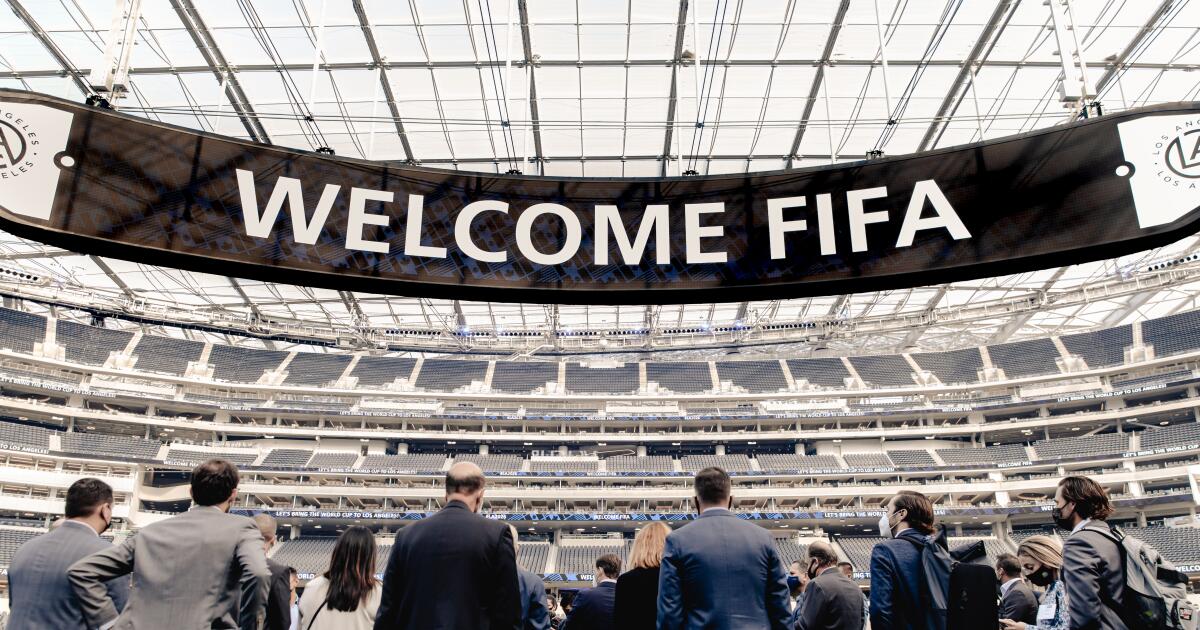 Business8 minutes ago
California soccer fans sue StubHub after it fails to deliver expensive World Cup tickets
-
 Entertainment11 minutes ago
Lucas Museum to give free annual passes to South L.A. neighbors, host community preview day
-
 Lifestyle16 minutes ago
Meow Wolf taps famed L.A. animation house for its new Los Angeles venue
-
Politics23 minutes ago
Column: Trump decries ‘communism’ while his government takes ownership of companies
-
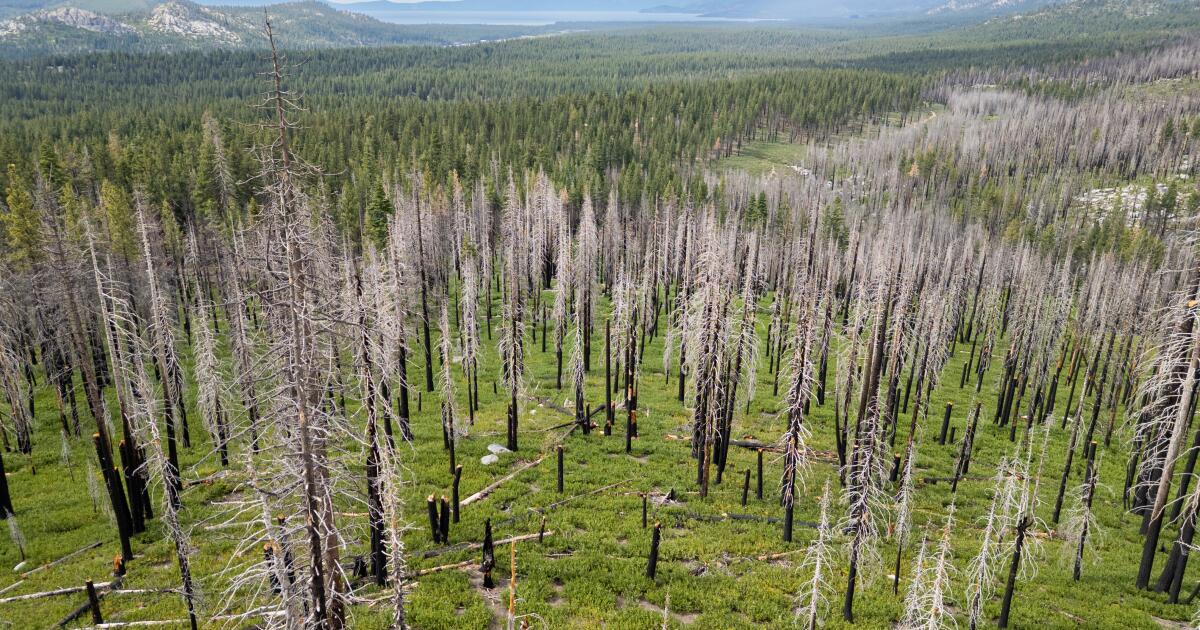 Science26 minutes ago
‘I’d rather my house burn down than get cancer’: Herbicide use upends California’s fight to save forests
-
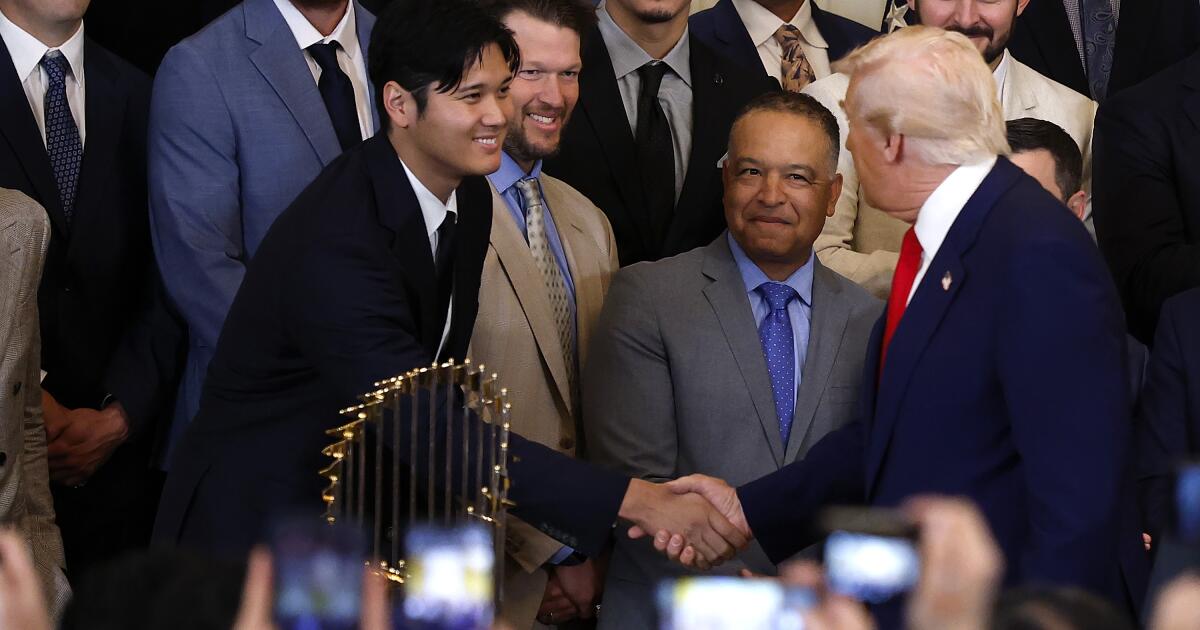 Sports31 minutes ago
Dodgers scheduled to visit White House in late July to celebrate 2025 World Series win
-

 World41 minutes ago
Former US Olympian pleads not guilty in DC reflecting pool vandalism case


