Washington, D.C
Bishop at inaugural service pleads for Trump to ‘have mercy' on LGBTQ people, migrants
At the inaugural prayer service, the Right Rev. Mariann Budde, the Episcopal bishop of Washington, made a direct appeal to President Donald Trump to have mercy on the LGBTQ+ community and undocumented migrant workers.
Referencing Trump’s belief that he was saved by God from assassination, Budde said, “You have felt the providential hand of a loving God. In the name of our God, I ask you to have mercy upon the people in our country who are scared now.”
The Trump administration has already issued executive orders rolling back transgender rights and toughening immigration policies.
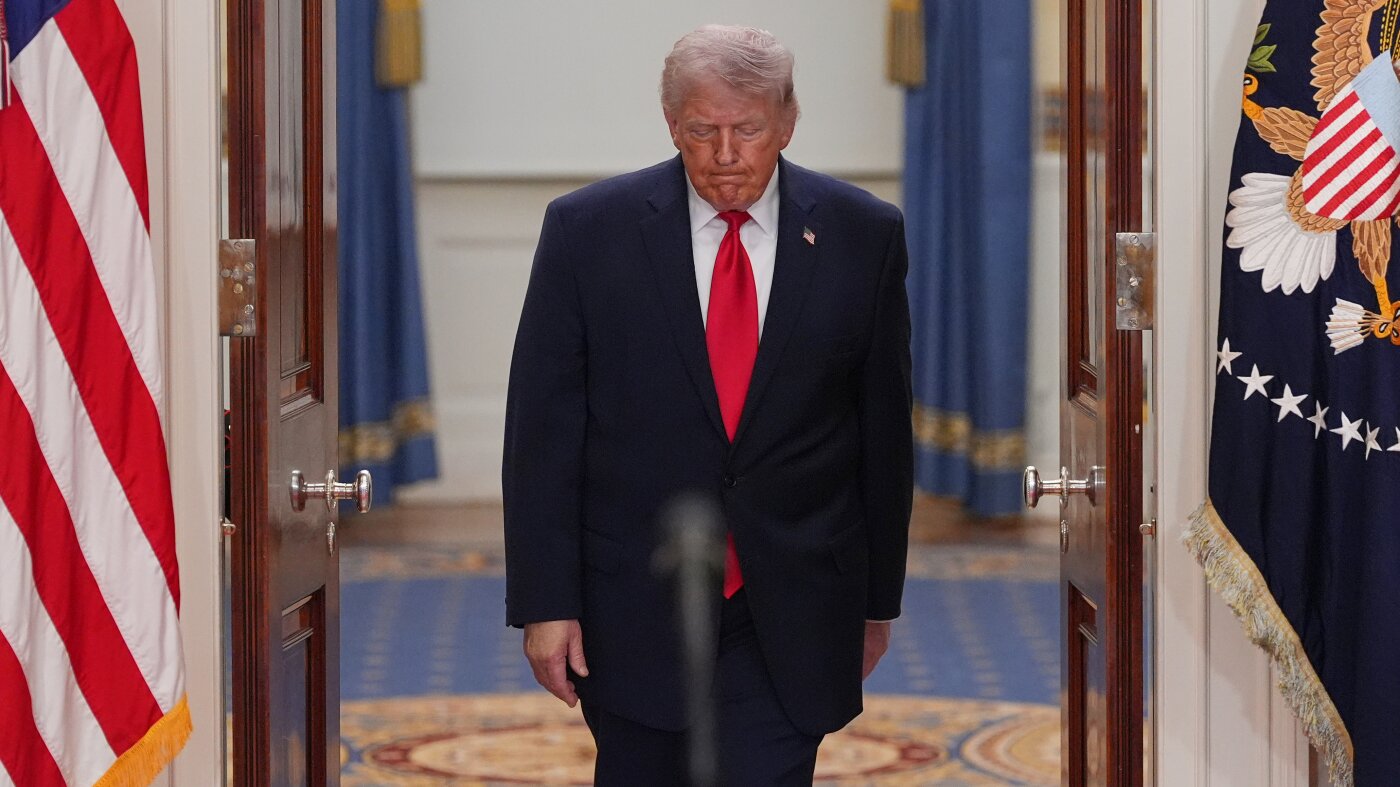
When he returned to the White House, Trump was asked about the sermon.
“Not too exciting, was it?” the president said as he walked with staff toward the Oval Office. “I didn’t think it was a good service. They could do much better.”
The Washington National Cathedral service was largely focused on national unity. Trump and Vice President JD Vance were in attendance with their families, along with House Speaker Mike Johnson and Defense Secretary nominee Pete Hegseth.
In her sermon, Budde said they gathered “to pray for unity as a people and a nation — not for agreement, political or otherwise — but for the kind of unity that fosters community across diversity and division.”
She added, “Unity is not partisan.”
Evangelicals were at the service but not on the program
More than a dozen religious leaders spoke during the interfaith service, including those from Jewish, Muslim, Buddhist and Hindu traditions.
Notably absent from the invited clergy with speaking roles were conservative evangelicals, who are among President Trump’s strongest supporters.
Nonetheless, some of those evangelical supporters were in the pews.
In attendance were Robert Jeffress, a longtime Trump supporter and pastor of Dallas’ First Baptist Church; Paula White-Cain, a televangelist and key spiritual adviser during Trump’s first term; and Lorenzo Sewell, the pastor of Detroit’s 180 Church who gave a spirited benediction at Monday’s inauguration.
A new kind of inaugural prayer service
The Washington National Cathedral has hosted 10 official inaugural prayer services for presidents of both parties. The tradition dates back to 1933.
The latest service had a different emphasis than previous ones. Its focus was on the nation instead of the new administration — a plan made before Election Day.
“We are in a unique moment in our country’s history, and it is time to approach this differently,” said the Very Rev. Randy Hollerith, dean of the Episcopal cathedral, in an October statement.
“This will be a service for all Americans, for the well-being of our nation, for our democracy.”
The texts and songs revolved around themes of compassion and togetherness, including a reading from Deuteronomy 10:17-21, which speaks of taking care of orphans and widows and all who are in need.
Sermons at inaugural services have often been given by ministers aligned with the incoming administration. In 2021, the Rev. William Barber, a progressive civil rights leader, preached before President Joe Biden at the cathedral.
Budde, who gave this year’s sermon, has joined other cathedral leaders in criticizing Trump previously, rebuking his “racialized rhetoric” and blaming him for inciting violence on Jan. 6, 2021.
Budde was “ outraged ” in 2020 after Trump staged an appearance in front of St. John’s Episcopal Church, which is near the White House. He held up a Bible after the area had been cleared of peaceful protesters.
Eric Javits shares the story behind Melania Trump’s iconic inauguration hat and reacts to the “blocked kiss” and Donald Trump’s joke about her almost blowing away as she said farewell to the Bidens.
Music made for Trump
The one part of Tuesday’s service that seemed tailor-made for Trump was the inclusion of opera singer Christopher Macchio, who also sang the national anthem at the inauguration.
The tenor sang “Ave Maria,” a favorite song of Trump and one that Macchio sang at a Trump rally and the Republican National Convention.
Before the service began, Macchio performed hymns like “How Great Thou Art” and another Trump favorite, “Hallelujah,” written by Leonard Cohen.
News4 sends breaking news stories by email. Go here to sign up to get breaking news alerts in your inbox.
As the prayer service neared its end, Trump joined others in singing “America the Beautiful.”
Trump also thanked many of the clergy who participated as they processed past him — except for Budde, whom he did not acknowledge.
Associated Press reporter Darlene Superville in Washington contributed to this report. Associated Press religion coverage receives support through the AP’s collaboration with The Conversation US, with funding from Lilly Endowment Inc. The AP is solely responsible for this content.

Washington, D.C
DC police chief accused of manipulating crime data in new House Oversight Committee report – WTOP News
D.C. Police Chief Pamela Smith has been accused of manipulating crime data to “maintain the appearance of low crime” in a new report released Sunday by the House Committee on Oversight and Government Reform.
The interim staff report came from transcribed interviews with the commanders of all seven D.C. patrol districts, as well as one former commander currently placed on suspended leave, according to a news release.
The report alleges Smith “punished and removed officers for reporting accurate crime numbers and fostered a toxic culture.”
D.C. police Chief Pamela Smith recently announced she is stepping down at the end of the month after two years leading the department.
Mayor Muriel Bowser’s office told WTOP they “are reviewing the report.”
Read the full report here.
This is a developing story and will be updated.
Get breaking news and daily headlines delivered to your email inbox by signing up here.
© 2025 WTOP. All Rights Reserved. This website is not intended for users located within the European Economic Area.
Washington, D.C
How Maryland is Tackling Traffic Delays and Enhancing Travel to Washington D.C. Through Key Infrastructure Upgrades, Here is All You Need to Know – Travel And Tour World
Published on
December 14, 2025
Traffic delays in D.C. have long been a challenge for both residents and visitors. In Maryland, addressing these issues has become a top priority, with major projects aimed at easing the notorious Beltway congestion. Among the most crucial initiatives are the reconstruction of the American Legion Memorial Bridge and the Francis Scott Key Bridge. These key infrastructure upgrades are essential not only for reducing traffic delays but also for improving access to Washington D.C.’s famous attractions. With millions of tourists visiting the nation’s capital every year, these projects aim to enhance the flow of traffic, ensuring a smoother travel experience for all. By tackling congestion head-on, Maryland is making significant strides in boosting Washington D.C. tourism. The ongoing improvements promise to make visiting the capital more convenient and enjoyable, benefiting both locals and travelers alike.
Maryland’s Focus on Infrastructure Upgrades
One of the most pressing issues currently being tackled by Maryland officials is the ongoing traffic delays in D.C. caused by outdated and overcrowded bridges. The Francis Scott Key Bridge, in particular, has seen its estimated costs balloon as the need for reconstruction becomes more urgent. The Maryland Department of Transportation has faced increasing pressure to ensure the timely and efficient completion of this project, which is expected to be fully funded by taxpayers.
In September 2025, U.S. Transportation Secretary Sean P. Duffy raised concerns regarding the proposed budget and timeline for the FSK Bridge replacement. This project, aimed at addressing significant traffic bottlenecks, is crucial to improving the daily commute for both locals and visitors heading into Washington D.C. for business, leisure, or cultural experiences.

Addressing Congestion on the American Legion Memorial Bridge
Another key project under discussion is the American Legion Memorial Bridge, which connects Maryland to Virginia along the I-495 Beltway. This bridge is notorious for heavy congestion, contributing significantly to the broader traffic delays in D.C. In 2025, Washington, D.C. was rated the worst city in the nation for traffic, with an average delay of more than six hours. As part of efforts to alleviate this problem, Secretary Duffy and Maryland Governor Wes Moore are exploring ways to accelerate the reconstruction of the American Legion Memorial Bridge.
A major focus of this initiative is the public’s input on how best to alleviate congestion in the I-495/I-270 corridor. The Federal Highway Administration (FHWA) has recently released a Request for Information (RFI) to gather feedback on potential solutions. The aim is to develop a multi-state plan to address the congestion that affects both Maryland and Virginia, directly benefiting travelers heading into Washington D.C. This effort is seen as vital for improving the overall travel experience in the region, particularly for tourists navigating the Beltway.
Improving Access for Washington D.C. Tourists
Tourism in Washington D.C. is a significant economic driver for the region. Each year, millions of tourists flock to the nation’s capital to visit iconic landmarks such as the White House, the U.S. Capitol, the Lincoln Memorial and the Smithsonian museums. However, these visitors often face traffic delays that hinder their ability to enjoy their trip. The ongoing congestion on the I-495 Beltway and critical bridges like the American Legion Memorial Bridge and the Francis Scott Key Bridge directly impact the ease with which tourists can access these sites.
Improving these key transportation routes will not only benefit local commuters but also enhance the tourism experience in Washington D.C. Faster and more efficient access to the city’s major attractions can encourage more visitors, boosting local tourism revenue and supporting the area’s hospitality sector. By addressing Beltway congestion and modernizing key infrastructure, Maryland is taking a proactive approach to ensuring that tourists spend less time stuck in traffic and more time exploring the capital’s many cultural and historical offerings.
The Role of the Capital Beltway Accord
Maryland’s commitment to improving transportation in the region is also evident in its collaboration with Virginia through the “Capital Beltway Accord.” In 2019, Maryland and Virginia announced a bipartisan agreement to build express lanes on the Beltway, designed to ease congestion. Virginia completed the 495 Express Lane Extension in November 2025, a move that aims to improve the flow of traffic between the two states.
The express lanes offer an expedited route for drivers and are expected to have a direct impact on reducing congestion, particularly in areas where traffic delays have historically been the most severe. For tourists traveling to Washington D.C., these lanes represent a potential shortcut that could significantly shorten travel times to key attractions. The implementation of such infrastructure upgrades helps ensure that both residents and tourists benefit from improved access to the region.
Public Input and Community Involvement
Secretary Duffy has emphasized the importance of involving the public in the planning and development of these transportation projects. The release of the Request for Information (RFI) for the American Legion Memorial Bridge reconstruction is a clear indication of Maryland’s commitment to ensuring that local communities, commuters and tourists alike have a say in how congestion is addressed. Public input is vital for shaping the future of transportation in the region, particularly when it comes to making improvements that impact everyday lives and travel experiences.
A Brighter Future for Maryland’s Transportation Network
With ongoing efforts to tackle Beltway congestion, rebuild the Francis Scott Key Bridge and improve the American Legion Memorial Bridge, Maryland is positioning itself to enhance travel to Washington D.C. for years to come. The state’s focus on modernizing key infrastructure projects is crucial for easing traffic delays and improving the overall experience for both residents and tourists. As these projects progress, they promise to unlock smoother, more efficient travel, benefiting everyone who relies on these critical routes.
Conclusion: Enhancing Travel Through Strategic Infrastructure Investment
Maryland’s commitment to addressing traffic delays in Washington D.C. through key infrastructure upgrades is set to have a significant impact on both local commuters and tourists. The reconstruction of the American Legion Memorial Bridge and the Francis Scott Key Bridge will not only ease Beltway congestion but also improve access to the capital’s major attractions. By ensuring that these vital projects are completed on time and within budget, Maryland is making strides in improving travel for everyone who relies on these roads. With the ongoing public input process and collaboration with neighboring Virginia, the future of travel in the Washington D.C. metro area looks brighter than ever.
Washington, D.C
Trump sets sights on next renovation project – Washington DC’s public golf courses
President Donald Trump has set his sights on his next renovation project: Washington, D.C.’s golf courses, according to a new report.
The president, who frequently spends weekends on the fairways at his various properties, is seeking to redevelop the three public golf courses in the nation’s capital, The Wall Street Journal reported.
“If we do them, we’ll do it really beautifully,” he told the outlet on Friday after reportedly describing the courses as run down and neglected. Interior Secretary Doug Burgum echoed this sentiment, describing one course as “in total disrepair,” adding that Trump is trying to bring it “back to what it was originally envisioned to be, which is the finest municipal golf in the country, right here in our capital.”
In his pursuit to remake the green spaces, he is attempting to wrest control from the National Links Trust, a non-profit with a 50-year lease to operate, restore and maintain the affordability of East Potomac Golf Links, Rock Creek Park Golf and Langston Golf Course.
Earlier in 2025, the administration ordered the group to take dirt resulting from the demolition of the East Wing of the White House or risk defaulting on its lease with the government, people familiar with the matter told the outlet. The group accepted and trucks were seen dumping piles of soil onto one of East Potomac’s courses.
Despite this, the Interior Department told the National Links Trust that it violated its lease and delivered an official default notice. Trump said that the courses will fall under the administration’s control if the group does not remedy alleged violations by the end of the year.
“Such a move could make it easier for Trump to implement his vision for the East Potomac course, which sits on a prime stretch of Washington real estate along the river,” the outlet reported, noting that the course is “at the top of his list.”
In a statement, the group disputed the administration’s assessment.
“National Links Trust respectfully disagrees with the characterization that we are in default,” a spokesman for the National Links Trust told the newspaper. “National Links Trust appreciates the president’s interest in the D.C. golf courses and looks forward to the opportunity to partner with the administration to improve these historically significant facilities.”
But the Republican president has no interest in working with the organization.
“I think what we’re looking to do is just build something different, and build them in government,” he said.
He’s also shown interest in hiring Tom Fazio, a famed golf course architect, to create designs for a new East Potomac course and hopes to host a professional golfing event in the capital in the near future.
The president’s renovation attempts have triggered consternation among some golfers in Washington, D.C., who fear Trump’s beautifying efforts could boost prices and render the courses unaffordable for residents.
But, Trump said that, if he takes over the three courses, D.C. inhabitants will receive lower rates than visiting golfers.
If Trump is successful in his bid, it would add to the many changes he’s made to the nation’s capital since returning to office in January. At the White House, he’s paved over the Rose Garden, installed towering flag poles on the lawn, affixed gilded furnishings to the Oval Office and began constructing a massive ballroom where the East Wing once stood.
He’s also proposed building a victory arch on the banks of the Potomac and is considering renovating the Reflecting Pool that sits in front of the Lincoln Memorial.
A White House spokesperson did not immediately respond to a request for comment from The Independent.
-
Alaska1 week agoHowling Mat-Su winds leave thousands without power
-
Texas1 week agoTexas Tech football vs BYU live updates, start time, TV channel for Big 12 title
-
Washington5 days agoLIVE UPDATES: Mudslide, road closures across Western Washington
-
Iowa1 week agoMatt Campbell reportedly bringing longtime Iowa State staffer to Penn State as 1st hire
-
Miami, FL1 week agoUrban Meyer, Brady Quinn get in heated exchange during Alabama, Notre Dame, Miami CFP discussion
-
Cleveland, OH1 week agoMan shot, killed at downtown Cleveland nightclub: EMS
-
Iowa1 day agoHow much snow did Iowa get? See Iowa’s latest snowfall totals
-
World7 days ago
Chiefs’ offensive line woes deepen as Wanya Morris exits with knee injury against Texans