Washington, D.C
Being human in a digitally disembodied world – Washington Examiner


Clubbing on a Monday night — that’s the image that came into my mind as I was reading the great new book by Christine Rosen, The Extinction of Experience: Being Human in a Disembodied World. Rosen is a senior fellow at the American Enterprise Institute and a columnist for Commentary magazine. She is one of America’s best writers and thinkers.
The Extinction of Experience explores the way the digital revolution and the rise of the internet, the smartphone, and AI have altered our lives. Rosen appreciates the miracles of modern technology, which are useful and “fun.” She defines “technology” as “computers, smartphones, smart speakers, wearable sensors, and, in our likely future, implantable objects, as well as software, algorithms, etc.”
However, the bigger picture is that our gadgets have become obstacles to the spiritual, mental, and psychological flourishing of human beings.
“Many of our current technologies seem to view people as the problem to which devices and platforms and algorithms provide a necessary solution,” Rosen writes. “If earlier technologies were an extension of our senses, today’s technologies train us to mistrust our own senses and rely instead on technology.”
The results of this are bad, as we can no longer tolerate boredom or contemplation. We can’t experience a concert, conversation, or romantic pleasure without digital mediation.
“The extinction of fundamental human experiences creates a world where our sense of shared reality and purpose is further frayed, and where a growing distrust of human judgment will further polarize our culture and politics,” she writes. “Technological change of the sort we have experienced in the last 20 years has not ushered in either greater social stability or moral evolution. In fact, many of our sophisticated technological inventions and platforms have been engineered to bring out the worst of human nature.”
The contrast to this is the image that came into my mind as I was reading her book: dancing in a club on a Monday night in the pre-digital world. When I was in my 20s, back in the 1980s and before the digital revolution, I would sometimes go out clubbing and bar-hopping on weeknights. I worked at a restaurant in Georgetown in Washington, D.C., and for many of us in that business, our weekends were Mondays and Tuesdays.
On Monday, I would go out and hit a few favorite night spots. The crowds were small and the city quiet. You could have time with bartenders and DJs you knew to share some conversation. It was contemplative, friendly, sometimes even boring. You’d think about your life, your loves, your goals. You would talk to God. You’d dance with someone you had just met, and actually see the smile on their face. It was like an urban nightlife version of Huck Finn and Jim drifting down the Mississippi River.
That experience came to me while reading The Extinction of Experience because it touched on so many things that Rosen argues are necessary for human flourishing.
She writes, “Certain types of experience — some rooted deeply in our evolutionary history, such as face-to-face interaction and various forms of pleasure-seeking; others more recent and reflective of cultural norms, such as patience and our sense of public space and place — are fading from our lives. Many of these experiences are what, historically, have helped us form and nurture a shared reality as human beings. Mediating technologies have been a significant force behind these changes.”
Rosen devotes the entire first chapter of her book to the importance of the human face. For thousands of years, we have used our subtle and complex reading of the human face to make friends and discover a spouse, to detect danger, to lift our spirits, to laugh and cry. That primal ability is being lost as faces are now glued to cellphones. Just as young people are forgetting how to write cursive, they are losing the ability to read the human face.
CLICK HERE TO READ MORE FROM RESTORING AMERICA
I can still remember in detail the faces of all the bartenders, DJs, and a few girls I danced with 40 years ago. Today’s young digital addicts can’t remember who they met an hour ago. As Rosen notes, we marvel at “the rarity of finding someone in public space who is not immersed in a smartphone.” We suffer from a “waning ability to experience human pleasure without mediation.”
Spending a quiet Monday night in the clubs of Washington, D.C., all those decades ago gave me something I remember to this day. It gave me a fully human experience.
Mark Judge is an award-winning journalist and the author of The Devil’s Triangle: Mark Judge vs. the New American Stasi. He is also the author of God and Man at Georgetown Prep, Damn Senators, and A Tremor of Bliss.



Berk Kutay Gokmen
28 June 2026•Update: 28 June 2026
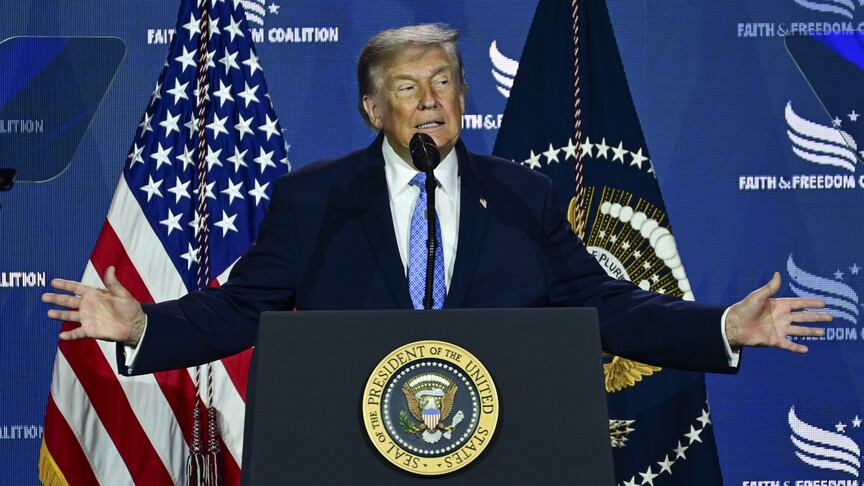
US President Donald Trump on Sunday criticized Democratic mayoral nominee Janeese Lewis George, calling her a “communist” and attacking her policy positions ahead of Washington, DC’s mayoral election.
“Janeese Lewis George, the Communist who is almost certainly going to be elected Mayor of Washington, D.C., has stated that she wants to empty the prisons, make D.C. a Sanctuary City, oppose ICE, welcome Criminal Illegal Aliens back into our beloved Capital, resist Anti-Crime Crackdowns, Defund the Police, continue and expand Cashless Bail, and so many other Capital destroying ‘things’,” Trump wrote on his Truth Social platform.
George won the Democratic primary for mayor of Washington, DC, earlier this month, securing her party’s nomination in the heavily Democratic city and becoming the likely successor to outgoing Mayor Muriel Bowser after the November general election.
Trump said he would not allow Washington, DC, to be “destroyed.”
“In the end, it will never work out, nor will I let it even have a chance because I have worked too hard to make Washington, D.C., the Envy of the World, with almost No Crime, and a Beautification process that has been second to none,” he said.
Trump also said he would “meet with Janeese Lewis George,” adding that Washington, DC, is “again a Safe and Prestigious Community.”
“Many people, including myself, have worked long and hard to get it there, and we will not let it be destroyed by a Communist adherent who has no intention to, MAKE WASHINGTON GREAT AGAIN!” he added.

Just in time for the Fourth of July, the Smithsonian Institution in Washington, D.C., has rolled out a big new exhibit highlighting nature in all its glory, with specimens from across America. But the Hawaiʻi offerings are a bit of a dud.
The Smithsonian’s National Museum of Natural History is a vast repository, occupying a stately edifice on the National Mall. It holds some 148 million objects, including more than a million from Hawaiʻi, including eight priceless feathered cloaks, but when the institution’s curators picked out one item to exemplify each state for this exhibit, they gave Hawaiʻi a rock.
Yes, a rock.
Seen in person, it’s a striking black clump of glittering pāhoehoe lava, and of course we are proud of our lava, but it comes across as, well, underwhelming.
Millions of visitors are expected to arrive in Washington, D.C. in the next two weeks. Many will be drawn by the fanfare associated with the 250th anniversary of the signing of the Declaration of Independence. In the eyes of many Americans, President Trump has tainted the occasion by claiming personal sponsorship of it.
To be fair, the city is looking pretty good, decked out in its finery for the events, and some improvements have been made. Flags are flying; the lawns look green and lush. The scene is drawing large crowds of tourists from all over the world, cheerfully milling about and popping into the many free museums that line the mall.
There are also some notable exceptions: The reflecting pond by the Lincoln Memorial is definitely tainted by algae infiltration. There’s also a bit of slime attached to what was reportedly a no-bid job for the renovation work by a Trump donor.
Also to be fair here: Hawaiʻi has had difficulties with its own reflecting pool, the now-waterless water feature at the State Capitol.

Amid the ongoing partisan warfare, Hawaiʻi’s state government, along with about 10 other Democratic-controlled states, has decided not to participate in the D.C. festivities. That includes the Great American State Fair, now being set up on the National Mall, which will host some 56 themed pavilions where individual states are expected to highlight what they believe makes them special. Sprawling over 10 city blocks, crowned by a 110-foot ferris wheel, the festival will feature concerts, military flyovers, fireworks displays, movie screenings and exhibit spaces representing the nation’s states and territories.
In a statement, Erika Engle, a spokeswoman for Gov. Josh Green, said the state is not officially participating, adding that no funds had been allotted for it by the Legislature or Congress.
She added that Washington, D.C, “is 5,000 miles away.”
That’s a distance that hasn’t previously inhibited the governor, whose peregrinations to the nation’s capital have almost qualified him as a frequent flyer.
This is supposed to be a sign of how Hawaiʻi’s leaders are effectively rejecting Trump. As if Trump cares whether Hawaiʻi participates or not.
It’s a strange place to make a stand. July Fourth is bigger than any president. The signing of the Declaration of Independence represents a rare kind of bravery. The 56 signers risked their lives to sign it, knowing they would have a target on their backs, placed there by King George III, one of the world’s most powerful monarchs.
In fact, people who signed resolutions against the king in the past could expect persecution not just in this life but in the next. In England in the 1630s, the autocratic King Charles I decided to bypass the elected body and instead to rule by executive order. Discarding established law and tradition, he disbanded Parliament for 11 years.
The English people thought that was high-handed and, amid a set of bloody civil wars that killed 200,000 people, he was eventually executed. But when his son was restored to the throne in 1660, the 59 people who had signed the former king’s death warrant were themselves hunted down. Many were drawn and quartered; the lucky were imprisoned for life.
Oliver Cromwell, the Parliamentary ringleader, had already died but his corpse was exhumed and he was hanged. His body was hung in chains and his decapitated head was impaled on a pike and put on public display for 20 years. Almost 100 years later, his embalmed head was still being carted about as a gruesome trophy, even as the signers of the Declaration of Independence put pen to paper.
Back in 1776, the memory of what vengeful kings do to their enemies was high in the minds of those who were publicly protesting Charles II’s autocratic heir, George III. In fact, one of the first ships built and commissioned by the Connecticut General Assembly, launched just two weeks before the Declaration of Independence was signed, was named the Oliver Cromwell.
Democracy has had its ups and downs.
Back to the exhibit at the Smithsonian.

The goal of the curators was to reflect America’s natural diversity and how humans interact with it. In dozens of exhibits spread over 5,000 square feet, visitors can learn about the oddities and idiosyncrasies in the natural world, from rocks to birds to butterflies to snakes to fossils to plants and also how humans have incorporated these items into crafts and artistry. It touched on the problems of animal extinction and climate change.
A video graphic allows people to track bird migration routes across the continental United States.
One display explains the long history of traditional blacksmithing in Guam, another provides examples of Samoan siapo bark cloth.
In addition to several lava rocks representing Hawaiʻi, the exhibit also featured a lovely Niʻihau snail shell necklace and a goby fish from Kāneʻohe Bay, which the exhibition touted as one of the largest sheltered bodies of water in Hawaiʻi, known for its living corals.
But more striking symbols of Hawaiʻi seemed notably sparse and some obvious elements are missing. How nice it would have been to see a feathered cape or an example of one of the brightly colored lizards that have played such an important role in Hawaiian mythology. I would have liked to have seen more of Hawaiʻi’s beautiful birds and butterflies.
Another thing that appears to have gone missing are Hawaiian philanthropic donors making the case for the state’s natural splendors. The display’s list of financial sponsors shows philanthropy from both blue and red states but nothing from Hawaiʻi.
That’s partly because we are suffering another form of extinction. We have a lot fewer large companies based in Hawaiʻi than we once did, and so there are fewer corporate sponsors. Even Hawaiian Airlines, once a mainstay of exhibits like this that appeal to frequent travelers, has been subsumed into an airline from another state.
We do have more billionaires than we once did, of course, but they own estates in so many places that it is hard to know what they actually consider home.
They just better not steal our rocks.

Sign up for our FREE morning newsletter and face each day more informed.

To mark Gun Violence Awareness Month, residents in Southeast D.C. came together to search for a lasting solution.
The Trigger Project held a peace walk Saturday afternoon reflecting on lives impacted by gun violence
The Trigger Project decided to host the walk to give victims’ loved ones a chance to be among others who have experienced the pain of losing a loved one.
The agency said it prides itself on getting the word out about how to prevent gun violence through lived experiences, community leadership and partnerships. The group aims to uplift young people through healing, opportunity and connection while addressing the root causes of gun violence. Another critical part of the event was to ensure that young people have a safe space where they can hang out.
“We’re losing too many of our babies to the streets, you know what I’m saying?” said Darlene Williams, who said she has been a victim of gun violence and also lost her granddaughter to gun violence. “Like I say, the guns don’t kill, people kill. [..] Be around other people, you know what I’m saying, that’s going through the same thing that we’re going through.”
-

 Movie Reviews5 minutes ago
‘Balaramana Dinagalu’ review: A restrained look at the gangster mind
-
World17 minutes ago
A rights group warns Vietnam is ramping up arrests under broad laws to crush dissent
-
 Lifestyle55 minutes ago
‘House of the Dragon,’ Season 3, Episode 2: Honey, I’m home!
-

 Technology1 hour ago
China’s Z.ai claims it can match Mythos on cybersecurity
-

 World1 hour ago
Shipping giant warns Strait of Hormuz chaos is ‘new normal’ as Tehran shifts 4M barrels
-

 Politics1 hour ago
Jacob Frey praises Somali community as Minnesota faces renewed scrutiny over fraud investigations
-

 Sports1 hour ago
J.T. Poston posts a 12 on a single hole at Travelers Championship in stunning meltdown
-

 Technology2 hours ago
Midjourney’s wild body scanner scans you in water

