Washington, D.C
A Tale of Two National Days


WASHINGTON, D.C.—Last Monday, I arrived at the fortress-like Chinese Embassy complex in Washington to the blare of protesters’ megaphones, a common sound outside the embassy. Running late from a meeting, I passed through a metal detector, then scurried through the atrium down to a packed ballroom in the subterranean level of the embassy. There, Chinese Ambassador to the United States Xie Feng was delivering a speech to mark China’s National Day before a sea of suits and military uniforms flecked with the occasional festive qipao.
Two days later and about a mile south, I ambled up a driveway—no security check in sight—to the 18-acre Twin Oaks estate, which serves as Taiwan’s de facto embassy in Washington. I passed a rock garden shaped like the island before arriving to watch Taipei’s representative in Washington, Alexander Tah-ray Yui, give his own National Day speech from the portico of the estate’s 19th-century Georgian-style mansion. Rain briefly threatened, but Yui’s gamble panned out—guests gathered on the rolling lawns below, and he delivered his remarks under the open skies.
Every fall, Washington goes through this ritual—celebrating two National Days, one for the People’s Republic of China (PRC) and the other for the Republic of China (Taiwan), while maintaining a “One China” policy and opposing Taiwanese independence. For U.S. diplomats and experts working on cross-strait relations, carefully executing such mental gymnastics is part of the job description, but even for the nimble, the stretch of holidays can trigger some cognitive dissonance.
The Twin Oaks reception was held a week before the official holiday in Taiwan—standard practice, although the Taipei Economic and Cultural Representative Office gave no official explanation for the gap in scheduling when asked about it. Under U.S. policy, Taiwan is not allowed to have a formal diplomatic presence in Washington, so every move that its unofficial representatives make here is closely scrutinized by Beijing, which maintains that Taiwan is part of its territory.
The National Day holiday itself has been the subject of debate in Taiwan. Also referred to as Double Ten Day, it honors the 1911 Wuchang Uprising in China that led to the fall of the Qing Dynasty and founding of the Republic of China. The Kuomintang (KMT) party governed mainland China intermittently over the following decades until it was forced to retreat to Taiwan after the Chinese Civil War and the 1949 founding of the People’s Republic of China.
But last year, former Taiwanese President Ma Ying-jeou of the KMT—currently the opposition party and the one that holds closer ties to Beijing—criticized the ruling Democratic Progressive Party (DPP) for using the phrase “Taiwan National Day” to describe the holiday, arguing that it is unnecessarily provocative.
This year, the holiday season has been laced with extra tension. In the lead-up to Oct. 10, President William Lai of the DPP, who took office in May, made remarks that angered Beijing. Lai pointed out that the Republic of China was marking its 113th anniversary, while the PRC was celebrating its 75th. “Therefore, in terms of age, it is absolutely impossible for the People’s Republic of China to become the ‘motherland’ of the Republic of China’s people. On the contrary, the Republic of China may be the motherland of the people of the People’s Republic of China who are over 75 years old,” he said on Oct. 5.
And in his speech on the Oct. 10 holiday itself, Lai reiterated a statement he made during his inaugural address, which also drew outrage from Beijing.
“The Republic of China and the People’s Republic of China are not subordinate to each other. On this land, democracy and freedom are growing and thriving. The People’s Republic of China has no right to represent Taiwan,” he said.
But Lai also told the audience that Taiwan was willing to work with China on issues such as climate change and maintaining peace, which analysts said signaled his desire not to upend relations.
Nonetheless, Taiwan is bracing for potential fallout after the holiday. Taiwanese officials told Reuters earlier this week that China may respond to Lai’s speech with military exercises around Taiwan, as occurred after his May speech.
Back in Washington, the two National Day events at the Chinese Embassy and Twin Oaks reflected the fragile state of relations between the United States, China, and Taiwan.
In his roughly 20-minute speech at the Chinese Embassy event, Xie—the Chinese ambassador—described the PRC’s 75-year history as a triumph of economic development before turning his attention to the U.S.-China relationship. By his account, Washington fundamentally misunderstands Beijing’s intentions.
“We have no strategy to overtake or replace the United States, no intention to overthrow the existing order or dominate, and no interest in geopolitical rivalry or a Game of Thrones,” he said. Unlike other instances when Chinese officials have outright rejected the framing of the U.S.-China relationship as a competition, Xie said that while some competition is natural, it shouldn’t dominate the relationship.
He also made a case for the benefits to the United States of integration between the two economies—Teslas rolling off the assembly line at the company’s Shanghai gigafactory and Starbucks opening a new store in China every nine hours. And he listed some of the areas where the United States and China have been able to make some tentative progress together over the past year—climate change; fentanyl control; student exchanges; and critically, the return of the giant pandas to U.S. zoos (including two reportedly coming to D.C. soon).
But Xie also issued several warnings. Referring to the reopening of U.S.-China relations under former U.S. President Richard Nixon, he said, “Today, the relationship is again at a new starting point. History surges onward like a mighty river, but it is the choices made at critical junctures that shape the course.” Taiwan is the “first and foremost red line” in the U.S.-China relationship, he said, adding that “condoning ‘Taiwan independence’ would only invite disaster to oneself.” Finally, he said that a trade or tech war would be a “double-edged sword” that would harm the United States, too.
Following Xie on the stage was Daniel Kritenbrink, the U.S. assistant secretary of state for East Asia and Pacific affairs. He first congratulated China on its anniversary before joking that he was in the “unenviable position” of having 60 seconds to respond to a 20-minute, policy-heavy speech delivered by his “dear friend” Xie.
“I think perhaps this is not the appropriate occasion for me to engage in a rebuttal of some of the points that Ambassador Xie made,” he said, leaving a palpable tension in the stuffy ballroom air. He went on to recite the Biden administration China policy mantra—“invest, align, compete”—and, when possible, cooperate.
But China had the last word, or rather, a Chinese opera singer did. He had his own unenviable task: delivering the famous closing aria from Giacomo Puccini’s Turandot against the backdrop of hundreds of people chattering about Xie and Kritenbrink’s remarks. He may not have been Pavarotti, but he nobly persevered, crescendoing to the booming final line “Vincero, vincero!”—Italian for “I will be victorious.”
Two days later at Twin Oaks, Yui used his speech to thank the United States for its support of Taiwan, militarily and otherwise, and underline the bipartisan nature of that support.
“It is rock solid, but I think with a lot of room to grow still,” he said of the partnership. U.S. congressional support for Taiwan “shows the aggressor we are not alone,” he added. Yui had reason to be pleased; the United States recently approved its largest-ever military aid package to Taiwan—$567 million in weapons to be delivered from U.S. stockpiles.
Yui also echoed language that Lai used in his May inauguration address, saying, “We are not subordinate to the authoritarian communist Chinese regime as they claim it to be.”
As is traditional, an official from the American Institute of Taiwan (AIT), the United States’ de facto embassy in Taipei, followed Yui. Ingrid Larson, the managing director of AIT, kept her speech short—no longer than Kritenbrink’s—and light, remarking on the long-standing U.S. support for Taiwan and their shared values. It was a script designed not to test any red lines.
At both events, the geopolitical dance was followed by a hearty helping of regional delicacies. At the Chinese Embassy, that included D.C. restaurateur and former Chinese Embassy chef Peter Chang’s famous Peking duck, which your vegetarian correspondent politely declined, to the dismay of her Chinese hosts.
Fried rice and mushrooms were a perfectly fine pairing, though, to observe the zoo of U.S.-China relations. The National Day event serves as one of the rare moments these days where the many U.S. government departments that deal with China—from the National Security Council to the Departments of Defense, Commerce, Energy, and so on—all interact with their Chinese counterparts.
I wouldn’t go as far as to describe the feeling as hopeful, but there was something reassuring about the fact that despite all the tensions in the relationship, both countries’ officials can still gather under one roof and tuck into some well-glazed duck together.
At the Taiwanese event, every edible and drinkable item was designed to remind attendees of Taiwan’s unique identity—and its global support. One could sample steaming noodles from Tainan, pork-filled buns and mahi-mahi from Taiwan, copious rolls from sushi boats—a nod to Taiwan’s Japanese colonial period—and, somewhat puzzlingly, even American Thanksgiving-style fare from a buffet featuring casseroles and green beans.
To showcase its remaining 12 official allies, the event also featured Paraguayan dancers in flouncy yellow dresses, hot sauce from Belize, coffee from Guatemala, and beer from the Czech Republic. (While not an official Taiwanese ally, Prague has shown strong support for Taiwan in recent years).
Even the ice cubes in the drinks sent a message—a small Taiwanese flag was embedded in each cube. As I chatted with Taiwanese contacts, I quietly worried about the implications of my cocktail melting in the heat.
While fewer high level U.S. officials were in attendance at Twin Oaks, the hosts made up for it with large TV screens positioned around the main tent, like billboards for Taiwan’s U.S. support. Each screen shuffled through letters from members of Congress congratulating Taiwan on its National Day. A video message from Rep. John Moolenaar—the chairman of the House select committee on the Chinese Communist Party—also played on loop throughout the event.
As I wandered back down the driveway at the end of the evening, I wondered what the two National Day celebrations might look like next year. If former U.S. President Donald Trump wins the upcoming presidential election, he has threatened to launch a new trade war against China and shake up U.S.-Taiwan relations. But even under an administration headed by current Vice President Kamala Harris, relations are likely to remain fragile as the United States continues to ratchet up its tech restrictions against China and China continues its gray-zone and military actions in the South China Sea and Taiwan Strait.
Before leaving Twin Oaks for the night, I took a final sip of my Taiwanese whiskey sample to savor the moment of relative calm.



One family, four generations with DC Metro
As Metro celebrates 50 years of service, one D.C. family is marking the milestone with a legacy of their own — four generations who have all worked on the system, helping keep the region moving for decades.
WASHINGTON – D.C. residents got on their first Metro train 50 years ago on March 27, 1976. Here’s a look back at the beginning.

Connecticut Avenue; NW; looking south. evening traffic-jams are aggravated by metro subway construction in Washington D.C. ca. 1973 (Photo by: HUM Images/Universal Images Group via Getty Images)
View of the Metro Center subway station (at 13th and G Streets NW) during its construction, Washington DC, November 16, 1973. (Photo by Warren K Leffler/PhotoQuest/Getty Images)
Standing in the cavernous tunnel, planners wearing hard hats discuss the construction progress of the Metro Center subway station at the intersection of 13th and G Streets in Washington, DC, November 16, 1973. (Photo by Leffler/Library of Congress/In
WASHINGTON, DC – NOVEMBER 07: FILE, Metro construction miners and blasters on a jumbo drill outside the hole they are working on at Rock Creek Parkway and Cathedral Ave NW in Washington, DC on November 7, 1973. (Photo by James K.W Atherton/The Washin
WASHINGTON, DC – MARCH 4: FILE, View of the Post Office at North Capital and Mass Avenue NE, and 1st NE where subway tunnels were being constructed in Washington, DC on March 4, 1974. (Photo by Joe Heiberger/The Washington Post via Getty Images)
WASHINGTON, DC – AUGUST 29: FILE, Workers rig a pipe at the entrance to the Rosslyn Metro Station in Washington DC on August 29, 1974 (Photo by Larry Morris/The Washington Post via Getty Images)
WASHINGTON, DC – MARCH 27: FILE, The crowd at Rhode Island Station on opening day of the Washington Metro on March 27, 1976. (Photo by James A. Parcell/The Washington Post via Getty Images)
WASHINGTON, DC – MARCH 28: FILE, Reverend Leslie E. Smith of the Episcopal Church, right, and George Docherty of New York Avenue Presbyterian church hold a joint service at the new Metro Center station in Washington, DC on March 28, 1976. (Photo by D
WASHINGTON, DC – JULY 1: FILE, An aerial view of metro construction where it crosses the Washington Channel. The Potomac River, the Pentagon and Northern Virginia can be seen in the distance. (Photo by Ken Feil/The Washington Post via Getty Images)
WASHINGTON, DC – JANUARY 27: FILE, A packed train of commuters on the Silver Spring metro on the Red Line on January 27, 1987. (Photo by Dudley M. Brooks/The Washington Post via Getty Images)
WASHINGTON, DC – JULY 4: FILE, Thousands of people press their way into the Smithsonian Subway station after the Independence Day fireworks in Washington, DC on July 4, 1979. (Photo by Lucian Perkins/The Washington Post via Getty Images)

Among the liquor store, barber shop and dry cleaners at the Watergate Complex’s retail plaza, there is a new pop-up museum dedicated to the scene of the crime that toppled Richard Nixon’s presidency.
Among the liquor store, barber shop and dry cleaners at the Watergate Complex’s retail plaza, there is a new pop-up museum dedicated to the scene of the crime that toppled Richard Nixon’s presidency.
The temporary exhibit features the work of artist Laurie Munn — portraits of members of the Nixon administration and those connected to the Watergate break-in. The exhibit features members of Congress, the media and some who were on Nixon’s enemies list.
Keith Krom, chair of the Board of Directors of the Watergate Museum, told WTOP the exhibit was first featured in the gallery in 2012 for the 40th anniversary of the break-in at the Democratic National Committee.
“When she (Munn) learned about our museum effort, she offered to reassemble them as a way for us to expand awareness of the museum,” Krom said.
Krom, who lives in the Watergate, said his favorite portrait is of one of the special prosecutors, whose firing sparked the “Saturday Night Massacre” in 1973.
“I had the pleasure of being a student of Archibald Cox,” Krom said. “He served as my mentor for my third-year writing project.”
Krom said during this time, at the Boston University School of Law, he spent a great deal of time with him.
“I didn’t realize how much he must have gone through. Here he was, this one man, who was challenging the president of the United States over something pretty serious,” Krom said.
The pop-up opened in October and was recently extended to stay open until April 25. Krom said the hope is to find it a permanent location within the Watergate Complex, where they can “present the history of Watergate, but with two perspectives.”
The first would be on the building’s “architectural significance to D.C.,” he said.
“You may not like the design, you actually may hate it,” Krom said. “But you cannot deny that it changed D.C.’s skyline.”
The secondary focus would, of course, be on the mother of all presidential scandals that changed the course of American history.
“That’s where that suffix ‘-gate’ started and continues to be used for almost every scandal that comes out today,” Krom said.
The inspiration for the museum spawned from an interaction from a tourist outside the Watergate.
“He says, ‘This is the Watergate, right?’ And I was like, ‘Yeah, it’s one of the buildings,’” Krom recalled.
The tourist then asked Krom, “So where’s the museum?”
“I was like, ‘Oh, we don’t have a museum.’ And he literally just looked at me and said, ‘That’s so sad.’ And he got on his bike and rode away,” Krom said.
While the self-proclaimed political history nerd said he “still gets goose bumps” when he drives by the Capitol at night, Krom hopes that when people leave the museum, “they’ll walk away with a new appreciation for how our government works, the guardrails that are in place.”
“Maybe an understanding that those guardrails themselves are kind of frail, and they probably need our collective help in making sure they last — that’s what we hope to accomplish,” Krom said.
Get breaking news and daily headlines delivered to your email inbox by signing up here.
© 2026 WTOP. All Rights Reserved. This website is not intended for users located within the European Economic Area.

According to the National Park Service at the National Mall, famous cherry blossoms around the nation’s capital have hit peak bloom conditions. The National Park Service X account for the National Mall proclaimed this morning, “PEAK BLOOM! PEAK BLOOM! PEAK BLOOM!”
It became apparent yesterday that the bloom would be at peak today. “Despite a sunny afternoon and patches of blue sky, the cherry blossoms remain at Stage 5: Puffy White,” the Park Service wrote on X yesterday. Stage 5, “Puffy White”, is the final stage blossoms go through before being in full bloom. They start at Stage 1 as a “Green Bud”, grow into Stage 2 with “Florets Visible”, and then florets become extended at Stage 3. In Stage 4, there is “Peduncle Elongation” which sets the stage for the puffy blossoms to appear in Stage 5. Puffy White and Peak Bloom are defined as when 70% of the blossoms on the trees reach that stage.

Peak bloom varies annually depending on weather conditions; the most likely time to reach peak bloom is between the last week of March and the first week of April. According to the Park Service, extraordinary warm or cool temperatures have resulted in peak bloom as early as March 15 in 1990 and as late as April 18 in 1958.
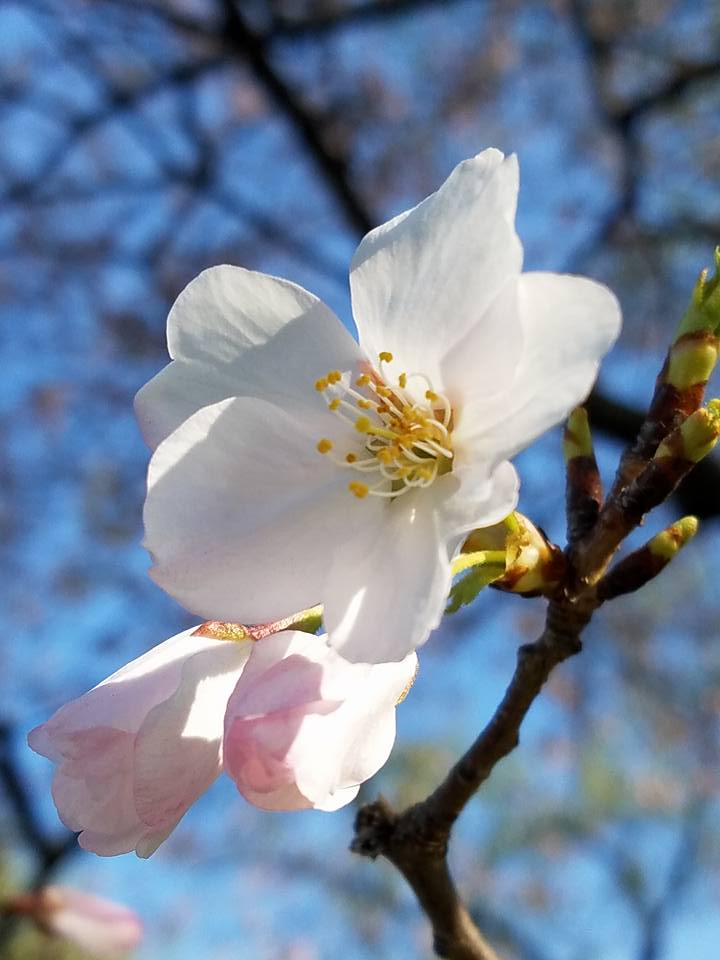
The planting of cherry trees in Washington DC originated in 1912 as a gift of friendship to the People of the United States from the People of Japan. In Japan, the flowering cherry tree, or “Sakura,” is an important flowering plant. The beauty of the cherry blossom is a symbol with rich meaning in Japanese culture.
Dr. David Fairchild, plant explorer and U.S. Department of Agriculture official, imported seventy-five flowering cherry trees and twenty-five single-flowered weeping types from the Yokohama Nursery Company in Japan. After experimenting with growing them on his own property in Maryland, he deemed that the cherry tree would be perfect to plant around the Washington DC area. This triggered an interest by a variety of individuals to plant the tree around Washington. In 1909 the Mayor of Tokyo, Yukio Ozaki, donated 2,000 trees to the United States on behalf of his city. When the trees arrived, they were riddled with disease and insects and to protect other agriculture, they were burned. The Tokyo Mayor made a second donation of trees in 1910, this time amounting to 3,020 trees. This started the forest of cherry trees that now line the Potomac basin around Washington DC. In a gesture of gratitude back to Japan, President Taft sent a gift in 1915 of flowering dogwood trees to the people of Japan. Thousands of trees have been added since, including another gift of 3,800 trees from Japan in 1965.


Another state bans ‘gas station heroin’ as officials warn of deadly risks

Tiger Woods involved in rollover crash in Florida less than 2 weeks before Masters: reports

Fox News AI Newsletter: Family turns down $26M from AI giant to keep farmland

Commentary: How a custody fight over an old dog showed why lawyers should never trust AI to tell the truth
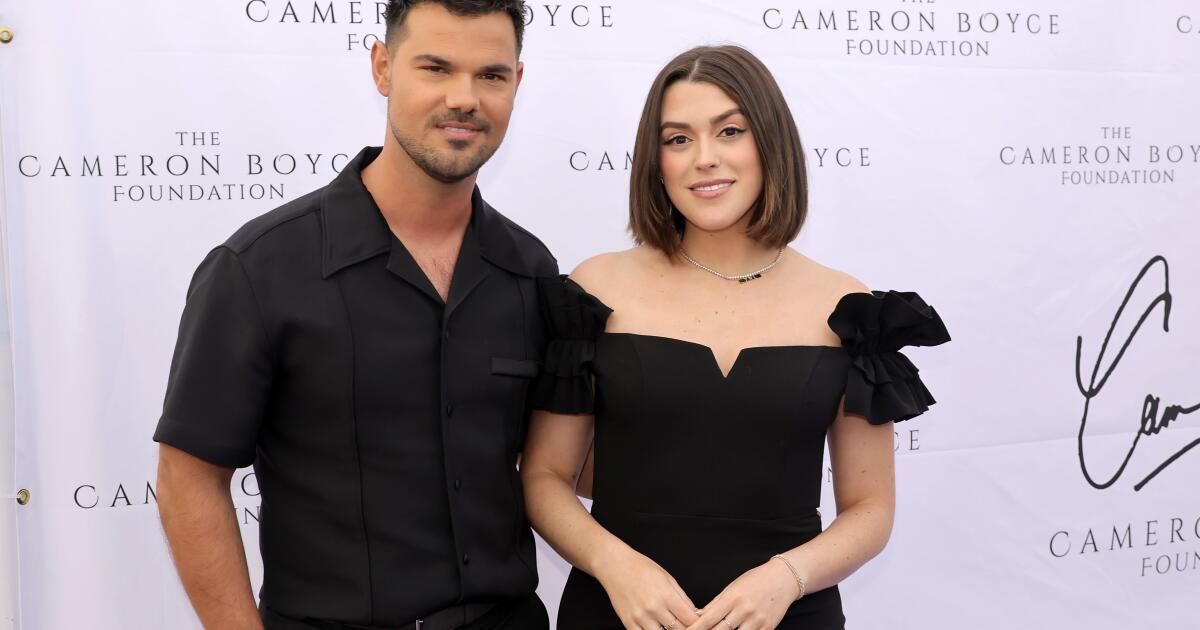
The two Taylor Lautners announce a baby Lautner is on the way

Florida High School Football Rankings: Top 25 teams – Oct. 21

How old is Bo Nix? What to know about Oregon quarterback ahead of 2024 NFL Draft

Cleary's 21 help Le Moyne down Central Connecticut State 69-64 in OT

99th annual Pony Swim held in Virginia

Indiana Members Credit Union announced as new anchor tenant at Bottleworks District

US diplomat Marco Rubio denounces settler violence, tolls in Hormuz strait

Iran-linked hackers have breached FBI Director Kash Patel’s personal emails | CNN Politics

Live: CPAC 2026 Day 2

Video: Will ICE Change Under Its New Leader?

DHS shutdown breakthrough comes at cost for Republicans as funding fights nears end
-

 Detroit, MI1 week ago
Drummer Brian Pastoria, longtime Detroit music advocate, dies at 68
-

 Movie Reviews1 week ago
‘Youth’ Twitter review: Ken Karunaas impresses audiences; Suraj Venjaramoodu adds charm; music wins praise | – The Times of India
-

 Sports6 days ago
IOC addresses execution of 19-year-old Iranian wrestler Saleh Mohammadi
-

 New Mexico5 days ago
Clovis shooting leaves one dead, four injured
-
 Business1 week ago
Disney’s new CEO says his focus is on storytelling and creativity
-

 Technology5 days ago
YouTube job scam text: How to spot it fast
-

 Tennessee4 days ago
Tennessee Police Investigating Alleged Assault Involving ‘Reacher’ Star Alan Ritchson
-

 Texas1 week ago
How to buy Houston vs. Texas A&M 2026 March Madness tickets