Virginia
Is Virginia volleyball becoming a competitive ACC program?


With the offseason fully upon us, it’s time to take a look at the state of the many athletic programs at UVA and hand out some grades.
After a turbulent recent history, here’s how the Virginia Cavaliers volleyball program is shaping up heading into the fall.
Last five years: D
The past five seasons for Virginia volleyball have, to say the least, not been pretty. Off the court, the program dealt with a coaching scandal in the spring of 2021 that saw head coach Aaron Smith and his entire staff relieved of their duties and replaced with former University of Florida associate head coach Shannon Wells.
On the court, the results have been less than stellar. The ‘Hoos have finished below .500 in each of the last five seasons, have a cumulative record of 46-84 (.354 winning percentage), and have finished no better than 11th in the ACC during that span. The 2019-20 season was the last in which UVA had a winning home record, and the ‘Hoos haven’t been able to knock off a ranked opponent in the past five seasons.
After a complete overhaul of the program just three seasons ago, it would be unfair to expect immediate dominance, especially in the always-competitive ACC. But it’s hard to justify a better grade considering just how mightily the ‘Hoos have struggled to remain competitive recently.
Coaching staff: B
Shannon Wells and her staff stepped into an extremely tough situation when they accepted the Virginia job in April of 2021. And while the on-court results haven’t been great so far, Wells has rejuvenated the program’s culture and taken important steps toward creating a winning environment.
By the numbers, the ‘Hoos are 31-54 (.365) overall and 9-45 (.167) in the ACC under the guidance of Wells, who came to Charlottesville after serving under Mary Wise for seven seasons (2014-20) at Florida. While those results aren’t incredibly inspiring, the squad has taken strides in each of Wells’s three seasons, and this fall will be the first in which she has a roster of entirely her own recruits.
There have been some shake-ups amongst the assistants since the new staff’s arrival, but the ‘Hoos will head into the 2024-25 campaign with Travis Magorien coordinating the offense, Sarah Bullock overseeing the recruiting and pin hitters, and Trevor Kennan managing the defense and liberos.
While the ‘Hoos went only 4-14 in the conference this past season, they showed a lot of growth in the non-conference portion of their schedule and managed to complete a season sweep of Virginia Tech. With Wells finally being able to hand-pick her entire roster this season, look for Virginia to take some more significant steps in the right direction.
Current roster: B-
The ‘Hoos are returning ten players from last season’s squad including leading-scorer Abby Tadder, their assists leader Ashley Le, their top two servers: Le and Kate Johnson, and three-year starting outside hitter Brooklyn Borum. With another year to develop under Wells, the returning core has the talent to take a big step forward.
Wells has also brought in seven new faces this offseason. Four rising freshmen — Teegan Hogan, Zoey Dood, Sarah Brodner, and Becca Wright — and three transfers.
Among the transfers, the most impactful addition will likely be rising senior Elayna Duprey from Virginia Tech. Duprey led the Hokies in kills last season with 222 and was fourth on the squad in digs with 121 while registering 12 starts in 26 appearances.
Wells also snagged Kate Dean out of the portal this offseason, an intriguing 6’3 middle blocker from Eastern Illinois. The rising junior racked up 209 kills last season, finished the year with a .329 attack percentage, and was third in blocks (62) on an Eastern Illinois squad that reached the NCAA Tournament for the first time since 2001.
This season’s roster is one of the tallest in recent memory, and with a combination of returning potential and incoming talent, should be in line for more tangible success in the fall.
Future recruiting: B
Wells didn’t enroll her first class of freshman until last season when she brought in Lilly Gervase and Meredith Reeg, but the transfer portal has become just as important for future recruiting as high school recruiting, and Wells has shown a knack for bringing in talent each offseason.
Wells signed Alana Walker in 2021, who finished the 2021 regular season second in the nation in blocks per set (1.51), and Gabby Easton in 2022, who led that year’s team in assists. And with Duprey, Dean, and Tennessee transfer Kadynce Booth arriving on grounds this fall, Wells has yet another talented crop of transfers.
From the high school ranks, the ‘Hoos have four intriguing freshman from the class of ’24:
Outside hitters Sarah Brodner (6-foot-5) — the fifth-ranked prospect in the state of Florida — and Becca Wight — who stands at 6’6 and hails from Worthington, Ohio — will add even more height to a towering UVA squad.
Zoey Dood, a 6-foot-2 setter from Grandville, Michigan, was named a 2023 AVCA First Team High School All-American and was twice recognized as an All-State playe. Meanwhile, Teegan Hogan was an All-State Honorable Mention in North Carolina as a defensive specialist.
Down the road, the ‘Hoos already have several commitments in the classes of 2025 and 2026 as Wells continues to put her signature on the program.



A skydiver crashed into the Lane Stadium scoreboard before Virginia Tech’s spring football game Saturday.
Virginia Tech officials said on X that the skydiver “was safely secured and is currently stable” following rescue efforts. The incident caused a delay in the start of the spring game.
“Thankful for game days with Hokie Nation and for the Blacksburg and Virginia Tech first responders whose quick actions safely returned today’s parachuter to the ground without injury,” the university said.
The name of the skydiver wasn’t released.
“Our primary focus remains on their well-being,” Virginia Tech officials said in a statement. “We extend our sincere appreciation to the first responders, event staff, and medical personnel for their swift, coordinated and professional response.”
Video footage showed the skydiver’s parachute landing between the “C” and the “H” on the Virginia Tech lettering on top of the scoreboard before first responders rescued him.
CBS News has reached out to the Blacksburg Fire Department for details on the incident.

A much cleaner performance carried Clemson baseball on Friday, as it answered the previous night’s loss with a 5-1 win over No. 9 Virginia.
Michael Sharman set the tone from the start. He kept Virginia off balance all night, working eight innings while giving up just a single run. There weren’t many free passes, and he consistently pitched ahead, which allowed him to stay in control deep into the game. Hayden Simmerson wrapped things up in the ninth without any trouble.
At the plate, Nate Savoie was the difference. He delivered two home runs, including a go-ahead shot later in the game that put Clemson in front for good. His first long ball gave the Tigers an early edge, and he finished with three RBIs on the night.
Virginia managed to pull even midway through, but Clemson quickly responded. The offense strung together quality at-bats, with Bryce Clavon driving in a run and Luke Gaffney continuing his strong weekend with multiple hits. The Tigers created more separation late, adding another run after working a bases-loaded situation.
Clemson moves to 25-15 overall and 6-11 in conference play with the win. The series now comes down to Saturday’s matchup in Charlottesville.
Contact us @Clemson_Wire on X, and like our page on Facebook for ongoing coverage of Clemson Tigers news and notes, plus opinions.
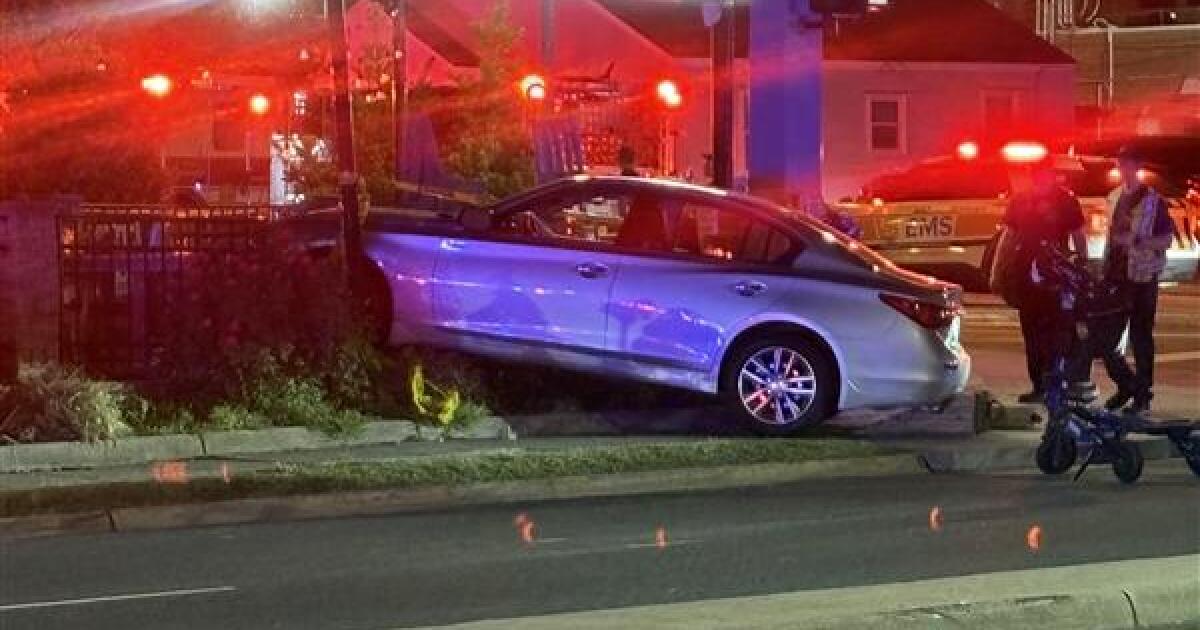
VIRGINIA BEACH, Va. — A car crashed into the patio at Murphy’s Irish Pub on the Oceanfront on Friday night.
Virginia Beach medics arrived at the scene around 7:54 p.m. at Murphy’s Irish Pub and found several victims, according to police. All were taken to the hospital with injuries ranging from non-life-threatening to very severe.
Medics are still on the scene, according to News 3’s team onsite.
This is an active scene and an ongoing investigation; News 3’s team will continue providing updates.
-

 Wisconsin7 minutes ago
US animal rights activists clash with police over Wisconsin dog breeder
-

 West Virginia13 minutes ago
The 2026 WVU Tommy Nickolich Award Goes to a Parkersburg Native
-

 Wyoming19 minutes ago
Wyoming Gov. Mark Gordon won’t seek a third term. He won’t rule out running for other offices, either
-

 Crypto25 minutes ago
1 Cryptocurrency to Buy While It’s Under $80,000
-

 Finance31 minutes ago
Budget crisis is top concern for MPS leader Cassellius | Opinion
-

 Fitness37 minutes ago
I’m a running coach — I’ve just tested shoes actually designed for women’s feet, and they’re a total game changer
-

 Movie Reviews49 minutes ago
‘Hen’ movie review: György Pálfi pecks at Europe’s migrant crisis through the eyes of a chicken
-

 Business1 hour ago
Video: Why Your Paycheck Feels Smaller